Rare 1854 Quarter Errors (List & Pictures)
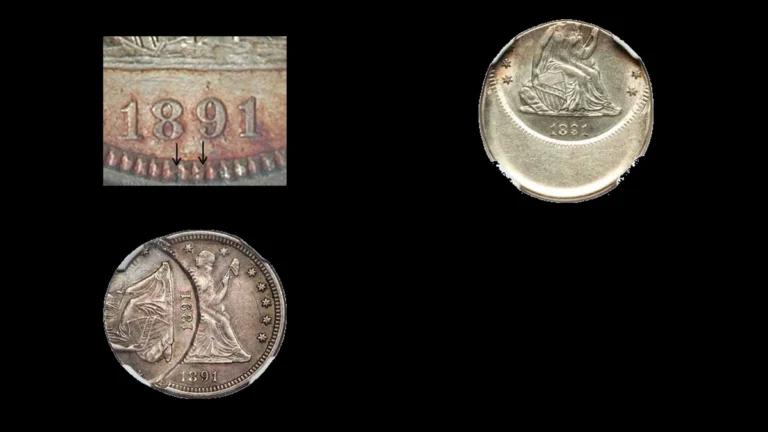
A quarter struck 25% off center brought $2,400 in January 2023. Estimated whole-coin values for these 1854 Liberty Seated quarter errors run from $30–$6,000.
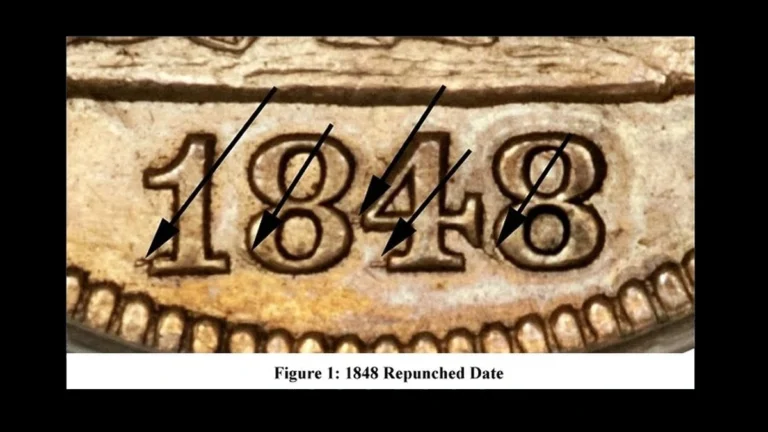
The date arrows are normal; compare the alignment of both faces, raised die damage, and separating metal to understand what is actually unusual.
| Observation | Explanation | Estimated range |
|---|---|---|
| Eagle turns with all reverse lettering | Rotated die | $50–$500 |
| Shifted reverse, centered front | Misaligned die | $50–$600 |
| Both pictures partly miss the blank | Off-center strike | $500–$5,000 |
| Raised lines or border-connected masses | Die cracks and breaks | $30–$1,500 |
| Peeling surface on a Huge O variety | Lamination | $700–$6,000 for the whole variety coin |
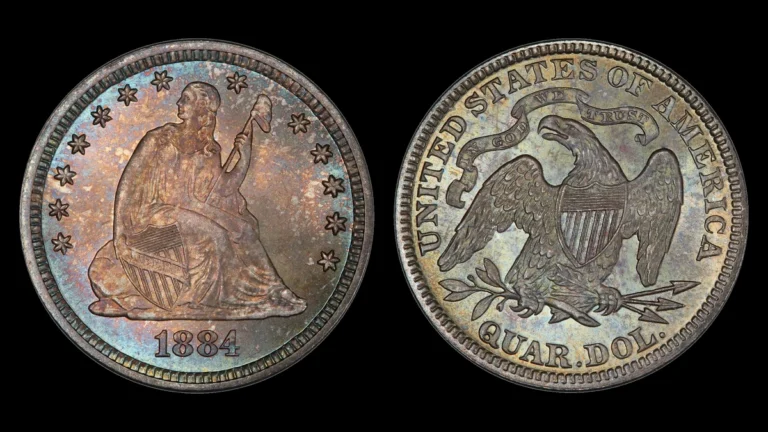
1. 1854 Quarter The reverse turns as a whole: rotated die Error
Published 1854 examples have about 60 degrees and 80 degrees of clockwise reverse rotation. These are separate coins, not competing measurements of one specimen.
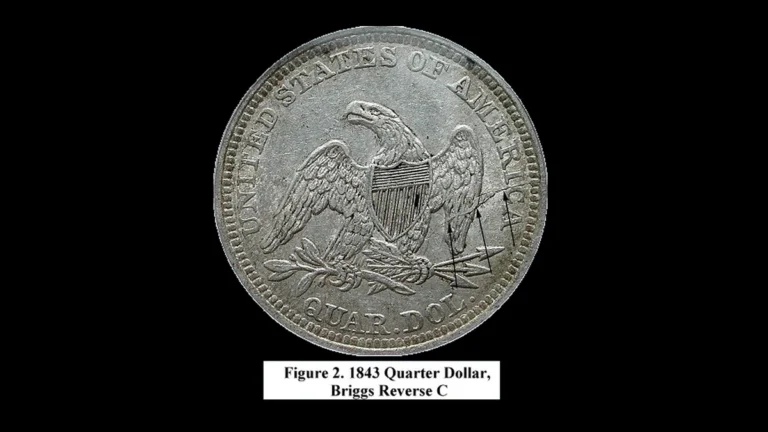
A die, the steel tool that stamps a face, turned relative to its partner. The eagle and surrounding lettering consequently share the same lean.
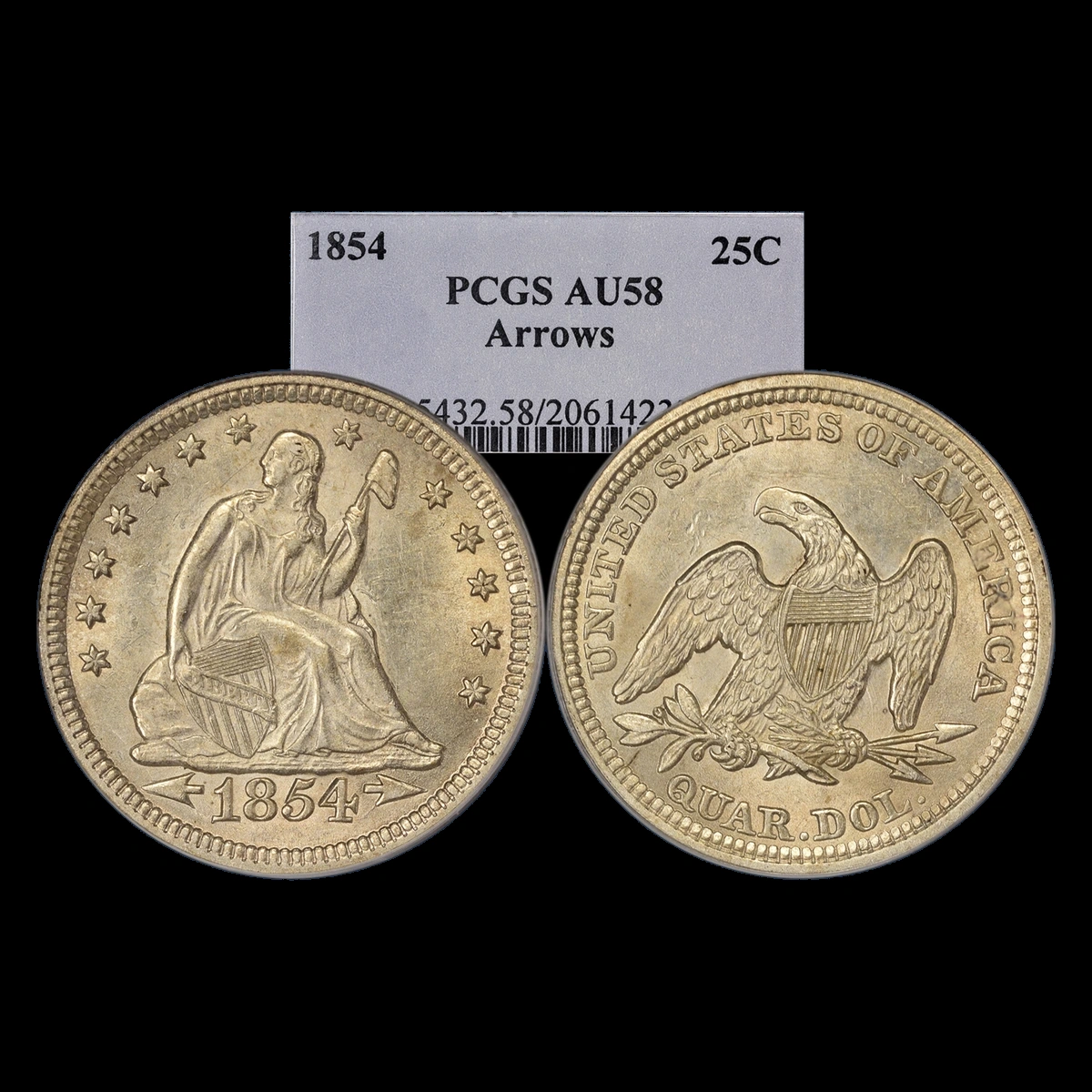
How to Identify
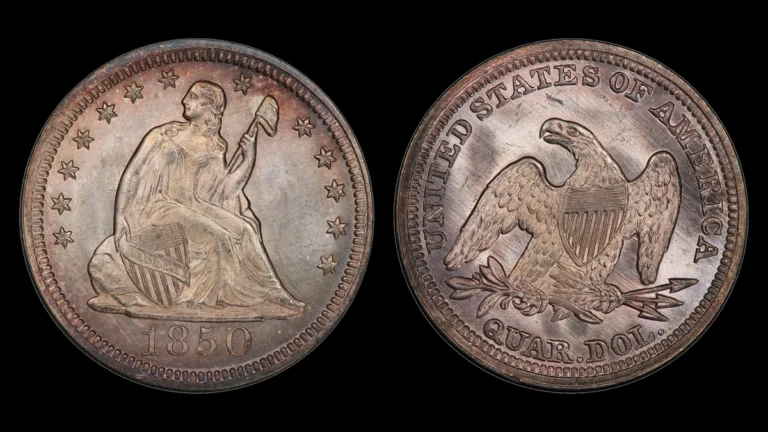
Align Liberty upright in a clear holder and flip it top to bottom without twisting sideways. A normally aligned quarter finishes with the eagle upright.
Repeat the movement while preserving the front’s starting orientation. Measure the reverse against a vertical guide rather than estimating from the spread of its wings.
Photographs independently rotated to look straight cannot establish this relationship. Keep the whole holder visible in both views.
What It’s Worth
Clearly demonstrated rotations on circulated quarters are estimated at $50–$500.
No completed sale was supplied for the two angles. A larger repeatable turn is easier to show, but wear, cleaning, and marks still affect the complete coin.
2. 1854 Quarter A high rim accompanies a shifted reverse: misaligned die Error
A Jim’s Coins catalog described a Very Fine 1854 quarter with a misaligned reverse and high rim. The reverse tool was off position relative to the normally centered front.
How to Identify
Compare the space from the outer lettering to the edge around each face. A shifted reverse with a centered front supports die misalignment.
Inspect the high rim from the side for an impact that pushed metal inward or flattened edge grooves. Rim height alone does not establish a striking error.
What It’s Worth
Comparable examples have an estimated range of $50–$600.
The catalog listing specified a $60 minimum bid. It did not supply a completed selling price.
3. 1854 Quarter An unstruck area remains beside missing design: off-center strike Error
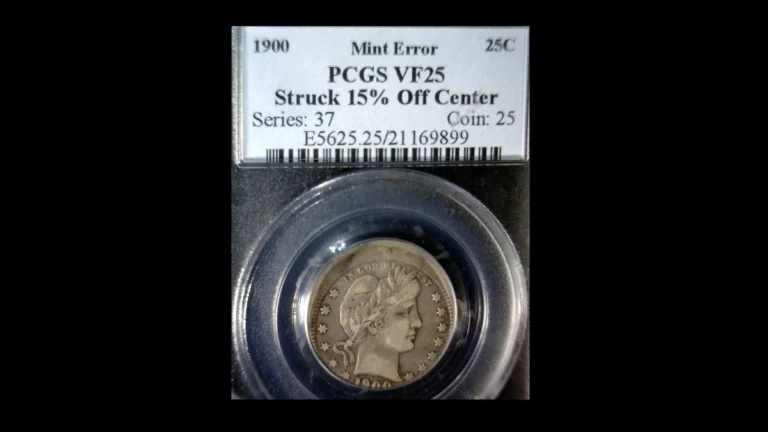
The documented NGC VF25 example is 25% off center. Part of the blank lay outside the dies, leaving bare silver while the opposite portion of the design missed the metal.
The percentage describes displacement, not a rotation angle. VF25 describes a moderately worn coin.
How to Identify
Locate the original unstruck area, then follow the design to the opposite edge. Both faces should show displacement consistent with the same blank position.
If the design remains complete inside an expanded border, consider broadstriking. If only one face moves, compare the misaligned-die category instead.
Normal references for this issue are about 24.3 millimeters and 6.22 grams. Wear or later filing can lower weight, so inspect the edge as well as the measurements.
What It’s Worth
Circulated examples with substantial displacement and clear identity are estimated at $500–$5,000.
Greysheet’s auction record reports $2,400 at Heritage on January 23, 2023 for the 25% off-center NGC VF25. A smaller shift or partly missing date needs a different comparison.
4. 1854 Quarter Raised lines and masses interrupt the design: die cracks and breaks Error
Philadelphia examples include breaks on either face and a reverse crack running from the lower-left border through the wings and shield. Silver filled openings in the damaged die to produce raised features.
A substantial break joined to the rim is called a cud. A separate New Orleans variety has a filled 4 and a lump above the right date arrow.
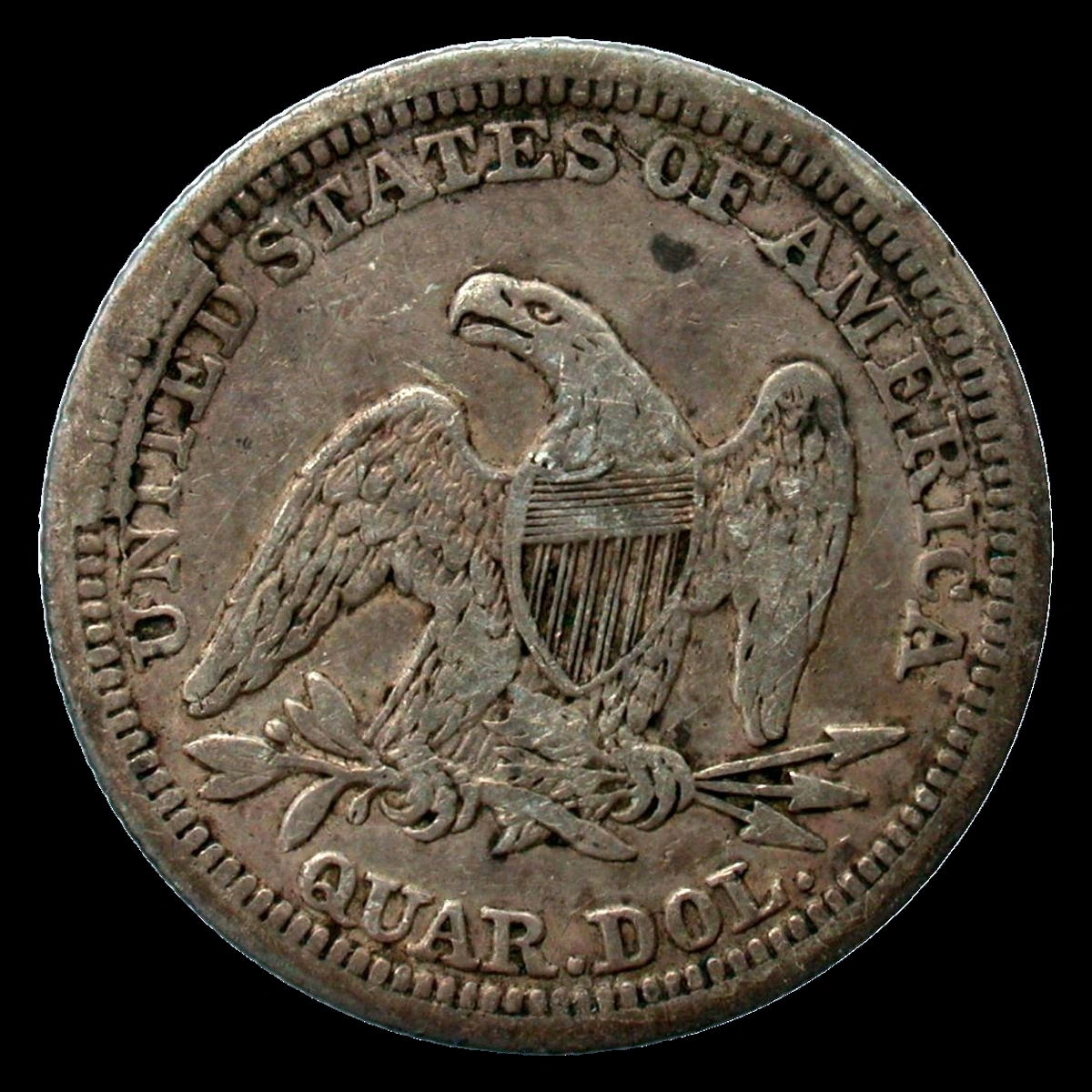
How to Identify
For the long Philadelphia crack, trace the route from about eight o’clock through the left wingtip, shield stripes, and right wing. Compare that complete raised path with its own reference.
For the New Orleans variety, confirm O below the eagle and compare the filled 4 with the lump above the right arrow in the published variety list. Do not add the Philadelphia route to this different pattern.
For a cud, inspect the rim connection and lost design. A retained break may preserve some detail because the broken steel remained partly in place.
What It’s Worth
Circulated coins across this group have an estimated whole-coin range of $30–$1,500.
Fine cracks may add little, while large breaks or a clear filled-date pattern can attract more interest. No exact transaction accompanies these descriptions.
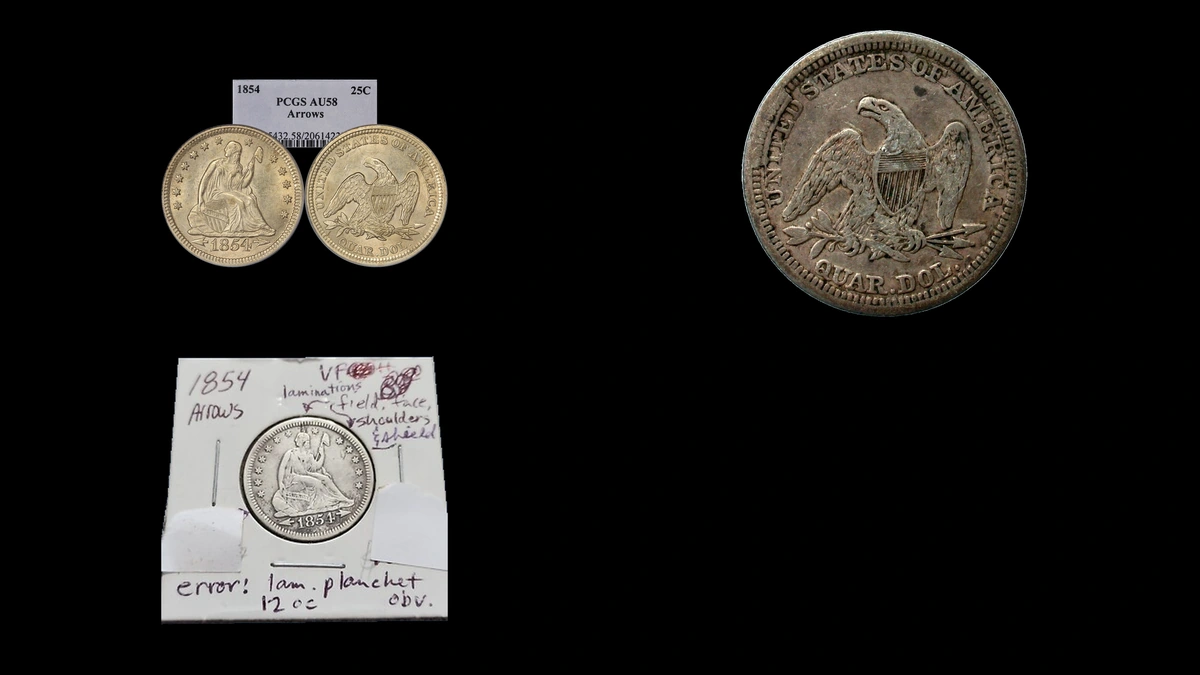
5. 1854 Quarter A front surface patch separates: lamination on a Huge O Error
A collector described a Fine-plus 1854-O Huge O quarter with a small front lamination. The thin separation is a metal fault, while the oversized mint mark is a separate variety feature.
Weakness within the alloy can allow a surface layer to peel. That process does not create the large O.
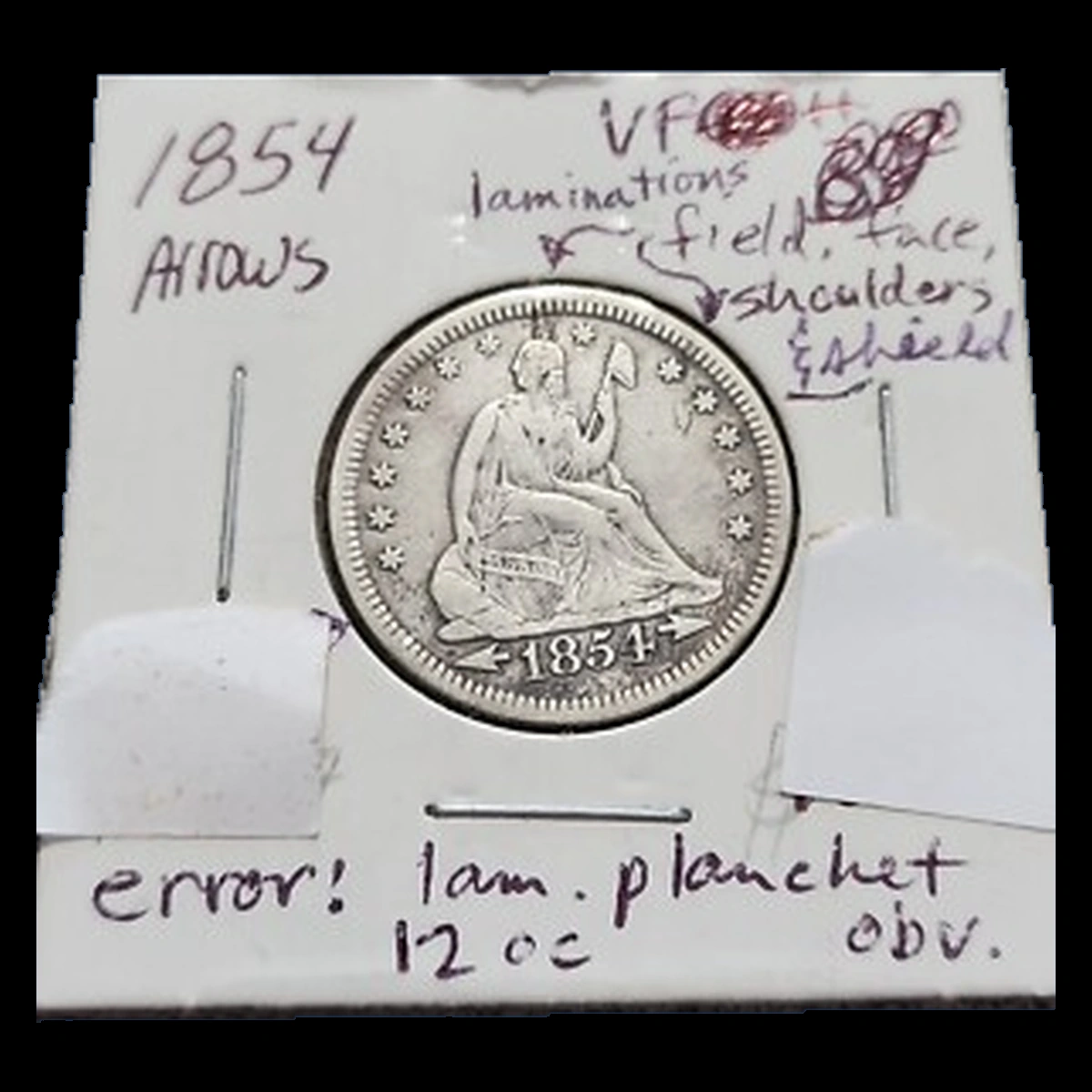
How to Identify
First compare the unusually large, irregular O with a recognized Huge O reference. A merely thick-looking mint mark is not enough.
Then inspect the front patch for a lifted edge, thin broken layer, or shallow rough area left by separation. Leave attached metal untouched.
A scrape can leave tool marks across the design, while corrosion more often produces pits. Find a real layer boundary before naming a rough spot as lamination.
What It’s Worth
A circulated Huge O with a small lamination is estimated at $700–$6,000 as a complete coin.
The collector’s published account records a $45 purchase after recognizing an overlooked variety. That bargain is not a normal retail benchmark.
Much of the value belongs to the scarce Huge O variety. A distracting peel may reduce what a variety collector pays rather than add a large premium.
Conclusion
Two-face comparisons distinguish rotation, one-sided misalignment, and an off-center strike. Raised cracks and separating silver need closer surface examination because they come from different stages of production.
The $2,400 transaction belongs to the documented 25% off-center quarter. For the laminated Huge O, establish the scarce mint-mark variety independently and remember that the recorded $45 purchase was an overlooked bargain, not a typical market price.