Rare 1882 Dime Errors (List & Pictures)
An MS67+ 1882 F-105 dime brought $3,840 in February 2022, combining exceptional preservation with a small misplaced fragment in Liberty’s base. Estimated whole-coin values for 1882 dime errors run from $20 to $4,500.
Use the 2 as a starting point, then inspect the base, gown, and reverse before checking the edge. Standard measurements are 2.50 grams and 17.9 millimeters.
| Starting point | Feature | Estimated whole-coin range |
|---|---|---|
| Top of 2 | Broken date punch | $20–$600 |
| Beside date digits | Repunched date | $30–$1,200 circulation; $300–$3,500 Proof |
| Base above final 8 and 2 | Misplaced digit | $40–$4,500 by condition |
| Gown beside shield | Die defect | $40–$1,000 |
| ONE DIME | Weak denomination transfer | $40–$900 |
| Front or wreath lines | Die cracks | $25–$1,500 |
| Reverse fields | Die clash | $30–$750 |
| Straight missing top edge | Planchet clip | $150–$1,200 |
1. 1882 Dime The upper curve of 2 is interrupted: broken date punch Error
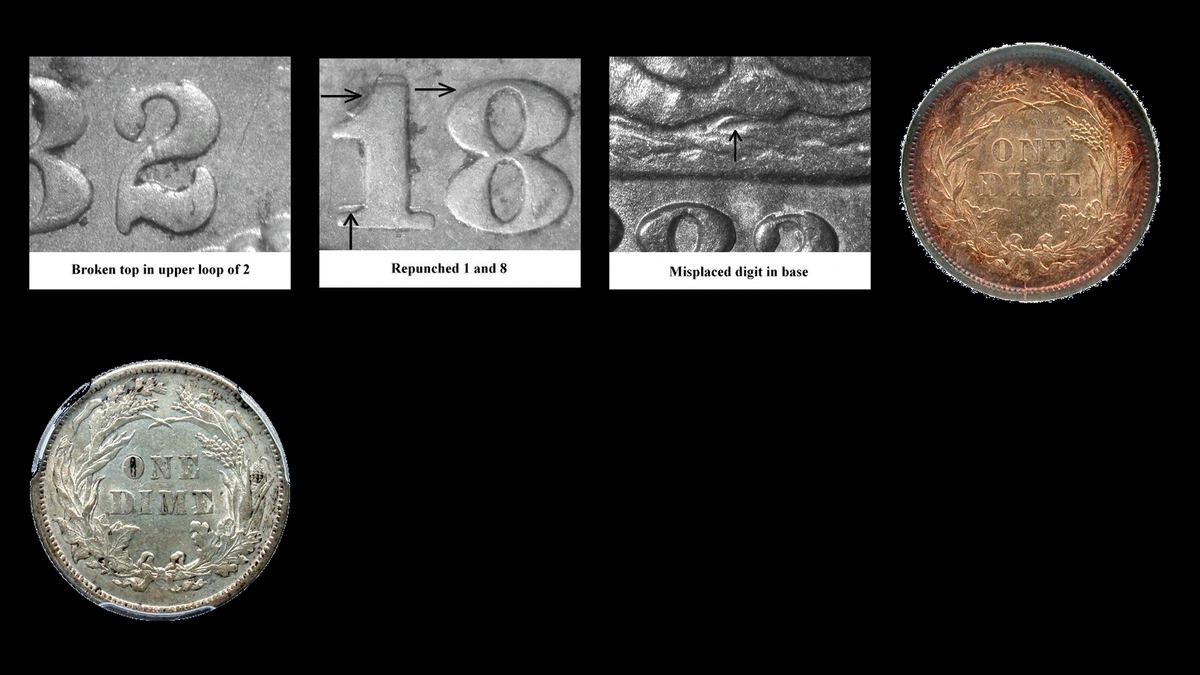
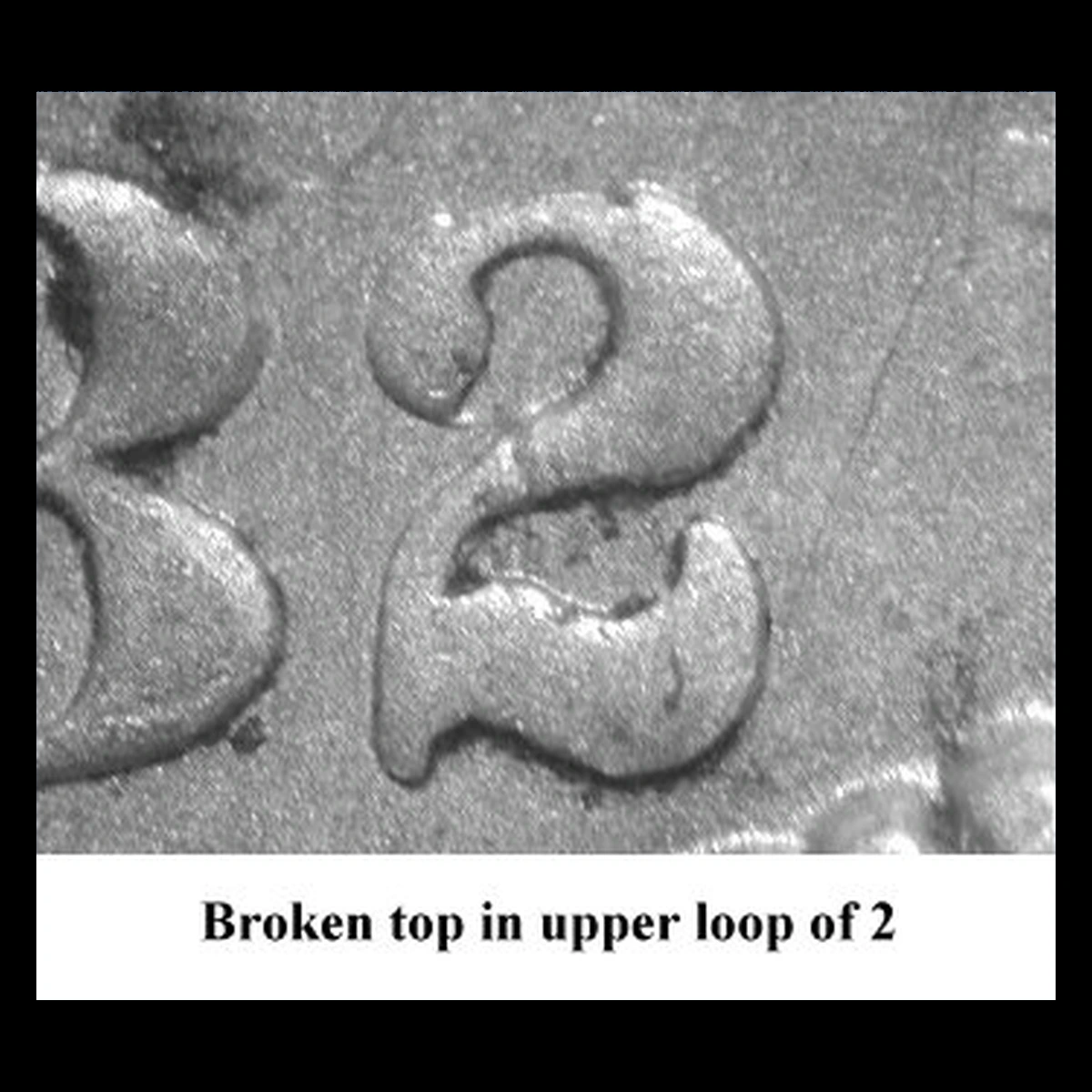
A small gap appears at the top of the 2 on several Philadelphia circulation varieties. The damage began in the date punch used to prepare their dies, allowing different tools to reproduce the same missing piece.
The F-101 Proof has an intact upper 2 and separate repeated detail elsewhere on that digit. Its complete curve is a useful contrast, not evidence that every circulation example has suffered later damage.
How to Identify
Study the interruption while keeping the neighboring digits visible. The expected gap can coexist with otherwise normal date detail.
Check its edges for a nick cutting through an already struck number. General wear usually softens other exposed details too, whereas the broken punch leaves a recurring localized feature.
Use a documented Philadelphia circulation comparison. The same flaw appearing on several dies means that the gap alone does not identify one scarce die pair.
What It’s Worth
Circulated through lower-grade unworn examples have an estimated whole-coin range of $20–$600. The repeated use of the broken punch limits what the gap alone can establish about rarity.
PCGS records an F-102 repunched-date MS63 at $185 in 2021; that variety also carries the punch flaw. The result covers its complete condition and features rather than pricing the missing curve separately.
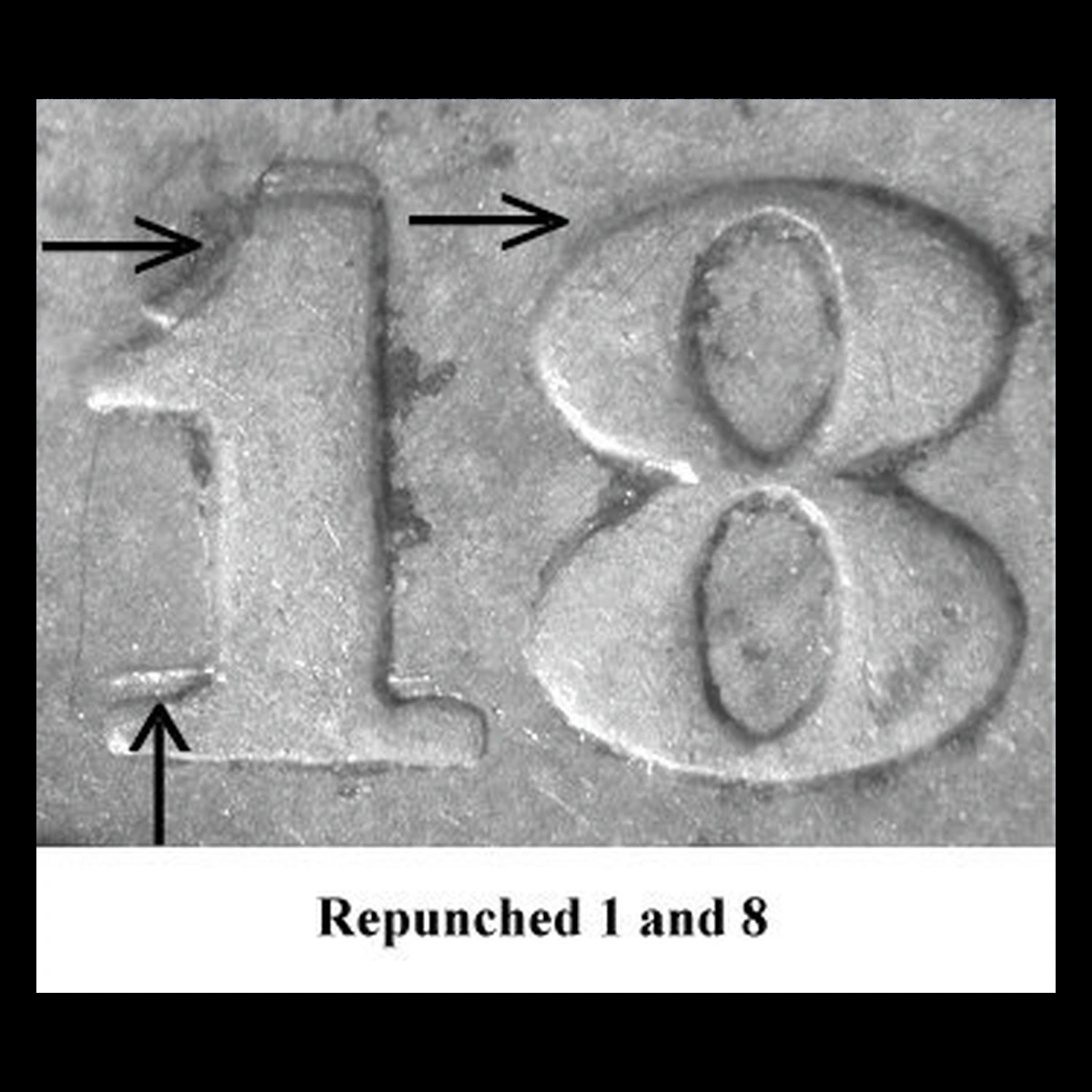
2. 1882 Dime Raised remnants beside the date: repunched date Error
F-102 has earlier strokes above the 1 and around both sides of its base, with another curve at the first 8’s upper loop. These additions survived repeated placement of the date punch.
Other varieties carry remnants inside the upper 2 or beneath its base. The beneath-base pattern belongs to Proof-related tools that also saw later circulation use.
How to Identify
Choose one recorded pattern and match its specific digits. Do not assemble the F-102 18, the internal 2 trace, and the beneath-base trace into a required pattern on one coin.
Record a broken gap at the top of 2 separately: missing detail does not demonstrate an earlier numeral outline. Repunching requires an added raised remnant in the correct position.
Judge the finish from the whole coin. Reuse of a Proof die does not turn every circulation strike from that tool into a collector Proof.
What It’s Worth
Identified circulation examples are estimated at $30–$1,200 from worn through lower-grade unworn condition. Collectible lower-to-middle-grade Proofs form a separate $300–$3,500 whole-coin group.
The recorded MS63 F-102 sale was $185 on October 2, 2021. That benchmark belongs to the circulation variety and cannot price every separate 2 pattern or Proof finish.
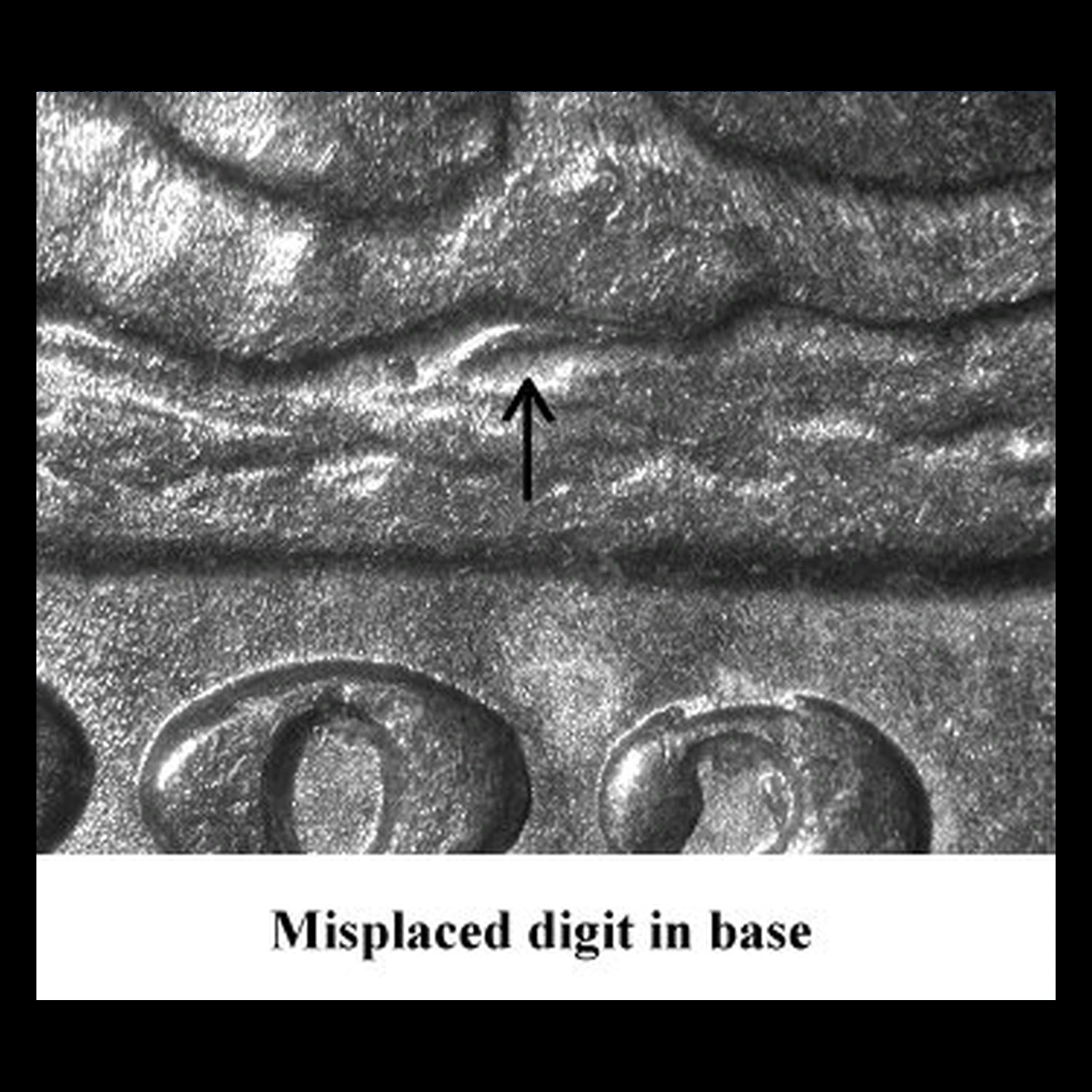
3. 1882 Dime A small fragment above the final date gap: misplaced digit Error
F-105 has an extra raised shape within Liberty’s base, directly above the space between the final 8 and 2. The specialist interpretation is a misplaced digit, possibly the top of an 8.
The position is more certain than the original digit’s identity. The same die also has a repeated 2 and other supporting features.
How to Identify
Keep the date in view as you locate the point above its last gap. Compare the complete small raised shape with F-105, rather than deciding from a detached closeup.
A rock line or scratch can suggest a numeral when its setting is hidden. Check the repeated 2 and the rest of both faces to support the attribution.
Describe the fragment without insisting that it is a proven extra 8. Recognizing the variety does not require resolving a suggested interpretation beyond the evidence.
What It’s Worth
Typical circulated through lower-grade unworn examples are estimated at $40–$1,200; exceptional MS67+ quality belongs around $3,000–$4,500. Both are whole-coin ranges.
PCGS records the MS67+ F-105 at $3,840 from Heritage on February 27, 2022. The result includes its date features and outstanding surfaces, not a separate payment for each tiny mark.
4. 1882 Dime Raised metal on the gown beside the shield: die defect Error
On F-111, a raised mass sits immediately right of the shield’s horizontal lines. Its documented description is a die defect, without assigning a particular cause such as rust or drilling.
A hollow in a die can fill with metal and leave a raised shape during striking. Material added to a finished coin has a different origin.
How to Identify
Locate the shield lines and move directly onto the adjacent gown. Follow the outline of the mass and its connection with the surrounding struck design.
Do not scrape or probe it to test whether it is attached material. An attachment boundary or loose deposit calls for a different explanation.
Compare the complete F-111 die pair because another variety also has a gown lump. Similar location alone does not identify the same tool.
What It’s Worth
Circulated through lower-grade unworn examples with the original feature are estimated at $40–$1,000. No sale of the illustrated F-111 is supplied.
A clear outline on preserved surfaces provides a stronger comparison than a worn or corroded lump. The feature must belong to the original strike before a variety allowance is useful.
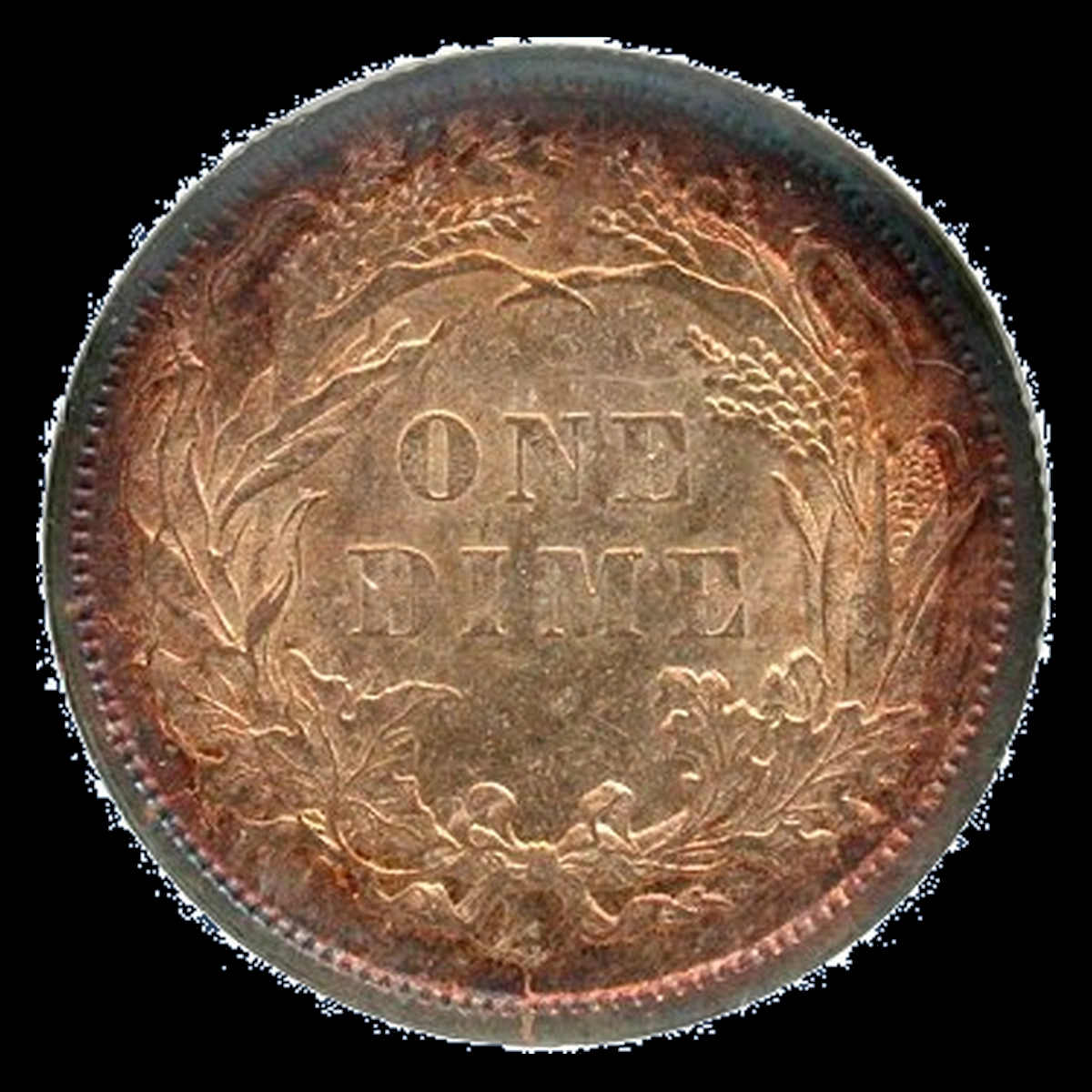
5. 1882 Dime Shallow ONE DIME inside a stronger wreath: weak denomination transfer Error
F-108a shows unusually shallow denomination letters despite better wreath detail, including on an NGC MS64 example. That contrast cannot simply be explained as heavy circulation wear.
The revised specialist account attributes it to incomplete transfer from the master tool into the working die. This superseded an earlier polishing explanation.
How to Identify
Compare the depth of ONE DIME directly with the leaves. Selective shallow letters deserve closer study, while an entire reverse worn smooth offers much weaker evidence.
Check the supporting crack below the bow, through the left wreath, and toward the rim near ten o’clock. Both the shallow lettering and the matching crack route should belong to the same candidate.
Ordinary weak striking can also reduce letter detail. The complete F-108a pattern is more informative than missing letters alone.
What It’s Worth
Collectible worn through roughly MS64 examples with a convincing match are estimated at $40–$900. The range is not a recorded F-108a auction price.
Surrounding detail and original surfaces determine how useful a comparison is. Normal measurements cannot establish either this die-transfer explanation or a premium.
6. 1882 Dime A route from STATES or through the wreath: die cracks Error
The F-105 front has a raised line from the final S of STATES across Liberty’s head toward the cap. Its base fragment and repeated 2 supply additional identifying information.
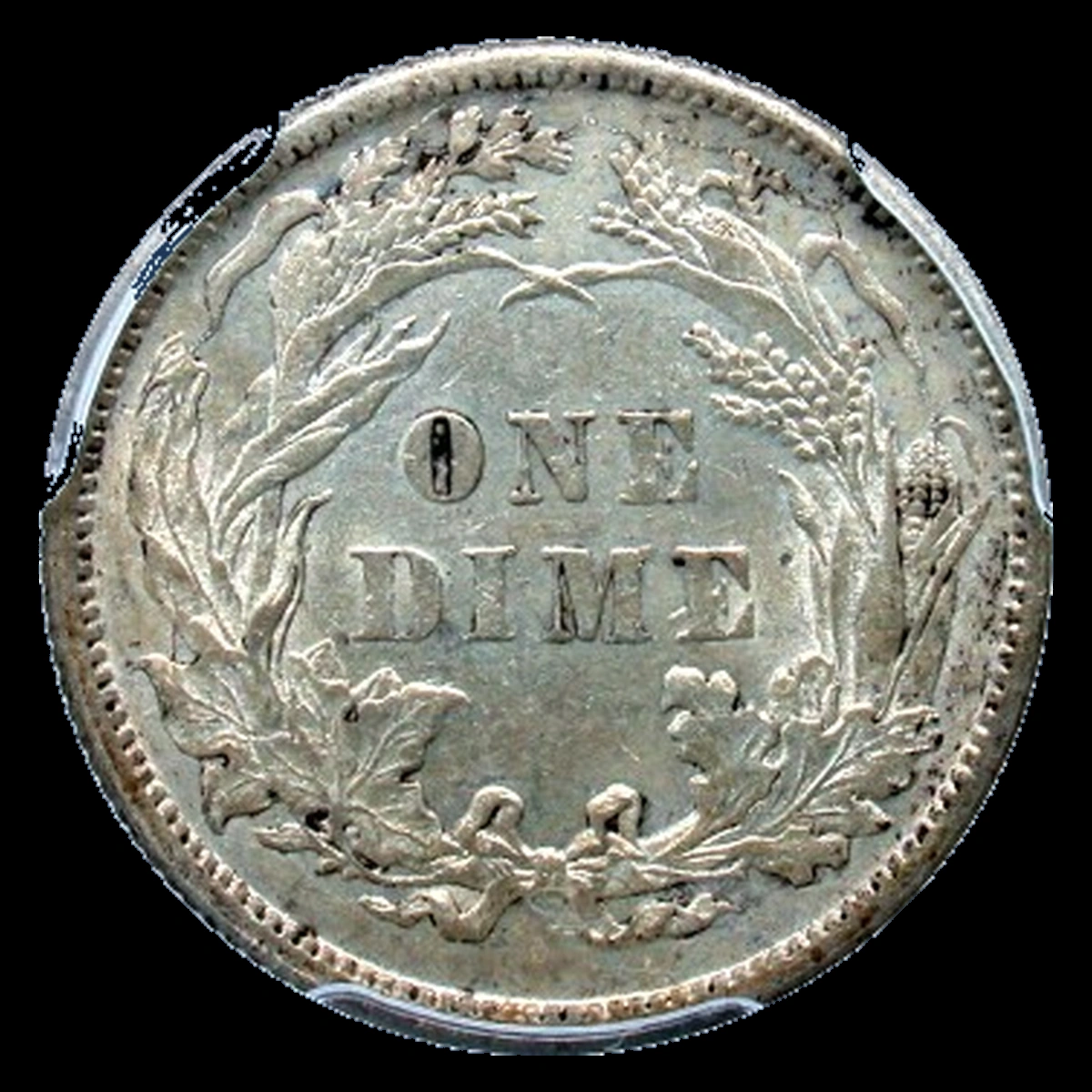
A separate reverse route runs from below the bow through the left wreath to about ten o’clock. Metal entering cracks in the dies created these ridges during striking.
How to Identify
Choose the appropriate face and trace from one named landmark to the next. The STATES-to-head route and bow-to-wreath route are separate comparisons.
Shine light from both sides to distinguish a ridge from a dark scratched groove. An isolated segment in the right general area does not establish the complete pattern.
Other varieties have their own wreath cracks. Do not treat every raised reverse line as the same die stage.
What It’s Worth
Visible matching cracks on circulated through roughly MS64 coins have an estimated whole-coin range of $25–$1,500. Exceptional grades require their own comparisons.
The $3,840 MS67+ F-105 also has misplaced and repunched-date features. Its outstanding preservation, not just the crack, places it beyond the ordinary range.
7. 1882 Dime Opposing-design traces on the reverse: die clash Error
F-102 has reverse clash traces as well as wreath cracks. A clash arises when the dies meet without a blank and acquire marks from each other’s designs.
The reference does not map every contour to one fixed reverse spot. The relevant evidence is a recognizable shape from the front, not simply an unusual line.
How to Identify
Confirm the F-102 date pattern, then compare both designs at a similar scale. Identify a reverse contour that makes sense as transferred front-side detail.
Trace wreath cracks independently. A split in the die can produce a ridge without copying anything from the opposite face.
Changing light may help reveal faint shapes, but counting unexplained lines is not an attribution method. The contour needs an actual design match.
What It’s Worth
Worn through lower-grade unworn F-102 examples with recognizable clashes are estimated at $30–$750. This describes the complete coin and its condition.
The $185 MS63 F-102 sale supplies same-variety context. It does not measure a clash premium independently of the date features, preservation, and other marks.
8. 1882 Dime A straight section missing at the top: planchet clip Error
A 1979 catalog describes an 1882 dime with about 5% missing at twelve o’clock in a straight-end clip. No modern certification or realized price is supplied.
A straight clip can form when the blank-cutting punch crosses the edge of the metal strip. The incomplete disc then receives its design, unlike a finished coin filed flat afterward.
How to Identify
Inspect both endpoints of the straight boundary and the surviving rim. Natural striking detail should show how metal formed around the pre-existing gap.
Parallel file marks or a freshly sheared wall favor later removal. A neat straight outline by itself proves little.
Measure intact spans and check the surviving reeding. Weight loss also includes wear, so it cannot directly confirm the historical 5% description.
What It’s Worth
Genuine circulated through lightly worn 1882 examples have an estimated whole-coin range of $150–$1,200. The actual condition and authenticity of the boundary are central.
A 1906 Barber dime with a 12% straight clip, graded PCGS MS62, sold for $288 in July 2021. This is a different-design, different-year mechanism comparison with a larger gap, not a sale of the historical 1882 coin.
Conclusion
The date alone offers several different questions: a missing curve, an added numeral outline, and a misplaced fragment above the normal numbers. The gown and reverse add further clues that require their own shape-and-position matches.
Several features can belong to one die pair without generating separate prices. Keep the exceptional F-105 sale, the ordinary F-102 benchmark, and the estimated categories attached to the coins they actually describe.