Rare 1883 Dime Errors (List & Pictures)
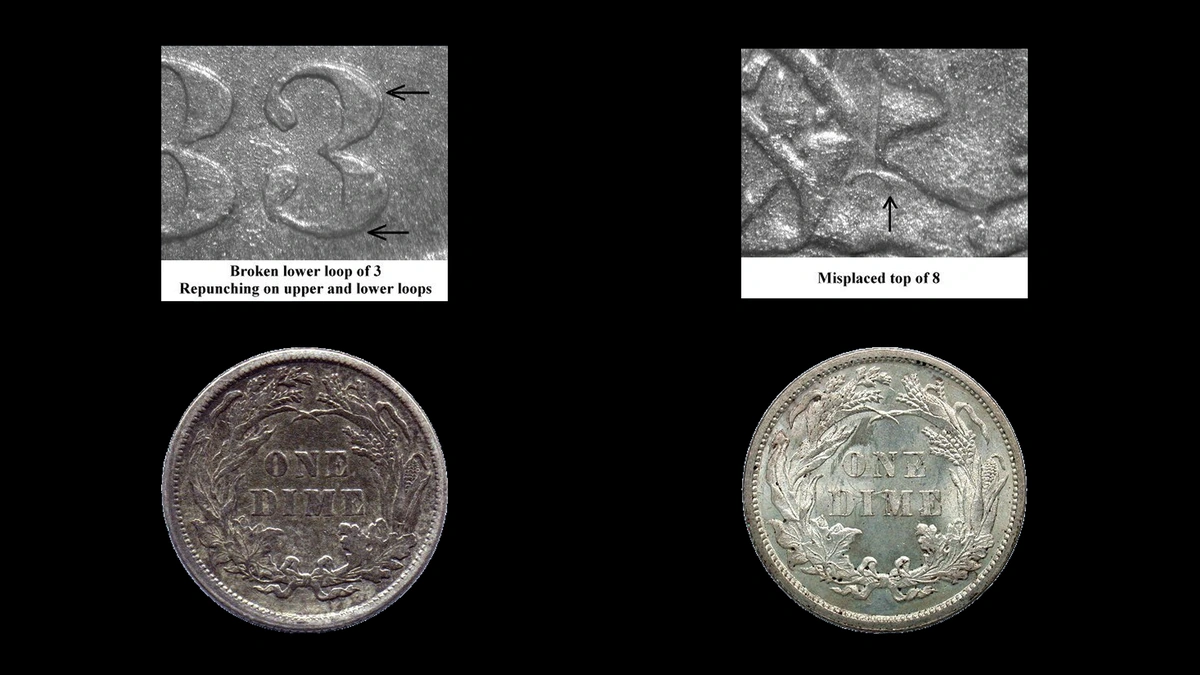
An exceptional F-108 graded MS68 sold for $7,344 in October 2014, with preservation accounting for much of its value alongside recorded clashes. Ordinary collecting estimates for the 1883 dime errors below span $20–$3,500.
Separate the incomplete date punch from extra and misplaced numerals, then compare reverse lines, rim breaks, and shifted designs with the correct individual specimen.
| Location | Feature | Estimated range |
|---|---|---|
| Final 3 | Broken date punch | $20–$500 |
| Loops of 3 or 83 | Repunched date | $30–$1,200 |
| Scroll area or rim teeth | Misplaced 8 | $50–$1,500 |
| Wreath | Die cracks | $20–$600 |
| Opposite-design traces | Die clash | $30–$1,000 |
| Top obverse rim | Reported cud | $150–$2,000 |
| Blank margin and cropped design | Off-center strike | $500–$3,500 |
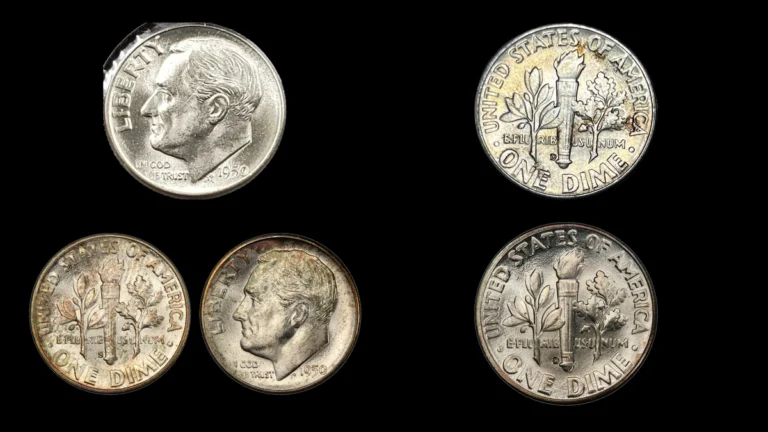
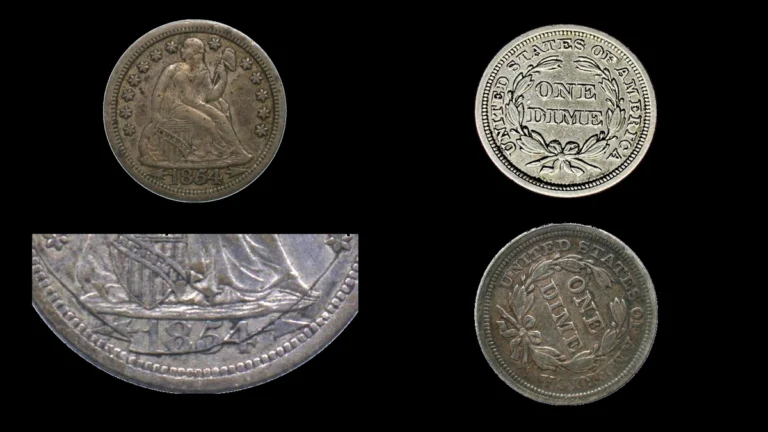
The Philadelphia varieties discussed here have no mint letter. A normal 90% silver dime starts at 2.50 grams and 17.9 millimeters, with a grooved edge; several small die features can coexist on one coin.
1. 1883 Dime A Repeated Interruption in 3: Broken Date Punch Error
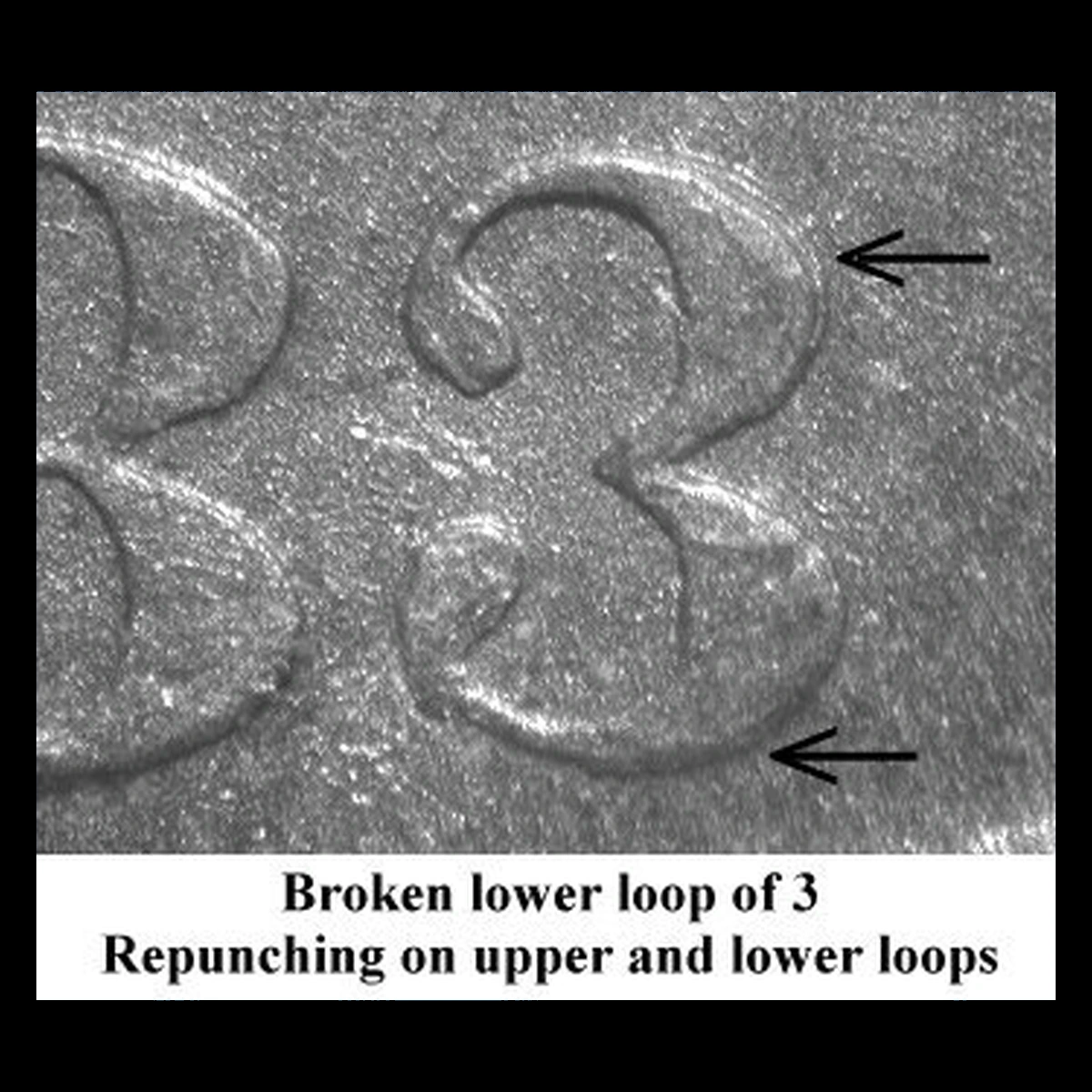
A damaged numeral punch transferred an incomplete final 3 into several dies. Those tools repeated the same interruption on the coins rather than each dime suffering an individual injury.
F-104 and F-105 are among the Philadelphia varieties using a Broken 3. Other pairings combine that numeral with repunching or a misplaced number, so its shape is only the beginning of attribution.
How to Identify
Keep both loops of 3 and the surrounding field visible when comparing the 1883 variety photographs. Match the specific missing shape, not just general weakness.
Wear can flatten much of the numeral, while a contact mark can remove a localized stroke. Neither necessarily follows the repeatable outline of the damaged punch.
What It’s Worth
Collectible worn through roughly MS63 examples are estimated at $20–$500. Ordinary Philadelphia MS61 and MS63 coins sold for $216 in December 2025 and $305 in April 2026 respectively, without a separately established Broken 3 premium.
2. 1883 Dime Earlier Curves around 3 or 83: Repunched Date Error
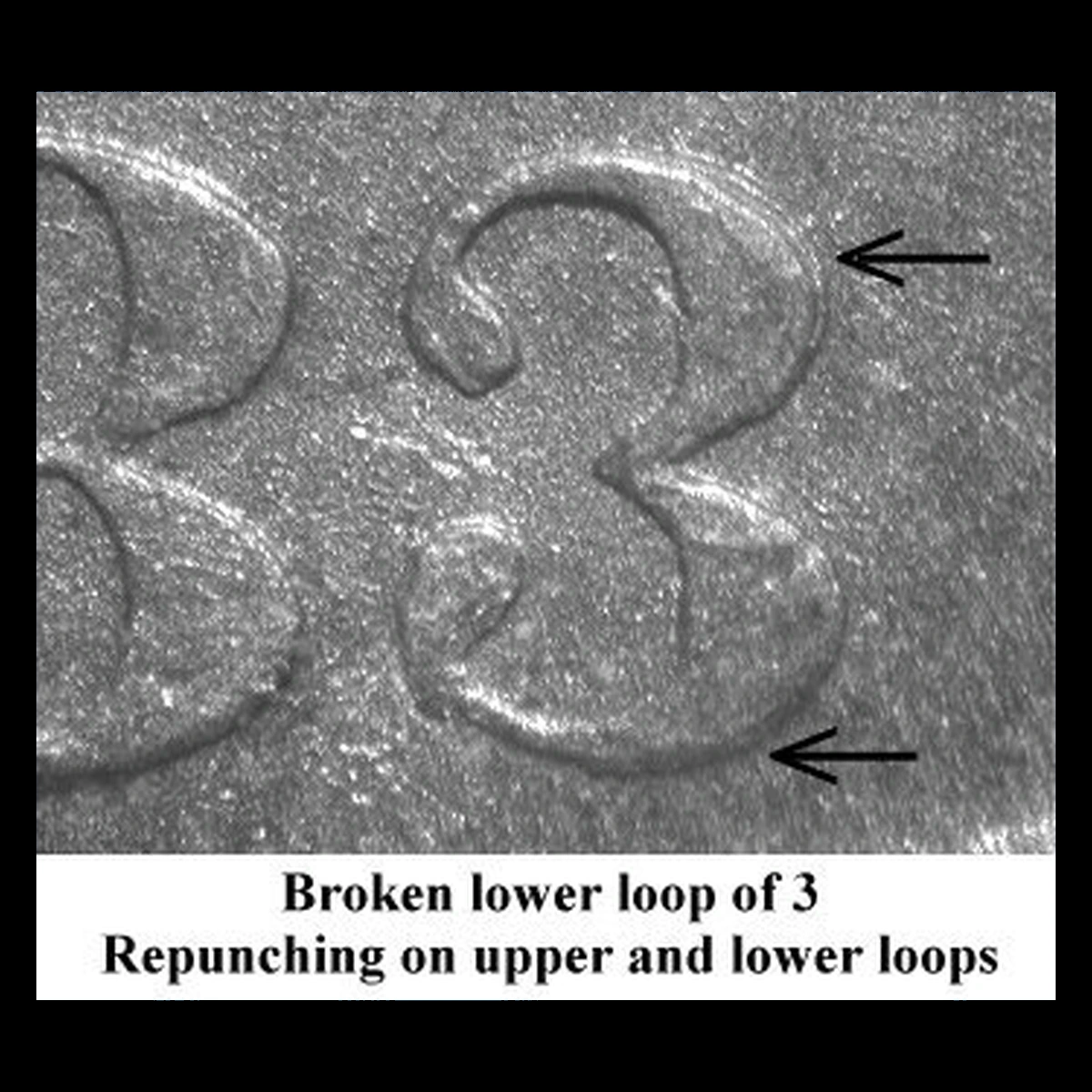
One reported pattern has extra pieces at the upper loop’s right side and lower loop’s base on 3. Another places remnants inside the upper loops of 83.
These belong to separate die patterns created by repeated date punching. Repunching can occur with either a Broken 3 or a Complete 3, so incompleteness alone does not prove a second entry.
How to Identify
Compare the full date before enlarging the affected loops. Choose the reference for the actual arrangement instead of combining separate numeral remnants into one supposed variety.
Earlier strokes should form raised portions of recognizable numbers. Flat shelves, scratches, and the ordinary edges of a broken punch need different interpretations.
What It’s Worth
Matched repunched dates are estimated at $30–$1,200 from circulated through attractive unworn condition. Ordinary MS63 and MS64 results of $305 and $397 show the role of preservation but are not supplied sales of these particular patterns.
3. 1883 Dime An 8 outside the Normal Date: Misplaced Numeral Error
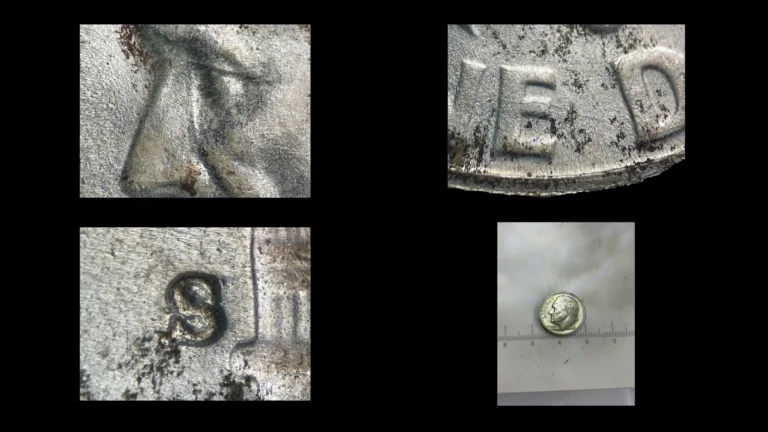
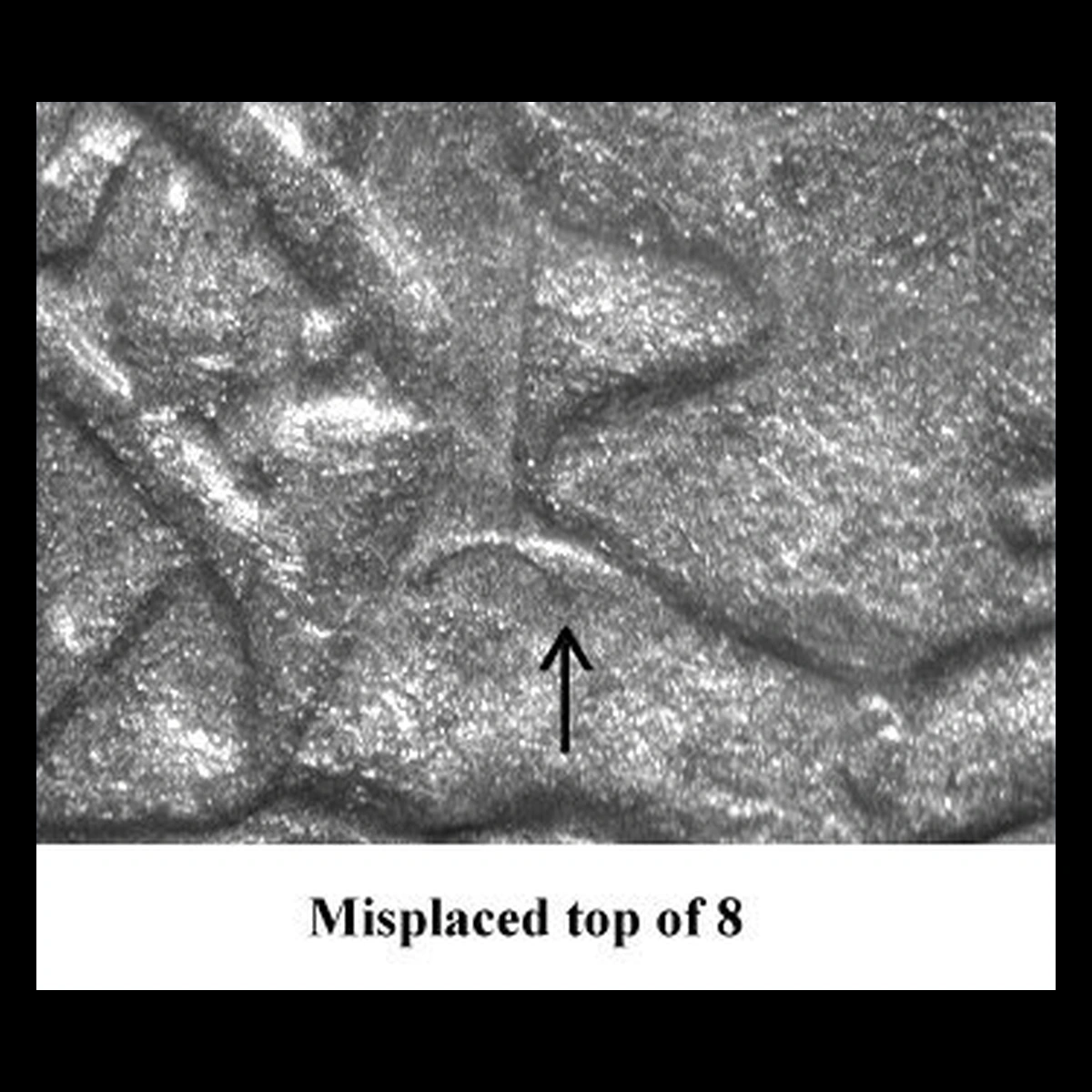
F-106 has an extra 8 fragment near the right end of Liberty’s scroll and adjoining gown. F-107 instead places part of 8 among the rim teeth below the date.
The number punch entered the wrong part of the die. F-106 also combines repunching with a Broken 3, while F-107 uses a Complete 3; those facts describe different coins.
How to Identify
Frame Liberty’s lower design and the entire date so the extra shape retains its position. Decide whether the candidate is at the scroll or rim before comparing the curve with the appropriate reference.
A distorted rim tooth or stray scratch can suggest a numeral without matching it. Companion date features support an F-106 identification but do not replace the misplaced 8 itself.
What It’s Worth
Estimated whole-coin values are $50–$1,500. No completed F-106 or F-107 sale is supplied for this range, and the separate sections on Broken 3 and repunching must not be added to it for a single combined specimen.
4. 1883 Dime Raised Lines through the Wreath: Die Cracks Error
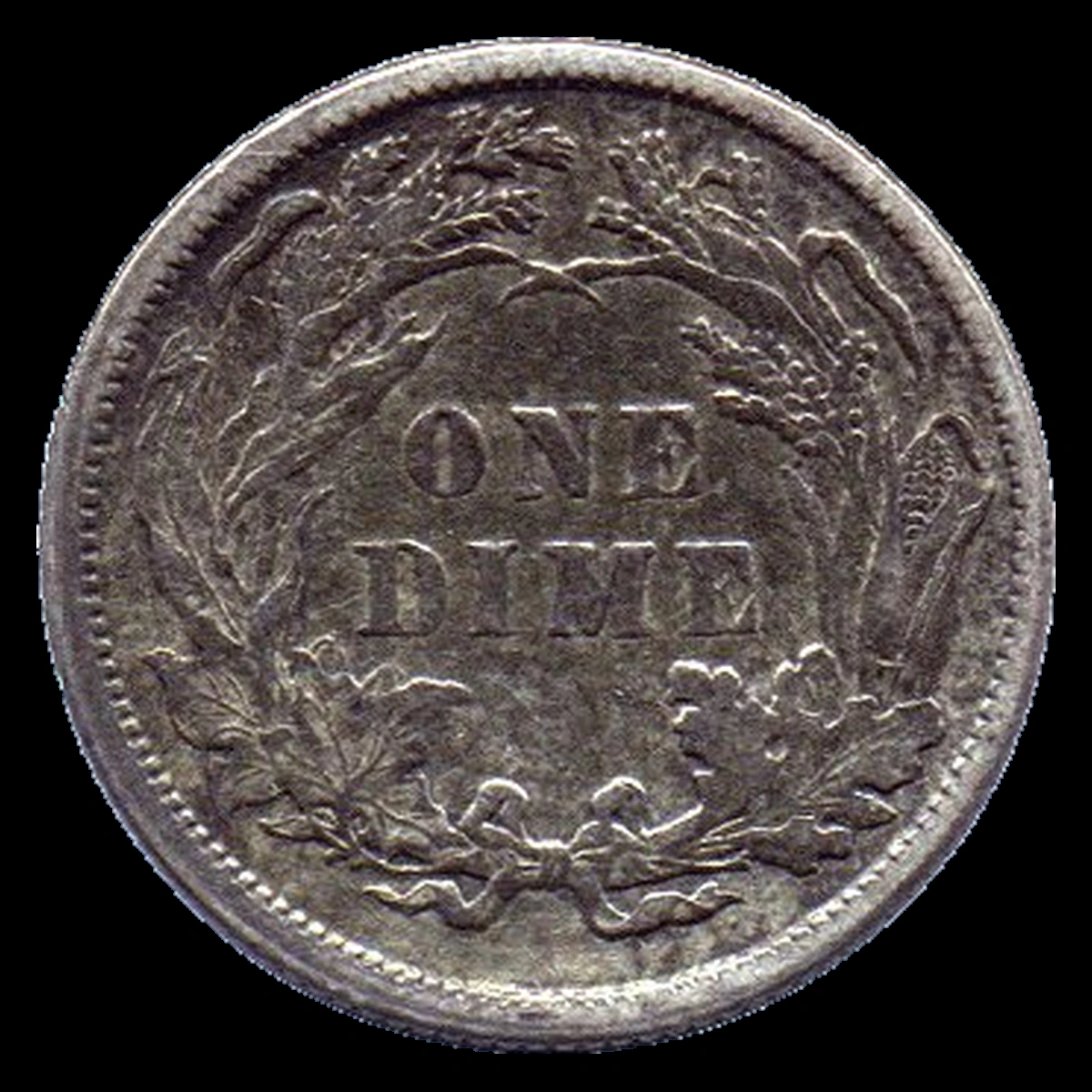
Several reverse dies developed narrow openings that filled with silver during striking. Their coins show raised wreath lines, with no universal route shared by every 1883 pairing.
F-104 and F-105 combine wreath cracking with a Broken 3, while other cracked reverses accompany complete numerals. F-113 also has reverse clash traces, adding another kind of mark in the same general area.
How to Identify
Trace the full raised route under side lighting, then use the date style to select the matching pairing. Avoid combining a reverse from one reference with a date from another.
A scratch cuts into the field, and a clash should relate to part of the opposite design. Examine each line independently where multiple effects occur together.
What It’s Worth
Circulated through modest unworn examples are estimated at $20–$600. A normal-date PCGS MS64 sold for $397 in June 2025 as a condition comparison, not a separately priced crack result.
A larger network may interest specialists, but its branches remain parts of one developing die failure. Each line does not create another full value to add.
5. 1883 Dime Faint Fragments of the Other Face: Clashed Dies Error
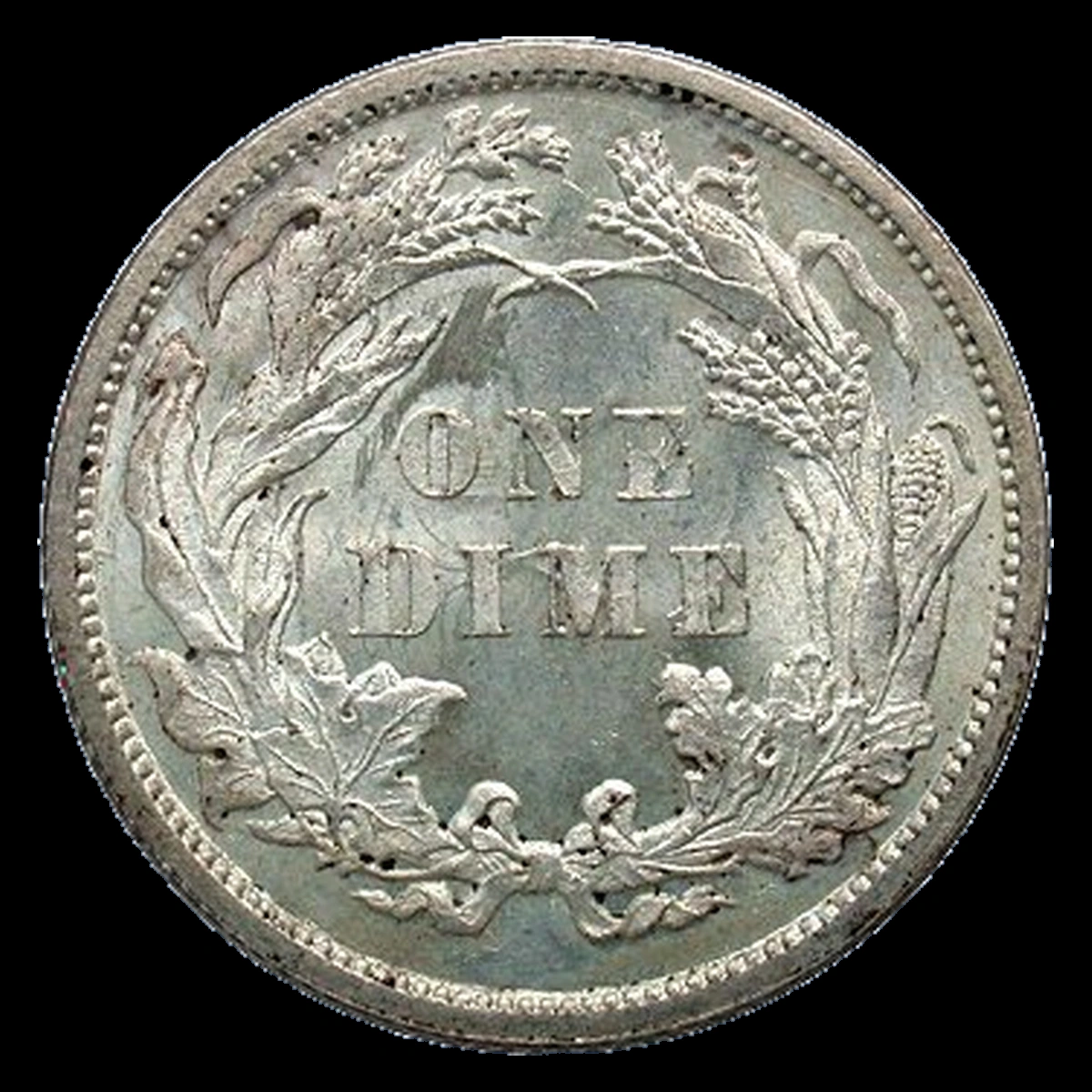
F-108 and F-118 have recorded clashes on both sides, while F-113 has reverse clash marks alongside wreath cracks. The dies contacted one another without a blank and later transferred the resulting extra shapes to coins.
The catalog gives no single location common to every clash. Each pattern must fit its own opposing design and die pairing.
How to Identify
Compare both faces in their proper relationship and identify the design fragment that could produce each trace. A meaningful matching shape is stronger evidence than a collection of unexplained thin lines.
Take particular care with F-113, where a raised crack and a copied outline may coexist. Their mechanisms differ even though they appear on the same reverse.
What It’s Worth
The ordinary collecting estimate is $30–$1,000 through about MS64. An exceptional NGC MS68 F-108 brought $7,344 in October 2014, outside that range.
MS68 signifies exceptionally fine preservation with very few imperfections. The total cannot be transferred to a worn F-108 simply because it shares the clash-bearing pairing.
6. 1883 Dime A Raised Patch at 12 O’Clock: Reported Obverse Cud Error
A seller offered an 1883 dime described as having an obverse cud at the top rim. The supplied report has no professional attribution or established sale history.
A genuine cud forms when metal fills the gap left by a broken-off section at the die’s edge. The resulting raised patch reaches the rim and replaces normal design.
How to Identify
Follow the patch inward from the top edge and determine whether it replaces details rather than merely lying over completed design. Check the opposite face for possible weakness associated with the same affected area.
Inspect the edge and boundary for solder, impact distortion, or tool marks. Location alone cannot distinguish a real cud from added metal or a folded rim.
What It’s Worth
A genuine conspicuous rim cud is provisionally estimated at $150–$2,000. No completed sale or certified grade is supplied for the offered coin, and the upper range assumes a substantial break with sound surfaces.
7. 1883 Dime A Clear Date beside a Large Blank Margin: Off-Center Strike Error
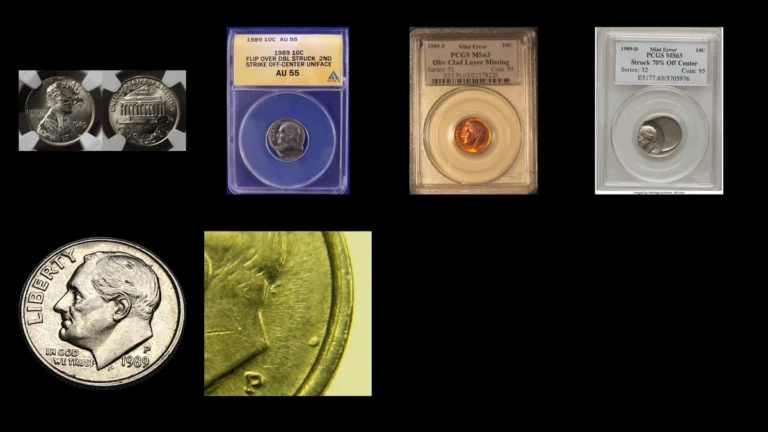
The 2014 ANA catalog describes a PCGS AU53 dime struck 30% off center just short of 12 o’clock, with a sharp surviving date. A historical Very Fine specimen instead has a 25% shift toward 3 o’clock.
Those directions and percentages belong to two separate coins. Each began with a blank misplaced between the dies, leaving untouched metal alongside incomplete designs.
How to Identify
Use complete views of both sides to match the date, displacement, and struck-to-blank boundary with the appropriate specimen. A one-face shift can involve a misaligned die instead.
Check the apparently blank area for filing or flattening and inspect surviving edge grooves. The outline may spread, but grinding marks do not belong to original unstruck surface.
What It’s Worth
Circulated through lightly worn examples with substantial shifts and readable dates are estimated at $500–$3,500. The 2014 ANA catalog documents the 30% AU53, without a sale result used here.
The range is therefore an appraisal, not an amount paid for that coin or the older 25% specimen. Original surfaces and the clarity of the displacement guide comparison.
Conclusion
Use the date to separate a damaged numeral punch, repeated number entry, and a numeral placed outside its intended location. Then match the correct reverse crack or clash pattern and inspect the rim and outline independently.
Several features may identify one die pairing, but they still belong to one coin’s value; the exceptional MS68 result requires a very different preservation comparison from ordinary circulated examples.