Rare 2002 Dime Errors (List & Pictures)
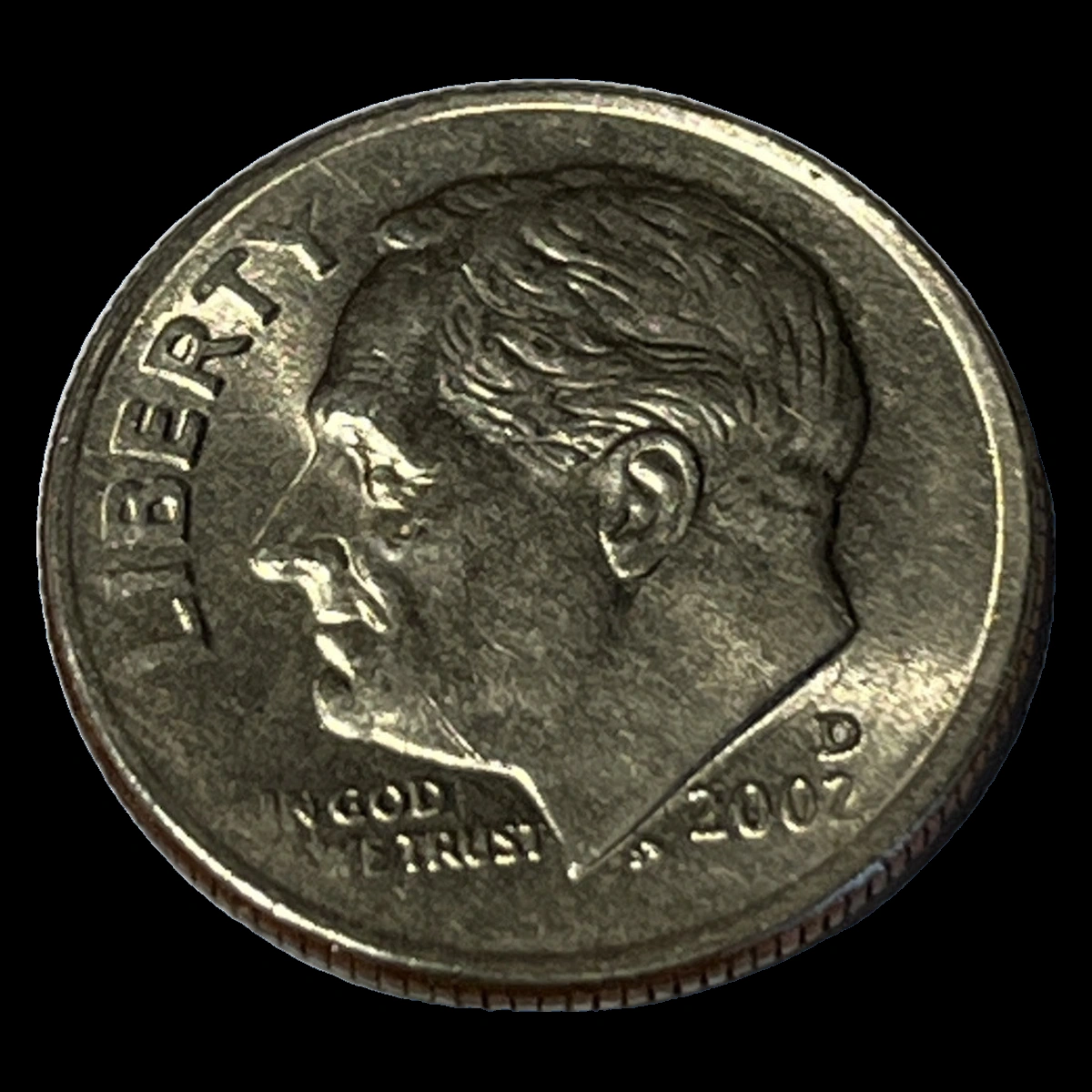
A bow-tie-shaped mark on one 2002-D dime came from scrap metal caught in the press. A published sales table recorded $818.08 for that distinct impression.
These 2002 dime errors cover estimated values of $5–$1,500. Some change only a small surface detail; others leave missing metal, repeated designs, or a folded shape that needs a closer look.
1. 2002 Dime A Bow-Tie Impression or Weak Patch: Struck Through Material Error
Scrap between a die and blank can block the design and leave its own outline. The documented Denver example received a bow-tie-shaped impression on the back.
Other reports concern weak parts of the date and motto. A weak letter does not establish the same scrap shape or material.
How to Identify
For the Denver scrap example, inspect the back for a depression with a narrow middle and wider ends. Its precise position must come from the actual photograph.
The supplied description in Mint Error News records an NGC 66 grade. Keep that coin separate from front-side reports of a weak second 2, I, or W.
Compare weak lettering with nearby high points for wear. A missing stroke alone cannot identify what blocked the strike.
What It’s Worth
$15–$900 is an estimated range across minor blocked details and strong scrap impressions. Small weak patches normally sit far below a distinct object-shaped mark.
The published table records $818.08 for the 2002-D bow-tie scrap impression. That result belongs to the complete Denver coin, not any dime with a faint motto letter.
2. 2002 Dime A Straight Raised Line Across the Face: Die Gouge Error
A cut in a stamping tool can create a raised line on the coin. Metal enters the groove in the die during striking.
The reported 2002-D example has such a line across Roosevelt’s face. The supplied account does not establish its exact starting and ending points.
How to Identify
Use changing side light to see whether the line itself rises above the face. A later scratch usually has a cut center, sometimes with pushed-up metal beside it.
Keep the D and date visible when comparing a candidate. A similar mark on a Philadelphia dime does not establish the same damaged die.
If another coin repeats the exact line, compare nearby design details too. Do not scrape at a suspected deposit or mark to test it.
What It’s Worth
$10–$125 is an estimated range for a genuine raised facial line. Clear original detail on an unworn portrait is more appealing than a faint mark on a heavily worn coin.
The year guide’s high-grade description does not establish a sale price for every similar line. The actual feature and overall condition need separate assessment.
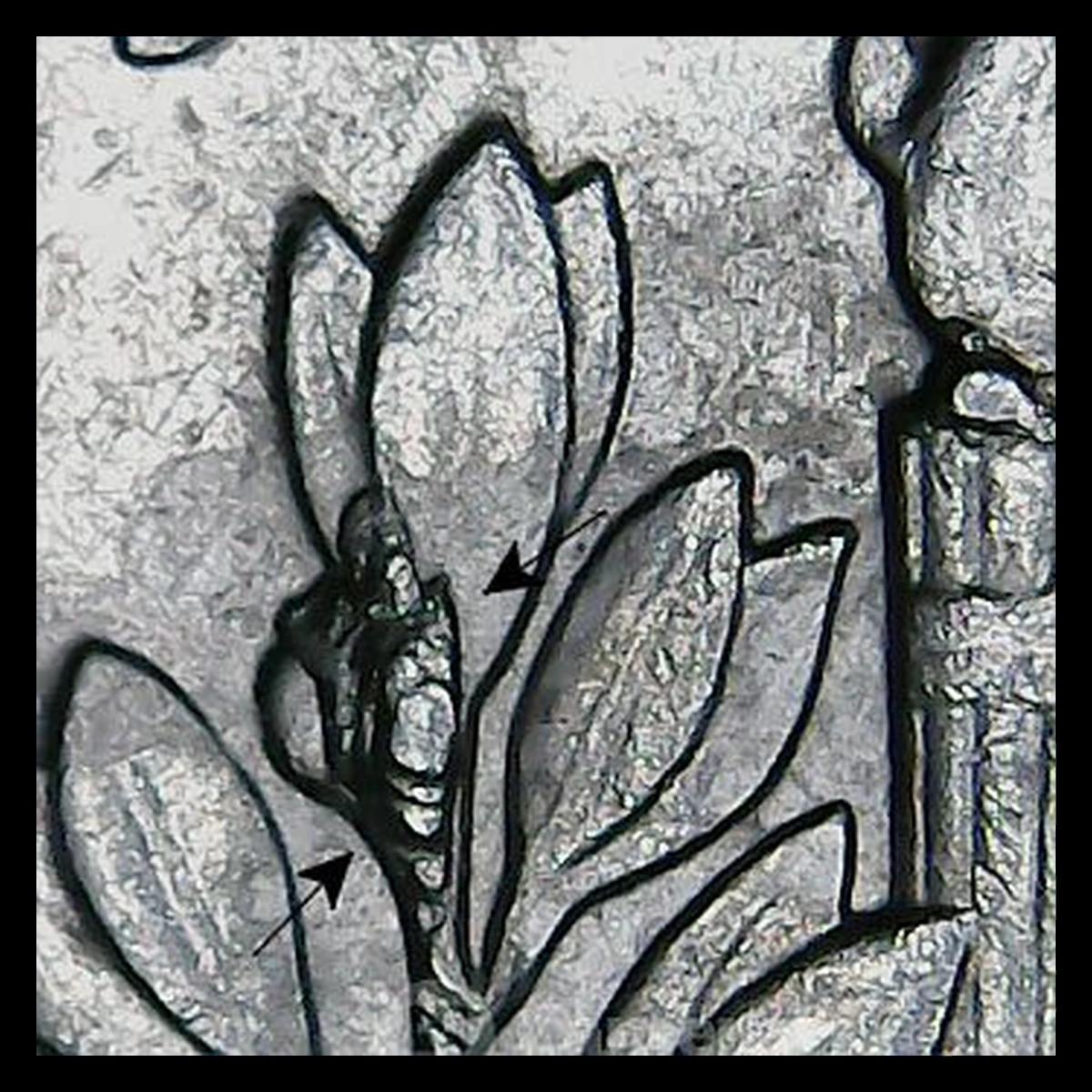
3. 2002 Dime Fine Raised Lines: Die Cracks Error
A die can develop a narrow crack as it stamps coins. Metal pushed into that opening leaves a ridge on later pieces.
Philadelphia and Denver cracks are reported for 2002 without one required path. A line near the torch or portrait is only a starting clue.
How to Identify
Follow the line through adjacent details with a magnifier. A continuous raised crest with natural changes in width is more consistent with a crack than repeated parallel cuts.
Inspect for a groove next to the ridge and for nearby impact damage. A scratch can push up metal without coming from a cracked die.
What It’s Worth
$5–$75 is an estimated range for ordinary small cracks. Barely visible lines on worn dimes usually add only a modest premium.
A longer clear line with visible branches can be more interesting. The number on a seller’s price tag does not turn an ordinary scratch into a valuable error.
4. 2002 Dime Faint Opposite-Side Shapes: Die Clash Error
A torch fragment near Roosevelt or a portrait trace among the back’s branches can come from clashed dies. The tools struck each other without a blank between them and transferred marks.
Later coins then picked up those unwanted shapes. The supplied reports include Philadelphia and more general 2002 examples.
How to Identify
Compare straight-on photographs of both faces with the normal designs. Try to fit the unwanted trace to a specific part of the opposite side.
A faint shape needs more than the right general location. Random scratches, shadows, or deposits do not establish transferred design.
Substantial overlapping letters or a second border may instead suggest another strike. Do not explain every opposite-side detail as a clash.
What It’s Worth
$15–$100 is an estimated range for genuine recognizable clashes. Clear fragments on clean surfaces are easier to show than traces requiring very careful lighting.
The range does not assume every 2002 clash came from the same die pair. Match the visible pattern rather than the year alone.
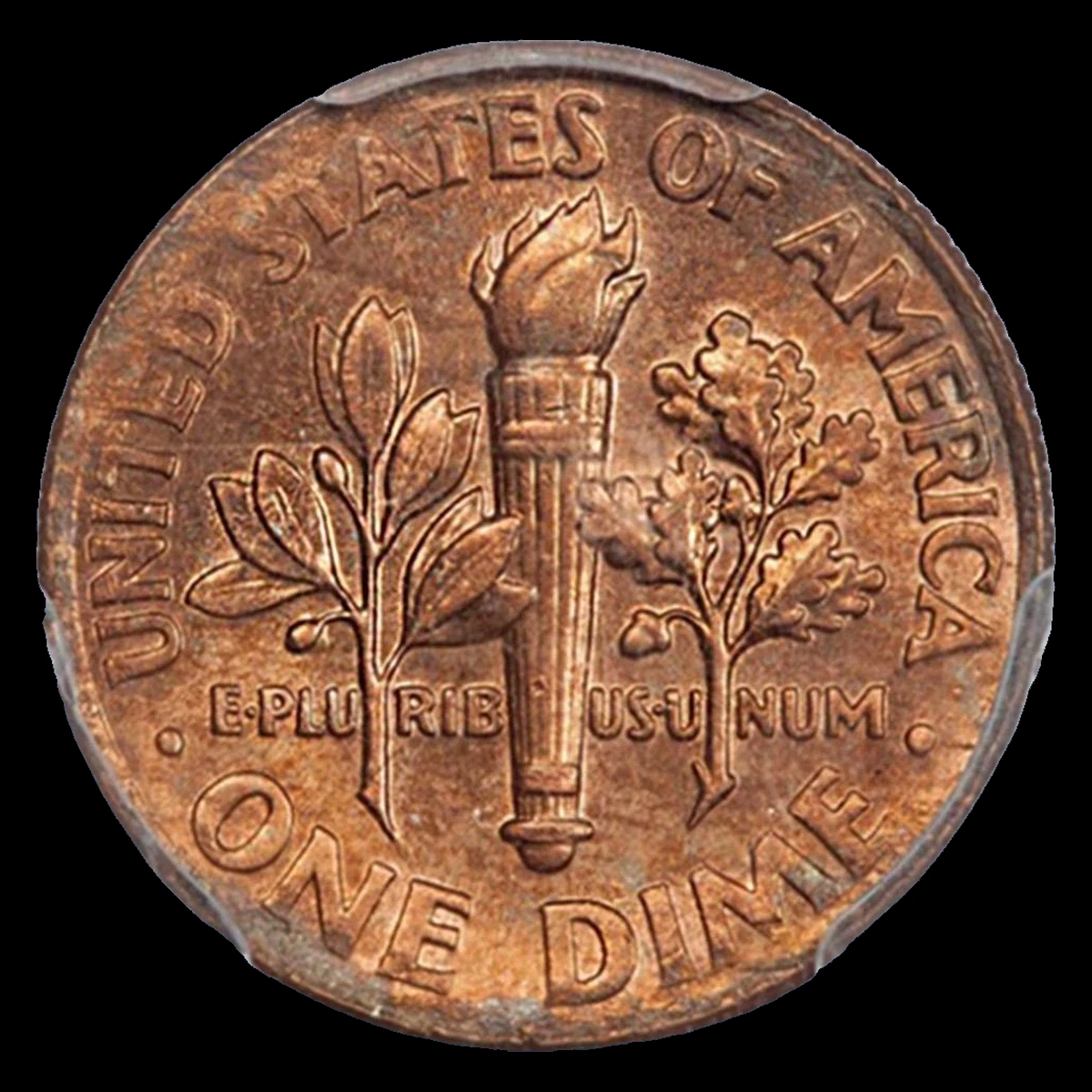
5. 2002 Dime Copper on the Front and Reduced Weight: Missing Clad Layer Error
A normal circulating dime has pale copper-nickel outer layers around a copper core. The documented 2002-P error is missing its front layer.
That coin weighs 1.8 grams and is graded NGC MS64. A separate Denver year-guide report does not supply the same weight or affected face.
How to Identify
Inspect both face colors and the edge layers. On the documented P coin, exposed copper is on the front while the other outer layer remains.
A normal clad dime weighs 2.268 grams and measures 17.91 millimeters. Reduced weight supports lost metal, but chemical attack or stripping can also lower it.
Look for etched details, pitting, or a coating over intact layers. A 2002-S silver Proof normally weighs 2.50 grams and needs a different metal comparison.
What It’s Worth
$50–$350 is an estimated range for genuine single-layer-loss examples. A clear original copper face and sharp identification can support stronger interest.
The 1.8-gram Philadelphia coin sold for $55 on October 4, 2016. Its result and front-layer loss do not describe the separate Denver report.
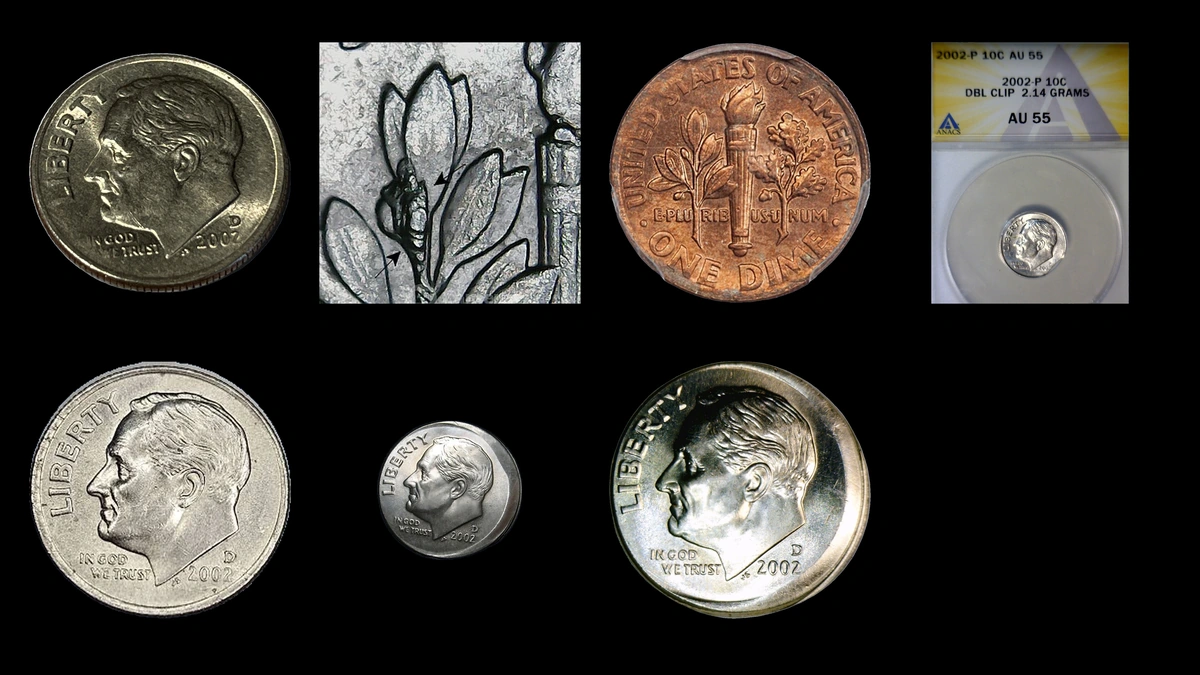
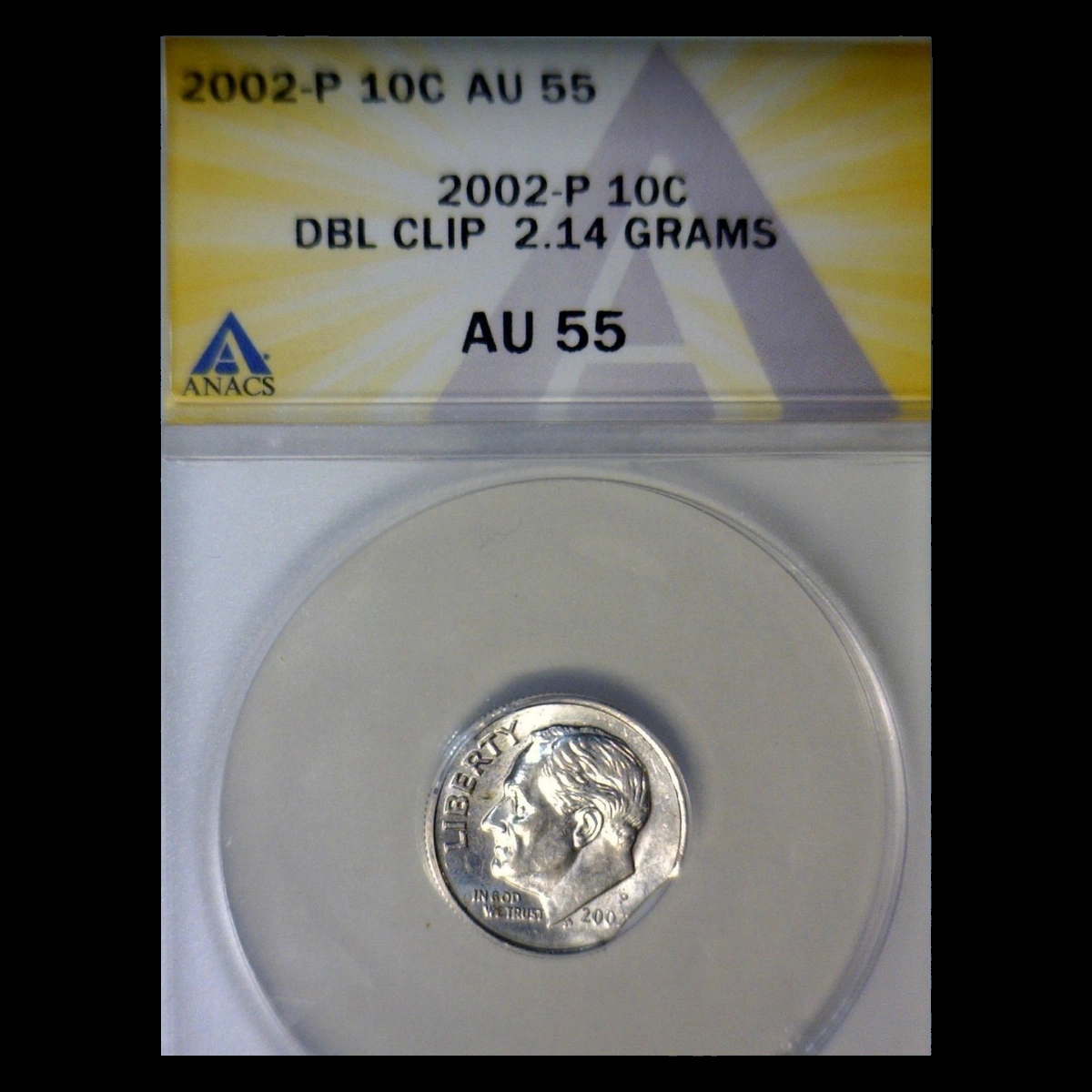
6. 2002 Dime Two Gaps in the Outline: Double Clip Error
The listed 2002-P double clip has two shortages that existed before the design formed. The struck rim had to develop around both missing areas.
The coin weighs 2.14 grams and was graded ANACS MS63. Its two clips belong to one piece.
How to Identify
Compare both gap edges with the listed Philadelphia specimen. Reduced weight shows that metal is absent but cannot establish when it disappeared.
Look for letters and rim ends shaped around the shortages. Fresh tool marks or a sharp cut through finished detail suggest later removal.
Measure only intact spans of the outline and photograph nearby details with each gap. Do not assume both openings have the same shape or size.
What It’s Worth
$20–$200 is an estimated range for genuine double-clipped examples. Larger well-formed gaps with readable dates usually provide a stronger visual comparison than tiny shortages.
The listed 2.14 grams is descriptive, not a direct formula for value. Price the coin with both gaps together.
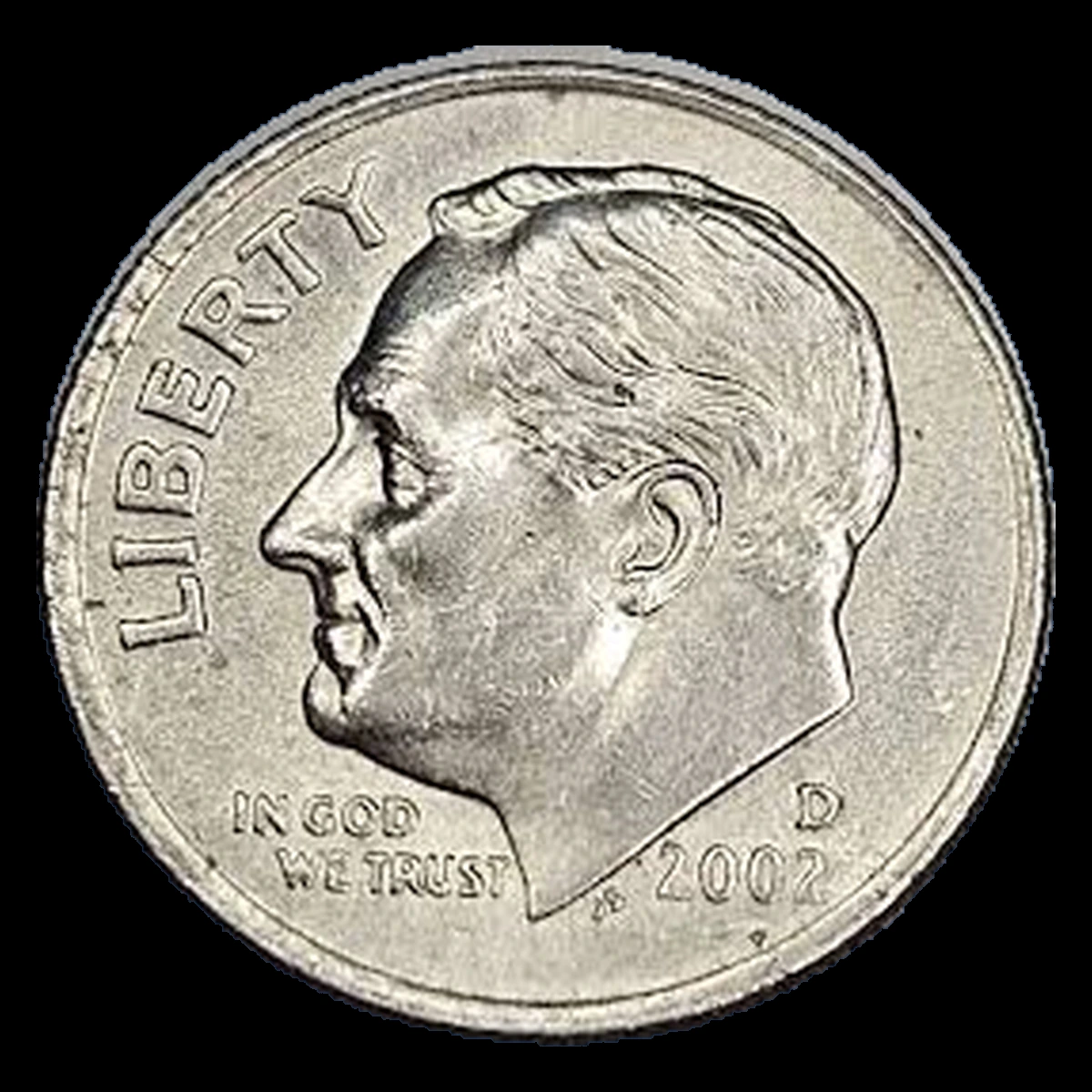
7. 2002 Dime An Uneven Border or Uneven Strike: Misaligned or Tilted Die Error
A sideways die shift can move one design toward the rim. A tilted die can instead bring one area closer to the blank than another, creating uneven strike strength.
The 2002-P report combines an upward front shift with uneven back detail. Its wording does not establish a fixed off-center percentage.
How to Identify
Take square-on photographs so camera angle does not distort the borders. Compare the upper and lower front margins, then check the back’s centering.
One shifted face with the other centered supports sideways die misalignment. For tilt, compare strong and weak areas with wear on exposed high points.
Check whether any design actually runs off the blank. A narrow border alone does not mean part of the design is missing.
What It’s Worth
$15–$150 is an estimated range for a genuine visible shift or tilt. Slight border differences generally add little.
A strong, clearly explained difference between the faces can draw more interest. Misleading camera angles and ordinary wear do not support the same premium.
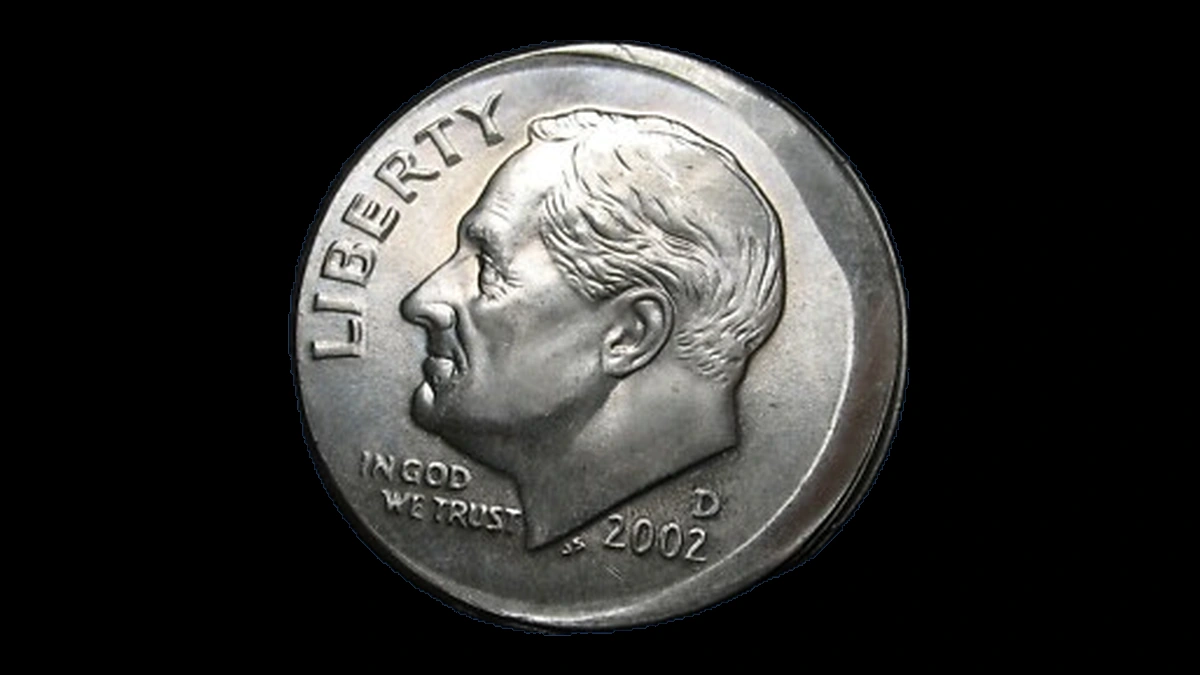
8. 2002 Dime A Ledge Along the Edge: Partial Collar Error
A partial-collar strike leaves part of the blank restrained by the collar and part free to spread. The collar normally sets the diameter and creates the edge grooves.
A 2002-P report uses the loose term “double rim.” An extra circle on the front alone does not establish this edge error.
How to Identify
Look at the coin from the side for two levels. A confined grooved band should meet an expanded portion along a natural step.
Follow the boundary around the edge and compare any damaged face border nearby. A rim impact can alter both the edge and face in a different way.
A clear side photograph is essential here. A front-only view of an extra border cannot show whether the collar restrained just part of the blank.
What It’s Worth
$30–$250 is an estimated range for genuine partial-collar strikes. A broad obvious step has more visual appeal than a slight ledge.
A doubled-looking border without the edge structure needs another explanation. It should not automatically receive a partial-collar value.
9. 2002 Dime A Complete Design Inside a Wider Coin: Broadstrike Error
A broadstrike occurs when the collar fails to contain the strike normally. Metal spreads outward while the intended design stays complete.
A seller listed a 2002-P example graded ANACS MS65. That grade describes an unworn coin with some marks, rather than measuring its expansion.
How to Identify
Compare the width in several directions with a normal dime. Follow the lettering around both faces to confirm it remains on the metal.
A cropped design opposite bare blank metal suggests an off-center strike instead. A narrow restrained edge band beneath a wider band needs a partial-collar check.
Later flattening can also enlarge a coin. Look for crushed letters or tool marks on details that had already formed.
What It’s Worth
$35–$300 is an estimated range for authentic broadstrikes. Greater clear expansion and cleaner surfaces can improve the comparison.
The saved ANACS MS65 seller listing asked $55. That offer is not a recorded completed sale.
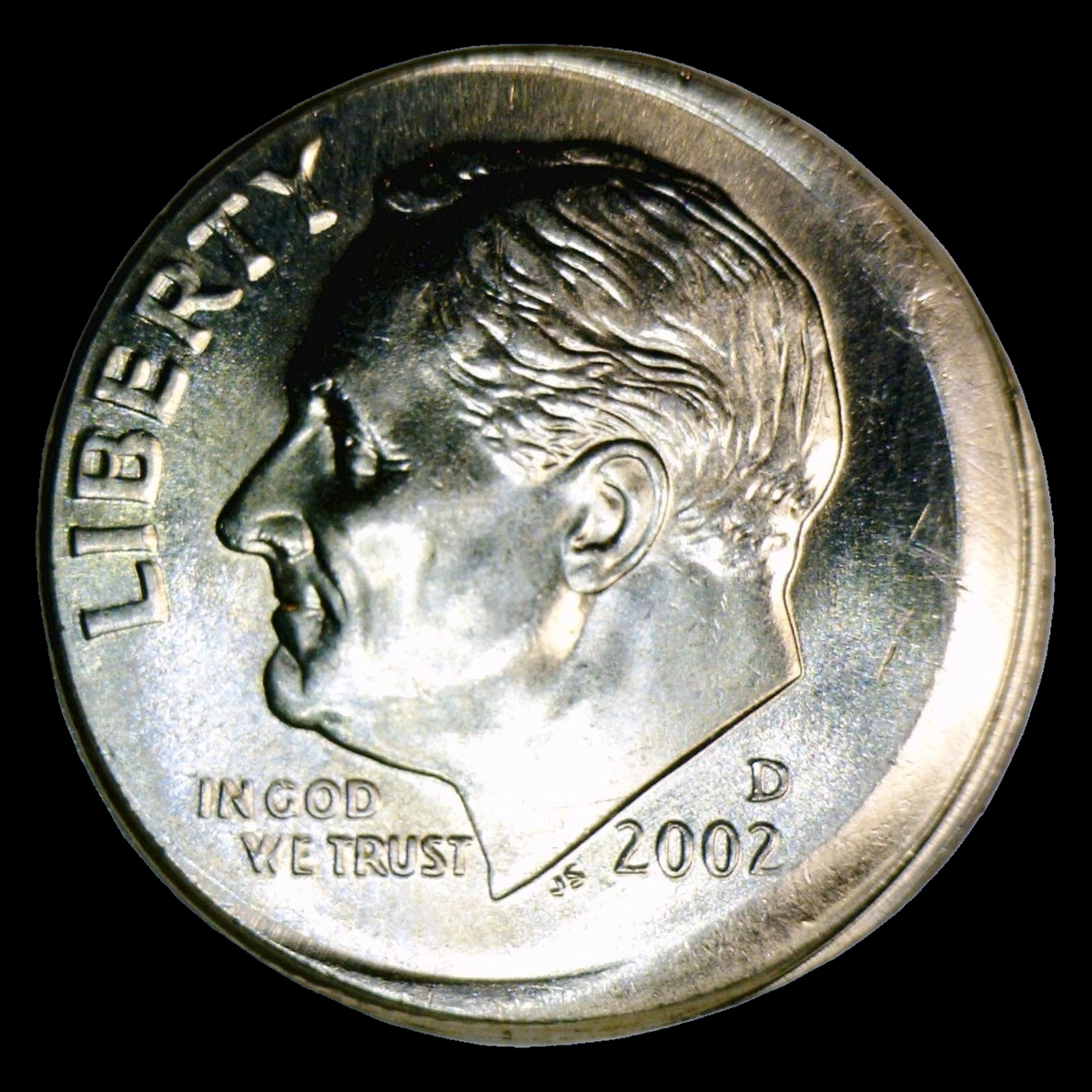
10. 2002 Dime Bare Metal Beside Lost Design: Off-Center Strike Error
A blank positioned too far to one side receives only part of the intended design. The opposite arc stays untouched.
The general 2002 reports do not establish a specific mint, direction, or percentage. Those details must be read from the actual coin.
How to Identify
Compare both faces for the same division between struck and blank areas. An uneven front with a centered back suggests a tool shift instead.
Keep the date connected to the error in a whole-coin photograph. A smooth area ground into a finished coin may show scratches or an unnatural boundary.
What It’s Worth
$40–$600 is an estimated range for genuine examples with readable dates. A dramatic displacement can be attractive when enough design remains to identify the year.
A 1977 dime about 10% off center sold for $109 in June 2026. That different-year result provides context for a modest shift.
11. 2002 Dime Backward Letters Pressed Into the Surface: Brockage Error
An already struck coin can remain in the press and stamp its image into the next blank. That new coin receives a sunken mirror image, called a brockage.
A Denver 2002 brockage appears in a year guide. The affected face and extent of the image are not specified.
How to Identify
Reverse a photograph of the unexpected letters to see whether they form a real coin design. Check that the impression is sunken and the other face has a normal struck image.
Study several connected details, not a single backward-looking mark. Pressing finished coins together later can imitate a brockage, so the pressure pattern needs expert examination.
What It’s Worth
$250–$1,200 is an estimated range for authenticated brockages. A strong readable mirror image across much of a face usually makes a clearer example than a weak partial trace.
The general 2002-D report does not provide a specific auction result. The estimate applies after the original Mint-made impression is established.
12. 2002 Dime Design Struck Into Folded Metal: Foldover Strike Error
A blank can fold during a striking accident and receive the design in that folded state. The 2002-D report describes a distorted portrait with mixed torch-and-branch detail.
The order of events separates a foldover strike from an ordinary bent dime. A later bend distorts a design that was already complete.
How to Identify
Photograph the fold edge and both faces without opening or straightening the coin. Look for design pressed into the doubled-over metal.
Check for plier marks, scraping, or stretched completed details from later bending. The curved outline by itself proves only that the coin is bent.
What It’s Worth
$300–$1,500 is an estimated range for authenticated foldover strikes. A pronounced fold with readable struck detail can be a strong collecting example.
The estimate does not apply to damaged or jewelry-altered dimes. Identification must establish that the fold belongs to the minting sequence.
13. 2002 Dime Opposite-Face Designs Beneath a Later Strike: Flipover Double Strike Error
A coin can turn over after its first strike and receive another blow. Front design then lands over back design, and back design lands over front design.
The Philadelphia report describes portrait traces beneath the torch and branch, with back lettering on the portrait side. The proposed sequence requires evidence of two actual strikes.
How to Identify
Join the earlier fragments into recognizable front and back designs. Look where the later image crosses or partly flattens them.
Compare with the clash category before deciding. Faint opposite-side traces in open areas do not automatically prove that the coin flipped and was struck again.
What It’s Worth
$300–$1,500 is an estimated range for a genuine flipover double strike. Clear surviving detail from both blows makes the sequence easier to demonstrate.
Readable dates and good surfaces support the comparison. Authentication should establish the two-strike order rather than count every unusual line as another impression.
14. 2002 Dime A Cup Shape or a Covered-Die Image: Die Cap Error
A coin stuck to a die can spread and curl into a cap under repeated blows. That cap can also interfere with designs on later blanks.
The 2002-P year report mixes the cap itself with a coin struck through one. These are different objects and need different checks.
How to Identify
A cap may have a curved wall, so photograph its depth and both inner and outer surfaces. Never flatten it for measurement.
A receiving coin may stay relatively flat but show a soft distorted image from the covered die. Compare that face with the normally struck opposite side.
One blurred letter is not enough to prove either form. The full shape and design pattern must show which object you have.
What It’s Worth
$75–$1,500 spans the estimated ranges for these two forms. Comparable receiving coins are estimated at $75–$600, while genuine caps are estimated at $300–$1,500.
A deep recognizable cap differs from a lightly softened receiving coin. Resolve that distinction on the reported specimen before applying either range, and do not add the two estimates together.
Conclusion
The strongest clue may be a raised line, an original edge step, or a whole earlier design. Each explains a different event, even when sellers use similar words for the coins.
Estimated values run from $5–$1,500. The reported $818.08 scrap impression and the $55 missing-layer sale are separate examples, while folds and cap shapes should be preserved exactly as found for examination.