Rare 1912 Dime Errors (List & Pictures)
A 1912-S off-center dime brought $373.75 despite a holder incorrectly identifying Philadelphia. These 1912 dime errors span estimated whole-coin values of $20–$2,000; the highest supplied completed comparison, $396 in September 2024, is a different-year 1911 off-center coin.
Inspect both faces to establish the mint, then compare the outline, missing metal, and smaller raised details.
| Visible evidence | Feature | Estimated value |
|---|---|---|
| Missing design beside bare metal | Off-center strike | $200–$1,600 |
| Expanded outline with complete design | Broadstrike | $200–$1,200 |
| A section absent from the blank | Clipped planchet | $75–$600 |
| A surface layer peels or splits | Lamination and partial split planchet | $25–$500 |
| A raised patch may reach the rim | Reported die break or cud | $50–$500 |
| Earlier D or S strokes | Repunched mintmark | $20–$300 |
| Matching repeated outlines in UNITED | 1912-S doubled die obverse | $150–$2,000 |
1. 1912 Dime The design is shifted beside unused metal: Off-Center Strike Error
The auctioned 1912-S had been placed in a holder naming Philadelphia, but the small S beneath the wreath bow established San Francisco. It was described as 5% off center toward twelve o’clock, leaving bare metal below the date.
A separate San Francisco report describes a 20% offset, and a Denver example appears in a seller report. Those coins share an error class without sharing the first specimen’s grade, direction, or price.
How to Identify
Read the date and inspect the reverse mintmark instead of relying solely on a holder label. Include both entire faces and the unstruck area in photographs.
A small displacement may omit only border teeth, while a larger one can remove letters. The incomplete designs on both faces should fit the same shift within the blank.
Inspect the boundary for later grinding or cutting. The ordinary 90% silver dime started at 2.50 grams and 17.90 millimeters with a grooved edge, providing general measurement context for an accessible coin.
What It’s Worth
The estimated whole-coin range is $200–$1,600. The 5% 1912-S graded AU50 sold for $373.75 in September 2005.
An AU50 1911 dime with a 10% shift sold for $396 in September 2024. Both grades indicate light wear, but that second result belongs to a different year.
The separate 20% 1912-S does not inherit either price or the first coin’s grade. Remaining date detail, surfaces, and actual displacement all affect comparison.
2. 1912 Dime The entire design remains on spread metal: Broadstrike Error
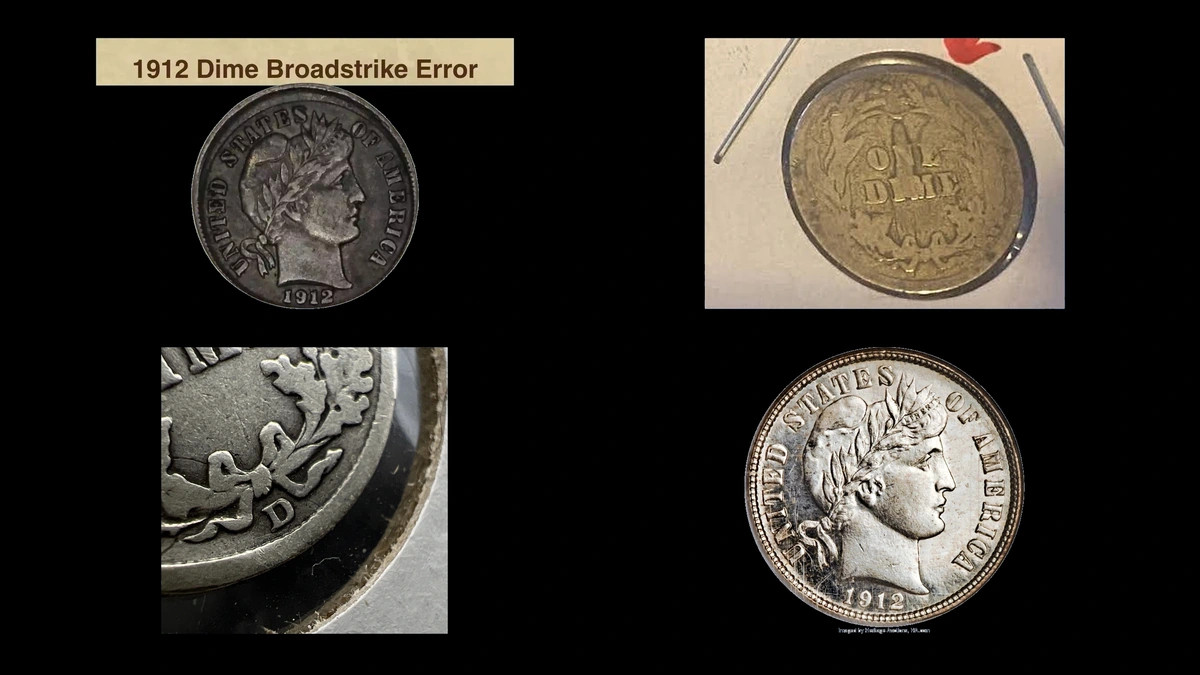
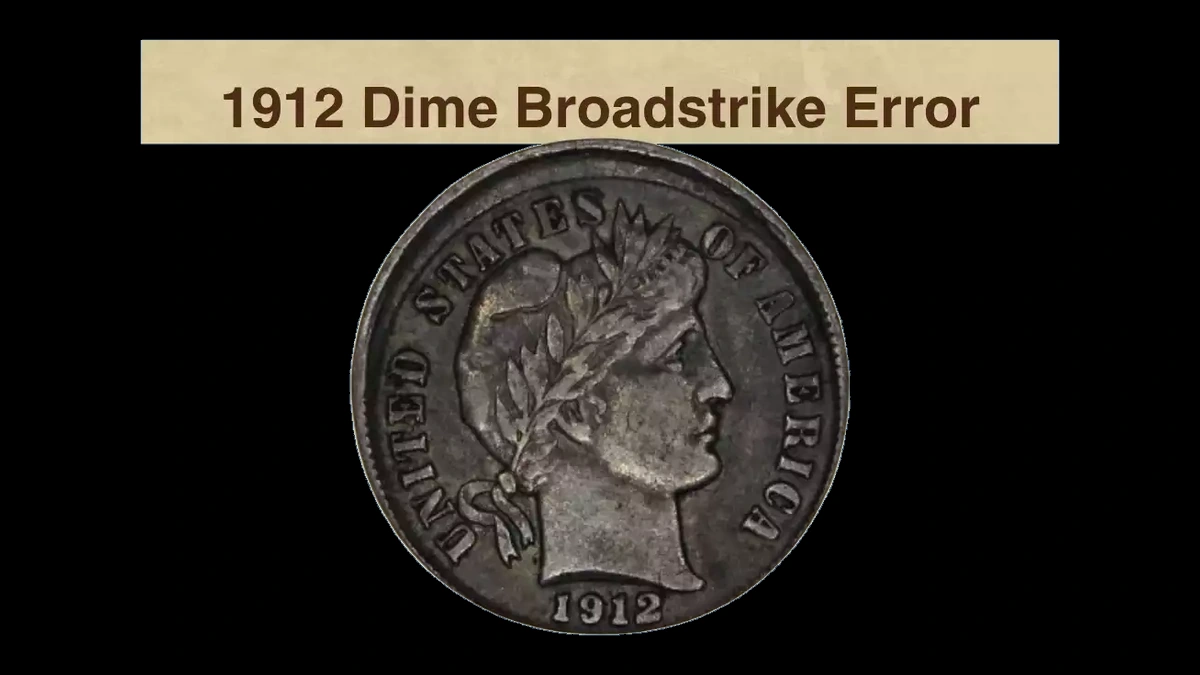
A Denver AU55 appeared in Jim’s Coins catalog as a broadstrike. Its wider outline resulted from failure of the collar, the ring that normally restrains diameter and helps form edge grooves.
Metal spreads outward under pressure without necessarily losing any design. An uneven border can therefore accompany a broadstrike, but missing picture elements call for an off-center comparison.
How to Identify
Compare the outline with a normal dime without rubbing the surfaces together. Check the full outer design on each face before accepting a broadstrike identification.
Measure the width if possible and inspect the edge for incomplete grooves. Weight can remain near the original amount because spreading redistributes metal rather than removing it.
Later hammering can also widen a coin while flattening existing details. Look for original metal flow and preserved design instead of judging diameter alone.
What It’s Worth
The estimated range is $200–$1,200 for whole 1912 broadstrikes. Jim’s Coins listed the Denver AU55 at a $199 minimum bid, which was an offer condition rather than a completed sale.
A different-year 1900-S broadstrike sold for $342 in March 2026 at VF30. Its wear and substantial remaining detail offer comparison context, not a transaction record for the Denver coin.
3. 1912 Dime A small section is missing before striking: Clipped Planchet Error
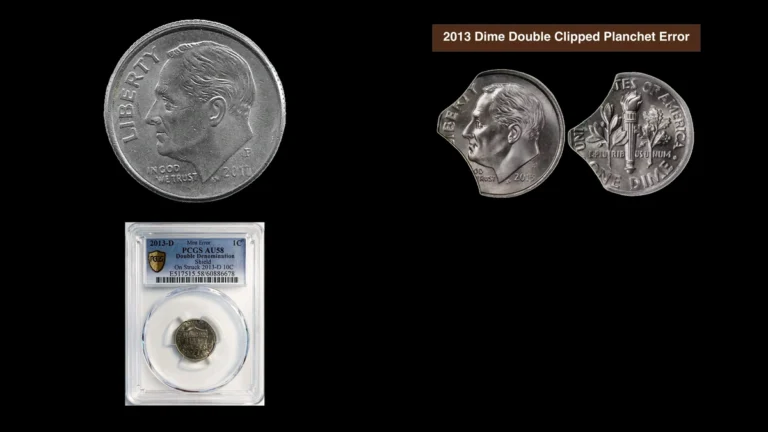
A 1912-D offered in December 2024 was described as having a 4% clip and graded PCGS MS61. Its incomplete blank received the design after the section was already absent.
A Philadelphia seller separately reported a clipped example. That coin should not inherit the Denver clip’s percentage or unworn grade.
How to Identify
Inspect both endpoints of the gap and the surrounding struck detail. Fading detail toward the opening or a weak opposite rim can support a pre-strike clip.
Check for sharp burrs, tool marks, or cut edge grooves that suggest later removal. Reduced weight can support the visible missing metal but cannot establish how it disappeared.
Four percent describes the reported amount missing, not a four-o’clock position. Measure across intact metal and keep the whole outline visible.
What It’s Worth
The estimated whole-coin range is $75–$600, from modest worn clips through attractive unworn examples. The December 2024 listing for the 4% Denver clip supplies no visible sale result.
A 1942 Mercury dime clip graded MS66 sold for $192 in March 2025. Its different year, design, and high unworn grade keep it separate from the 1912-D offering.
4. 1912 Dime A layer separates from the reverse: Lamination and Partial Split Planchet Error
The documented 1912-X lost approximately 30% of its reverse layer after striking and was graded Good 4. The X means its mint could not be identified, not that it was Philadelphia.
Weakness inside the silver alloy allowed part of the metal to separate. Smaller flakes belong to the same broad material-failure category without needing the auction coin’s depth or coverage.
How to Identify
Follow the missing layer’s boundary under magnification. A natural split differs from a ground hollow, scrape, or saw cut through finished metal.
Look for surviving design bordering the exposed separation and a split continuing toward the edge. Leave any attached flap undisturbed.
The auctioned example’s post-strike loss is established for that coin. Do not assign the same timing or mint uncertainty automatically to every smaller 1912 lamination.
What It’s Worth
The estimated range is $25–$500, from small flakes through larger, better-preserved separations. The Good 4 1912-X partial split sold for $139 at Heritage on March 31, 2025.
Heavy wear did not erase interest in that particular separation. Its result does not create a fixed price per percentage of missing surface.
5. 1912 Dime A raised patch may or may not meet the rim: Reported Die Break or Cud Error
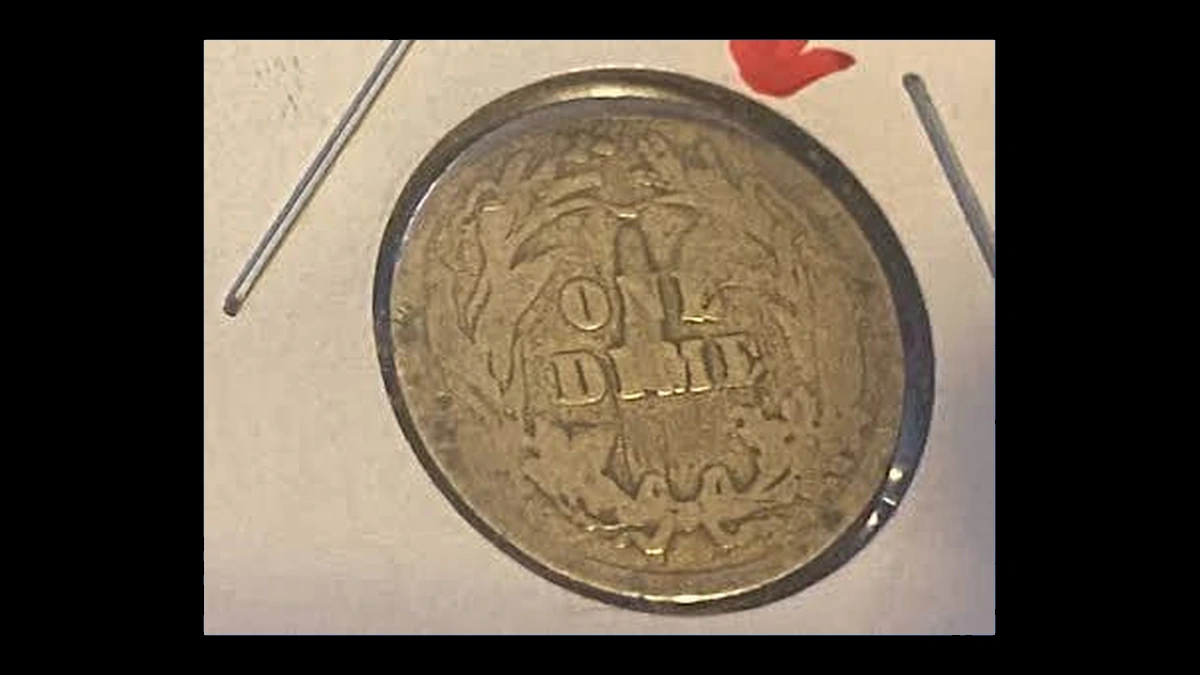
A seller calls an ungraded Philadelphia coin a large cud while also placing the feature near its center. A cud requires a raised connection to the rim; an area surrounded by intact surface would instead be an enclosed break.
Either genuine feature can form when metal fills an opening in a damaged die. Added material or later damage can also make a lump, so the seller’s name does not settle its origin.
How to Identify
Trace the patch all the way around and toward the edge. Establish whether normal surface encloses it or whether a continuous raised area reaches the rim.
Inspect for a seam, attached metal, or disturbed edges using light from several directions. Weakness on the opposite face may be supporting information but cannot prove a cud by itself.
What It’s Worth
The estimate is $50–$500 for genuine whole-coin die-break examples. The seller’s $149.99 price is an ask and does not authenticate the feature or establish a completed sale.
A clear large rim break and a small enclosed chip are different comparisons. Added metal and post-mint damage do not receive the same mint-error estimate.
6. 1912 Dime A second letter segment borders D or S: Repunched Mintmark Error
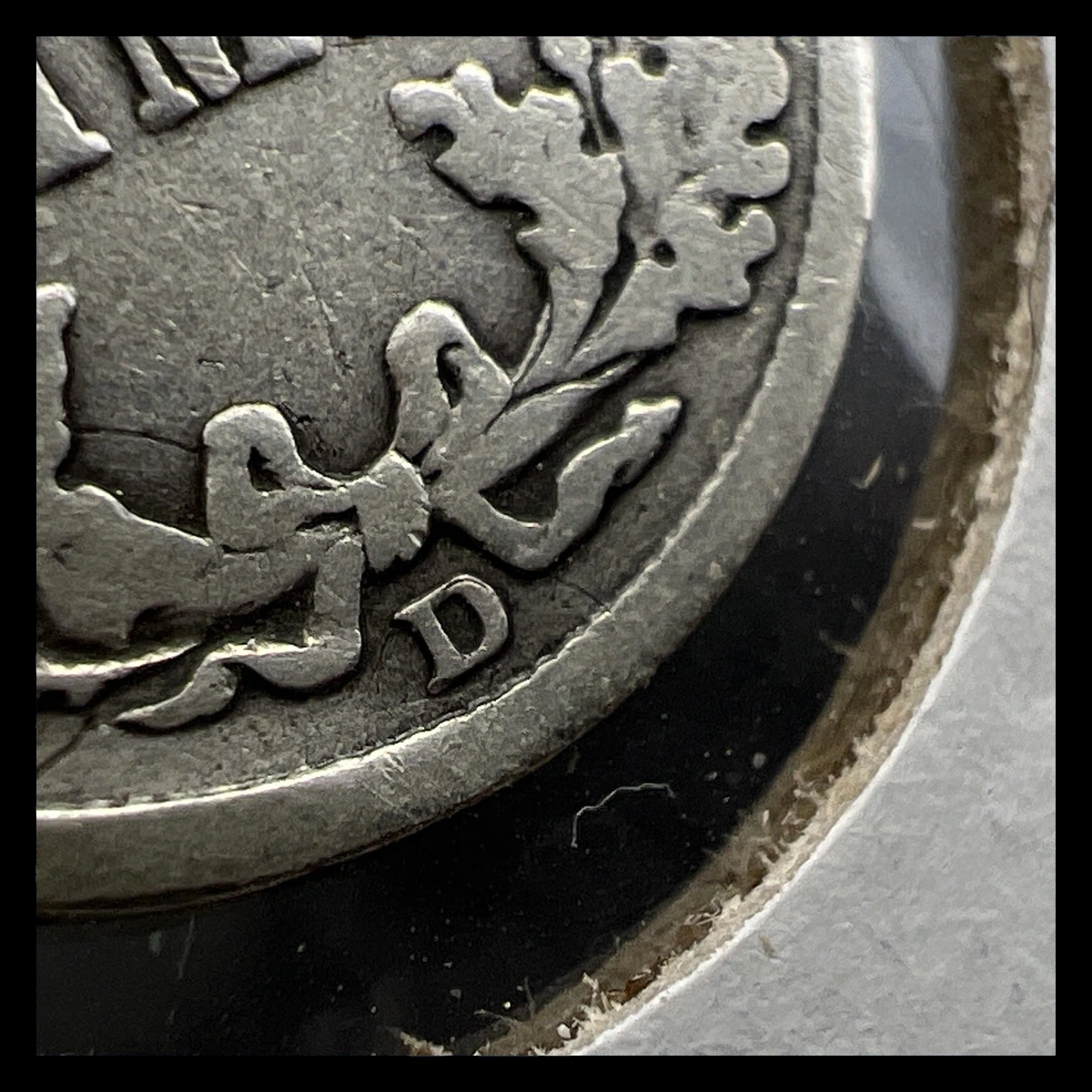
Denver reports describe extra strokes above or above-right of D. The San Francisco report describes only a slight extra S, without establishing the same direction.
Mint letters were punched into the dies before production. An earlier impression could remain if later entry did not completely overlap it.
How to Identify
Find the mintmark below the reverse wreath bow, then select a reference for that mint. Inspect the top and upper-right of a reported Denver D, while using the S example’s own image for San Francisco.
The extra raised stroke should fit part of another letter. A dent, smear, or flat shelf does not establish repunching simply because the main letter looks uneven.
What It’s Worth
The supplied guide estimate is $20–$300 for recognizable worn through modest unworn whole coins. It is not a recorded auction range.
Readable remnants and overall preservation determine how useful the estimate is. Exceptional condition can place a coin above the range for reasons unrelated to repunching.
7. 1912 Dime Repeated letter outlines appear in UNITED: Doubled Die Obverse Error
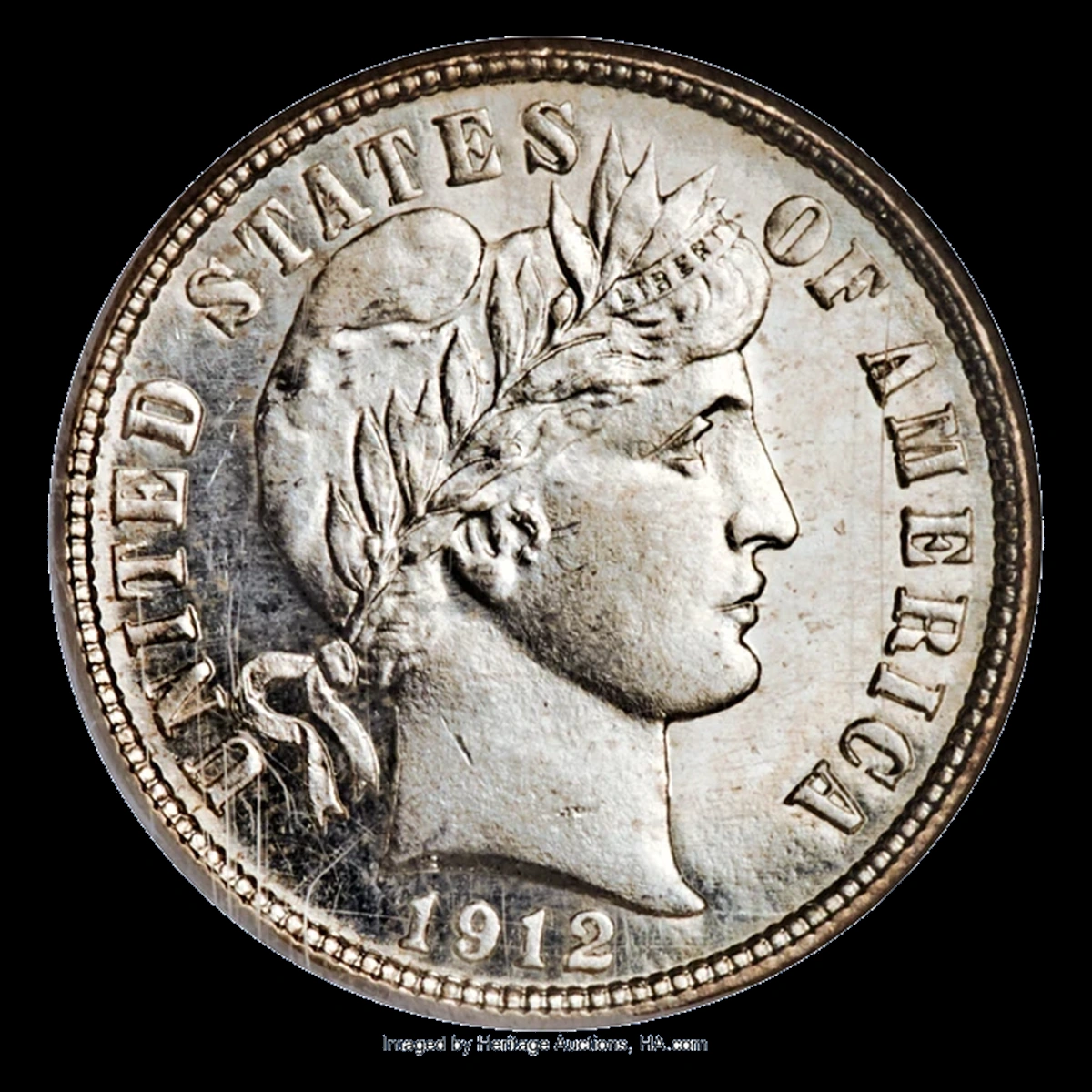
The recognized 1912-S FS-101 is described with obverse doubling in UNITED. Its die already carried the repeated design before striking the individual coins.
A doubled-looking cheek can have another cause, including movement during the strike. That portrait edge does not replace the required letter comparison.
How to Identify
Confirm S, then compare UNITED with a sharp photograph of an attributed FS-101 at the same orientation. Follow the repeated raised outlines rather than judging a general impression of thickness.
A low shelf that appears to shave width from a letter suggests movement during striking. Examine the cheek separately as supporting information, not the sole diagnostic.
What It’s Worth
The guide estimate is $150–$2,000 for recognizable worn through stronger unworn examples. PCGS recognizes FS-101, but the consulted page supplies no auction record.
A precise variety match and preservation support the estimate. Ordinary flat strike doubling does not automatically belong in this range.
Conclusion
Read the coin as well as its label: an S corrected one auction attribution, while a missing layer left another coin’s mint unknown. For the reported cud, the actual rim connection still determines the proper description.
The $20–$2,000 estimates cover different features and conditions. Keep minimum bids, asks, listings without results, and different-year comparisons distinct from completed sales of a specific 1912 error.