Rare 1981 Nickel Errors (List & Pictures)
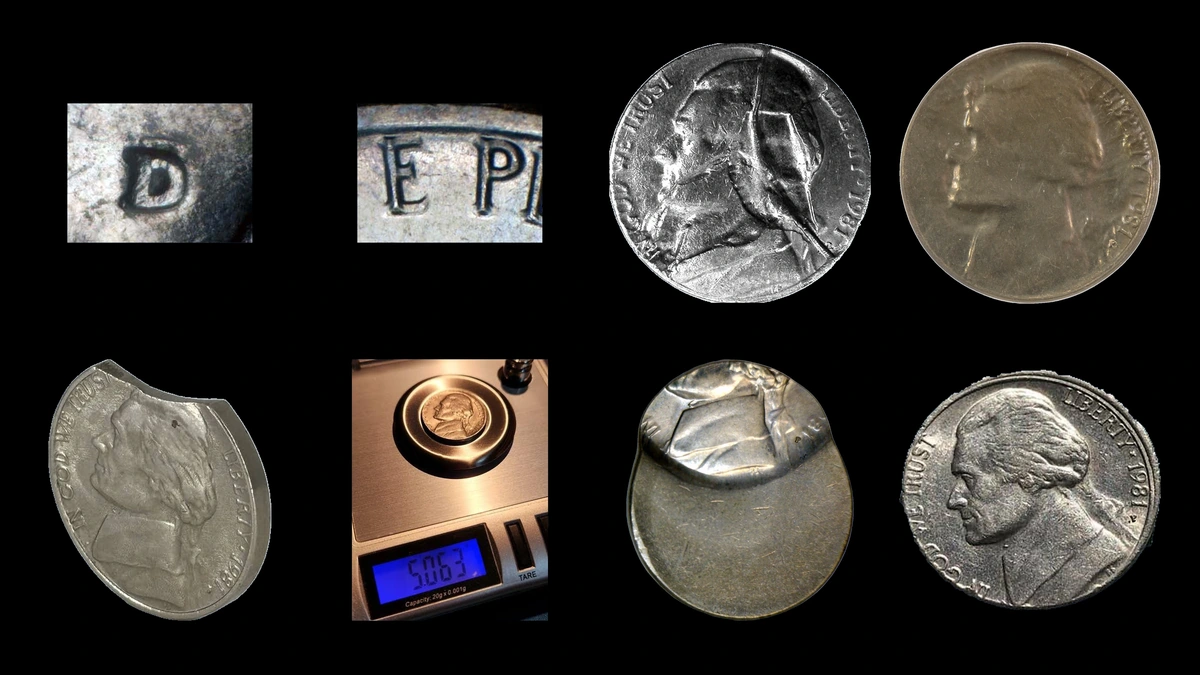
A joined pair of 1981-P nickels sold for $1,610 in August 2010, but many errors from this year are small enough to need a magnifier. Even a tiny extra curve above the D can have a name.
This guide to 1981 nickel errors spans estimated values of $10–$3,500. Start with local details, then compare the edge, overall shape, and any older design beneath the nickel strike.
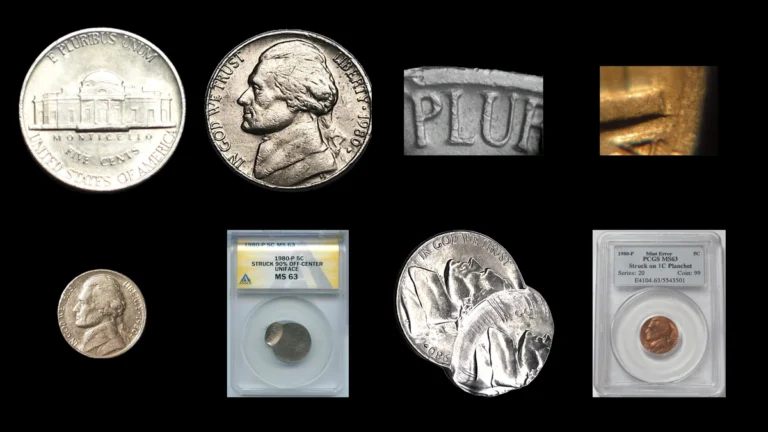
1. 1981 Nickel An Extra Curve above D: Repunched Mintmark Error
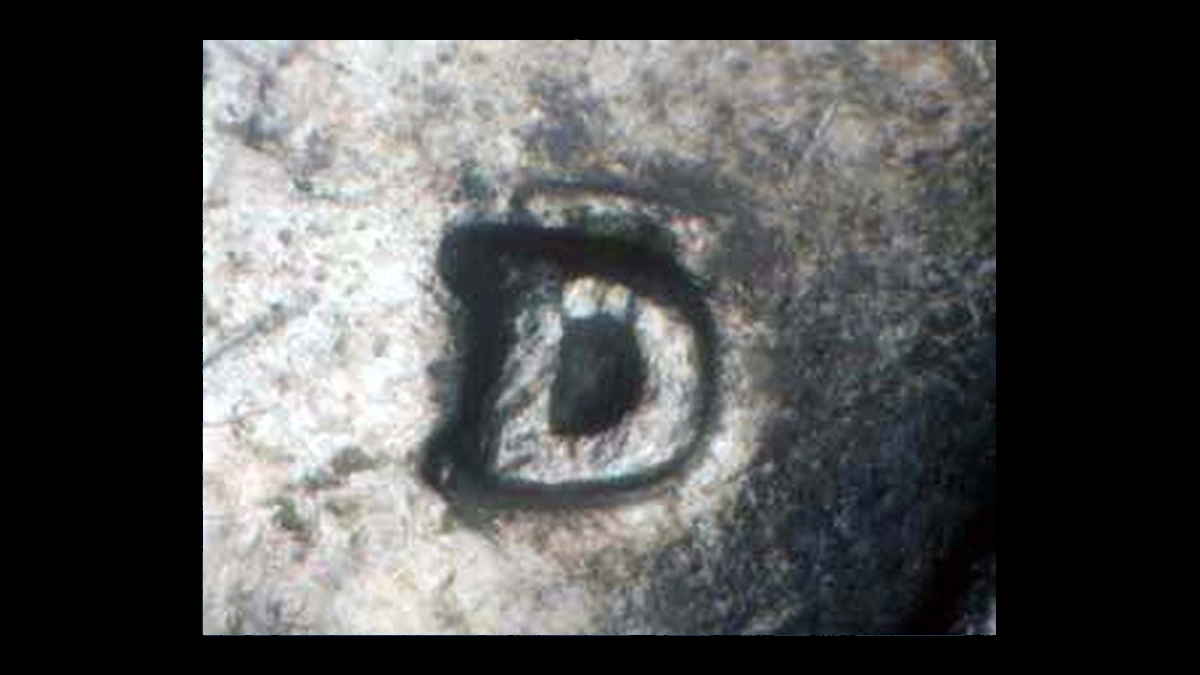
The earlier D sits north, or above, the main mintmark on 1981-D RPM-001. It remained on the die after the mintmark punch landed again in a slightly different position.
How to Identify
Find the D below the date and compare its upper outline with the RPM-001 photographs. A recognizable earlier curve matters more than general thickness.
Move the light to rule out a reflection. A random dent or flat shelf beside the letter is not the same pattern.
What It’s Worth
$10–$100 is the estimate for a clear matched example. Unworn coins with visible remains of the first D usually make stronger comparisons than worn, faint pieces.
No specific auction result is supplied for this variety. Its value includes the condition of the whole nickel, not just the tiny extra line.
2. 1981 Nickel Repeated Letters from Doubled Dies Error
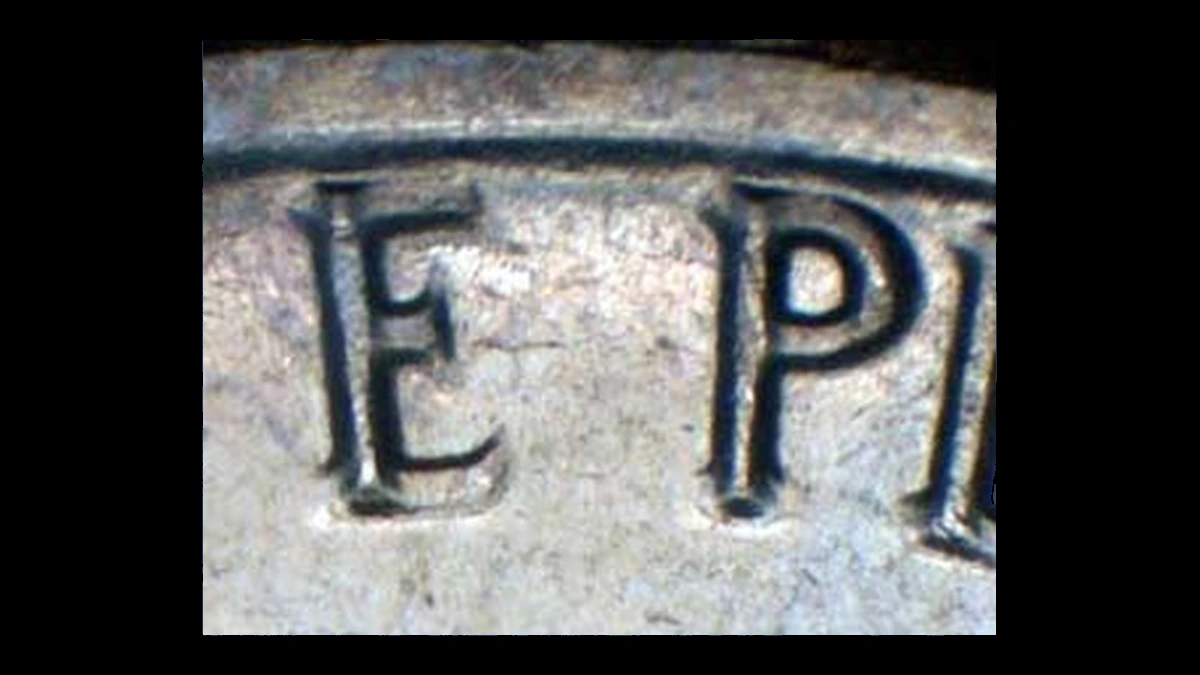
Denver back varieties show extra outlines in the upper motto, country name, and sometimes FIVE CENTS or Monticello. A separate San Francisco Proof pattern has subtle doubling across the upper motto.
Front doubling is also reported for Philadelphia. Each pattern comes from a die with repeated detail, rather than automatically indicating two strikes on the coin.
How to Identify
Match the mint, finish, and face before comparing close-ups. One Denver pattern affects the first M and last O in MONTICELLO, while the Proof’s motto separation becomes stronger toward the right.
The variety listings provide separate comparisons. Normal Type 1 and Type 2 S shapes are not doubled-die errors.
Look for persistent extra outlines across several details. A uniform blur or one flat letter shelf does not establish the reported Philadelphia front category.
What It’s Worth
$15–$150 is the working range for identified examples. Readable separation and preserved lettering support the higher end.
Compare Proofs with Proofs and ordinary Denver coins with their own varieties. These estimates do not turn a reported Philadelphia pattern into an established auction record.
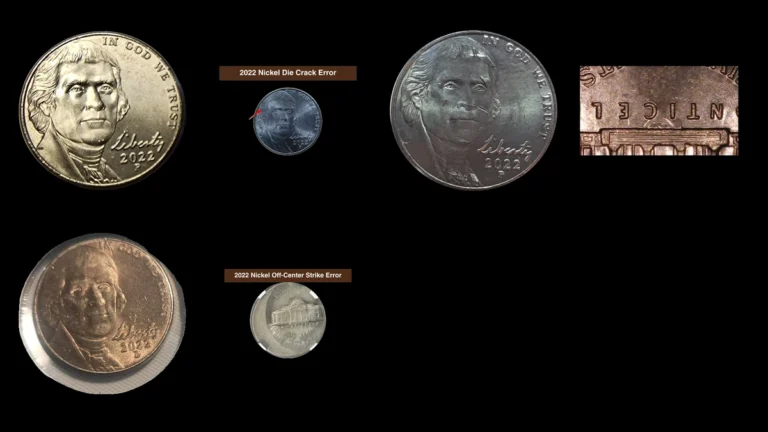
3. 1981 Nickel Raised Branches and Rim Cuds from Broken Dies Error
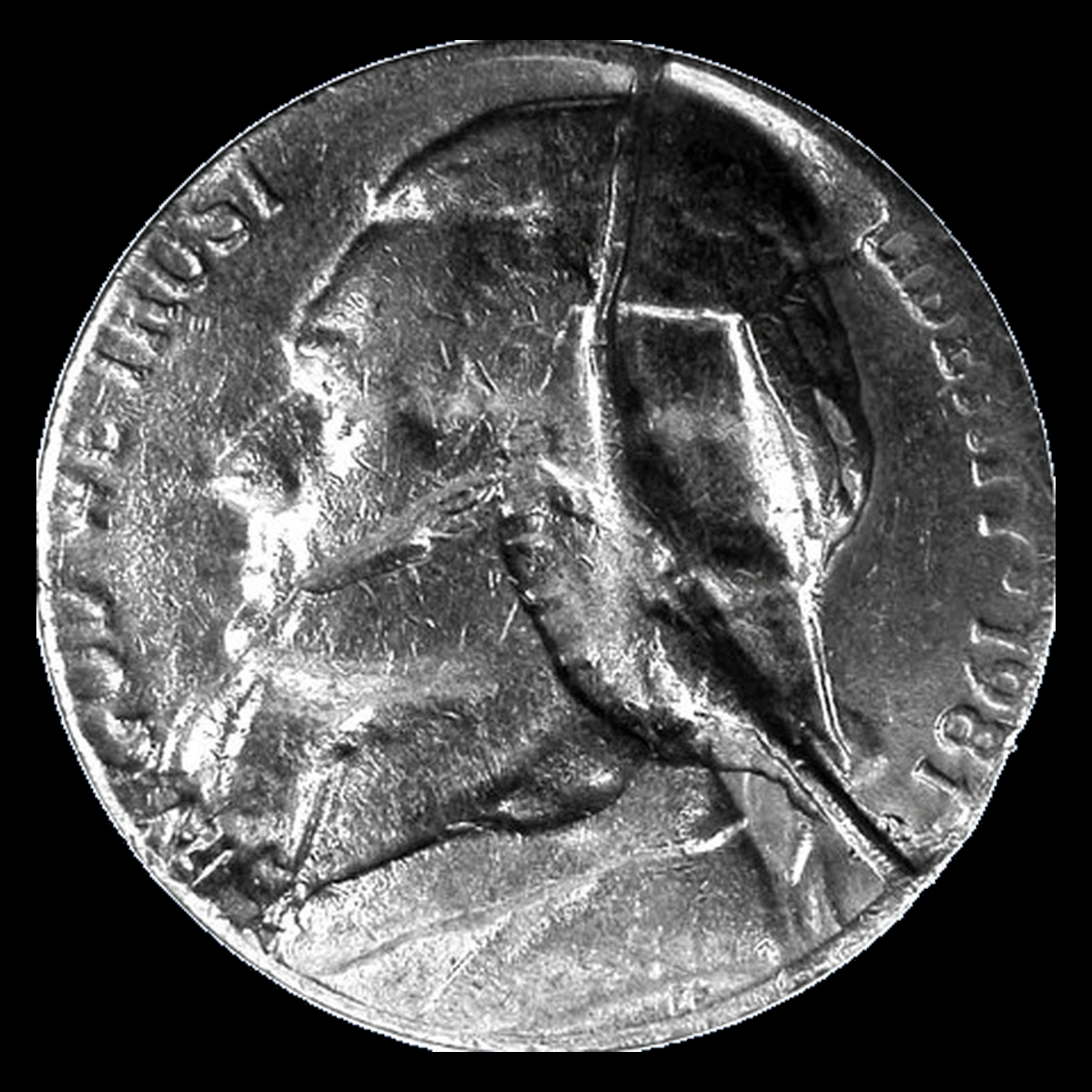
Cracks in a die leave raised lines where metal enters the gaps. A larger break at the die’s edge can replace normal design with a rim-connected patch called a cud.
Two Philadelphia cud patterns and a separate shattered-front-die coin are recorded for 1981. They do not form one required pattern on a single nickel.
How to Identify
Use side lighting to distinguish raised branches from scratches below the surface. Trace the line through recognizable design details.
For a cud, follow the larger patch to the rim and check for an attachment seam. Match the entire outline to the appropriate specimen instead of borrowing another cud’s position.
What It’s Worth
$20–$600 covers small cracks through strongly broken designs. The NGC MS60 shattered-die coin sold for $402.50 in August 2010.
A separate NGC MS65 Philadelphia cud brought $161 in the same auction. A fine isolated crack should not inherit the more dramatic shattered coin’s price.
4. 1981 Nickel Soft Design from a Cap or Folded Metal Error
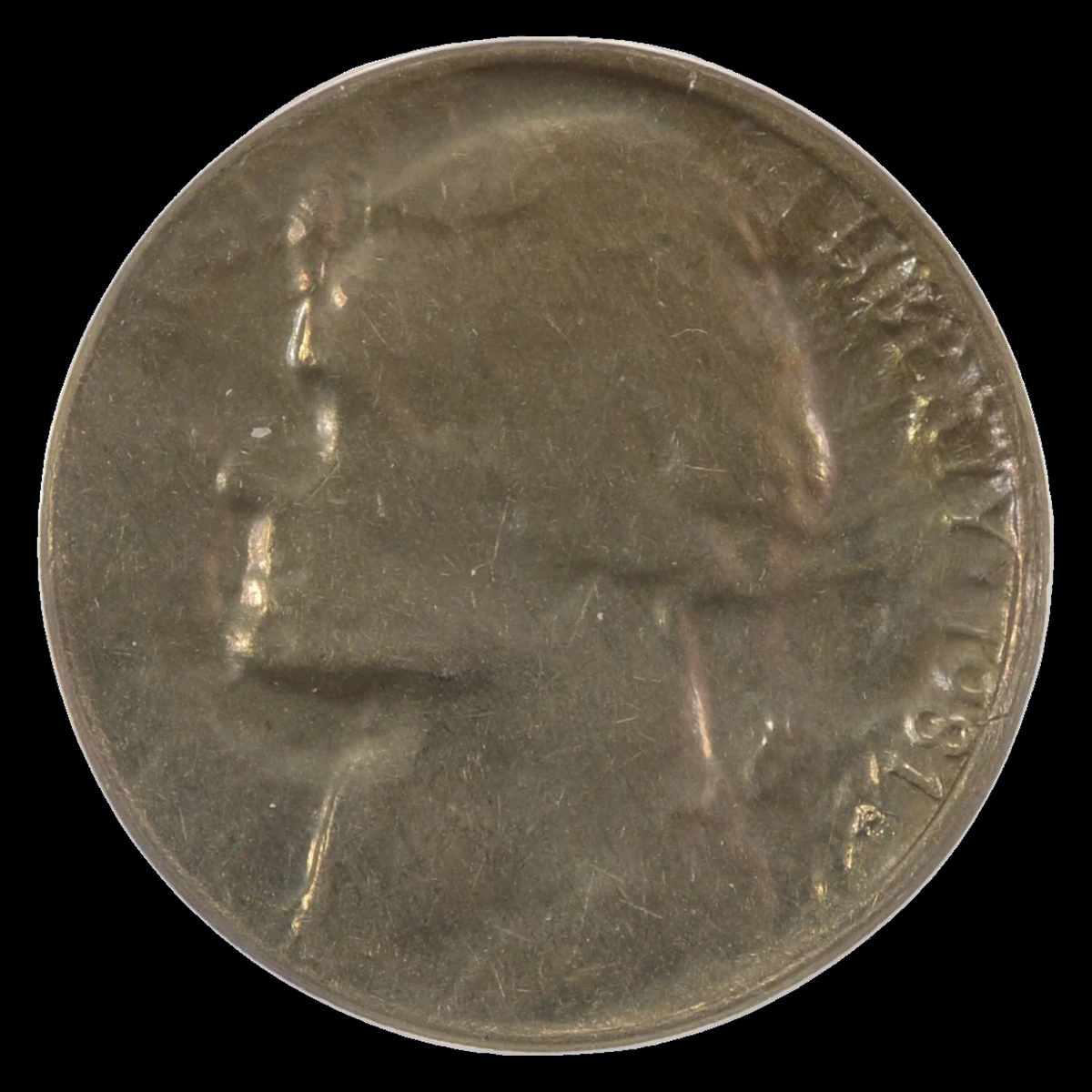
A thin metal layer between the die and a new blank can blur the portrait. One 1981-P coin combines this blocked strike with evidence of a split die.
A different illustrated nickel has an off-to-one-side split and impressions from folded thin metal. A torn die cap is a proposed source, while late-stage cap strikes are also reported for Philadelphia.
How to Identify
Separate the raised split-die line from the softened design around it. Compare the front with a clearer back to see which area was obstructed.
The folded-metal example has shallow overlapping impressions with irregular boundaries. General wear without those shapes is not enough to establish the same cause.
What It’s Worth
$40–$350 is the range for comparable blocked strikes. The Philadelphia capped-split-die coin sold for $161 in August 2010.
Its raised split and softened portrait share one price. The separate folded-metal and late-cap reports need comparisons based on their own visible features.
5. 1981 Nickel Missing Edge Sections from Clips Error
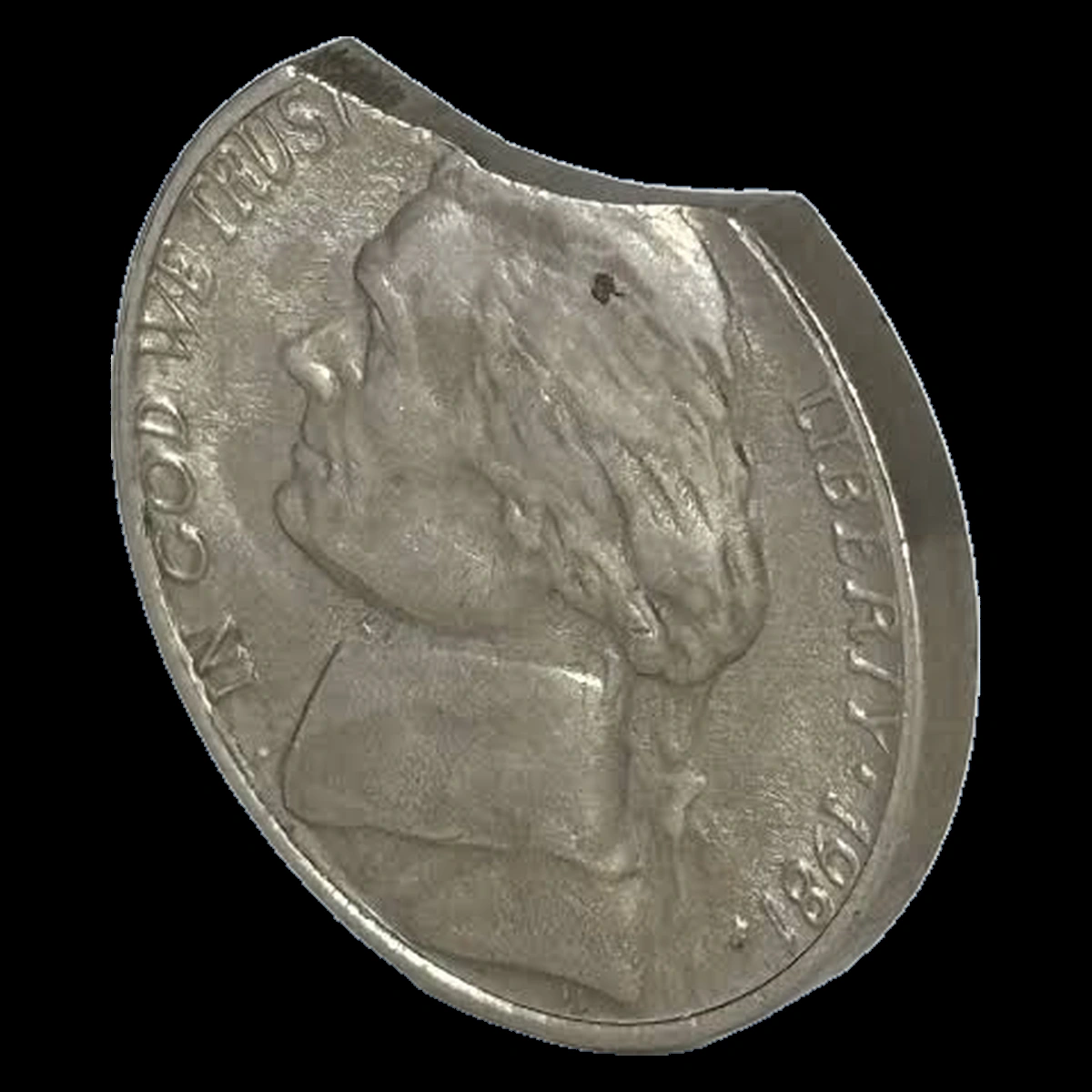
A 1981-P nickel graded NGC MS64 has two clips. The openings existed in the blank before it received the design.
Single curved and straight clips are also reported. Curved openings can come from overlapping blank cuts, while a straight missing section can come from the strip’s outer edge.
How to Identify
Check each opening separately for saw grooves, burrs, and the way nearby struck detail ends. One genuine gap does not prove a second gap is original.
Weakness near or opposite a clip can support the identification. A normal nickel starts at 5 grams and 21.21 mm, so missing metal should reduce weight while intact spans remain useful for size comparison.
What It’s Worth
$20–$250 covers genuine single and double clips. The Philadelphia MS64 double clip appears in a January 2024 sale record at $168.
Two clearly formed gaps may make an attractive display, but size and surface quality still matter. Later edge damage is not equivalent to that recorded double clip.
6. 1981 Nickel Extra Width from a Broadstrike Error
A broadstrike keeps the design on a coin that spreads beyond its usual outline. The collar failed to contain the blank during the blow.
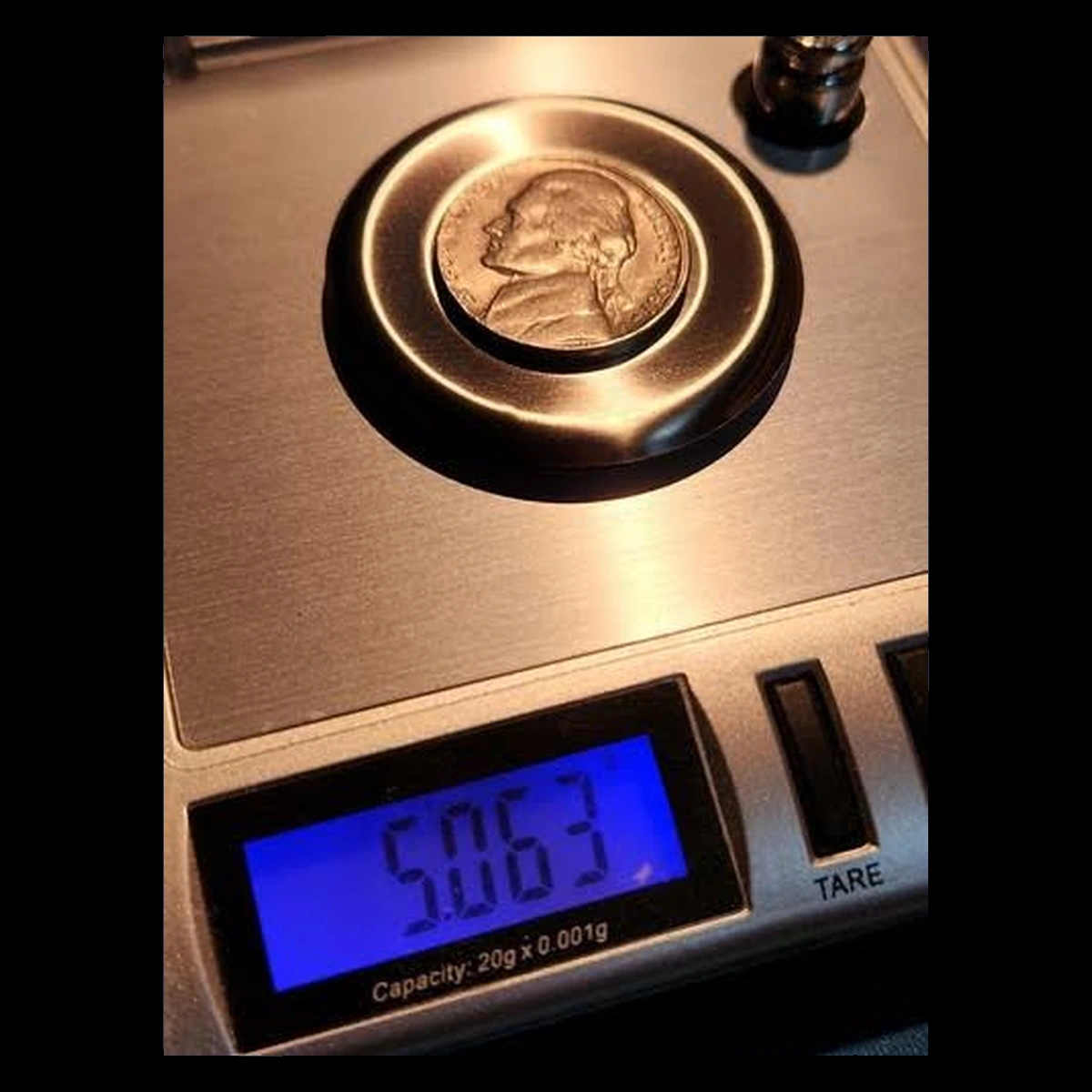
Recorded Philadelphia examples include separate NGC MS66 and PCGS MS66 coins, the latter described as a huge broadstrike. Another example has a Full Steps designation for clear building steps.
How to Identify
Follow the outer lettering around both faces and check that the design remains substantially complete. Measure several directions because the spread may be uneven.
Inspect the expanded border for hammered high points or smeared lettering. A plain edge is normal on a nickel, and Full Steps is a quality designation rather than another error.
What It’s Worth
$40–$400 allows for modest through especially wide attractive broadstrikes. The NGC MS66 coin sold for $115 in August 2010.
The much wider PCGS MS66 example appears in a February 2015 record at about $282. “Huge” describes that specimen rather than a fixed size that every broadstrike must reach.
7. 1981 Nickel Bare Metal beside an Off-Center Strike Error
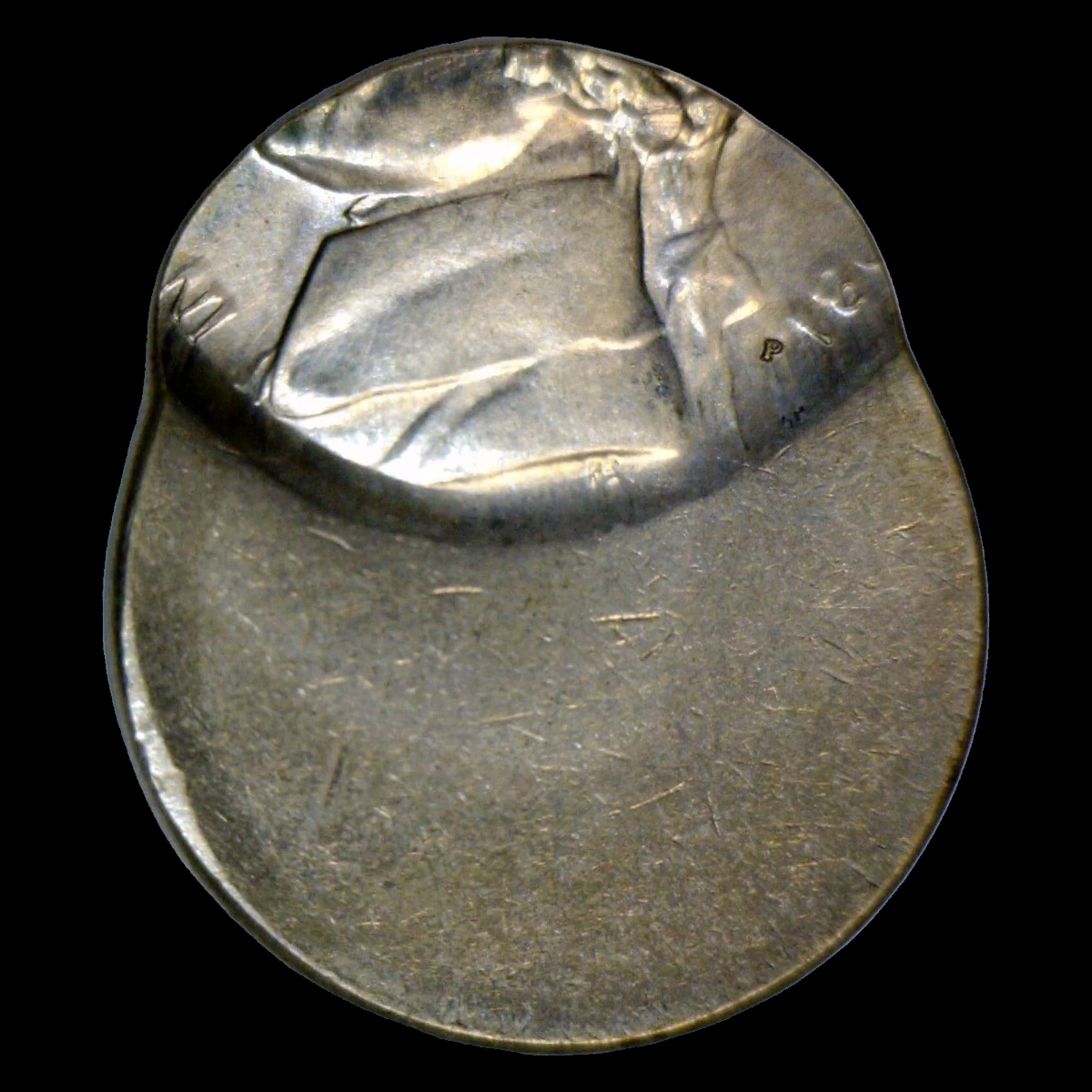
The recorded 1981-P ANACS MS63 coin was struck about 15% off center toward eleven o’clock. Part of its blank missed the dies and remained without design.
How to Identify
Turn the nickel over and compare both displaced striking areas. A normal centered back behind a shifted front suggests a different problem.
Check the boundary of the bare metal for grinding or scraping. Read the date and P from the actual struck portion rather than assuming an identity from a label alone.
What It’s Worth
$25–$250 covers visible 1981 off-center strikes, with the cited 15% type toward the modest end. Greater displacement can attract more interest when the date survives.
The supplied description does not provide that ANACS coin’s auction price. An uneven rim alone is not enough to apply the range.
8. 1981 Nickel Uneven Borders and a Partial Collar Error
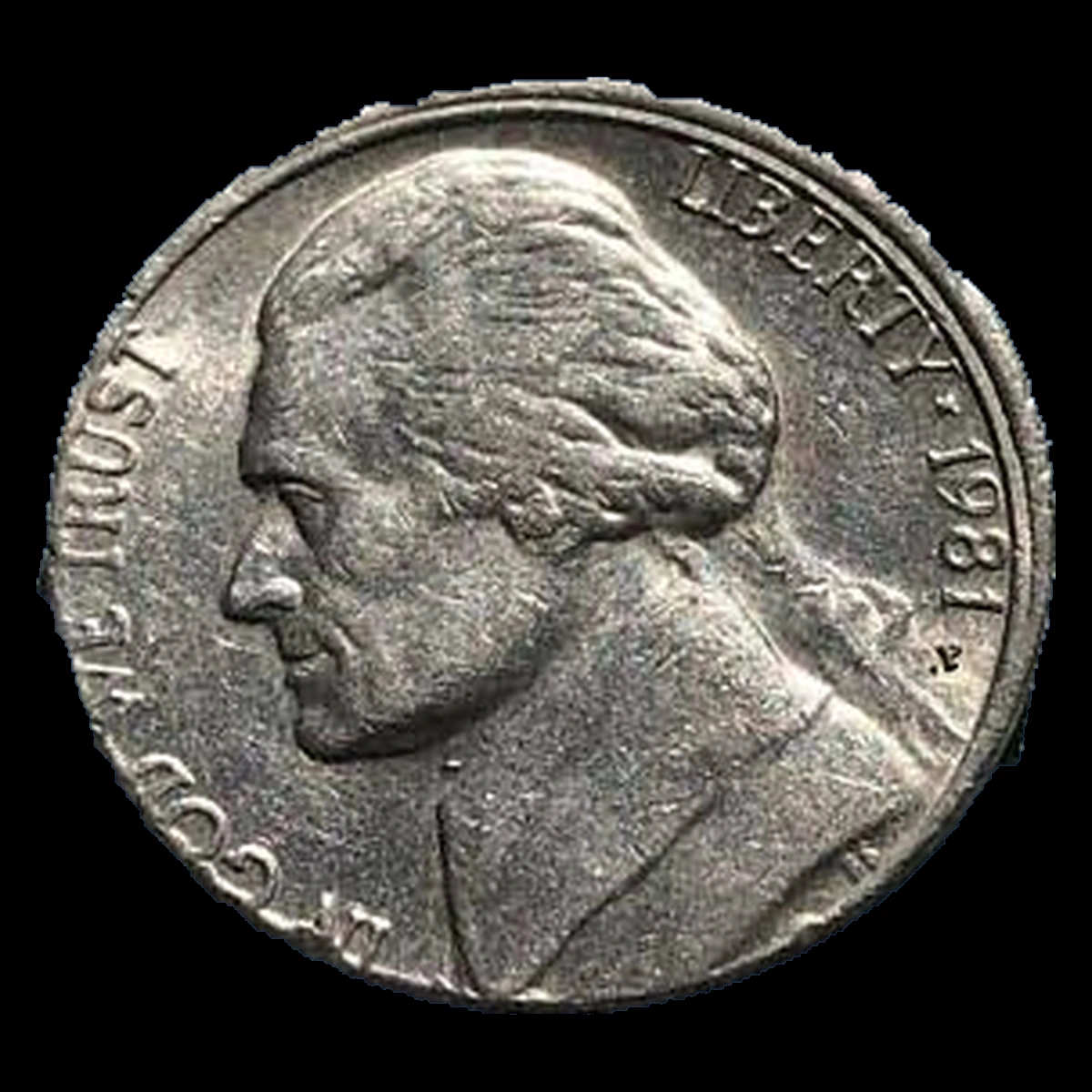
A misaligned front die can shift Jefferson while leaving Monticello more centered. One Philadelphia example was graded NGC MS66 Full Steps.
A separate ANACS AU58 coin combines front misalignment with a partial collar. Part of its edge was contained by the ring while another part spread farther, leaving a step.
How to Identify
Photograph both faces straight down so camera tilt does not distort the rims. Compare the position of the front and back designs.
For the partial collar, examine the edge step in a side view. Check for a cut seam or added ring, and remember that missing edge grooves are not a test on a plain-edged nickel.
What It’s Worth
$10–$500 spans slight circulated shifts through better-preserved, clearer examples. The MS66 Full Steps coin appears in a December 2023 sale record at $432.
A 2012 listing including the AU58 partial-collar coin is recorded at $24. It does not provide a separate price for each feature on the coin.
9. 1981 Nickel A Thin Body from a Split Blank Error
The documented 1981-P split-blank coin weighs 2.91 grams and was graded ANACS MS60. Its blank separated before striking, leaving a thinner piece to receive the design.
How to Identify
Examine how struck letters and portrait details meet the rough separated surface. Design impressed after the split differs from grinding through a finished coin.
Record thickness, diameter, and weight on a loose piece. The 2.91-gram figure belongs to the documented specimen and is not a required weight for every split blank.
What It’s Worth
$30–$400 is the estimate for confirmed examples. The auction index records the ANACS MS60 coin at $30 in August 2021.
Clearer design and better-preserved surfaces can support higher comparisons. Low weight alone does not establish that metal separated at the Mint.
10. 1981 Nickel A Second Design Position from a Double Strike Error
A Philadelphia NGC MS63 example received a second off-center strike. A separate ANACS MS60 coin has an approximately 85% off-center second blow with one side blocked.
A Cornell collection record also describes a second strike as 100% off center without establishing its mint. That wording should not be turned into a claim of two complete readable designs.
How to Identify
Find a portrait part or word in two positions, then follow each impression through the overlap. A recessed backward copy can indicate contact with another coin instead.
On the 85% example, compare the later striking area on both sides to locate the blocked face. Do not name it as front or back without the specimen’s images.
What It’s Worth
$75–$650 covers modest to more dramatic readable double strikes. The NGC MS63 Philadelphia coin appears in a June 2023 sale record at about $124.
The 85% ANACS coin appeared in a five-coin group recorded at about $164 in December 2014. That total should neither become its individual price nor be divided equally among the five coins.
11. 1981 Nickel Nickel Designs on Wrong Blanks Error
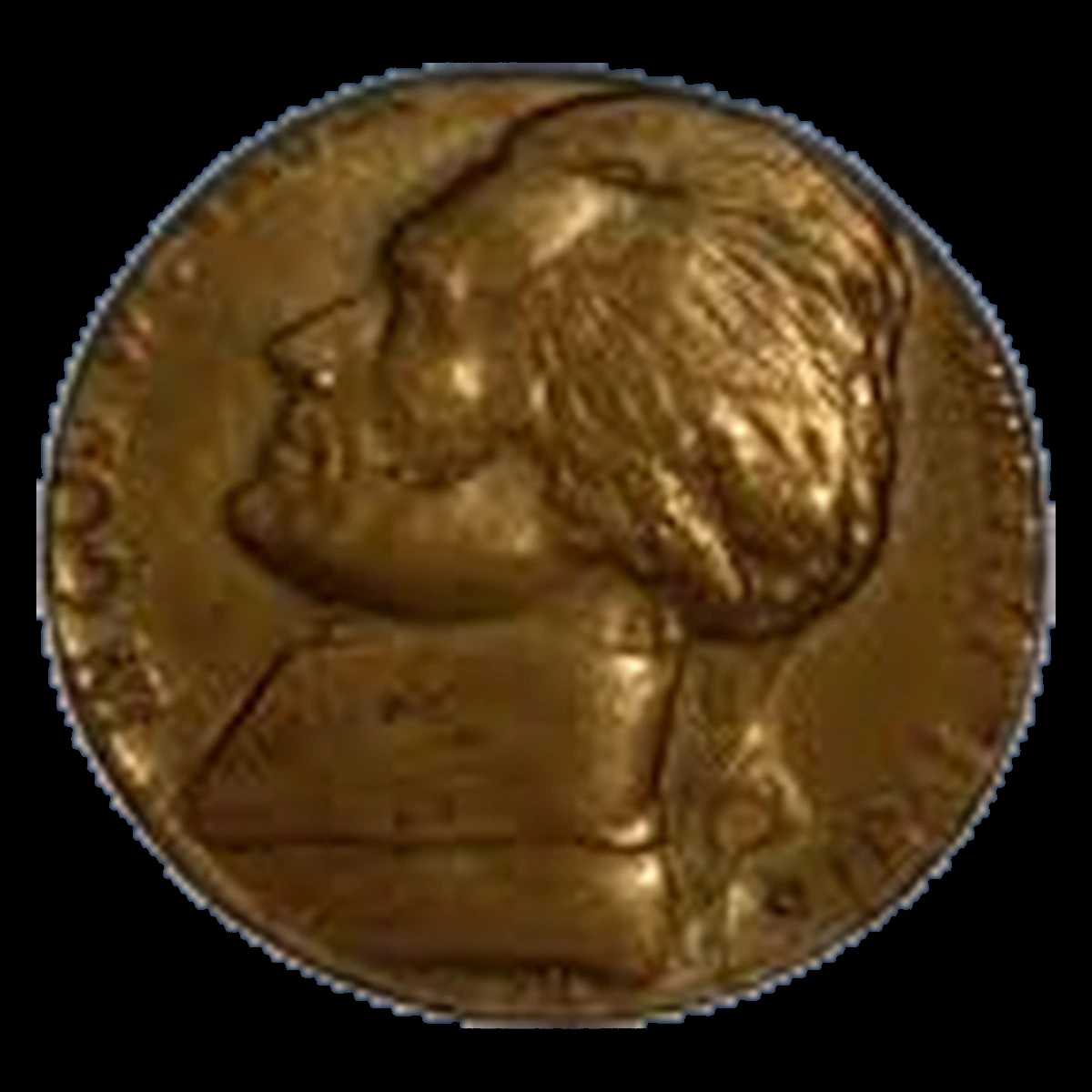
Several 1981-P nickels were struck on smaller copper cent blanks, with recorded weights of 3.03, 3.05, or 3.10 grams. A separate Philadelphia coin was cataloged on an unidentified foreign blank weighing 3.82 grams.
How to Identify
For the cent-blank type, compare the smaller outline and truncated lettering with a period cent’s starting standards of 3.11 grams and 19.05 mm. Added copper plating does not make a normal nickel smaller.
Search for any earlier Lincoln design, which would indicate a finished cent rather than an unused blank. The foreign coin’s country cannot be inferred from 3.82 grams alone.
What It’s Worth
$200–$1,000 is the range for these wrong-blank examples. A 3.03-gram cent-blank coin graded CACG MS63 Red appears in a June 2026 record at about $671.
The 3.82-gram foreign-blank PCGS AU58 coin is listed at $312 in July 2022. They have different blanks and preservation, so one result should not automatically price the other.
12. 1981 Nickel Two Blanks Joined as a Bonded Pair Error
Two blanks entered side by side and were struck off center together. Metal joined their touching edges, creating the documented 1981-P NGC MS65 bonded pair.
The main designs remain strong, but outer lettering is stretched and distorted. Its visible building steps did not receive a separate Full Steps label.
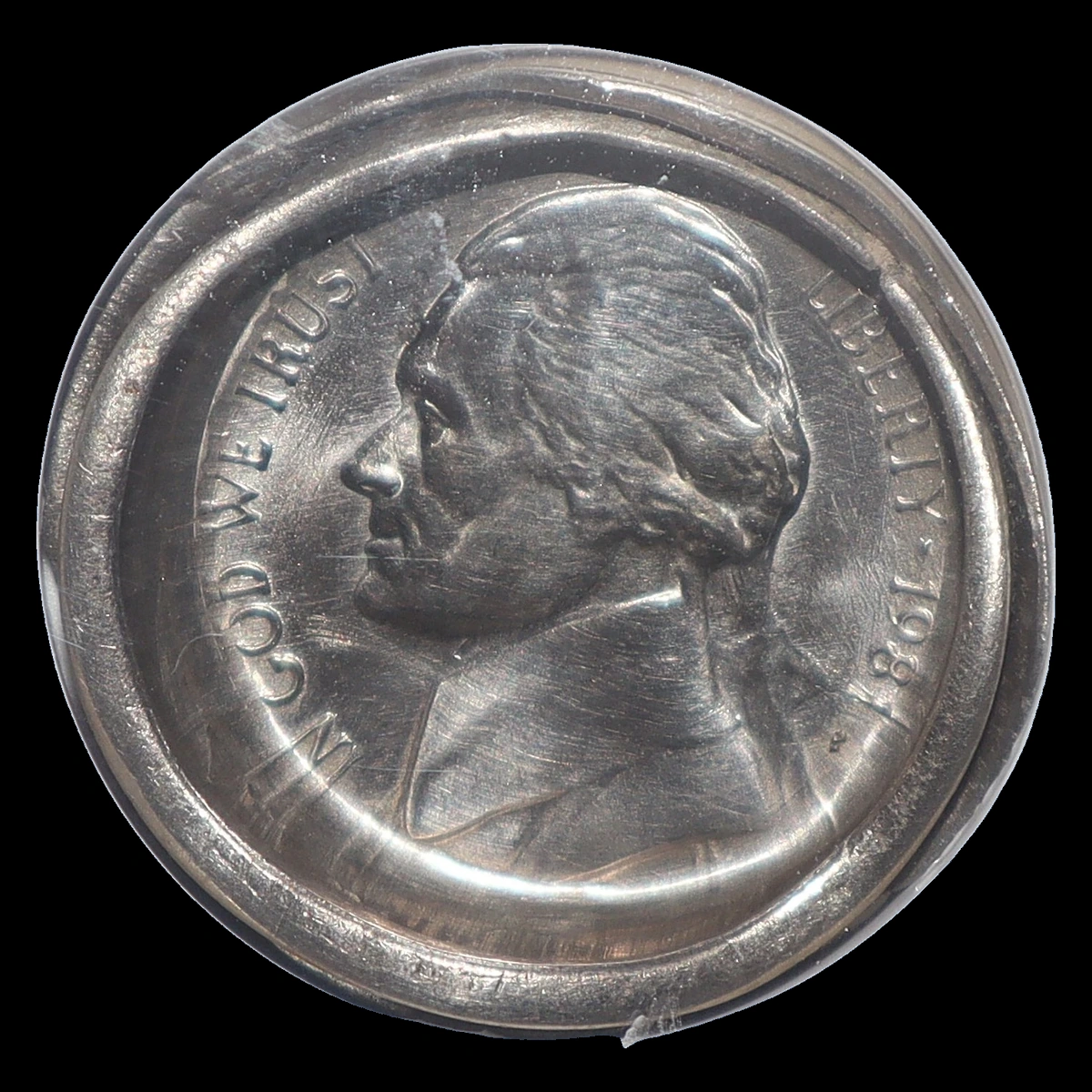
How to Identify
Study the meeting edge with side lighting without bending or pulling the pieces. Look for continuous metal flow rather than glue or a solder bead.
Follow the stretched lettering away from the join on both pieces and rotate photographs to read the surviving date. Their designs should fit the same simultaneous strike.
What It’s Worth
$1,200–$2,500 is the estimate for a comparable pair with a sound connection and readable design. The documented MS65 pair sold for $1,610 in August 2010.
The price covers the entire joined object. Damage to its connection would harm the feature that makes the error distinctive.
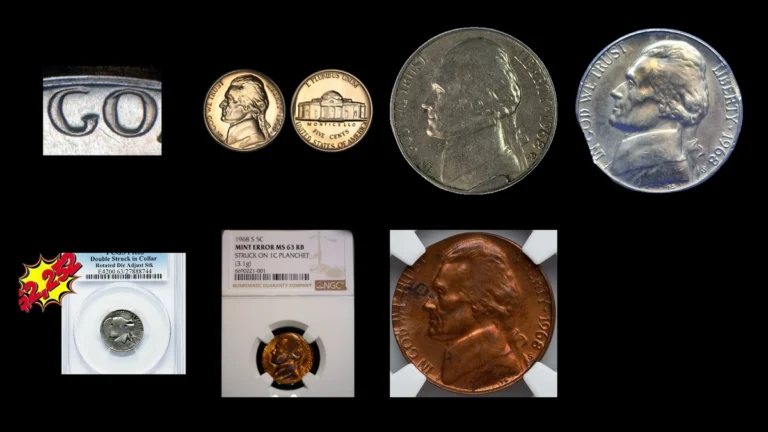
13. 1981 Nickel Two Denominations on One Coin Error
A 1981-P nickel was struck over a finished Lincoln cent, leaving older cent detail beneath it. A different event put a 1981-P quarter design over a flipped 1981 nickel.
In the second case, the original nickel’s mint is not established. The order of the designs matters because the two combinations began with different coins.
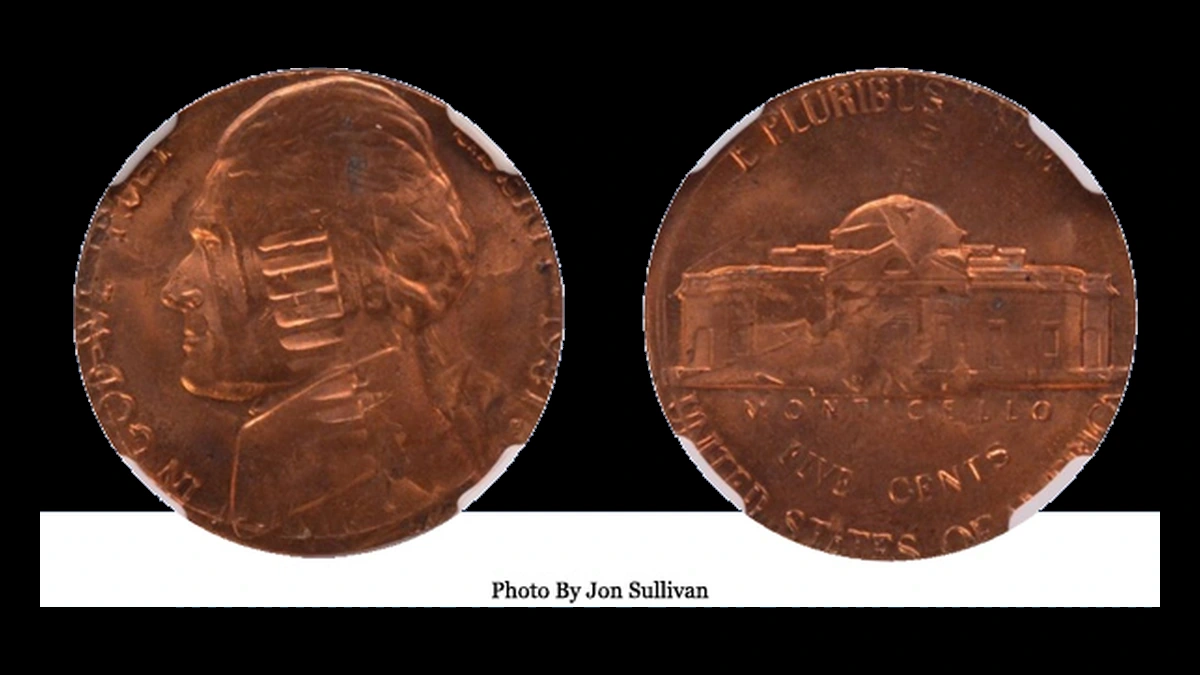
How to Identify
Trace which recognizable design crosses the other: Jefferson over Lincoln, or Washington over the nickel’s features. The newer quarter date alone cannot prove the date of a hidden nickel.
Weight helps distinguish a cent host from a nickel host, but surviving older design establishes that it was already a finished coin. Inspect the edge for later squeezing or assembly.
What It’s Worth
$300–$3,500 covers nickel-over-cent examples around $300–$1,200 and confirmed quarter-over-nickel pieces around $1,000–$3,500. These are prices for each complete error.
A separate 1981-P nickel-over-cent graded NGC MS64 Red and Brown is listed at $528 in September 2024. The higher quarter-over-nickel range is an estimate for a different combination, not a supplied sale of the documented host nickel.
Conclusion
A useful 1981 nickel search moves from small repeated details to the whole object. Raised lines, missing edge sections, extra width, and older designs each point toward a different process.
Keep fragile connections and unusual surfaces untouched. When an example combines several effects, describe the complete coin and compare its price as one object, preserving the differences between individual sales and group totals.