Rare 1884 Dime Errors (List & Pictures)
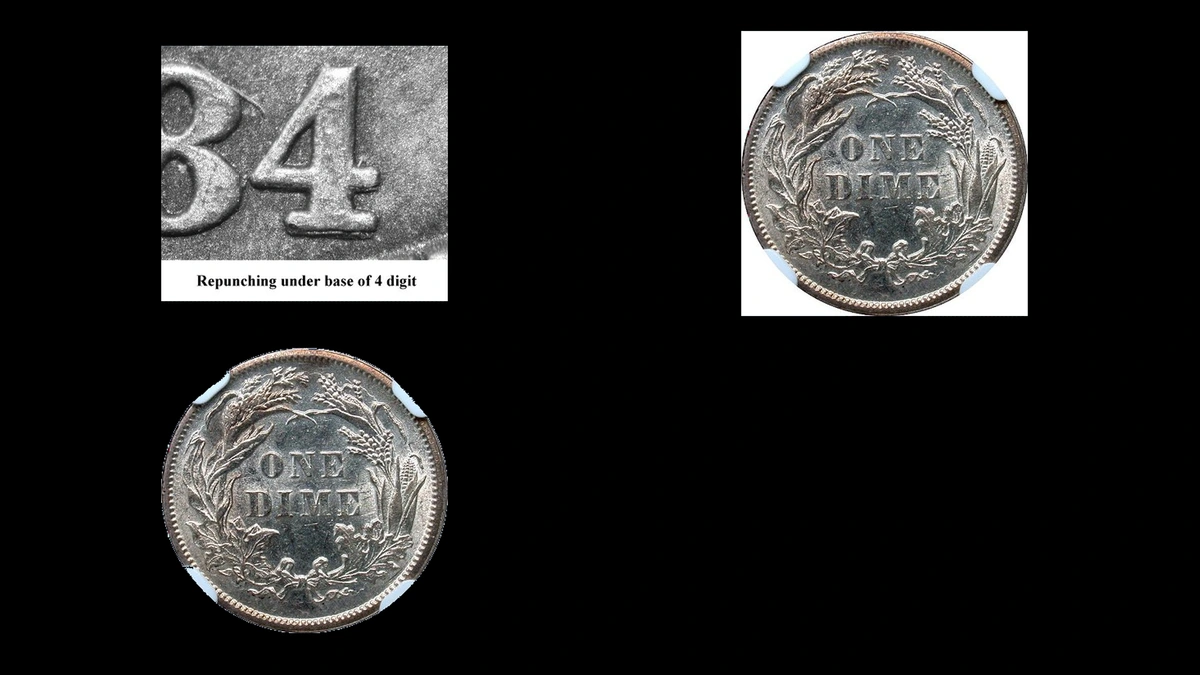
An ordinary 1884 dime graded PCGS MS67 sold for $1,920 in July 2025. The 1884 dime errors below have estimated whole-coin values of $20–$1,800 in the more accessible grades discussed here.
Examine the date, lettering, surface lines, and any disturbed metal in sequence. A regular example weighs 2.50 grams and measures 17.90 millimeters; those measurements support a basic check but do not identify a variety.
| Visible clue | Feature | Estimated whole-coin range |
|---|---|---|
| Remnants beside 1 and 4 | Repunched date | $40–$1,800 |
| Repeated UNITED STATES contours | Doubled die obverse | $40–$1,500 |
| Raised lines or spots | Die cracks and chips | $20–$1,200 |
| Opposite-design traces | Die clash | $20–$1,000 |
| Peeling or interrupted metal | Defective planchet | $40–$1,400 |
1. 1884 Dime Earlier numeral traces at both ends: repunched date Error
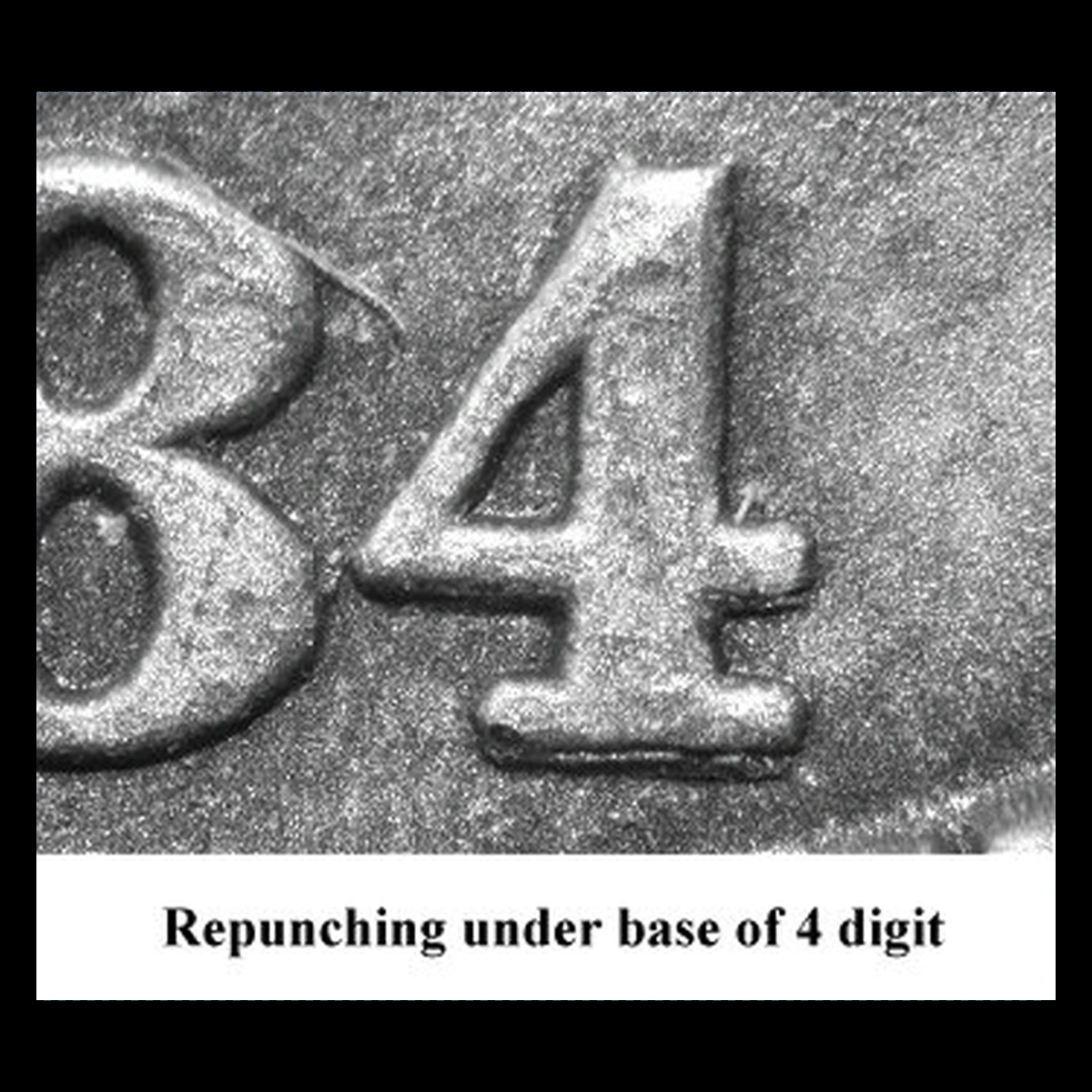
The useful remnants lie beside the 1 and the final 4. The middle digits do not need equally prominent extra outlines for this particular date pattern.
Repeated entries of the date punch left part of an earlier position in the die. Its paired reverse also developed cracks, giving a second face to examine.
How to Identify
Study the complete shapes of 1 and 4 and follow each extra edge. The remnants should fit parts of earlier numerals rather than random dents or scratches.
Compare the date’s placement and associated reverse cracks with the documented variety. Cracks provide supporting evidence, but do not mean the finished dime was struck twice.
Wear can soften the small traces, and polishing can remove them. Normal weight and diameter cannot replace a direct match to the numeral details.
What It’s Worth
Estimated whole-coin values are $40–$1,800 for circulated through attractive unworn examples. Strong attribution and original surfaces provide a better basis than vaguely thick digits.
Ordinary 1884 sales include a PCGS MS62 at $264 in April 2025 and a PCGS MS67 at $1,920 that July. Neither is identified here as this repunched-date variety.
The exceptional MS67 shows why a normal coin can exceed the introductory range. It does not establish that price for a lower-grade dime with repeated date detail.
2. 1884 Dime Repeated edges in UNITED STATES: doubled die obverse Error
The front lettering carries added raised contours on a documented variety with a medium-height, level date. Those repeated design elements were already in the die before it struck the coin.
This differs from separately repunching the date. A coin can receive the doubled letters in one strike, without having a repeated date or a second displaced portrait.
How to Identify
Compare neighboring letters in UNITED STATES with the 1884 variety gallery. Match the added contours across the affected area rather than relying on one thick stroke.
Check the medium-height, level date as a companion feature. Doubling confined to the date would not establish this lettering variety.
Move the light across the letters to separate rounded repeated outlines from flat shelf-like edges and reflections. A clear image of the whole pattern is more useful than an extremely tight crop of one bright line.
What It’s Worth
The estimated whole-coin range is $40–$1,500 for circulated through attractive unworn examples with confirmed doubled lettering. Preservation and clarity of the diagnostics influence the assessment.
Ordinary MS63 through MS66 sales of $336–$840 provide condition context. They are not transaction records for this doubled-die variety, so the upper estimate is not a guaranteed error premium.
3. 1884 Dime Ridges or small raised spots: die cracks and chips Error
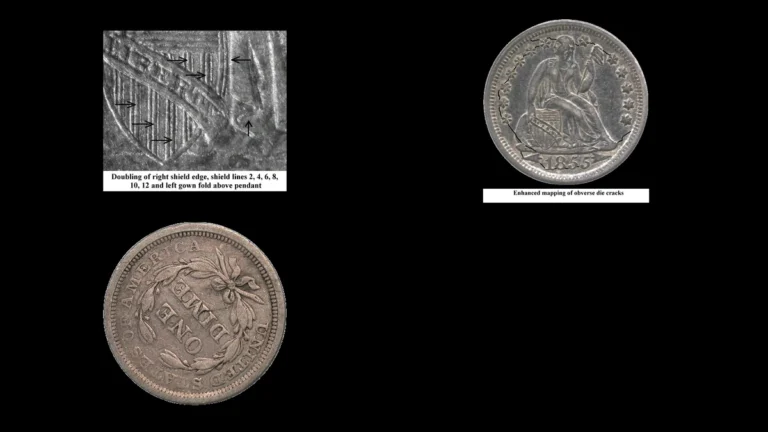
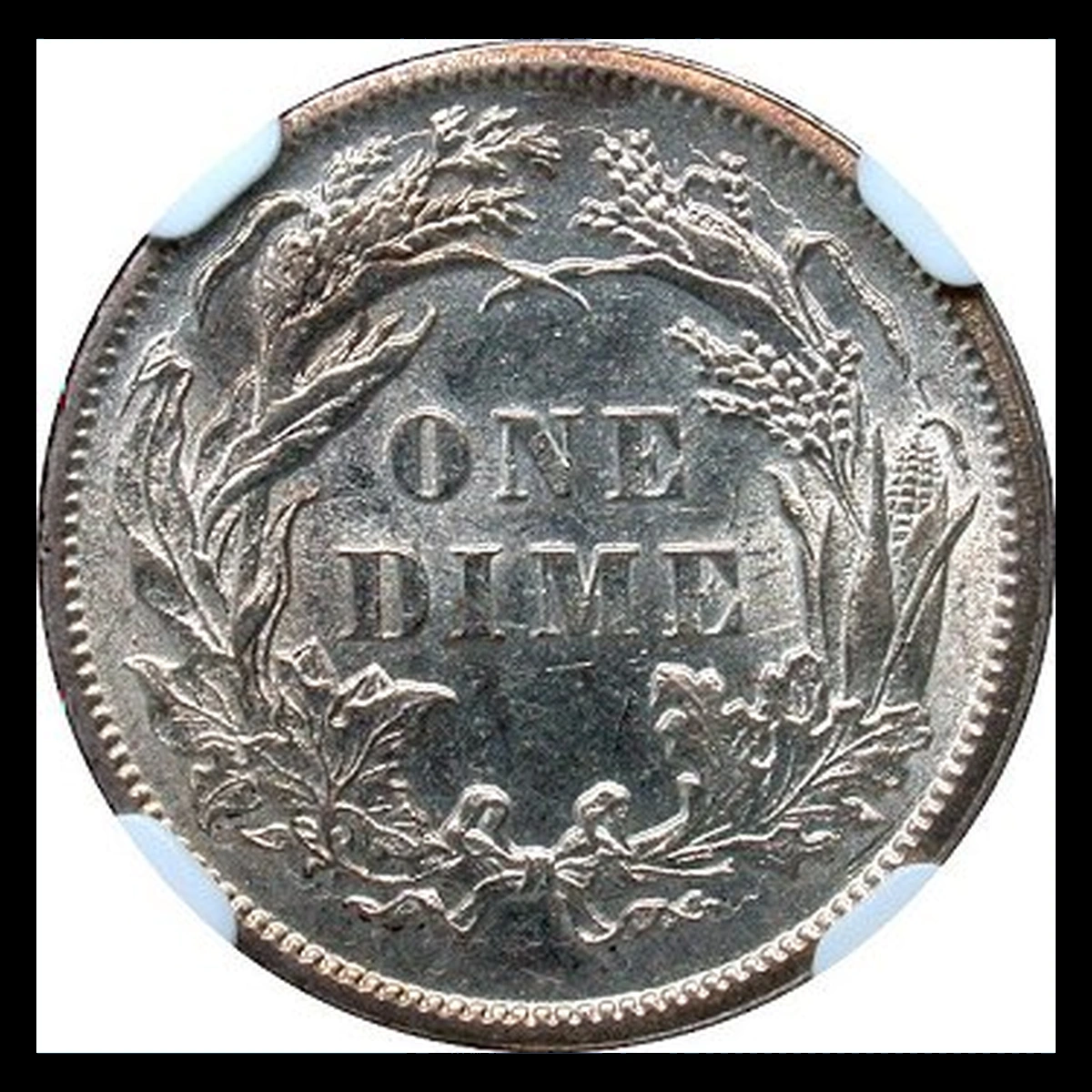
One recorded front crack runs from STATES toward Liberty’s head. Separate examples have reverse cracks, including a die paired with the repunched date.
Metal entering a narrow die crack forms a ridge; a small missing chip can leave a raised spot. A larger break connected to the die’s edge produces a rim-connected patch called a cud.
How to Identify
Start at STATES and trace the front line toward the head under low-angle light. The expected feature rises above the struck surface rather than cutting into it.
For a reverse example, follow its own route through the wreath or open area. The front and reverse reports do not establish one universal crack pattern.
Inspect raised spots for a natural connection to the struck metal. Solder or attached material can imitate a die chip, while rim impacts can produce misleading displaced metal.
What It’s Worth
Worn through well-preserved circulation examples with visible die damage have an estimated whole-coin range of $20–$1,200. A fine crack may add little even when it is genuine.
1884 sale records include an NGC AU58 at $154 in September 2025 and a PCGS MS63 at $336 that November. These ordinary coins provide lightly worn and unworn comparisons, not prices for specific crack routes.
4. 1884 Dime An unfamiliar contour beside the design: clashed dies Error
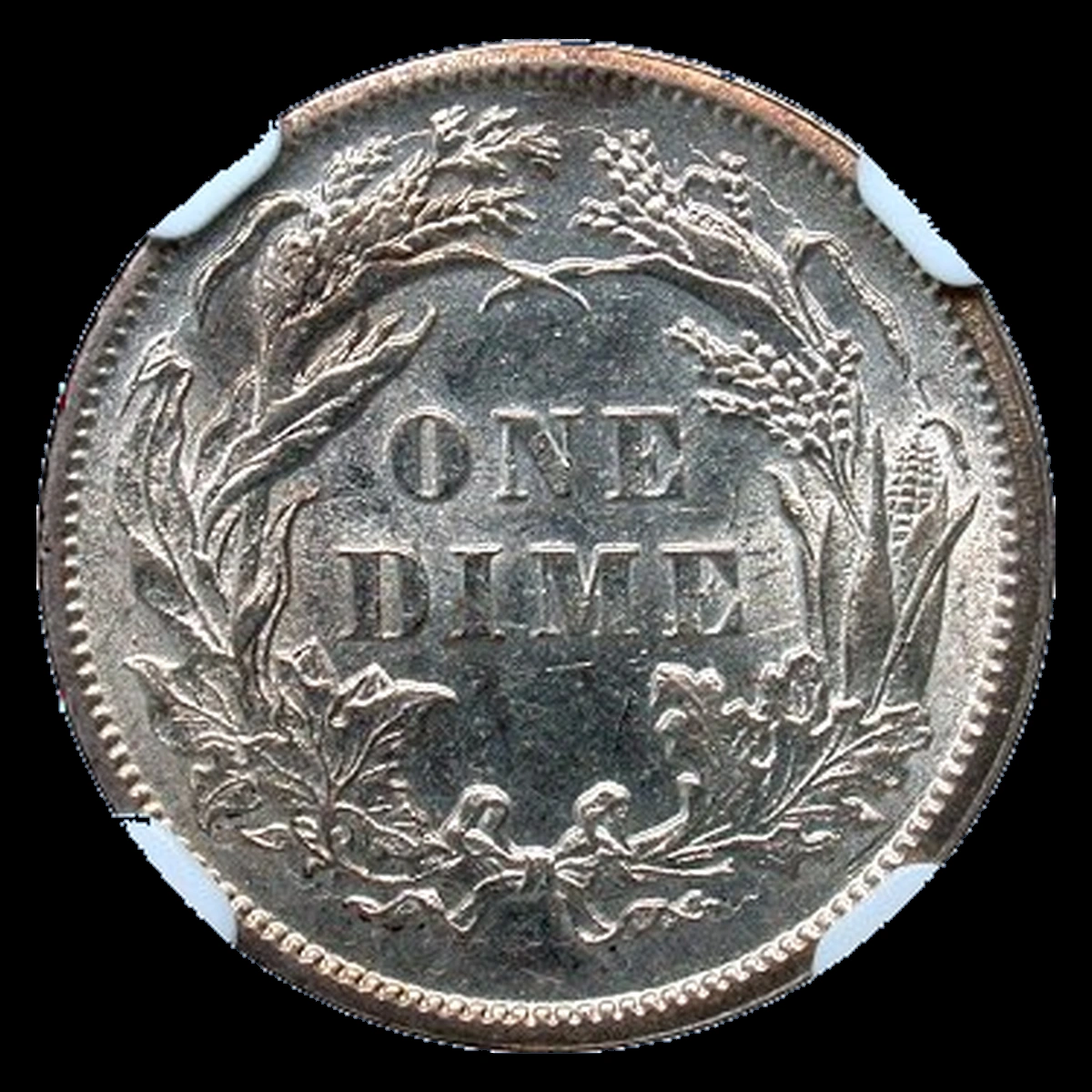
Some 1884 varieties have light clashes on both faces; another combines a clashed front with a cracked and clashed reverse. Each needs its own comparison rather than one photograph standing for every pattern.
The added contours originate when bare dies collide and acquire traces of the opposing design. Subsequent coins can carry those traces alongside their intended picture.
How to Identify
Identify a recognizable part of the opposite design within the unwanted shape. Keep the comparison orientation consistent so an arbitrarily rotated closeup does not create an imagined match.
Change the lighting to distinguish shallow contours from scratches and parallel cleaning lines. If reverse cracks are present, trace them separately from the clash shapes.
A crack records a split in the tool; a clash records contact with the other die’s design. The two can coexist without being the same feature.
What It’s Worth
Estimated whole-coin values are $20–$1,000 from circulated through attractive unworn examples with clear clashes. Surface quality still matters alongside the extra design traces.
An ordinary NGC MS65 sold for $576 in January 2026, and a PCGS MS66 brought $840 in June 2025. Neither was identified as a clash variety, so these amounts are preservation comparisons only.
5. 1884 Dime A peel or flaw in the silver: defective planchet Error
A planchet is the metal disc prepared for striking. A defect in that disc can leave a rough patch, thin peeling layer, or interruption in the finished design.
The reported 1884 category does not establish a single position for the flaw. Its relationship with the surrounding struck design is more useful than assuming a standard location.
How to Identify
Leave any attached flake in place and photograph the boundary. Look for a thin separating layer or design detail struck around or across the affected metal.
A later gouge damages an already finished surface, while corrosion has another cause again. Inspect both faces and the edge for tool marks, a mounting scar, or corresponding impact damage.
A shallow flaw may barely change the weight. Low weight alone cannot distinguish an original metal problem from later removal, so use measurements with the surface evidence.
What It’s Worth
A genuine Mint-made metal flaw has an estimated whole-coin range of $40–$1,400 for circulated or lower-grade unworn examples. Its extent and the condition of the remaining coin both affect value.
An 1893-O Barber dime with front-side peeling, graded NGC MS63, sold for $381.88 in December 2014. That older comparison involves a different year and design using the same silver alloy.
It is not a recorded sale of an 1884 defective-planchet dime. A fresh scrape or corrosion patch cannot use the estimate without evidence of an original metal defect.
Conclusion
A repeated numeral, a repeated letter, a raised ridge, and a peeling layer each call for a different comparison. Work from the feature’s shape and location instead of treating every unusual line as the same kind of error.
The supplied ordinary-coin sales show how strongly preservation changes prices. Match the actual variety and condition before assigning a premium, and leave loose metal and delicate raised details untouched.