Rare 1803 Dime Errors (List & Pictures)
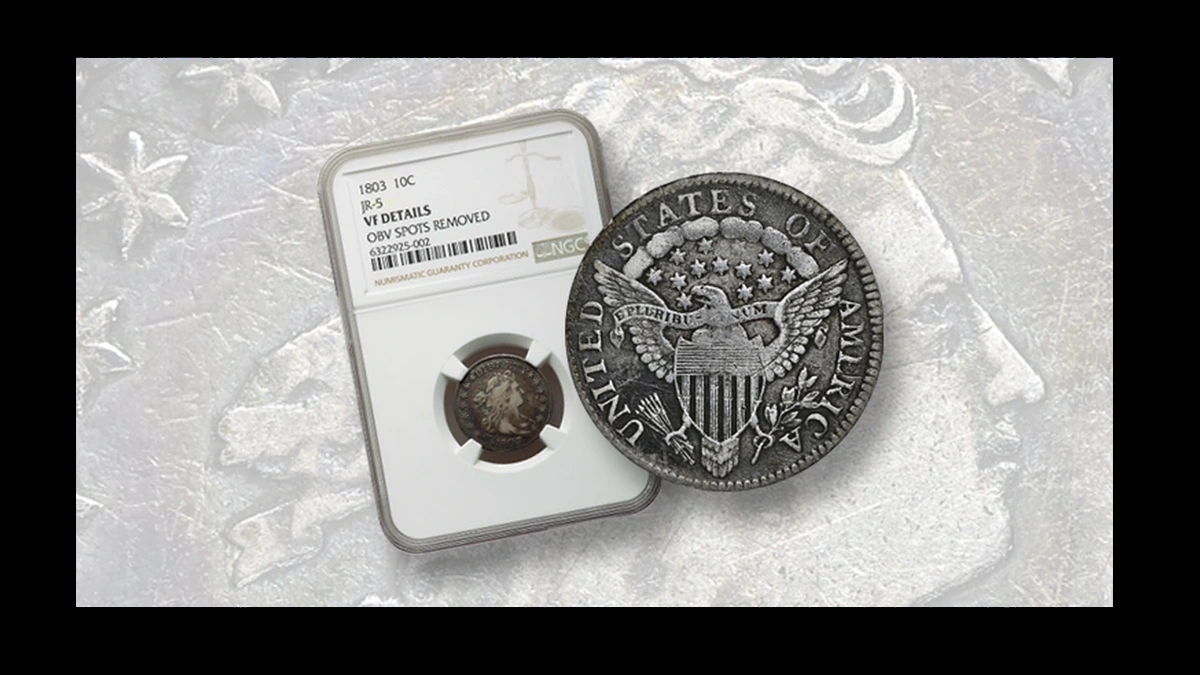
Nine points on one tiny star provide the starting clue for these 1803 dime errors. Estimated values of $2,000–$10,000 apply to worn examples of the early dime and its variety; a documented JR-5 brought $6,300 in February 2022.
Examine the reverse star first, then use the date on the front to narrow the identification.
1803 Dime The first reverse star has extra tips: Recut Reverse Star Error
Most stars in this design have six points, so a nine-pointed outline deserves a closer look. The unusual first star on the reverse of certain 1803 Draped Bust dimes reflects work performed on the die before those coins were struck.
A die is the steel tool carrying the coin’s design. Recutting the star left extra parts of its outline in that tool, which then reproduced the feature on multiple coins.
This is therefore a repeating die variety, not evidence that every affected dime was struck twice. Two catalog varieties, JR-1 and JR-5, share the recut reverse star.
How to Identify
With the reverse upright, inspect the first star under a 10× magnifier and follow its outside edge. Count actual tips in the raised design, taking care not to include a scratch or a bright reflection as an extra point.
A sharp reference photograph is especially helpful on a worn coin. If wear prevents a reliable count, an impression of a thick or untidy star is not enough to establish the feature.
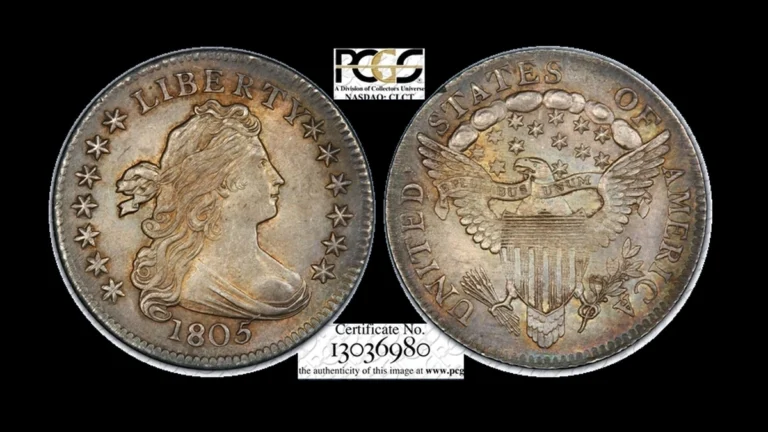
Once the unusual reverse is matched, turn to the date. The recorded JR-5 has a right-leaning 3 whose upper portion runs roughly parallel to the line beneath Liberty’s bust.
That front die was also used for JR-4, so neither side should be considered alone. The combination of the correct date arrangement and the shared nine-pointed star is what matters when assessing a possible JR-5.
Look for fresh incisions or disturbed metal around the star that might indicate later carving. Deliberately cutting an extra point into an old coin does not create the original die variety.
An accessible coin can also be checked against the original specifications: about 2.70 grams, 19.8 millimeters, approximately 89.2% silver, and a grooved edge. Wear may reduce the weight, and these general checks do not replace matching the design details.
What It’s Worth
Worn examples have an estimated $2,000–$10,000 whole-coin range. This includes the value of an early United States dime, its specific variety, and its condition.
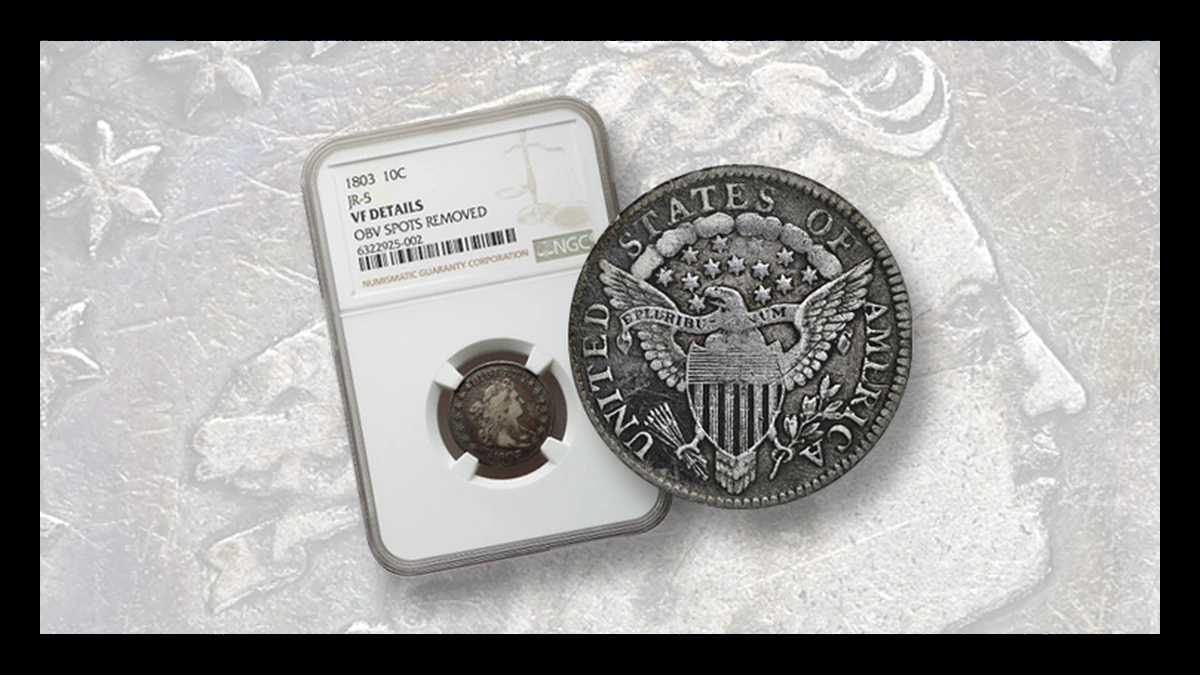
Coin World reported a JR-5 selling at Heritage for $6,300 in February 2022. NGC described that coin as Very Fine Details, meaning it had wear appropriate to that condition level as well as a problem preventing a normal numerical grade.
Spots had been removed from its obverse. That treatment is relevant to the result and makes the coin a poor direct comparison for an example with untouched surfaces.
The nine-pointed star can identify an interesting reverse, but it does not automatically assign a $6,300 value. Correctly separating JR-1 from JR-5 and describing the surfaces are necessary parts of a meaningful comparison.
Conclusion
The star supplies the first clue; the front design completes the investigation. Count nine genuine points, compare the position of the 3, and make sure both sides support the proposed variety.
Values reflect the complete 1803 dime rather than an isolated star premium. Keep the documented sale’s spot removal in view when comparing it with another coin in the estimated $2,000–$10,000 range.