Rare 1884 Half Dollar Errors (List & Pictures)
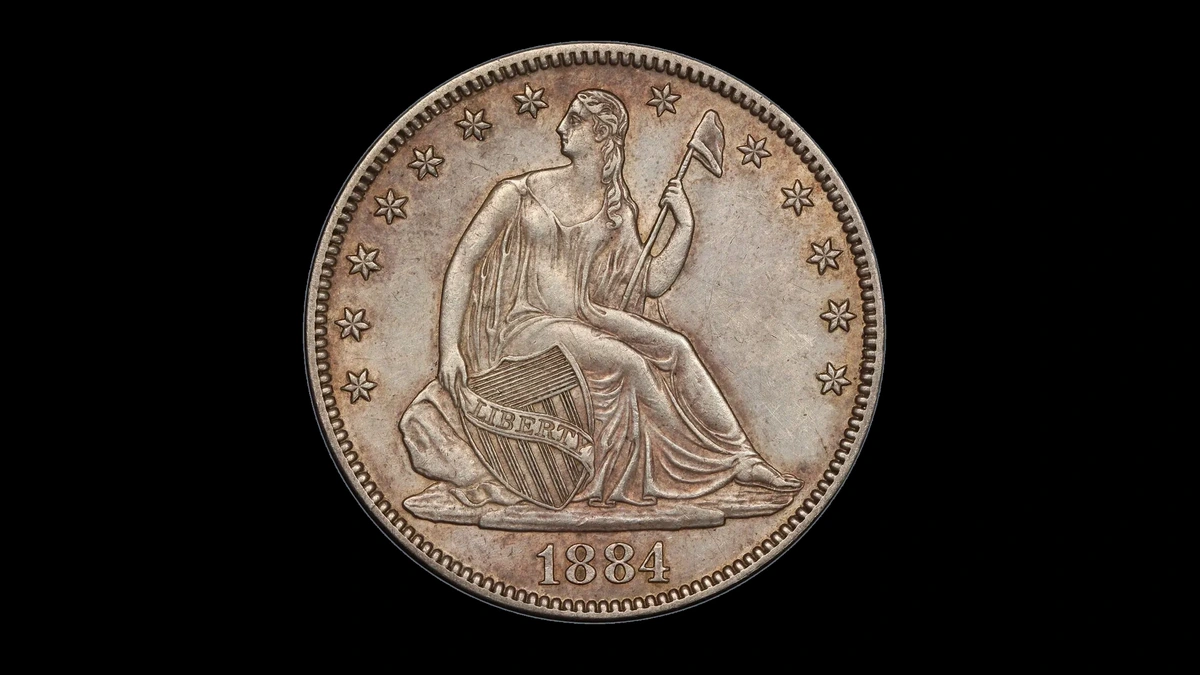
The final 4 holds the key to the 1884 half dollar errors covered here: a tiny surviving piece of a second date impression. Examine that numeral first, then compare the preservation of the whole coin.
Identified MS64–MS66 examples have an estimated value of $2,500–$5,000. The much higher $43,125 paid for an exceptional 1884 half dollar in November 2010 chiefly reflects its outstanding condition.
1884 Half Dollar An Extra Foot Below the 4: Repunched Date Error
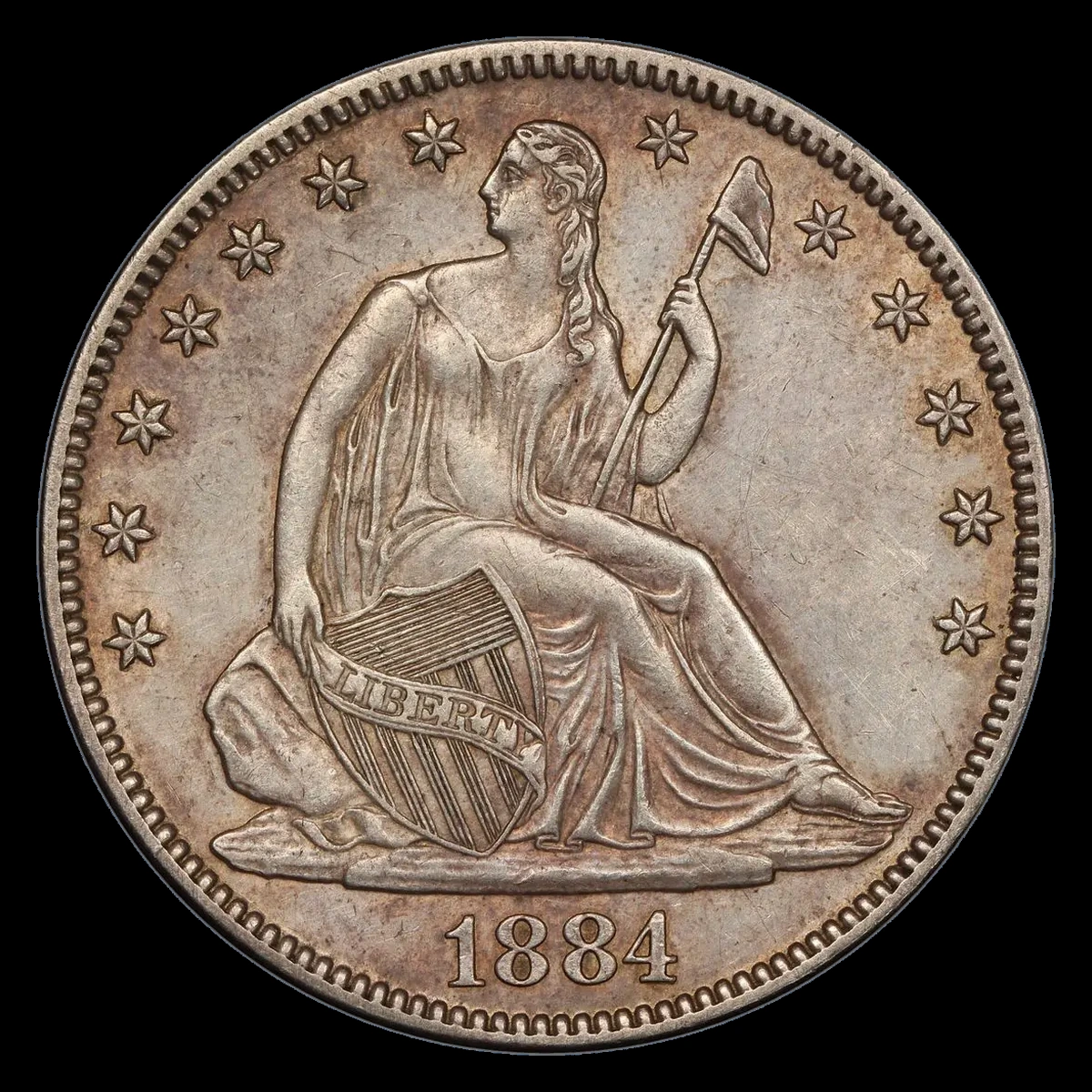
Collectors use the name WB-102 for this Philadelphia repunched-date variety. The visible evidence is small: part of an earlier 4 protrudes beneath the final digit.
The doubling began while a worker was preparing the steel die that would stamp the coins. Repositioning the date punch left part of the first impression uncovered, and the finished die reproduced it in raised silver.
WB-102 occurs on regular coinage, including pieces with reflective backgrounds. That surface appearance needs a separate judgment from the extra digit when distinguishing regular coins from proofs made for collectors.
How to Identify
Set a lamp to one side and inspect the 4 through a 10× magnifier. Keep the entire digit visible before concentrating on the little projection beneath it.
The projection should make sense as part of another 4. Compare its outline and position with an identified WB-102 coin rather than treating any nearby bump as a match.
Turn the coin gently under the light. A reflection can disappear or change shape, while a raised feature remains fixed in the metal.
A hit against the date can push silver outward and create a misleading lip. Also rule out a cut beside the numeral or a flat, shelf-like edge caused by movement during striking.
For an unmounted coin, normal dimensions provide a separate basic check: approximately 12.50 grams, 30.6 mm across, and a grooved edge. These figures cannot confirm WB-102, but a substantial mismatch calls for a closer examination of the coin itself.
What It’s Worth
Estimated range: $2,500–$5,000 for examples graded MS64 through MS66. MS means Mint State, with no circulation wear; the numbers describe differences in preservation within that group.
A Heritage WB-102 example graded NGC MS64 brought $2,760 in January 2025. Another example graded NGC MS65 sold for $3,120 in August 2024.
The $43,125 result recorded for an MS67 1884 half dollar illustrates the market for an outstanding coin of this scarce date. It does not establish a $43,125 premium for the extra stroke.
Conclusion
WB-102 identification rests on the shape below the 4, not the brightness of the silver or a high auction headline. Match that small remnant before considering a variety value.
The supplied MS64 and MS65 sales sit comfortably inside the $2,500–$5,000 estimate. The far higher MS67 result concerns exceptional preservation, so a coin with more marks or wear needs a different comparison.