Rare 2020 Half Dollar Errors (List & Pictures)
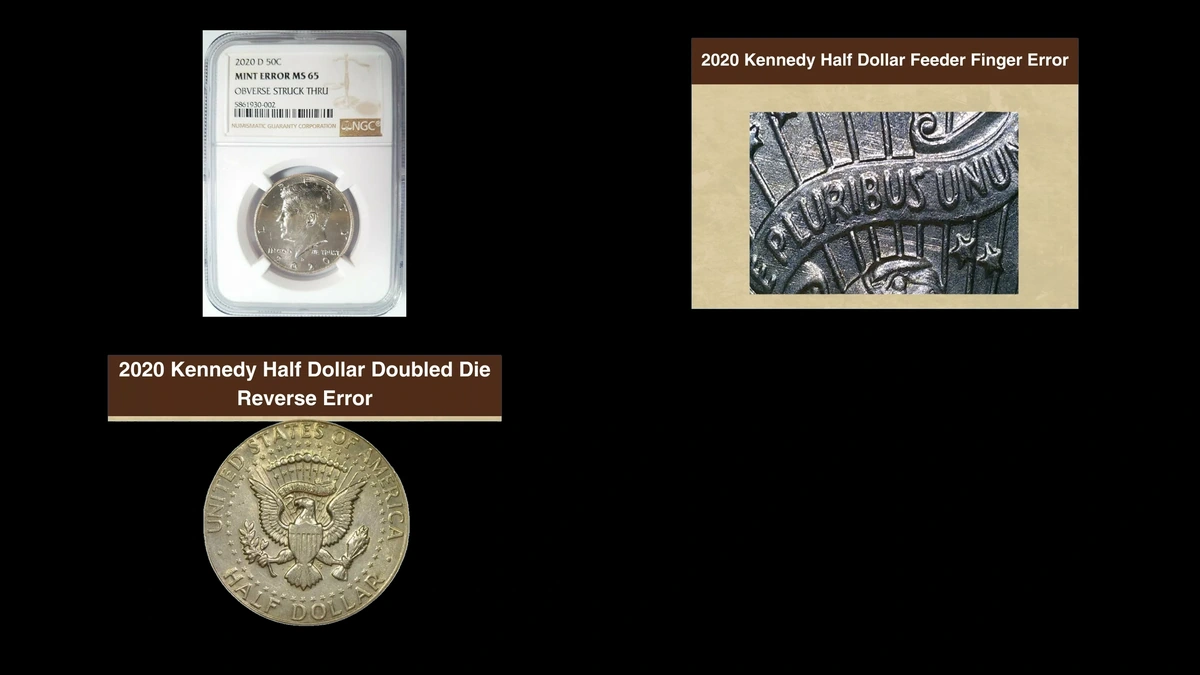
A collector found roughly 20–25 Denver halves with interrupted front detail in one 200-coin Mint bag. Such modest finds are a useful starting point for 2020 Kennedy half dollar errors.
The estimated ranges here span $3–$200. A year guide reports a clipped-coin sale of $170, although its original transaction is not independently established in the supplied material.
Work from Kennedy’s portrait and mintmark to the back, then check the edge and alignment.
| Where you notice a change | Feature | Estimated range |
|---|---|---|
| Weak patches beside Kennedy | Strike-through | $15–$75 |
| Parallel raised lines | Reported feeder-finger die damage | $3–$5 |
| A closed-looking P or D | Filled-mintmark report | $5–$10 |
| A narrow raised route | Die crack | $10–$30 |
| Extra motto outlines | Front doubled die | $15–$40 |
| Extra eagle-side details | Reverse doubled die | $15–$50 |
| A gap in the edge | Clip | $40–$170 |
| A wider, displaced design | Reported off-center broadstrike | $50–$150 |
| A copper face | Missing clad layer | $50–$200 |
| A tilted back after a flip | Rotated dies | $10–$30 |
Ordinary clad coins weigh 11.34 grams and have bonded outer layers over a copper center. The normal 2020-S silver Proof uses 99.9% silver and weighs 12.685 grams; both types measure about 30.61 mm across.
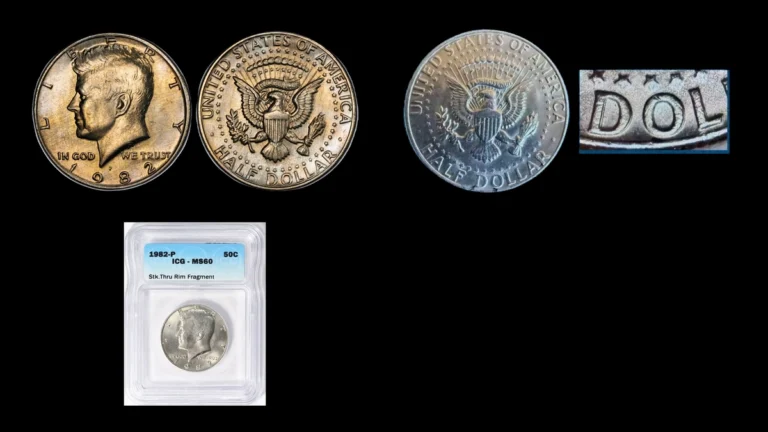
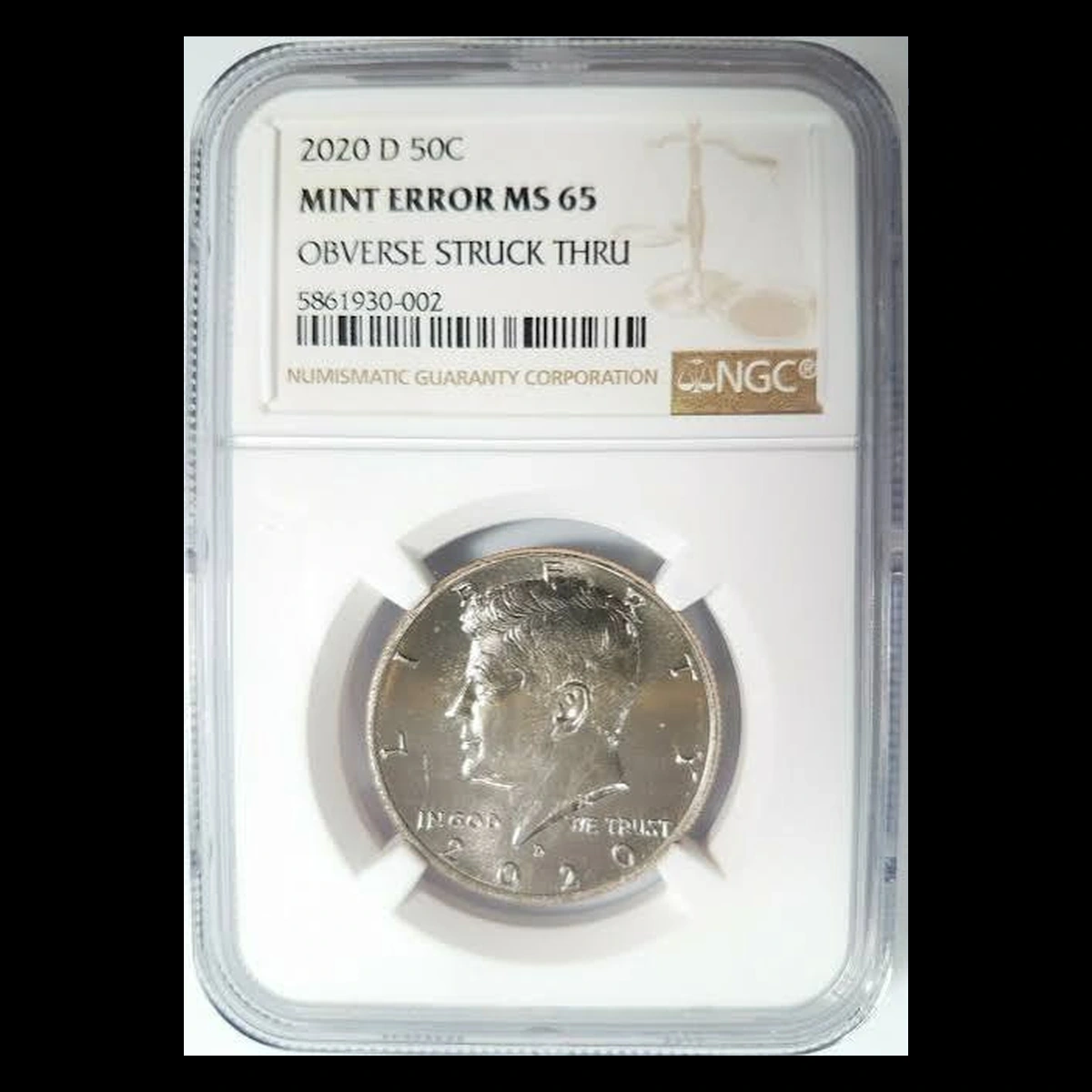
1. 2020 Half Dollar Patches beside the Portrait Lose Detail: Grease or Debris Strike-Through Error
On a stronger Denver example from the reported Mint-bag finds, a large affected area lies in front of Kennedy’s face and a smaller area behind it. Another collector reported similar Philadelphia and Denver finds.
Material between the die and blank interrupted the design. The collectors suggested grease, but the surviving surface must support any more specific claim about what was present.
How to Identify
Compare each weak patch with the sharp design beside it. A localized interruption differs from wear spread across exposed high points.
Inspect the boundaries for scraping channels or metal pushed up by an impact. Record the actual mintmark rather than assigning all reported examples to Denver.
A smooth patch does not prove cloth, wire, or a particular solid object. Let any impressed texture guide that narrower description.
What It’s Worth
$15–$75 is the estimate for ordinary clad examples. Larger clear interruptions on attractive surfaces fit higher than slight weakness.
The collector discussion gives no price for the bag finds. A separate guide reports a $57 cheek-area strike-through sale, which is not the value paid for each coin in that bag.
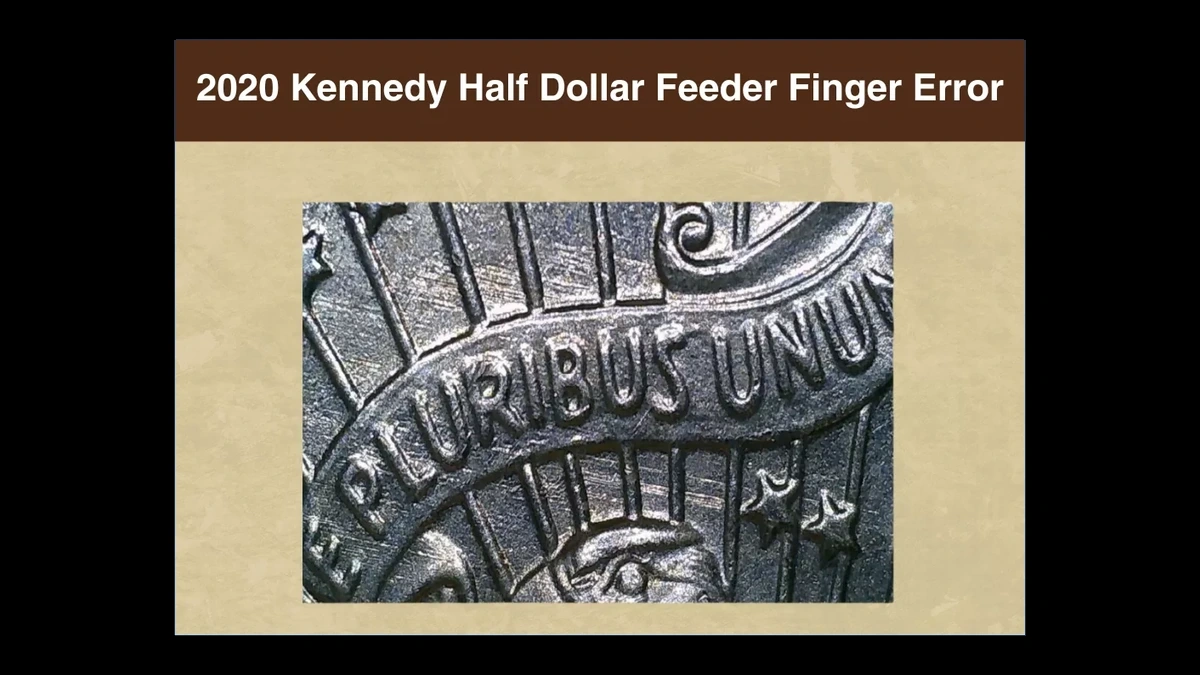
2. 2020 Half Dollar Parallel Lines Stand above the Surface: Reported Feeder-Finger Damage Error
A feeder finger helps move coin blanks through the press. If it scratches a die, the grooves in the steel can become raised lines on coins struck afterward.
The Denver report combines this proposed damage with strike-through marks. The raised lines and blocked design need separate checks even when found together.
How to Identify
Light the portrait from the side and compare several lines under magnification. Establish whether they rise above the surface or cut down into it.
An exact pattern repeated on another coin supports a mark carried by the die. Random recessed scratches on finished coins do not establish feeder-finger damage.
Keep 2020 and D in the full views. The pattern matters more than one bright edge in a cropped image.
What It’s Worth
$3–$5 is the guide estimate for minor examples. These are inexpensive collecting pieces even when the marks are genuine.
The reported $2.99 sale concerned a lot described with both feeder-finger and strike-through features. It was not a separate price for every coin or every feature.
3. 2020 Half Dollar The Mintmark’s Center Looks Closed: Filled-Letter Report Error
A small piece breaking from the die can allow extra metal to fill part of P or D. It may form a raised bridge or lump in the letter’s opening.
A blocked recess can instead prevent part of the letter from forming. The reports use “filled mintmark” for different appearances, so added relief and missing detail must be distinguished.
How to Identify
Compare the letter below Kennedy’s neck with a sharp normal P or D. Use side lighting to decide whether the unusual area is raised fill or weak relief.
Dirt or later flattening can also close the opening visually. Do not scrape it; inspect whether the material joins the struck surface naturally.
A blurry photograph cannot settle the cause. The height and structure of the feature are the useful clues.
What It’s Worth
$5–$10 is the estimate for visible original mintmark abnormalities on ungraded coins. The market discussion provides no named-variety auction record.
A clear raised chip is easier to demonstrate than indistinct lettering. Dirt or poor lighting does not justify the same allowance.
4. 2020 Half Dollar A Fine Raised Line Crosses the Design: Die Crack Error
A crack in the stamping tool lets coin metal enter the opening during striking. The finished half receives a narrow ridge that was not part of the intended design.
The source suggests checking the portrait and LIBERTY without establishing one fixed route. A normal hair strand or letter edge can occupy the same general area.
How to Identify
Compare the suspected line with an ordinary coin, then trace it across flat areas and design details. Check both ends rather than deciding from one segment.
Move the light to see whether the line rises or cuts a channel. A scratch’s raised margins can be misleading if its sunken center is hidden.
A large rim-connected lump needs a different explanation from the small ridge described here. Length alone does not identify the cause.
What It’s Worth
$10–$30 is the estimate for small genuine cracks on ordinary clad halves. The guide’s $20–$30 discussion fits more visible examples.
A clear ridge on clean surfaces is easier to collect than a faint line among many contact marks. No major-auction result is supplied for this category.
5. 2020 Half Dollar The Motto Has Extra Rounded Edges: Front Doubled Die Error
R, U, and S are the inspection letters named in the front-doubling report. A doubled die carries extra design detail in the tool and can repeat the pattern on later coins.
The report gives no confirmed mint or variety number. Naming inspection points does not establish a complete authenticated pattern.
How to Identify
Inspect the named letters’ corners and long strokes through a 10× magnifier. Look for rounded extra outlines that stay visible as lighting changes.
A low shelf from movement during striking is a different effect. Compare a normal coin before deciding the entire motto is too thick.
Retain the actual mintmark with every close-up and match a verified pattern. A generic illustration cannot supply the doubling’s direction.
What It’s Worth
$15–$40 is the estimate for demonstrated front-side doubled dies. The guide places clearer examples around $30–$40.
A repeatable raised pattern and clean surfaces support the higher portion. Flat shelves do not receive the same value just because they appear on the named letters.
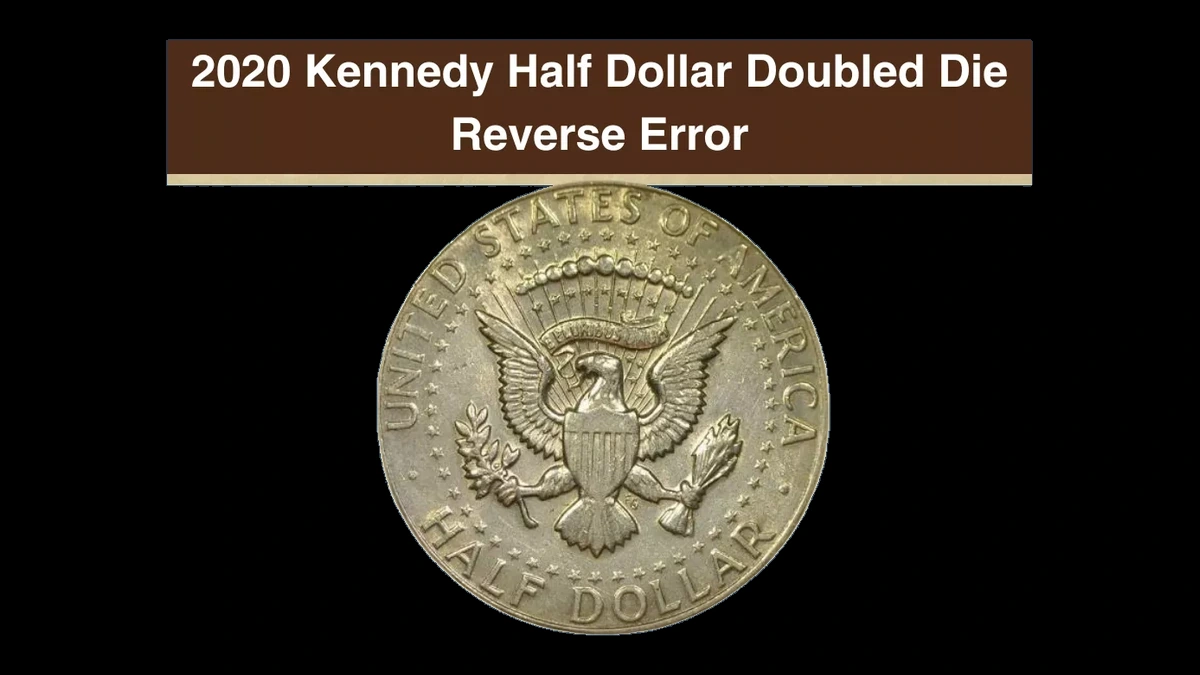
6. 2020 Half Dollar Back Letters or Feathers Show Extra Contours: Reverse Doubled Die Error
The reverse report points to E PLURIBUS UNUM, HALF DOLLAR, and the eagle. It provides no fixed separation direction on a certified specimen.
The eagle’s busy design can create paired shadows around normal feather edges. A true doubled die requires extra detail beyond that ordinary artwork.
How to Identify
Compare one letter corner or feather edge at a time with a normal coin of the same issue. Check whether the proposed extra outline is physically raised.
Repeat under another light angle to eliminate paired shadows. The same stable shape needs to match a confirmed example.
Identify clad coins and silver Proofs correctly before using weight as a check. Different normal metal specifications do not establish doubling.
What It’s Worth
$15–$50 is the estimate for minor confirmed reverse doubling. The guide’s $30–$50 figures help frame clearer examples.
No established rarity comparison makes this report automatically more valuable than the front category. Actual extra detail and correct identification decide the useful comparison.
7. 2020 Half Dollar A Piece Was Missing before Striking: Clipped Blank Error
A clipped blank has an incomplete edge before it receives the picture. Overlapping blank punches can leave a curved gap, while the strip’s outer boundary can produce other shapes.
The 2020 account names no mint, gap percentage, or clock position. A reported price cannot supply those missing details.
How to Identify
Inspect both ends of the missing segment and follow the struck rim into them. Natural transitions differ from file marks or cuts through finished details.
Check the opposite rim for possible weakness and compare the weight loss with the visible gap. Neither clue alone proves the timing of the missing metal.
The opening need not be curved to be genuine. The boundary and nearby strike are more informative than a familiar bite shape.
What It’s Worth
$40–$170 is the estimate for genuine examples with readable identity. The 2020 guide reports a $170 sale without a grading-service identity for that coin.
The transaction is reported by the guide rather than independently established here. Smaller clips or poorer surfaces can fit lower in the range.
8. 2020 Half Dollar A Wide Border Accompanies a Shifted Design: Reported Off-Center Broadstrike Error
The reported 2020-D is described as both broadstruck and about 10% off center. These describe different observations: expansion beyond the retaining ring and design that misses the metal.
They can occur together, but a wide uneven border can also surround a complete picture. The design boundaries must establish which description applies.
How to Identify
Look on both faces for picture details actually running beyond the edge. Weak but present design is different from a truly unstruck area.
Measure the expanded outline and inspect the edge for absent grooves, filing, or later compression. A normally complete design supports broadstriking without automatically proving off-centering.
Both faces should support a misplaced blank if that second claim is made. One shifted die can create a different border imbalance.
What It’s Worth
$50–$150 is the estimate for comparable modest displacement with original expansion. The guide reports $130 for an MS65 example described with both features.
The amount and grade come from the secondary account, not a newly verified auction. They price the reported whole coin rather than two separate errors.
9. 2020 Half Dollar A Copper Face Replaces the Outer Metal: Missing Clad Layer Error
A normal clad half has copper-nickel outer layers on both sides of a copper center. Losing one can expose a reddish face while the opposite side retains its usual pale metal.
The report describes an MS65 example without specifying the affected side. The normal 99.9% silver Proof has a different construction and is not this error.
How to Identify
Inspect the exposed area and any surviving layer boundary. Detail struck directly into copper supports a different explanation from a colored coating over intact outer metal.
Compare the weight with 11.34 grams and assess whether the reduction fits the layer loss. Inspect the edge for chemical attack, scraping, or forced removal.
Use the coin to establish front or back loss rather than guessing from the report. Color alone is insufficient.
What It’s Worth
$50–$200 is the comparison estimate for genuine 2020 clad errors of this kind. The guide reports $142 for an MS65 example.
Clear extensive loss and attractive remaining details support the upper end. The reported amount does not identify which face was affected or apply to a stained ordinary half.
10. 2020 Half Dollar The Eagle Remains Tilted after a Flip: Rotated Dies Error
The year report describes moderate rotations of roughly 15–45 degrees. One die pointed at a different angle relative to its partner, even if both pictures remained centered.
This is an orientation problem rather than sideways displacement. A seller’s use of “misaligned” does not establish which occurred.
How to Identify
Hold Kennedy upright against a fixed vertical line, then flip straight from top to bottom. Avoid twisting sideways as you turn it.
A normal eagle finishes upright; repeat the movement to confirm any consistent tilt. A protractor can measure the remaining angle.
Two photographs turned independently cannot prove rotation. Preserve the relationship between the actual faces during the test.
What It’s Worth
$10–$30 is the estimate for the reported moderate rotations. The guide places clearer examples around $20–$30 without an individually traceable auction coin.
Use the measured angle and condition in a comparison. A small departure or poorly oriented photograph should not be priced as a large rotation.
Conclusion
Many reported 2020 features are modest in both size and value, but they still offer useful lessons in checking a coin. Begin with surface height for raised marks, design boundaries for strike problems, and weight plus the edge for missing metal.
Keep guide-reported transactions distinct from independently identified examples. A clear photograph of the actual feature and mintmark is more useful than a dramatic error label.