Rare 1886 Half Dollar Errors (List & Pictures)
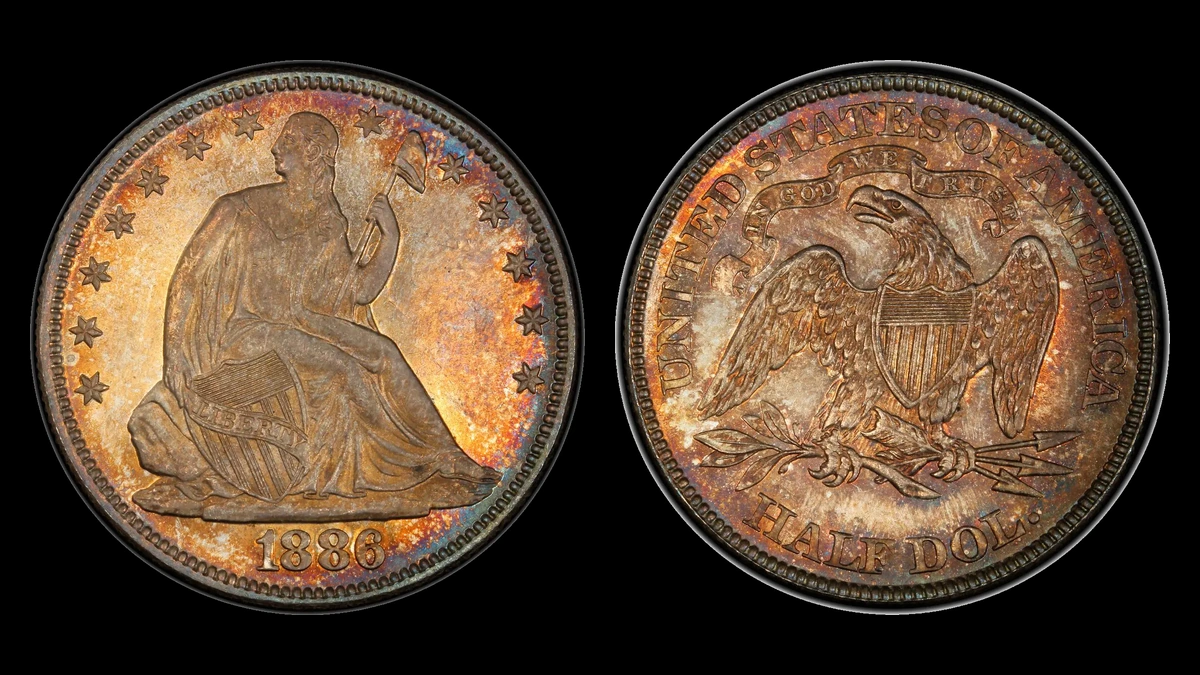
A small dress detail is the focus of these 1886 half dollar errors: a raised line reported on a collector proof. Comparable PR65–PR66 Cameo proofs are estimated at $3,000–$5,000.
The documented $4,200 sale in March 2025 concerns a separate proof whose listing did not confirm the crack. Follow the sandal-to-drapery inspection below to understand the feature before using that condition comparison.
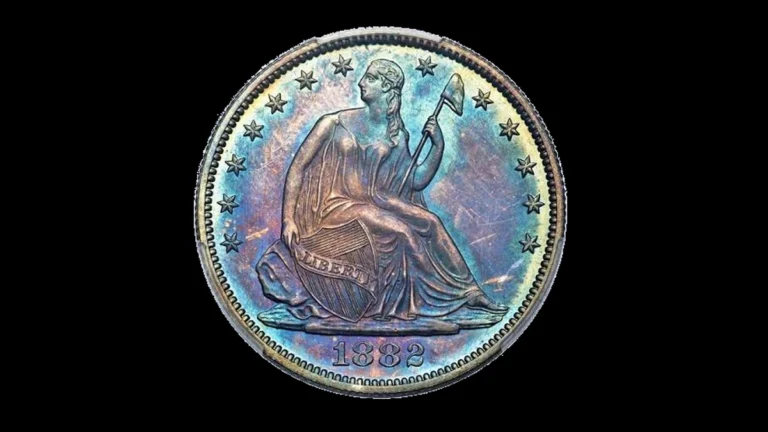
1886 Half Dollar A Small Ridge Behind the Sandal: Proof Drapery Die Crack Error
The extra line occupies a narrow space between the two lowest folds of Liberty’s dress, just behind her sandal. Heritage described it on a PCGS PR67 Cameo proof in August 2006.
Its height helps explain what happened: silver was pressed into a narrow opening in the stamping tool. That tool is called a die, and a split in it can create a raised line on an otherwise solid coin.
The described example was a proof, meaning it was specially made for collectors. Both the production type and the line’s exact position belong in the identification.
How to Identify
Find the sandal in a view of the complete front, then enlarge the fabric immediately behind it. Follow both of the lowest folds so you know which space to inspect.
Use a 10× magnifier with light coming from a low angle. The additional line must sit between the folds, rather than simply being one of the folds catching the light.
A scratch may look bright in a photograph, but it cuts into the silver. Move the light across the suspected mark to judge whether it is a ridge or a groove.
A shiny background is not enough to establish that the coin is a proof. Match the coin’s production type as well as the crack location to the documented example.
For a loose half dollar, the normal specifications are about 12.50 grams, 30.6 mm in diameter, and a grooved edge. These checks help establish the basic coin but cannot identify this small die feature.
Keep a photograph of the entire coin alongside the detail view. A close crop can show a line clearly while concealing that it belongs to the wrong part of the design.
What It’s Worth
Estimated range: $3,000–$5,000 for comparable PR65–PR66 Cameo proofs. Those grades describe well-preserved collector coins; Cameo refers to the contrast between frosted designs and reflective backgrounds.
An NGC PR66 Cameo brought $4,200 at Heritage in March 2025. Its date and condition make it useful context, although the listing does not establish that it has the drapery crack.
The PR67 coin described in 2006 supplies the location evidence, while the PR66 sale supplies a price comparison. They are separate examples and should not be combined into one auction record.
Surface preservation and the strength of the Cameo contrast account for much of a proof’s value. The evidence does not establish a fixed additional amount for this small ridge.
Conclusion
This search comes down to a precise location: between the lowest two dress folds behind Liberty’s sandal. Confirm the extra line is raised and that the coin is a proof before matching it to the reported example.
Comparable PR65–PR66 Cameo proofs are estimated at $3,000–$5,000. The $4,200 result helps frame that range, but it is not a confirmed sale of the crack variety.