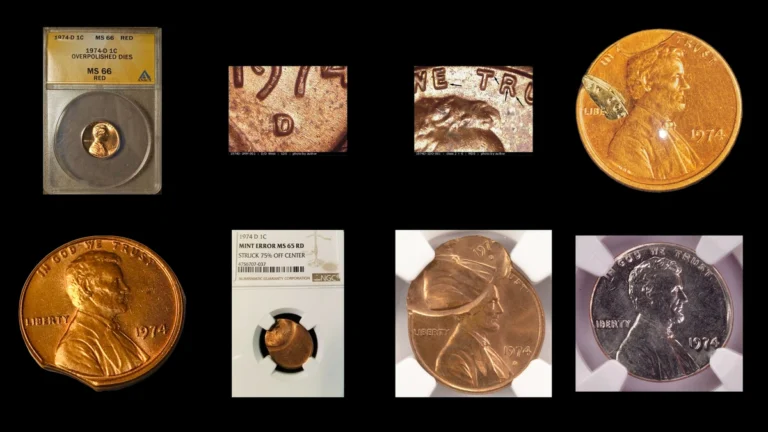
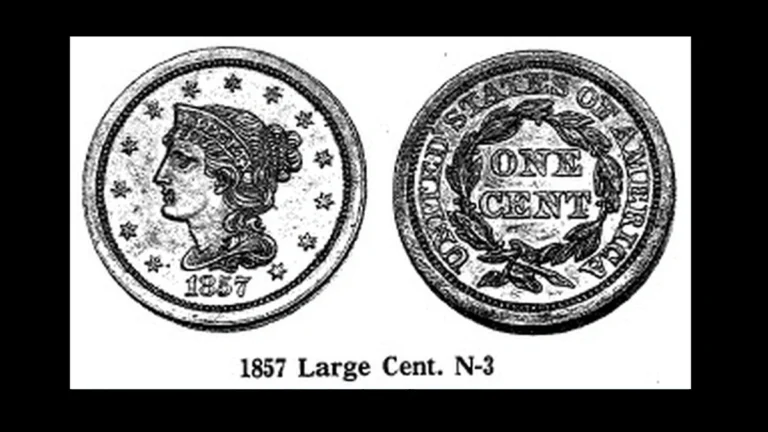
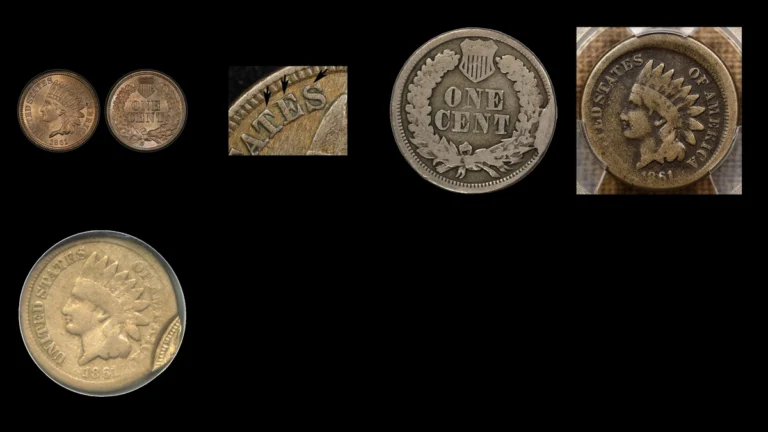
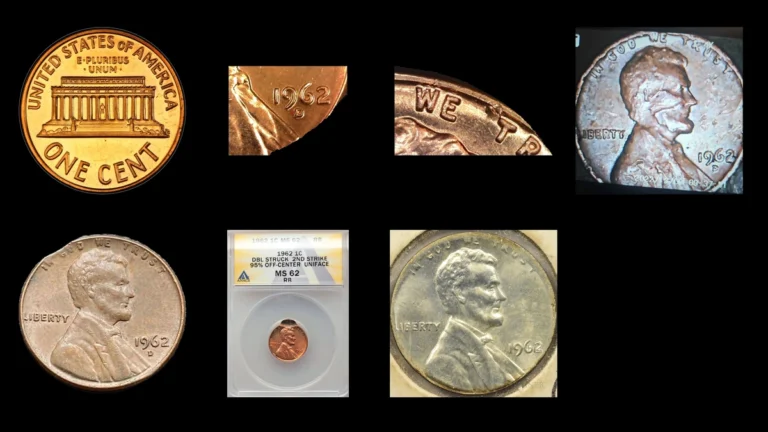
Rare 1892 Penny Errors (List & Pictures)
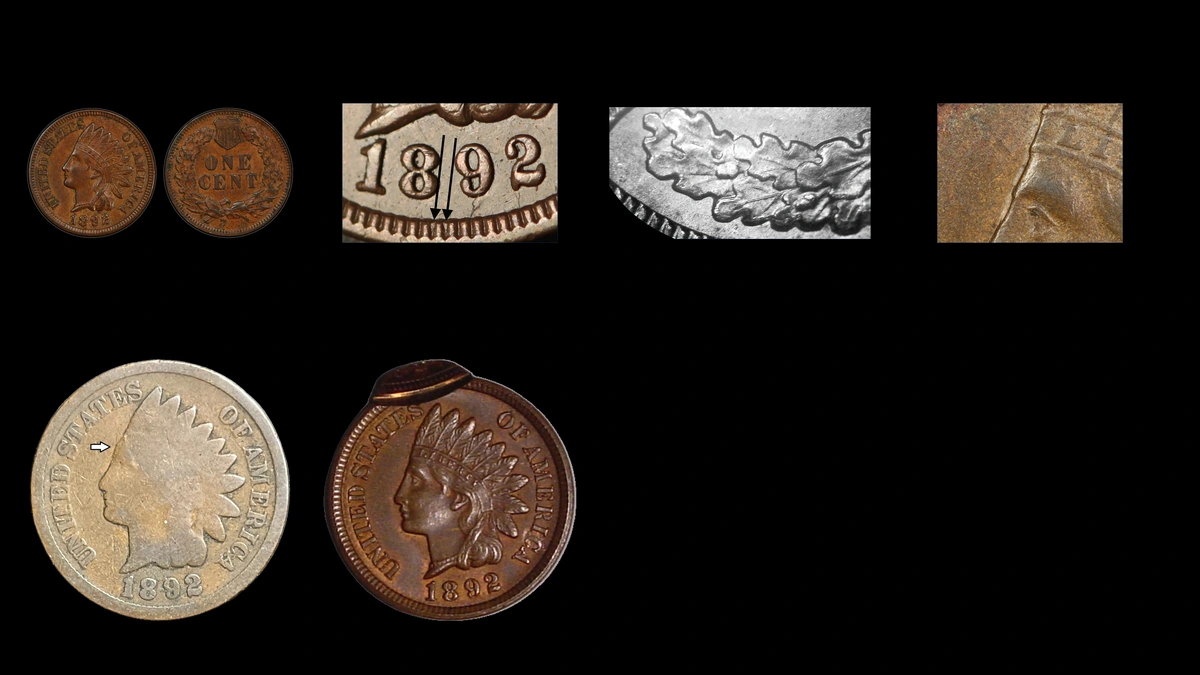
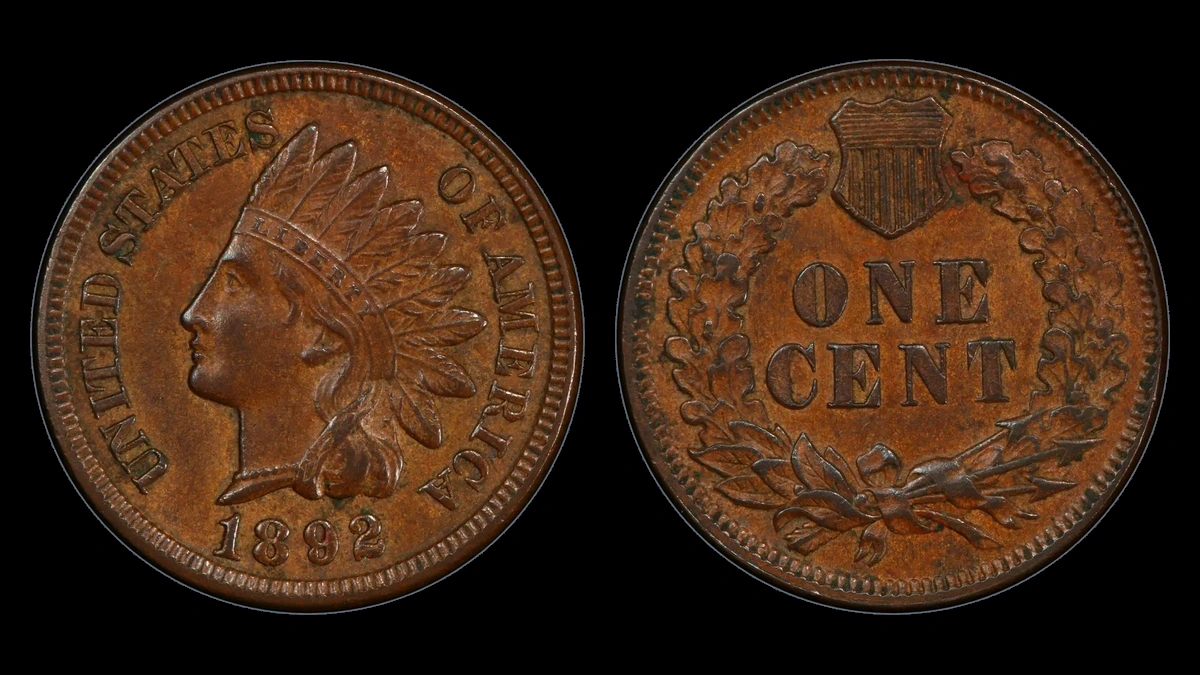
The spaces around the date and inside the wreath can reveal 1892 Indian Head penny errors that are easy to miss at first. Larger examples change where the design lands or add another strike.
Estimated whole-coin values below run from $5–$3,000. A documented off-center cent with a separate back indent sold for $253 in February 2010; that amount covers both features on one coin.
1. 1892 Penny Extra Strokes Follow the Date Digits: Repunched Date Error
Workers added the date to the die with a separate punch. If it moved before another blow, small parts of its earlier position could remain beside the finished numbers.
How to Identify
Compare one digit at a time with a normal 1892 date. A useful extra curve or foot should resemble part of that number rather than an unrelated lump.
Recorded forms affect the 1, 8, or 9 in different ways. Choose one variety and check its other details too, instead of combining the best-looking stroke from several catalog photographs.
What It’s Worth
$15–$500 is a working estimate for ordinary examples with a clear variety match. Wear can hide the small strokes, while sharper, better-preserved coins offer easier comparisons.
A 1904 FS-301 graded MS64 Brown sold for $168 in January 2019. That unworn coin is a different-year repunched-date comparison, not a reported 1892 sale.
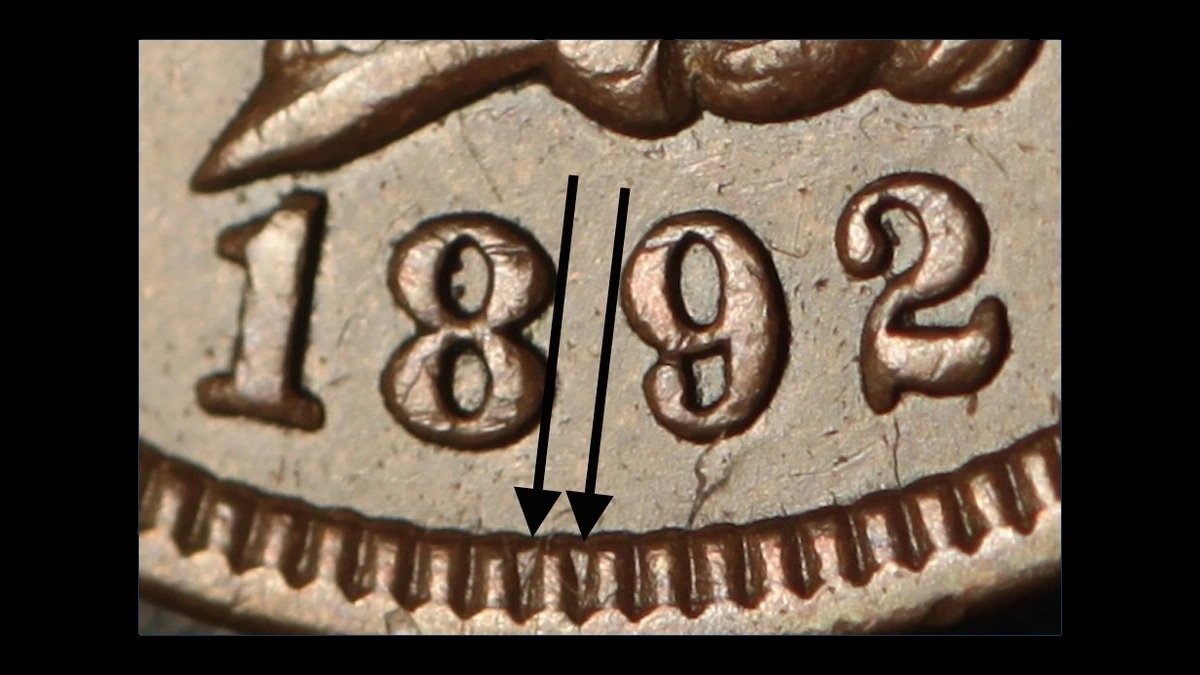
2. 1892 Penny Another Number Hides in the Border: Misplaced Date Error
Here the earlier punch touched the die farther from the intended date position. Remnants appear among the small border teeth instead of closely following the main digits.
How to Identify
The 1892 variety photographs include parts of 92 in the border and a separate form with an extra 2 below and right of the 8. These are different patterns, not one required set of marks.
Match a recognizable digit fragment and its location relative to the nearby border teeth. A normal date close to the rim, or an irregular corrosion lump, does not establish a misplaced number.
What It’s Worth
$25–$700 is an estimated whole-coin range for identifiable examples. Clear number fragments on original surfaces generally make the stronger comparison.
A 1908 FS-301 graded MS65 Red and Brown has a recorded eBay price of $1,187 from December 2021. It is a different date, grade, and price record, not a confirmed 1892 auction result.
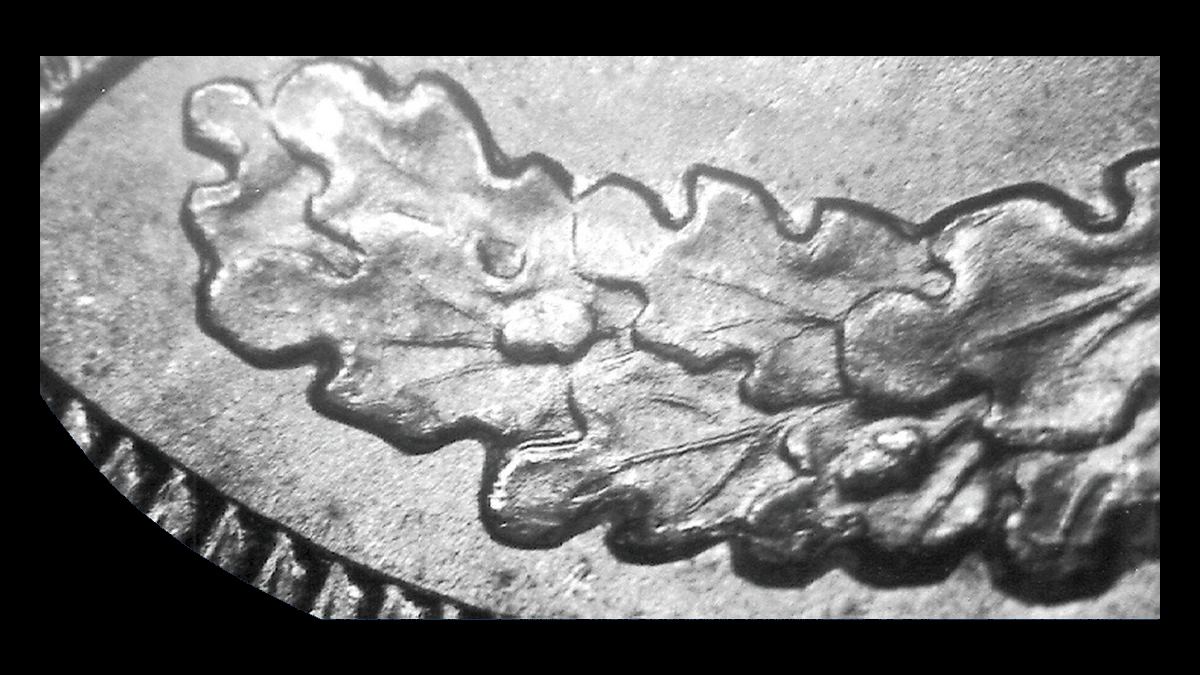
3. 1892 Penny Letters or Leaf Veins Repeat: Doubled Die Error
A doubled die carries a repeated design before it strikes the coin. The supplied front report concerns ED STATES OF AMER, while a separate back example has doubled veins in the wreath leaves.
How to Identify
For the front, compare several letters in the named inscription. For the back variety, start with the clearer right wreath veins and then check the left.
A repeated raised outline should continue through a curve or corner in the matching pattern. A flat, shaved-looking shelf from movement during striking is a different feature.
The front and back descriptions belong to separate examples. Finding one does not establish the other on the same penny.
What It’s Worth
$30–$1,000 is an estimate for clearly identified 1892 doubled dies. Condition and how well the pattern survives guide the comparison.
An 1887 FS-101 front doubled die graded MS63 Brown brought $1,380 in June 2025. That recognized variety is from another year and does not establish a four-figure sale for the 1892 reports.
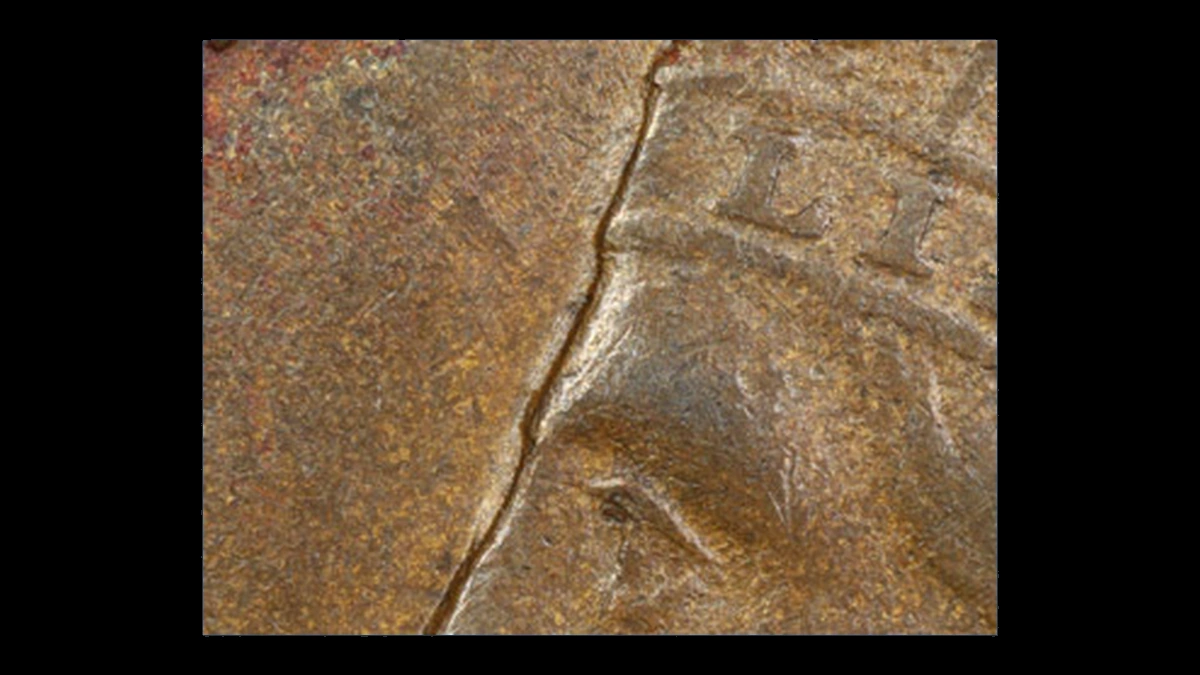
4. 1892 Penny A Faint Opposite-Design Shape Appears: Die Clash Error
The front and back dies can hit one another when no blank is between them. Marks from that contact may leave traces of the opposite design on later coins.
How to Identify
The 1892 catalog records clash features on both faces. Compare the unwanted outline with an actual part of the opposing design, rather than treating every raised line as a transferred picture.
Check its curves and placement against one matching photograph. Straight polishing lines, scratches, and deep later pressure marks need their own explanations.
What It’s Worth
$10–$200 is a working estimate for a clear clash on an ordinary 1892 cent. Faint traces on a worn coin may add little, while recognizable outlines are easier to show to a buyer.
No separate 1892 clash sale is supplied. The estimate includes the whole penny and its condition.
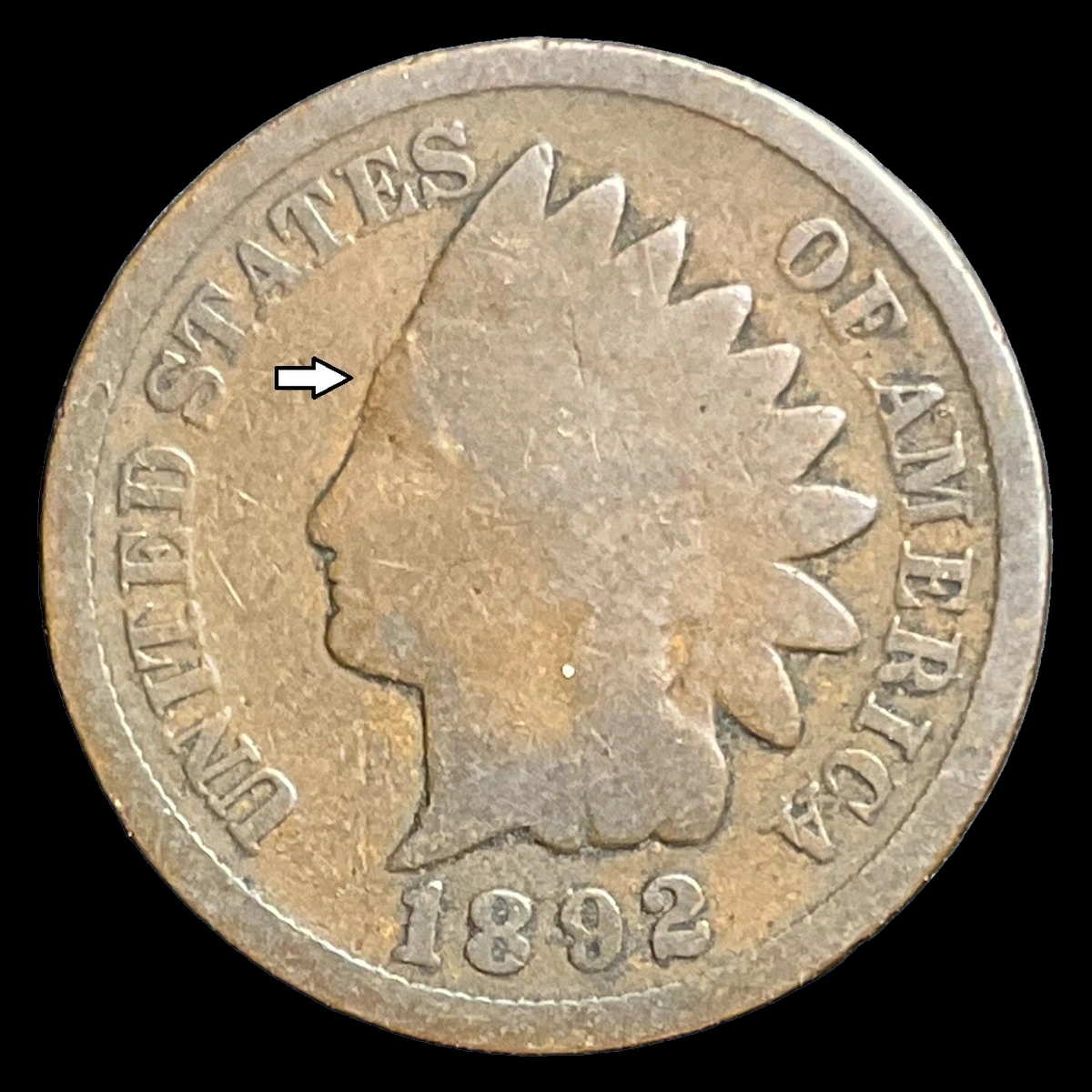
5. 1892 Penny Raised Lines Grow into Broken Areas: Die Cracks and Cuds Error
A crack in a die leaves a raised line where copper fills the opening. A missing piece at the die’s edge can create a larger raised patch called a cud.
How to Identify
Listed examples include cracks near the arrows, a forehead break, and rim breaks on either face. Match the actual location instead of joining these separate reports into one coin.
A retained broken die section can still form some design. A fully missing section replaces that detail with a less detailed raised area connected to the rim.
A rim dent usually pushes metal into the coin, and a scratch cuts below the surface. Inspect the whole boundary under side lighting to distinguish these from original raised die-break metal.
What It’s Worth
$5–$400 is the estimated whole-coin range across small cracks and more substantial breaks. A fine line on a worn penny belongs in a different comparison from a bold rim cud.
The range is not a set of documented sales for each listed pattern. Surface quality and readable detail still matter even when a break is large.
6. 1892 Penny A Shifted Design Meets a Back Depression: Off-Center Strike with Indent Error
The recorded VF35 example combines a 10% off-center strike with an indent on the back. Another overlapping blank blocked that part of the strike and pressed a depression into the coin.
How to Identify
Examine both faces as one event: the misplaced blank explains the shifted design, while the overlapping piece explains the back interruption. An ordinary dent added later does not create the same combination.
Inspect where the depression meets struck detail for a natural boundary. A later punch can crush existing design or leave a sharp raised lip.
A normal bronze cent weighs about 3.11 grams and measures 19.05 millimeters across. Use measurements with the surface evidence, allowing for changes in outline during striking.
What It’s Worth
$200–$700 is an estimate for comparable examples with differing wear and surface quality. The February 2010 Heritage results record $253 for the NGC VF35 combined error.
The result values both features together. It is a historical sale, not a current offer or two separate premiums to add to another coin.
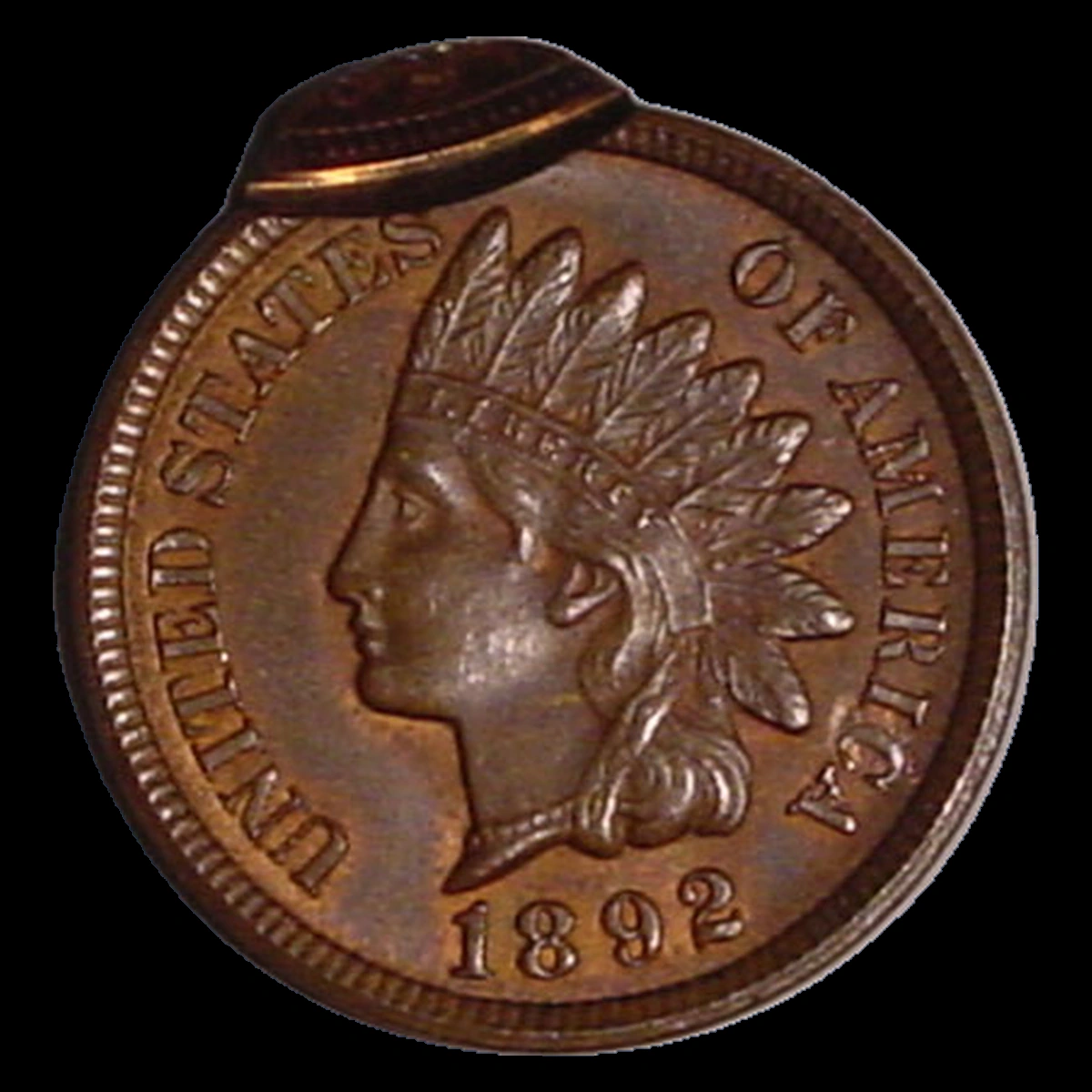
7. 1892 Penny A Small Second Picture Appears at the Top: Double Strike Error
One recorded 1892 cent has a centered first strike and another blow about 90% off center at twelve o’clock. Only a small part of that second design reached the coin.
How to Identify
Locate readable coin detail within the extra impression. An irregular flap of copper is not enough to establish a second strike.
The first design should remain across most of the coin while the later impression crosses a small area near the top. Inspect that boundary and the edge for added material.
The collection example is graded MS65 Brown by NGC. Its high preservation grade describes how it survived, not the reason the second strike occurred.
What It’s Worth
$400–$3,000 is an estimated range for genuine examples of this kind. Cleaner surfaces and readable second-strike detail support stronger comparisons.
An 1893 cent with its second strike 90% off center, graded AU58 by NGC, sold for $431.25 in August 2011. The supplied 1892 MS65 Brown specimen is a collection example without an adopted sale amount.
Conclusion
Work from the location and shape of the extra feature: date strokes, border digits, leaf veins, and whole second impressions tell different stories. Several reported varieties are separate specimens, even when they belong to one broad error group.
Keep full-face photographs alongside close-ups and value each coin as a complete object. The documented off-center and indent combination is one example where two visible mistakes produced a single sale price.