Rare 1850 Penny Errors (List & Pictures)
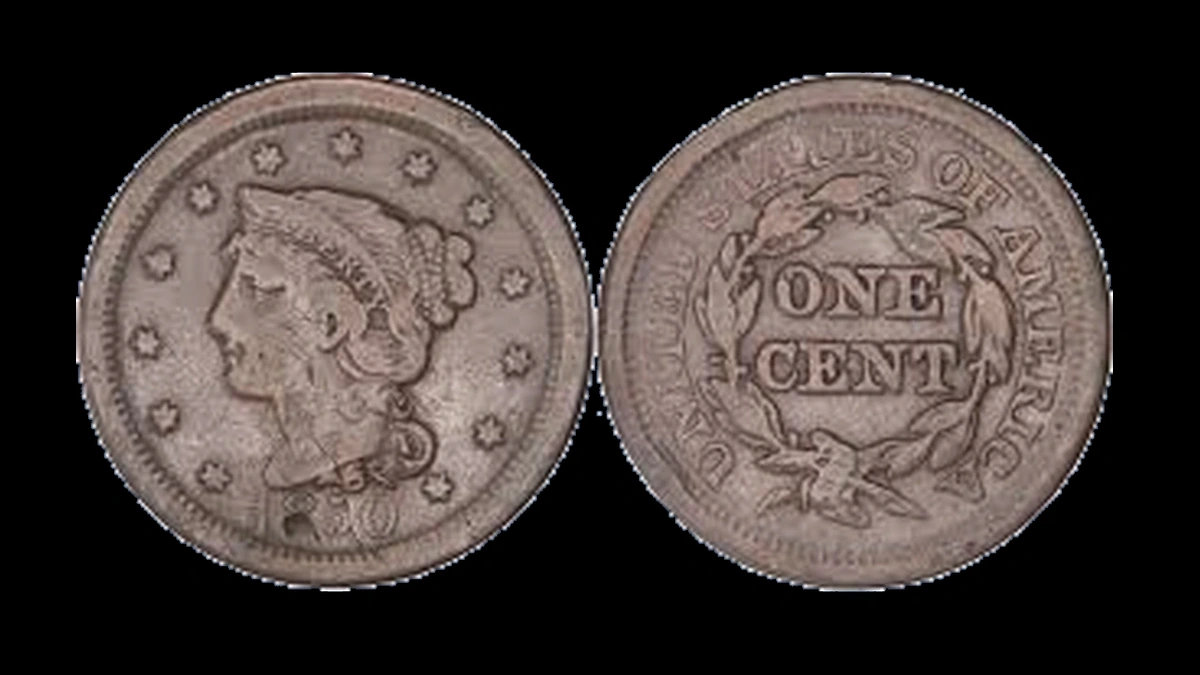
On an 1850 large cent, start by deciding whether the odd area has too little metal, raised metal, or a separating layer. Those observations lead to different explanations among 1850 penny errors, estimated at $20–$5,000.
A same-year rim-lamination coin sold for $603.75 in 1997; the highest supplied completed comparison is $1,527.50 for an 1854 off-center cent. Compare the surface boundary and whole outline below, keeping dealer asking prices separate from completed sales.
| What changes | Possible identification | Estimated range |
|---|---|---|
| A thin rim layer separates | Lamination | $25–$1,500 |
| Raised metal meets reverse letters and rim | Crack or cud | $20–$1,200 |
| An edge section is absent | Clipped planchet | $30–$700 |
| Metal spreads around complete design | Broadstrike | $150–$2,000 |
| Design misses the blank | Off-center strike | $400–$5,000 |
| A faint opposite-face outline appears | Reported die clash | $20–$400 |
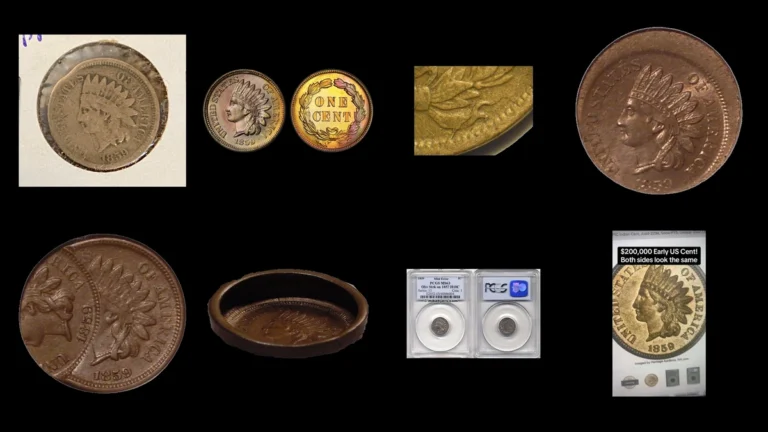
1. 1850 Penny Copper Separates Above the First Star: Lamination Error
The documented N-9 cent has a local rim lamination above the first star at the portrait’s lower left. The flaw is a separating layer of copper, not an entire disc split into two halves.
How to Identify
Follow the layer boundary under low side lighting without lifting or scraping it. A dark stain has no physical opening, while a later cut can cross completed design without revealing an internal layer.
The auction coin retained sharp stars and other unworn detail despite the flaw. A previously assigned PCGS MS64 Brown grade and the auction specialists’ MS61 Brown assessment describe that same coin, not two lamination specimens.
What It’s Worth
$25–$1,500 is the estimated range across circulated and well-preserved examples. A conspicuous flaw does not necessarily improve appeal if it removes important design.
The N-9 rim-lamination cent sold for $603.75 on September 11, 1997. Its sharp unworn detail contributed to that whole-coin result, which is not a separate price for the peeling copper.
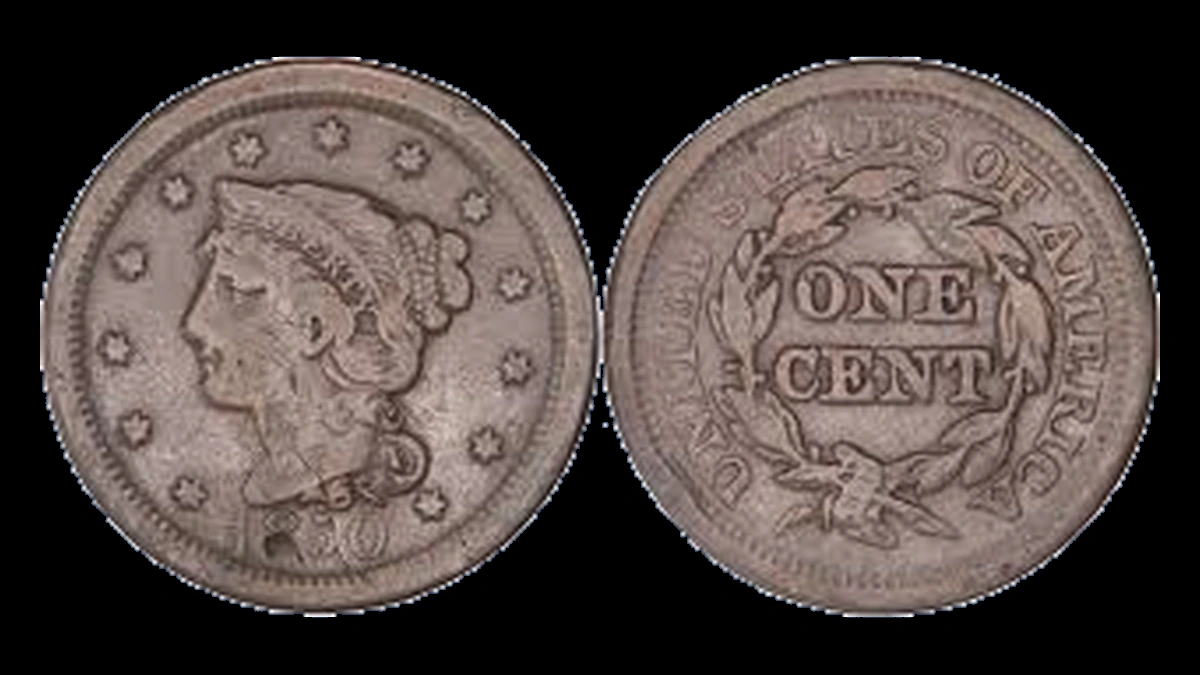
2. 1850 Penny Raised Patches Connect Letters to the Rim: Die Cracks and Cuds Error
Recorded reverse breaks occur near the E in STATES and between F and A. A missing die-edge section allows copper to rise into a rim-connected patch called a cud.
How to Identify
Match the particular patch’s outline and lettering location, then check its edge for a seam, solder, or folded metal. Another recorded coin has four reverse rim breaks, but that does not create a universal four-break pattern for the year.
For a thin suspected crack, change the lighting to determine whether the line rises above the surface or cuts into it. Do not invent a crack route linking the larger recorded patches without a matching specimen.
What It’s Worth
$20–$1,200 is the estimate for collectible 1850 coins with these die failures. A fine crack may add little, while a clear rim break on a desirable variety can attract more.
An 1864 copper-nickel cent with both a retained rim break and broadstrike sold for $646.25 in 2016. That different-size, different-metal compound error is a broad comparison, and multiple small cuds should not be priced by multiplying a single-cud estimate.
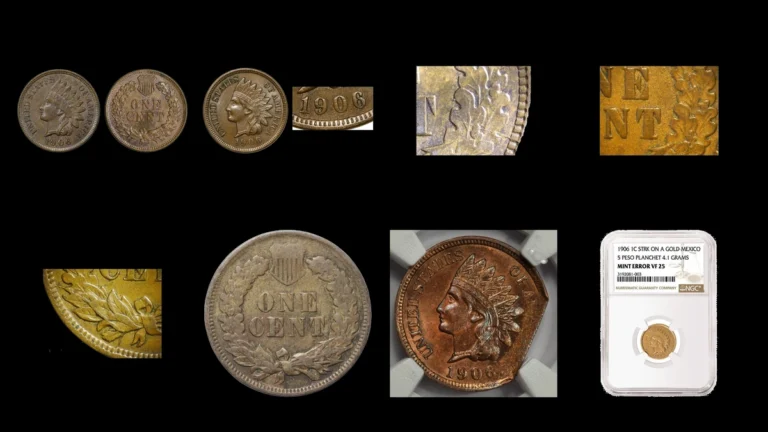
3. 1850 Penny Part of the Edge Is Missing: Clipped Planchet Error
An 1850 N-22 cent is recorded with a rim clip, indicating missing metal in the blank before striking. A separate seller’s multiple-clip description requires each claimed gap to be assessed individually.
How to Identify
Inspect both ends of each gap for natural rim formation, then look inside it for saw marks or repeated tool cuts. Weakness nearby or opposite the gap can support a clip, but one plausible gap cannot authenticate another.
A normal copper large cent weighs 10.89 g and measures 27.5 mm across; compare safely handled loose coins using an intact span and allow for wear or missing metal. Keep measurements away from loose layers, and leave certified specimens in their holders.
What It’s Worth
$30–$700 is the estimated range for identifiable clips on worn through attractive 1850 cents. Original edge evidence and surface quality matter alongside the amount missing.
A clipped 1939 small cent graded MS64 Brown sold for $180 in January 2023. Its different ordinary collector value makes it a limited comparison, not a price to multiply for a seller-described multiple clip.
4. 1850 Penny The Border Expands Around the Complete Image: Broadstrike Error
The recorded PCGS VF25 broadstrike has expanded metal above the portrait and below the reverse design. Its auction description proposed partial collar restraint at the front’s bottom while the top spread outward.
How to Identify
Compare the expansion on both faces as two views of the same piece of metal. Follow the complete outer design, which distinguishes a broadstrike from an off-center strike that misses part of the image.
Inspect the widened border for hammering, filing, or other artificial flattening. The proposed collar mechanism explains the cataloged shape, but the coin must supply the visible evidence for natural spreading.
What It’s Worth
$150–$2,000 is the estimated range for identifiable 1850 broadstrikes. Complete lettering and original surfaces make stronger comparisons than corrosion or heavy rim damage.
The PCGS VF25 example sold for $241.50 on June 29, 2008. Its circulated condition is part of that same-year result, rather than a fixed price for every expanded 1850 cent.
5. 1850 Penny The Portrait Shifts Toward the Upper Right: Off-Center Strike Error
A dealer-listed 1850 PCGS XF45 cent is 40% off-center toward 1 o’clock. The displaced blank received an incomplete design and retained a broad unused crescent opposite it.
How to Identify
Establish the surviving 1850 date before comparing the displacement. An undated Braided Hair cent with a similar crescent is not the same-year identification.
Both faces should fit the same misplaced blank, with original unstruck metal rather than ground-away design. A shifted front paired with a centered back would call for considering a die-alignment problem instead.
What It’s Worth
$400–$5,000 is the estimate for identifiable 1850 off-center cents. The recorded XF45 coin retains substantial detail despite circulation wear.
Fred Weinberg’s January 2007 price list offered that coin for $3,800, an asking price rather than a completed transaction. A separate 1854 large cent about 50% off-center, graded VF20, sold for $1,527.50 in September 2016.
6. 1850 Penny A Faint Shape Resembles the Opposite Face: Reported Die Clash Error
A possible clash needs an identifiable portion of the opposite design, not merely an unexplained line. Dies that touch without a blank between them can acquire transferred marks that appear on later coins.
How to Identify
Compare the suspected outline with the portrait or wreath on the other face, using whole-coin photographs alongside the closeup. A vaguely wreath-like front mark or star-like reverse mark is not an established 1850 pattern by itself.
Check whether scratches, corrosion, displaced metal, or shadows explain the feature. The supplied category remains conditional until an actual coin’s transferred design can be matched.
What It’s Worth
$20–$400 is the estimate for a confirmed clash on an ordinary 1850 large cent. Much of its total may still reflect preservation and the collectible die variety.
The $241.50 same-year VF25 broadstrike sale provides only a general price scale. A faint clash does not automatically receive the premium of a coin whose outline was visibly altered during striking.
Conclusion
An 1850 large cent’s unusual edge can preserve evidence of a metal flaw, an incomplete blank, a broken die, or a displaced strike. Follow the feature into the original surface before assigning a name.
Use the $20–$5,000 estimates with the complete coin’s condition and the strength of its identification. A dealer offer, a different-year comparison, and a same-year completed auction result should remain distinct when judging value.