Rare 1894 Half Dollar Errors (List & Pictures)
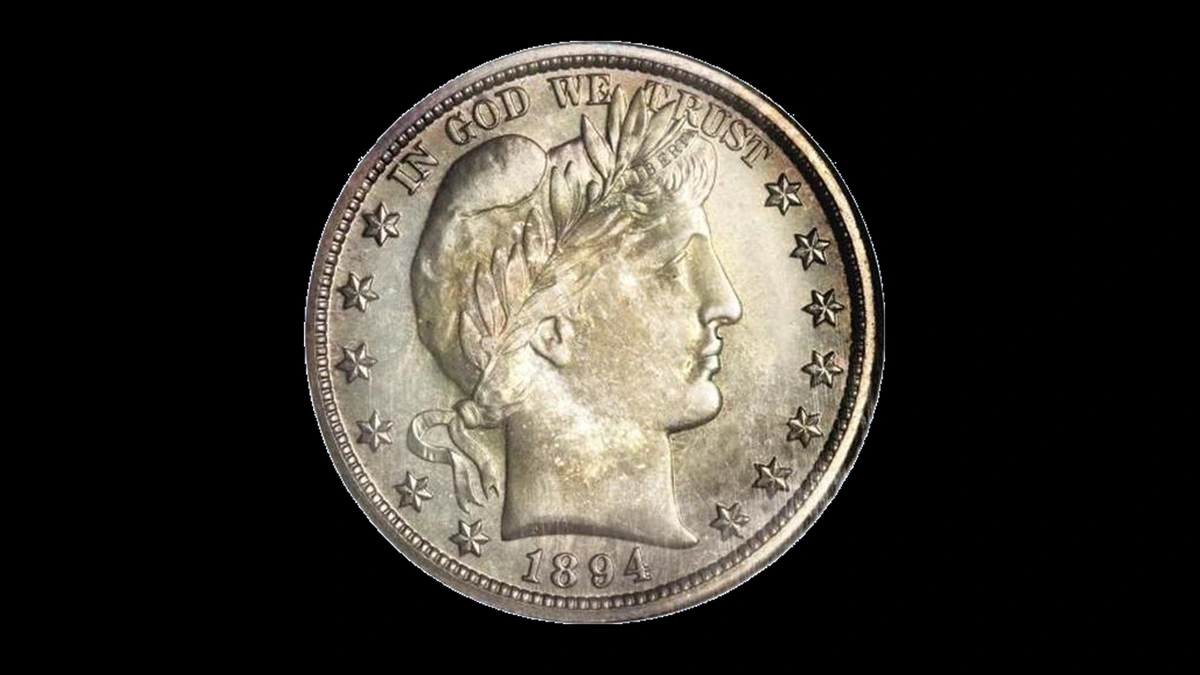
An 1894 half dollar can keep its full date yet lose the area that would identify its mint. One dramatic off-center example sold for $7,800 at Heritage in December 2022.
The 1894 half dollar errors below also include an expanded New Orleans coin and a small repeated outline inside a Proof’s date. Their estimated comparisons span $2,500–$8,500.
Begin with the whole shape, then move to the close-up inside the number 4.
| First clue | Error | Estimated range |
|---|---|---|
| Expanded border with slight displacement | Broadstrike | $2,500–$3,000 around XF to AU |
| Large blank crescent and missing design | Off-center strike | $6,500–$8,500 for a comparable major shift |
| Extra outline inside the 4 | Proof repunched date | $4,000–$5,500 around PR67 |
A normal unworn Barber half weighs 12.50 grams and measures about 30.6 millimeters across. Its grooved edge and normal size give you a starting point when checking an expanded or displaced strike.
1. 1894 Half Dollar An Expanded Border: Broadstrike with Slight Displacement Error
A broadstrike happens when the collar fails to hold the blank to its normal width. Without that metal ring containing it, the coin can spread outward during striking.
A 1978 catalog describes an 1894-O half as broadstruck with five-percent displacement. It graded the coin XF, meaning worn but still well detailed.
The two observations belong to one coin. Expansion can be uneven, so a broadstrike need not have perfectly even borders.
How to Identify
View both complete faces before concentrating on the widest edge. The historical description gives no direction for the shift, so do not assume it must point toward a particular clock position.
If the coin is loose, measure its width in several directions with calipers. Compare the results with the normal 30.6-millimeter diameter.
Check its weight as well, allowing for wear. Striking spreads the existing metal, while filing removes it.
Inspect the border and remaining edge grooves with a magnifier. A coin flattened later can also become wider, but its finished design may show crushing or other damage.
Read 1894 and locate the O below the eagle. An expanded outline alone does not identify the New Orleans example.
What It’s Worth
Estimated range: $2,500–$3,000 for a comparable Barber broadstrike in XF to AU condition. AU indicates lighter wear than XF.
The bracket comes from the Mint Error News price table, with the amount of expansion affecting the comparison. It is a guide estimate, not a confirmed 1894-O auction result.
The 1978 asking price was $110. Keep that historical offer separate from a present-day estimate or evidence of a completed sale.
2. 1894 Half Dollar A Large Blank Crescent: Off-Center Strike Error
The documented major error was struck forty percent off center toward two o’clock. Its complete 1894 date remains within the struck area.
On the back, however, the usual mintmark position missed the strike. The coin’s mint therefore cannot be identified from an absent letter.
This is a blank-position problem: part of the metal disc missed the dies. It differs from the slight displacement reported on the broadstruck New Orleans coin.
How to Identify
Compare the blank crescent with the missing design on both faces. An off-center coin retains that metal, whereas a clipped blank has a piece of metal missing.
Follow the edge of the struck area with a magnifier. Look for original unstruck surface rather than cuts or grinding used to remove a finished design.
Read the full date, then inspect the normal mintmark location on the reverse. If that region was never struck, “no mintmark” cannot be used to call the coin Philadelphia.
Photograph the whole outline from both sides. Weight and width measurements can support the examination, but they do not replace the paired blank-margin and displaced-design clues.
What It’s Worth
Estimated range: $6,500–$8,500 for a closely similar 1894 half with a major shift, full date, and comparable condition. The reference coin graded NGC AU53, indicating light wear.
Heritage sold that coin for $7,800 on December 21, 2022. Its readable year, dramatic strike, and good surfaces work together in that comparison.
A minor shift or a partly missing date needs a different benchmark. More blank area by itself does not guarantee the same price.
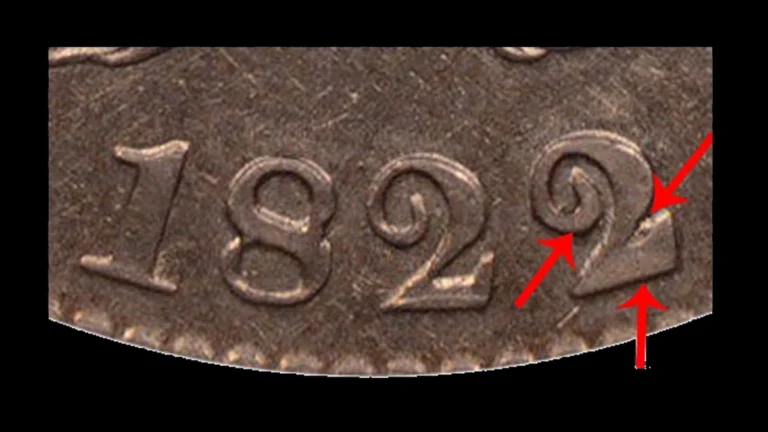
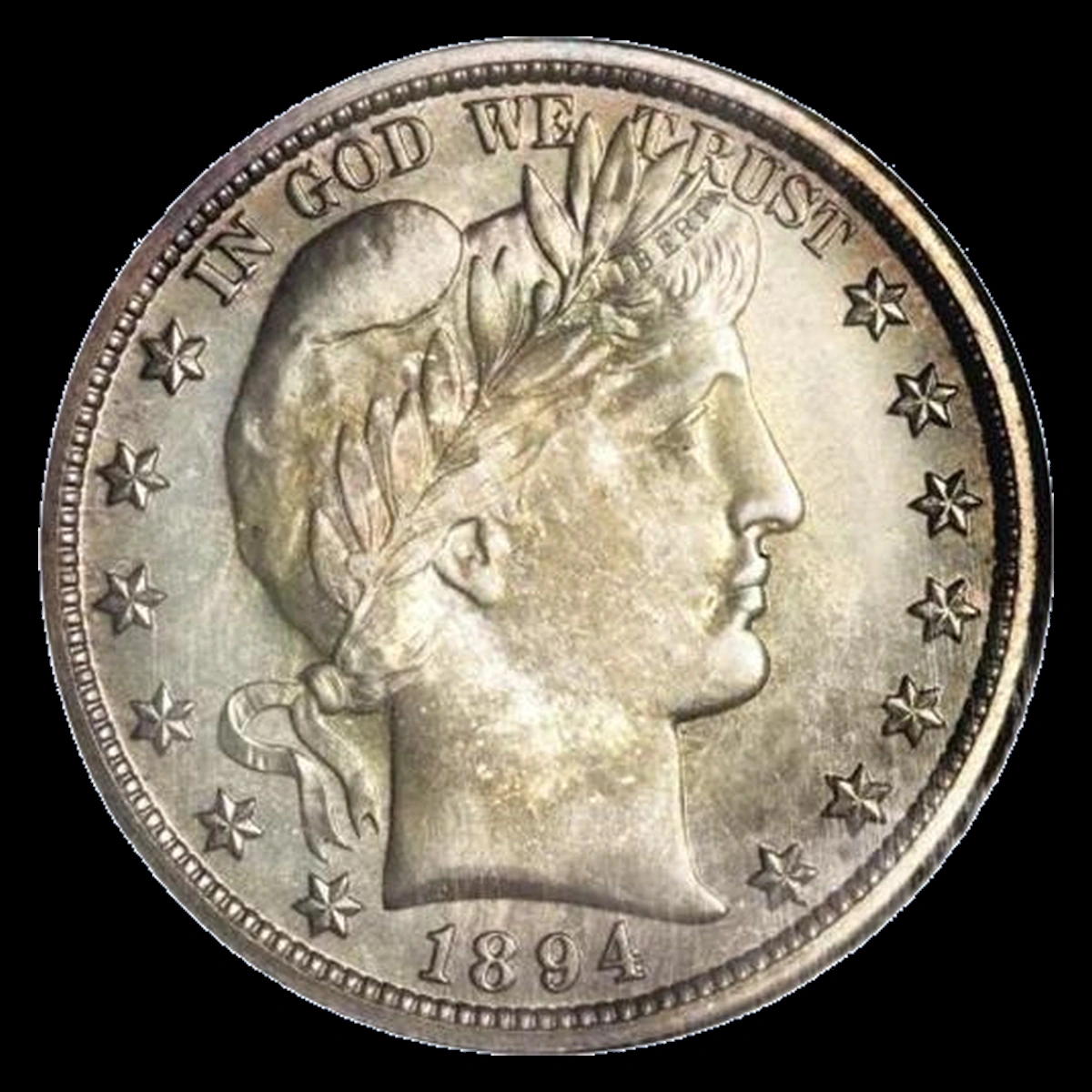
3. 1894 Half Dollar A Repeated Outline Inside the 4: Proof Repunched Date Error
The triangle inside the last number provides the landmark for this small feature. An extra outline there preserves part of an earlier date-punch impression.
The repeated detail was in the die before the coin was struck. The catalog name Breen-5052 refers to this Philadelphia Proof variety.
Proofs were specially made for collectors with carefully prepared surfaces. Do not assume the same variety is present on every worn 1894 half with a thick-looking 4.
How to Identify
Use soft light and a magnifier to inspect the opening inside the 4. Compare the outline with the photograph of the cataloged variety.
Hold the coin still while changing the light angle. A reflection moves across the shiny surface, while the physical trace remains attached to the same point of the digit.
Check whether a scratch crosses the area instead. Keep the rest of the date visible so the close-up retains its proper context.
The comparison calls for a Philadelphia Proof without a mintmark. Leave certified coins in their holders; the normal size and weight do not justify removing one merely to measure it.
What It’s Worth
Estimated range: $4,000–$5,500 for comparable PR67 Proofs. PR67 denotes a highly preserved collector coin.
The archived Heritage lot records a $4,875 floor price for an NGC PR67 in March 2008. No buyer’s fee has been added to that quoted figure.
Reflective surfaces, fine scratches, and color also affect the coin’s appeal. The small repeated outline is part of the identification, not the sole reason for a several-thousand-dollar price.
Conclusion
For an expanded or off-center half, the full outline and both faces carry the most useful evidence. For the Proof date variety, the fixed extra outline inside the 4 matters more than the overall shape.
Keep the $2,500–$8,500 comparisons tied to their error and grade. A missing mintmark area must also stay unnamed rather than being assumed to identify Philadelphia.