Rare 1897 Half Dollar Errors (List & Pictures)
For 1897 half dollar errors, first decide whether design is missing, the outline has expanded, or a smaller surface feature needs inspection. Estimated values span $100–$3,500 for the worn conditions described.
The supplied high auction comparison, $7,800, belongs to a much more dramatic 1894 off-center half sold in 2022. Use the outline checks below before relating that different-year sale to the modest reported 1897-S shift.
| Observation | Where to look | Category | Estimated value |
|---|---|---|---|
| Border design slightly cut off | Both faces, near the cataloged shift | Three-percent off-center strike | $1,200–$3,000 |
| Complete design in a wider outline | Both faces and edge | Uncentered broadstrike | $1,750–$3,500 |
| Possible extra numeral stroke | Full date | Repunched-date candidate | $150–$500 if identified |
| A defect within the coin’s metal | Back of the reported 1897-O | Planchet flaw | $100–$300 |
A normal unworn Barber half weighs 12.50 grams and measures about 30.6 mm across, with grooves around its edge. O below the eagle means New Orleans and S means San Francisco; photograph the date and mint with any suspected error.
1. 1897 Half Dollar A Small Loss of Border Design: Off-Center Strike Error
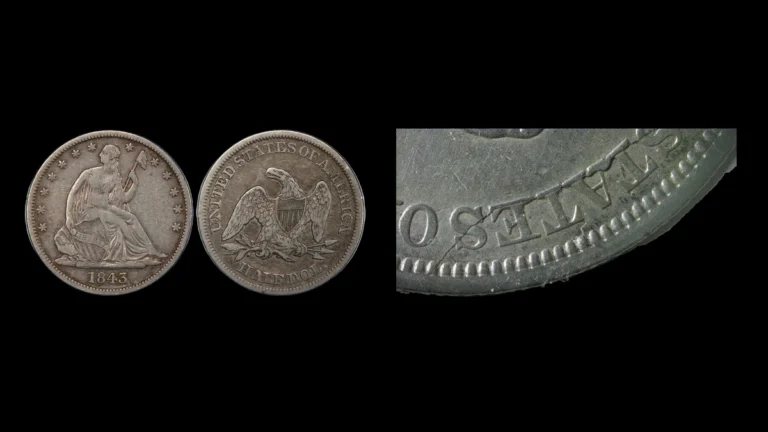
The 1984 catalog description of an 1897-S gives a three-percent shift toward seven o’clock. That is a small displacement, so the comparison should begin with subtle border loss.
The blank lay outside its intended position when the dies, the steel stamping tools, met. An authentic off-center strike should preserve evidence of that displacement on both faces.
How to Identify
Hold the portrait upright and inspect the border near seven o’clock. Locate where actual design ends and unstruck metal begins rather than relying on unequal rim widths alone.
Turn the same coin over and inspect the corresponding displacement. If just one face is shifted, movement of one die may explain the appearance instead of a misplaced blank.
The three-percent amount and clock direction describe the cataloged specimen. Another uneven 1897-S rim must establish its own pattern before sharing that description.
Read the surviving date and S and check for cuts or impact damage at the edge. Complete-face photographs are essential for judging how much of the intended design is missing.
What It’s Worth
Estimated range: $1,200–$3,000 for a genuine small off-center example with readable date and mint. No completed sale is supplied for the cataloged 1897-S.
A 1900-O five-percent example was offered at $2,450 in PCGS XF Details. That is another year’s asking price for a worn coin with a condition problem.
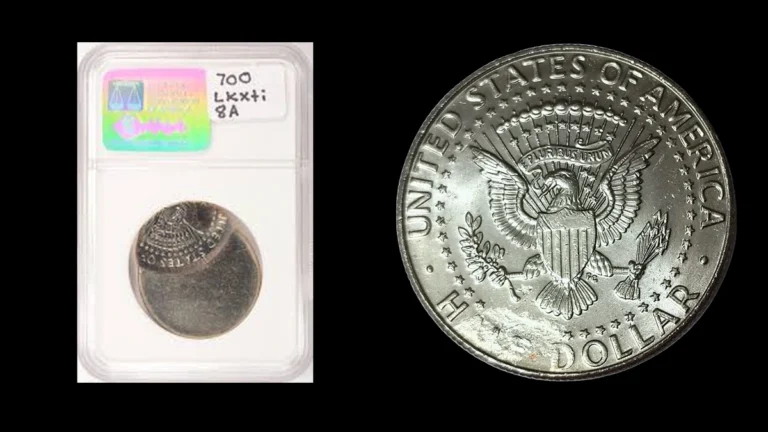
An 1894 struck forty percent off center sold for $7,800 in December 2022. Its much larger displacement makes it a poor direct price match for a three-percent 1897-S.
2. 1897 Half Dollar An Unevenly Expanded Outline: Uncentered Broadstrike Error
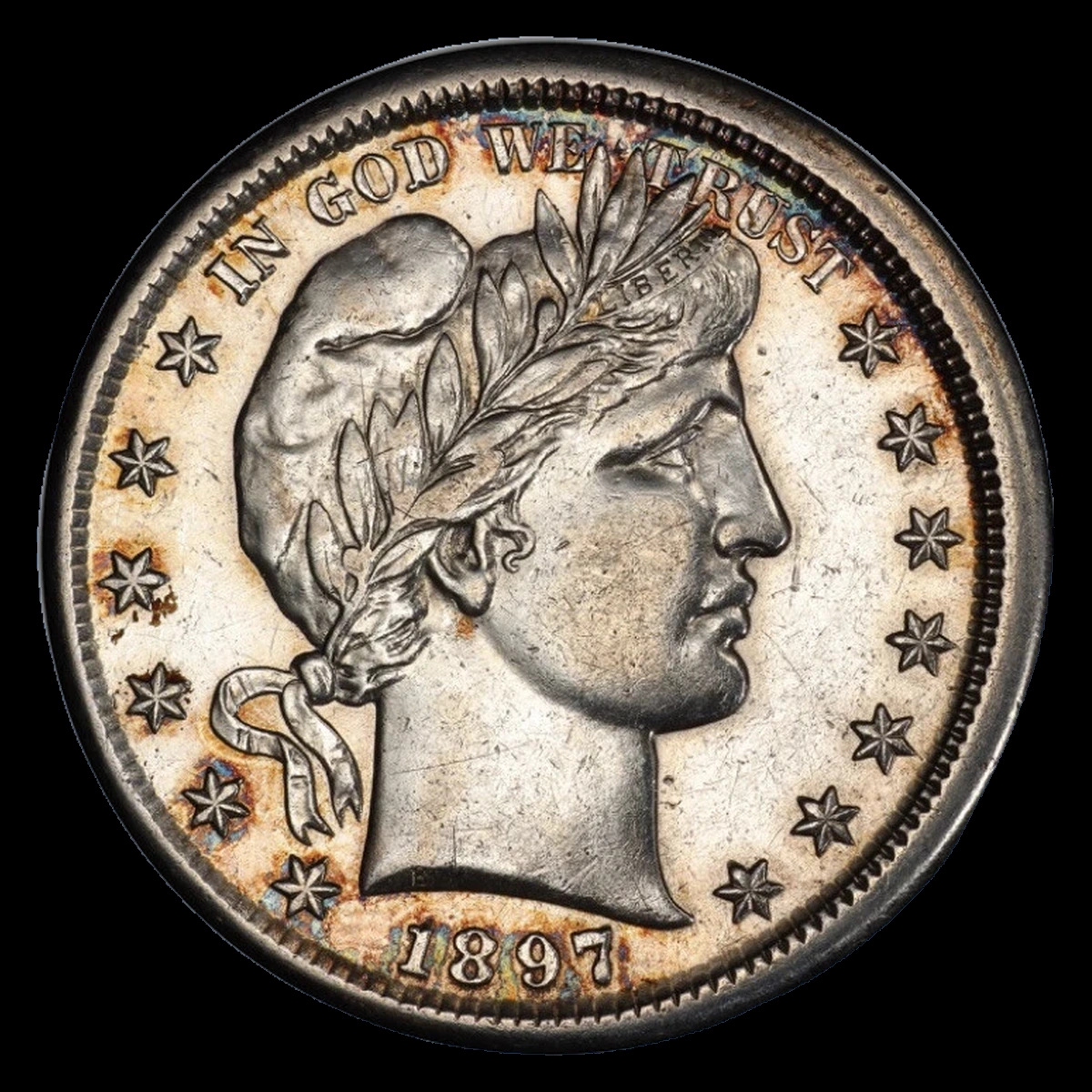
A different 1897-S keeps the full design within an expanded outline, with more extra space on one side. That combination describes an uncentered broadstrike.
The collar is the metal ring that normally controls the coin’s width. When it fails to restrain the blank properly, the metal can spread beyond the usual outline during striking.
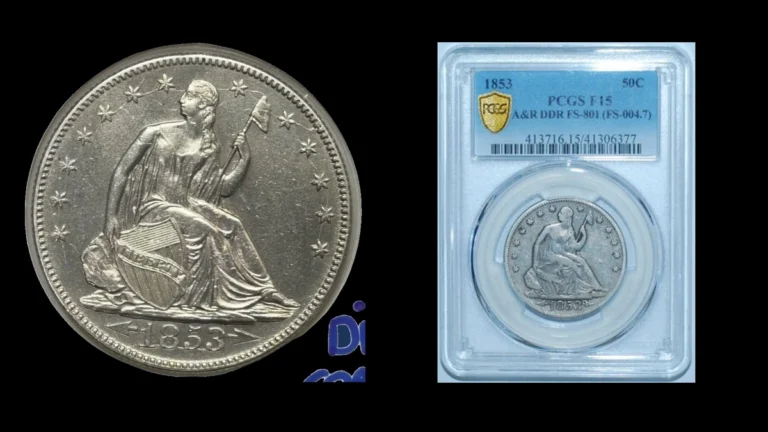
Al’s Coins advertised an ANACS AU55 example, and Mint Error News illustrates a broadstrike of this date and mint. The three-percent description in the preceding section concerns a separate off-center coin.
How to Identify
Follow the outer design on both faces and establish that the principal details remain within the metal. Their survival inside uneven expansion distinguishes this inspection from looking for design cut off by an off-center strike.
Use the illustrated ANACS AU55 listing to compare the outline. Examine the edge for original striking effects and for later flattening that could create false expansion.
Measure the width in several directions against the normal 30.6 mm. The coin’s existing metal spreads during broadstriking, so diameter and appearance are useful alongside weight.
The edge grooves may also be affected by faulty collar contact. Their condition needs to fit the rest of the strike rather than signs of cutting or repeated impacts.
What It’s Worth
Estimated range: $1,750–$3,500 for a comparable lightly worn example. Al’s Coins advertised its AU55 at $1,750 in 2007.
That historical figure is an asking price, not a completed auction result. An older Barber guide placed examples around XF and AU at $2,500–$3,000, providing additional context for the estimate.
The visibility of the expansion and the surfaces matter when comparing an individual coin. The label alone cannot fix its price.
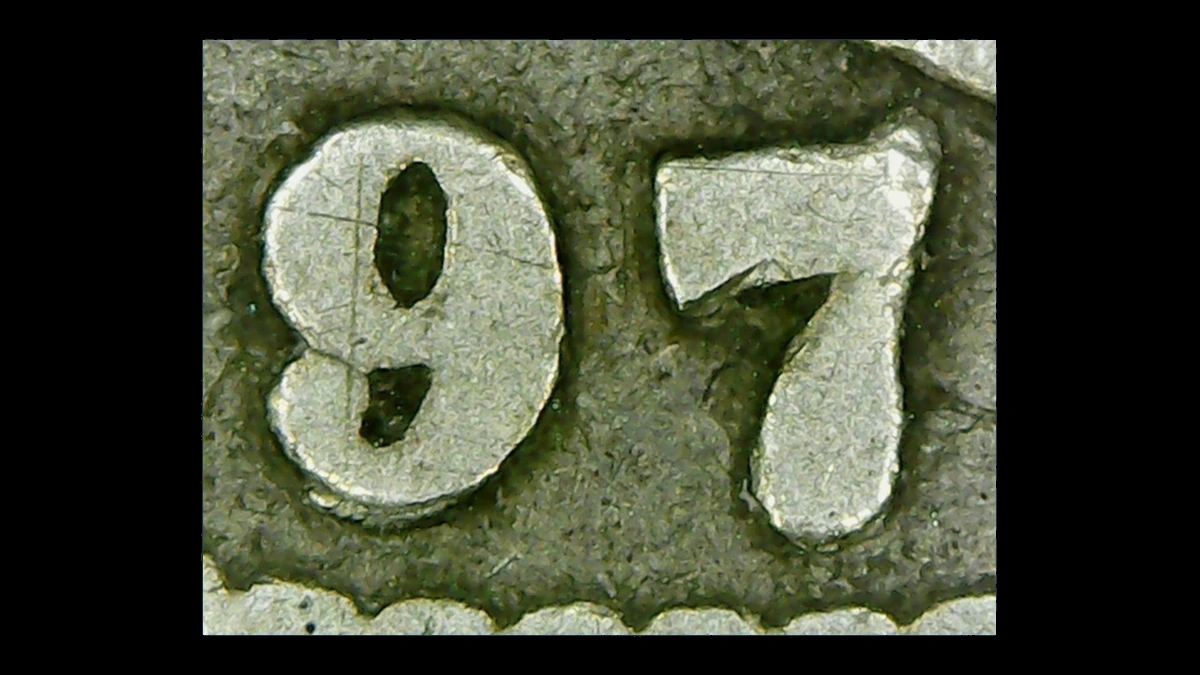
3. 1897 Half Dollar A Possible Earlier Number Beside the Date: Repunched-Date Candidate Error
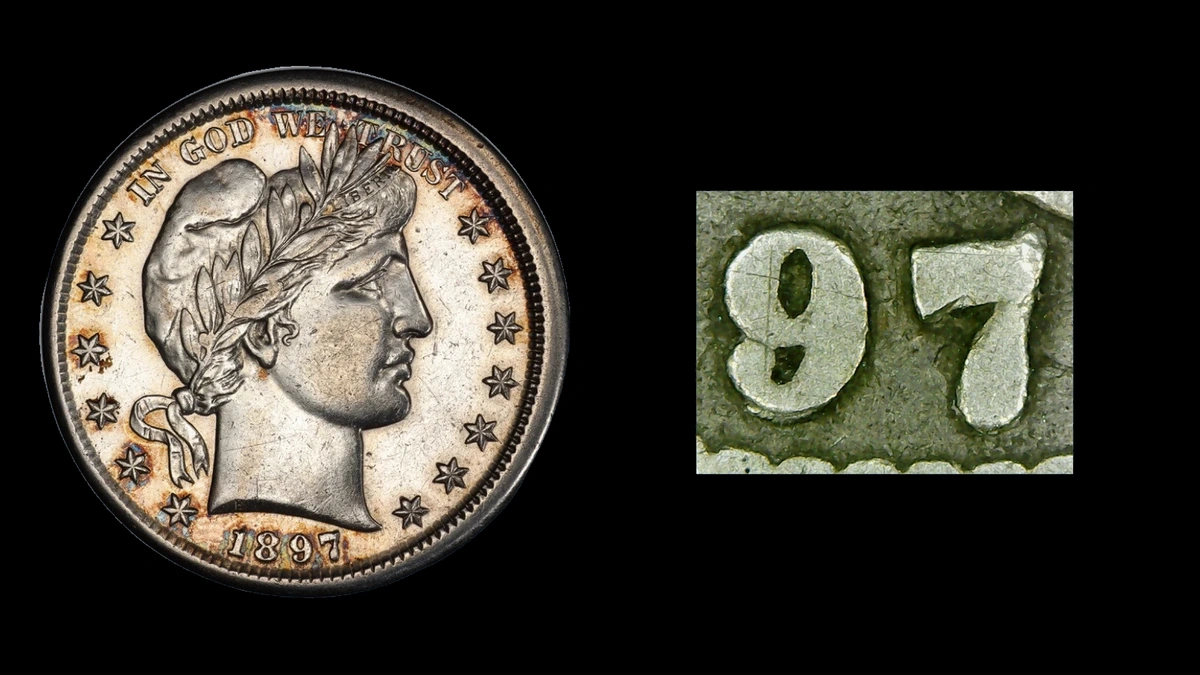
After examining the outline, enlarge all four date digits. The supplied 1897 candidate has no confirmed mint or specified location for the suspected earlier stroke.
A genuine repunched date preserves parts of an earlier punch position in the die. Coins then repeat those raised fragments alongside the final numerals.
How to Identify
Photograph the date straight on with the surrounding surface sharp. Search for an extra curve or numeral ending that can be compared with an identified example of the same date and mint.
Record the mintmark before choosing that reference. The incomplete report does not justify assigning the candidate to Philadelphia, New Orleans, or San Francisco by assumption.
Alter the lighting to see whether a suspected fragment remains shaped like a numeral. Reflections, flat shelves, and scratches do not establish a separate earlier punch impression.
Until a matching stroke is identified, retain the candidate description. General thickness of the date is insufficient evidence for a confirmed variety.
What It’s Worth
Estimated range: $150–$500 if correctly identified around Fine to Very Fine condition. These grades cover worn coins with different amounts of remaining detail.
A normal 1897-O Fine 12 sold for $294 in May 2026. It supplies whole-coin context rather than an amount paid for date repunching.
The candidate’s unconfirmed mint limits the comparison further. An estimated upper value requires a clear variety match as well as appropriate condition.
4. 1897 Half Dollar A Defect in the Back’s Metal: Planchet Flaw Error
The reported 1897-O has a metal flaw on the back and later scratches and dents on the front. The owner’s account reports a PCGS Fine Details assessment with a planchet-flaw label.
A planchet is the prepared metal disc before striking. The broad flaw label does not establish whether this example has peeling layers, a clipped portion, or some other specific form.
How to Identify
Inspect how the reverse defect meets the surrounding struck design under side lighting. Keep the full back and O mintmark in the photograph so the feature remains tied to the correct coin.
Assess the front scratches separately from the original metal problem. One coin can contain both a manufacturing defect and later damage.
Match the actual reverse feature with the grading description rather than selecting a more specific error name from appearance alone. A small flaw may have little effect on either the measured weight or diameter.
What It’s Worth
Estimated range: $100–$300 for a worn Fine Details example with the reported flaw and other damage. The error does not remove the effect of the later scratches.
An ordinary PCGS Fine 12 1897-O brought $294 in May 2026. That is the normal-coin reference mentioned above, not a sale of the owner’s flawed specimen.
Conclusion
Determine first whether the full design survives within the outline. That separates the broadstrike search from the small off-center report before attention moves to date fragments or a metal flaw.
The $100–$3,500 estimates combine different defects and conditions. Keep asking prices distinct from sales, preserve the repunched date’s candidate status, and assess later damage independently of any original mint error.