Rare 1919 Half Dollar Errors (List & Pictures)
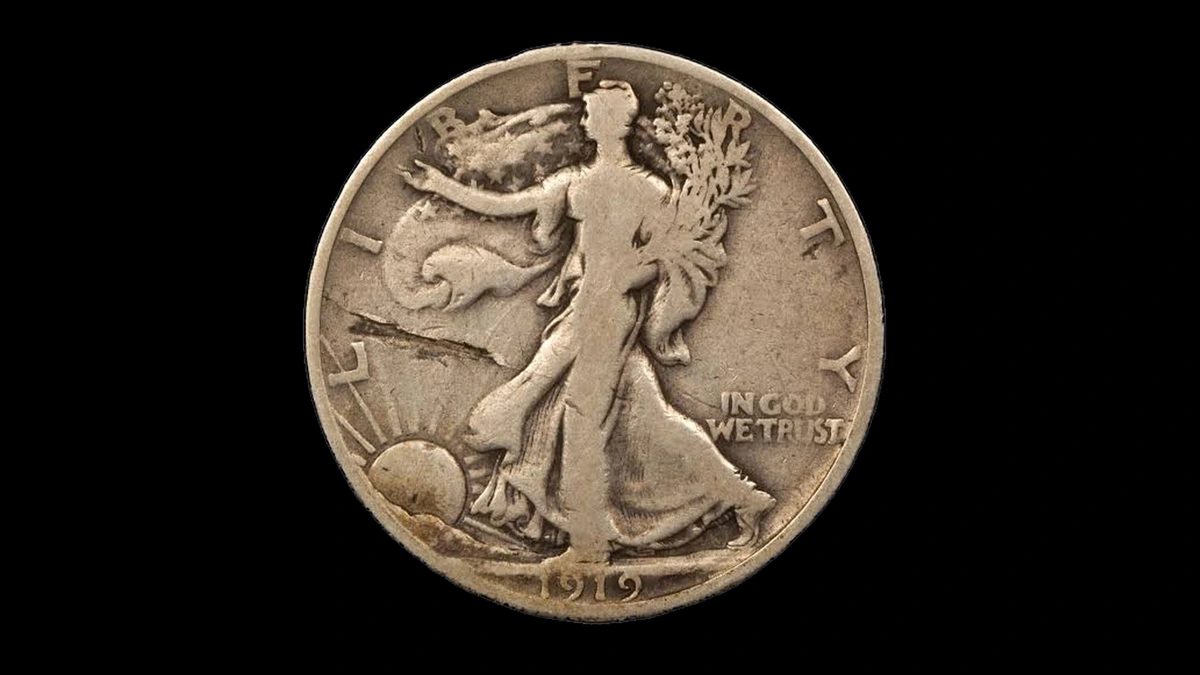
The best starting point for 1919 half dollar errors may be the tiny D on the reverse, where a documented repunched mintmark has an extra right-hand contour. Larger reported possibilities require stronger physical evidence.
Estimated whole-coin ranges extend from $60 to $25,000. The highest supplied auction comparison, $18,000, was paid for a 1942 quarter-blank error, not a 1919 discovery.
Work from mintmark and surface clues to the shape, design position, and metal of the coin.
| Inspection area | Feature to investigate | Estimated value |
|---|---|---|
| Reverse D | Repunched mintmark | $150–$2,000 |
| Surface layer | Lamination | $100–$600 |
| Raised line or rim patch | Die crack or cud | $60–$1,000 |
| Expanded complete design | Reported broadstrike | $3,000–$7,000 |
| Blank crescent | Reported off-center strike | $300–$12,000 |
| Another design position | Possible double strike | $8,000–$15,000 |
| Unusual size and weight | Possible wrong planchet | $10,000–$25,000 |
A normal Walking Liberty half dollar has a standard weight of 12.50 grams, a diameter near 30.6 millimeters, and a grooved edge. Record both faces and the edge before enlarging any suspected feature.
1. 1919 Half Dollar An extra D contour on the right: Repunched Mintmark Error
Find the Denver mintmark below the small branch at the lower left of the reverse. Wexler identifies a 1919-D variety as D/D East, referring to the surviving extra impression on the right of the D.
Mintmarks were punched into dies separately from the main design. A shifted punch could leave traces of an earlier letter, which would then appear on coins struck by that die.
How to Identify
Orient the eagle upright before comparing the D with the Wexler reference photographs. Look for a recognizable part of the second D, not merely a thick edge.
A flat shelf or a worn, smeared letter can look misleadingly broad. The supplied reference gives no additional markers elsewhere, so inventing a second diagnostic would weaken the attribution.
Examine the metal immediately around the mintmark for evidence of alteration or an added letter. Wear may conceal the extra contour, but it cannot supply a missing match.
What It’s Worth
The estimated range is $150–$2,000 for worn examples with clear repunching. A scarce 1919-D already has collectible value, so this is a whole-coin estimate rather than the amount paid solely for the extra D.
A different variety, a 1939-D/D in PCGS MS64+, sold for $1,292.50 at Kagin’s in September 2017. That unworn coin provides context without establishing a 1919-D sale, and exceptional 1919 preservation needs a separate comparison.
2. 1919 Half Dollar A layer separates from the face: Lamination Error
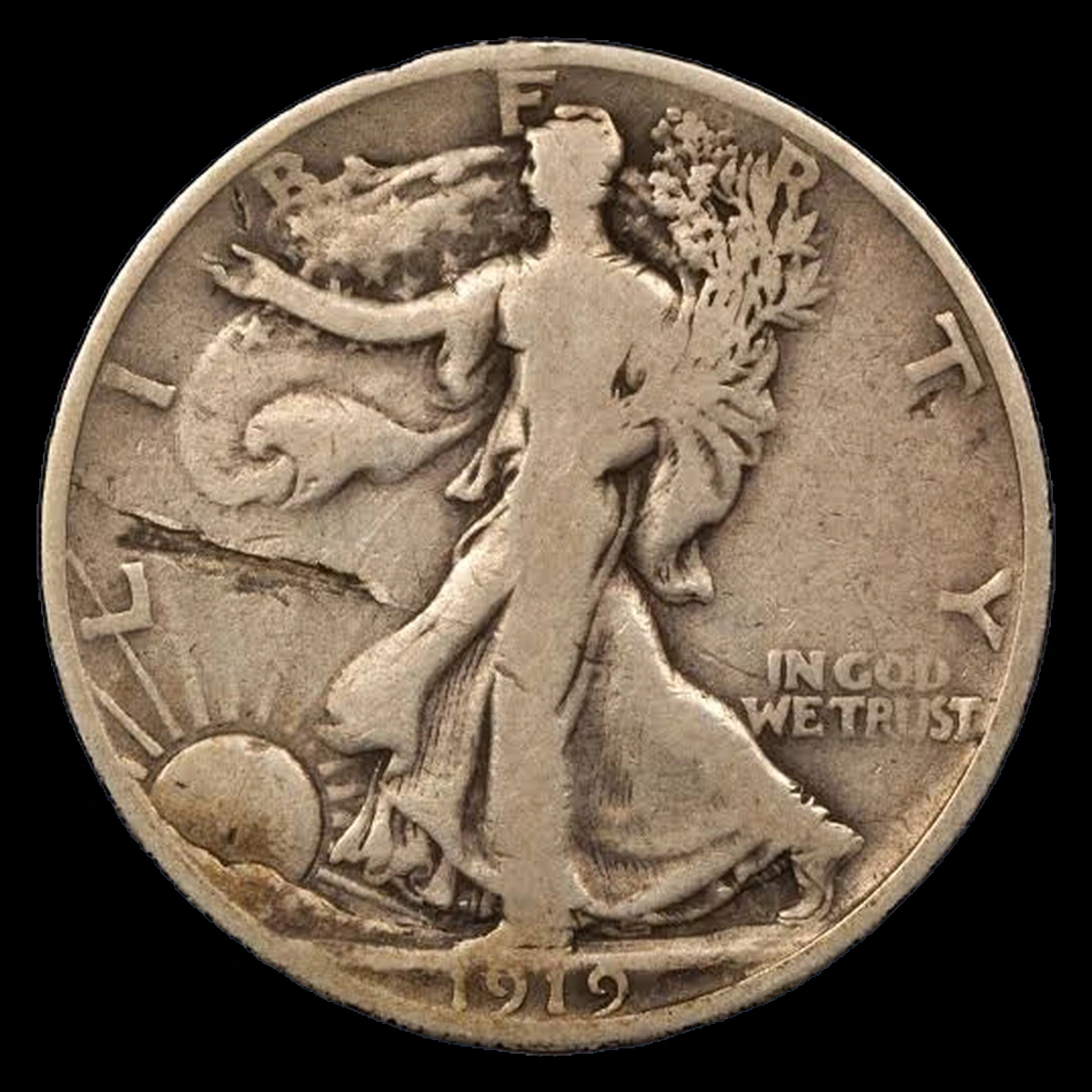
A reported 1919-S has a large separating area on the obverse. It was described as Fine, a worn condition with the main design still visible.
Lamination begins where the metal fails to hold together internally, allowing a thin layer to lift or detach. The report does not establish an attached flap or a coin split into two complete discs.
How to Identify
Study the boundary between intact design and the affected patch. Evidence of a layer separating beneath the struck surface is more helpful than a rough hollow alone.
Leave any attached metal in place and photograph it from the side. A detached layer can reduce weight, while a layer that remains attached may leave the total essentially unchanged.
Include the 1919 date and reverse S in the record. Cuts, scooped-out metal, corrosion, and artificial thinning need to be excluded before a missing patch becomes a lamination diagnosis.
What It’s Worth
Estimated values run from $100–$600 for worn examples with visible separation. The reported Fine 1919-S was advertised at $110, which is an asking price.
Surface loss can reduce a scarce date’s appeal even while the minting defect interests an error collector. A larger damaged area does not therefore guarantee a higher whole-coin value.
3. 1919 Half Dollar A raised ridge or a patch meeting the rim: Die Crack and Cud Error
The height and connection of a mark help distinguish these two related features. Silver entering a die fracture forms a raised ridge, while a missing piece at the die’s edge can create a larger raised patch connected to the coin’s rim.
That rim-connected break is a cud. The supplied 1919 list names the categories without documenting a particular mint or authenticated specimen.
How to Identify
Follow a suspected crack under changing light to confirm that it rises above the surrounding surface. A scratch usually forms a channel, although damaged edges around it can complicate the view.
For a possible cud, trace the raised patch all the way to the rim and look for related weakness on the opposite face. An isolated internal bump may be a die chip and should not automatically be called a cud.
Inspect unusual metal for an attachment seam or a different texture. Added material is not evidence of a broken die.
What It’s Worth
A broad estimate is $60–$1,000, from small cracks on ordinary worn coins to conspicuous confirmed rim breaks. Better-preserved scarce mint issues require their own underlying coin comparison.
A 1976-D Kennedy with a die break brought $256 at Heritage in June 2026, graded NGC MS65. That different-series, unworn example does not establish a 1919 cud price.
4. 1919 Half Dollar The coin spreads while keeping its design: Reported Broadstrike Error
A broadstrike directs attention to the perimeter: the design remains complete, but the metal spreads beyond its normal width. This can happen when the collar, the ring controlling the coin’s diameter, does not restrain it during striking.
No certified 1919 broadstrike is established in the supplied account. Its description explains a category to investigate, not a documented dated discovery.
How to Identify
Measure the width in several directions and check every outer letter and design element for completeness. A shifted strike that loses design beyond the edge is a different condition.
Inspect the edge for missing or interrupted grooves consistent with failed restraint. Later pressure can also enlarge a coin, but may flatten finished details or leave other damage.
The metal spreads rather than vanishes, so an accessible example should remain near its expected weight after allowing for wear. Diameter alone cannot establish how the coin became wide.
What It’s Worth
A series-based comparison range is $3,000–$7,000 for a successfully authenticated candidate. These figures are guide estimates, not realized 1919 auction prices.
The July 2025 specialist guide places lightly worn through nearly unworn broadstruck Walkers at $3,000–$4,000 and unworn examples at $5,000–$7,000. Identity, expansion, and original surfaces must justify the comparison.
5. 1919 Half Dollar Bare metal sits beside an incomplete design: Reported Off-Center Strike Error
A crescent that never received a design suggests the blank was partly outside the striking area. On the opposite side of the outline, some intended detail may fall beyond the available metal.
The 1919 source reports off-centering without tying its illustrative percentages to a certified coin. It supplies no established mintmark or direction for a particular specimen.
How to Identify
Compare both faces in their proper alignment to determine whether the entire blank was displaced. A border crowded on one face alone can result from one misaligned die.
Examine the transition into the bare area for original unstruck texture. Ground or flattened surfaces can erase design after minting.
The surviving date must support 1919. If the mintmark area never received a strike, its blank appearance cannot establish Philadelphia origin.
What It’s Worth
An estimated $300–$12,000 spans modest worn offsets through exceptional, authenticated, well-preserved examples. The width of that range reflects large differences in condition and visibility.
A 1918 Walker struck 10% off center and graded PCGS MS65 sold for $10,575 at Heritage in April 2013. That different-year result does not assign a price to an unrecorded 1919 coin, and a greater displacement is not automatically more valuable.
6. 1919 Half Dollar The design survives in two positions: Possible Double Strike Error
A coin that stays in the press may move before receiving another blow. The later impression can flatten earlier details while leaving enough remnants to reveal two design positions.
The year-specific account treats a 1919 double strike as a possibility. It does not establish a certified dated specimen.
How to Identify
Find related parts of Liberty or the eagle that fit one shifted impression. At an overlap, examine whether the later blow flattened a portion of the first design.
Several coordinated remnants provide better evidence than two close edges on a single letter. Include the outline and edge grooves when considering how the coin moved between strikes.
Pressing finished coins together can create sunken mirror images after minting. Such impressions and later dents require a different explanation from another strike by Mint dies.
What It’s Worth
For a substantial authenticated double strike with attractive worn surfaces, the comparison estimate is $8,000–$15,000. Faint extra blows, serious damage, or exceptional unworn preservation fall outside that narrow comparison.
An undated San Francisco Walker in PCGS AU53 sold for $11,400 at Heritage in August 2025 with its second strike 90% off center. Its missing date prevents it from being called a 1919 half dollar.
7. 1919 Half Dollar The design does not fit the metal: Possible Wrong Planchet Error
When a blank intended for another denomination receives a half-dollar strike, size, weight, composition, and design boundaries must be considered together. A smaller blank may preserve only the part of the design that reaches its surface.
The 1919 guide uses a dime blank to illustrate the possibility but does not document an actual 1919 dime-blank error. A real candidate’s metal must identify its own likely origin.
How to Identify
Record weight, width, and thickness if the coin can be handled safely, then inspect the full edge for filing or machining. A smaller blank may expand under pressure, so the struck diameter need not match an unused blank exactly.
Composition testing can help determine whether the metal suits another denomination. It should agree with the weight and naturally interrupted design, rather than explain only one unusual measurement.
Look for a surviving date before assigning the year. Neither a dramatic photograph nor a small diameter alone demonstrates the original blank.
What It’s Worth
A provisional comparison range is $10,000–$25,000 for a substantial authenticated candidate. The supplied completed transactions concern quarter blanks from other dates or without a date.
An undated PCGS MS64 Walker on a silver quarter blank brought $15,000 at Heritage in May 2022. A dated 1942 quarter-blank example graded NGC MS64 sold for $18,000 that January.
Those results establish neither a 1919 specimen nor a dime blank. The alternative blank, readable identity, and preservation must remain attached to the correct comparison coin.
Conclusion
A matching extra D contour provides a specific variety test, while a separating layer calls for a close look at the metal boundary. Larger striking claims demand evidence across both faces and the edge.
Several dramatic categories remain possibilities in the supplied 1919 material. Their other-year auction comparisons help explain potential scale, but they do not turn an unverified candidate into a documented discovery.