Rare 2010 Half Dollar Errors (List & Pictures)
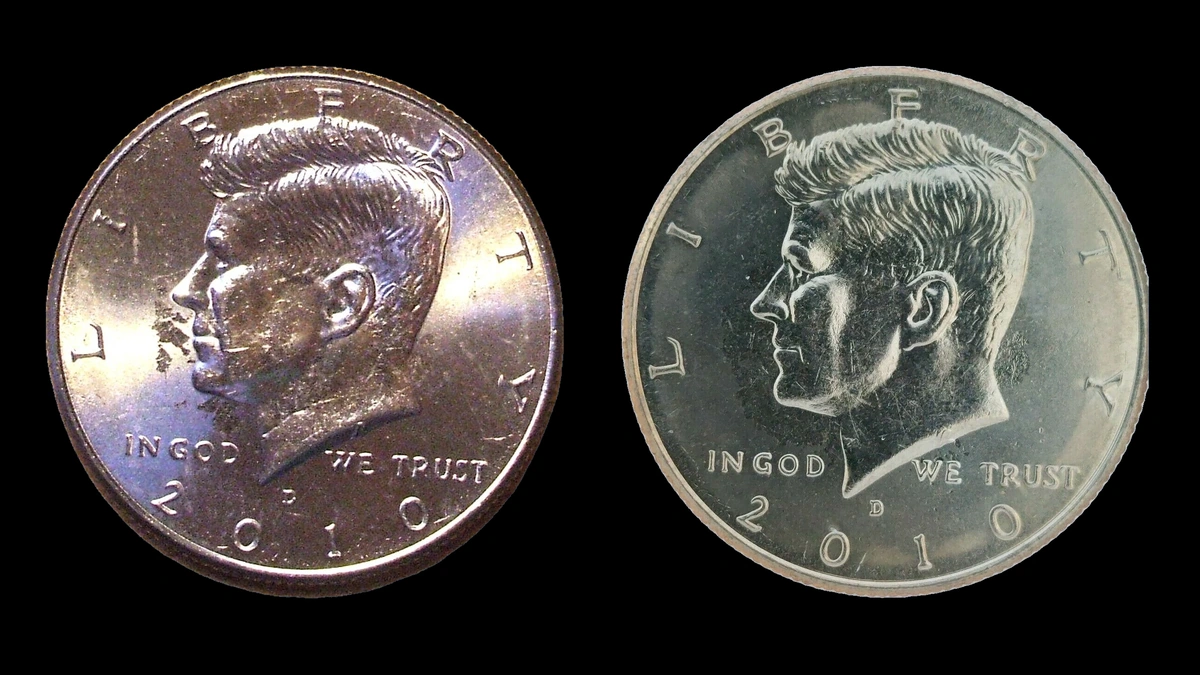
Peeling metal, repeated detail, and an overlapping second strike have different origins. These 2010 half dollar errors carry estimates of $10–$1,200, supported by a mixture of seller reports and broader comparisons.
The highest supplied comparison is a 1991-P double strike sold for $1,092.50 in 2009, not a 2010 transaction. Inspect the material and outline, then investigate interrupted details, reverse doubling, and the small FG initials.
| Clue | Inspection target | Category | Estimated value |
|---|---|---|---|
| A flap or layered opening | Both sides of the reported D coin | Lamination | $25–$200 |
| A missing piece of the blank | Edge and adjacent detail | Clipped planchet | $25–$500 |
| Bare metal beside cut-off design | Both faces | Off-center candidate | $50–$550 |
| Two displaced design impressions | Surviving overlap on both faces | Double-strike candidate | $300–$1,200 |
| Interrupted lettering or a depression | Reported P or D front/surface area | Struck through | $10–$150 |
| Repeated eagle-side detail | Reverse, no fixed position supplied | Doubled die reverse | $25–$250 |
| Both FG letters absent | Beside eagle’s leg and tail | Missing FG candidate | $20–$150 conditional |
Identify the mint, metal, and finish before comparing a 2010 coin. Ordinary clad coins weigh 11.34 grams and silver proofs 12.50 grams; the normal diameter is about 30.61 mm, and intentionally textured satin finishes require their own visual comparisons.
1. 2010 Half Dollar A Surface Layer Opens or Peels: Lamination Error
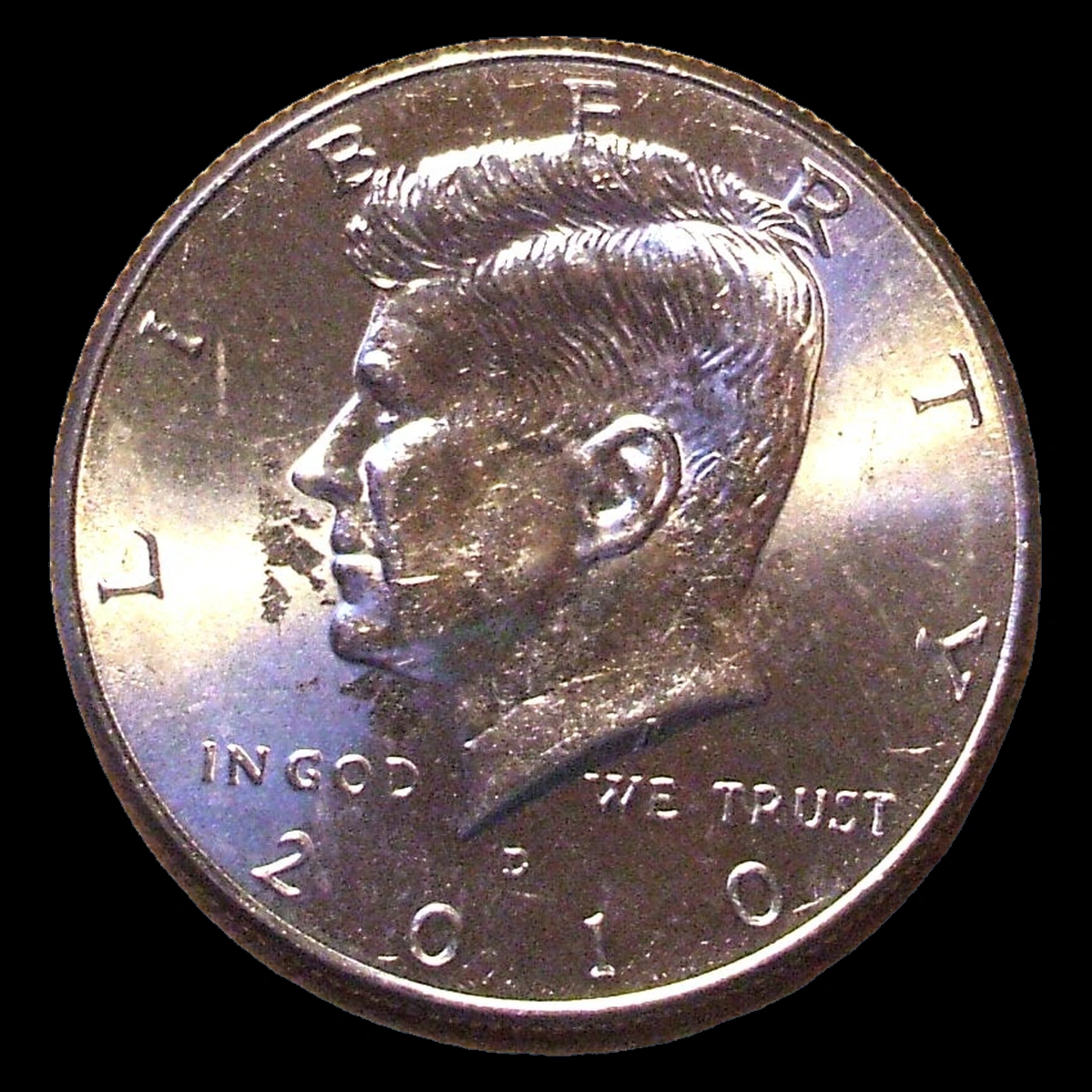
A seller described peeling on both sides of a 2010-D. The report gives no independent certification, precise location, or thickness for the affected layers.
Lamination is a separation within the metal, which may leave an attached flap or a shallow missing patch. Local peeling does not establish that both complete outer clad layers are absent.
How to Identify
Examine the opening without lifting a flap. Look for a layer continuous with the coin’s original metal and inspect both faces individually.
Blistered added plating, heat, and chemicals can produce misleading surfaces. Color alone cannot show that a separation began before minting.
An attached flap may leave weight nearly unchanged; missing metal can lower it. Keep the readable date and D with views of each affected area.
What It’s Worth
Estimated range: $25–$200 for genuine local separation, assessed across the complete coin. Two affected sides do not automatically double a premium.
A 2006 satin-half guide suggests roughly $40–$120 added value for small laminations. That different-finish estimate is not a completed sale of the seller-reported 2010-D.
2. 2010 Half Dollar The Metal Outline Has a Gap: Clipped Planchet Error
A clipped blank is incomplete before the portrait and eagle are struck. Nearby design forms on the metal that remains rather than being cut away afterward.
The 2010 clip listing mixes metals and finishes. It does not establish a specific San Francisco silver-proof example.
How to Identify
Inspect both ends of the gap, where normal rim and edge meet the missing segment. Look for naturally formed striking detail instead of fresh burrs, filing, or saw marks.
Weakness opposite the gap can support a clip but is not always obvious. Use weight appropriate to the actual metal and measure an unaffected span of the outline.
Record the date, mint, and finish from the coin. A neat crescent alone cannot establish either original manufacture or a particular proof issue.
What It’s Worth
Estimated range: $25–$500 from small original clips to substantial missing sections on well-preserved examples. The 2010 guide emphasizes stronger clips above $100.
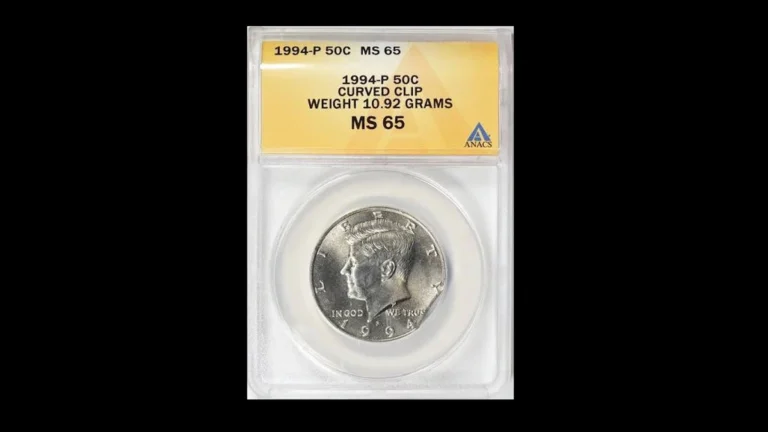
A 1993-D curved clip in ANACS MS64 brought $34.74 including buyer’s premium in August 2025. That unworn different-year coin supports an affordable lower comparison rather than a 2010 result.
3. 2010 Half Dollar The Designs Shift Beside a Blank Crescent: Off-Center Candidate Error
A blank partly outside the striking position receives incomplete designs on both sides. The metal beyond the dies remains unstruck.
The 2010 guide discusses hypothetical Philadelphia and Denver examples and percentages. It does not document a certified coin with those stated measurements.
How to Identify
Align front and back photographs by the same physical edge landmarks. Their missing design should fit one shift of the blank.
An uneven rim confined to one face may indicate a shifted die. A wider outline containing both full designs would instead suggest a broadstrike.
Inspect blank texture for grinding or shaving that removed design later. Keep the actual date and mintmark visible rather than identifying the year from packaging.
What It’s Worth
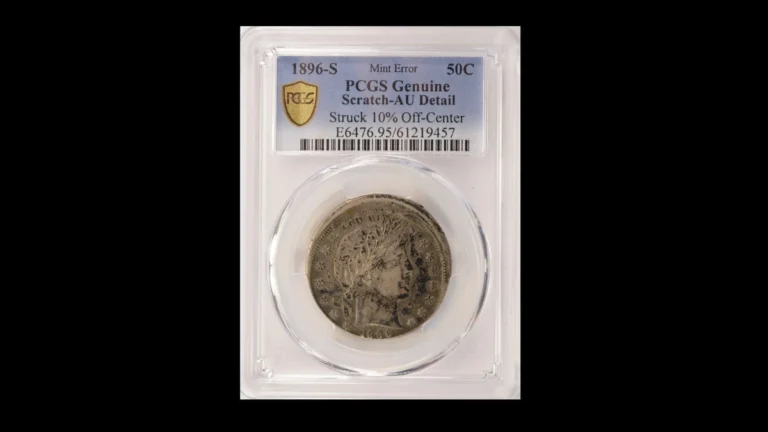
Comparative estimate: $50–$550, with small shifts near $50–$100 and stronger readable-date examples at several hundred dollars. No specific 2010 auction result is supplied.
A 50% off-center 1991-D graded PCGS MS62 brought $546.25 in 2009. That historical result does not turn the guide’s hypothetical percentages into measured 2010 specimens.
4. 2010 Half Dollar One Picture Overlaps Another in a New Position: Double-Strike Candidate Error
A coin that moves before an unintended second blow can retain parts of both designs. The earlier image may continue beneath the later impression.
The guide describes the possibility for 2010 without a documented mint, finish, grade, or displacement. A proof’s normal repeated blows in the same position do not establish this error.
How to Identify
Choose two recognizable parts of the earlier picture and compare their positions relative to the newer one. They should move together in a consistent pattern.
Inspect both faces for supporting overlap. A later squeeze against another coin can leave recessed mirror-image detail, while one thick letter is not evidence of a second full strike.
Keep the edge and any spreading visible. The error requires unintended design displacement, not merely reflective proof or prooflike surfaces.
What It’s Worth
Estimated range: $300–$1,200 for a genuine ordinary-metal example with clear overlapping pictures. Identity, separation, and preservation determine a useful comparison.
The 2009 FUN results record $1,092.50 for a 1991-P double strike. Its ANACS MS64 PL label describes an unworn coin with prooflike reflectivity, not a 2010 proof issue.
5. 2010 Half Dollar A Mark Interrupts the Normal Design: Struck Through Error
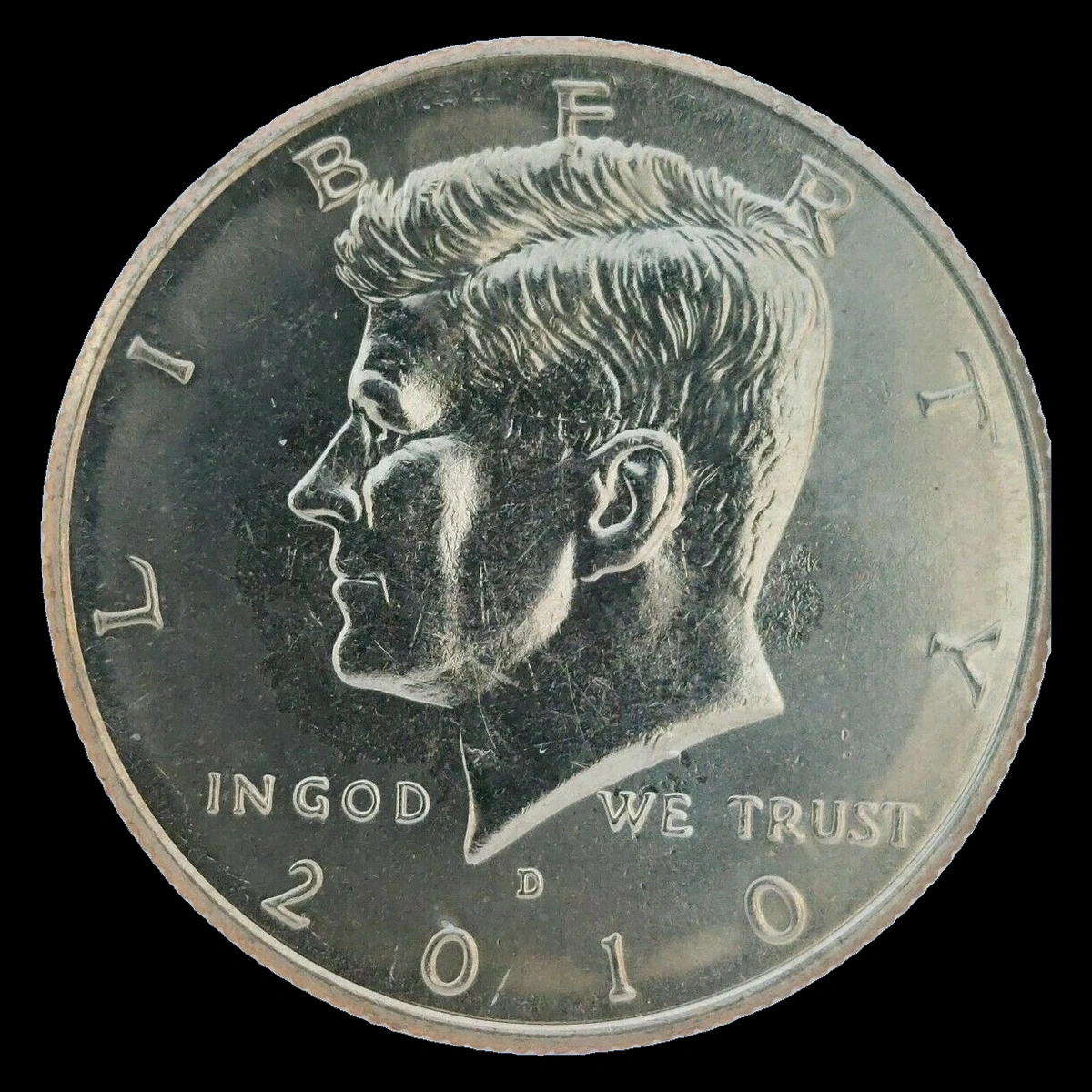
A Philadelphia seller attributed a mark to grease, while a Denver listing used the broader term strike-through. Neither supplies independent certification or a precise description of the affected area.
Material between a blank and die can weaken a letter or leave its own impression. The two seller accounts need not describe the same obstruction.
How to Identify
Locate where normal design meets the affected patch before naming its cause. Cuts, scrape tracks, and sharp displaced lips may reveal damage after the coin was struck.
Compare an ordinary coin of the same finish. A dull area could be wear, corrosion, or intentional surface texture rather than blocked design.
Confirm P or D and the complete date. The seller reports concern ordinary issues and should not automatically be extended to satin coins.
What It’s Worth
Estimated range: $10–$150 for genuine localized obstruction effects on regular clad coins. A clear impression with normal surrounding detail provides stronger evidence than faint weakness.
A 1976-D struck through on both faces sold for $114 in March 2025. It offers Kennedy-series context but assigns neither a realized price nor a certified grade to the two reported 2010 coins.
6. 2010 Half Dollar Eagle-Side Details Have Extra Raised Outlines: Doubled Die Reverse Error
CoinHub lists reverse doubling for 2010 without specifying the mint, finish, or exact design element. “Reverse” means the back of the coin.
A doubled die already contains repeated detail before striking and can reproduce it on successive coins. The report therefore needs an identified matching example, not an invented location.
How to Identify
The year list provides the category, while a reliable attributed photograph must supply the diagnostic. Keep the entire reverse visible before enlarging a suspected shape.
Compare rounded separation with a normal same-finish coin under changing light. Worn dies can thicken letters, and striking movement can leave a flat ledge.
A doubled-looking line around Kennedy is on the other face and cannot establish the reported reverse category. Match the same extra reverse detail on a known example.
What It’s Worth
Estimated range: $25–$250 for genuine identified reverse doubling on regular clad coins. A published 1982 guide’s $20–$150 estimate for modest reverse doubling supplies different-year context.
The upper figure allows for more conspicuous detail. Neither guide establishes a named 2010 variety or a certified individual sale.
7. 2010 Half Dollar Neither FG Initial Can Be Found: Missing FG Candidate Error
FG stands for reverse designer Frank Gasparro. The small letters sit below the eagle’s left leg, on the viewer’s right, beside tail feathers and arrows.
Heavy polishing can remove their recessed forms from the die. The guide raises a 2010 possibility through comparisons with other years but identifies no certified mint-and-finish example.
How to Identify
Locate FG on a normal coin before checking the candidate. Search for any surviving part of either letter using magnification and several light directions.
Compare the adjacent leg and feathers for wear or localized smoothing. Tiny visible remnants mean the initials are weak, not completely absent.
An undisturbed area with neither letter visible is a starting observation. Further attribution is still needed to distinguish die polishing from concealment or later removal.
What It’s Worth
Conditional estimate: $20–$150 for an independently identified 2010 with both initials genuinely missing through the die. No recognized 2010 sale is supplied.
Known 1982-P No FG coins graded NGC MS66 sold for $84 in early 2022. Their established variety identity and unworn condition do not transfer automatically to a 2010 with hard-to-see letters.
Conclusion
First distinguish a change in the metal from a change in the struck design. Then use the correct finish, both faces, and edge evidence to separate peeling, clipped blanks, displaced strikes, and repeated details.
The estimated $10–$1,200 span combines seller reports and conditional categories. A matching physical explanation must come before applying another year’s price, especially for missing FG and hypothetical 2010 double strikes.