Rare 1925 Quarter Errors (List & Pictures)
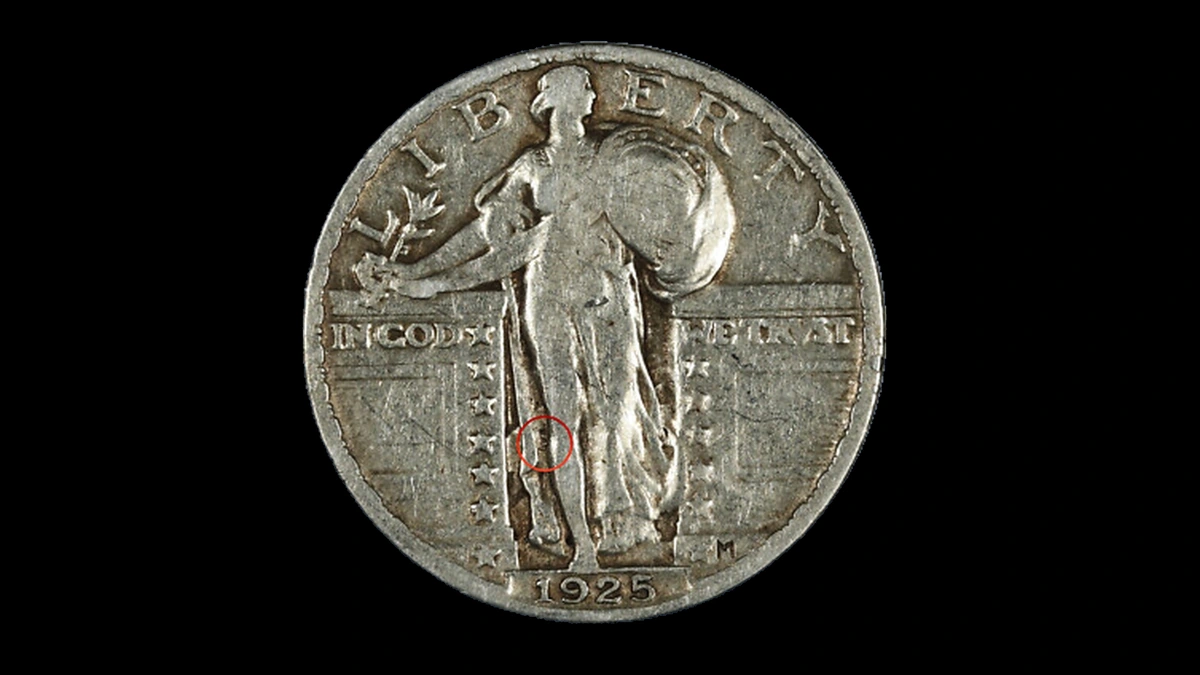
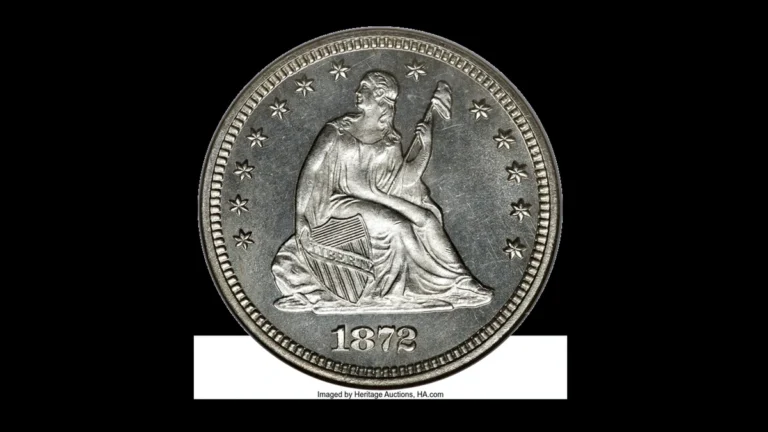
A missing mintmark and recessed date are normal on every regular 1925 Philadelphia quarter. Identifying 1925 quarter errors requires a different feature, with supplied estimates spanning $40–$8,000.
The highest provided sale is $33,600 for an undated Standing Liberty quarter struck 35% off-center in July 2022. That exceptional series comparison cannot be assigned to 1925; use the date, outline, and surface checks below to establish each candidate’s identity.
| Observation | Possible identification | Estimated value |
|---|---|---|
| Missing design and blank crescent | Off-center strike | $300–$8,000 |
| Missing metal at the edge | Clipped blank | $50–$700 |
| Repeated front contours | Reported doubled die | $40–$600 |
| E-shaped trace near robe | Reported die clash | $40–$1,200 |
| Thin surface separation | Possible lamination | $40–$400 |
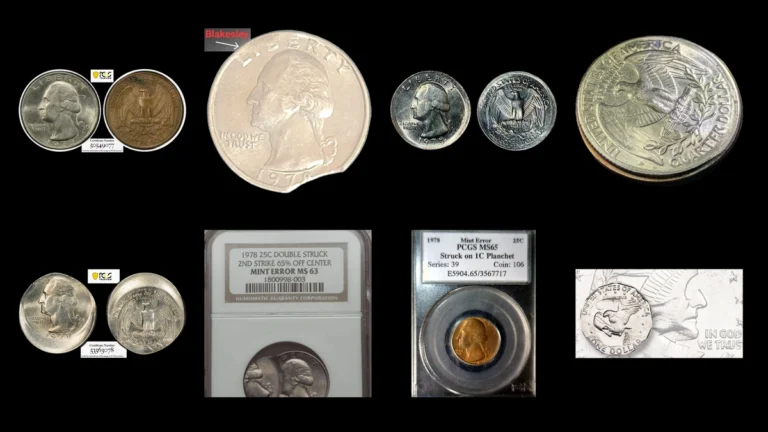
1. 1925 Quarter A Picture That Runs Past the Edge: Off-Center Strike Error
One side of an off-center quarter can contain untouched blank metal while the opposite side loses part of the intended picture. The blank was out of position when the dies came together.
The supplied 1925 report establishes no specific dated specimen’s direction or percentage. Each candidate must provide its own visible displacement and readable identity.
How to Identify
Read all four date digits before calling the coin a 1925 quarter. The general Standing Liberty design cannot supply a year that fell outside the struck area.
Follow the picture from the blank crescent to the opposite boundary and identify the missing design. Both faces should agree with the same displaced blank.
If only one face is shifted, a misaligned die may explain the uneven border. A broadstrike can also have an uneven margin, but it retains the complete intended design.
Inspect apparently blank metal for flattened letters, grinding lines, or polishing that removed a finished design. A loose coin’s outline can be measured against the normal approximately 24.3-millimeter diameter, though dimensions alone do not establish an off-center strike.
What It’s Worth
$300–$8,000 is the supplied estimate for authenticated off-center quarters with a readable 1925 date. A modest shift on a worn example is a different comparison from a dramatic error with excellent surfaces.
An undated Standing Liberty quarter struck 35% off-center sold for $33,600 in July 2022. NGC graded it MS65 Full Head, indicating unworn preservation and sharp head detail.
The missing date prevents treating that extraordinary coin as a 1925 transaction. Its price is neither a routine target nor evidence that an unidentified off-center quarter belongs to this year.
2. 1925 Quarter An Incomplete Original Disc: Clipped Blank Error
A clip leaves part of the blank absent before the design is struck. A curved form can result when the blanking punch overlaps a hole already cut in the metal strip.
Clipped 1925 quarters are reported without an established gap size or position for a specific specimen. A curved silhouette therefore starts the examination rather than completing it.
How to Identify
Confirm that the surviving date reads 1925, then inspect both ends of the gap. Look for rim and design formation consistent with an already incomplete blank.
Opposite-rim weakness can support an original clip, although it need not be obvious on every coin. Saw marks, sharp burrs, or letters cut through after striking instead suggest later damage.
The normal silver quarter weighs 6.25 grams, providing a reference for a loose candidate. Weight loss also accompanies wear and cutting, so it must agree with the original edge evidence.
What It’s Worth
$50–$700 is the supplied estimate for authenticated clipped 1925 quarters. A noticeable original gap and readable date help make a clear example, while heavy damage or missing identity can reduce appeal.
No completed clip sale is supplied for 1925. Weakness opposite the opening is supporting evidence for the same clip, not a separate error premium.
3. 1925 Quarter Extra Outlines at the Date, Head, or Shield: Reported Doubled Die Error
Reports describe repeated front detail around the date, Liberty’s head, and the shield. A doubled die carries extra design contours in the tool itself, allowing one ordinary strike to transfer them.
The supplied report does not name an illustrated 1925 variety or establish a precise direction of doubling. An apparent extra edge therefore remains a candidate until a consistent die pattern can be matched.
How to Identify
Inspect the date, head, and shield individually under magnification. Determine whether an added raised contour follows an actual digit or design element.
Compare with a normal 1925 quarter under similar lighting. The recessed date area introduced for this issue belongs in the normal design and is not another outline of the numerals.
A low flat shelf beside a reduced main shape can result from mechanical doubling during the strike. Ordinary head weakness or a line visible only in one reflection also needs another explanation.
Record several affected details for specialist comparison. A repeatable arrangement is more useful than one thick letter or blurry edge.
What It’s Worth
$40–$600 is the supplied estimate for a correctly identified doubled-front example. Natural surfaces, overall preservation, and clear separation help determine its appeal.
This is a conditional whole-coin guide rather than a recorded sale of an established named variety. A general impression of thickness does not justify its upper range.
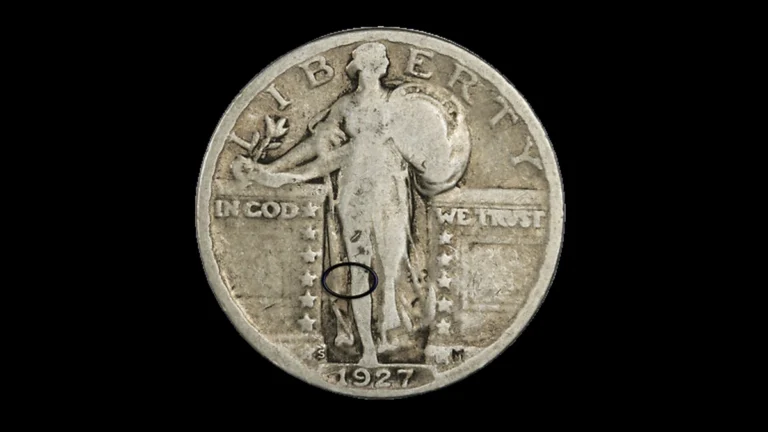
4. 1925 Quarter A Stray E Near the Lower Robe: Reported Die Clash Error
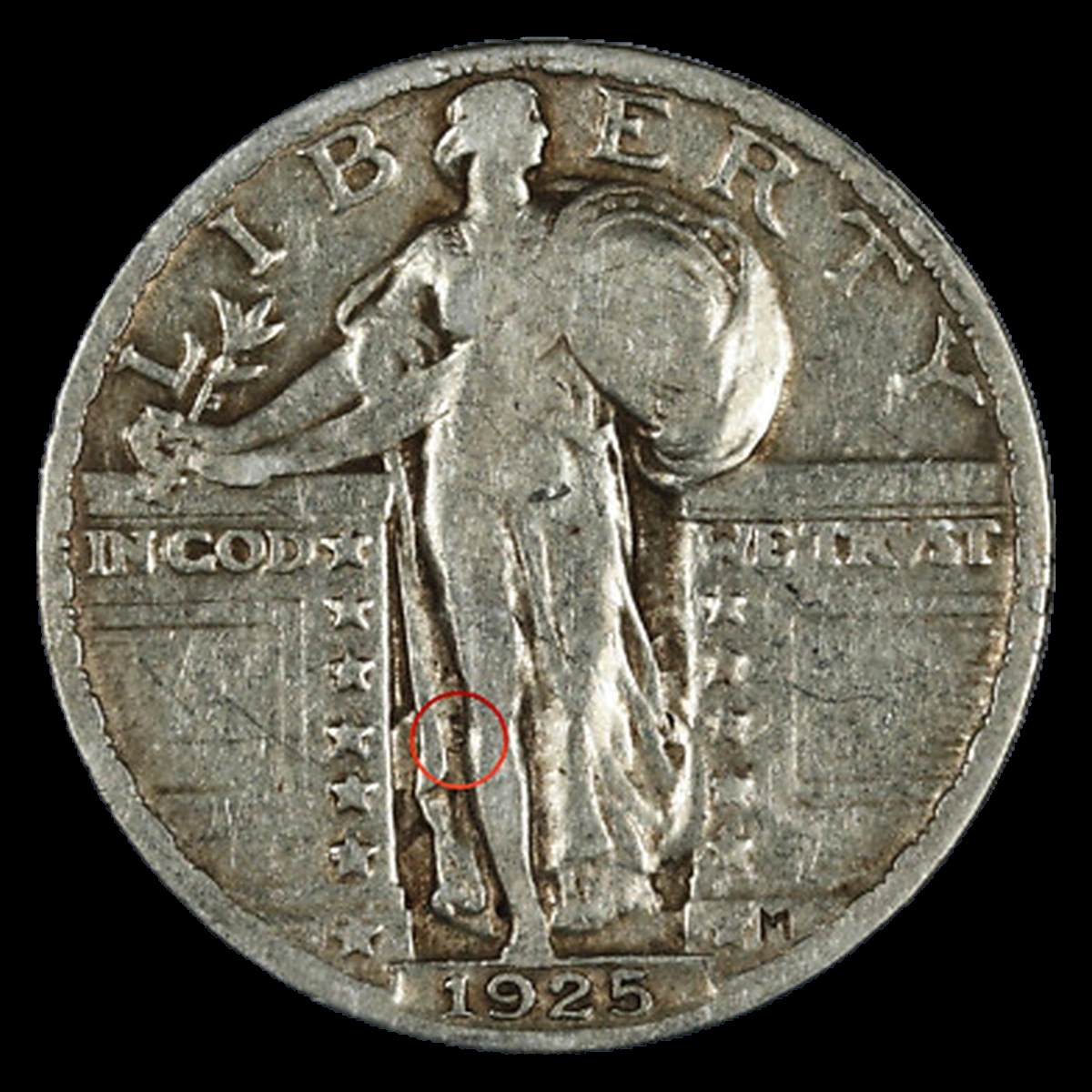
An E-shaped trace near Liberty’s knee or lower skirt is reported on 1925 examples. It may represent reverse lettering transferred through a collision of the two dies without a blank between them.
The marked tool could then reproduce the stray shape beside the normal front design. A seller’s listing of a worn clashed-E example supplies a report, not independent authentication.
How to Identify
Locate the knee and lower robe before studying any E-like lines. A mark elsewhere cannot be assigned the same identity solely because it resembles a letter.
Compare the trace with the reverse lettering that could have transferred and with a clearly identified 1925 clash. Normal fabric folds should remain distinct from the proposed additional outline.
Side lighting can help follow the shape without rubbing the surface. Random scratches that suggest part of an E are insufficient unless their position and form support the transferred design.
What It’s Worth
$40–$1,200 is the supplied estimate for a genuine 1925 clashed-E quarter. Visibility of the trace and the condition of the entire coin govern the comparison.
A separate 1929-S clash variety in PCGS MS66+ sold for $2,520 in January 2022. Its unusually strong unworn preservation belongs to that different-year example, not the worn 1925 seller report.
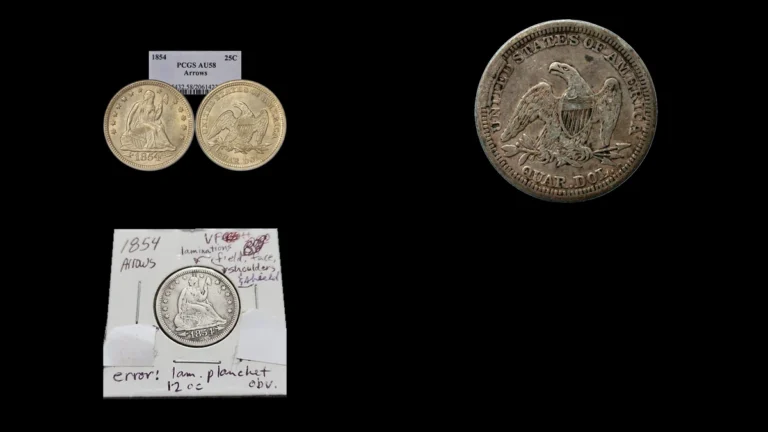
5. 1925 Quarter A Thin Piece Lifting from the Surface: Possible Lamination Error
A weak layer within the blank can open before or after striking, leaving a ragged peel or missing flake. The supplied evidence does not establish a clearly identified 1925 example, so lamination remains a possibility to examine.
This quarter consists of 90% silver alloy. Its separation would occur within that metal, unlike loss of a distinct outer layer on a modern clad quarter.
How to Identify
Leave any attached flap untouched and inspect the boundary under angled light. A thin continuing separation at its base supports a different explanation from metal piled up by a gouge.
Follow nearby design into the affected area to assess its relationship with the original strike. Do not lift the metal to see underneath.
Check the rest of the surface for corrosion pits or parallel scraping lines. Those patterns may account for missing metal without an original weakness in the blank.
What It’s Worth
$40–$400 is the supplied estimate for an authenticated 1925 lamination. A clear larger separation with preserved surrounding detail is easier to demonstrate than a small flake on a heavily worn coin.
The range includes the complete silver quarter’s value. Corrosion, gouging, or an uncertain rough patch does not qualify simply because part of the surface seems absent.
Conclusion
A readable date anchors any 1925 identification, especially when a clip or displaced strike removes nearby detail. The normal lack of a mintmark and recessed date should remain separate from the suspected error.
Use the original edge for missing-metal claims, a consistent pattern for doubled or clashed designs, and intact boundaries for peeling surfaces. Keep the exceptional undated $33,600 comparison distinct from confirmed 1925 coins and from the guide’s more modest estimates.