Rare 1942 Quarter Errors (List & Pictures)
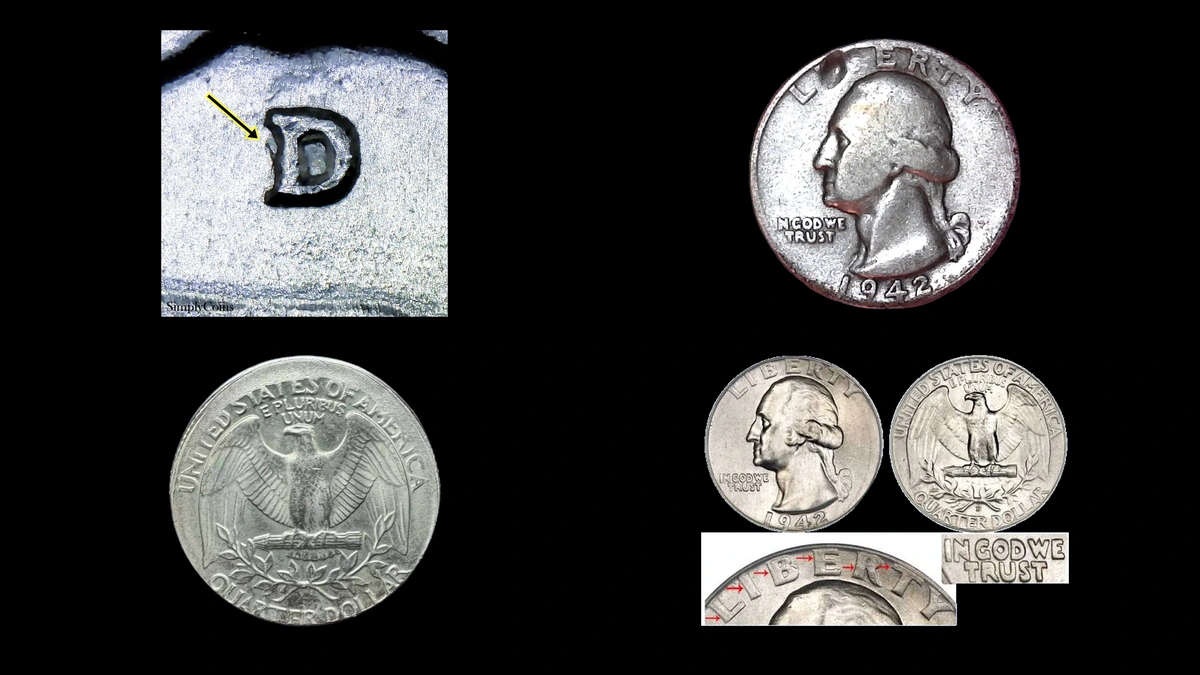
A Denver doubled-reverse quarter graded MS66+ sold for $8,225 in November 2012. Estimated values across 1942 quarter errors run from $20–$10,000, covering modest metal flaws as well as major varieties.
This guide explains which design, mintmark, edge, or surface details distinguish the categories before a price comparison becomes useful.
| Category | Estimated value |
|---|---|
| Lamination | $20–$400 |
| Curved clip | $25–$400 |
| Clashed dies | $25–$500 |
| Repunched mintmark | $25–$600 |
| Broadstrike | $75–$600 |
| Struck-through material | $30–$1,000 |
| Cracks and cuds | $20–$2,000 |
| Off-center strike | $150–$3,500 |
| Doubled dies | $50–$10,000 |
1. 1942 Quarter Lamination Error
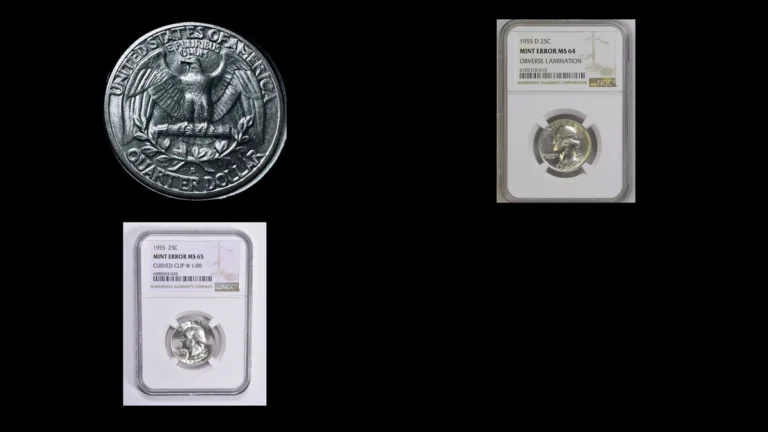
A thin silver flap or a shallow area where metal has separated can belong to the reported lamination category. A weakness within the alloy allows part of the surface layer to lift.
These quarters are silver alloy throughout. The feature is different from losing one of the outer sheets on a later copper-centered clad coin.
How to Identify
Follow the layer boundary into the surrounding design without lifting attached metal. A surviving letter or portrait detail on the flap may help show the separation.
Where metal is gone, compare the opening with pits, scratches, or digging marks that could explain later damage. A retained flap need not make the coin lighter.
What It’s Worth
Genuine laminations have estimated values of $20–$400. Clear natural separation with readable detail generally provides a better comparison than a worn, scratched patch.
2. 1942 Quarter Curved Clipped Blanks Error
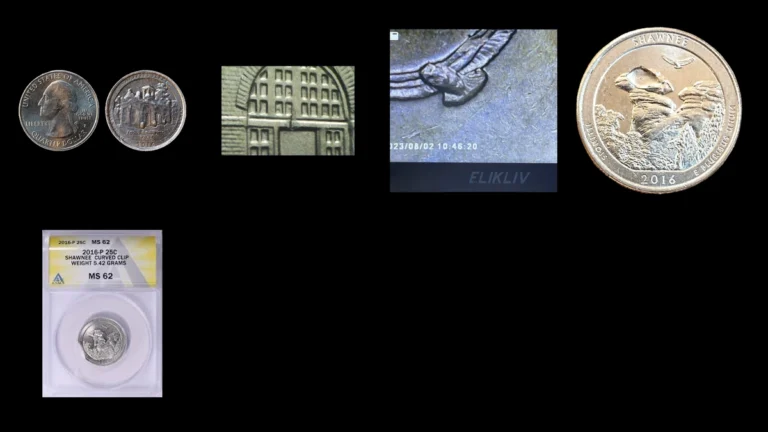
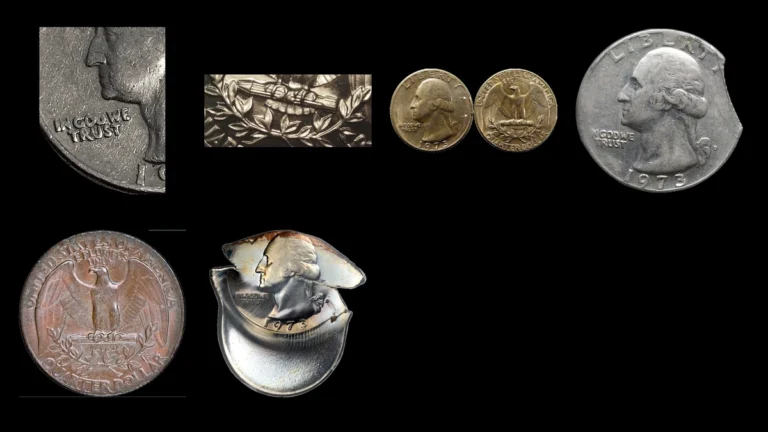
The 1942 reports include curved clips. An incomplete disc can form when the blank-cutting punch overlaps an earlier hole in the metal strip.
The missing arc then affects how the rim and nearby design form during striking. A similar shape cut into a finished quarter has a different origin.
How to Identify
Inspect the gap from both faces and the side for original formation rather than sawing or filing. Follow the rim into both ends of the opening.
A normal silver quarter weighs 6.25 grams and measures about 24.3 millimeters across. Lower weight and possible weakness opposite the clip support examination, but do not independently prove an original blank defect.
What It’s Worth
Genuine clips have estimated values of $25–$400. A different 1966 clad quarter with a straight clip sold for $124 in June 2024.
That result involves another metal and gap shape. It is a broad comparison rather than a 1942 curved-clip sale.
3. 1942 Quarter Clashed Dies Error
A piece of the eagle design can appear near Washington, or portrait-related traces can appear on the reverse. Such marks may form when the dies meet without a blank between them.
The contact marks the tools, and later coins reproduce those traces. The 1942 report requires a match to the individual coin rather than one assumed clash location.
How to Identify
Compare the unexplained shape with the opposite design while preserving the proper orientation. Look for another connected feature that fits the same relationship.
A comparison image freely rotated until one line seems to match can mislead. Scratches and their raised lips do not normally reproduce a coherent section of the opposing design.
What It’s Worth
Recognizable clashes have estimated values of $25–$500. Stronger comparisons show a clear transferred shape on attractive original surfaces.
Unrelated scratches do not increase the strength of a clash. Wear can obscure the very traces needed to identify it.
4. 1942 Quarter Repunched Mintmarks Error
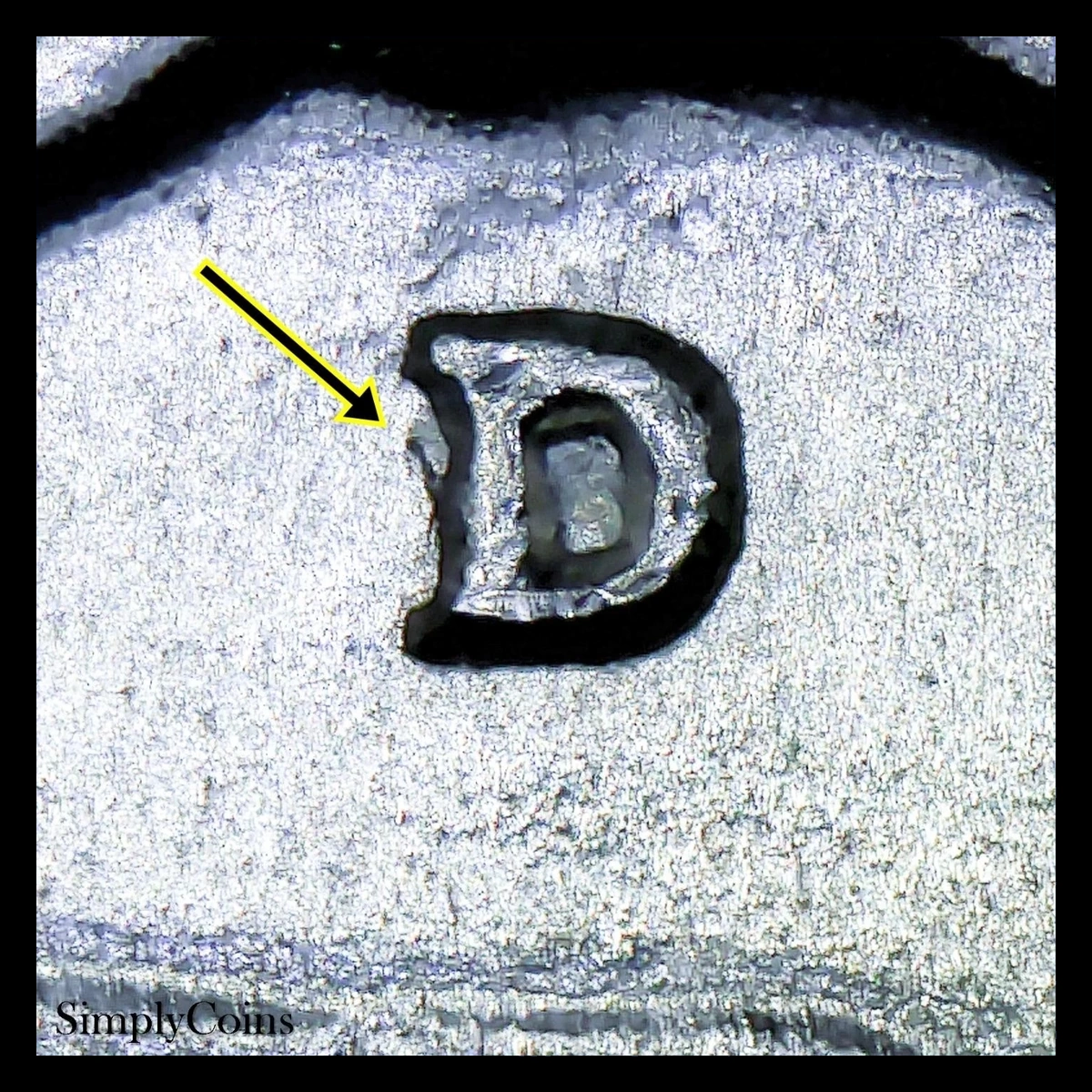
Both D-over-D and S-over-S varieties are reported. The extra outlines originated when a mintmark punch entered the die more than once at slightly different positions.
The relevant repeated feature is the small letter beneath the eagle. Nearby doubled words cannot establish a repunched mintmark by themselves.
How to Identify
Find the actual D or S and trace its normal shape before examining additional curves or uprights. Compare with a documented same-year example from that mint.
Keep the photograph upright and change the lighting to separate fixed metal from a reflection. A Philadelphia coin without a mintmark cannot be identified as D/D or S/S.
What It’s Worth
Identified repunched mintmarks have estimated values of $25–$600. Clear separation and preserved original surfaces support stronger comparisons.
PCGS lists a $495 eBay result in August 2021 for a different 1962-D repunched-mintmark quarter. Its year and pattern should not be transferred to a 1942 candidate.
5. 1942 Quarter Broadstrikes Error
A complete quarter design inside an expanded border can indicate a broadstrike. The collar failed to contain the blank normally as the metal received its design.
The image need not sit perfectly centered within the expanded outline. Its intended outer details should nevertheless remain on the metal.
How to Identify
Check the full portrait, eagle, and lettering before measuring the width. Design missing beyond the blank needs an off-center comparison instead.
Examine edge formation and the adjacent details for crushing. Later pressure can widen a finished quarter but alters existing relief rather than creating the original image as metal spreads.
What It’s Worth
Genuine broadstrikes have estimated values of $75–$600. A different 1966 clad broadstrike graded AU58 brought $222 in June 2024.
The later coin provides general context. Expansion and preservation on the silver 1942 specimen must support its own comparison.
6. 1942 Quarter Struck-Through Material Error
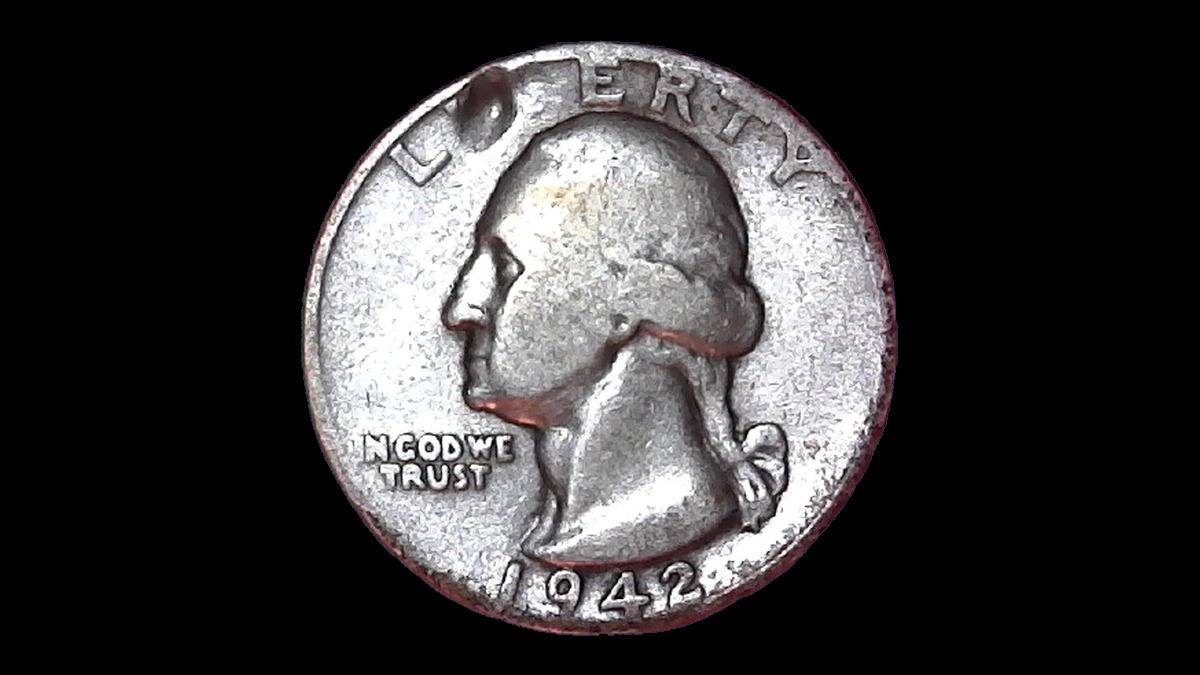
Material between the die and blank can leave weak detail or a shaped depression. Grease filling a die and a solid obstruction can produce different appearances.
The 1942 reports do not identify one particular object. A deep mark alone cannot prove cloth, wire, string, or any other material.
How to Identify
Follow the boundary between the affected area and normal struck design. Sharp cuts or pushed-up impact edges may indicate later damage.
A proposed thread or fabric impression needs a coherent pattern, not just one suggestive line. Inspect both faces and leave any lodged material undisturbed.
What It’s Worth
Genuine struck-through quarters have estimated values of $30–$1,000. Larger recognizable impressions provide different comparisons from small soft patches.
A 1954-S quarter struck through string sold for $186 in July 2021. That identified material must not be assigned automatically to an unexplained 1942 depression.
7. 1942 Quarter Die Cracks and Cuds Error
A narrow ridge can form when metal fills a crack in the die. If a larger section of the tool breaks away, the coin may receive a broader raised patch.
A patch connected to the rim is called a cud. The reported category does not give every 1942 example the same location or severity.
How to Identify
Follow the raised line or patch to its full boundary. An internal chip surrounded by normal design is not a rim cud.
Inspect where letters or portrait details become unformed and check for added material or impact damage. A corresponding weak area on the other face can support examination without replacing the need to understand the actual raised surface.
What It’s Worth
Estimated values span $20–$2,000 across modest cracks and major genuine cuds. The higher range requires a substantial original break, not simply a small bright ridge.
A different 1954 head-crack quarter sold for $52 in July 2022. That modest result does not price a major 1942 rim-connected break.
8. 1942 Quarter Off-Center Strikes Error
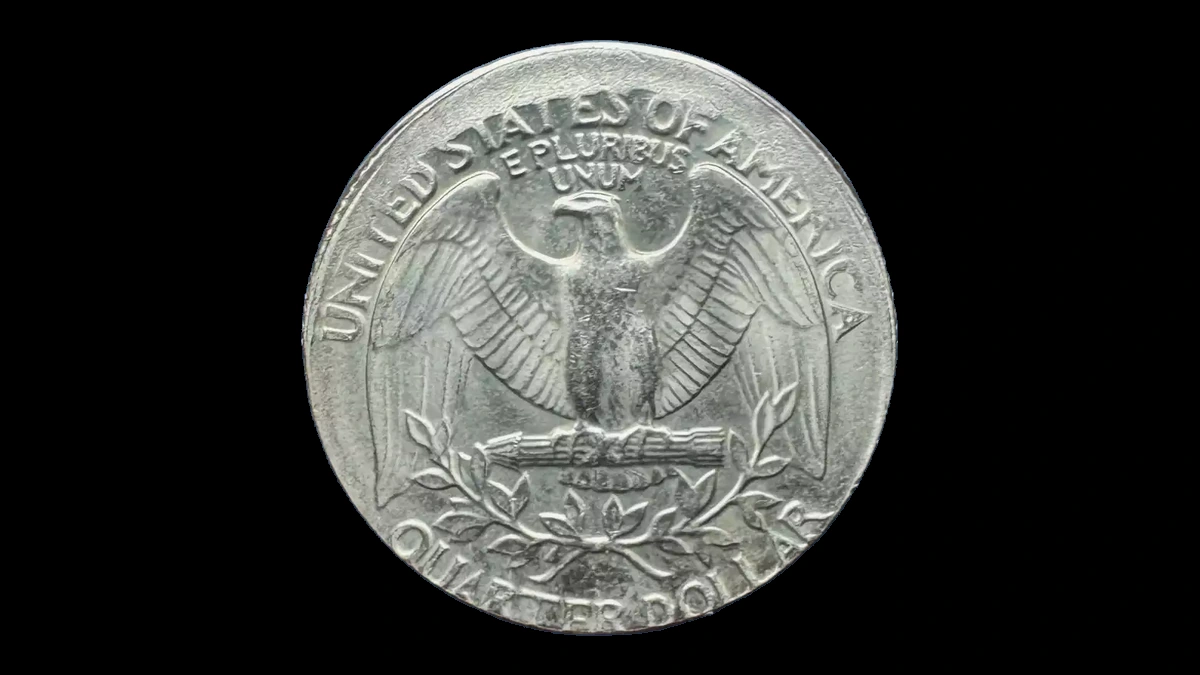
The year guide describes an example about fifty-five percent off center toward one o’clock. Much of the intended design missed the blank, leaving a large unstruck area.
The percentage describes displacement of the image. It does not mean that fifty-five percent of the silver is missing.
How to Identify
Begin with the readable date and compare both faces for a consistent fit on the displaced disc. A large blank area alone cannot establish 1942.
Keep the reported direction and percentage with that particular example. A shift confined to one face may call for a die-alignment explanation instead.
What It’s Worth
Genuine dated examples have estimated values of $150–$3,500. Clear identity and original preservation remain important even on dramatic strikes.
A 1943-S quarter struck thirty-five percent off center sold for $2,640 in July 2022. That is a different coin, not a sale of the fifty-five-percent 1942 report.
9. 1942 Quarter Doubled Dies Error
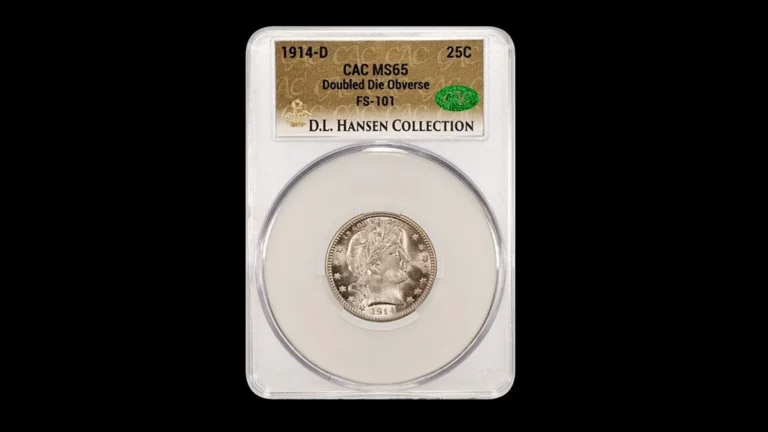
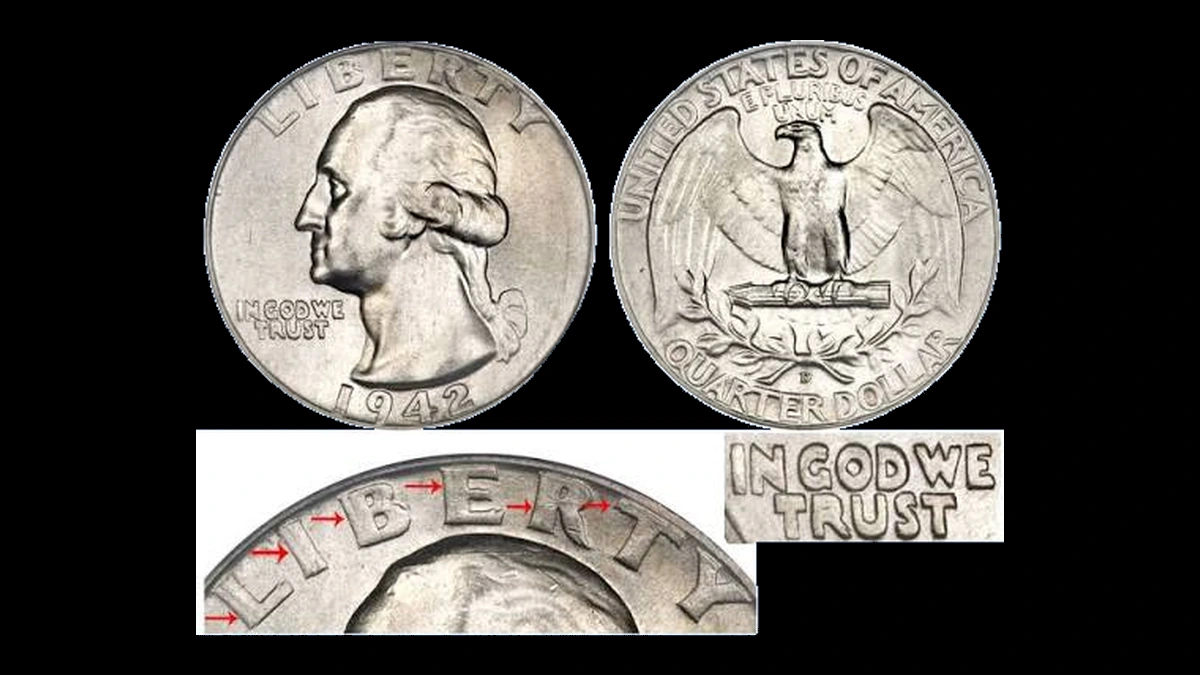
Denver front varieties include strong repeated detail in LIBERTY and IN GOD WE TRUST. A separate reverse variety affects the eagle’s beak, arrows, and branch above D.
Philadelphia examples include doubled QUARTER DOLLAR on the reverse and reported front date or lettering patterns. These features belong to separate dies rather than one coin that must show them all.
How to Identify
Choose mint and face first, then match several repeated features with the correct variety. For Denver reverse doubling, inspect the beak, arrows, and branch together rather than borrowing front diagnostics.
For Philadelphia reverse doubling, begin with QUARTER DOLLAR. Flat shelves from strike movement and worn thick letters do not establish rounded repeated detail in a die.
What It’s Worth
Identified doubled dies have estimated values of $50–$10,000. The Denver doubled-reverse MS66+ example sold for $8,225 in November 2012.
A worn Denver doubled-front coin brought $345 in July 2004, while a Philadelphia doubled-reverse MS64 sold for $517.50 in February 2009. Those results belong to their own varieties and preservation levels.
Conclusion
A repeated eagle’s beak, a natural silver flap, and an unstruck crescent require different identification methods. Keep each observation attached to the correct mint, face, and complete coin before choosing a reference.
Original surfaces make subtle features easier to interpret, so preserve them during inspection. Price estimates become useful only after the feature is explained, and another year’s auction result remains a comparison rather than a sale record for your candidate.