Rare 1926 Dollar Errors (List & Pictures)
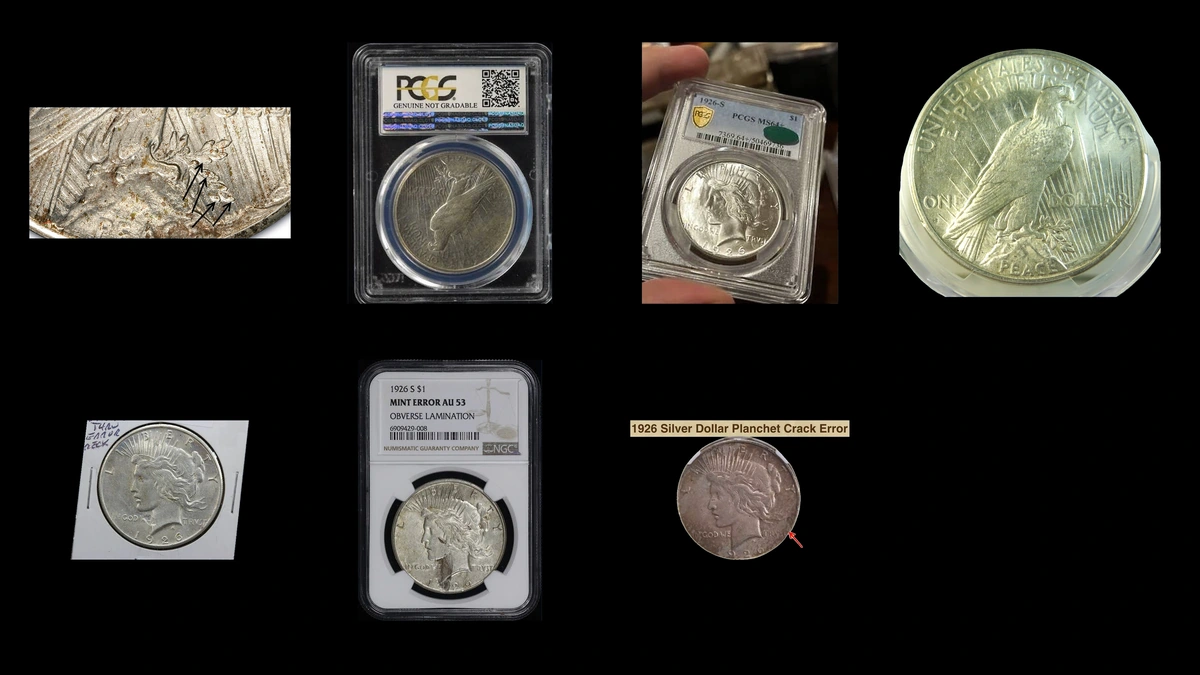
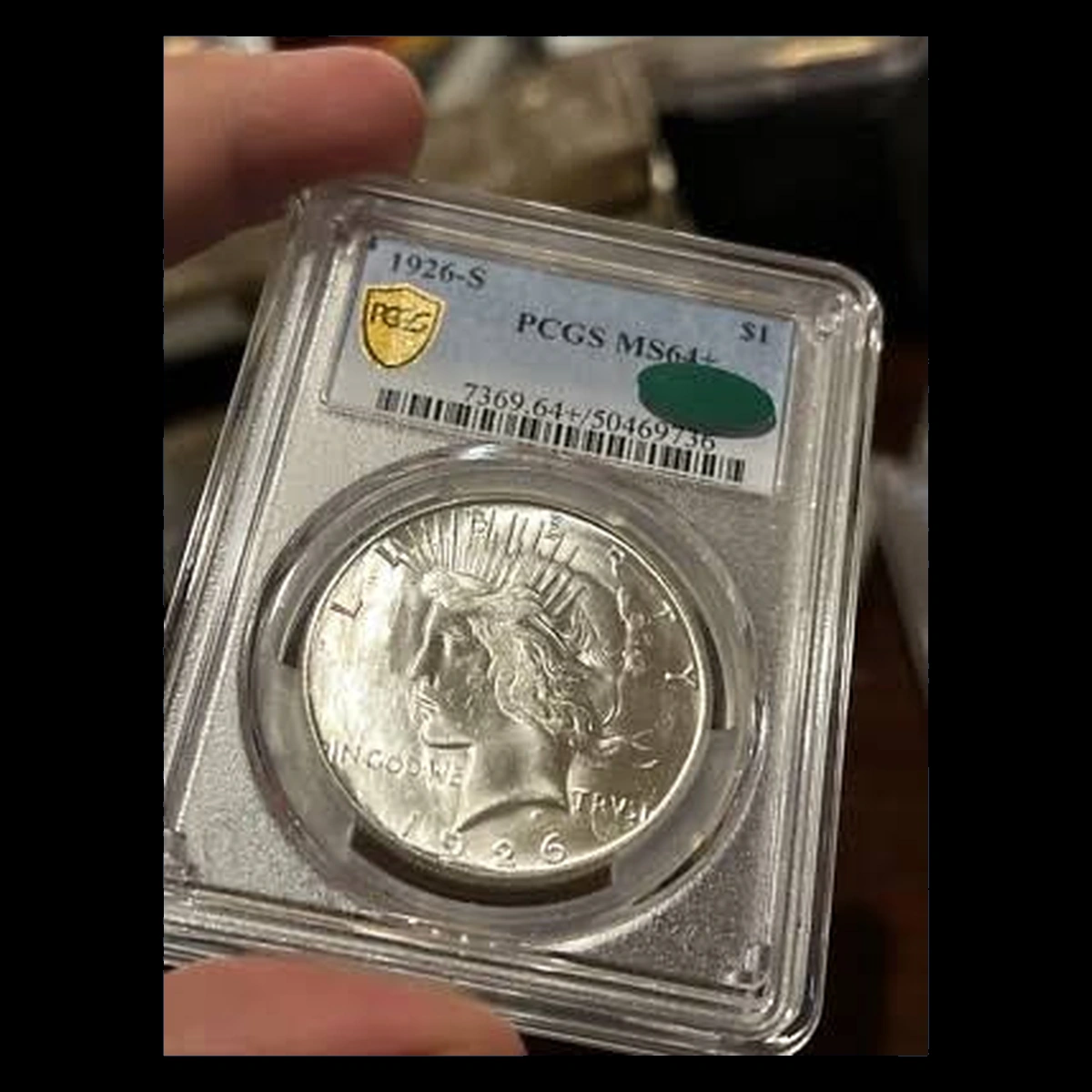
A Philadelphia VAM-2 dollar graded MS66+ sold for $5,520 in January 2022. Estimated whole-coin values for the 1926 Peace dollar errors and varieties below range from $50–$6,000.
Check the mint first, then distinguish repeated design, raised die marks, weakened details, and flaws in the coin’s own metal.
| Observation | Possible explanation | Whole-coin range |
|---|---|---|
| Repeated outlines | Doubled die | $75–$6,000 |
| Raised dots, lines, or lumps | Die marks, dot variety, or die break | $50–$2,000 |
| Changed rays or missing fine detail | Die reworking or polishing | $50–$600 |
| Ghost letters or shoulder spikes | Die clash | $60–$750 |
| Weak patch or missing date digit | Struck through material | $75–$2,500 |
| Peeling, a metal opening, or two gaps | Lamination, cracked planchet, or clips | $75–$1,500 |
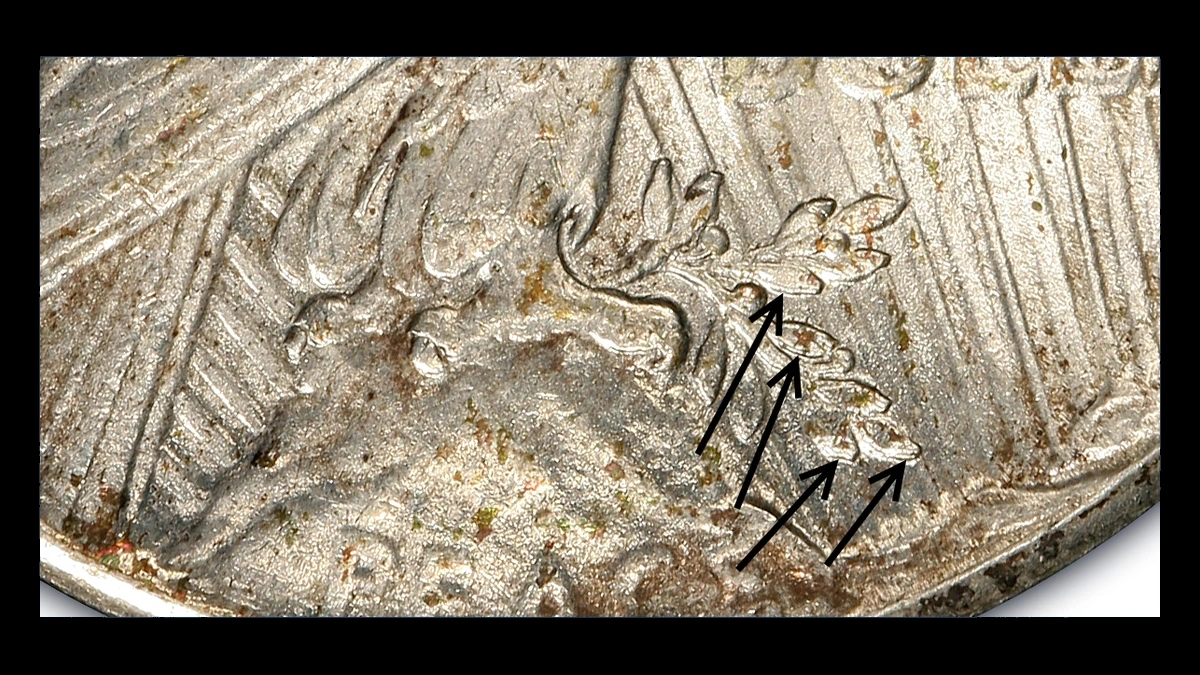
1. 1926 Dollar Repeated dates, leaves, or feathers: doubled die Error
A doubled die contains repeated contours before it strikes the coin. The same outlines can recur on dollars made from that tool, unlike two full impressions caused by a coin being struck twice.
Philadelphia VAM-2 and San Francisco VAM-5 affect different lower-reverse details. Other reported varieties involve the date, hair, rays, designer’s initials, or eagle’s shoulder.
How to Identify
For Philadelphia VAM-2, inspect the left edges of olive leaves, feathers behind the leg, and selected lower rays. Not every ray below ONE is doubled.
San Francisco VAM-5 instead calls for the right sides of DO in DOLLAR, top olive leaves, leg feathers, and lower-right wing. Keep those positions separate from the Philadelphia pattern.
Date and hair varieties need their own local comparison, including reported Philadelphia 6 and San Francisco 26 patterns. Match several raised contours before using an accompanying crack or clash to identify a later stage.
What It’s Worth
Identified doubling varieties have an estimated whole-coin range of $75–$6,000. Subtle doubling on a worn coin may add little.
PCGS records Philadelphia VAM-2 in MS66+ at $5,520 in January 2022. San Francisco VAM-5 has a separate recorded AU58 sale of $750 in April 2019.
The high Philadelphia result includes exceptional preservation of the whole dollar. It is not a price for one extra outline alone.
2. 1926 Dollar Raised lines beside letters or the eagle: die tool marks Error
A groove or scratch cut into a die becomes a raised mark on the struck coin. These marks can help identify an individual die even when they add little visual drama.
Philadelphia reports include a groove below G. San Francisco has separate letter-area grooves, file-line patterns, and the named Comet and worm-shaped eagle-neck appearances.
How to Identify
Use side lighting to check whether the line rises above the surface. Later cleaning scratches usually cut into the finished coin, although their displaced edges can be misleading.
Match the entire route and intersections with the proper mint’s reference. The groove below G cannot establish one of the separate San Francisco patterns.
A high or slightly high S can help select a comparison but is not automatically an error. The Comet and eagle-neck forms each require their own matching image.
What It’s Worth
A broad whole-coin estimate is $50–$500 for ordinary circulated through attractive unworn examples with identifiable die marks.
No individual sale is supplied for these particular patterns. A minor unnamed line may contribute little beyond the normal value of the silver dollar.
3. 1926 Dollar Raised dots near the olive branch: Extra Berry varieties Error
On San Francisco VAM-4, a main dot lies between the lower-left olive leaf and the mound. Two smaller dots below OF provide additional comparison points.
The Extra Berry nickname describes the visible feature without proving the exact event that damaged the die. Related dot varieties can also include shortened rays, sloping open areas, or file lines.
How to Identify
Locate the main dot in relation to the leaf and mound, then find both smaller dots below OF. A complete three-point match is more useful than one unexplained bump.
Inspect under changing light for raised original metal rather than a surface deposit. Do not scrape a suspected dot, and use separate references for other dot-related varieties.
What It’s Worth
Identified dot varieties have an estimated range of $75–$1,500 in commonly collected conditions.
An ungraded seller listing labeled 1926-S “Extra Berry” shows a sold price of $69.49 in January 2026. That lower comparison is not a certified VAM attribution and falls below the working range for identified examples.
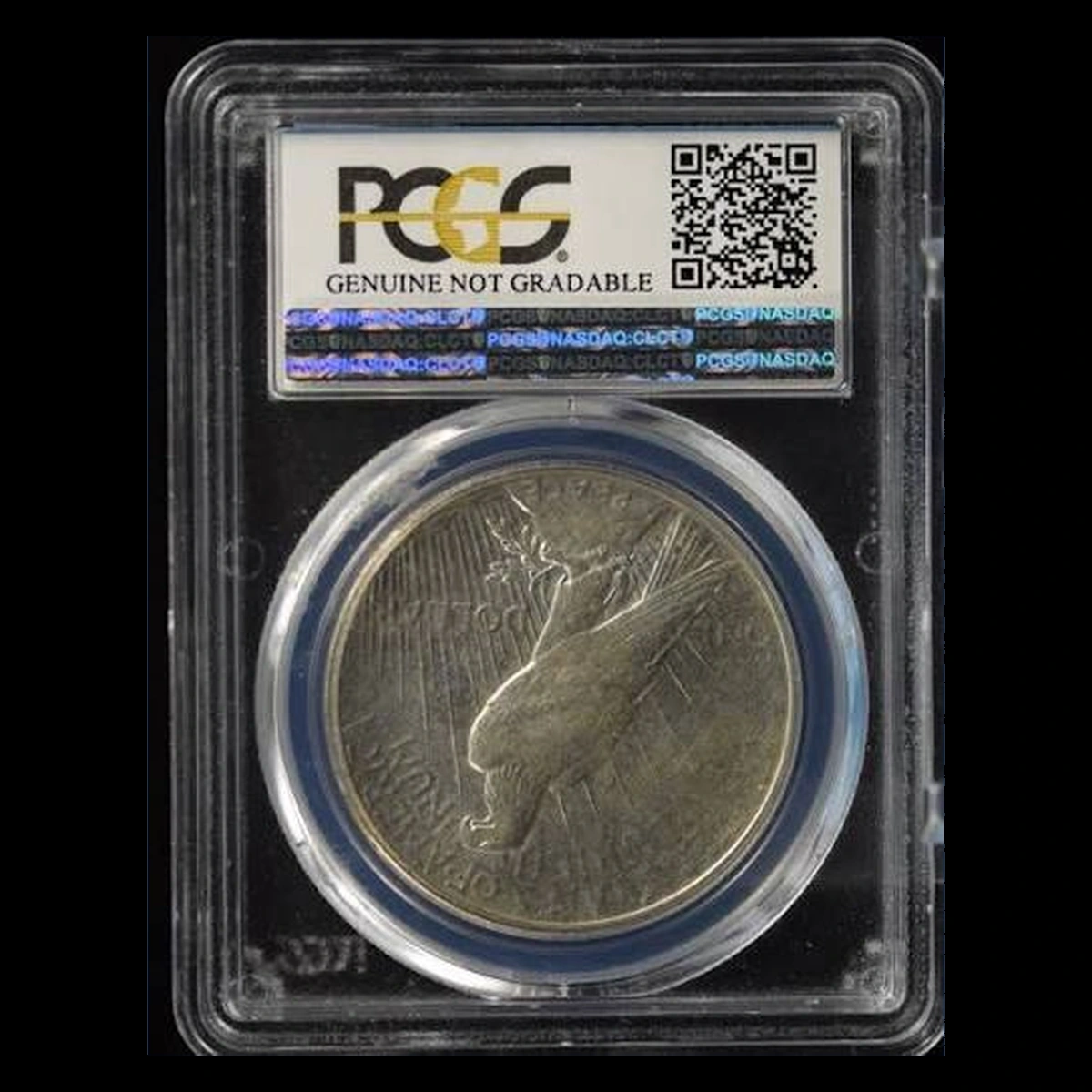
4. 1926 Dollar A V-shaped hair line or other raised break: die cracks and chips Error
Denver VAM-1B, called Extra Hair, has an upright V-shaped crack within Liberty’s lower-middle hair. Its upper portion carries thickened metal.
Philadelphia reports include a broken wing edge and a break below UNUM. San Francisco examples affect separate wing, tiara, letter, nose, or PEACE locations.
These raised forms copy openings where the die cracked or lost a piece. They are separate patterns, not a collection of marks required on every coin.
How to Identify
For Denver Extra Hair, follow the upright V and examine the thickening along its upper part. Other mints and locations need their own catalog images.
Distinguish a raised break from a cut or rim hit that displaced metal sideways. Later die stages may combine a break with earlier grooves or clashes, so compare the complete local arrangement.
What It’s Worth
Estimated whole-coin values span $75–$2,000 across identifiable crack, chip, and broken-die examples.
A Denver VAM-1B graded PCGS MS62 sold for $204 in April 2019. Its result does not establish a separate price for a Philadelphia wing break or San Francisco tiara chip.
5. 1926 Dollar A ray, feather, or hair detail fades away: die polishing Error
Removing metal from a die can erase shallow parts of its design. Later coins may show a shortened Philadelphia reverse ray or one of the San Francisco hair-bun and feather patterns.
Some San Francisco varieties also have sloping open surfaces beside the design. These are changes to the stamping tool, not evidence that each finished dollar was individually polished.
How to Identify
Compare the exact stopping point of the weakened ray, feather, or hair with a named reference. Nearby preserved detail helps distinguish local die modification from general wear.
Check exposed high points for circulation wear and inspect for cleaning scratches. A repeatable missing-feature boundary is stronger evidence than a generally soft eagle.
What It’s Worth
Identifiable die-polishing forms have an estimated whole-coin range of $50–$600.
No completed sale supplied here establishes a premium for each pattern. Some subtle stages remain close to the ordinary date, mint, and grade value.
6. 1926 Dollar An altered reverse ray: reworked die Error
An engraved groove in a die produces a raised line on a coin. San Francisco patterns include a ray below the mountain, touched-up rays, and changes associated with the mountain top.
Those are separate catalog appearances. An unusually thick ray by itself does not identify a particular repair.
How to Identify
Compare a normal San Francisco reverse at the same scale, using the mountain and eagle to establish location. Choose the below-mountain or mountain-top reference that fits the actual feature.
Follow the line from end to end and inspect how it joins neighboring design. A later scratch generally cuts into the surface, while the reworked die’s groove leaves raised metal.
What It’s Worth
A correctly identified reworked-ray variety has an estimated whole-coin range of $50–$600.
This is a comparison range for minor die varieties rather than a documented sale of each pattern. A faint change on a worn dollar may add little.
7. 1926 Dollar Shoulder spikes or a partial letter: die clash Error
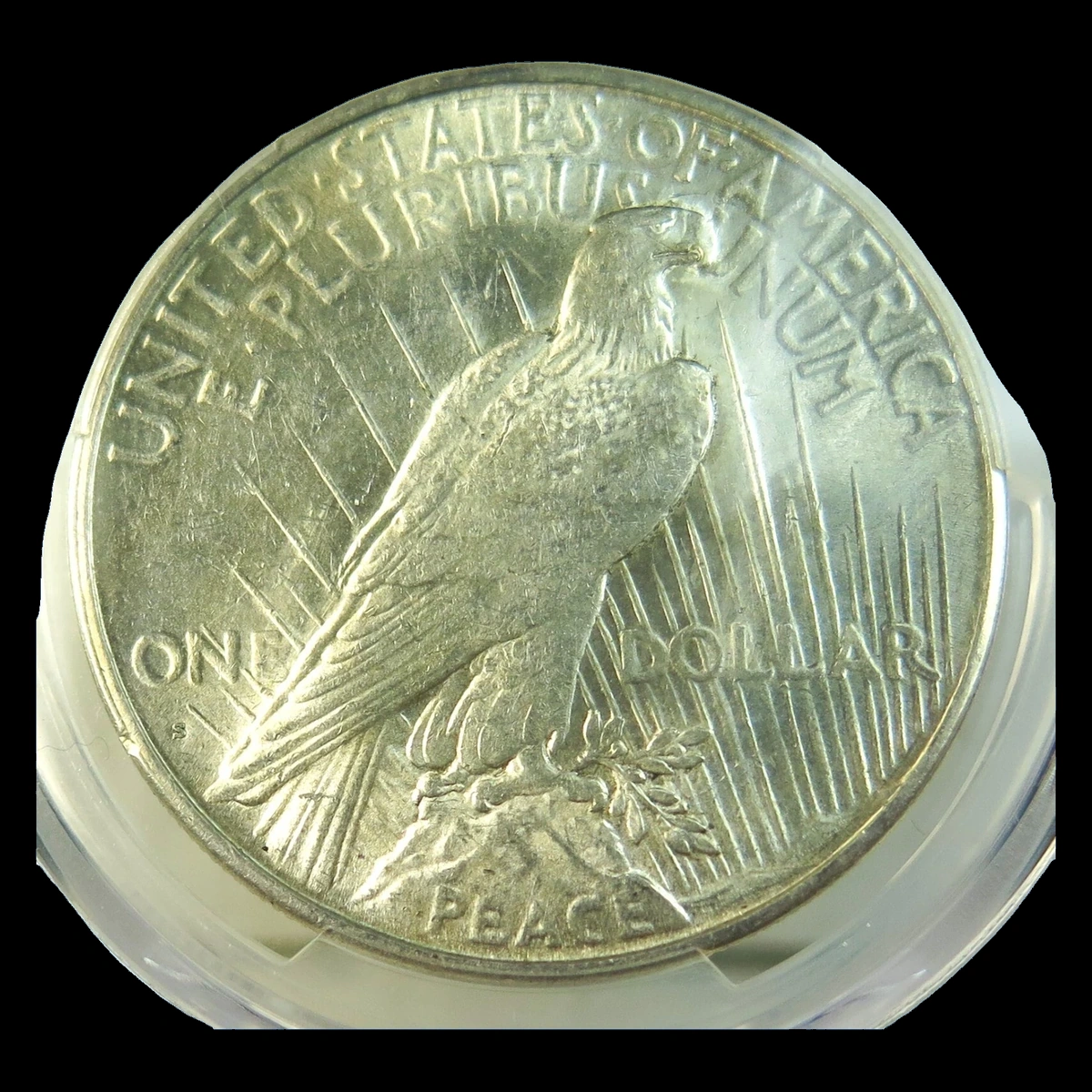
San Francisco clash varieties include paired spikes near the eagle’s shoulder and a partial E on the front. The forms do not all occur on every coin.
Clashes begin when the dies meet without a blank between them and acquire traces of the opposing design. Later coins copy those altered tools.
How to Identify
For a shoulder-spike type, compare the number and spacing of the spikes above the eagle’s shoulder. For the partial E, examine the front at the location shown by its own reference.
Relate each faint shape to the opposite design and exclude scratches or metal moved by a hit. Two clash spikes do not establish two complete strikes on the coin.
What It’s Worth
Identifiable clash varieties have an estimated range of $60–$750, including the underlying 1926-S dollar value.
No particular sale in the supplied evidence prices these clash patterns. Recognizable transferred artwork is more useful than an unexplained shallow line.
8. 1926 Dollar A blocked patch or missing first date digit: struck through Error
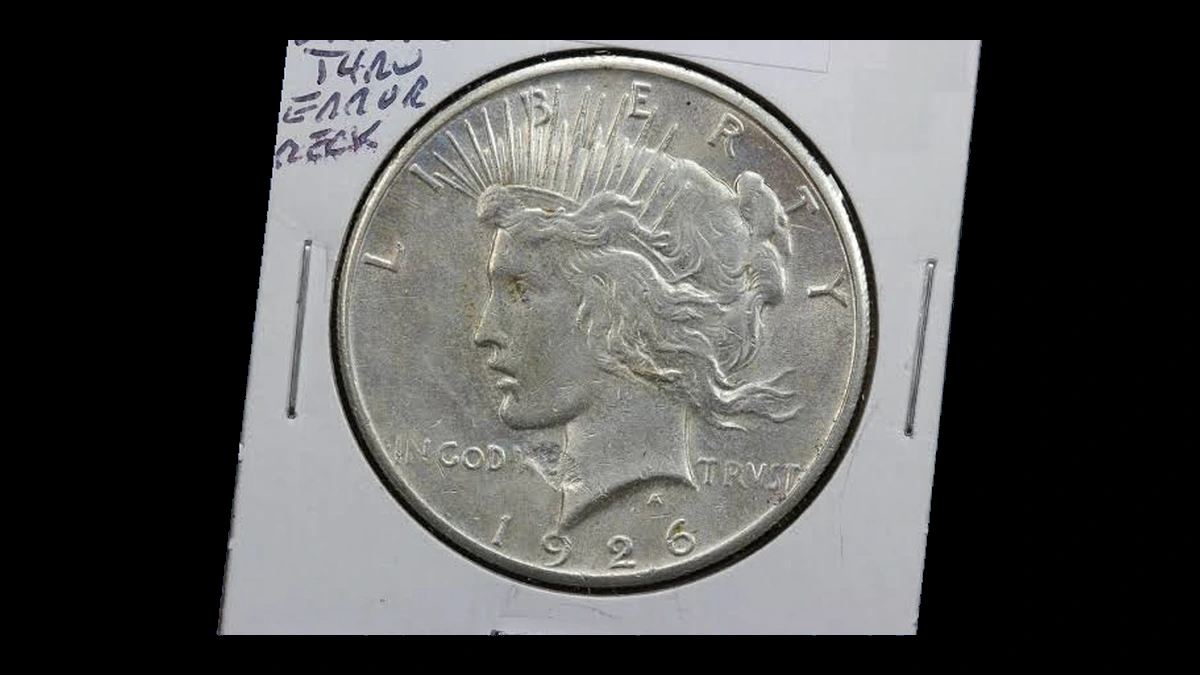
Material between the die and coin can leave a depression or stop detail from forming. Reports include a cleaned Philadelphia coin, a San Francisco PCGS MS63 example, and a separate S coin showing 926 with its first date digit obscured.
The missing detail does not identify the obstruction as grease, wire, or cloth. Those descriptions require additional evidence.
How to Identify
Compare the area where 1 should appear with the normal date position. Look for a blocked impression or depression without signs that the digit was filed or scraped away.
The other specimens need their own full-face and close views. Keep the cleaned Philadelphia surface separate from the San Francisco examples when assessing originality.
What It’s Worth
Authenticated struck-through coins have an estimated whole-coin range of $75–$2,500.
A different-year 1923 Peace dollar with a front struck-through area, graded NGC MS62, sold for $134 in March 2023. That result is not a sale of any reported 1926 specimen.
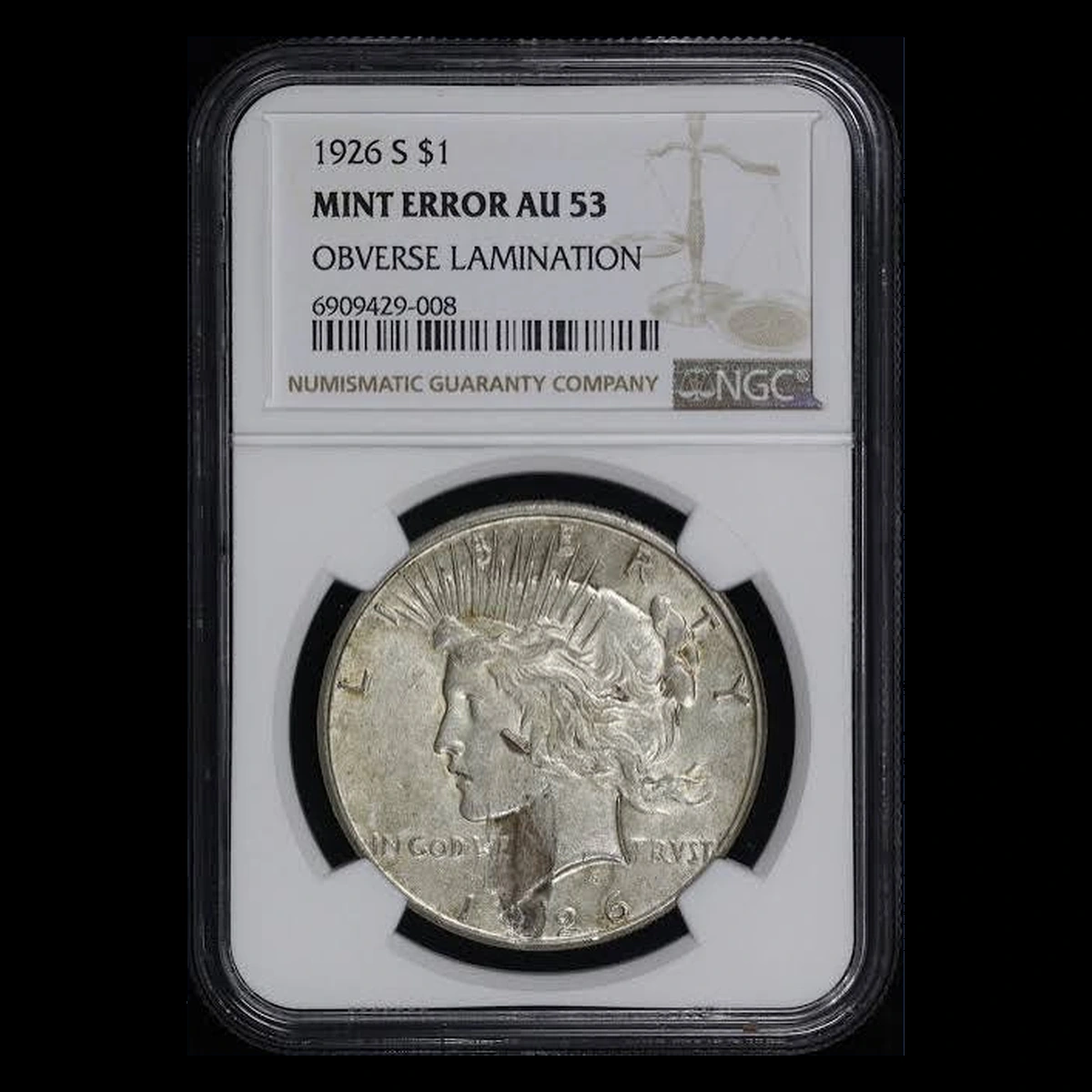
9. 1926 Dollar A peeling patch on the eagle side: lamination Error
The reported San Francisco example has a separated reverse surface patch. A weakness within the silver-copper alloy allows a thin layer to lift or fall away.
This dollar has silver-copper alloy throughout rather than a modern copper-centered clad construction. A brown patch alone does not show a missing outer coating.
How to Identify
Confirm S and map the reverse patch against the eagle and nearby lettering. Look for a thin attachment or torn edge where surface metal separated.
If the flaw crosses design, compare any surviving artwork on a flap with the surrounding surface. Leave loose metal untouched; corrosion or scraping may make a rough patch without a genuine layered opening.
What It’s Worth
A confirmed reverse lamination has an estimated whole-coin range of $75–$850. Size, retained metal, and overall condition influence the appeal.
A 1923 Peace dollar with a front lamination, graded NGC MS64, sold for $84 in March 2024. Both the year and affected face differ from the reported 1926-S example.
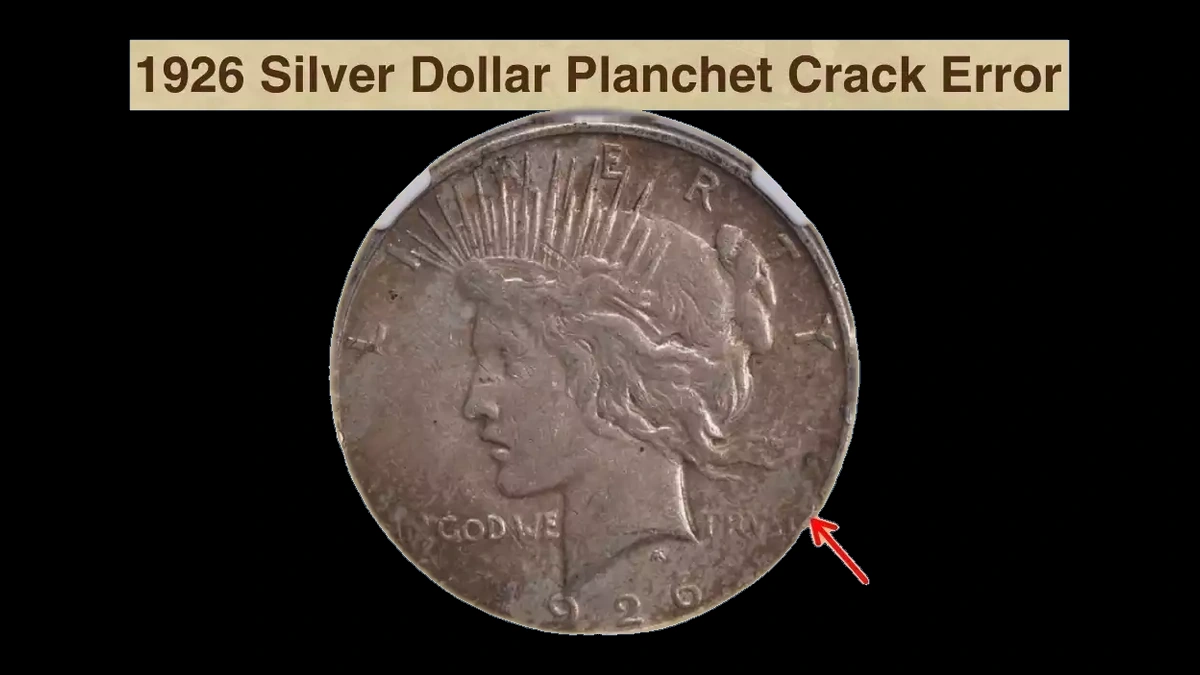
10. 1926 Dollar An actual opening in the dollar: cracked planchet Error
A cracked planchet has a separation in the coin’s own metal rather than a raised line copied from a fractured die. A reported Denver PCGS XF45 example has damage at the date’s 1 and the second T in STATES.
How to Identify
Examine both faces and the edge for a connecting fracture. Never flex the coin to widen an opening.
The date and letter locations describe the reported specimen, not a universal route for all cracked blanks. Check for fresh cuts or tool marks that would suggest a later forced split.
What It’s Worth
Authenticated through-metal defects have an estimated whole-coin range of $100–$1,000.
The Denver PCGS XF45 coin sold for $129.25 in December 2013. Missing letters without an original metal fracture do not establish a comparable error.
11. 1926 Dollar Two missing edge sections: double clip Error
A Philadelphia example is reported with two clips. Each gap represents metal missing from the blank before the coin received its design.
The exact positions are not established in the supplied account. Two dents made after striking would require a different explanation.
How to Identify
Keep both gaps visible in a complete photograph, then inspect each wall and the adjoining rim separately. Weak or stretched detail approaching a gap can support an incomplete blank.
A normal Peace dollar weighs 26.73 grams, but reduced weight also follows later cutting. Search both gap walls for filing, sharp burrs, or saw marks.
A weak rim opposite a gap can be supporting evidence without settling the question alone. Both missing sections need original struck-boundary evidence.
What It’s Worth
A genuine two-clip example has an estimated whole-coin range of $150–$1,500.
No completed sale is supplied for the reported Philadelphia coin. The size and clarity of both gaps matter more than multiplying a price by the number of clips.
Conclusion
A 1926 Peace dollar’s unusual feature may come from its die or from the metal blank itself. Raised marks, missing fine detail, peeling layers, and a true fracture should therefore lead to different checks.
Keep each mint and catalog pattern in its own comparison, with whole-coin condition included in the price. Exact locations and original surfaces are more useful than a dramatic nickname attached to an unexplained mark.