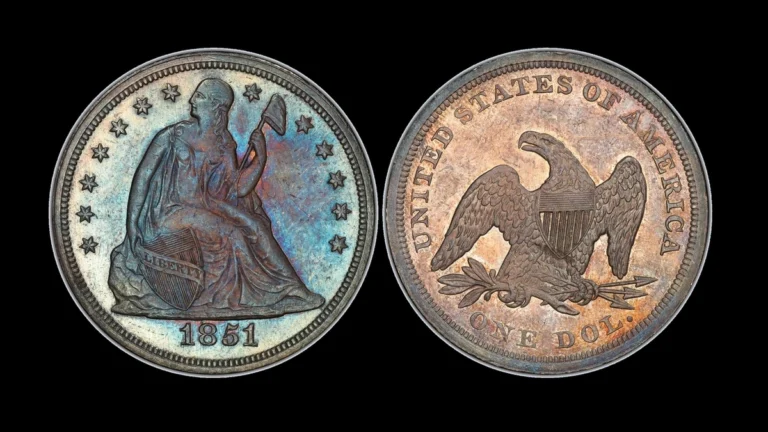
Rare 1867 Dollar Errors (List & Pictures)
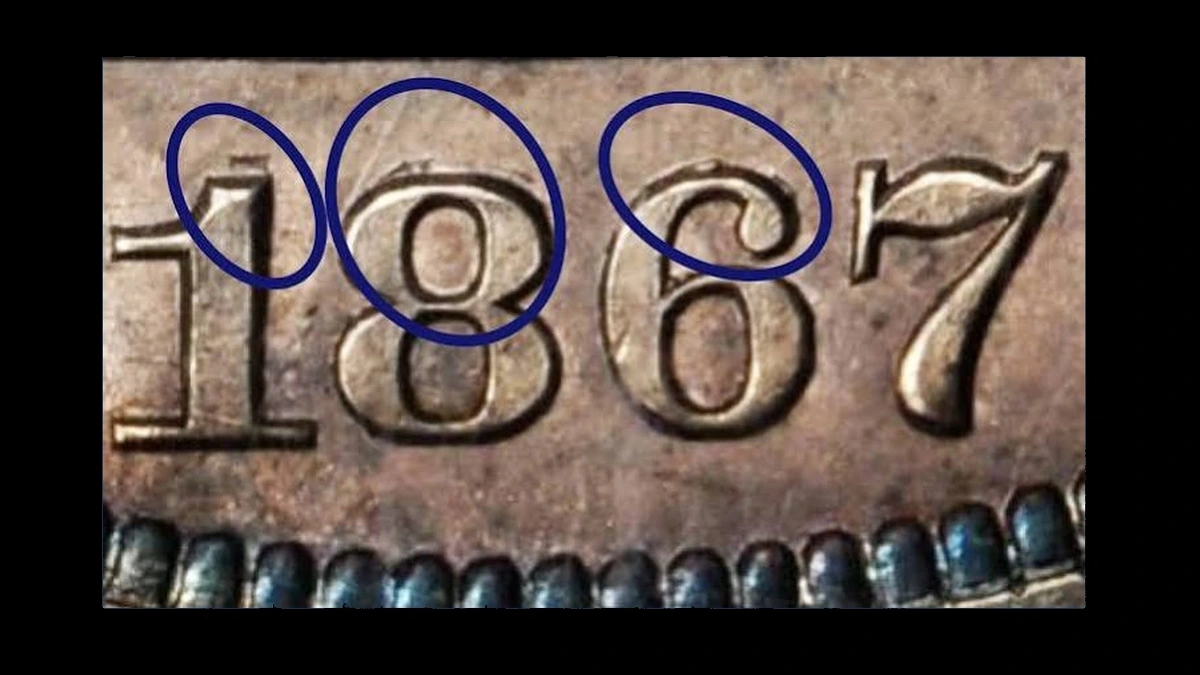
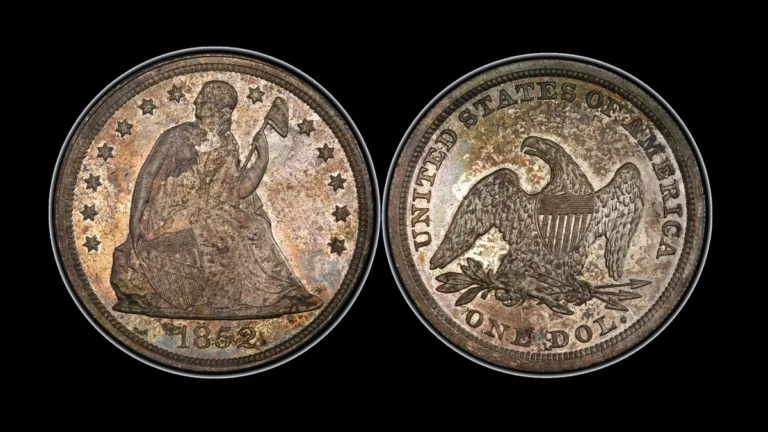
A Large over Small Date example brought $2,400 in November 2021. The estimated $800–$20,000 whole-coin range in this guide to 1867 Liberty Seated dollar errors reflects condition and the scarce date as well as the visible repunching.
Examine the smaller strokes around the date, then compare the coin’s finish and die pairing. The mistake involved a half-dollar date punch, not a dollar struck on a half-dollar blank.
1867 Dollar Small Date Remnants beneath Larger Digits: Repunched Date Error
The 1867 date was first entered into the die with a punch intended for half dollars. A correct dollar-sized punch followed, leaving some of the smaller impression visible around the larger digits.
Both punches represented the same year. This is why the variety is called Large over Small Date rather than an overdate involving an earlier year.
An ordinary-strike example is cataloged as OC-1, a designation for its pairing of front and back dies. A die is the steel tool that transfers its design to the coin.
The extra date strokes were already in that tool when the coin was made. They do not require the finished dollar to have received another strike or another denomination’s metal.
How to Identify
Photograph the complete date before concentrating on individual remnants. Keeping neighboring digits visible helps distinguish a correctly positioned small stroke from an unrelated line.
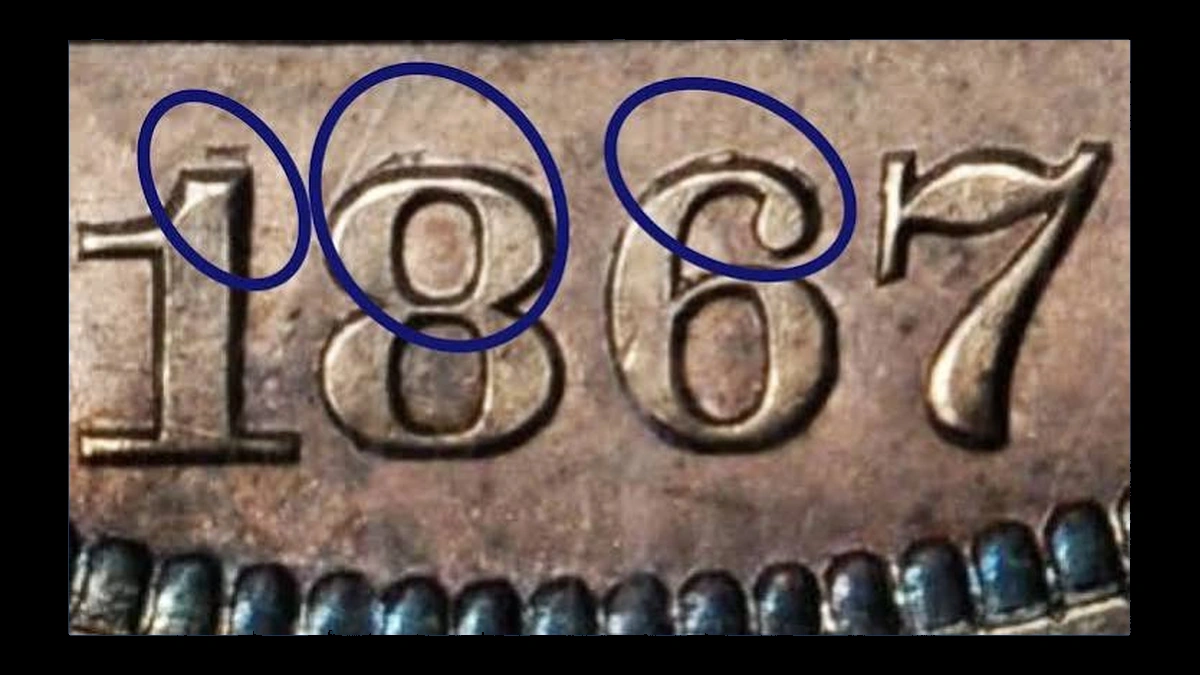
Begin around the top and middle of the large 1, then continue above the 8 and 6. Compare the raised traces with a named Large over Small Date photograph rather than expecting a complete second year.
The documented early-stage coin shows the first two digits especially clearly. Other remnants may be weaker, so an uneven amount of surviving detail is not a reason to invent a different date underneath.
Move the lamp to verify that each extra stroke stays fixed in the metal. Later engraving can cut the finished surface or disturb the surrounding silver instead of reproducing an original raised punch remnant.
Match finish as well as date detail when selecting photographs. Proofs were specially made collector coins and need a corresponding Proof comparison rather than an ordinary-strike label inferred from the same year.
What It’s Worth
$800–$20,000 is an estimated range for ordinary examples across worn and attractive unworn condition. It values the entire dollar, not each smaller digit separately.
The PCGS auction record for OC-1 lists $2,400 in November 2021 for an MS60. That grade describes an unworn coin with substantial marks.
Clear remnants make attribution easier, but they do not cancel cleaning, scratches, or contact marks elsewhere. The upper estimate requires a suitable whole-coin comparison with much stronger preservation.
Conclusion
The 1867 Large over Small Date records two sizes of punch used while preparing a die. Its surviving small strokes repeat 1867; they do not identify another year or a half-dollar planchet.
Keep the complete date in photographs and match the correct finish and variety. The $800–$20,000 estimate includes the scarce dollar’s overall condition, with the $2,400 MS60 sale providing one documented comparison.