Rare 1928 Dollar Errors (List & Pictures)
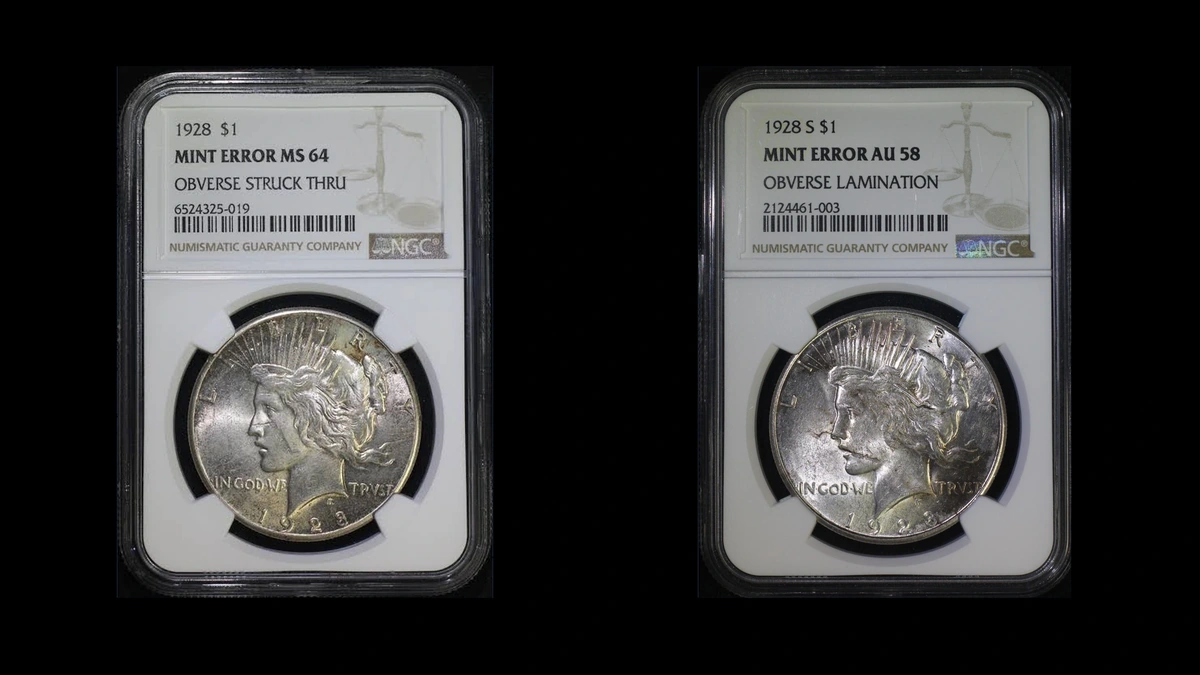
A repeated motto and a partly missing date digit can suggest different 1928 Peace dollar errors, even when both appear on San Francisco coins. A doubled-motto VAM-3 graded MS64 sold for $1,170 in September 2022, the highest completed result supplied here.
Whole-coin estimates span $100–$2,500 for the conditions discussed. Use the mintmark to choose a comparison, then distinguish extra raised outlines from interrupted design and separating metal.
| Area | Possible finding | Estimated value |
|---|---|---|
| Front motto, hair bun, rear crown rays | Doubled die | $100–$2,500 |
| Part of the date’s 1 | Reported front strike-through | $250–$2,000 |
| A lifting surface patch | Lamination | $100–$1,500 |
1. 1928 Dollar Extra outlines surround the motto: doubled die Error
The 1928-S Doubled Motto variety has repeated detail on Liberty’s side of the coin. Related extra outlines are reported around the hair bun and rear crown rays.
A doubled die transfers its repeated design during a normal strike. The V in TRVST is intentional lettering and is unrelated to this feature.
How to Identify
Confirm the S on the reverse, then return to the front motto. PCGS lists the doubled-motto variety among 1928-S Peace dollars.
Examine the lower-right edges of the motto letters under magnification and changing light. Look for actual repeated outlines rather than one wide letter or a reflection.
Compare the hair bun and rear crown rays for supporting detail. A consistent match across several areas is stronger than one flat shelf beside a letter.
The mintmark’s reverse location does not make this a doubled-reverse variety. The identifying motto remains on the portrait side.
What It’s Worth
$100–$2,500 is the supplied whole-coin range from circulated through comparable unworn examples. An NGC MS64 Doubled Motto VAM-3 sold for $1,170 in September 2022.
The grade describes an unworn coin with some marks and relatively attractive surfaces. Strong letter separation helps attribution, while exceptionally high-grade examples need individual comparisons beyond this general range.
2. 1928 Dollar Part of the date’s 1 is interrupted: struck through Error
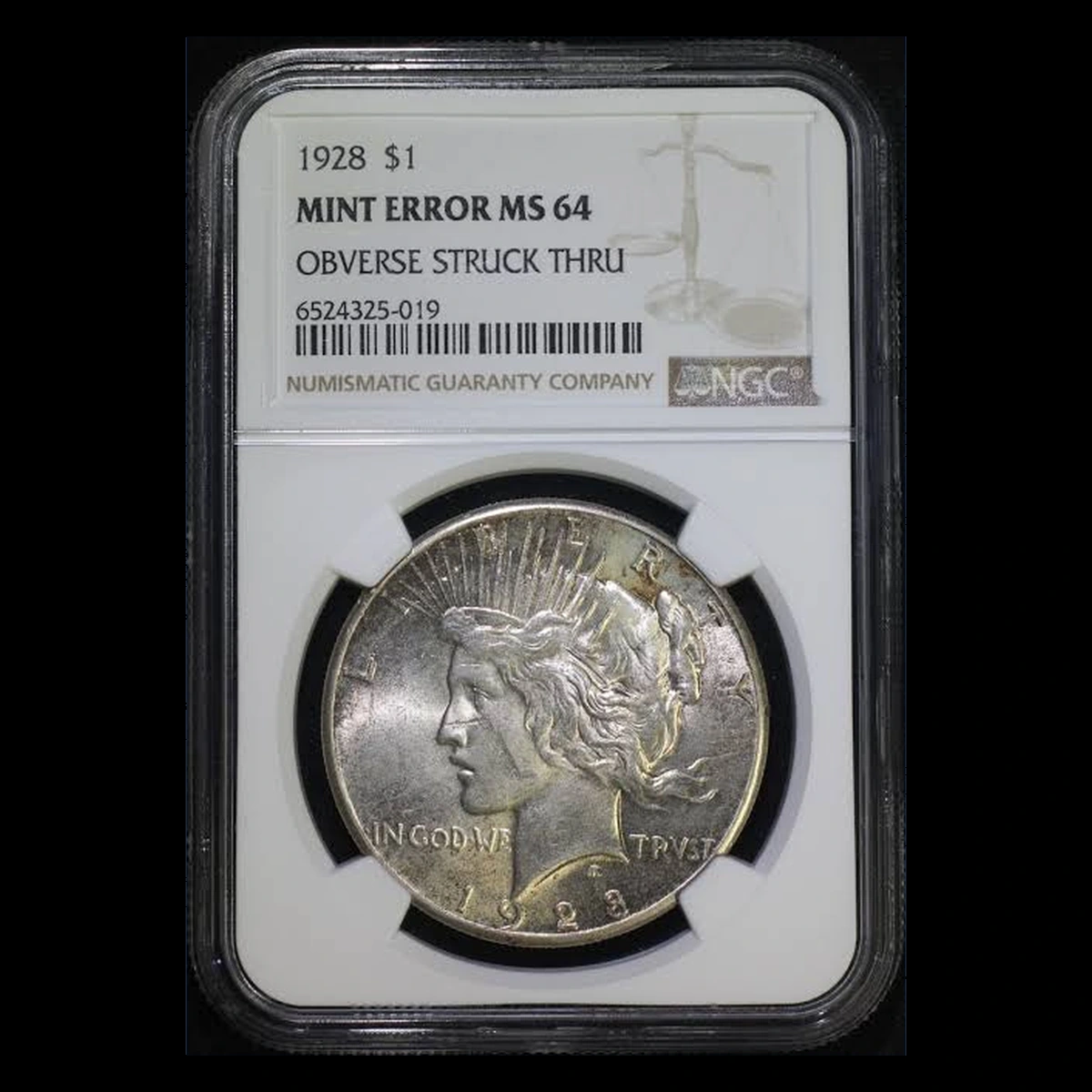
A collector drew attention to the 1 on a 1928-S and reported that PCGS returned the coin as MS63 with a front struck-through error. The report describes an unworn example with noticeable marks.
Material between die and blank can block a small area or impress its shape into the metal. The substance responsible for this particular interruption was not identified.
How to Identify
Compare the 1 with its neighboring 9 and follow the boundary of the affected patch. Local interruption beside normally formed detail helps distinguish an obstruction from overall weakness.
Examine for a sharp cut, displaced metal, or scraping that could show later impact. Do not infer cloth, wire, or grease from a hollow alone.
The owner also noticed doubling around the portrait and crown. Those observations need a separate explanation and do not establish a second certified error or identify the obstructing material.
What It’s Worth
$250–$2,000 is the estimate for an authenticated San Francisco front obstruction of comparable preservation. The owner’s MS63 account is not a public sale record.
A 1923 Peace dollar with a front strike-through graded NGC MS64 sold for $192 in December 2025. That different-year transaction compares the mechanism rather than setting the 1928-S price.
A clear interruption and attractive original surroundings support a more useful comparison than a vague weak patch. The date and mint also contribute to the total.
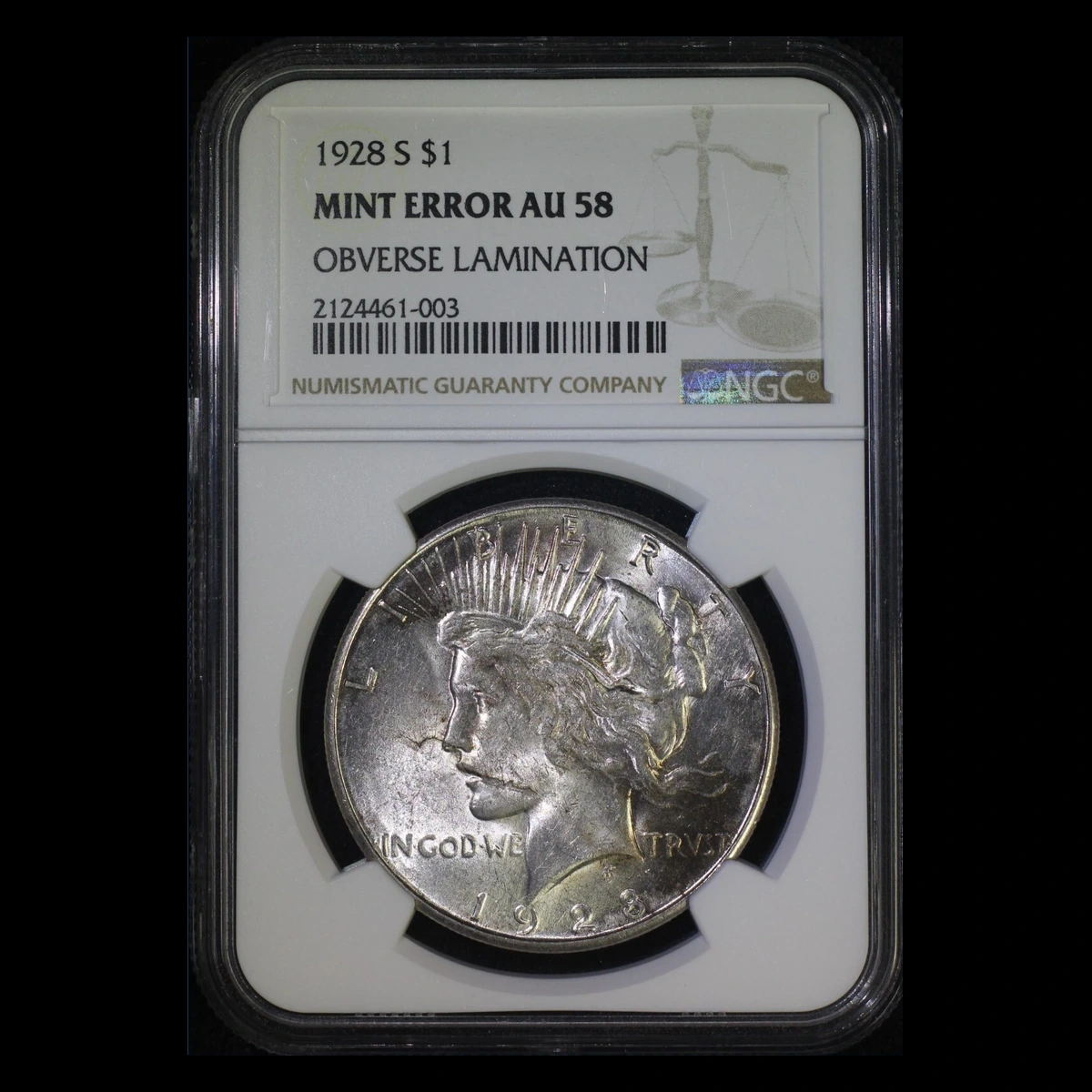
3. 1928 Dollar A thin surface layer lifts away: lamination Error
A weak area inside the silver-copper alloy can separate as a flap or shallow peeling patch. Peace dollars do not have the bonded outer layers of later copper-nickel clad dollars.
The supplied year guide lists lamination for 1928 without identifying a mint or certified specimen. The category therefore needs confirmation from the actual metal separation, not a fixed location or color change.
How to Identify
Leave the flap attached and inspect its edge for a thin internal seam. Follow any struck detail across or up to the opening without trying to widen it.
A deep gouge can push metal aside, while corrosion can leave an irregular hollow. The untouched boundary and remaining design help distinguish those causes from peeling.
Normal comparison figures are 26.73 grams and 38.1 millimeters for a loose dollar. A tiny flake may make no meaningful difference to the measured weight.
What It’s Worth
$100–$1,500 is the estimated whole-coin range for a genuine 1928 lamination. Mint and wear are important, particularly because the scarcer Philadelphia date can contribute substantially to the value.
A different-year 1922 reverse lamination graded NGC AU58 sold for $134 in December 2025. Its light wear and specific reverse defect should not be assigned to an unspecified 1928 candidate.
Conclusion
Extra outlines, missing design, and lifting alloy call for separate explanations. Start with the San Francisco motto comparison when appropriate, then examine the date interruption or a peeling boundary on its own evidence.
The quoted ranges price complete coins with different mints and preservation. Keep the confirmed $1,170 doubled-motto result distinct from the owner’s strike-through report, and protect any attached metal so its original relationship with the design remains visible.