Rare 1889 Dollar Errors (List & Pictures)
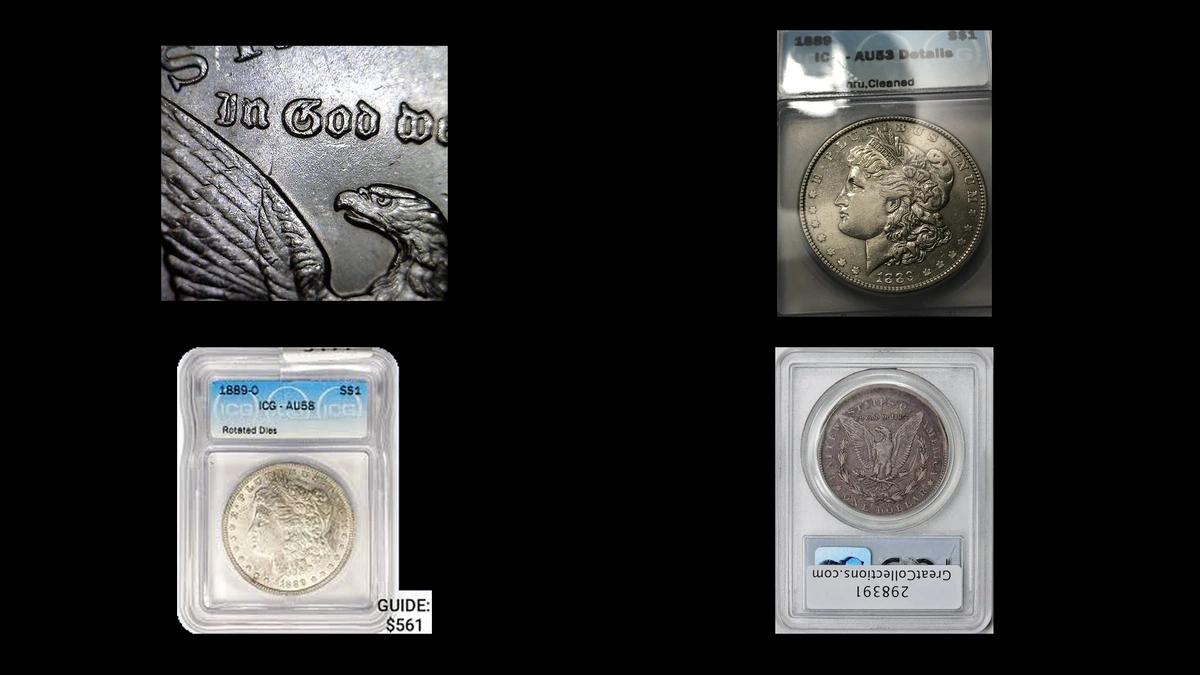
A wider border does not always mean the design was struck off center. An 1889-S broadstrike kept its complete picture and brought $4,680 in September 2025.
These seven groups of 1889 dollar errors have estimated whole-coin values of $75–$6,500. Compare the transferred letters and surface marks first, then check how the faces line up and whether the outline has missing or extra metal.
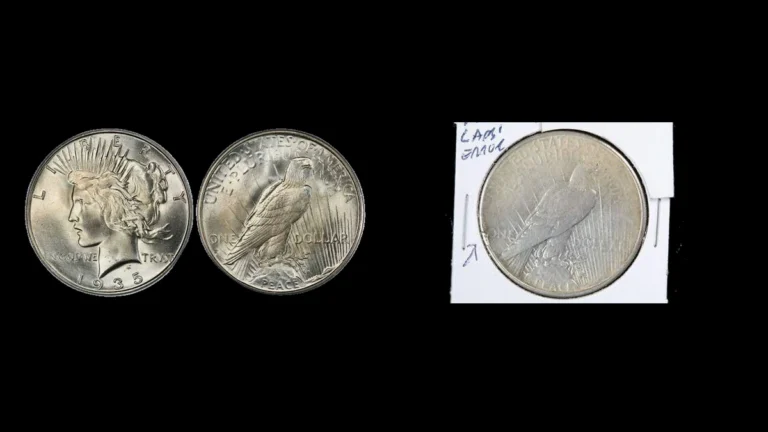
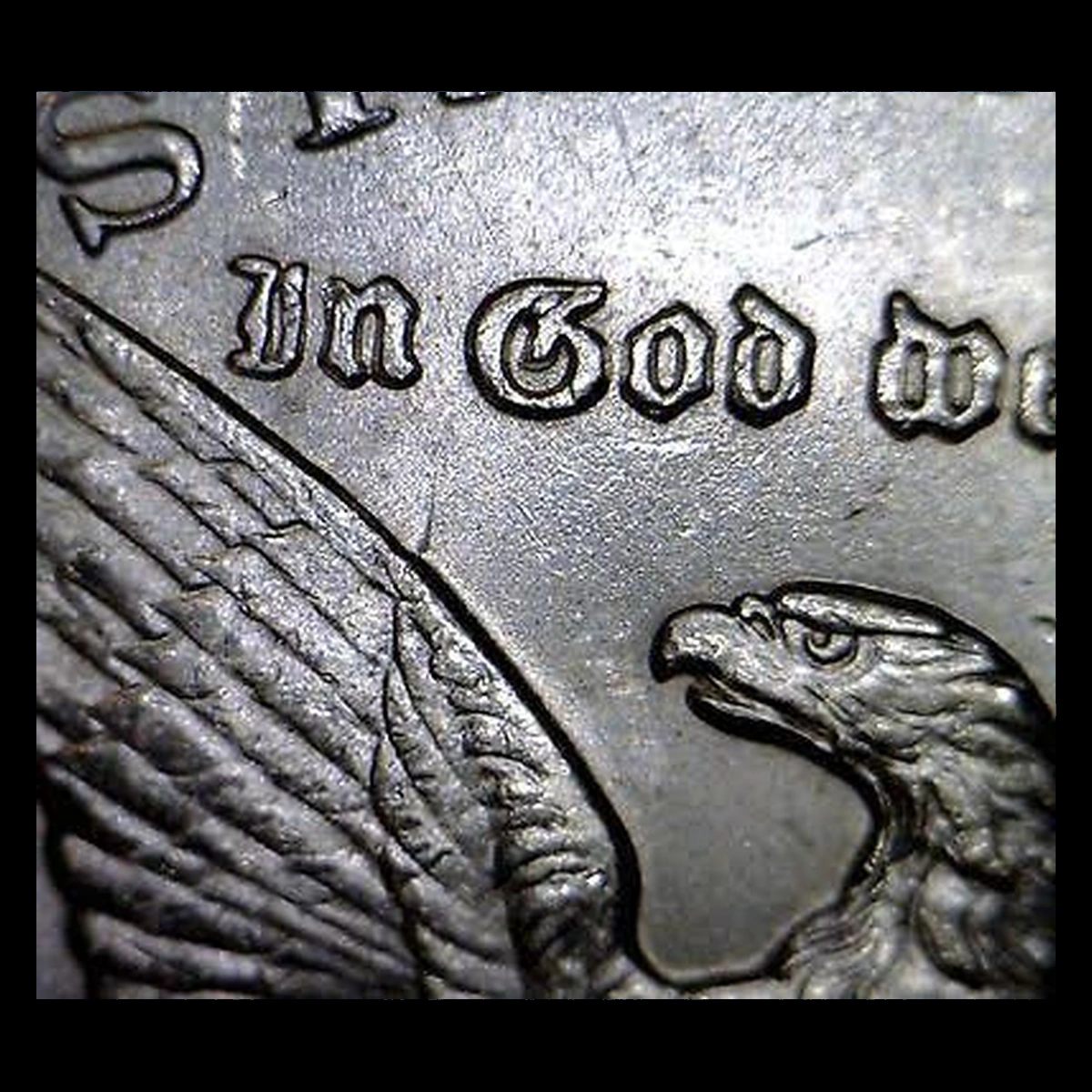
1. 1889 Dollar Letter Fragments on the Wrong Face: Die Clash Error
When the dies collide without a blank, they can pick up traces of the opposite design. Later dollars receive those unwanted shapes along with the normal picture.
Reported Philadelphia patterns include transferred IN, while New Orleans examples include an E. The two mint issues need separate matching photographs.
How to Identify
Identify the mint beneath the reverse wreath before choosing a reference. Follow the whole fragment for a recognizable corner or curve rather than relying on one straight line.
Compare its position with the design on the opposite face. A scratch or scrape can look out of place without having any connection to a die clash.
What It’s Worth
$75–$750 is the estimate for identified letter-transfer clashes. A legible fragment on attractive surfaces usually shows better than a weak trace among heavy marks.
The amount covers the complete dollar. Each additional line does not create another separate charge.
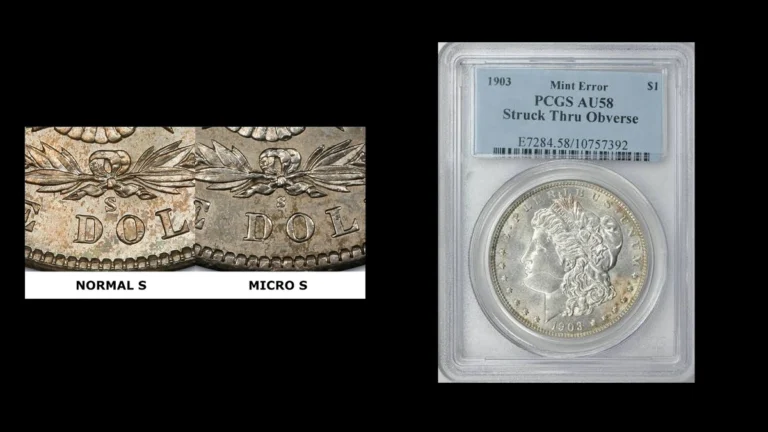
2. 1889 Dollar A Narrow Impressed Track: Struck Through Error
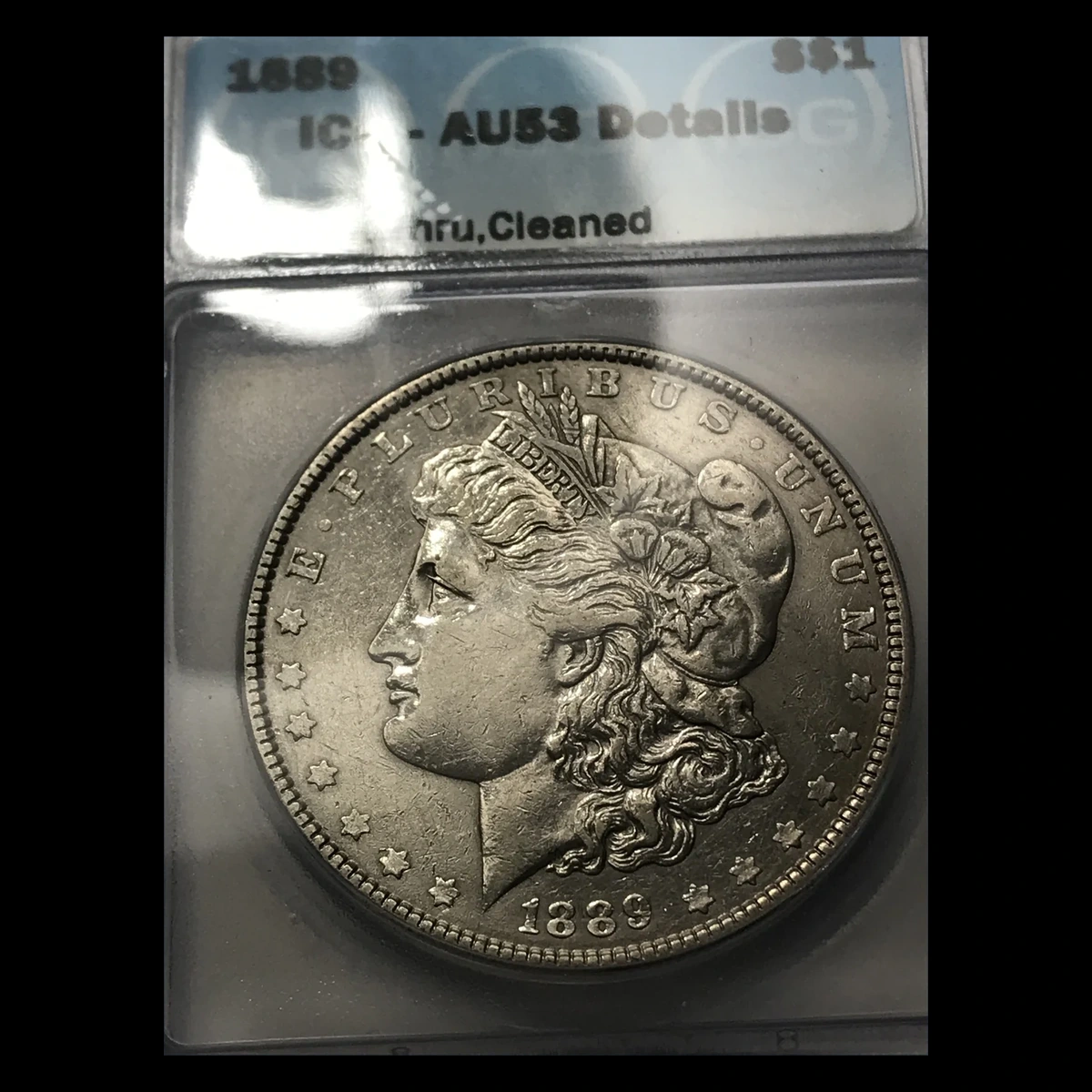
A Philadelphia dollar graded PCGS AU53 was listed with a wire impression on its reverse. Material between the blank and die blocked contact and left the track as the rest of the design formed.
A separate 1889-O AU55 report concerns a front impression with unspecified material and location. The wire description belongs only to the Philadelphia example.
How to Identify
Inspect the track from end to end, including where it crosses raised detail. Later scratching may leave scraping beyond the main groove or pushed-up metal along a cut.
Use the reverse photographs from Northeast’s error inventory for the Philadelphia comparison. A similar-looking front mark on an O-mint dollar needs its own explanation.
What It’s Worth
$150–$1,000 is the comparison range for genuine examples of similar size and condition. Northeast listed the Philadelphia AU53 wire coin at a $550 asking price.
That offer is not a completed sale. The sharpness of the impression and the surrounding surfaces both affect collector interest.
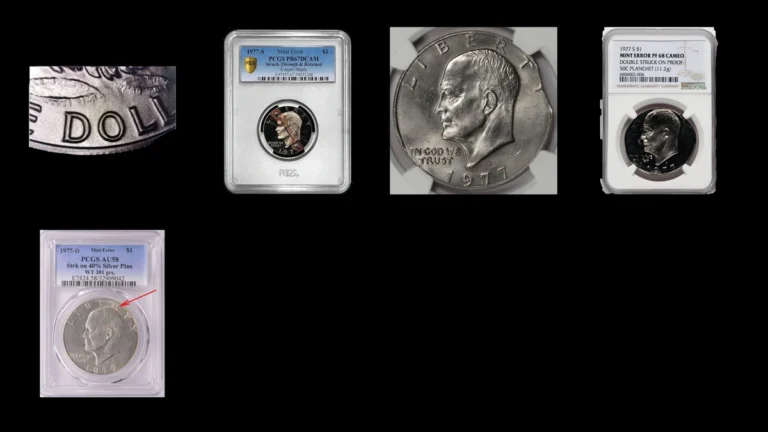
3. 1889 Dollar The Eagle Leans after a Fixed Flip: Rotated Dies Error
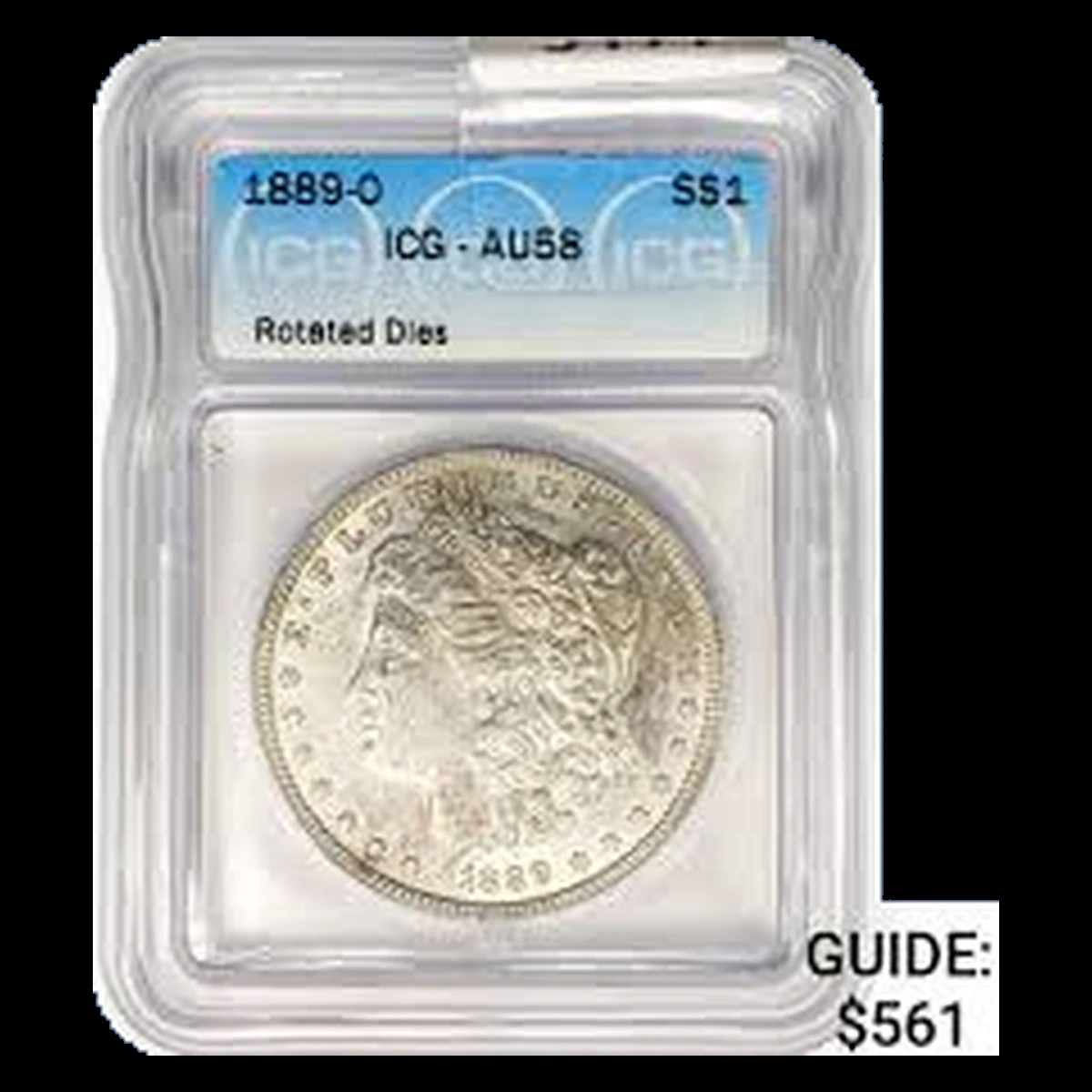
A reported 1889-O dollar has a 100-degree rotation between its faces. One die turned away from its normal position, leaving the entire reverse at an angle.
The year guide describes the coin as XF Details, indicating wear plus a condition problem. It does not establish the direction of rotation.
How to Identify
Set Liberty upright and flip the holder top to bottom without a sideways twist. On a normal dollar, the eagle should finish upright too.
Measure any departure from upright while keeping the holder fixed. The eagle and surrounding lettering should share the same turn; separately rotated photographs are not proof.
What It’s Worth
$100–$1,000 is the estimate for authenticated 1889-O rotations. The guide reports a $128.50 sale for its 100-degree XF Details example.
That secondhand figure concerns a coin with a condition problem. A large angle alone cannot explain value without accounting for wear and surface damage.
4. 1889 Dollar A Raised Mass Joining the Rim: Cud Error
A piece breaking from the edge of a die can leave a space that fills with silver. The coin then shows a raised lump connected to the rim, often replacing normal detail.
The year guide reports an 1889-O example in worn VF/XF condition. Its exact shape and location need the actual coin or matching photographs.
How to Identify
Trace the rim connection and identify the design that the lump replaces. A small isolated bump inside the picture does not have the same structure.
Look for an impact hollow or crushed edge nearby, which may explain pushed metal from later damage. Weakness on the opposite face can support a major die break but is only one clue.
What It’s Worth
$125–$1,500 covers authenticated cuds of different sizes and grades. The reported worn example carried a $147.75 asking price, not a confirmed sale.
A larger clear break may be more striking visually. Cleaning and rim hits still affect the complete dollar’s appeal.
5. 1889 Dollar A Missing Section of the Original Blank: Clip Error
A blank-cutting error can leave a gap before the dollar receives its design. The incomplete disc then passes through the press with that section already absent.
An 1889 clip graded MS61 appeared in a 2014 Stack’s Bowers group. The supplied description does not establish its exact gap position.
How to Identify
Inspect both places where the rim meets the gap for natural metal flow or weak nearby detail. Then check the exposed edge for filing or saw marks.
The opposite rim may also be weak, but that sign can be subtle. Combine it with the original surfaces beside the gap instead of relying on shape alone.
What It’s Worth
$100–$1,250 is the estimate for genuine 1889 clips. A clear missing section with a readable date and original surfaces is easier to display and compare.
The MS61 example sold within a group, so the group price cannot be assigned to that dollar. A later-cut coin does not receive the same error allowance.
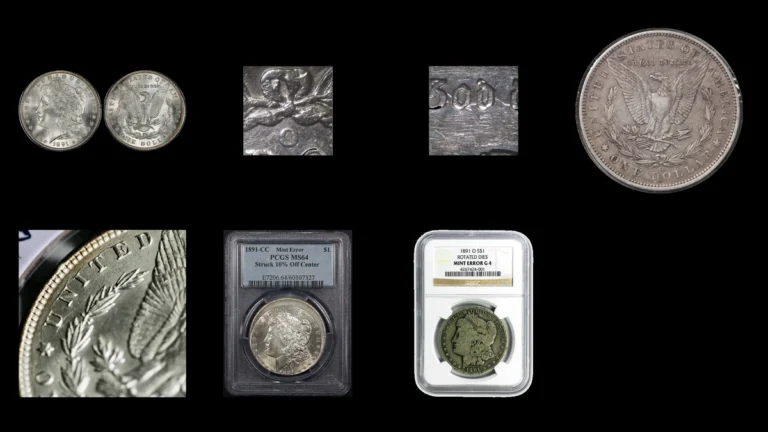
6. 1889 Dollar Design Lost beyond the Blank: Off-Center Strike Error
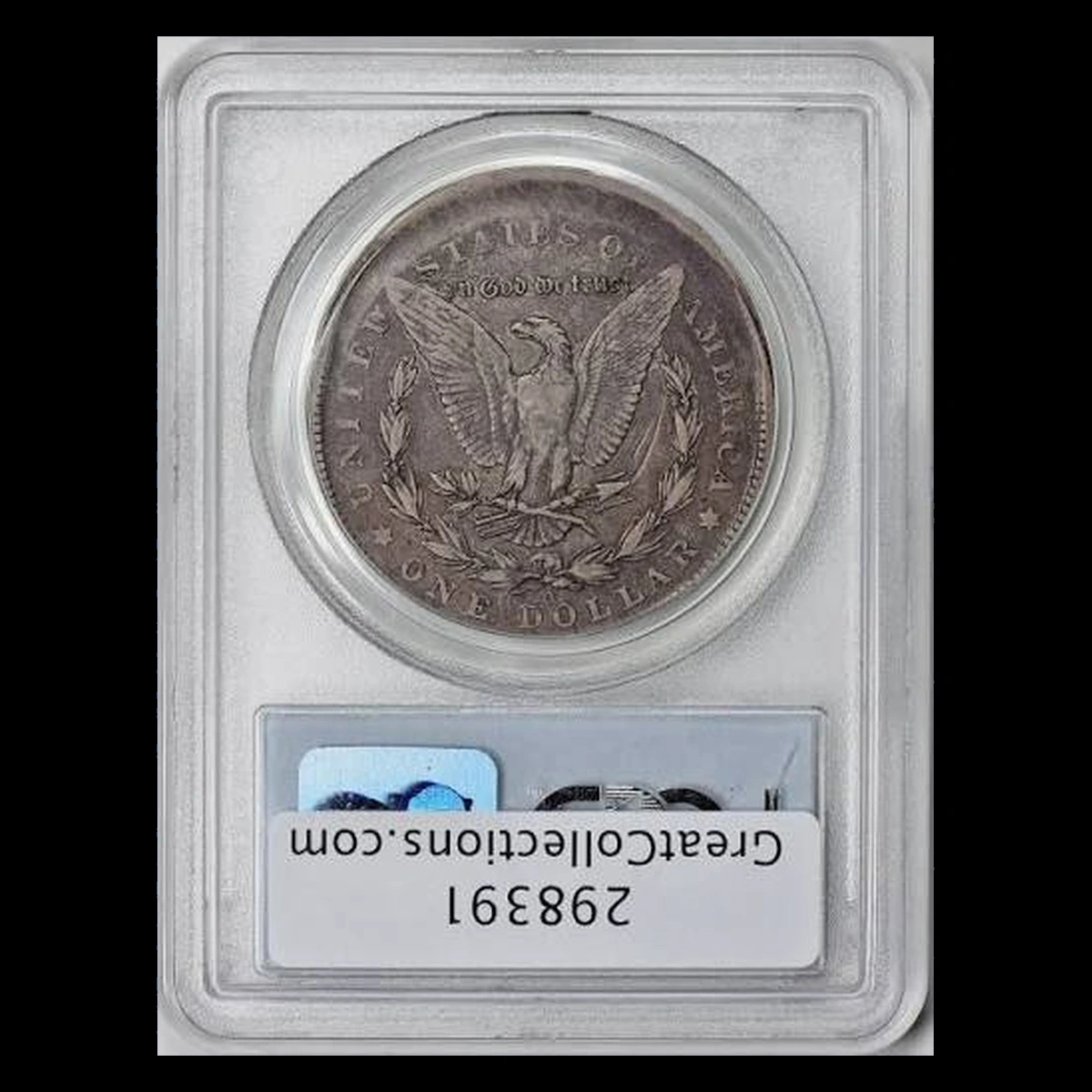
Two documented coins show how modest shifts can remove outer detail. A Philadelphia PCGS MS62 dollar is about 5% off center toward three o’clock, while an 1889-O PCGS VF30 is about 8% toward twelve o’clock.
The Philadelphia coin loses right-side border teeth and has extra silver on the left. The New Orleans example loses the tops of PLURIBUS at the upper edge.
How to Identify
Read the outer design all the way around both faces and find what failed to fit. Compare that loss with the unused metal on the other side.
An uneven border alone is not enough. A broadstrike can spread unevenly while keeping all the intended design, and grinding can create false blank-looking areas.
What It’s Worth
$1,000–$6,000 is the range for comparable identified off-center dollars. The Philadelphia 5% example brought $2,990 in July 2002, and the New Orleans 8% coin brought $1,782.50 in March 2004.
The larger displacement did not produce the higher result in these records. Mint, condition, and the clarity of the original strike must be considered together.
7. 1889 Dollar Complete Design inside an Expanded Border: Broadstrike Error
An 1889-S uncentered broadstrike has an unevenly expanded outline but retains its complete design. The collar, which normally controls the coin’s width, failed to contain the silver during striking.
Listings from 2014 and 2025 both describe an 1889-S PCGS MS63 example. Matching mint, date, error, and grade do not prove that they are the same physical coin.
How to Identify
Confirm that the outer words, date, and stars remain on both faces. Missing intended design points back toward the off-center comparison.
Inspect the expanded edge for original texture rather than hammering that crushed the relief. The normal Morgan diameter is 38.1 millimeters, but increased width needs supporting surface evidence.
What It’s Worth
$2,000–$6,500 covers recognizable 1889-S broadstrikes. Heritage’s September 2025 archive records $4,680 for the PCGS MS63 example.
A wide original margin and complete readable design strengthen the display. Later damage can reduce value even when the expansion itself is genuine.
Conclusion
Check the whole dollar before naming a small mark: its mint selects the right clash pattern, and a fixed flip establishes rotation. Along the edge, distinguish missing blank from extra metal and missing design from a complete broadstrike.
Those differences make the price records useful. Keep individual sales, dealer offers, and group-lot descriptions attached to the correct coin.