Rare 1934 Quarter Errors (List & Pictures)
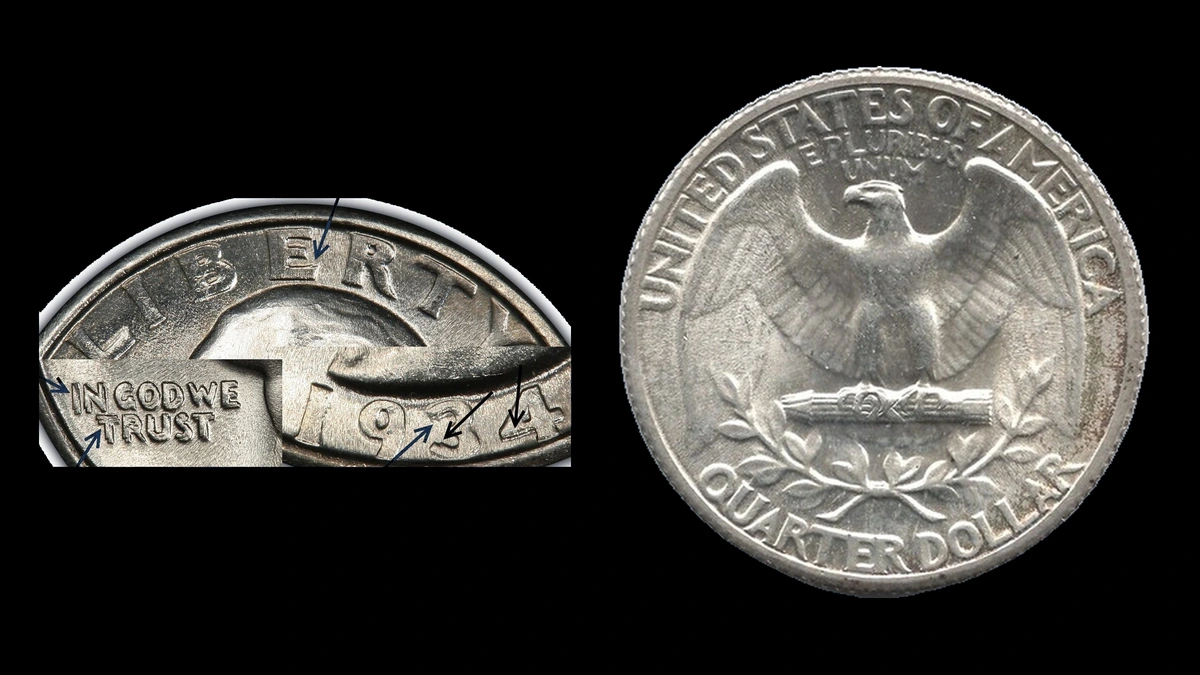
Bold letters and a large D can be normal on a 1934 quarter. The useful clues in 1934 quarter errors are repeated shapes, original blank defects, and abnormal striking, with supplied estimates of $25–$11,000.
A Philadelphia doubled die graded MS65 sold for $10,350 in March 2005. Compare the year’s normal lettering styles first, then inspect raised lines and changes to the metal’s outline.
| Clue | Identification | Estimated value |
|---|---|---|
| Split motto strokes | Doubled die obverse | $50–$11,000 |
| Another D impression | Reported repunched mint mark | $40–$600 |
| Horizontal raised line through hair | Die crack | $40–$300 ordinarily; exceptional grade higher |
| Small original metal irregularity | Minor planchet defect | $30–$1,000 |
| Missing blank segment | Clip | $25–$400 |
| Complete design sits unevenly in spread metal | Uncentered broadstrike | $100–$1,000 |
1. 1934 Quarter The Motto Splits into Repeated Strokes: Doubled Die Obverse Error
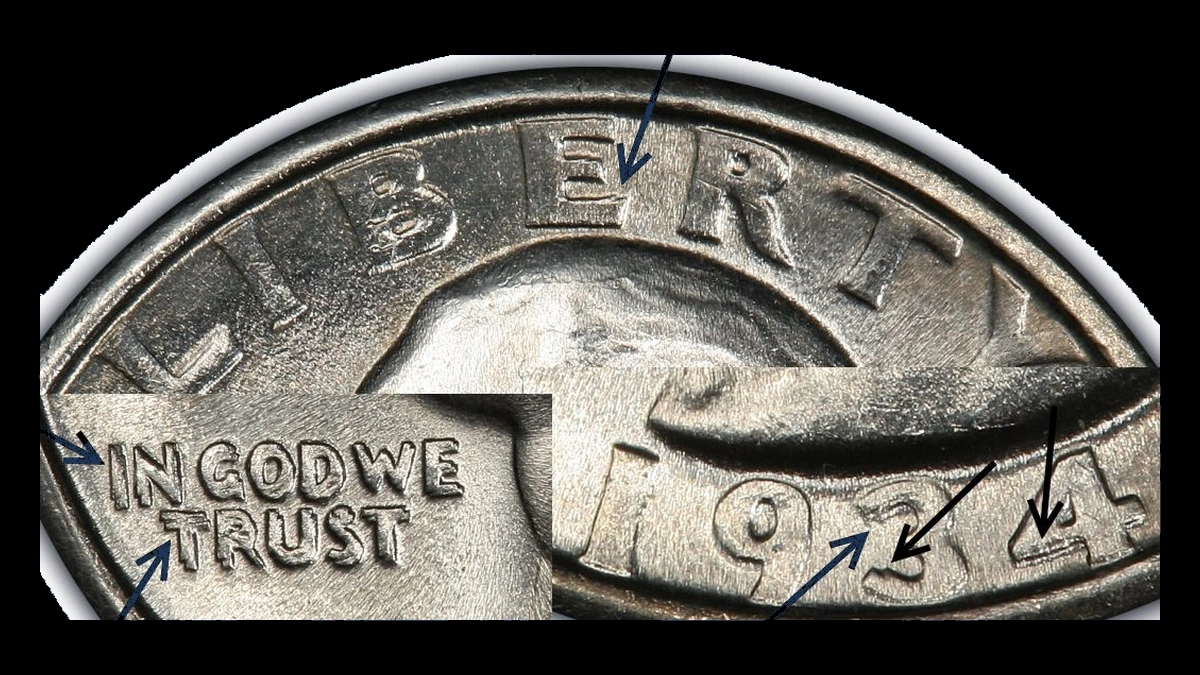
The major Philadelphia 1934 doubled die has its strongest repetition in IN GOD WE TRUST. LIBERTY and the date show less dramatic doubling that supports the same attribution.
This variety belongs to the Medium Motto style. The ordinary Heavy Motto has bold letters without requiring a repeated outline.
How to Identify
Compare the candidate with both a normal Medium Motto coin and an attributed doubled die. Match split raised strokes across several motto letters before checking the weaker LIBERTY and date features.
Inspect the apparent second edges under changing light for flat shelves caused during striking. Thickness alone cannot distinguish the variety from the year’s normal style differences.
What It’s Worth
$50–$11,000 is the supplied range from well-worn identified pieces to exceptional examples. PCGS records an MS65 sale of $10,350 at American Numismatic Rarities in March 2005.
A separate MS65 FS-101 at Heritage sold for $3,220 in July 2012. Those different results show why grade alone does not set a fixed price.
2. 1934 Quarter A Second Letter Appears at D: Reported Repunched Mint Mark Error
Denver used more than one normal mint-mark size in 1934. A repunched mark requires evidence of another D impression, not simply a larger or smaller letter.
A seller described an AU example as repunched. The report points to a feature to investigate without supplying a matched catalog pattern here.
How to Identify
Choose a normal comparison with the same D size, then trace the upright and curved portions for an additional recognizable letter fragment. An ordinary change in punch style should not become an error diagnosis.
Use light from both sides to distinguish raised shapes from dents, shadows, and flat shelves. Match the entire extra contour with an identified quarter variety rather than importing a number from another denomination.
What It’s Worth
$40–$600 is the estimate for a genuine identified repunched D. The seller’s AU coin was listed at $95, an asking figure rather than a verified auction result.
AU indicates limited wear, but the feature still needs confirmation. Normal large and small D styles do not justify the repunching premium.
3. 1934 Quarter A Raised Line Crosses Washington’s Hair: Die Crack Error
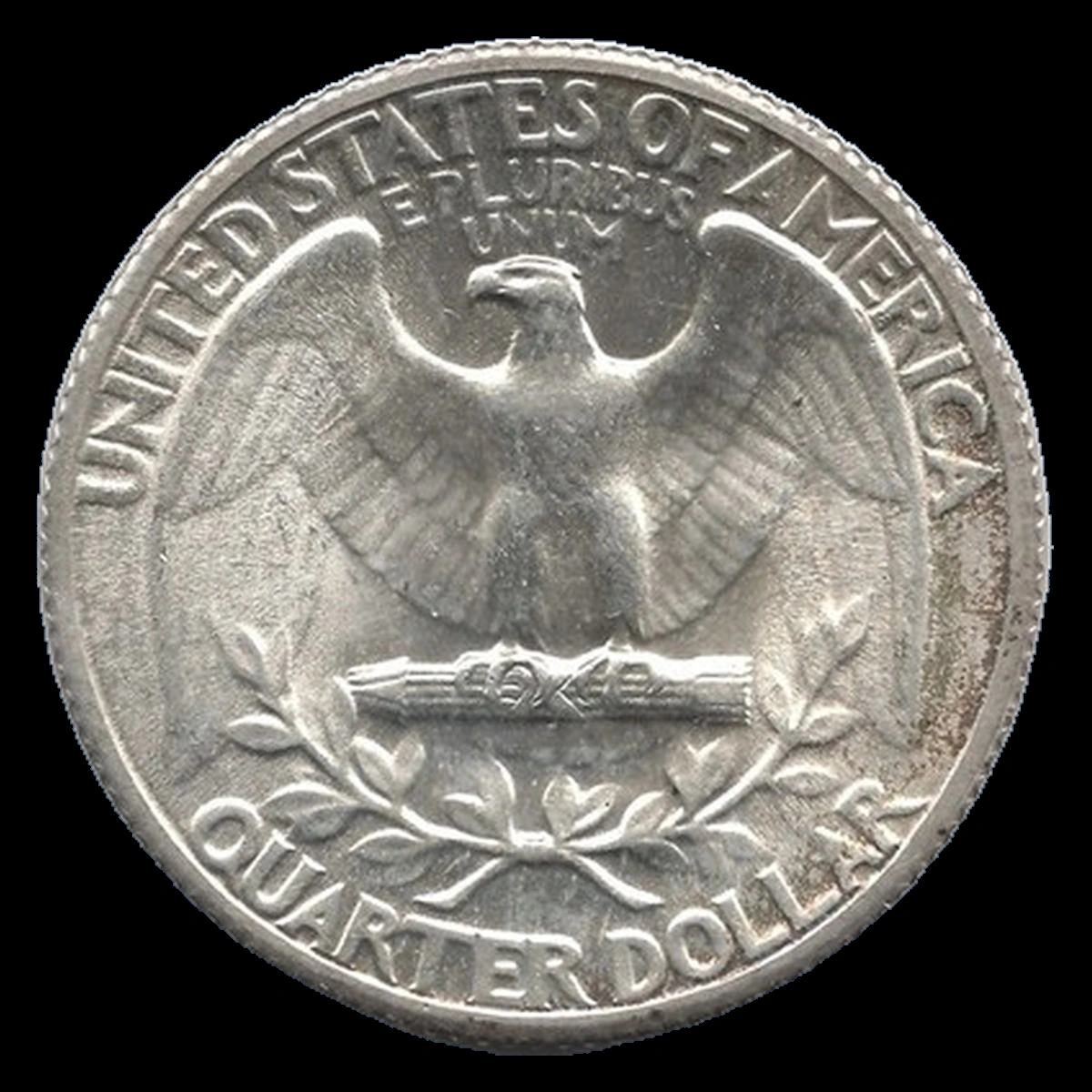
A documented 1934-D Heavy Motto quarter has a horizontal die crack through the upper hair. Silver entered the fracture in the die and formed a ridge within the ordinary hair design.
How to Identify
Compare the complete path with the documented Denver example and follow it across several hair strands. A Heavy Motto quarter does not automatically share this crack.
Side lighting should distinguish the raised center from a scratch’s recessed channel and displaced lips. Keep enough portrait visible to exclude an ordinary strand of hair.
What It’s Worth
$40–$300 is the estimate for ordinary worn or modest-grade examples with a similar small crack. Exceptional coins approaching the cited MS67 preservation are estimated around $8,000–$10,000.
The documented MS67 Heavy Motto coin sold for $8,700 in August 2025. That whole-coin result was strongly influenced by preservation and is not an $8,700 charge for the crack.
4. 1934 Quarter A Small Flaw Interrupts the Original Metal: Minor Planchet Defect Error
A Philadelphia quarter graded PCGS MS66 was offered as a Minor Planchet Defect example. A planchet is the prepared blank, so the label places the problem in the metal before striking.
The brief description does not specify peeling, a missing edge, or one exact shape. Those details must come from the actual coin.
How to Identify
Match the holder and photographs, locate the flaw, and examine how the surrounding design crosses or meets it. Avoid expanding a small surface irregularity into an unsupported major-loss claim.
A side-lit photograph can clarify peeling or an edge feature without disturbing the metal. Keep the certified coin sealed while narrowing the description.
What It’s Worth
$30–$1,000 is the supplied estimate across minor original defects in differing conditions. An MS66 quarter can already have substantial value from preservation.
The GreatCollections specimen sold in October 2025, but its public page does not display the paid amount. It establishes a graded example without providing a price to copy.
5. 1934 Quarter Metal Is Absent beside the Struck Rim: Clipped Blank Error
Clips are reported for Philadelphia and Denver 1934 quarters without a shared gap shape or location. The design formed after part of the blank’s intended outline was already missing.
How to Identify
Inspect the exposed edge through its thickness and follow the rim into both ends of the gap. Softened or interrupted detail can support an originally incomplete blank, while filing and sharp cuts suggest later removal.
Weakness at the opposite rim helps on some clips but is not mandatory. Compare a loose coin’s weight with the 6.25-gram silver-quarter standard without treating low weight as proof of timing.
What It’s Worth
$25–$400 is the estimate for genuine clips in ordinary circulated through modest unworn condition. Gap size, date readability, and surface preservation matter.
A straight-clipped 1966 quarter sold for $124 in June 2024. Its different date and clad metal make it a comparison rather than an automatic lower bound for an older silver clip.
6. 1934 Quarter The Complete Design Sits to One Side: Uncentered Broadstrike Error
A broadstrike can have uneven design placement while retaining all its outer detail. The collar failed to restrain the blank normally, allowing metal to spread beyond the intended width.
A secondary guide reports separate Philadelphia PCGS MS63 and MS64 examples sold in 2024. Their uncentered appearance should not automatically be labeled off center.
How to Identify
Read the outer lettering on both faces to determine whether the whole design remains within the metal. A complete image in an uneven expanded border supports an uncentered broadstrike.
Compare several widths with the normal 24.3-millimeter diameter and inspect the widened edge for altered reeding. Spreading changes shape without adding silver.
Look for original artwork rather than crushed detail caused by later hammering. The design and expanded outline should have formed during the same strike.
What It’s Worth
$100–$1,000 is the estimated broadstrike range. Coins Value reports June 2024 Stack’s Bowers results of $360 for the MS64 coin and $192 for the separate MS63 specimen.
Those are secondary-reported results for different coins. Spread, surfaces, and preservation account for more than border imbalance alone.
Conclusion
Normal 1934 motto styles and D sizes must be recognized before an unusual-looking quarter receives an error label. The doubled motto, repeated mint letter, and raised hair crack each require their own pattern comparison.
For blank and striking errors, keep the complete outline and both faces visible. Exceptional condition can dominate a sale result, so the high price of the cracked MS67 coin should never become a routine crack premium.