Rare 1988 Quarter Errors (List & Pictures)
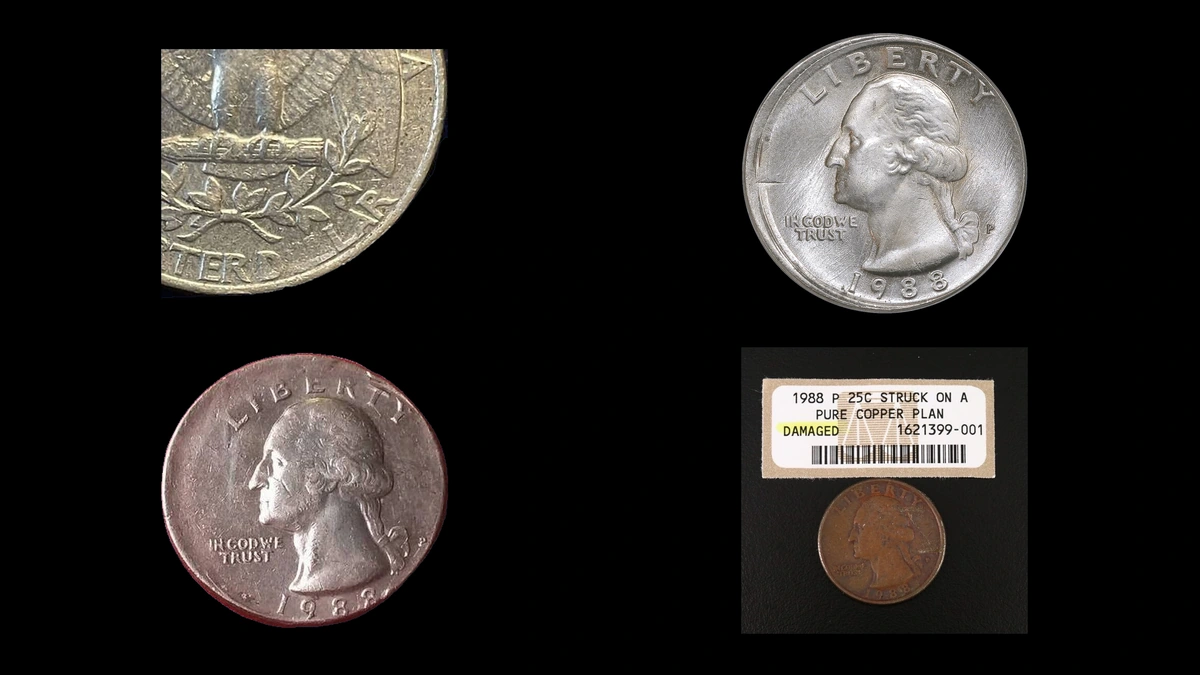
The edge can explain a 1988 quarter that looks unusual from the front. Estimated values for 1988 quarter errors range from $10 to $2,000, with different tests for a spread blank, missing cladding, and a second strike.
A Philadelphia quarter on a nickel blank graded NGC MS66 sold for $852 in October 2021. Begin with repeated or raised details, then compare both faces and the edge before applying a value range.
| Observation | Possible identification | Estimated value |
|---|---|---|
| Related extra letter outlines | Reported doubled die | $20–$200 |
| Raised patch or rim-connected lump | Die chip or cud | $10–$350 |
| Local or whole-face missing detail | Struck through | $15–$600 |
| Copper face with an absent outer layer | Missing cladding | $75–$500 |
| Two edge levels | Partial collar | $25–$250 |
| Full design in expanded metal | Broadstrike | $20–$250 |
| Tooth-like marks in the outer field | Reported collar clash | $100–$750 |
| Unstruck crescent and lost design | Off-center strike | $50–$650 |
| Two differently displaced impressions | Double strike | $150–$1,000 |
| Quarter design on smaller metal | Nickel or dime planchet | $200–$2,000 |
1. 1988 Quarter Motto or Date Details Repeat: Reported Doubled Die Error
One 1988 report concerns IN GOD WE TRUST without an established mint, while a separate Denver report mentions both the motto and date. These descriptions do not establish two authenticated catalog varieties or one shared pattern.
A true doubled die carries repeated detail in the tool before it strikes the blank. Movement during striking can instead produce a flat shelf beside a letter.
How to Identify
Compare neighboring letters for rounded related repetition and inspect the date separately on the Denver claim. Keep the actual mint mark visible in another photograph.
Move the light to distinguish fixed extra metal from glare. A catalog number from another year or mint cannot identify these reported features.
What It’s Worth
$20–$200 is the estimate for a genuinely identified doubled-die example. Clear separation on original surfaces is more useful than vague thickening.
The range does not apply automatically to every doubled-looking edge. The actual pattern needs to be established first.
2. 1988 Quarter Extra Metal Fills a Spot or Joins the Rim: Die Chip or Cud Error
A broken area of the die accepts metal and leaves a raised patch on the coin. An interior patch is a die chip, while a break connected to the outside rim can form a cud.
Both are reported for 1988. Suggested letter-opening checks do not establish a separate known chip in every letter, and the supplied Philadelphia cud report gives no exact location.
How to Identify
Inspect the patch’s boundary for continuity with the struck surface rather than attached deposits. A large internal bump still needs a rim connection before it can be called a cud.
Check the opposite face for supporting weakness, which may vary in visibility. Do not scrape or pry at a suspicious raised area.
What It’s Worth
$10–$50 is the estimate for small chips, and $75–$350 for conspicuous rim cuds. Size, originality, and surface condition all affect the comparison.
Corrosion or metal pushed beside a dent can resemble an extra patch. Those later changes do not receive the same mint-error premium.
3. 1988 Quarter Letters or the Entire Front Are Obscured: Struck Through Material Error
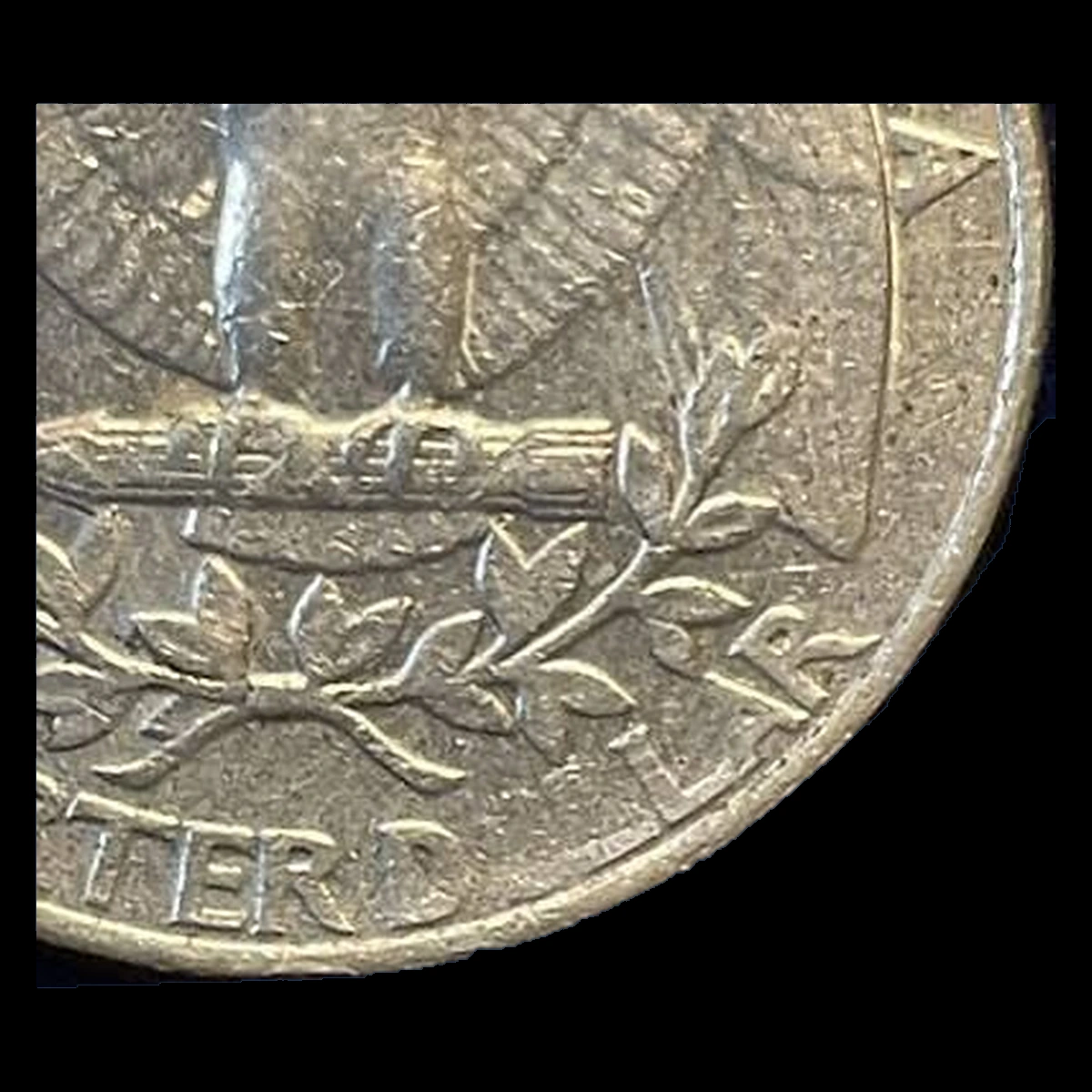
Philadelphia reports include local blocked detail and a PCGS AU55 coin described as 100% struck through on the obverse. The blocking material for the whole-front example is not specified.
Grease can fill small die recesses, while other material can obstruct the space between die and blank. Neither explanation should be inferred solely from an absent mint mark.
How to Identify
Compare a nearly blank front with the surviving eagle side to evaluate ordinary wear as an explanation. Inspect for scratches or polishing that could have removed finished detail.
For a missing mark, examine its expected location to the right of Washington’s hair ribbon and the surrounding surface. A blank spot cannot establish that a P was originally present.
Do not identify cloth or a die cap without evidence of that material or mechanism. The whole-face description establishes extent, not the obstruction’s identity.
What It’s Worth
$15–$100 is the estimate for small identifiable blocked areas, while $100–$600 covers dramatic whole-front examples. AU55 indicates light wear on the documented full-front coin.
A faint mint-mark area needs its own assessment. It cannot inherit the range for a much larger, established obstruction.
4. 1988 Quarter Washington’s Side Exposes Copper: Missing Clad Layer Error
The documented Denver example is missing its obverse outer layer and weighs 4.8 grams. It is graded NGC MS62, with the reverse retaining its pale outer metal.
A separate Philadelphia report does not establish the affected face or weight. Its identity must be read from its own evidence.
How to Identify
Compare both faces and the adjacent edge layers to determine whether metal is absent rather than stained. Reduced mass can support the finding against the ordinary 5.67-gram clad standard.
Inspect exposed copper for original struck detail and for scraping or chemical damage. The Denver 4.8-gram measurement is not a required weight for every layer-loss coin.
What It’s Worth
$75–$500 is the estimate for comparable missing-layer quarters. The NGC MS62 Denver obverse-layer example sold for $156 in November 2020.
That is an identified structural error, not merely a brown quarter. The Philadelphia report needs its own face and metal-loss evidence before making a close comparison.
5. 1988 Quarter The Edge Divides into Two Levels: Partial Collar Error
A reported Philadelphia example graded ANACS MS63 has a partial-collar edge. Part of the blank was restrained by the collar ring while the exposed portion spread farther.
How to Identify
View the edge from the side and follow the step between the grooved band and smoother expanded metal. Its height may vary around the circumference.
The ordinary copper stripe is a color boundary without necessarily having an edge step. Washington’s clothing collar is unrelated to the press ring involved in this error.
Check dents crossing the boundary for evidence of later squeezing or folding. A face-only uneven border cannot establish the original two-level structure.
What It’s Worth
$25–$250 is the estimate for a clear partial collar. A clean visible transition between restrained and expanded metal is central to its display.
Edge condition matters as much as portrait preservation here. Heavy dents can obscure the feature even on an otherwise attractive coin.
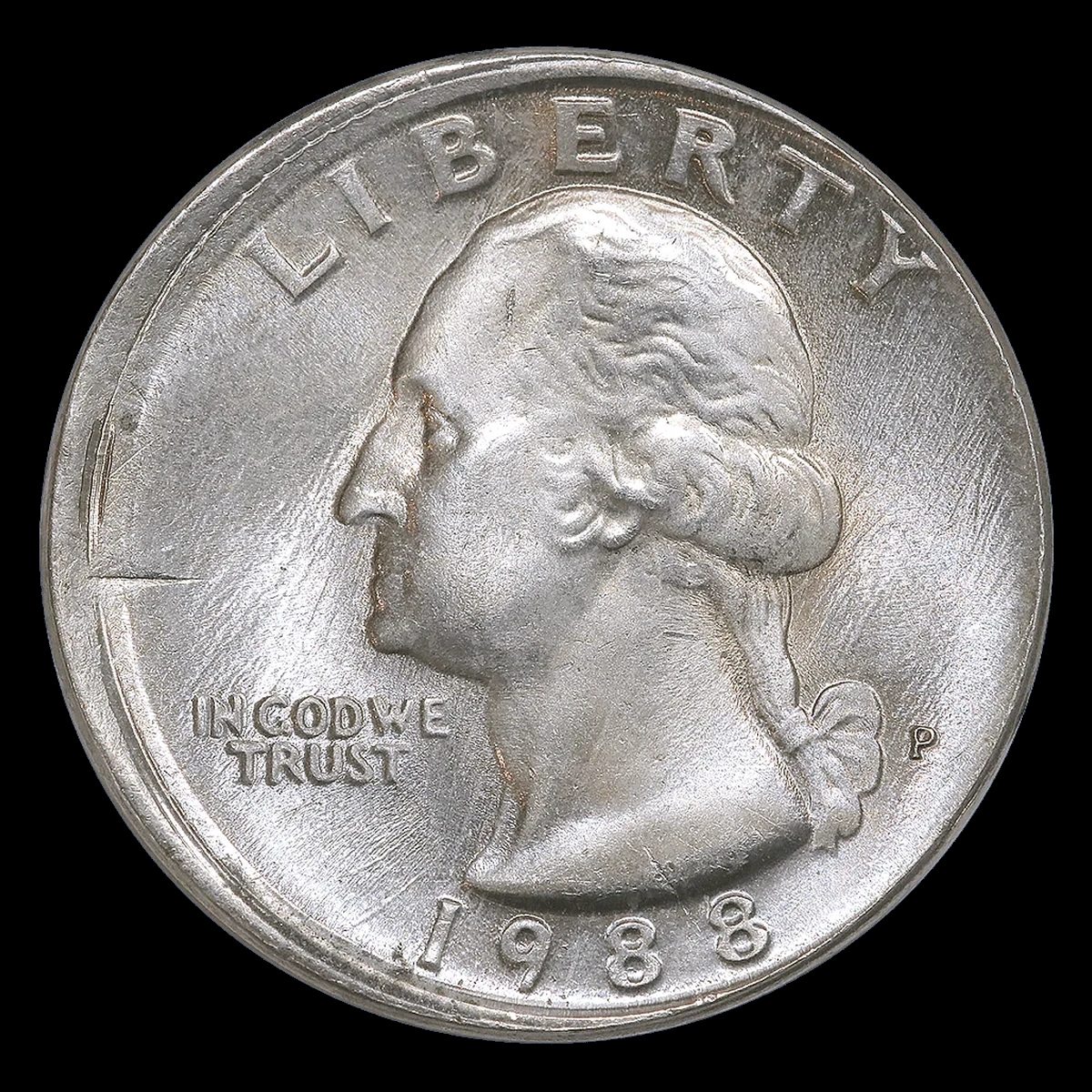
6. 1988 Quarter A Wide Border Retains the Complete Design: Broadstrike Error
Philadelphia broadstrikes are reported as a graded example and a separate ungraded auction coin. Their expanded outlines reflect metal spreading without normal collar restraint.
How to Identify
Photograph the full coin straight on and compare its diameter with the ordinary 24.3-millimeter standard. Trace the outer lettering and eagle to confirm that the intended design remains within the metal.
Inspect the expanded edge and central design for abrasive lines or crushing from later alteration. A smooth edge by itself can result from wear or grinding.
What It’s Worth
$20–$250 is the supplied broadstrike estimate. A clear original outline and readable complete design help demonstrate the error.
The graded and ungraded reports are separate specimens with separate condition assessments. Similar borders do not establish that they are the same coin.
7. 1988 Quarter Tooth-Like Marks Appear in the Outer Field: Reported Collar Clash Error
An owner-documented 1988 quarter shows edge-like marks near LIBERTY, the motto, and beneath the last two date digits. The owner relayed Mike Diamond’s explanation that collar damage to the die was transferred as metal spread across the affected area.
How to Identify
Locate the marks in the flat outer obverse area rather than on the ordinary reeded edge. Compare their repeated arrangement with surrounding metal flow.
Later hits from another coin’s edge can leave superficial dents, so inspect both faces and the complete rim. These marks alone do not prove that the dies were installed in reversed positions.
What It’s Worth
$100–$750 is a working estimate for an established collar-clash combination with clear transferred marks. It is not a recorded sale of the reported forum coin.
The pattern and its relationship to the strike must be visible together. A few unrelated dents cannot establish the same manufacturing sequence.
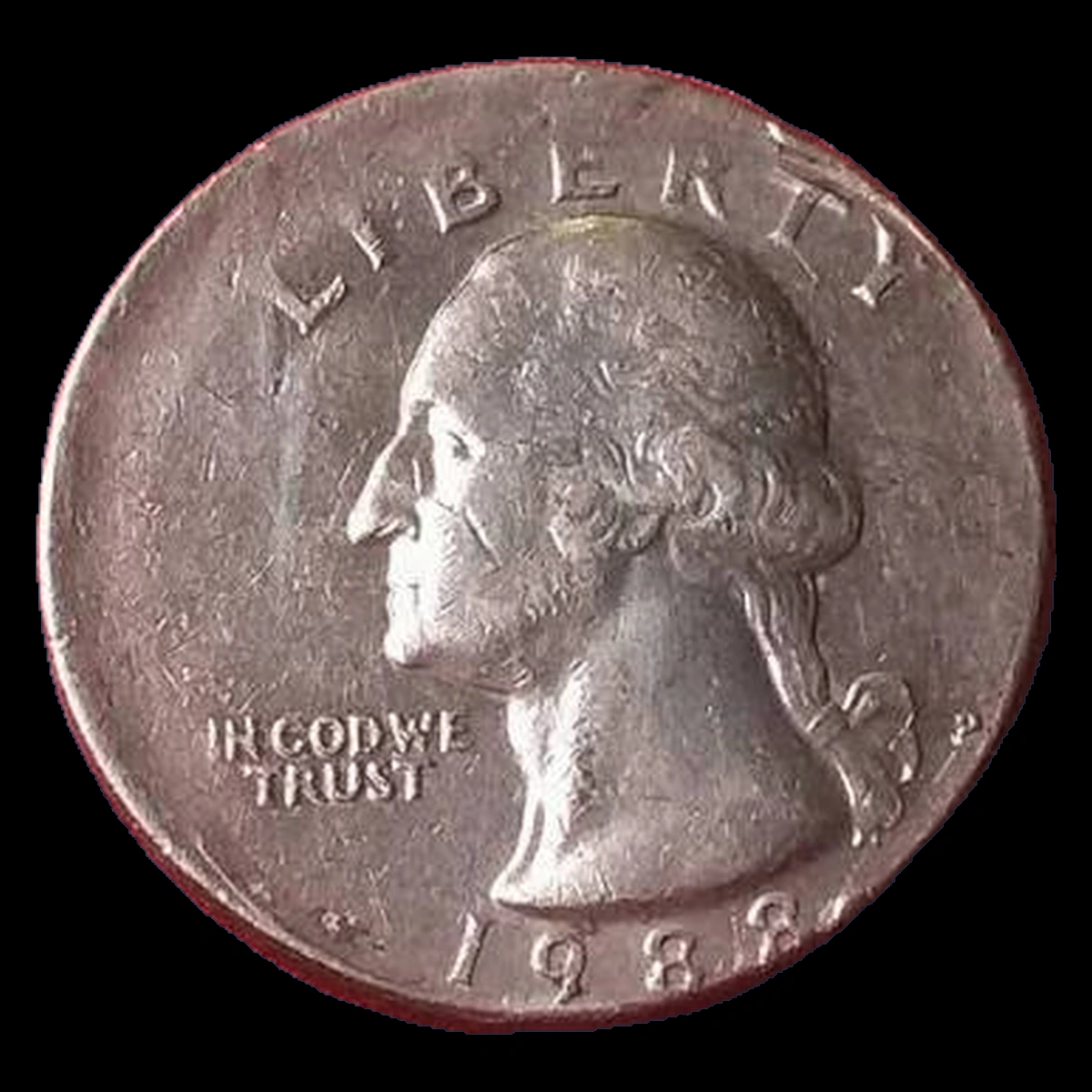
8. 1988 Quarter An Unstruck Crescent Borders a Cropped Design: Off-Center Strike Error
A Philadelphia example is 30% off center toward one o’clock, while a Denver report describes 10% displacement. A separate 65% example has no established mint, and another Philadelphia auction coin has no stated percentage.
How to Identify
Compare both faces for incomplete designs that fit the same misplaced blank. A broadstrike keeps its complete design within expanded metal, and a single shifted face may instead involve die alignment.
Read surviving dates and mint marks directly, especially on the 65% coin. Do not supply its mint or the separate Philadelphia coin’s percentage from a better-documented example.
What It’s Worth
$50–$650 is the estimate across these off-center pieces. The 30% Philadelphia example graded ANACS MS63 sold for $109 in January 2022.
That sale concerns displacement on a quarter blank, not a nickel-planchet error. Readable identity and original surfaces can matter more than the largest shift.
9. 1988 Quarter A Small Later Impression Follows an Earlier Shift: Double Strike Error
The reported Philadelphia PCGS MS64 coin has a first strike approximately 10% off center and a second about 93% off center. Only a small fraction of the later design reached the metal.
How to Identify
Establish the first impression’s blank crescent and missing design, then locate connected remnants of the later blow near the edge. Two complete portraits are not expected from such extreme second-strike displacement.
Compare both faces before assigning the sequence. A single line or dent cannot establish another impression, and other double-struck coins require their own measurements.
What It’s Worth
$150–$1,000 is the estimate for a convincing 1988 double strike with readable evidence of both impressions. No completed-sale figure for the described PCGS MS64 coin is supplied.
Even a small later strike can be appealing when its details explain the event. Heavy marks may obscure that evidence despite dramatic percentages in the description.
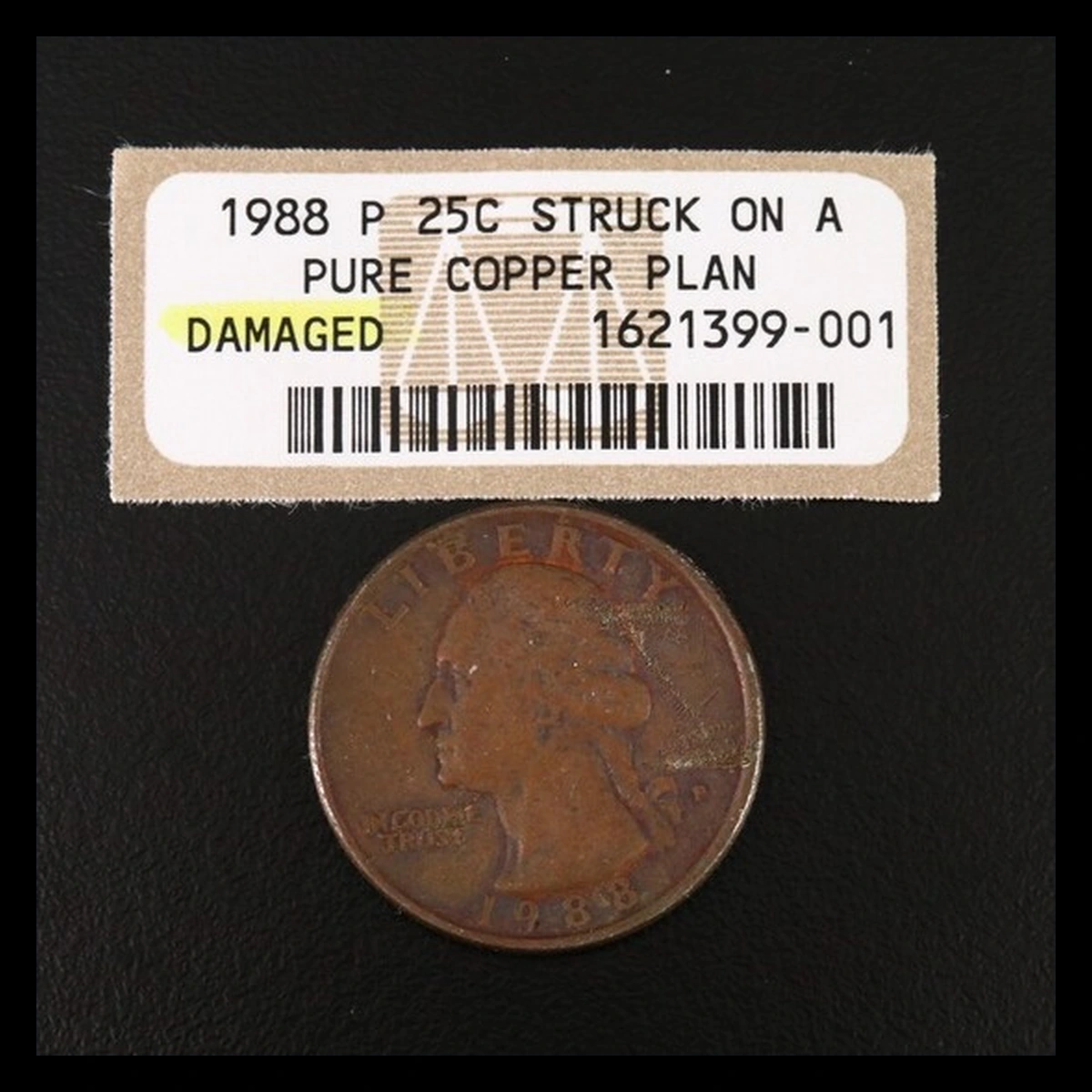
10. 1988 Quarter Quarter Lettering Outgrows a Smaller Blank: Nickel or Dime Planchet Error
The Philadelphia NGC MS66 nickel-planchet quarter is recorded at 5 grams. A separate dime-planchet report concerns smaller metal with a different layered structure.
How to Identify
Examine the edge before choosing a denomination: nickel blanks are solid copper-nickel alloy, while clad dime blanks have a copper-colored center layer. Both are smaller than a quarter blank.
Starting standards are about 5 grams and 21.21 millimeters for a nickel blank and 2.268 grams and 17.91 millimeters for a clad dime blank. These are reference dimensions, and striking can spread the metal.
Read the surviving date and follow outer letters to the original boundary. A normal quarter ground smaller after striking can also lose lettering, but its altered edge requires another explanation.
What It’s Worth
$200–$1,200 is the estimate for identified nickel-planchet pieces, with $300–$2,000 for dime-planchet examples. The Philadelphia NGC MS66 nickel-planchet quarter, recorded at 5 grams, sold for $852 in October 2021.
Each blank requires its own metal and size evidence. A low mass alone does not place a chemically thinned or damaged quarter within either range.
Conclusion
The 1988 examples reward a full-coin examination: an expanded border, stepped edge, and unstruck crescent can look similar in a tight front photograph. Their relationship to the complete design distinguishes the mechanisms.
Keep each reported mint, percentage, weight, and grade with its own specimen. A blocked mint mark, copper color, or unusual edge is a starting clue; the original metal and both faces must support the final identification.