Rare 2007 Quarter Errors (List & Pictures)
A Montana quarter struck over a cent has a recorded auction price of $13,750. Most 2007 quarter errors occupy a much lower price bracket, with estimated values of $2–$20,000 across the categories below.
This guide explains what to inspect on each state design and how to separate documented sales from estimates and asking prices.
| Visible feature | Error group | Estimated value |
|---|---|---|
| Extra small lines or lumps | Clashes, cracks, chips, doubling | $2–$500 |
| Missing or disturbed metal | Clips, lamination, missing layers | $25–$2,000 |
| Displaced or expanded design | Off-center, collar, broadstrike errors | $30–$1,000 |
| Multiple images or a deep cup | Repeated strikes and die caps | $300–$6,000 |
| Another denomination involved | Wrong blank or overstrike | $500–$20,000 |
1. 2007 Quarter Die Clash Marks on Utah Quarters Error
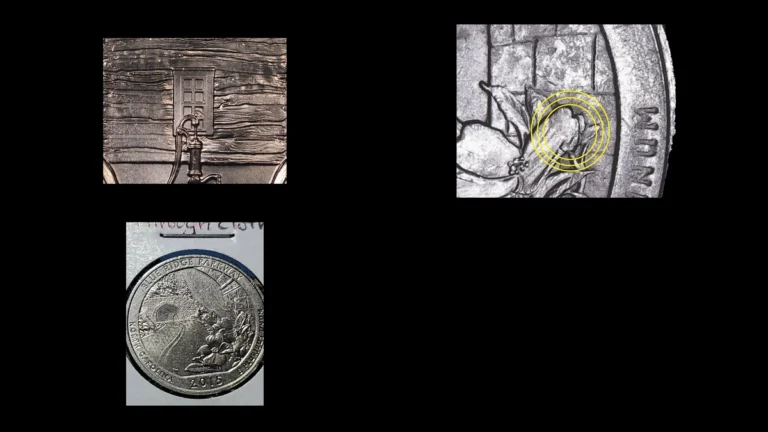
The railway scene contains many legitimate lines, so an unfamiliar mark needs comparison with an ordinary Utah reverse. A die clash can add traces from the opposite design when the two stamping tools meet without a blank between them.
The Utah report concerns possible Washington-design traces around the central tracks. It does not establish one exact ghost image or mint for every candidate.
How to Identify
Compare the rails and nearby field under light from several directions. A clash mark should fit a feature from the opposing design, rather than simply resemble an extra rail or scratch.
What It’s Worth
Estimated values are $10–$100 for identifiable clash marks. Ordinary railway details and unrelated surface marks do not qualify for that premium.
2. 2007 Quarter Missing Designer Initials on Idaho Quarters Error
A Denver Idaho quarter has been cataloged without the expected DE initials. The dealer presentation included an ordinary coin for comparison.
The missing letters alone do not establish the cause. Obstruction in a die, changes to its surface, wear, and damage require different explanations.
How to Identify
Locate the initials on a normal Idaho reverse, then inspect the corresponding area and neighboring bird details. An intact surrounding surface is more useful evidence than a photograph showing only a blank spot.
What It’s Worth
A working estimate is $10–$150 for a genuine example with an adequately explained missing-initial feature. That is not a recorded sale for the dealer’s comparison pair.
3. 2007 Quarter Weak Strikes Error
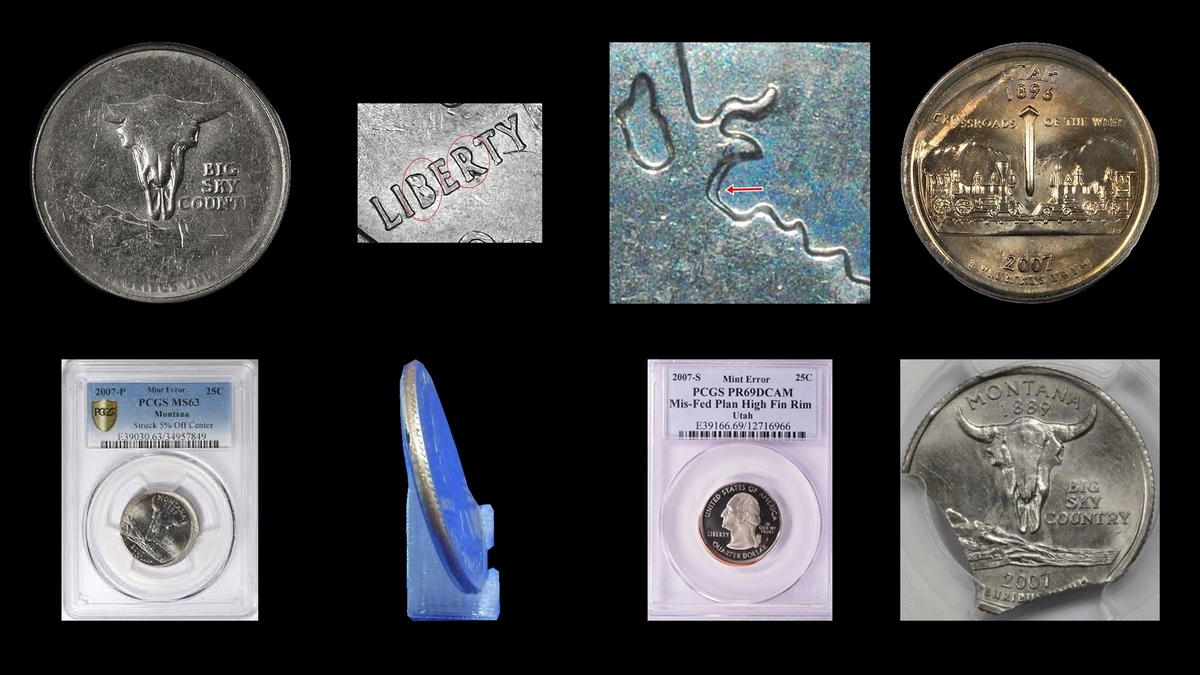
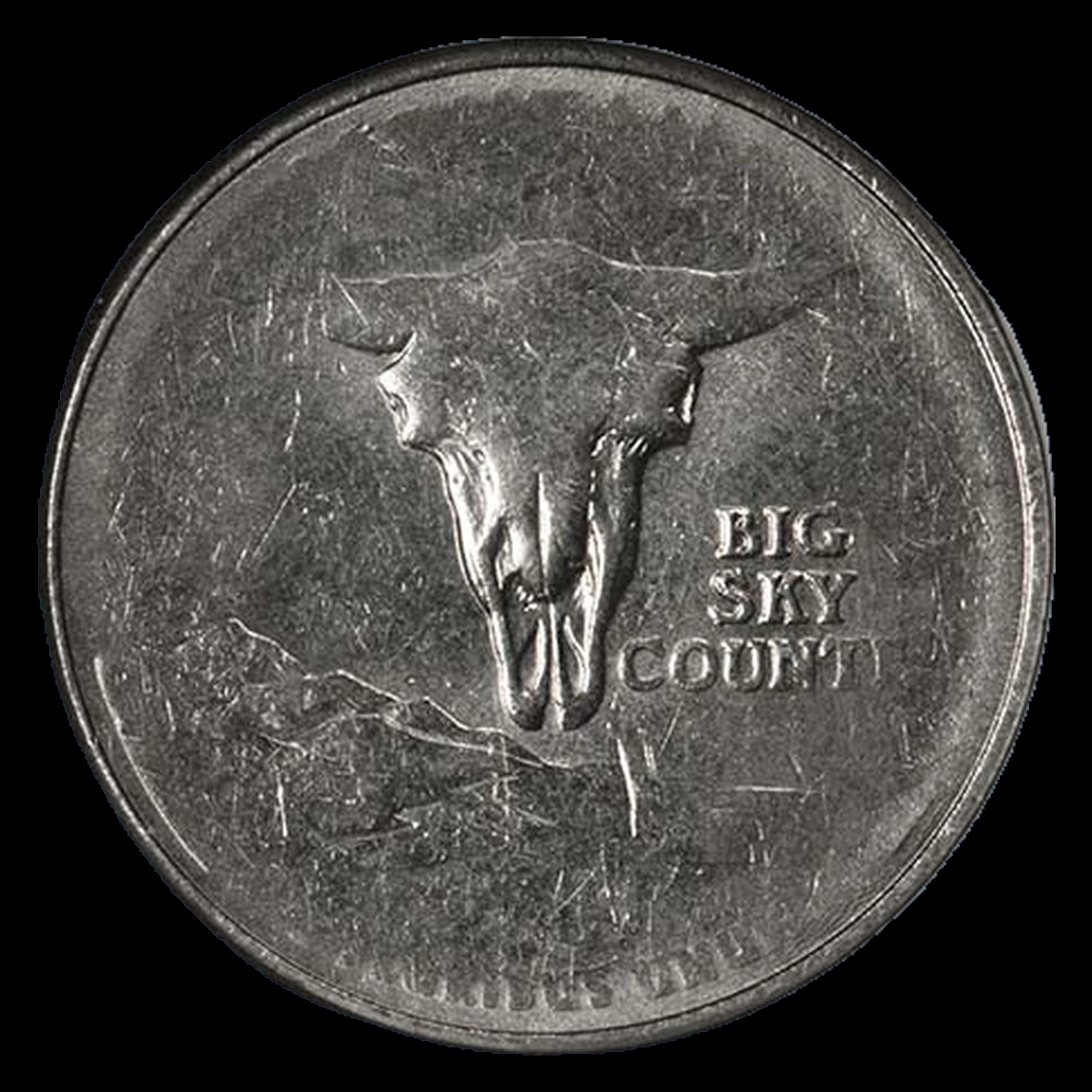
Some Montana and Denver Utah quarters have unusually weak designs across broad areas. Wyoming also has a weak-strike report.
These have been described as die-adjustment appearances, but weak detail does not by itself prove that a coin was an intentional press test. A small patch of missing detail can instead result from material blocking part of a die.
How to Identify
Check how much of both faces failed to develop and whether circulation wear could explain it. The reported Denver Utah example also had weak edge grooves.
What It’s Worth
Estimated values are $50–$300 for genuine substantially weak strikes. A historical Utah listing asked $135; it does not establish a completed transaction.
4. 2007 Quarter Cracks, Chips, and Cuds Error
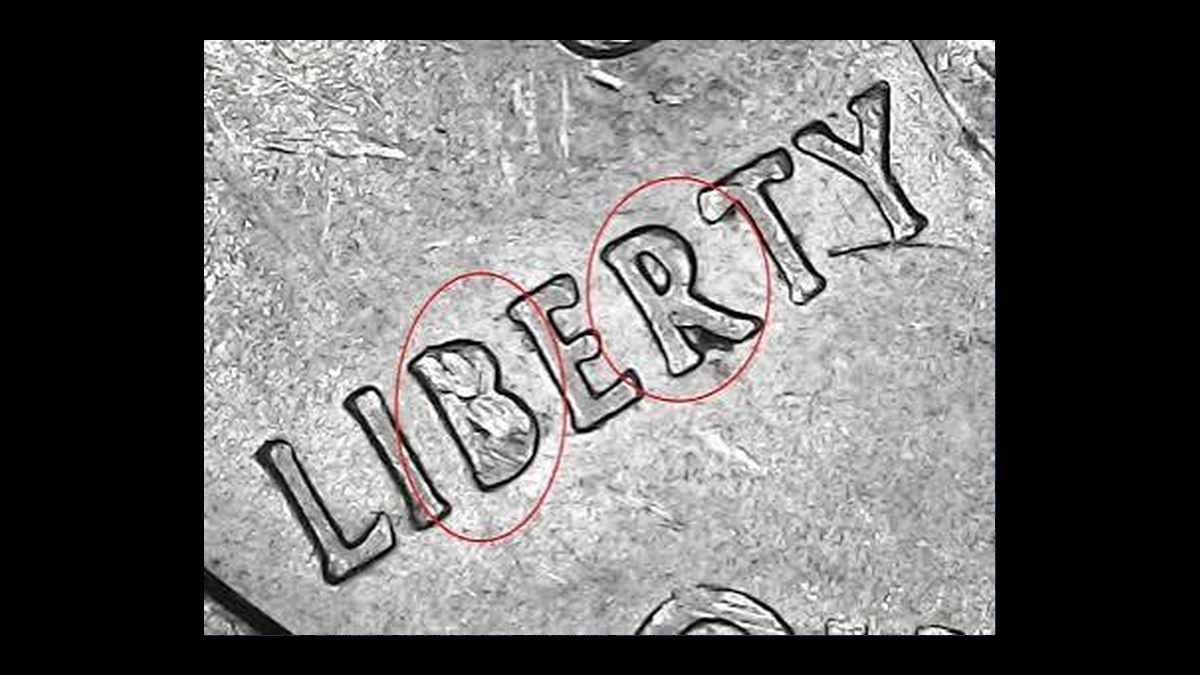
A raised lump behind Wyoming’s horse is often called the “Pooping Horse” feature. It belongs to the die-chip group, where a small piece of the stamping tool has broken away and coin metal fills the opening.
Reports also include cracks near Washington’s fish or mountains and chips on both sides of Denver Utah quarters. Larger breaks touching the rim, called cuds, occur in the Washington and Denver Wyoming reports.
How to Identify
Look for raised metal that forms a line, a localized lump, or a larger rim-connected patch. A mark resembling an extra leg or horn should not be assigned a cause from its nickname alone.
What It’s Worth
Small cracks and chips have estimated values of $2–$50. Larger, clear cuds may fall around $50–$300, depending on their extent and the coin’s condition.
5. 2007 Quarter Doubled Dies Error
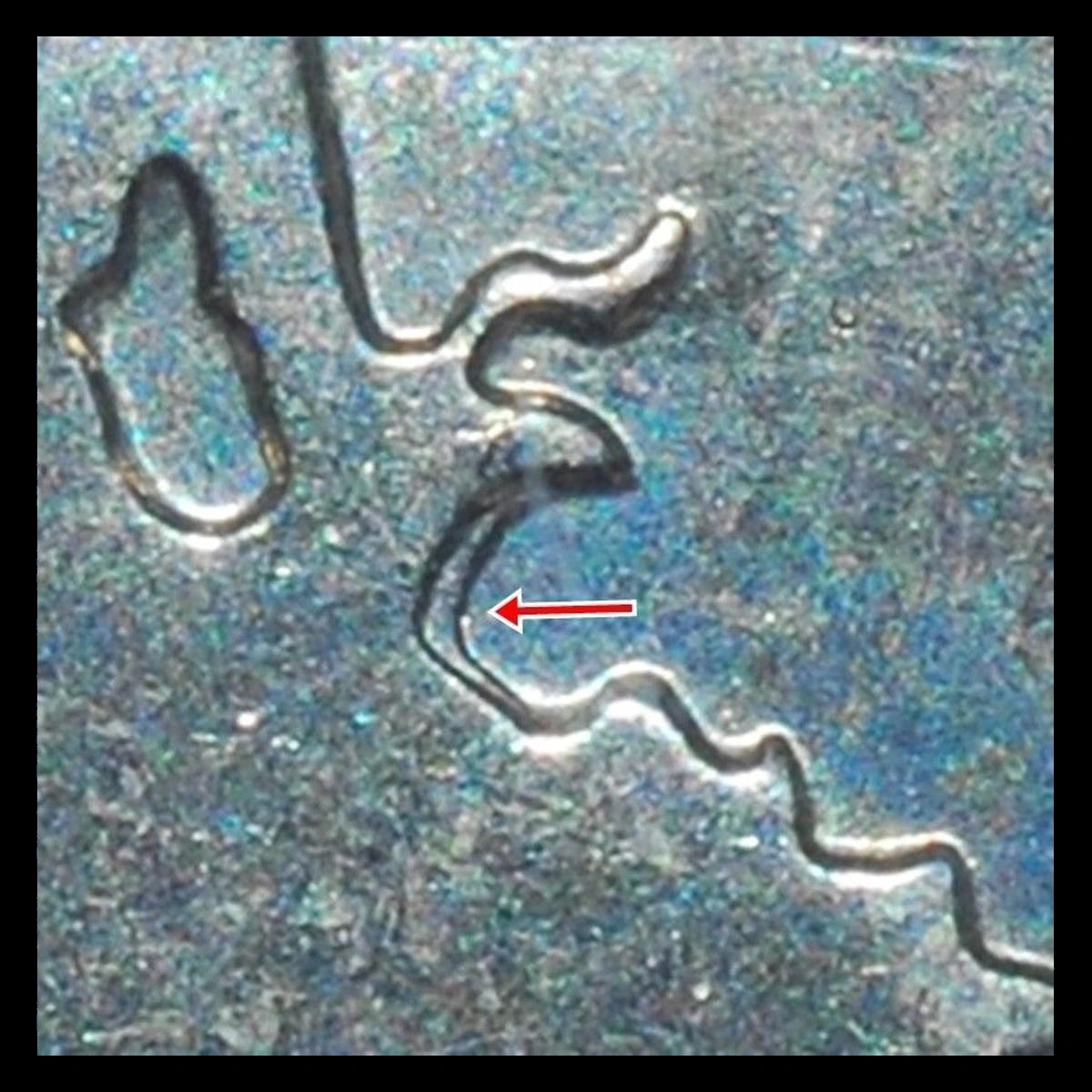
A doubled die repeats a design feature because the stamping tool itself carries a doubled image. Philadelphia Wyoming’s reported “double horn” is one example to investigate within this group.
Other reports involve Idaho’s ear and state outline, Utah’s front design and golden spike, Montana details, and the reverse of San Francisco Washington Proofs. These are separate candidates, not one pattern shared by all five states.
How to Identify
Match the location and shape of the repeated detail to the specific variety being claimed. A flat ledge beside a letter or mintmark can be strike-related distortion and does not establish a doubled die elsewhere on the coin.
For the Washington Proof report, inspect the reverse itself. Doubling beside the front S cannot identify that reverse variety.
What It’s Worth
Estimated values are $5–$250 for ordinary-issue examples and $40–$500 for the reported Proof category. Identification of the exact variety matters more than the presence of any doubled-looking edge.
6. 2007 Quarter Broadstrikes Error
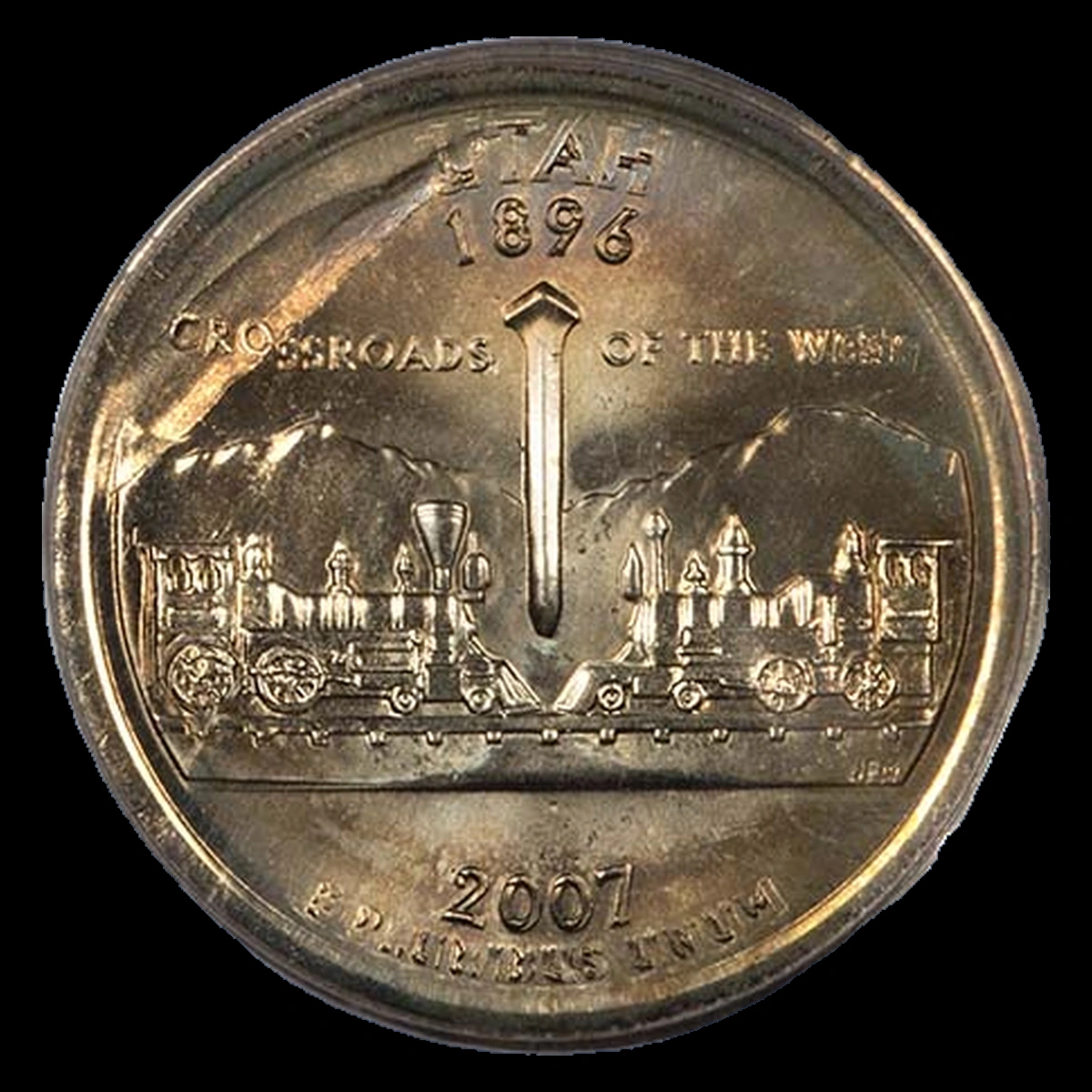
A Philadelphia Montana broadstrike has an expanded outline because the collar failed to contain the metal properly during the strike. The collar normally controls the coin’s outer shape and forms its edge grooves.
A broad border does not automatically mean the design was struck off center. Wyoming and Utah combinations involving additional strikes also need their other features considered.
How to Identify
Follow the design around the perimeter and inspect the expanded metal beyond it. Do not assign a precise diameter to the reported Montana coin when its measurement has not been supplied.
What It’s Worth
Simple broadstrikes have estimated values of $30–$500. Coins with multiple strikes belong to a different comparison group and should not receive several added error premiums.
7. 2007 Quarter Lamination and Peeling Metal Error
A Philadelphia Idaho quarter graded MS64 has been reported with bubbling or peeling metal. Its appearance raises questions about where separation occurred within the layered coin and when the affected metal lifted.
A thin surface separation, failure between bonded layers, and damage from later heat are not interchangeable diagnoses. The report does not settle the affected face or timing for every candidate.
How to Identify
Examine the border of a lifted patch without touching it. Design crossing the disturbed area can help a specialist determine whether the metal was already unstable during striking.
What It’s Worth
Estimated values are $25–$600 for genuine mint-related lamination or separation in this group. A retained flap may leave the weight near normal, so weight alone cannot resolve the cause.
8. 2007 Quarter Off-Center Strikes Error
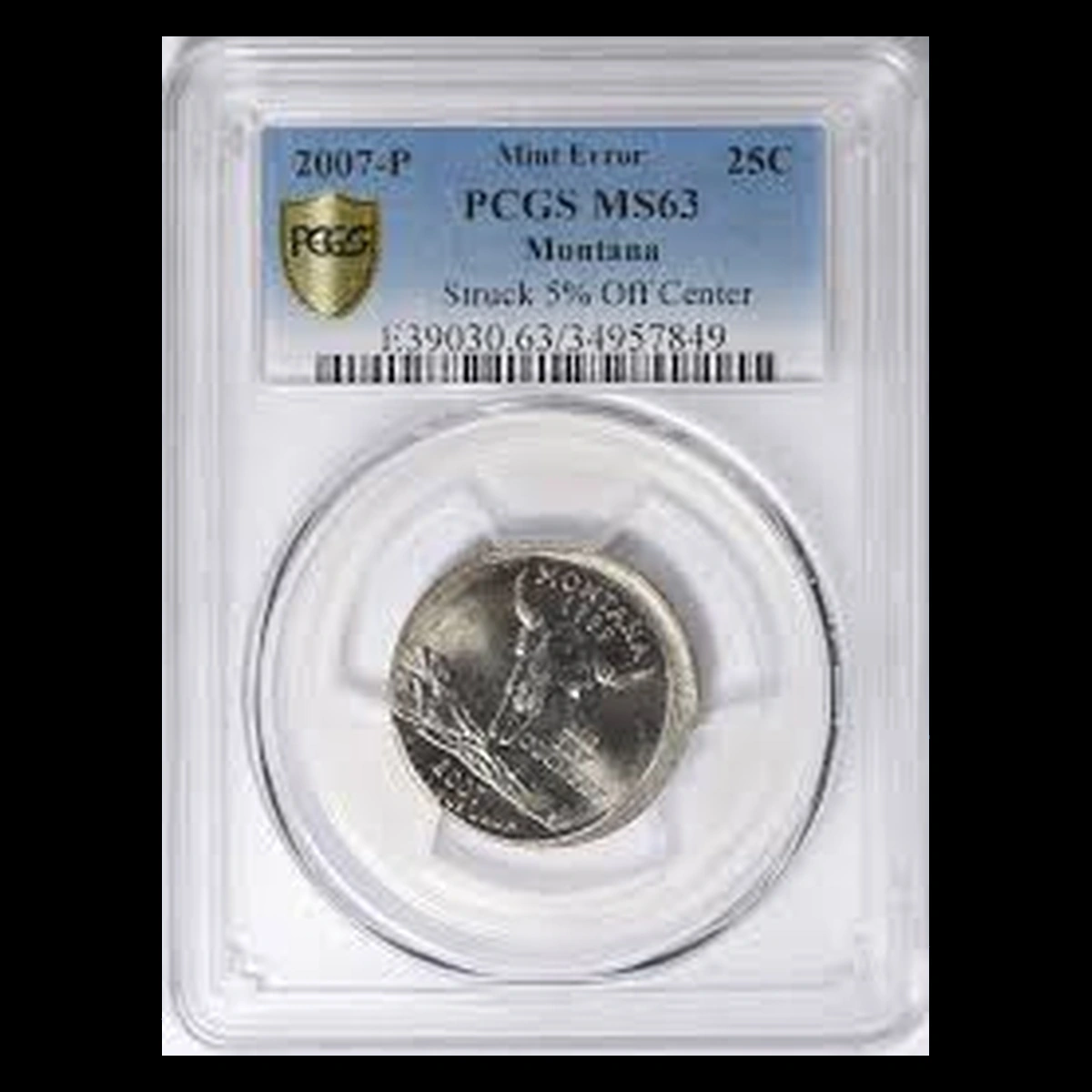
On an off-center quarter, part of the design misses the blank and an unstruck area remains elsewhere. A Philadelphia Montana coin graded MS62 has been cataloged with a five-percent displacement.
The state’s 1889 admission date is part of the reverse artwork. It must not be confused with the coin’s 2007 issue date.
How to Identify
Check both faces for the missing design and the unstruck crescent. The reported five-percent example has no supplied direction, so its displacement should not be assigned a clock position without evidence.
What It’s Worth
Small off-center strikes have estimated values of $30–$150. More dramatic examples can fall around $150–$750, especially when the issue date remains readable.
9. 2007 Quarter Partial Collar Strikes Error
A stepped edge can form when only part of the blank enters the collar. Idaho examples have been described as having a railroad rim, a nickname for that edge shape rather than a reference to Utah’s railway design.
The Philadelphia Montana report involves a tilted partial collar strike. Tilt can make the step or band vary around the edge.
How to Identify
Inspect the edge from several positions for a change between grooved and smooth bands or a distinct ledge. A single photograph of the front rim may hide the feature that identifies this error.
What It’s Worth
Estimated values run from $40–$800. Strong steps and clearly visible collar involvement are more useful comparisons than a slightly uneven rim.
10. 2007 Quarter Misaligned Die on a Wyoming Silver Proof Error
The San Francisco Wyoming silver Proof report concerns a stamping tool shifted sideways. It is different from a tilted tool or a reverse design rotated relative to the front.
The reported coin received an NGC grade of 69. Its silver Proof composition also separates it from an ordinary circulation quarter.
How to Identify
Compare centering on both faces and read the certification description. A horizontal die shift can affect one face differently from the other.
A normal clad quarter weighs 5.67 grams and measures 24.26 millimeters across, while a 2007 silver Proof normally weighs 6.25 grams. These are standards for comparison, not measurements of the reported error.
What It’s Worth
Estimated values are $100–$1,000 for this Proof misalignment category. The extent of the shift and the preservation of the Proof surfaces affect the comparison.
11. 2007 Quarter Finned Rim on a Utah Proof Error
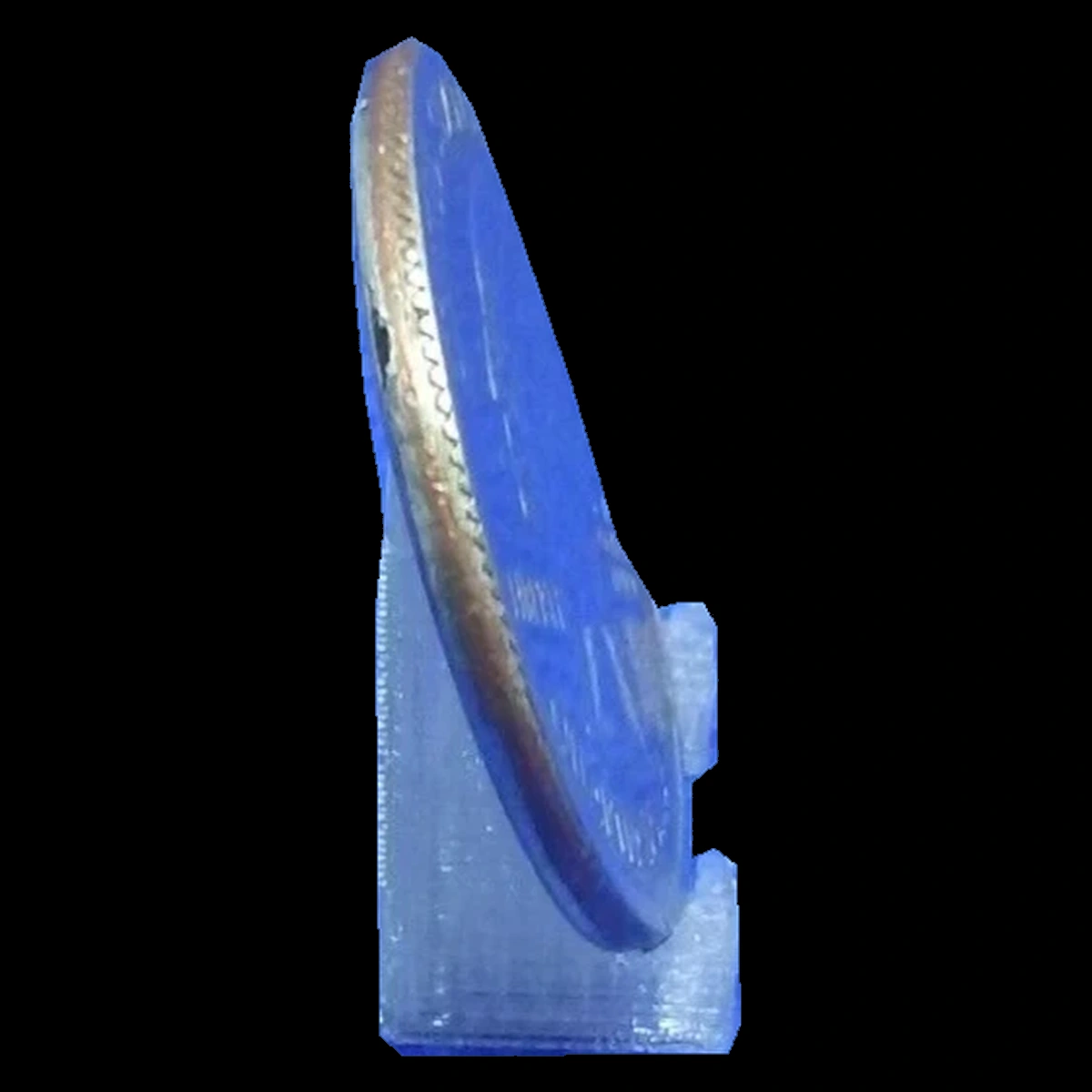
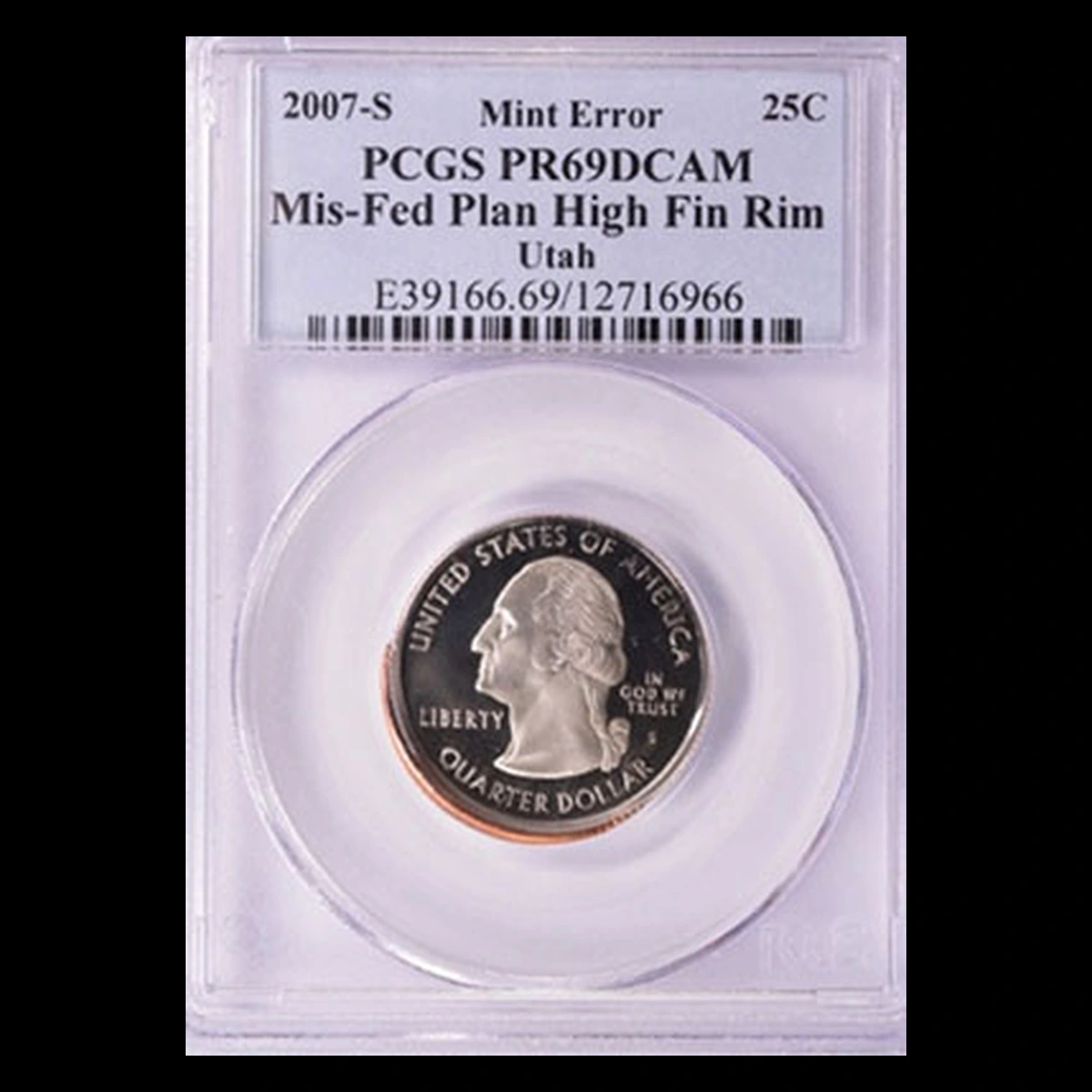
A San Francisco Utah Proof has a thin, unusually high metal fin around part of its rim. The reported example was graded 69 by PCGS and had strong frosted-design contrast.
Part of the fin was detached between approximately four and nine o’clock. A dealer attributed the feature to a feeding problem, but the supplied record does not establish whether this particular Proof was silver or clad.
How to Identify
Use a side view to distinguish a projecting fin from the ordinary rounded rim. Leave the fragile metal in place, and use the holder description to resolve composition before selecting price comparisons.
What It’s Worth
A working estimate is $100–$1,500. The fin’s height, continuity, and survival matter; the grade alone does not measure the severity of the error.
12. 2007 Quarter Clipped and Oval Blanks Error
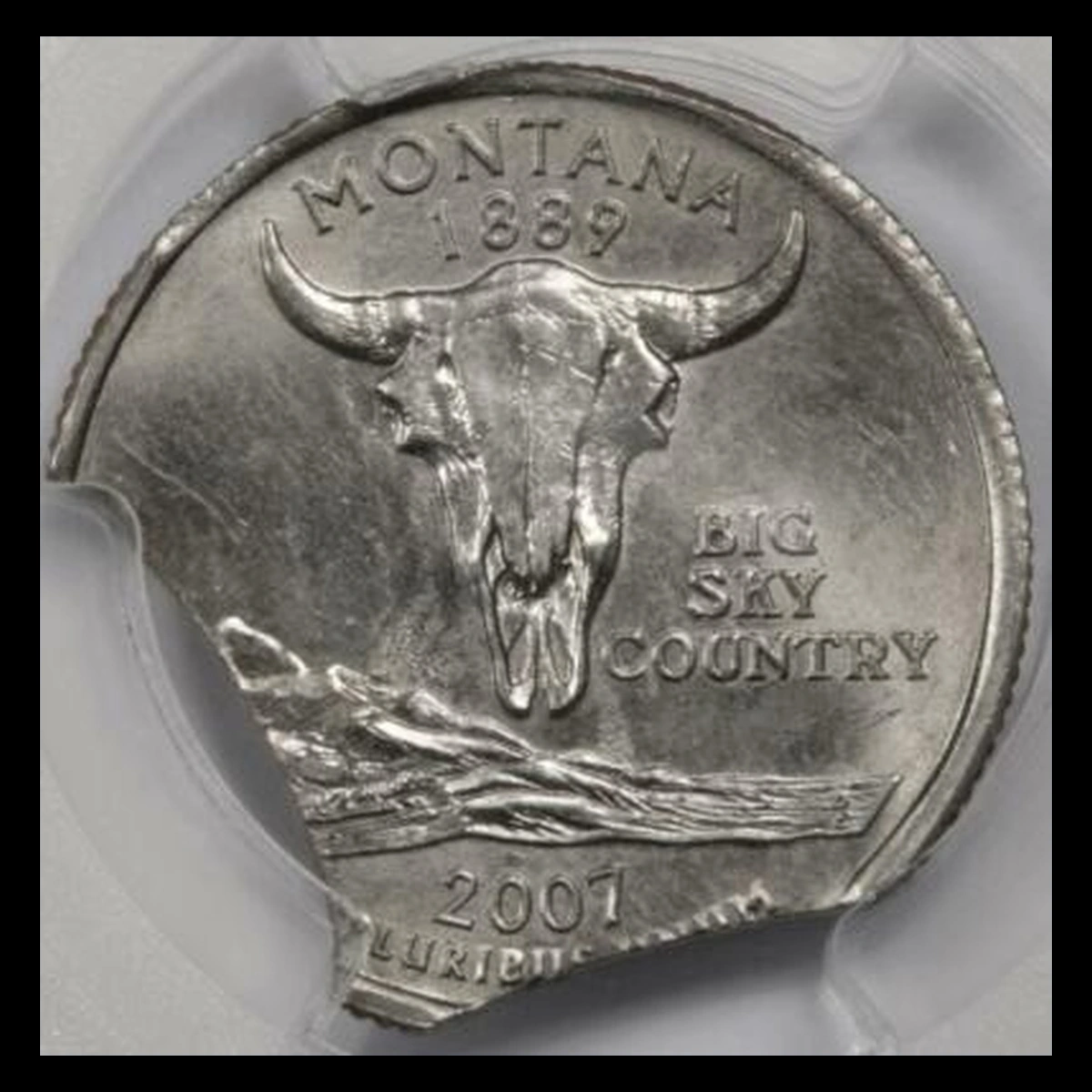
Denver examples from all five states have appeared in catalogs with oval or football-like incomplete outlines. A separate Denver Montana report describes a fifteen-percent clip.
Cataloged weights include 4.9 grams for Idaho, 4.6 grams for Washington and Montana, and 4.8 grams for Utah. Those measurements belong to their individual coins.
How to Identify
Inspect the missing area, the remaining edge, and the way the struck design approaches the boundary. A coin cut down after striking can also be light, so low weight is not sufficient evidence.
Do not treat every oval blank as the same fifteen-percent Montana clip. The outline and surviving design must agree with the particular description.
What It’s Worth
Estimated values span $30–$1,500 across minor clips and unusual incomplete blanks. Shape, amount missing, condition, and any additional striking error determine the useful comparison.
13. 2007 Quarter Struck-Through Material Error
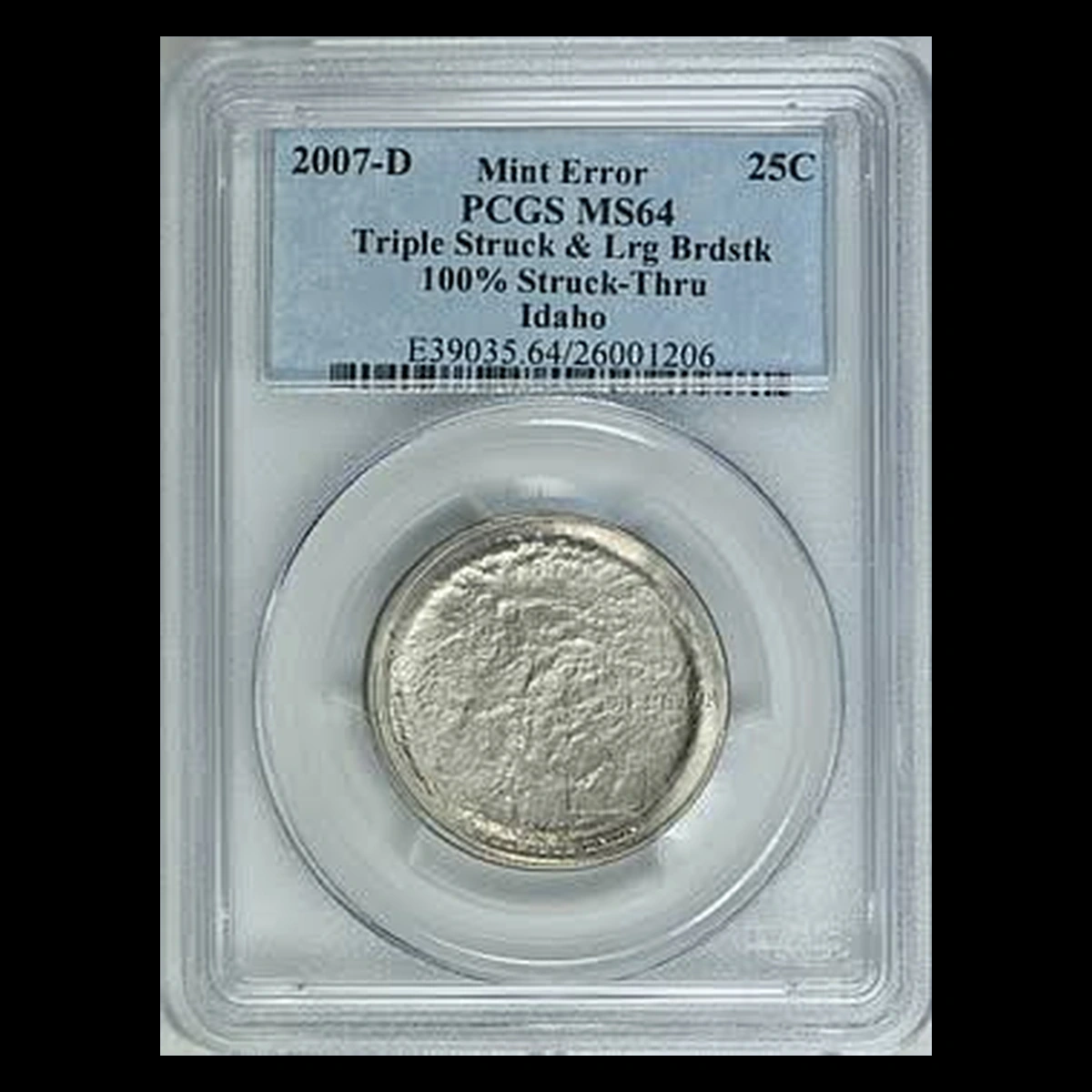
A certified Washington quarter reportedly retains a steel wire bristle struck into its surface. This is more specific evidence than an unexplained weak patch.
Philadelphia Wyoming examples have grease-related weakness on both sides, while Denver Idaho reports include interruption at the bird’s forehead. Utah also has a blocked reverse report, but the material there is not identified.
How to Identify
Look for a depression or interruption where the die failed to reach the blank normally. Retained material should remain untouched, since removing it destroys part of the evidence.
Some Idaho descriptions also include a second strike. Confirm each feature on that coin rather than transferring the wire identification from Washington.
What It’s Worth
Minor grease-related weakness has estimated values of $2–$30. Major impressions or genuinely retained objects may bring an estimated $100–$2,000.
14. 2007 Quarter Missing Clad Layers Error
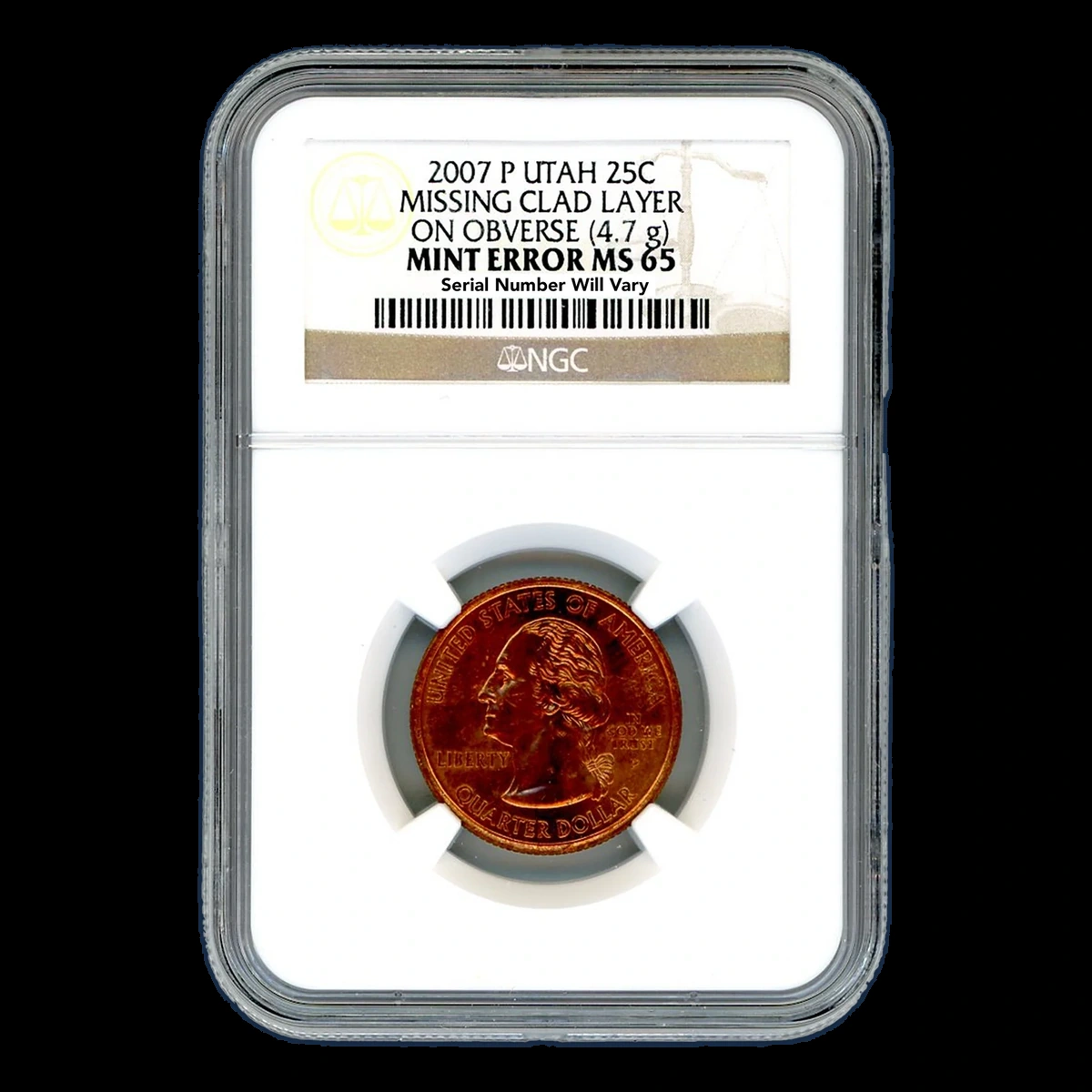
Missing outer metal exposes the copper center of a clad quarter. Reports include partial front-layer loss on Denver Utah and a missing front layer on Denver Wyoming, with additional Montana and Washington candidates.
A Denver Idaho example has a more complicated history: partly copper-faced strip was rolled to the intended thickness, and further patches separated both before and after striking. Its surface cannot be interpreted as one simple missing-layer event.
How to Identify
Compare the exposed area with the remaining layer and the edge, looking for scraping or chemical alteration. On the described Idaho coin, a patch near eleven o’clock separated before striking, while a larger patch below TE in UNITED came away afterward.
The Idaho strip history also means that one universal low-weight cutoff would be misleading. Keep each face and each missing patch tied to its own evidence.
What It’s Worth
Estimated values are $100–$2,000 for genuine partial or complete layer loss. The historical $275 listing for Denver Wyoming was an asking price, not a confirmed sale or a valuation of Idaho’s more complex example.
15. 2007 Quarter Repeated Strikes Error
A second date, portrait, or state image can reveal that a quarter received another blow after moving. Denver Idaho reports include separate forty-, sixty-, and eighty-percent second strikes, while Philadelphia Washington has a ninety-percent report.
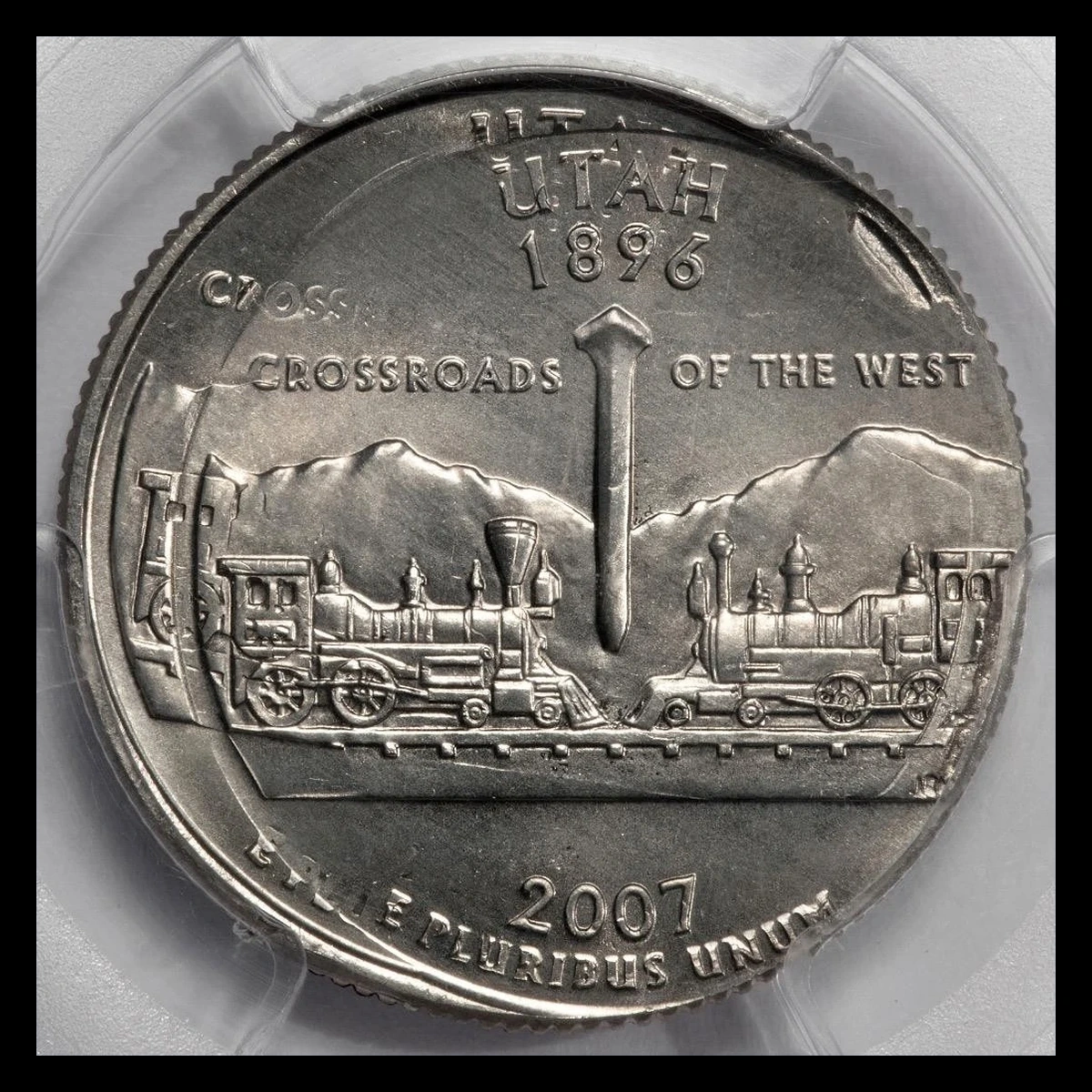
A Philadelphia Montana coin is cataloged with fifteen overlapping strikes. Denver Wyoming and Utah examples combine repeated blows with expansion or an unusual blank, so their final shapes can be especially complicated.
How to Identify
Trace one recognizable design, then identify another image that cannot fit the same position. For closely overlapping Montana images, do not replace a documented strike count with a quick count of shiny outlines.
Keep Utah’s separately reported two- and three-strike coins distinct. Their descriptions do not prove that all references concern the same specimen.
What It’s Worth
Estimated values are $300–$5,000 for these repeated-strike combinations. The sixty-percent Idaho example had a historical asking price of $2,250, and the fifteen-strike Montana example was offered at $2,350.
Neither listing establishes a sale. Value the finished coin as a whole rather than adding a separate price for each strike and its expanded border.
16. 2007 Quarter Deep Die Cap Error
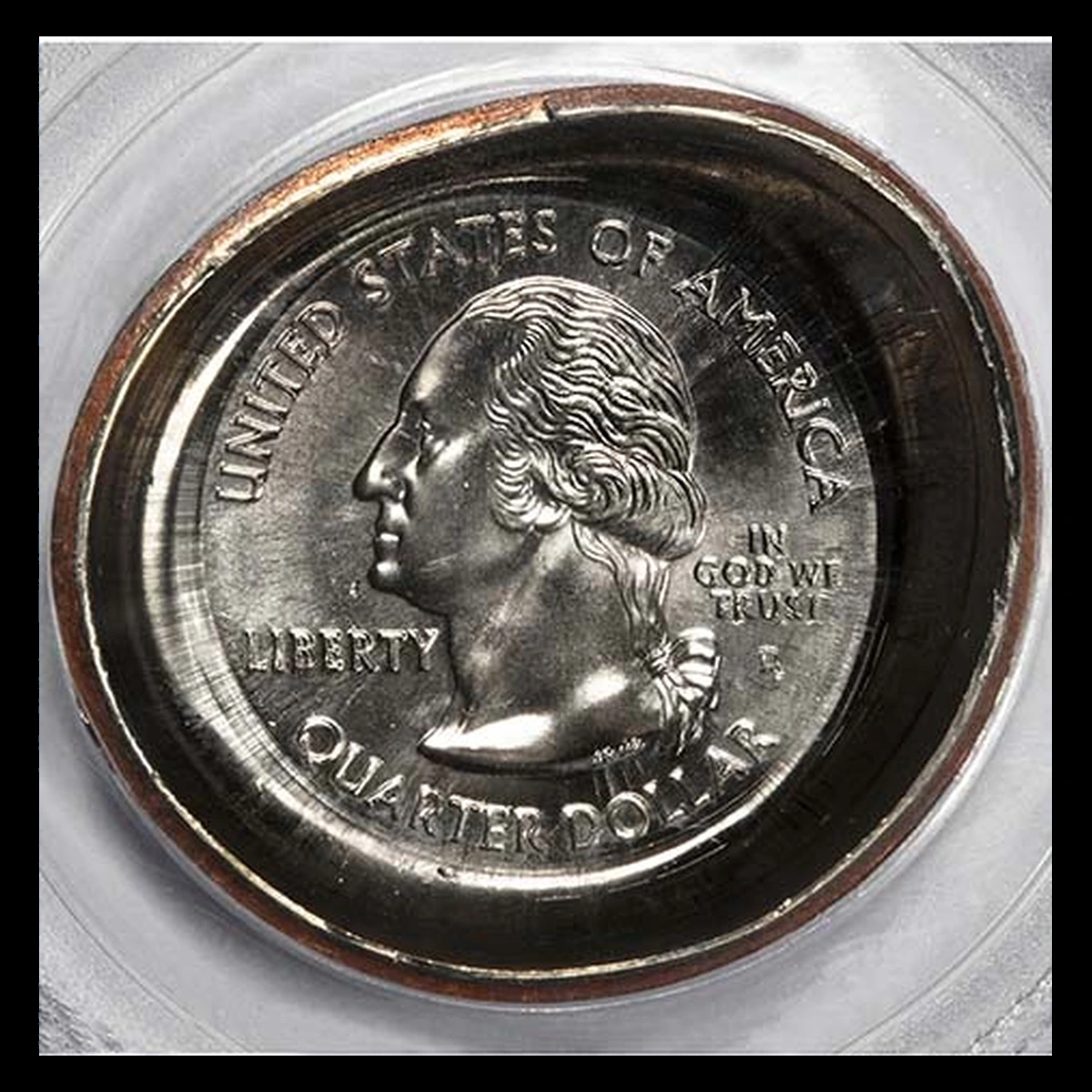
A Denver Wyoming quarter graded PCGS MS66 has developed into a deep cup with Washington’s portrait inside. It is the coin that clung to the front stamping tool and stretched around it under repeated pressure.
A different coin struck beneath such a cover may have blurred detail, but it is not the cap itself. Here, the tall wall is central to the identification.
How to Identify
Inspect the side profile and the transition from the cup floor into its wall. A bent edge segment does not reproduce the overall form of a deep cap.
Preserve the shape and its holder. Flattening the wall would damage both the coin and the evidence of how it formed.
What It’s Worth
Estimated values are $1,000–$6,000 for genuine deep Wyoming caps. Intact walls, readable design, and good preservation matter, but this range is not a documented auction result for the MS66 coin.
17. 2007 Quarter Wrong-Denomination Blanks Error
Montana and Wyoming quarters from Denver have been struck on nickel blanks. Idaho also has reports involving nickel or cent blanks, which require confirmation of the metal and size.
A Denver Washington quarter described by Sullivan Numismatics used a larger golden dollar blank in a dollar-sized collar. It was subsequently crushed in the Mint’s cancellation equipment.
How to Identify
A smaller blank can cut off the outer quarter design, while the Washington dollar-blank combination has an enlarged format. A normal nickel weighs 5 grams, but material identification is needed before applying that comparison to an unknown coin.
Search for older designs as well as checking the blank. The Washington piece’s lack of edge lettering cannot distinguish a Sacagawea blank from a presidential-dollar blank, since both started without that lettering.
What It’s Worth
Nickel-blank quarters have estimated values of $600–$2,500. A specialist history records separate Montana results of $1,073 and $1,238 in 2012.
Confirmed Idaho wrong-blank candidates have an estimated $500–$3,000 range. The canceled Washington dollar-blank combination has a separate estimated range of $2,000–$10,000, including its unusual collar and later cancellation.
18. 2007 Quarter Quarters Struck over Finished Cents or Nickels Error
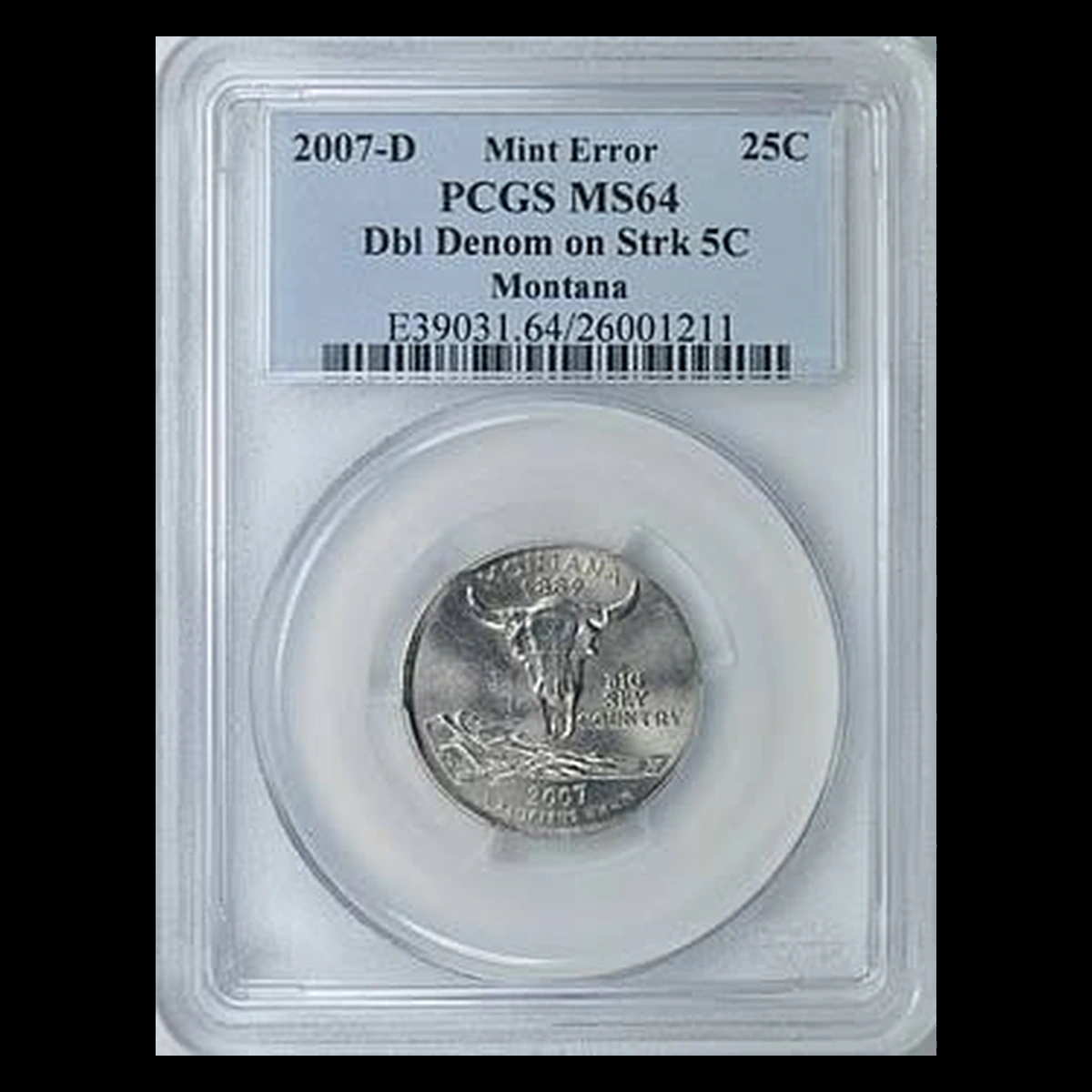
Monticello’s base crosses the bison skull on a documented Denver Montana quarter. That surviving nickel design proves that the host had already been struck before it entered the quarter press.
The host nickel’s 2007 date and D also remain near Washington’s profile. Separate Montana and Idaho reports involve finished cent hosts.
How to Identify
Find a recognizable earlier design that cannot belong to a quarter, then follow it through the overlapping new image. Copper color alone cannot distinguish a finished cent from an unused cent blank.
On the documented nickel host, examine the area between Washington’s profile and UNITED for the older date and mintmark. Keep those host details separate from the quarter’s own markings.
What It’s Worth
Estimated values are $2,000–$20,000 across these different hosts and conditions. A specialist sale history records $13,750 for a Montana quarter over a cent at GreatCollections on August 26, 2012.
The NGC MS67 Montana quarter over a 2007-D nickel brought $3,220 on September 11, 2009. The nickel and cent results concern different coins and should not be combined.
Conclusion
Identify the state, issue date, mintmark, and finish before choosing a comparison. A small raised chip and a quarter carrying another denomination’s design may share the same year but belong in very different price groups.
Photograph both faces and the edge, and protect any loose metal or unusual shape. For a major candidate, an error specialist can help explain the manufacturing sequence and find sales that match the actual coin.