Rare 1936 Half Dollar Errors (List & Pictures)
A worn 1936 half dollar sold for $15,000 at Stack’s Bowers in November 2019. Its particular doubled design mattered more than its lack of shine.
Estimated values for 1936 half dollar errors run from $85 to $15,000 across different doubled-die varieties. Check which pattern your coin matches before using a high auction result as a price guide.
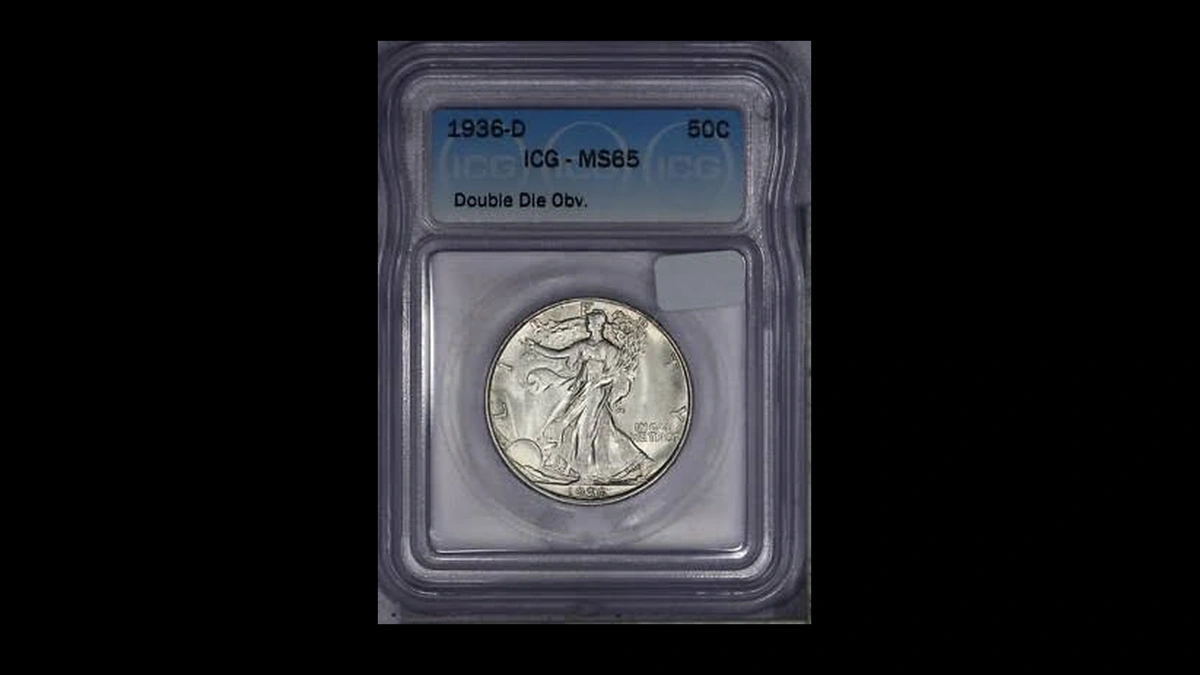
1936 Half Dollar Which Details Repeat? Doubled Die Obverse Error
Start with the date and IN GOD WE TRUST on the front. Depending on the variety, repeated outlines can also appear near Liberty’s lower skirt, shoes, or the ground.
A die is the steel tool that stamps a coin’s design. Here, its repeated details formed while the tool was being made, so a coin could receive the doubling in one strike.
The Philadelphia and Denver examples do not all share one pattern. Catalog labels such as FS-101 and FS-102 identify different varieties within this broad error type.
How to Identify
Turn the coin over to find its mintmark. A D identifies Denver, while a Philadelphia coin has no mintmark.
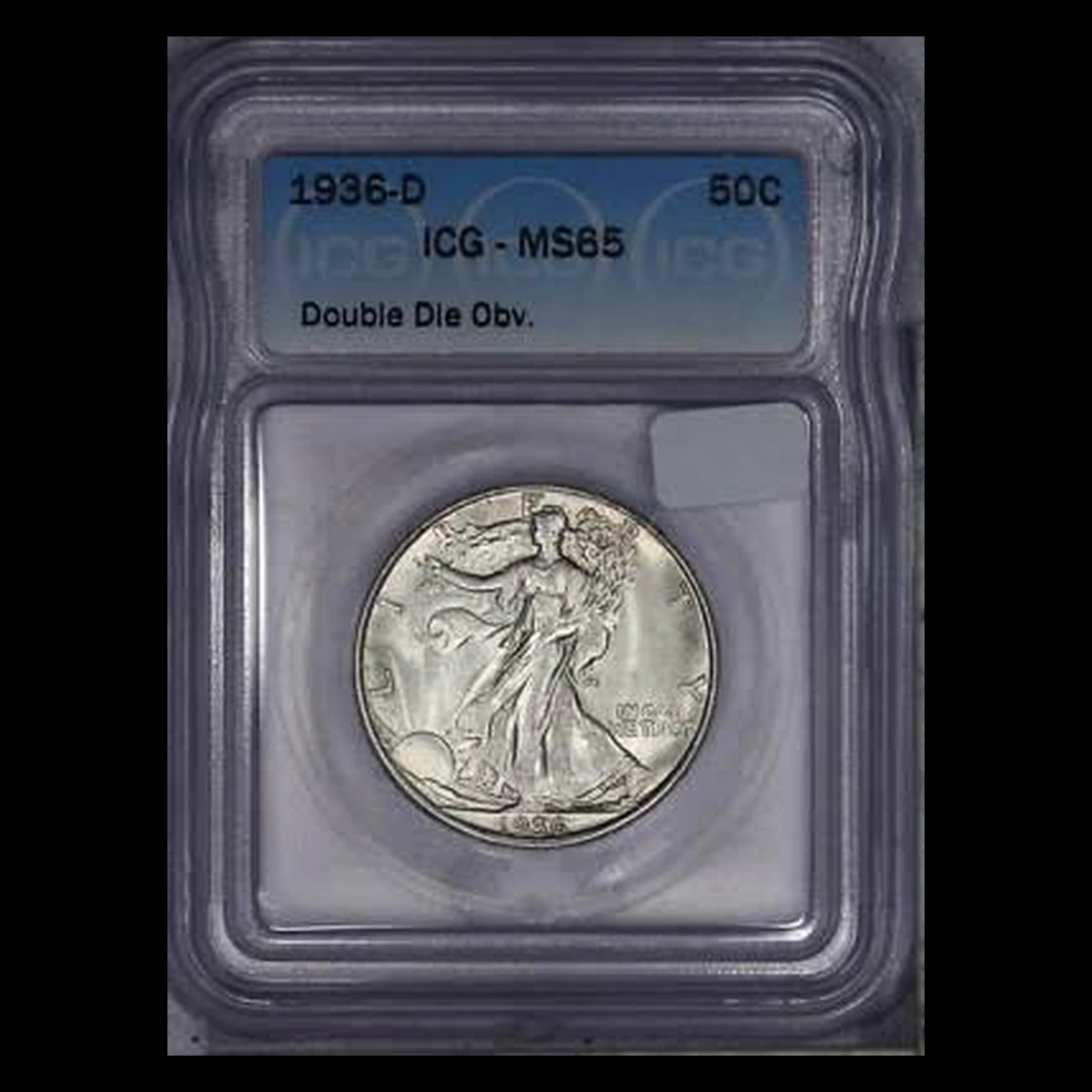
With a 10× magnifier, compare the date and motto against a reference from that same mint. Continue to the lower skirt, shoes, and ground only where that reference shows the extra outlines.
All the marks you use should belong to one matching variety. A date from one reference and a skirt detail from another do not identify the same die.
Watch for a low, flat ledge beside a letter or number. Movement during striking can leave that shelf-like effect without creating a doubled die.
Side lighting makes the height of the details easier to judge. Change the angle if a scratch or a dark reflection seems to form an extra line.
For a loose coin, a scale and calipers can check the normal 12.50-gram weight and 30.6-millimeter diameter. The edge should have grooves, but those basic checks cannot tell FS-101 from FS-102.
What It’s Worth
Estimated overall range: $85–$15,000. The wide gap reflects different varieties as well as different amounts of wear.
The FS-101 example that reached $15,000 in November 2019 was graded VG10. That grade describes a well-worn coin, making the rare doubling pattern central to the comparison.
Philadelphia FS-102 examples have an estimated $85–$4,000 range. A PCGS MS67+ CAC example brought $3,862.12 in April 2024.
MS67+ describes a very well-preserved coin without circulation wear. Even that strong condition did not put the FS-102 sale above the worn FS-101 result.
Conclusion
The most useful question for a 1936 half dollar is which doubling pattern it matches. Read the mintmark, compare the extra outlines, and then look for prices from that particular variety.
Estimated values span $85–$15,000, but a better grade alone does not guarantee a higher price. The $15,000 FS-101 and $3,862.12 FS-102 sales show why the variety name belongs beside the grade in any comparison.