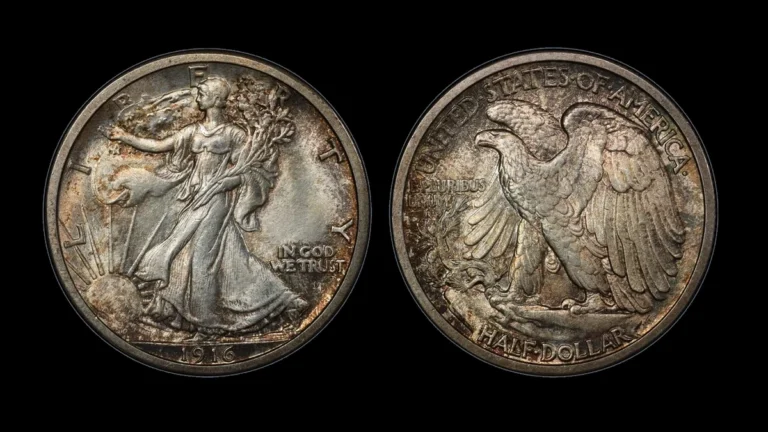
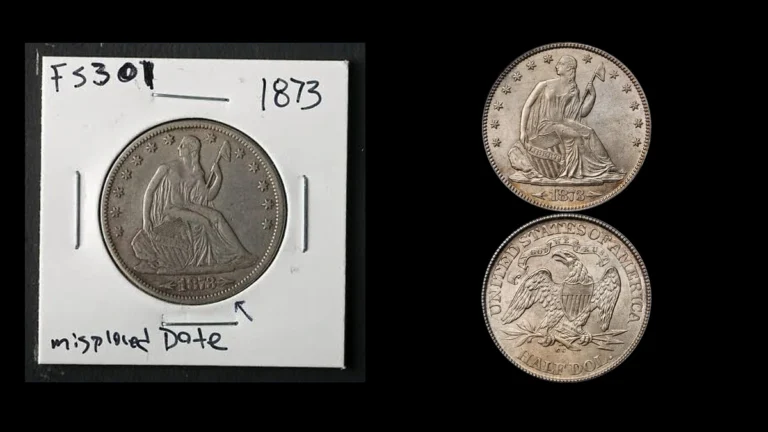
Rare 1918 Half Dollar Errors (List & Pictures)
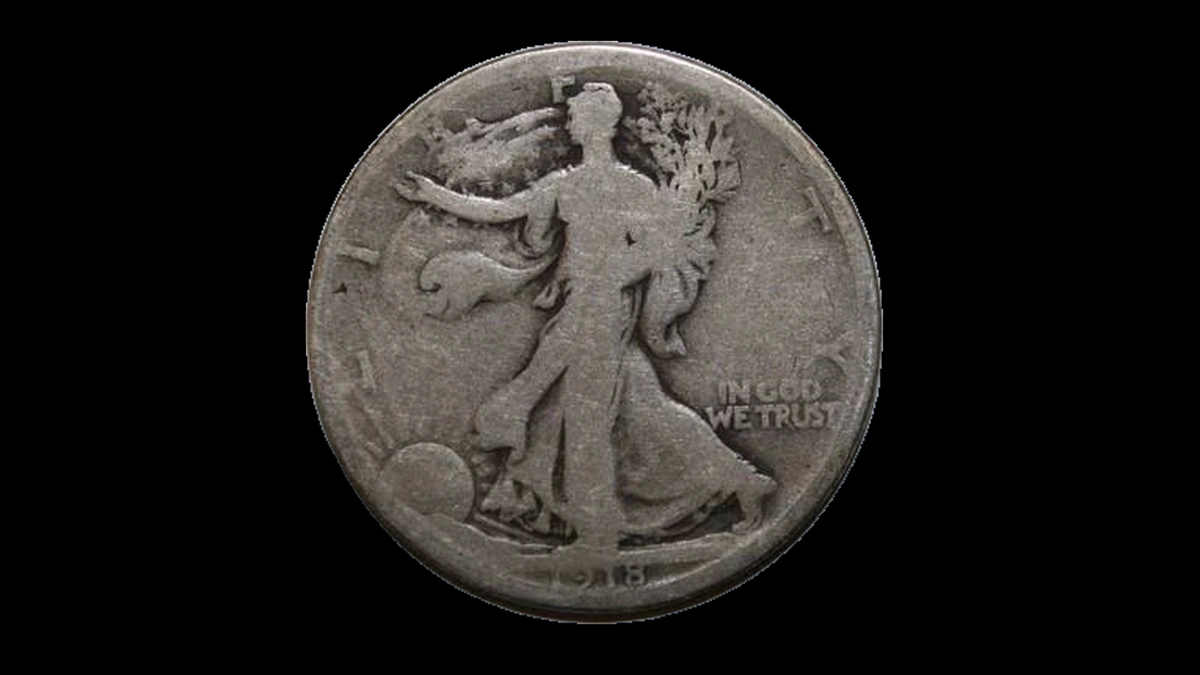
Check whether all of the design fits on your coin before studying its smaller letters. That first check separates two of the most valuable 1918 half dollar errors from ordinary-looking halves.
Estimated values across four categories range from $40–$11,500, with the top documented result paid in 2004 for a ten-percent off-center example. This guide follows the outline, the sharpness of the design, and the initials beneath the eagle’s tail.
| Visible clue | Inspection area | Category | Estimated value |
|---|---|---|---|
| Blank crescent and missing design | Both faces near the edge | Off-center strike | $10,000–$11,500 |
| Extra spread with complete designs | Outline and below the date | Broadstrike | $3,000–$7,000 |
| Soft hand or eagle breast | High details on both sides | Weak strike | $40–$1,500 |
| No designer’s initials | Below the eagle’s tail | No AW | $40–$300 |
A normal unworn example weighs about 12.50 grams and measures 30.6 mm across, with grooves around the edge. Use those figures when checking an unusual outline; a broadstrike or off-center strike can change the width without removing silver.
1. 1918 Half Dollar A Blank Crescent Beside a Cut-Off Design: Off-Center Strike Error
A genuine off-center coin combines two clues: an area that never received the design and a design that runs beyond the available metal. Both faces were struck while the blank was out of position.
The recorded 1918 examples are displaced by about ten percent. One auction description places the shift toward eleven o’clock and notes that the date survives.
How to Identify
Examine the front and back together, aligning the blank area on each face. Follow the boundary between plain silver and stamped detail rather than judging the width of the rim alone.
When only one face is displaced, the die itself may have been out of alignment. A broadstrike has another distinction: its designs remain complete despite the wider shape.
Check the plain crescent for filing, cuts, or newly exposed metal. Damage that removes design after minting cannot reproduce an untouched area of the original blank.
The Liberty figure can be sharply formed even on an off-center coin. In the MS65 auction description, the rounded thumb was a favorable detail, not evidence against the error.
What It’s Worth
Estimated range: $10,000–$11,500 for comparable certified 1918 examples in MS64–MS65 condition. These grades describe coins without circulation wear, with strong preservation.
A PCGS MS64 sold at Heritage for $11,500 in August 2004. The PCGS MS65 example sold for $10,575 in April 2013.
The two results show why a grade number alone cannot predict the price. Buyers also weigh the visible displacement, readable date, surface appearance, and the competition at that sale.
2. 1918 Half Dollar Silver Spreading Beyond the Design: Broadstrike Error
Look below the date for an unusually wide expanse of silver. That was a feature of the reported 1918-S broadstrike graded NGC MS62.
The collar is the surrounding ring that normally controls a coin’s diameter and forms its edge. If it fails to contain the blank during striking, the metal can spread too far outward.
How to Identify
Trace every outer letter and design element on both sides. Complete designs are the key distinction from an off-center strike, even when the spread is uneven.
Measure the widest and narrowest parts of the coin with calipers. Then inspect the edge for absent or irregular grooves where the collar did not act normally.
A coin flattened after leaving the Mint may also become wider. Crushed lettering and damaged surfaces point toward that later treatment, while a broadstrike preserves the design made during the abnormal strike.
What It’s Worth
Estimated range: $3,000–$7,000 for Walking Liberty broadstrikes from lightly worn to uncirculated condition. This is a series estimate from the July 2025 Mint Error News guide.
The 1918-S NGC MS62 offered by Heritage in January 2004 did not sell. It documents the type, but provides no completed sale price for this date.
A conspicuous spread generally makes the error easier to appreciate. Marks, wear, and the overall shape still matter when choosing where a particular coin belongs within the guide range.
3. 1918 Half Dollar Flat Fingers and a Soft Eagle Breast: Weak Strike Error
Liberty’s hand may look unfinished while nearby lettering remains clear. The eagle’s breast can also lack detail because the strike did not fully force silver into the deepest parts of the dies.
This softness is particularly familiar on 1918-S halves. It is a production characteristic to recognize, but it does not automatically earn a mint-error premium.
How to Identify
Slowly tilt the hand and breast beneath a single light source. Original mint shine continuing through the soft areas supports incomplete striking rather than circulation wear.
Wear usually dulls and rubs the exposed high points. Compare those surfaces with the better-protected areas instead of deciding from the amount of detail alone.
A polished or cleaned coin is harder to read because its original surface clues may be lost. Inspect the whole coin for hairline scratches before relying on its shine.
What It’s Worth
Estimated range: $40–$1,500 covers worn coins through examples around MS63. The coin’s date, mintmark, and condition account for these values, rather than a separate reward for weak detail.
A regular 1918-S graded PCGS MS63 realized $1,260 in May 2025. That sale was not a separately certified weak-strike error.
Between two otherwise similar coins, many collectors prefer the sharper strike. A flat hand should therefore prompt closer grading, not an assumption of extra value.
4. 1918 Half Dollar An Empty Space Beneath the Tail: No AW Error
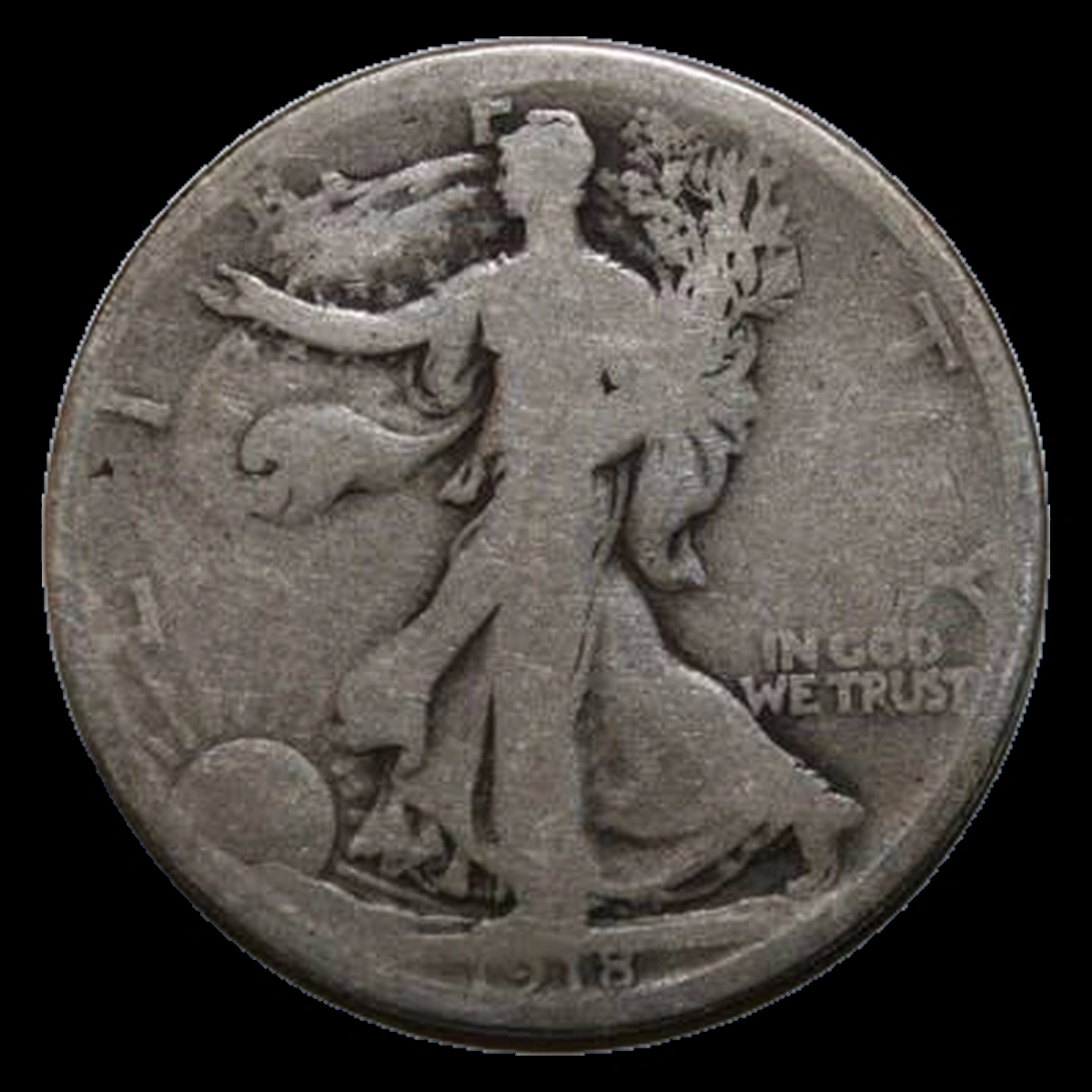
The small AW letters credit the designer, Adolph A. Weinman. On the 1918-D variety called No AW, die polishing removed these shallow initials before later coins were struck.
The recognized variety is cataloged as FS-901. It still belongs to the Denver issue, so the D mintmark and the surrounding reverse details are part of the examination.
How to Identify
With the eagle upright, magnify the area below its tail and compare it with a normal reverse. Establish exactly where the initials belong before deciding they are absent.
A very worn eagle can lose these tiny letters through ordinary use. The blank space must fit an identified FS-901 example, with enough surrounding detail to judge the variety.
Look for an unnatural hollow or scratches where the AW should sit. Either may indicate deliberate removal after minting rather than polishing of the original die.
What It’s Worth
Estimated range: $40–$300 for identified examples in Good through Very Fine, all circulated grades. A dealer listing asks $209 for a Fine-to-Very-Fine example; an asking price is not proof of a sale.
GreatCollections offered an ANACS G4 example in February 2024, although the supplied record does not provide its sale price. That listing supports collector interest in worn coins, without establishing a dollar result.
Conclusion
The outline gives the quickest starting point for a 1918 half dollar: incomplete designs suggest an off-center strike, while complete designs on spread metal suggest a broadstrike. Then inspect the hand, breast, and designer’s initials for the smaller features.
The $40–$11,500 range spans very different coins. Match the mint, wear, and actual error before applying any of these estimates to yours.