Rare 1936 Quarter Errors (List & Pictures)
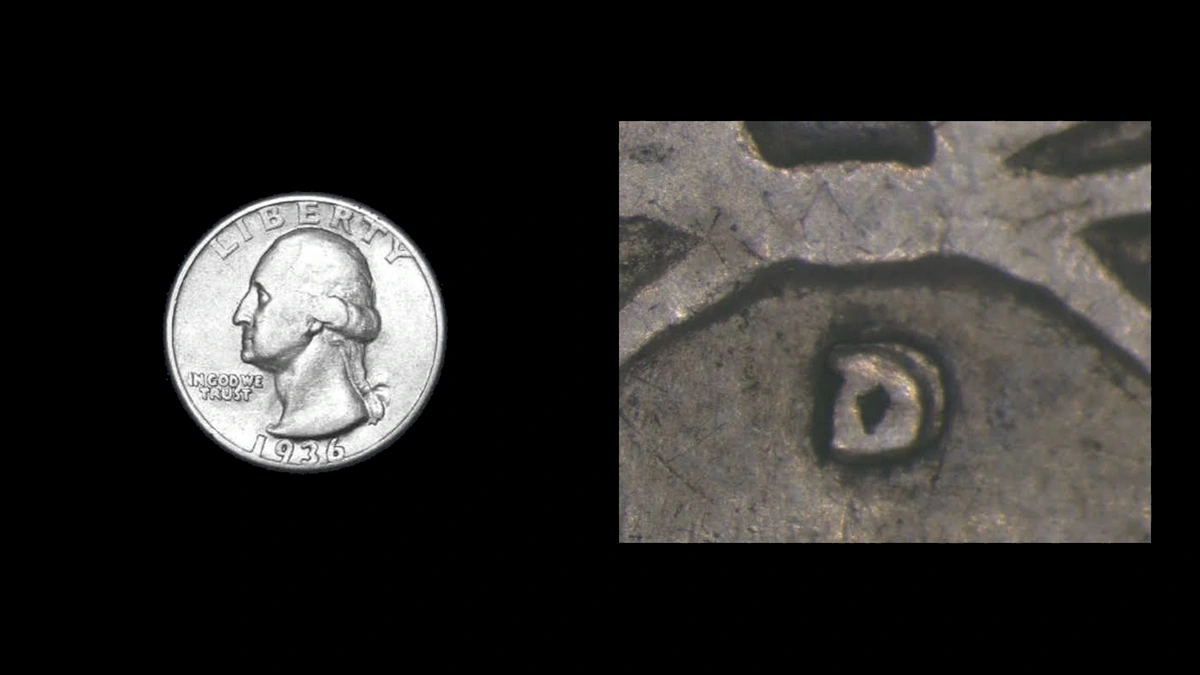
A Philadelphia FS-101 doubled-die quarter brought $6,600 in September 2018. Estimated values across these 1936 Washington quarter errors and varieties run from $25–$8,000.
Read the letters and mint mark first, then inspect raised or peeling metal before checking whether the blank and strike have the correct shape.
| Inspection area | Feature | Estimated range |
|---|---|---|
| Motto, date, or reverse details | Doubled die | $50–$8,000 |
| D or S below wreath | Repunched mint mark | $25–$2,000 |
| Unexpected opposite-side outline | Die clash | $25–$1,000 |
| Raised line or mass | Die crack, chip, or cud | $25–$2,000 |
| Peeling surface or edge opening | Lamination | $25–$750 |
| Missing curved or straight section | Clip | $50–$1,500 |
| Wide border and complete picture | Broadstrike | $100–$2,500 |
| Unstruck crescent | Off-center strike | $100–$5,000 |
| Quarter design on another blank | Wrong planchet | $500–$7,500 |
1. 1936 Quarter More than one outline in the design: doubled die Error
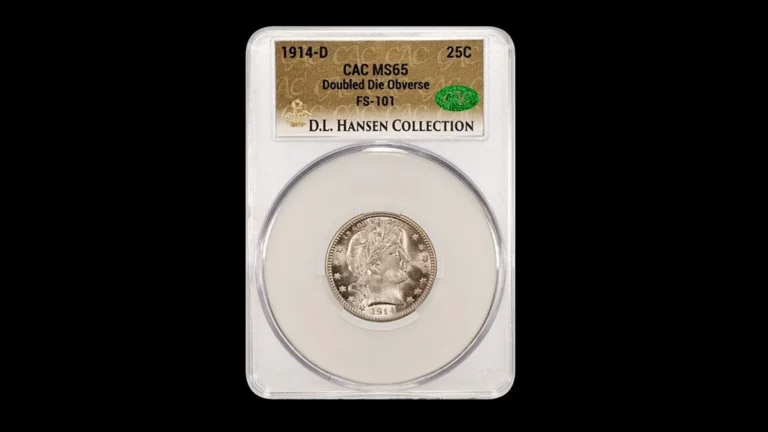
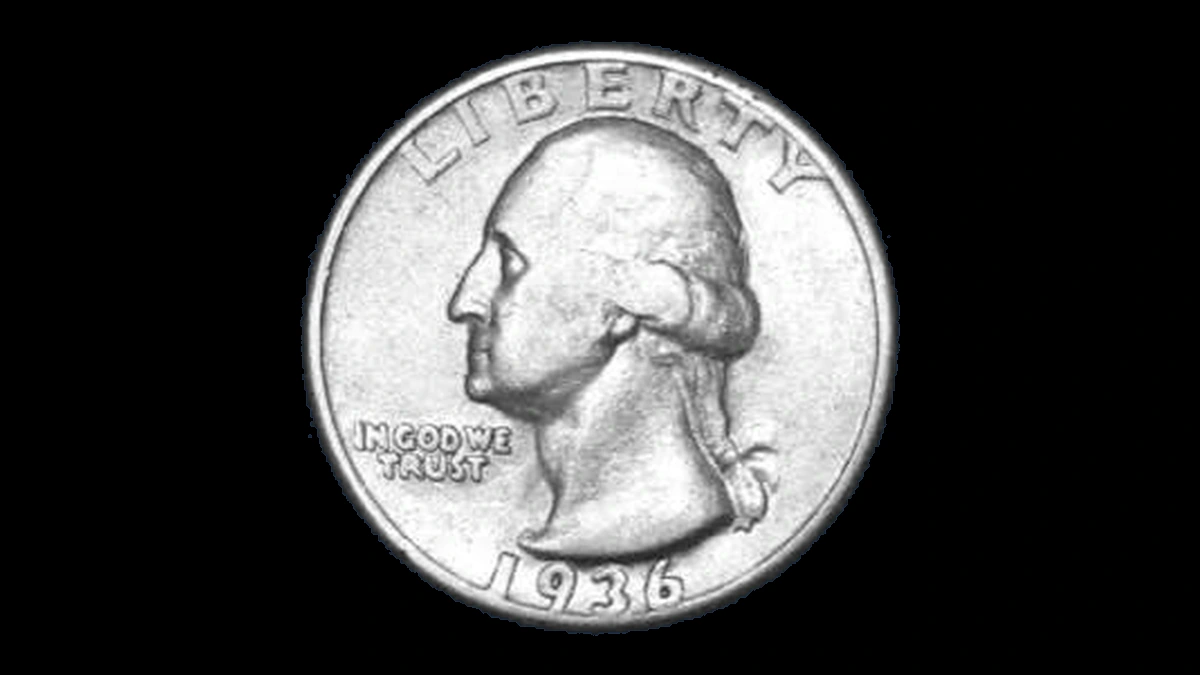
Philadelphia FS-101 repeats parts of IN GOD WE TRUST, LIBERTY, the date, and Washington’s eyelid. The die already carried these extra outlines when it entered the press.
Other Philadelphia patterns involve the date or hair-ribbon ends, while reverse patterns affect lettering, branches, or the eagle’s beak. San Francisco also has a separate reverse pattern.
How to Identify
For FS-101, start with the motto and compare the other listed front features against the same reference. Do not assemble an identification from different varieties’ strongest features.
Use an appropriate reference for a date-only, ribbon-end, or reverse variety. Confirm the mint before comparing a reverse pattern.
One auctioned FS-101 had a small forehead planchet flaw, but that individual mark is not required on other examples. Flat striking shelves and reflections also should not be mistaken for a matching doubled-die pattern.
What It’s Worth
Identified varieties have an estimated whole-coin range of $50–$8,000.
PCGS records an MS66 FS-101 at $6,600 in September 2018. A separate MS63 with the forehead flaw sold for $1,116.25 in February 2017.
Those prices include each coin’s condition. A faint unrelated pattern does not receive the strong FS-101 premium merely because it is also called doubling.
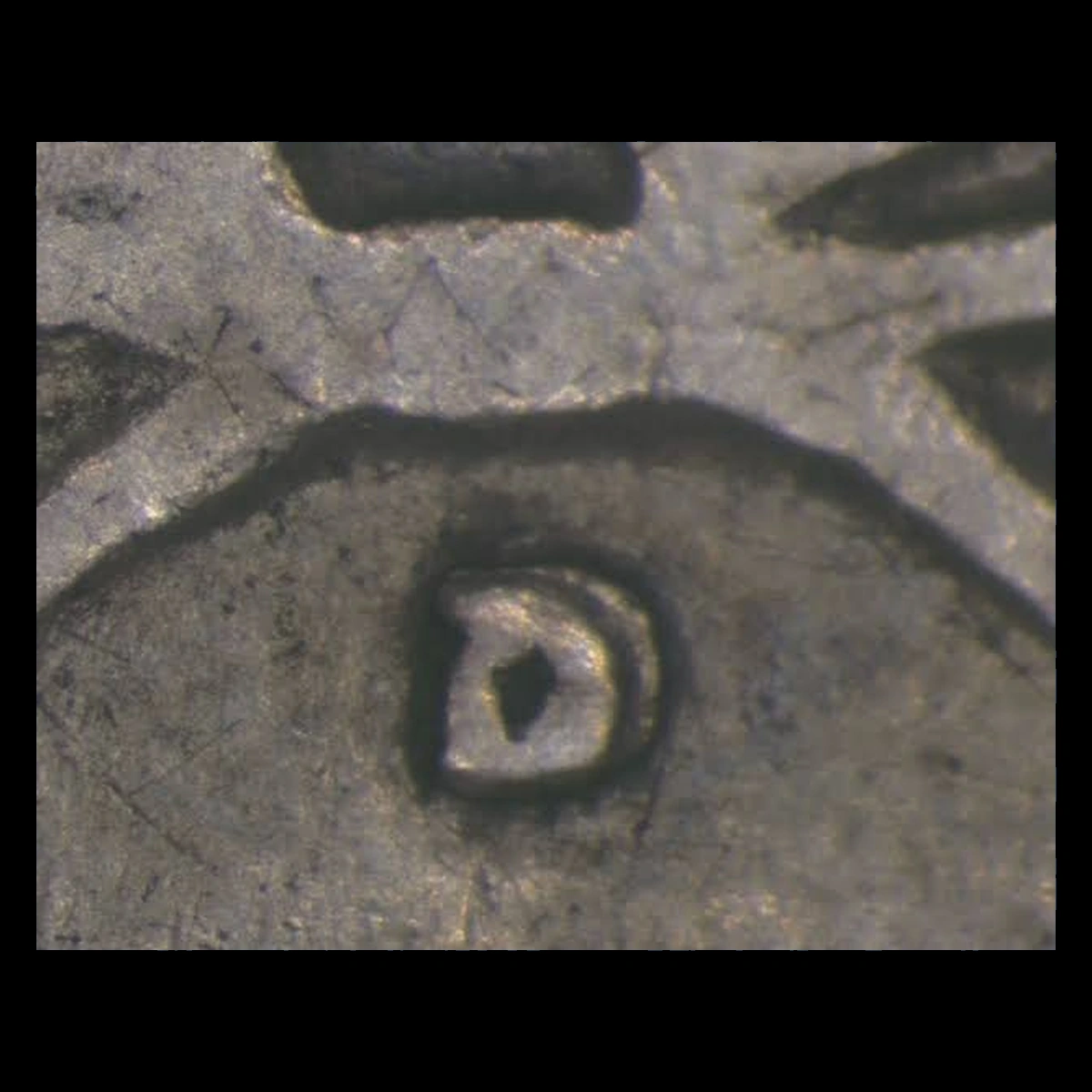
2. 1936 Quarter A second curve beside D or S: repunched mint mark Error
The listed San Francisco pattern has another S toward the right. The Denver pattern shows an earlier D toward the lower left.
Each came from repeated hand punching of the mint mark into a die. Neither requires two strikes on the finished quarter.
How to Identify
Find the mint mark beneath the wreath on the reverse and hold the lettering upright. Philadelphia normally has no letter in this position.
Compare the right side of S with the 1936 entry in Wexler’s catalog. For D, inspect the lower-left area instead.
A genuine remnant should retain part of the relevant letter’s shape. A chip or flat shelf beside a mint mark needs a different explanation.
What It’s Worth
Authenticated 1936 repunched mint marks are estimated at $25–$2,000.
No exact transaction was supplied for either directional pattern. Their visibility, preservation, and different mint issues all influence the whole-coin comparison.
3. 1936 Quarter The opposite picture leaves a faint trace: die clash Error
A clash can place an unfamiliar fragment of the reverse on the front, or vice versa. The dies met without a blank and acquired marks that later coins reproduced.
The year report identifies no particular mint, finish, or location. A candidate therefore needs an actual design match rather than a guessed diagnostic.
How to Identify
Compare the full faces before isolating an unusual line. Follow connected curves or edges and determine which opposite-side feature could explain them.
Scratches and die-polishing lines may cross the background without copying a recognizable design. Bright fields or a single straight mark do not establish a clash.
What It’s Worth
A confirmed 1936 clash is estimated at $25–$1,000.
Clear recognizable traces offer a stronger comparison than faint marks on worn silver. No specific sale accompanies the supplied report.
4. 1936 Quarter A raised thread becomes a lump or border mass: die damage Error
Metal can enter a crack or missing piece in the die and produce a raised feature. A fine crack leaves a line, a small chip leaves a lump, and a substantial rim-connected break creates a cud.
The 1936 reports supply no universal location for these features. Each candidate must be described by its own shape and position.
How to Identify
Use side lighting to distinguish a raised line from a scratch cut into the coin. For a lump, inspect whether a nearby hollow suggests an impact pushed metal upward.
A possible cud should join the rim and replace some normal design. Supporting weakness on the opposite face can help explain metal flowing into the broken die.
What It’s Worth
The estimated range is $25–$2,000, with fine cracks or small chips around $25–$300 and substantial cuds around $100–$2,000.
No exact sale was supplied. Several tiny bumps should not be priced as though they form one large verified rim break.
5. 1936 Quarter Silver lifts or opens near an edge: lamination Error
A weak layer within the blank can peel or separate, creating a lamination. Reports include Denver coins and one collector’s possible opening near four o’clock on the front.
The certified comparison shown in that discussion was a different coin. It did not authenticate the collector’s opening.
How to Identify
At the lower-right front edge, compare the reported opening from both faces and the side. Determine whether it is a thin peel, a deeper split, or later damage.
Keep any flap attached and inspect its boundary without scraping. Parallel cuts or metal pushed beside a gouge can indicate damage after minting.
What It’s Worth
Authenticated laminations have an estimated value of $25–$750.
The collector’s four-o’clock opening belongs in that range only if examination confirms an original metal fault. No completed sale or definitive diagnosis was supplied for it.
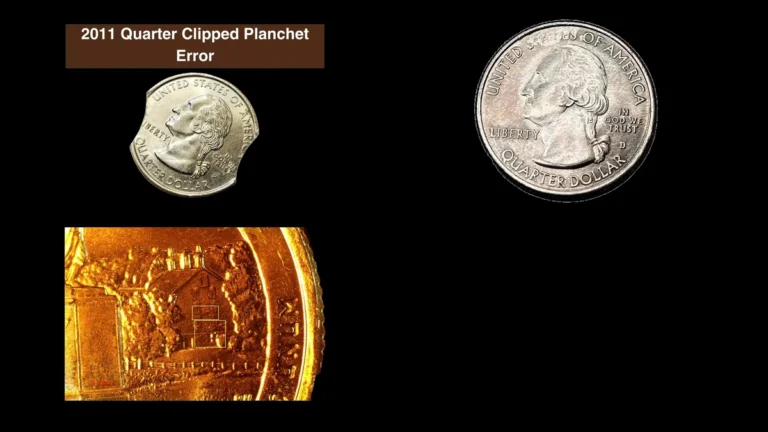
6. 1936 Quarter A curved or straight gap interrupts the outline: clipped blank Error
A blank cutter overlapping an earlier hole can leave a curved clip. Cutting across the strip’s end may create a straight missing section.
Both shapes are reported for 1936 without identified specimens. A double clip remains one coin with two affected areas.
How to Identify
Examine the rim at both ends of the gap for weakness or stretched detail. A weak rim opposite the missing section can offer supporting evidence, though it may be faint.
Check the exposed boundary for file or saw marks. A later cut through a complete struck design has a different history from striking an already incomplete blank.
What It’s Worth
Genuine 1936 clips are estimated at $50–$1,500.
The gap’s size, surviving date, and original surfaces affect the comparison. No particular mint or gap position should be inferred from the general report.
7. 1936 Quarter Extra width surrounds complete designs: broadstrike Error
Without the collar’s normal support, a blank can spread outward during striking. A broadstrike retains the intended design inside an enlarged border.
The collar normally controls size and forms edge grooves. Reports for 1936 include Denver examples without establishing one exact measured specimen.
How to Identify
Read the outer lettering on both faces before judging the width. Missing design opposite an unstruck crescent suggests an off-center strike instead.
A normal silver quarter is about 24.3 millimeters across and weighs 6.25 grams. Measure loose candidates in several directions and inspect the border and edge for original spread rather than hammering or crushing.
What It’s Worth
An authenticated broadstrike has an estimated range of $100–$2,500.
A substantial clear border is a stronger display than slight expansion on a heavily marked coin. The supplied evidence gives no exact sale for this category.
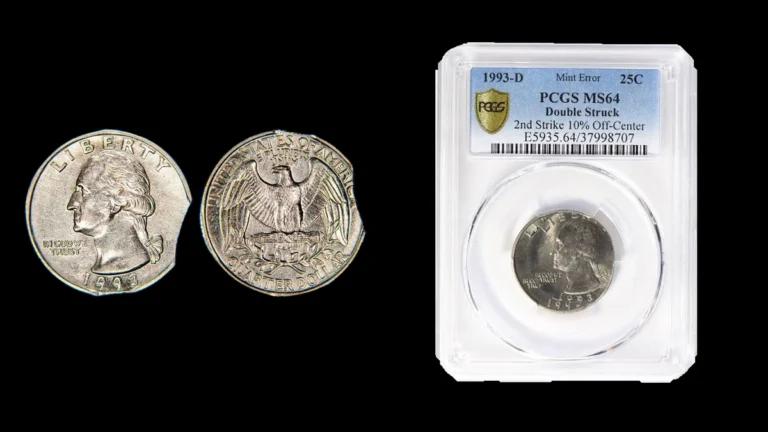
8. 1936 Quarter A blank crescent remains beside the strike: off center Error
An incorrectly positioned blank leaves part of the die’s picture beyond the metal. The result combines unstruck silver with incomplete designs.
Reports include Denver coins and a claimed combination with a doubled front. That combination requires evidence for each mechanism on the same specimen.
How to Identify
Track the blank crescent on both faces and record the surviving date and mint. The missing design should fit the blank’s displacement.
If details repeat, decide whether they belong within one strike or represent another shifted strike. A second date, portrait, or border does not by itself establish a doubled die.
Do not assign Philadelphia FS-101 merely because an off-center coin has extra outlines. Its specific pattern must also match.
What It’s Worth
A genuine 1936 off-center quarter is estimated at $100–$5,000.
A coin with two confirmed features receives one whole-coin valuation. Adding two complete price ranges would overstate what the combined specimen has demonstrated.
9. 1936 Quarter The quarter design does not fit the disc: wrong planchet Error
A dime or cent blank entering the quarter press can receive a design too large for its surface. Both silver dime and copper-alloy cent blanks are reported for 1936 without a confirmed specimen in the supplied evidence.
How to Identify
Establish the surviving 1936 date and inspect where outer design ends at the original edge. Filing can make a normal quarter smaller without creating a wrong-blank error.
Reference blank weights are 2.5 grams for a silver dime and 3.11 grams for a period cent. A candidate needs its own measurements and, where necessary, a nondestructive alloy test.
Color alone cannot identify the blank because plating or surface changes can mislead. The design, metal, weight, and original boundary need to agree.
What It’s Worth
The conditional estimate is $500–$7,500, comprising $500–$5,000 for a dime blank and $750–$7,500 for a cent blank after authentication.
A 1960 quarter on a dime blank sold for $552 in October 2021. A 1956 quarter on a cent blank brought $1,265 in December 2009.
Those different-year sales illustrate the two mechanisms. They neither confirm a 1936 discovery nor establish its weight.
Conclusion
Separate repeated die details from extra strikes, and distinguish missing blank metal from an expanded or displaced design. Each observation answers a different question about how the quarter was made.
The strongest specific comparison here is the identified FS-101 sale. General year reports and uncertain collector finds need their own physical evidence before their estimated ranges can be applied to an individual coin.