Rare 2018 Quarter Errors (List & Pictures)
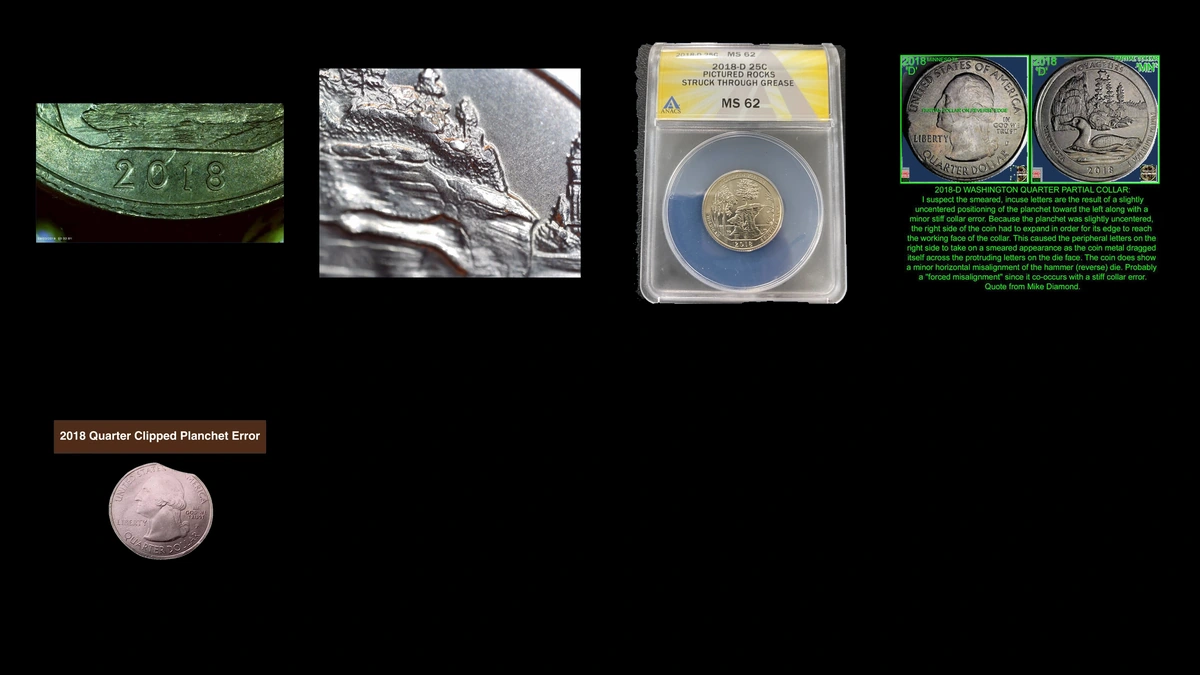
Identify the park before comparing 2018 quarter errors: a mark beside Chapel Rock cannot identify a fault in the Block Island scene. The five America the Beautiful designs have different reported features.
Estimates for genuine errors on ordinary clad coins range from $2–$600. A different-year missing-layer comparison brought $149 in December 2024; no exact-year auction result is established here.
Start with surface color and raised marks, then inspect the edge and compare the position of both designs.
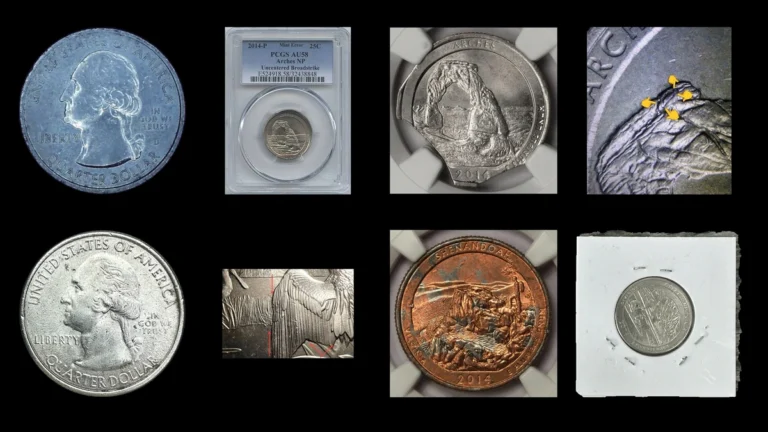
1. 2018 Quarter A Copper Band or Copper-Colored Back: Missing or Defective Clad Layer Error
The Cumberland Island reports describe two different pieces: one missing its reverse outer layer, and a Denver coin with a diagonal copper-colored band described as defective clad. The band does not by itself establish that a whole layer disappeared.
Clad quarters have a copper core bonded between lighter copper-nickel layers. A layer missing before striking can expose copper that receives the design directly.
How to Identify
Determine which metal version you have first. Ordinary clad quarters weigh 5.67 grams; the 90% silver collector version weighs 6.25 grams and lacks the clad coin’s copper core.
Both use a 24.26 mm diameter and grooved edge as normal references. Use recorded measurements for sealed coins and handle loose examples without scraping or polishing the surface.
Inspect the boundary between exposed copper and surviving outer metal. Actual layer loss should fit the edge structure, struck surface, and measured reduction in weight.
Plating, stripping, and scraping can create misleading color. Assess the Denver band independently rather than assigning it the other Cumberland coin’s missing face or weight.
What It’s Worth
Partial outer-layer defects are estimated at $30–$200; a fully missing outer layer at $100–$600. These ranges apply to authenticated defects on ordinary clad coins.
A 1999-D Connecticut quarter missing its reverse layer, graded PCGS MS62, sold for $149 in December 2024. It is a different-year comparison, not a sale of either 2018 report.
2. 2018 Quarter Dark or Reddish Surfaces without Proven Metal Loss: Annealing Error
A color change can involve the surface rather than an absent layer. Annealing heats a blank during preparation, and improper conditions can produce unusual brown, red, or dark areas.
The reports identify a Denver Apostle Islands coin and a separate Philadelphia Pictured Rocks coin. Their patches should not be described as identical.
How to Identify
Examine the full surface and edge for residue, coating boundaries, or signs of later burning. A similar color photograph alone cannot distinguish mint preparation from environmental staining or deliberate heating.
Check whether metal is actually missing before interpreting brown color as exposed core. A heating-related surface change does not automatically alter the coin’s weight or dimensions.
Authentication depends on the original texture and overall condition as well as the color. Neither of the reported park coins is authenticated by a sale of a different colored coin.
What It’s Worth
A genuine annealing error on an ordinary clad quarter is estimated at $20–$150. A 2005-P dime with an annealing error sold for $74 in April 2015, providing only a different-year, different-denomination comparison.
Later heat or staining does not qualify for that mint-error estimate.
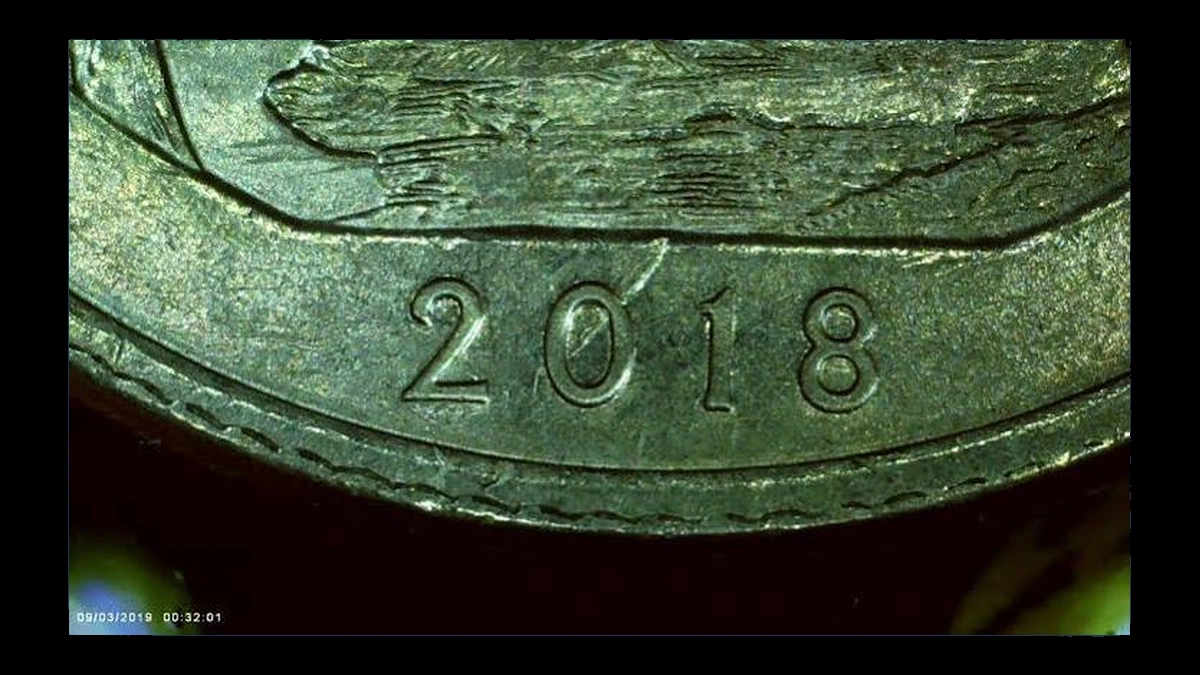
3. 2018 Quarter A Line Standing above Chapel Rock: Die Gouge Error
Look for a raised line that is separate from the intended Pictured Rocks scenery. A scratch or gouge cut into the die, the steel stamping tool, leaves a raised copy as coin metal fills the recess.
How to Identify
Compare Chapel Rock and its tree with an ordinary example of the same design. Natural rock edges can look irregular without being an error.
Under side lighting, examine whether the line is raised throughout or has a central cut with displaced edges. The latter structure can belong to a scratch made after striking.
The report supplies no established nickname or fixed direction for this feature. Match the actual tool mark rather than expecting any line near the rock to qualify.
What It’s Worth
Small identifiable gouges are estimated at $2–$30, with stronger examples around $50. A clear original ridge on an attractive clad coin supports more than a faint mark lost among the rock details.
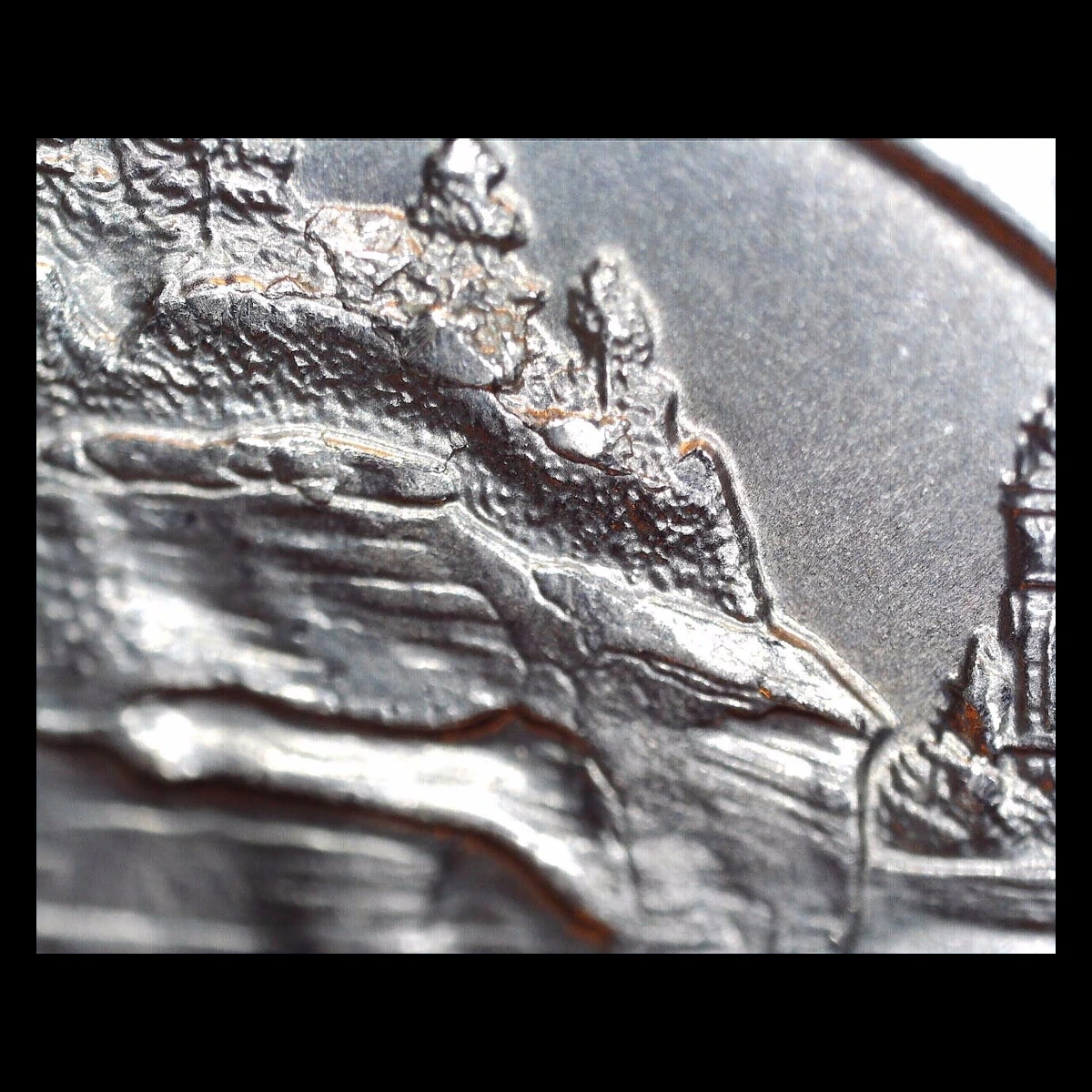
4. 2018 Quarter Raised Ridges, Lumps, or Rim Patches: Die Cracks, Chips, and Cuds Error
The shape of extra metal helps distinguish these related faults. A narrow die crack leaves a ridge, a chipped area leaves a lump, and a larger break reaching the rim can leave a cud.
Reports include Apostle Islands cave features, Pictured Rocks branch and front-initials marks, and Voyageurs and Cumberland Island rim breaks. These belong to separate coins and designs.
How to Identify
Choose the correct park before comparing the mark’s location. A branch lump on Pictured Rocks cannot establish the pattern of a break in a bird scene.
Trace a suspected cud all the way to the rim and inspect the neighboring grooves. A natural raised patch replacing design differs from a dent that pushes metal upward and crushes the edge.
For thinner lines, use light from more than one direction to distinguish a ridge from a scratch. Keep multiple features on one coin separate from a supposed pattern assembled from several different parks.
What It’s Worth
Small cracks and chips are estimated at $2–$30; stronger rim-connected breaks at $30–$200. Size, lost design, and preservation influence the whole-coin value.
A 1970-D nickel with two cuds sold for $63 in October 2022. That different-denomination comparison does not price any particular 2018 quarter.
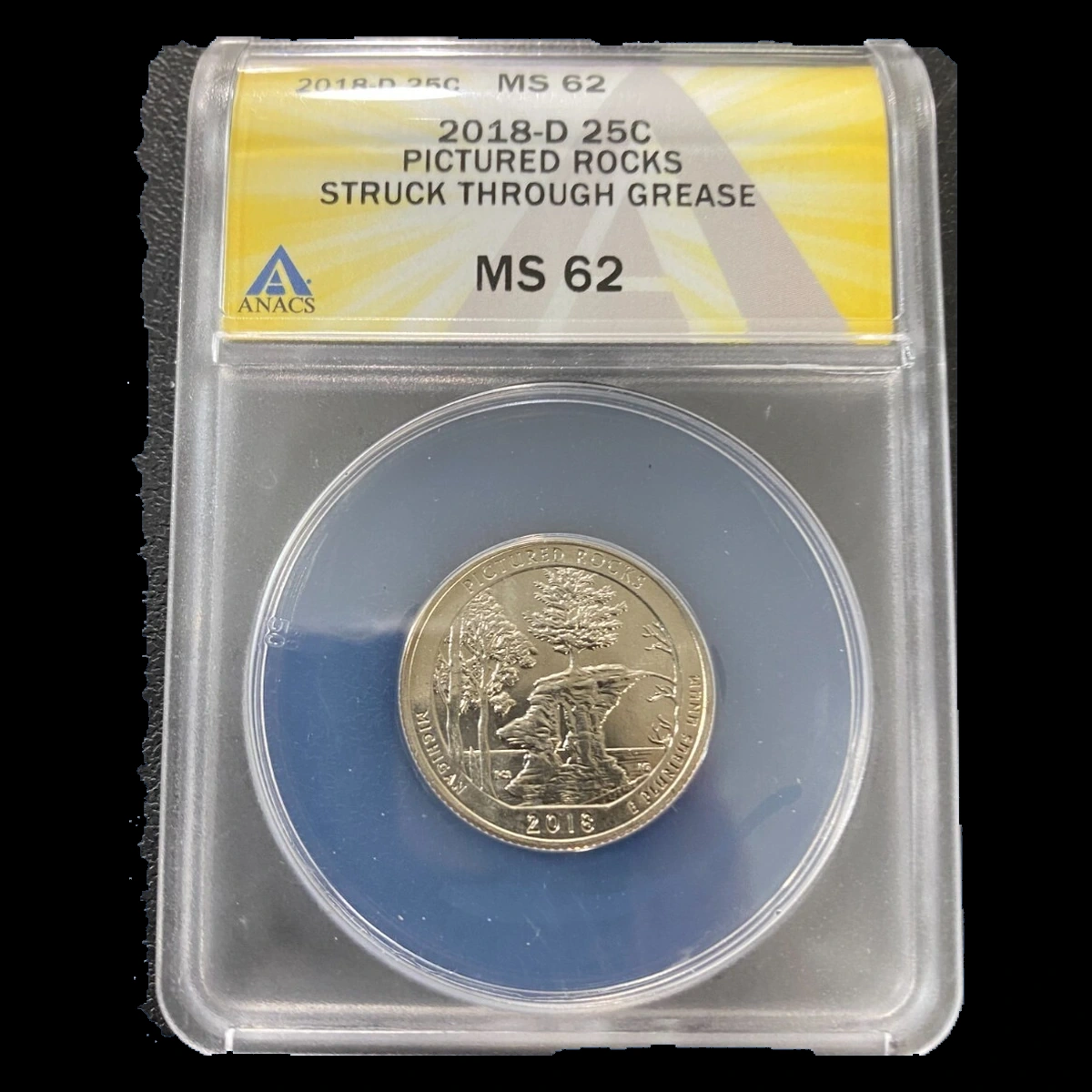
5. 2018 Quarter Weak Lettering or a Sunken Patch: Struck Through Material Error
Some unusual areas contain less design rather than extra metal. An obstruction between the tool and blank can prevent a normal impression or leave a depression.
Reports cover Washington’s face on Block Island, front lettering on Cumberland Island, Pictured Rocks weak areas, and the Apostle Islands kayak and water. No single object or impression shape is established across them.
How to Identify
Inspect the transition from the affected patch into intact design. A smooth struck boundary differs from torn metal or an impact with raised damage around it.
A Pictured Rocks example described as peeling was reported as a grease-blocked strike. Missing detail without a lifted layer should not be presented as proof of peeling metal.
Check both faces and the edge for later impacts. A nickname such as “starburst” needs visible evidence on the actual coin rather than assumptions about its cause.
What It’s Worth
Genuine strike-throughs are estimated at $10–$350, from small weak patches to large, distinct impressions. A 1986-P nickel struck through material sold for $204 in June 2023, a different-year and different-denomination example.
The price comparison does not establish what blocked a particular 2018 quarter. Wear and scraping should be excluded before applying the range.
6. 2018 Quarter Thickened Front Letters: Doubled Die Obverse Error
On the Philadelphia Pictured Rocks report, inspect LIBERTY and IN GOD WE TRUST for unusual thickness. The described effect is thickening, so widely split letters should not be promised.
A separate minor front doubling report concerns Denver Apostle Islands. Its exact letter pattern requires its own matching evidence.
How to Identify
A doubled die repeats an altered design from the tool on coins it strikes. Compare raised letter shapes with an ordinary coin and a verified example of the same reported pattern.
A flat shelf produced by movement during striking is a different effect. It does not establish die doubling merely because an edge looks repeated.
Confirm both the park and mint letter before selecting a comparison. The 2018 date is on the reverse of these quarters and cannot be a location for front-side doubling.
What It’s Worth
Identified front doubling on ordinary clad examples is estimated at $15–$300. Small thickening belongs below a clear, recognized variety in attractive condition.
The Pictured Rocks and Apostle Islands reports may have different demand. The range is not a supplied auction result for either pattern.
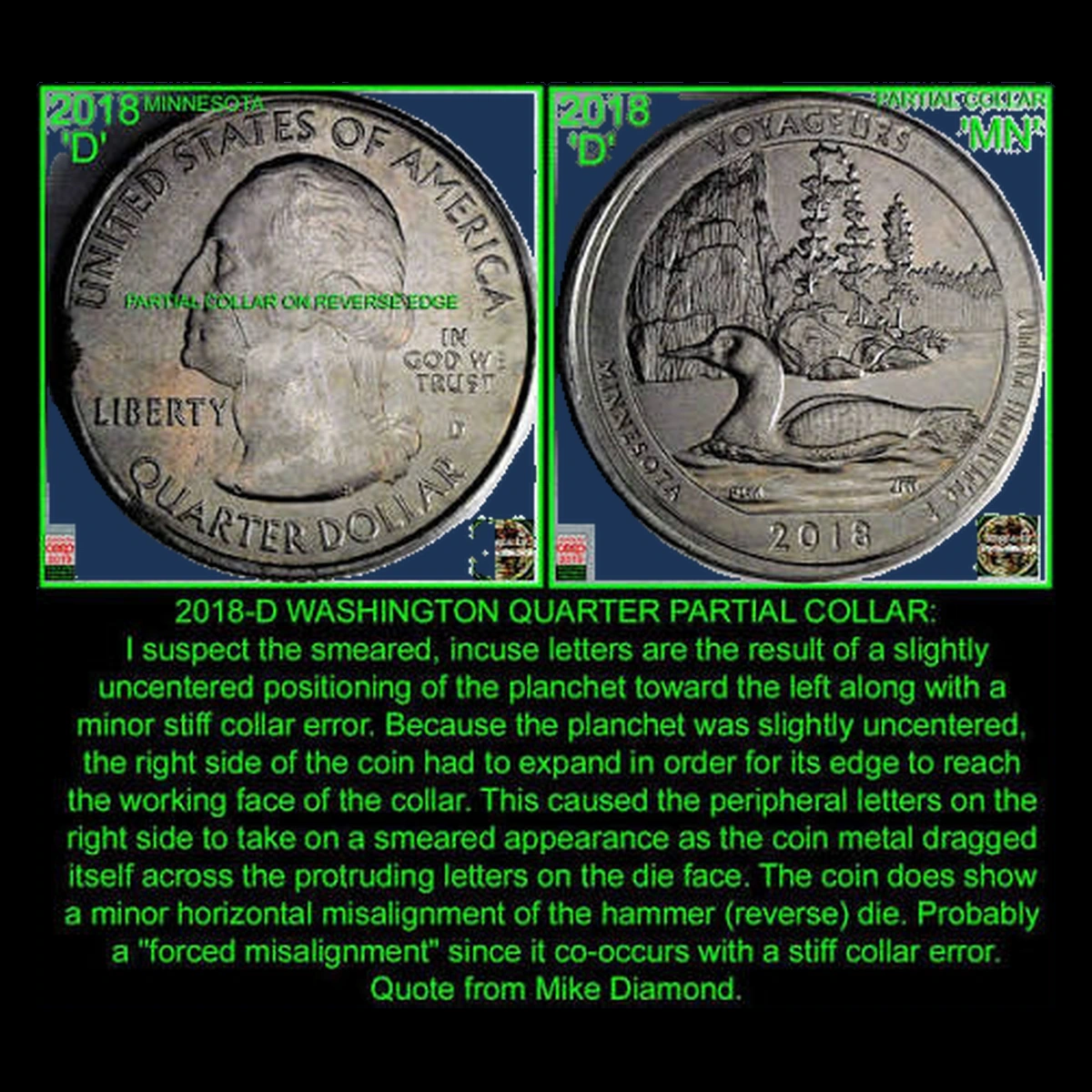
7. 2018 Quarter A Step on the Edge: Partial Collar Strike Error
The reported Apostle Islands edge has a transition between a normally grooved band and metal that spread beyond it. The blank met only part of the collar, the retaining ring that normally forms the full edge.
How to Identify
Inspect the edge directly from the side, following where the grooves stop and the expanded band begins. A raised border seen only from the face is less informative.
The step can remain level or change height around the coin. The familiar “railroad rim” name describes an appearance, not a fixed tilt shared by every example.
Look for filing scratches crossing the grooves before accepting the step as original. A naturally struck transition should account for both the retained and expanded parts.
What It’s Worth
Genuine partial collar errors are estimated at $25–$250. A 1990-P nickel with the error sold for $99 in June 2025, providing a comparison with a different size and design.
A substantial, undamaged edge step is easier to display than a barely visible one.
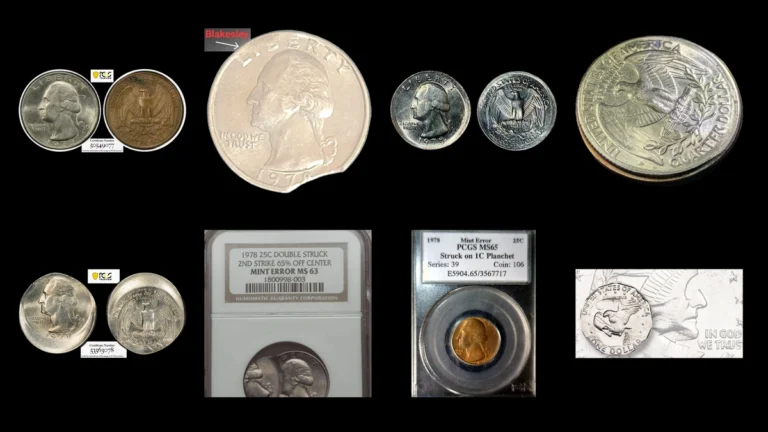
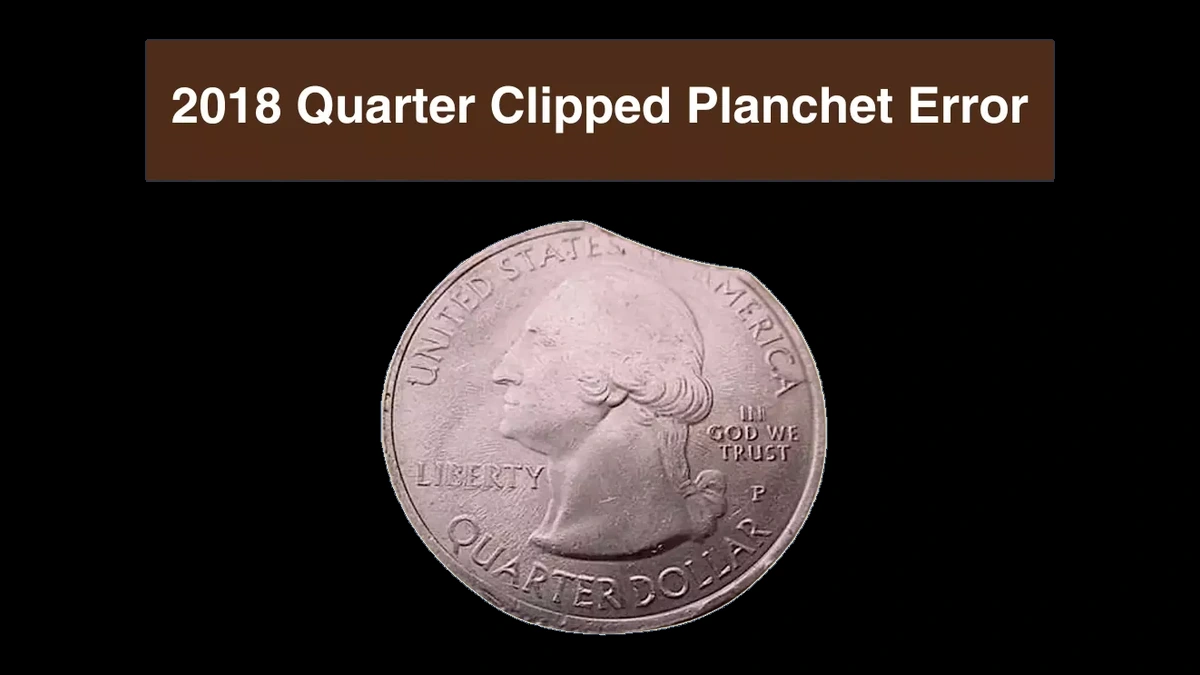
8. 2018 Quarter A Curved Piece Missing from the Outline: Clipped Blank Error
A blank-cutting punch that overlaps an earlier hole leaves an incomplete disk. Striking then places the quarter design around the curved missing section.
How to Identify
Examine the boundary for a natural cut-and-break surface and its interaction with the struck design. Saw marks, filing, or fresh burrs suggest someone removed metal afterward.
The surviving grooves and the rim opposite the opening provide additional context. Opposite-rim weakness helps when present, but is not required on every authentic clip.
The report supplies no exact park, mint, or missing percentage. Reduced weight supports metal loss but cannot establish when that loss occurred.
What It’s Worth
Genuine clipped clad quarters are estimated at $20–$400. A 1999-D Pennsylvania quarter with overlapping curved clips sold for $74 in December 2024.
That different-year example had its own two-clip shape. A larger original gap and good preservation generally offer a clearer comparison than a tiny damaged notch.
9. 2018 Quarter A Full Design inside an Oversized Border: Broadstrike Error
When the collar fails to contain the blank, metal can spread farther than usual. A straightforward broadstrike keeps the complete designs inside that enlarged outline.
How to Identify
Read the outer lettering and follow the scenery on both faces. Unequal border widths do not make a coin off center if all the intended design remains on the metal.
Inspect the wider surfaces and edge for natural striking rather than hammer marks and flattened detail. Missing grooves alone are insufficient because later damage can also remove them.
No park or mint assignment is established for the reported 2018 example. Use its surviving design to identify it rather than extending the report to all five parks.
What It’s Worth
A genuine broadstrike is estimated at $40–$450. The supplied $80.50 sale from May 2005 concerns a 1988-P dime with overlapping strikes and expansion.
That comparison differs in denomination and includes another striking effect. It is not a direct sale of a plain 2018 quarter broadstrike.
10. 2018 Quarter A Blank Crescent or Unequal Rims: Off-Center Strike and Die Misalignment Error
Compare front and reverse rim spacing before naming a shift. An entire misplaced blank produces corresponding displacement on both faces, while one moved tool can leave only one face misaligned.
Denver Voyageurs and Denver Apostle Islands off-center examples are reported. A Philadelphia Apostle Islands report describes slight misalignment instead.
How to Identify
For an off-center claim, locate matching unstruck areas and design that runs beyond the blank. Confirm the park scene and the 2018 date on the reverse.
For the Philadelphia slight shift, investigate one-tool misalignment before applying an off-center label. An uneven front rim with a normally placed reverse needs that distinction.
No precise percentage is supplied for these individual park reports. Figures such as 30% or 40% from another coin cannot be assigned from a similar-looking outline.
What It’s Worth
Off-center clad quarters are estimated at $50–$500, while small single-tool shifts are more modest at $2–$20. A readable date and clearly displaced design help support the off-center range.
A 1999-P Georgia quarter struck 40% off center sold for $192 in December 2024. That is a different-year comparison with an established percentage of its own.
11. 2018 Quarter The Heron and Lighthouse Lean after a Controlled Flip: Rotated Dies Error
A tilted Block Island scene can reflect one tool turning relative to the other. Unlike an off-center strike, this changes the angle between the faces without moving their centers sideways.
How to Identify
Hold Washington upright and turn the coin top to bottom without twisting sideways. Repeat the same movement with an ordinary quarter, using the heron and lighthouse to compare reverse alignment.
A stable difference across repeated checks can be measured. An angle that changes between attempts points to handling rather than a reliable rotation reading.
Both Philadelphia and Denver reports exist, but no fixed measured angle is established here. Keep rim damage from making the coin sit at a misleading angle in photographs.
What It’s Worth
A clearly established rotation is estimated at $10–$100. A 2015-D nickel rotated 90 degrees counterclockwise sold for $79 in October 2021.
The nickel’s angle and price do not establish either for a Block Island quarter. Measure the actual relationship between its faces before choosing a comparison.
Conclusion
A useful 2018 quarter comparison begins with the park, mint, and metal version. Then decide whether the unusual area is extra metal, absent metal, weak design, or a change in how the two faces align.
Keep separate reported coins separate, especially the Cumberland layer defects and the two front-doubling reports. The estimates concern genuine mint errors on clad quarters, with the cited older sales serving as comparisons rather than exact matches.