Rare 1972 Quarter Errors (List & Pictures)
Seeing 1964 beneath 1972 can reveal something more unusual than a wrong-metal blank. One quarter was struck over a finished 1964 silver quarter, leaving evidence of both dates.
That January 2026 auction listing reports $8,500, without specifying the fee basis. Estimated values across the 1972 quarter errors below range from $5–$40,000.
First separate ordinary coins from specially made Proofs, then check design details, edge structure, and any earlier coin underneath.
1. 1972 Quarter Thick or Repeated Details: Doubled Dies Error
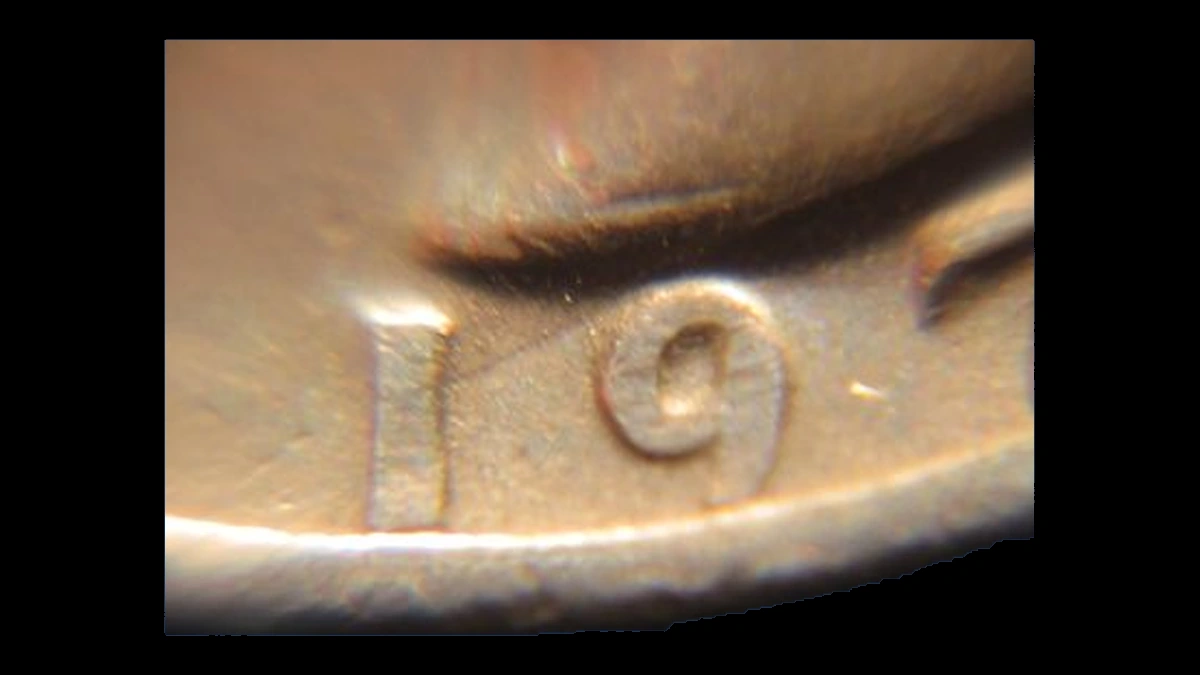
A doubled die contains repeated detail before it strikes a coin. Some ordinary 1972 doubling, however, comes from common repetition inherited from the master design used to make tools.
San Francisco Proofs have specific front and reverse varieties. A Proof is a collector coin made with specially prepared tools, so its detailed pattern should not be assigned to an ordinary Philadelphia or Denver piece.
How to Identify
On ordinary quarters, compare the lower reverse lettering with the common inward repetition seen across these years. Widespread master-design doubling is not automatically a scarce variety.
For Proof fronts, DDO-001 has slight motto and date thickening with tool lines inside the reverse wings. DDO-002 has moderate thickening and a frosted S, while DDO-003 has stronger thickening that needs its own reference.
Proof DDR-001 affects branch stems, QUARTER DOLLAR, lower-left leaves, wing tips, and RICA in AMERICA. Match several features without combining the separate front varieties into one imaginary coin.
What It’s Worth
$5–$500 spans the identified ordinary and Proof varieties. Ordinary patterns may fit $5–$250, while cataloged Proof patterns can fit $20–$500.
Common master-design repetition alone receives no assumed rare-variety premium. Flat shelves from movement during striking also need a different assessment.
2. 1972 Quarter An Earlier D or S: Repunched Mintmarks Error
Four cataloged 1972-S Proof patterns retain parts of earlier mintmark impressions. RPM-001 has a counterclockwise turn, RPM-002 and RPM-003 have different northward patterns, and RPM-004 has remnants to the right.
A Denver D/D is also reported, without a confirmed direction or catalog number. Its letter must be checked separately from the S varieties.
How to Identify
Photograph the entire mintmark near the lower-right portion of Washington’s hair. Follow any extra curve to see whether it forms part of an earlier letter.
The two northward S patterns require separate images despite pointing the same way. A filled opening, dirt, or a flat shelf is not evidence of another punch impression.
What It’s Worth
$10–$500 is the estimated range for genuine repunched mintmarks. Strong earlier outlines and well-preserved Proof surfaces make the small feature easier to see.
Match the actual letter pattern and finish before choosing a price. A Denver report does not inherit a San Francisco catalog attribution.
3. 1972 Quarter A Raised Line or Edge Patch: Die Cracks and Cuds Error
A cracked die leaves a ridge when coin metal fills its split. A larger broken area can leave a raised patch joined to the rim, called a cud.
The 1972 reports do not establish one mint, catalog pattern, or clock position. Each candidate needs its own visible route or outline checked.
How to Identify
Use light from opposite sides to distinguish a solid raised ridge from the bright edges of a recessed scratch. Photograph the complete route through nearby design.
For a larger patch, find its connection to the rim. An interior lump is not automatically a cud, and an impact can push metal upward while damaging the border.
What It’s Worth
$5–$500 is the estimate for authenticated ordinary 1972 examples. Fine lines normally bring less interest than a strong patch replacing visible design.
Corrosion or later rim damage can reduce appeal even when the original die feature is genuine.
4. 1972 Quarter Grooves or Fabric Texture in the Design: Strike-Through Error
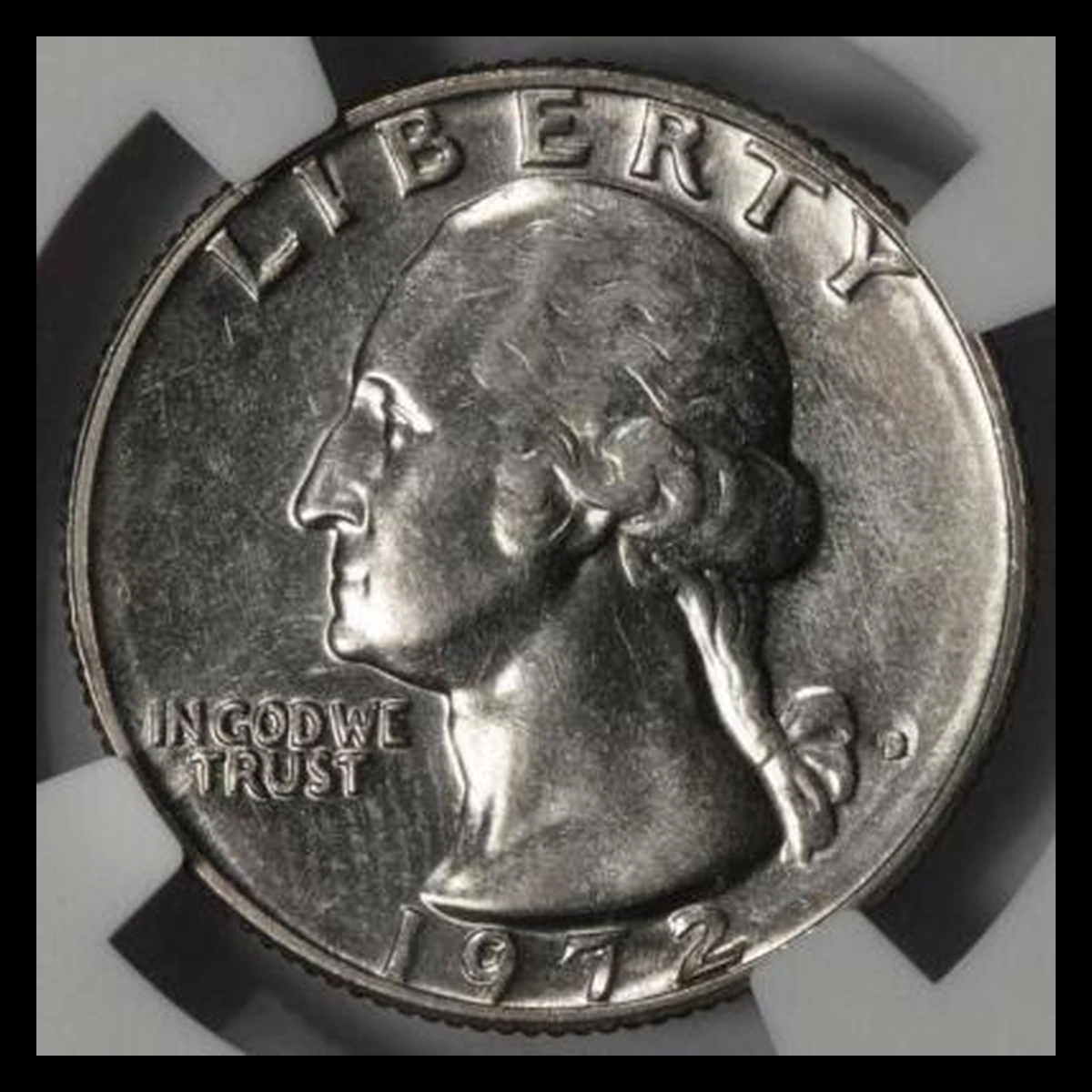
A Denver NGC MS62 quarter has regular reverse impressions described as a strike through reeding. The record does not establish which object supplied the grooves.
A separate Philadelphia NGC MS65 report describes cloth impressed into the front. These textures belong to different coins and different faces.
How to Identify
For the Denver coin, trace where the regular grooves begin and end within the eagle-side design. Do not automatically call the source the edge of another quarter.
For the Philadelphia example, look for an actual crossing weave on the front. A plain hollow or weak patch cannot identify cloth by itself.
Check the boundary for later scraping, torn metal, or raised lips. The surface should show how the obstruction interrupted the original strike.
What It’s Worth
$25–$2,000 is the estimated range for these strike-through types. Clear repeated texture is generally more informative than an unexplained depression.
The Denver MS62 example appeared with a $999.97 asking price. That offer is not a completed sale and does not price the separate Philadelphia cloth coin.
5. 1972 Quarter A Copper-Colored Eagle Side: Missing Reverse Layer Error
A reported 1972-D quarter is missing its reverse outer layer and weighs 4.67 grams. A normal clad quarter has pale outer layers bonded around a copper center.
The brief record does not establish whether separation occurred before or after striking. The exposed design and loss boundary may help resolve that timing.
How to Identify
Compare the copper-colored reverse, the portrait side, and the edge under the same light. Follow which metal layers remain.
The normal weight is about 5.67 grams, but a lighter coin does not reveal how the metal disappeared. Scraping and chemical removal can also expose copper.
Examine the design on the exposed surface for later cuts or damage. Keep any loose material with the coin and leave the boundary untouched.
What It’s Worth
$50–$1,200 is the estimate for an authenticated 1972-D reverse-layer loss. Clear original design on exposed copper is a stronger comparison than a scratched brown patch.
The recorded 4.67 grams belongs to that specimen. Color and low weight alone do not establish the same error on another coin.
6. 1972 Quarter Complete Designs within a Wide Outline: Broadstrike Error
The collar is the ring that limits a quarter’s width and forms the edge grooves. If it fails to hold the blank, metal can spread outward into a broadstrike.
The general 1972 report gives no fixed mint or measured diameter. The triple-clip Denver combination discussed next is a specific separate example.
How to Identify
Follow LIBERTY and the reverse’s outer lettering around the expanded metal. The complete intended design should remain on the coin.
Compare the outline with the normal width of about 24.3 millimeters, then inspect for natural edge spread. Later hammering can widen a coin while crushing its design.
Missing design opposite a bare crescent suggests off-center striking instead. Record any clipped section separately from the outward expansion.
What It’s Worth
$25–$800 is the estimate for an authenticated ordinary broadstrike. Strong expansion with a complete, well-preserved design offers the clearest comparison.
A slightly wide border or a damaged flattened quarter does not automatically qualify.
7. 1972 Quarter One Curved Gap or Three Clips: Incomplete Blanks Error
A Denver quarter is reported with a 25% curved clip, a 4.7-gram weight, and an AU58 assessment. The missing metal was absent before striking.
A different Denver PCGS MS63 coin was broadstruck with three clips totaling 22%. Its three gaps and expanded outline belong to one combined error.
How to Identify
Map every gap before estimating its size. The triple-clip percentage does not supply the individual gaps’ positions or shapes.
Inspect where the rim approaches each opening for natural changes in the original strike. Saw marks, burrs, or filing suggest later removal.
Opposite-rim weakness can help but need not be obvious. The single-clip coin’s 4.7 grams must not be transferred to the triple-clip specimen.
What It’s Worth
$10–$1,000 is the estimate across genuine clips and more distinctive broadstruck combinations. Size, preservation, and the clarity of the original boundaries guide the price.
The broadstrike and three clips form one coin. Do not add full separate guide prices for every feature.
8. 1972 Quarter The Eagle Tilts after a Flip: Rotated Dies Error
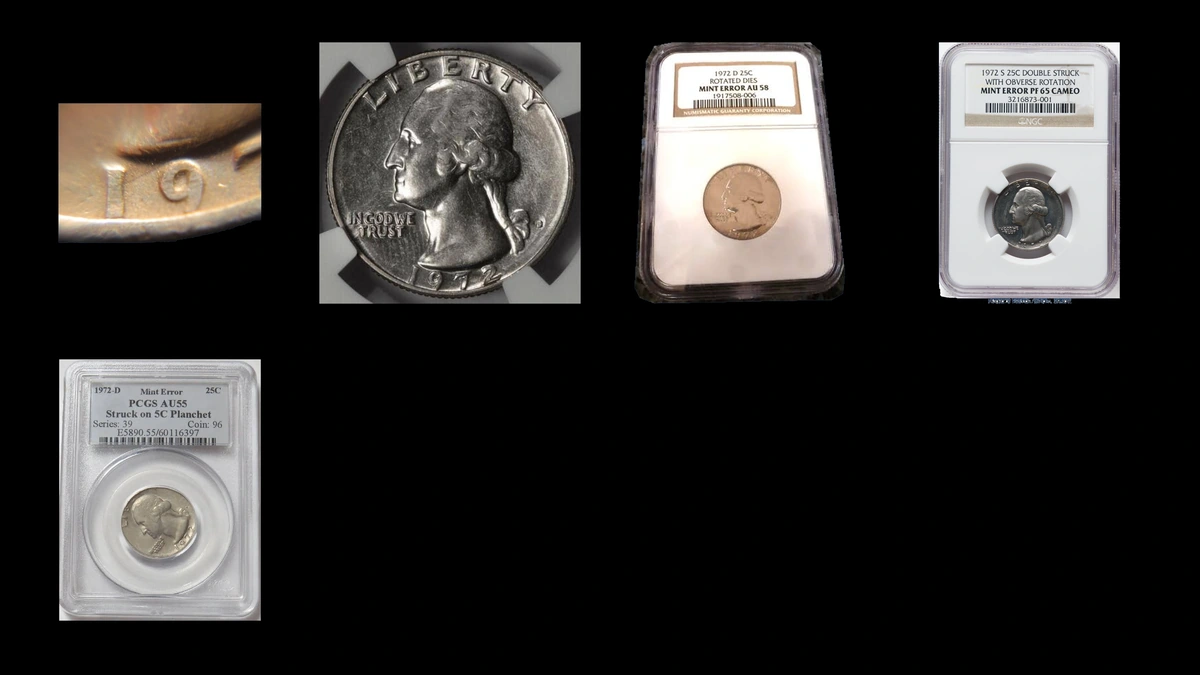
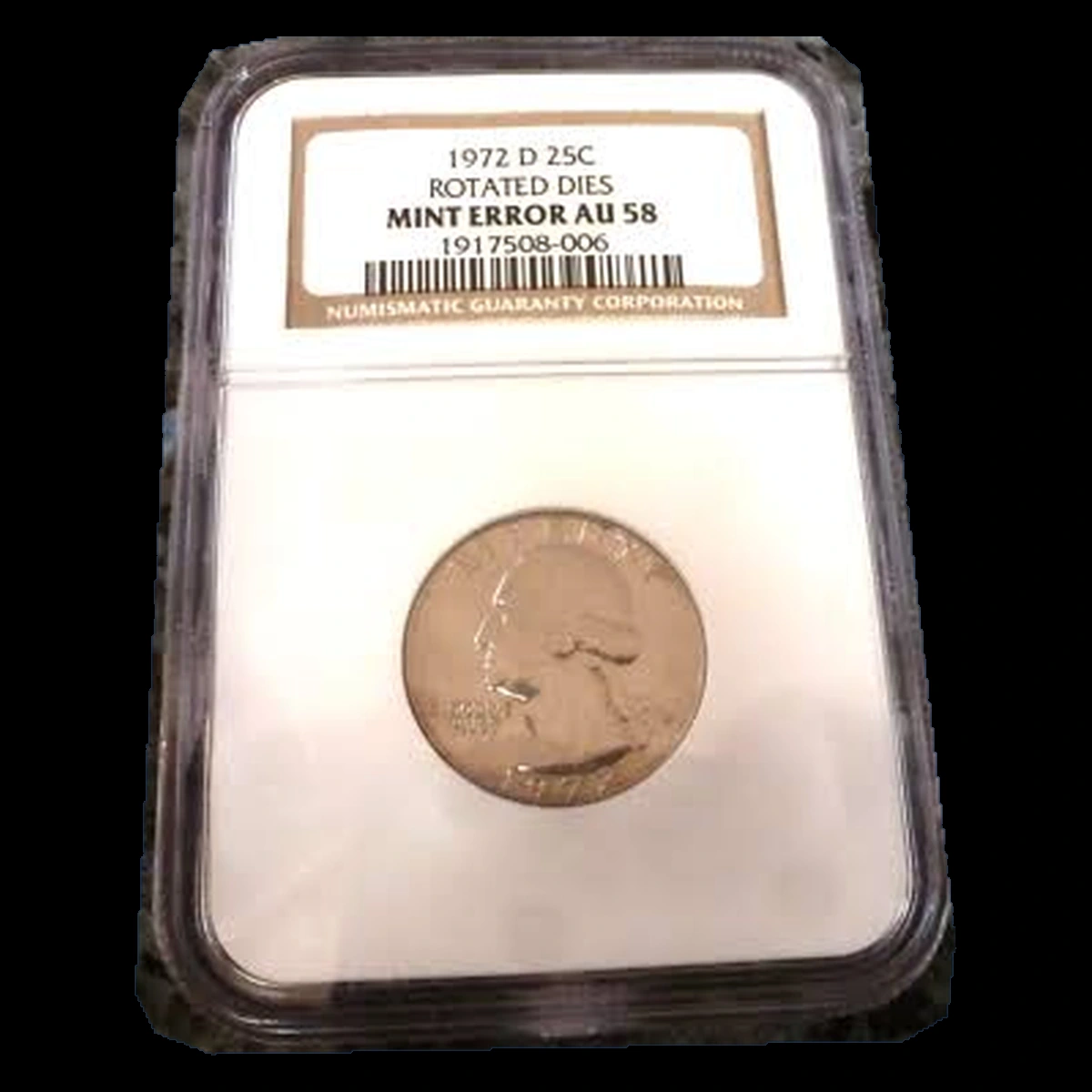
A Denver example graded ANACS AU58 is listed with rotated dies. This means the two faces have an unusual angular relationship.
The listing provides no rotation angle. It describes one intended design on each side, not two overlapping strikes on the same face.
How to Identify
Hold Washington upright against a vertical reference and flip the coin top to bottom without twisting. Repeat and check whether the eagle returns to the same tilt.
Photograph the movement with the date and D visible. A coin that moves inside its holder or photographs straightened separately can produce a false impression.
What It’s Worth
$20–$300 is the estimate for an authenticated 1972-D rotation. A large repeatable angle is easier to demonstrate than a small alignment difference.
The AU58 example has slight wear. Its condition needs to remain part of any comparison with an unworn coin.
9. 1972 Quarter Bare Metal beside Incomplete Designs: Off-Center Strike Error
A misplaced blank can leave part of the quarter unstamped. On the opposite side, some intended design falls beyond the metal.
Reports include ordinary Philadelphia and Denver coins without a single established percentage or direction. Those details must come from the actual example.
How to Identify
Compare the design boundary and blank crescent on both faces. They should fit the same misplaced disc.
A shift confined to one face suggests die misalignment. A full design on expanded metal instead points toward broadstriking.
Inspect for filing or later impacts that removed outer details. Keep every surviving date digit and mint letter visible rather than guessing missing information.
What It’s Worth
$25–$2,500 is the estimate for authenticated ordinary examples. Major displacement becomes more appealing when the coin remains clearly dated.
Small shifts and worn surfaces generally fit lower comparisons. A trimmed rim does not become an off-center error merely because lettering is gone.
10. 1972 Quarter Two Shifted Pictures on a Proof: Double Strike Error
Proofs normally receive careful repeated striking with the design kept in place. An error arises when the coin moves and the blows leave separate overlapping pictures.
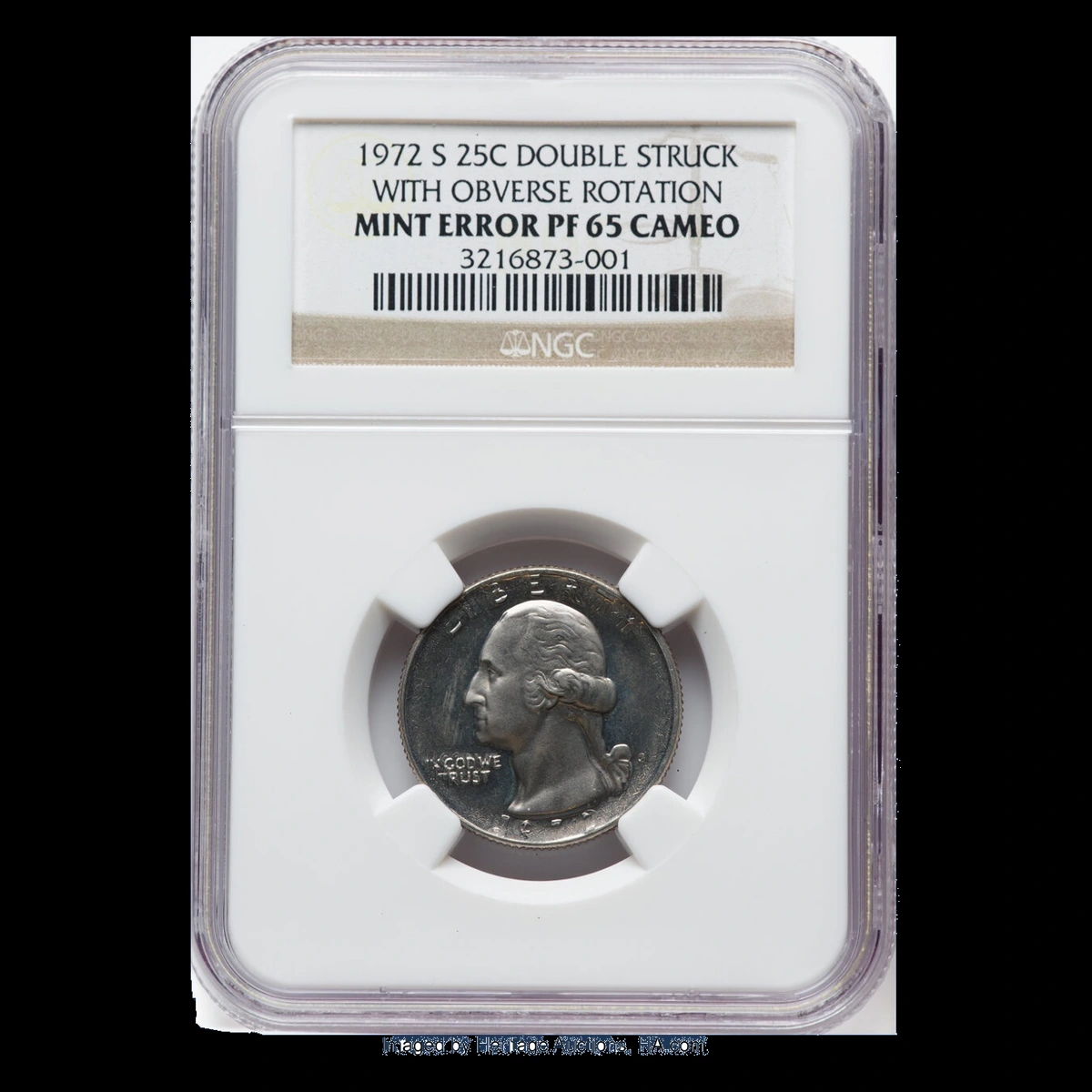
One 1972-S example has a rotated front design and an NGC PR65 Cameo grade. A separate PCGS PR66 coin is described with 35 degrees of movement between strikes inside the collar.
How to Identify
Trace several parts of the portrait, date, or inscription to map the second placement. A small repeated letter edge alone does not establish an additional blow.
The 35-degree measurement belongs to the PR66 specimen. Do not attach it to the separate PR65 Cameo example without evidence.
A rotated-die coin changes the relationship between its two faces. It does not show a second stamped portrait on one face.
What It’s Worth
$300–$3,500 is the estimated range for these double-struck Proofs. Clear separation and clean reflective surfaces strengthen the display.
A 2010 Mint Error News report records $805 for a PR65 Cameo example. The separate PR66 was advertised at $2,350, an asking price rather than a confirmed sale.
11. 1972 Quarter A Quarter Design on Smaller Metal: Wrong Planchet Error
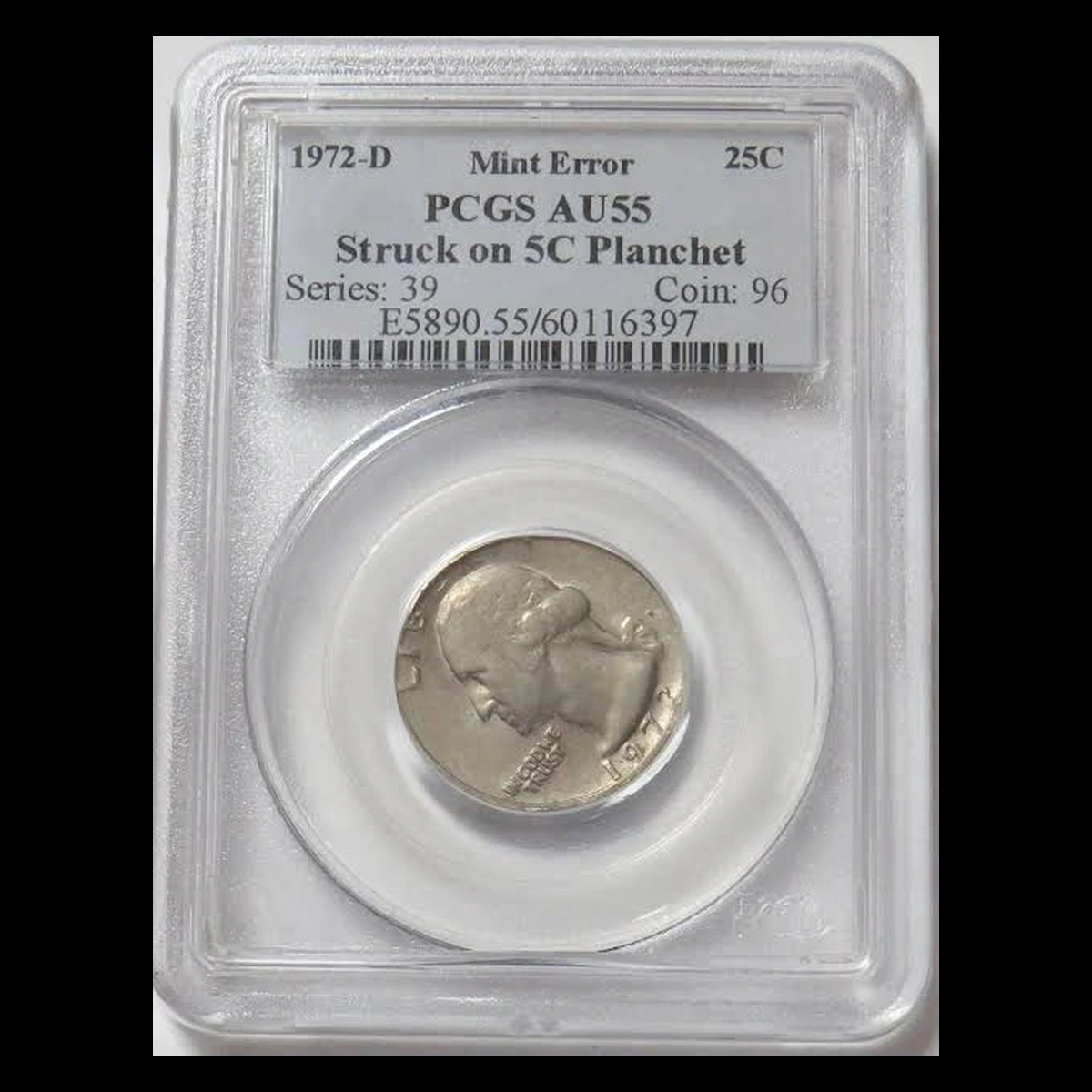
A planchet is the blank ready to receive a design. Denver examples include quarter strikes on nickel, cent, and Philippine five-sentimo blanks.
A San Francisco Proof on a cent blank also received two strikes. Another cent-blank example retains a thin reverse fragment whose metal has not been established.
How to Identify
Record the loose coin’s size, weight, edge, and how the quarter design fits. The reported Denver cent blank weighs 3.1 grams, while one Philippine-blank example weighs 2.4 grams.
A different Philippine-blank coin carries a PCGS MS62 grade. Keep those separate identities intact rather than combining one coin’s weight with another’s holder.
The 3.1-gram double-struck Proof has a readable date and S, repeated UNITED, and collar contact near four o’clock. LIBERTY falls beyond its edge.
Leave the separate retained reverse fragment attached and do not identify it from color alone. These blanks had no earlier coin designs; a finished host belongs to the last section.
What It’s Worth
$150–$10,000 spans the ordinary errors and the double-struck Proof combination. Ordinary smaller-blank strikes may fit $150–$5,000, while the Proof can fit $2,000–$10,000.
A Denver nickel-blank quarter graded PCGS AU58 sold for $172.50 in May 2005. That older lightly worn comparison does not set a ceiling for other blanks, finishes, or combinations.
12. 1972 Quarter A Smaller Brass Piece Joined to the Front: Bonded Blanks Error
A Philippine five-sentimo blank became embedded in the front of a quarter blank during striking. The joined 1972-D object weighs 8 grams and was graded NGC MS62.
This contains both pieces of metal. It is different from a quarter design struck only on a foreign blank.
How to Identify
Study the smaller piece’s boundary near nine o’clock on the portrait side using edge views. Do not pull the joined pieces apart.
The reverse has an unstruck groove near AMERICA that helps explain how the extra front metal affected the strike. Thin test scratches near three o’clock on the reverse are later damage.
The 8-gram figure is the combined weight. It must not be treated as the weight of a single 2.4-gram foreign blank.
What It’s Worth
$2,500–$10,000 is the estimate for a comparable authenticated bonded combination. The visible relationship between the joined pieces is central to its appeal.
Heritage sold the composite for $4,560 in December 2022. A loose foreign blank placed next to a quarter does not recreate the same error.
13. 1972 Quarter A Proof Drawn into a Cup: Reverse Die Cap Error
A coin stuck to a die can receive further blows as more blanks enter the press. Continued striking can stretch its metal into walls around the attached face.
The documented 1972-S Proof formed a cap on the reverse die, which carried the eagle. ANACS graded it PF65.
How to Identify
Begin with a side view showing the cup and its walls. Follow the original quarter design into the stretched metal on both faces.
A later fold bends a coin along a line rather than creating the same drawn cup structure. Inspect the walls for later bending, scraping, or breaks.
The brief description does not establish the number of blows. Visible ridges should not be turned into an exact strike count.
What It’s Worth
$2,000–$15,000 is the estimate based on comparable dramatic Proof errors. It is not a claimed recent sale of this PF65 specimen.
A deep original cup with readable design is more appealing than a damaged cap with bent or broken walls.
14. 1972 Quarter Older Coin Designs beneath the Quarter: Finished-Coin Overstrikes Error
A 1972-S Proof was double-struck over a Roosevelt dime, and another Proof was struck over a 1953 Italian ten-lire coin. A separate 1972 quarter was struck over a finished 1964 silver quarter.
The host designs distinguish these from unused blanks. The quarter-over-quarter example also differs from the two cases involving another denomination.
How to Identify
Find connected older letters or numbers beneath the 1972 design. On the dime-host Proof, NITED STA appears near four-thirty, with repeated GOD TRUST and a visible 72 and S.
The dime’s own date is not established and must not be inferred from the quarter year. The 1953 aluminum ten-lire host needs a separate match to its surviving design.
For the quarter host, compare 1964 near 1972 and follow both overlapping quarter designs. A silver blank alone cannot explain an older struck date.
What It’s Worth
$2,000–$40,000 is the estimated range across authenticated finished-coin overstrikes. Host identity, Proof finish, readable earlier details, and preservation can change the value greatly.
The January 2026 quarter-over-1964-quarter listing reports $8,500. Its fee basis is unspecified, so the amount is not labeled as either hammer-only or fee-inclusive.
The dime and Italian-host Proofs need their own comparisons. Their values cannot be added to the price of the separate silver-quarter host.
Conclusion
Finish and surviving design are especially useful on 1972 quarters. A Proof’s normal repeated blows differ from shifted strikes, and older coin lettering separates a finished host from an unused blank.
Keep joined metal, edge structure, and small remnants intact for examination. When one object combines several errors, describe and value that complete object instead of merging details or prices from different specimens.