Rare 1943 Dime Errors (List & Pictures)
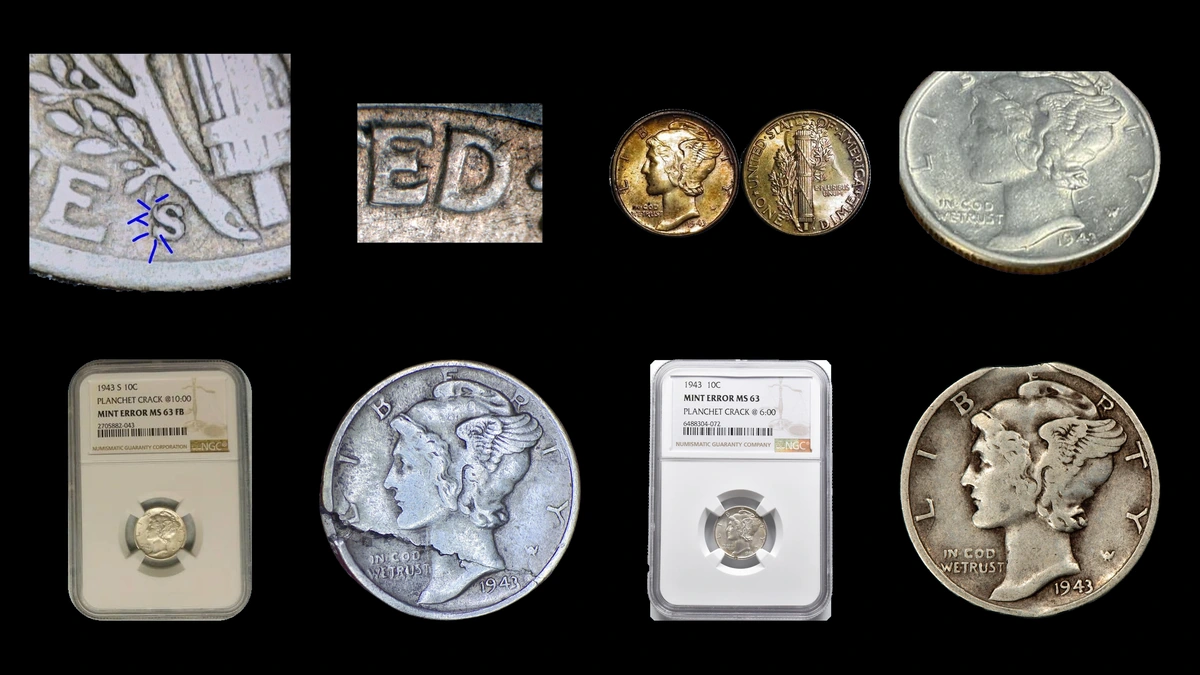
The position of an extra mark can tell you where to begin with 1943 dime errors: beside a mintmark, under the reverse leaves, or along a break in the metal. Estimated values run from $10–$2,000, and a 40% off-center Mercury dime sold for $1,680 in July 2021.
Check the small design features first, then separate flaws in the silver alloy from changes caused by the strike.
| Inspection clue | Possible error | Estimated value |
|---|---|---|
| Extra D or S strokes | Repunched mintmark | $20–$600 |
| Repeated letters or design contours | Doubled die | $20–$500 |
| Unwanted design fragments | Die clash | $10–$150 |
| Raised ridge or rim patch | Die crack or cud | $10–$700 |
| Opening through the coin | Cracked planchet | $35–$350 |
| Thin separating flap | Lamination | $15–$250 |
| Malformed area in the blank | Defective planchet | $40–$400 |
| Gradual thinning toward one side | Tapered planchet | $100–$450 |
| A missing section | Clipped planchet | $40–$750 |
| Localized blocked design | Struck through material | $30–$250 |
| Wide outline with complete design | Broadstrike | $40–$300 |
| Unstruck crescent and cropped design | Off-center strike | $75–$2,000 |
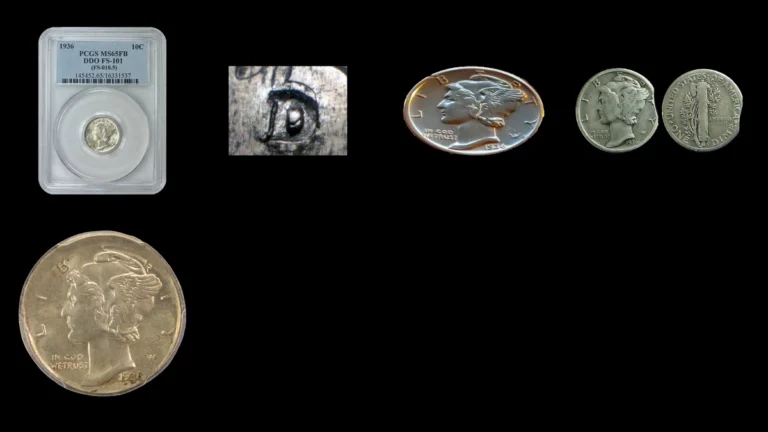
1. 1943 Dime A Smaller D or S Peeks out beside the Main Letter: Repunched Mintmark Error
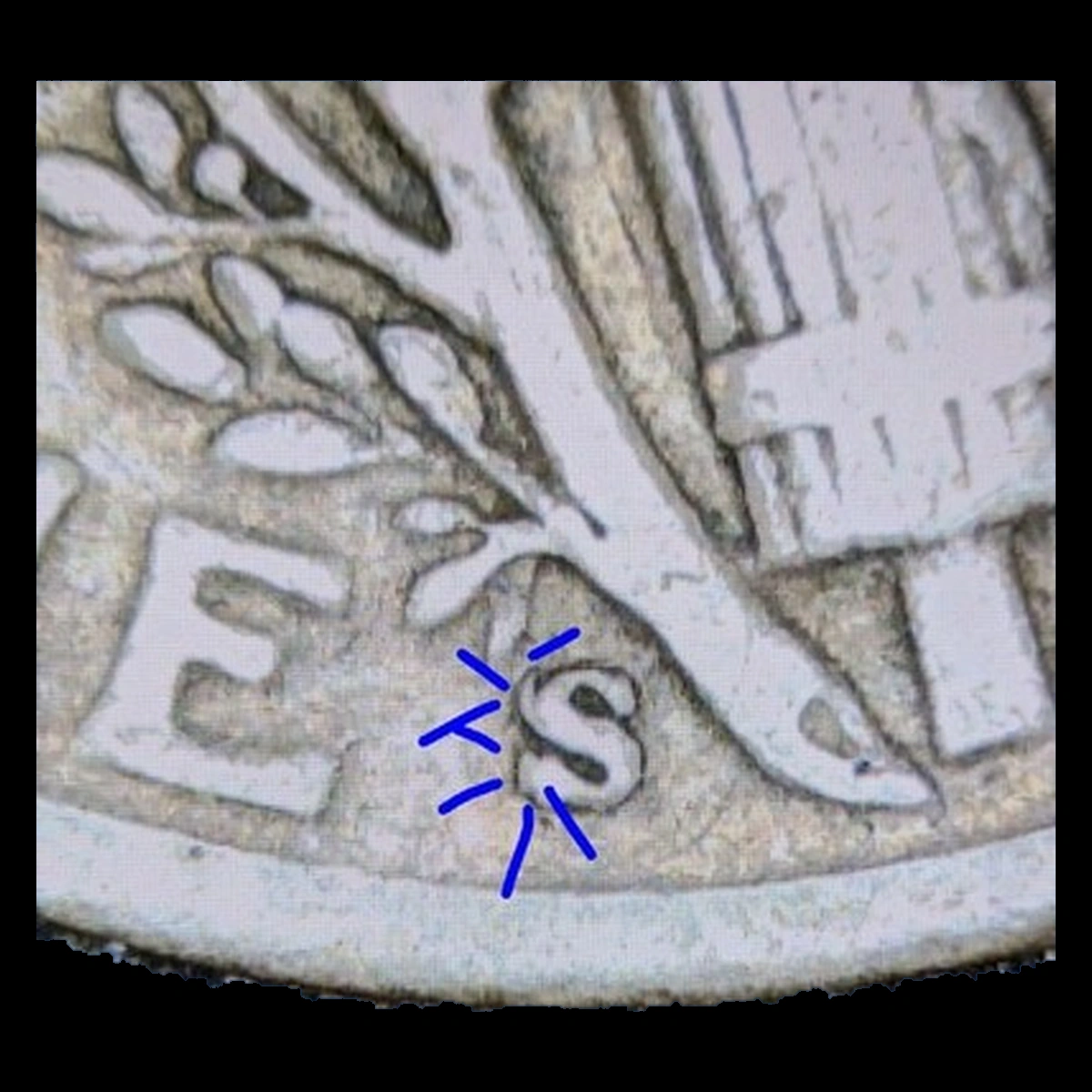
Look to the lower left of the upright bundle on the reverse for a D or S. These letters were punched into dies by hand, and a misplaced earlier impression could remain beside the final one.
Denver FS-501 is a D over an inverted D, while other Denver listings describe remnants in different directions. San Francisco also has several patterns rather than one universal S/S.
How to Identify
For Denver FS-501, compare the inverted-D remnant below and to the right of the main letter. San Francisco FS-501 instead has extra detail to the left and lower left.
The normal S style called Trumpet Tail has a flared end that does not itself prove repunching. Match a recognizable earlier letter fragment to the correct mint and catalog variety.
What It’s Worth
$20–$100 is the estimate for smaller repunched mintmarks, with roughly $100–$600 for recognized varieties showing clearer separation and stronger condition. The inverted-D and stronger S patterns need individual comparisons.
GreatCollections records for the different-series 1951-D Roosevelt FS-501 Full Bands variety run about $35–$115. Those results do not directly price a 1943 Mercury dime variety.
2. 1943 Dime Lettering Has Fine Repeated Edges: Doubled Die Error
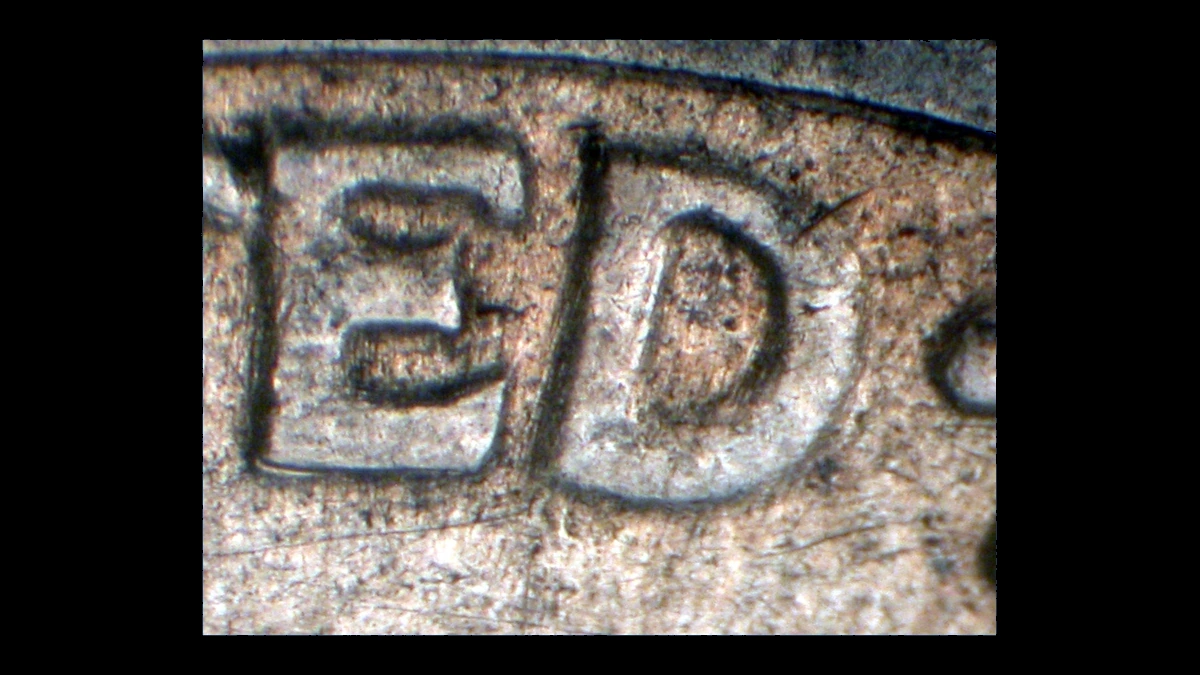
Philadelphia reports place front-side doubling around the date, motto, LIB, or AW initials, while a separate reverse variety has thickened lettering and stars. Denver patterns involve the date and parts of the motto.
The repeated design originates in the die and can recur on coins from that tool. San Francisco front doubling is also reported, but the supplied material gives no secure catalog match.
How to Identify
Sort the coin by its reverse mintmark before choosing a reference; an intact area without a letter indicates Philadelphia. Inspect Denver date detail and OD in GOD or the appropriate wider motto pattern separately from the Philadelphia listings.
Match the full set of details from one die rather than assembling features from several photographs. A flat shelf can result from striking movement and is not the same as rounded repeated design.
What It’s Worth
$20–$150 is the estimate for modest correctly identified doubling, with roughly $150–$500 for clearer recognized varieties on attractive unworn coins. These figures concern small-scale die doubling rather than dramatic multiple strikes.
No completed sale was supplied for the individual patterns. The San Francisco report belongs in an error range only after genuine doubling is established.
3. 1943 Dime Faint Unwanted Shapes Appear beneath the Reverse Leaves: Die Clash Error
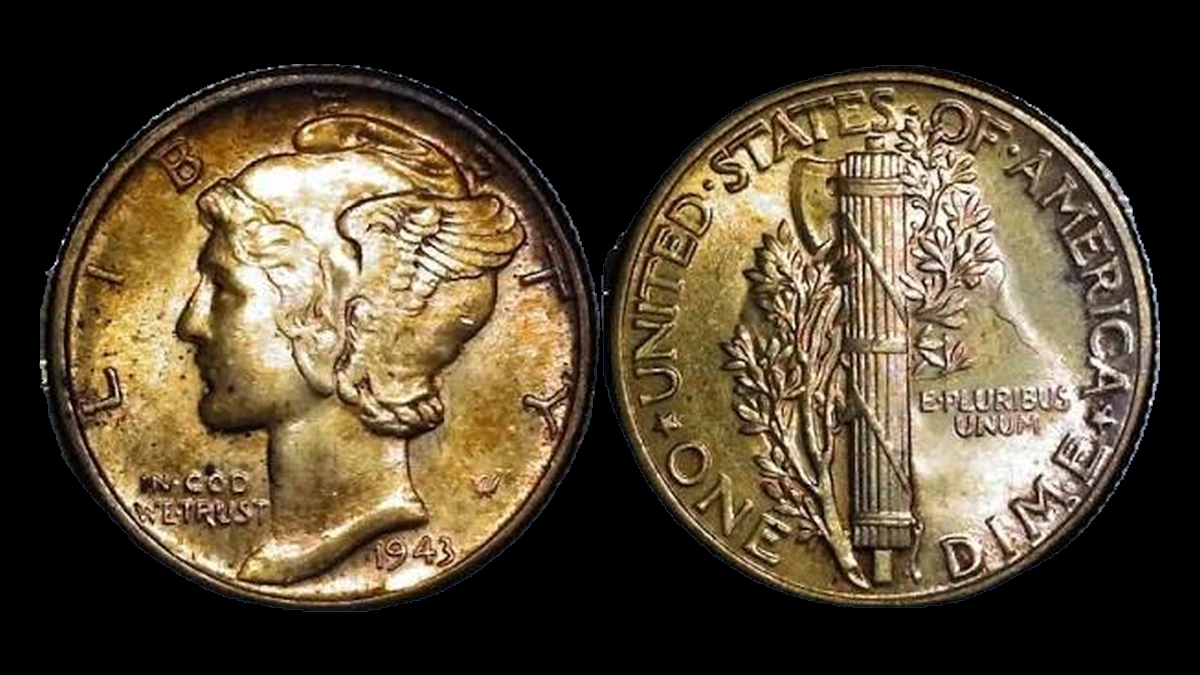
On one Philadelphia die pairing, faint downward marks occur below the leaves beside ER in AMERICA. The same pairing also carries fine front-side doubling.
Dies can acquire fragments of each other’s designs when they meet without a blank between them. Later coins receive those transferred marks in addition to their intended designs.
How to Identify
Compare the marks beneath the leaves with the normal reverse and look for a recognizable transferred design fragment. Random scratches do not establish contact between dies.
The associated front checks include the date and AW initials. Both faces must match the stated pairing rather than unrelated photographs of doubling and clashing.
What It’s Worth
$10–$40 is the estimate for visible clashes on circulated examples; clearer marks on attractive unworn coins may fall around $40–$150. No sale was supplied for this exact pairing.
A faint clash can add little beyond the coin’s ordinary value. When clash marks and doubling occur together, their separate full estimates should not be added.
4. 1943 Dime A Raised Line or Rim Patch Covers Normal Detail: Die Cracks and Cuds Error
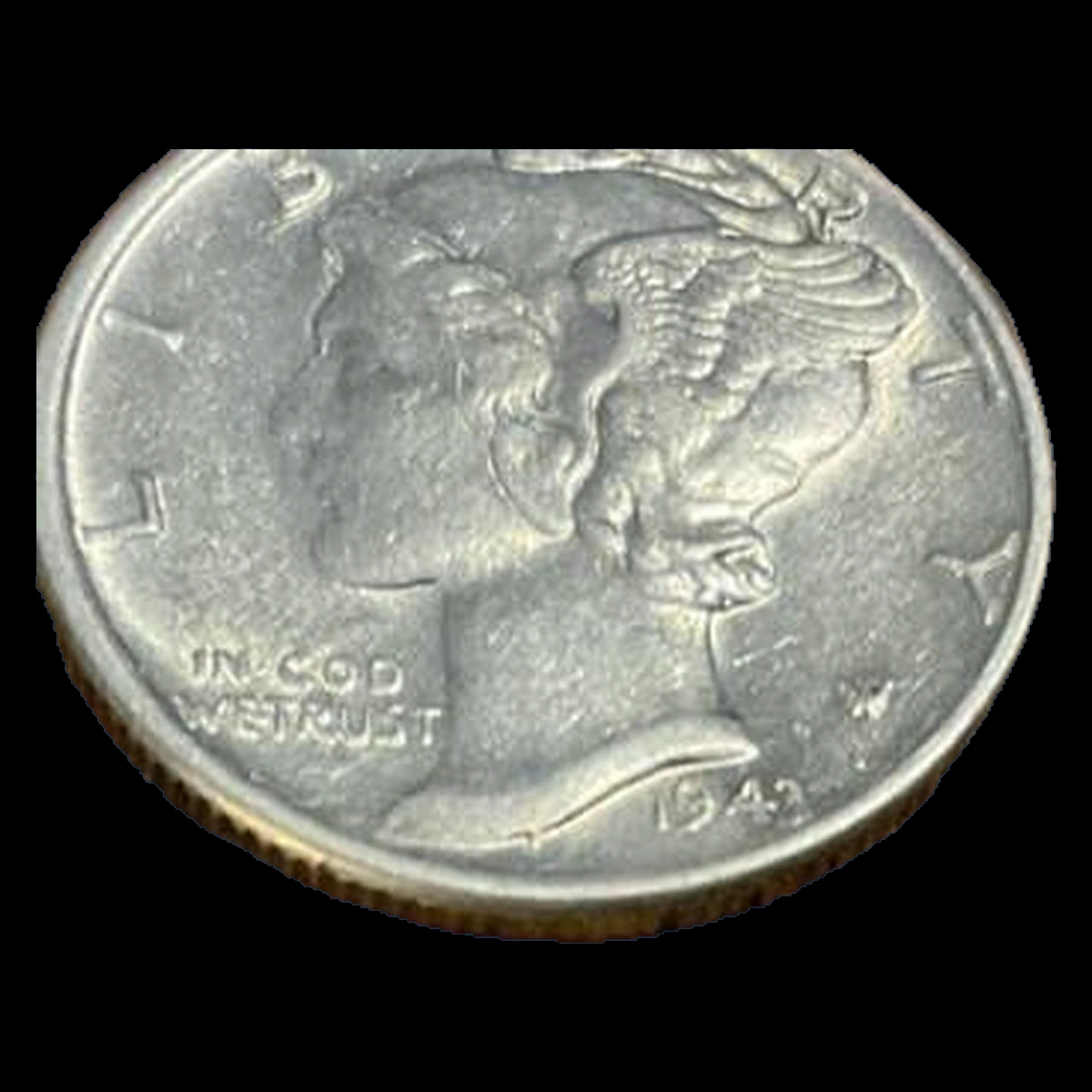
A crack in the die leaves a raised ridge on the coin, while a missing die section can leave a broader raised patch. A substantial break connected to the rim is called a cud.
Philadelphia reports include reverse border breaks and a front cud beside B near ten to eleven o’clock. A Denver example has a raised area along the lower reverse border beside the bundle and DIME.
How to Identify
Use side lighting to distinguish a narrow ridge from a broad patch replacing design. Philadelphia upper-right and lower-right reverse breaks are separate entries, and narrower Denver and San Francisco cracks require their own matches.
Examine the adjacent edge for an impact that might have pushed metal upward. A normal 1943 dime is approximately 2.5 grams and 17.9 mm with a reeded edge; a damaged die does not itself remove coin metal.
What It’s Worth
$10–$60 is the estimate for fine cracks, increasing to roughly $50–$700 for stronger rim breaks. Size, lost design, and preservation explain much of the difference.
A 1970-D nickel with two cuds sold for $63 in October 2022. That different-denomination comparison shows why a visible break alone does not imply a very high value.
5. 1943 Dime A Crack Opens through the Coin’s Metal: Cracked Planchet Error
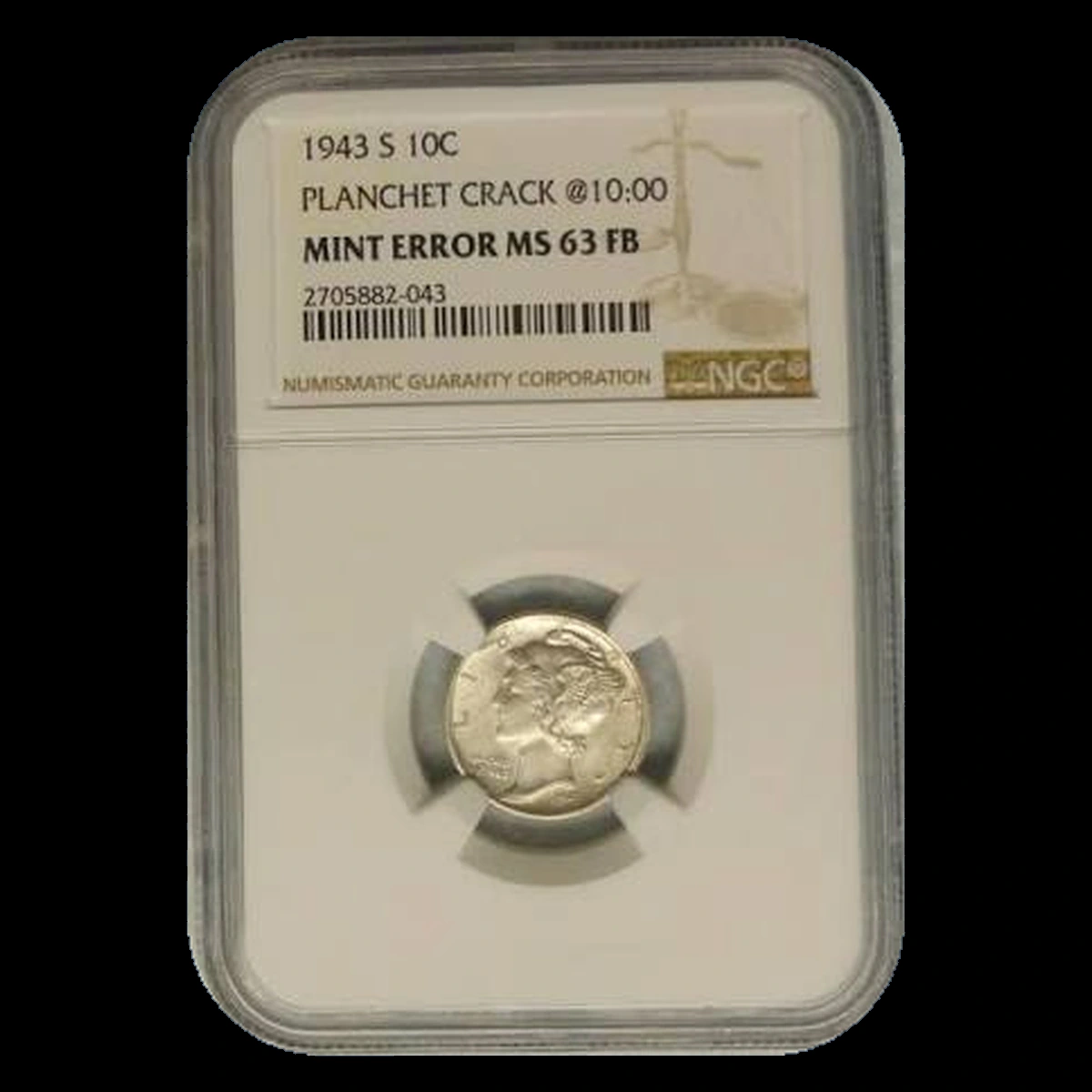
A genuine cracked planchet has a fracture in the blank itself. Pressure during striking can open an existing weakness, leaving an opening rather than a raised line.
A 1943-S graded MS63 Full Bands has a crack entering at ten o’clock. A separate Philadelphia XF45 example has a different crack and substantially more wear.
How to Identify
Follow the opening from the edge onto both faces without bending the coin. Prying, sawing, or fresh tool marks can reveal later intervention.
The ten-o’clock position belongs to the San Francisco specimen only. Full Bands describes clear separation in the reverse’s central straps and does not authenticate the crack by itself.
What It’s Worth
$35–$350 is the estimated range for genuine cracked-planchet 1943 dimes. The Philadelphia XF45 example sold for $41 at Heritage on October 10, 2022.
That sale offers a worn same-year comparison. The unworn San Francisco Full Bands coin needs its own assessment rather than inheriting the XF45 result.
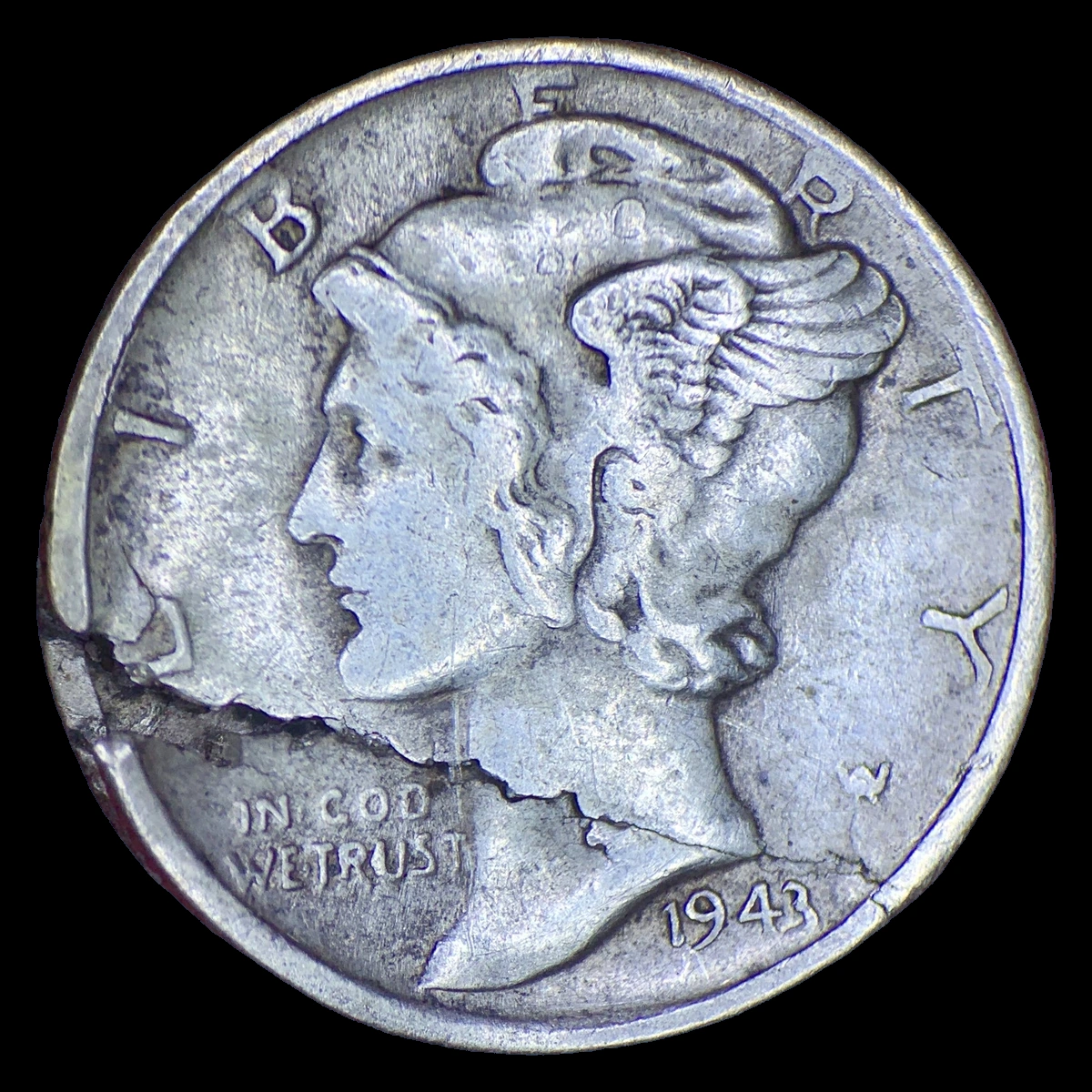
6. 1943 Dime A Thin Flap Separates along the Surface: Lamination Error
Mercury dimes are silver-alloy coins, and a weak internal layer can peel or leave a shallow missing patch. This lamination is not a modern dime’s outer clad layer coming away.
A Philadelphia example is reported in an AU50 collection without an established peeling location. A separate forum coin has a wider opened split that requires examination for possible forced separation.
How to Identify
Leave any attached flap untouched and inspect its boundary for a natural thin separation. A deep tool cut with displaced edges calls for another explanation.
Look toward the edge for bending or prying marks. Missing silver may reduce weight, but an attached flap can leave most or all of the original metal in place.
What It’s Worth
$15–$75 is the estimate for smaller genuine peeling areas on worn coins, while larger natural flaps on attractive pieces may reach $75–$250. No confirmed sale was supplied for the AU50 coin.
The opened forum example qualifies only if the initial separation was mint-made. Later pulling, cleaning, or damage can lower the value of an otherwise genuine defect.
7. 1943 Dime The Design Crosses a Malformed Area: Defective Planchet Error
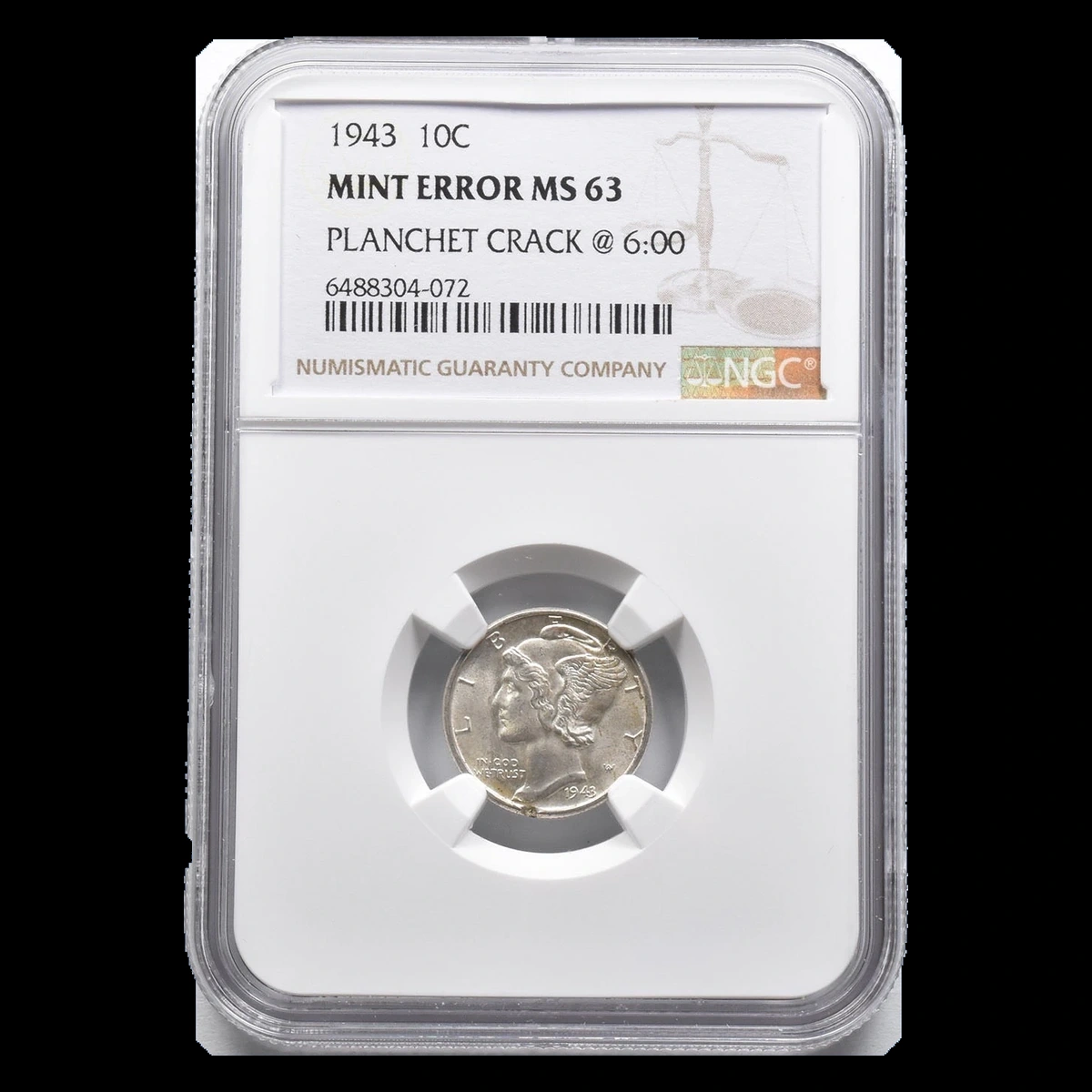
NGC has described a Philadelphia 1943 dime as struck on a defective blank. The term indicates a problem in the metal before striking but does not specify a particular alloy or missing layer.
An irregular area can interrupt the way the design forms. Its actual shape and surface must supply the evidence behind the broader label.
How to Identify
Read the holder’s precise description and follow the design across the defect. A flaw present during striking should affect the way details formed there.
Filing, crushing, and cuts through completed lettering can imitate irregular metal. Neither the word defective nor a low weight establishes that the dime was struck on copper or another wrong metal.
What It’s Worth
$40–$400 is the estimate for a visibly defective 1943 dime blank. The report supplies no measured weight or completed sale for that Philadelphia example.
A 1942-D nickel on a defective 4.4-gram blank sold for $156 in July 2021. Its different metal and denomination limit the comparison, and its weight does not apply to the dime.
8. 1943 Dime One Side Becomes Gradually Thinner: Tapered Planchet Error
A blank cut from the thinning end of a metal strip can have a gradual reduction in thickness toward one side. The thin area may not fill the dies fully, leaving localized weak detail.
A Philadelphia MS63 example is described as a 24% tapered-end planchet. That figure describes the affected portion, not a measured loss of 24% of its weight.
How to Identify
On a loose coin, compare thickness at accessible points with very light pressure. A smooth transition toward the thin side differs from a abruptly shaved edge.
Look for weaker design and edge grooves in the same area as the taper. Weak striking on a normally thick blank does not establish this metal defect.
What It’s Worth
$100–$450 is the estimate for comparable genuine tapered-planchet errors. The 24% MS63 example sold for $252 at Heritage on July 15, 2021.
A visible taper, readable date, and attractive surfaces make that result more useful as a comparison. Do not convert the catalog’s percentage into an assumed missing weight.
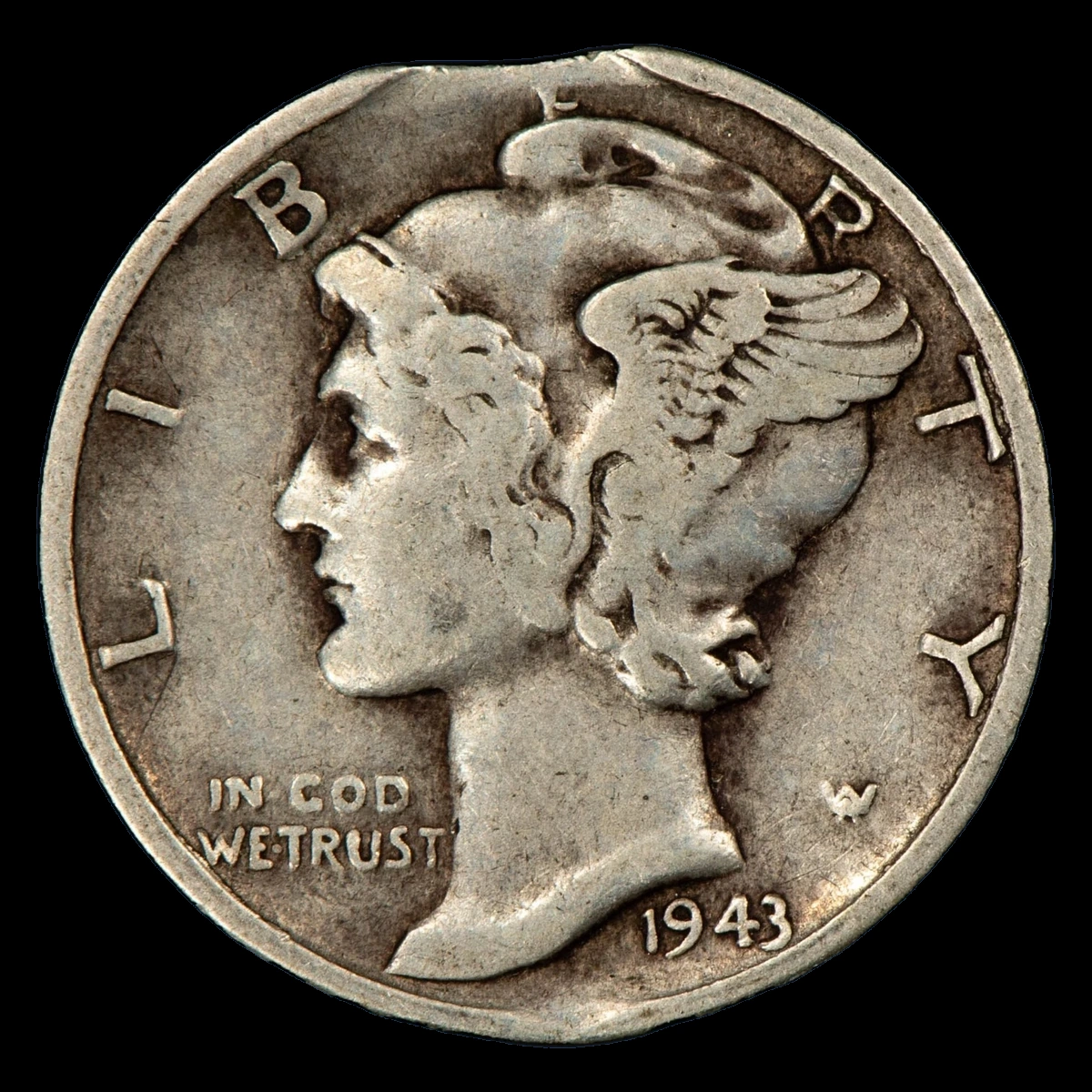
9. 1943 Dime A Curved or Ragged Section Is Missing: Clipped Planchet Error
A blanking punch can overlap an earlier hole or an irregular portion of the metal strip. The resulting incomplete blank receives its design after the shortage already exists.
One Philadelphia coin has a 10% curved clip along the bottom, approximately 5:30 to seven o’clock. Another curved example is clipped near 8:30, while a San Francisco report describes a 6% ragged clip without an established direction.
How to Identify
Inspect the missing boundary and the rim approaching it for natural blank-cutting and striking evidence. Fresh filing or a cut through finished details suggests later removal.
The rim opposite a clip may be weak, which can support the diagnosis when present. Neither low weight nor a high grade replaces examination of the gap itself.
What It’s Worth
$40–$200 is the estimate for smaller genuine clips, with roughly $200–$750 for larger attractive examples. Their own grades and shapes determine the comparison.
A 1997-P nickel with a 20% clip sold for $124 in March 2025. Its different denomination and clip size do not directly price any of the 1943 dime specimens.
10. 1943 Dime A Depression Blocks Part of Liberty’s Portrait: Struck Through Material Error
Philadelphia examples graded MS62 and MS63 have design interrupted by material caught in the strike. The identity of the obstruction is not established.
A separate scratched S-mint coin has a deep blocked area covering the date, motto, and lower portrait. It was described only as probably 1943-S because the date cannot be read securely.
How to Identify
Inspect the depression and its transition into normal design, distinguishing it from a later dent with displaced metal. A fully dated Philadelphia example provides firmer year identification than the blocked S-mint coin.
The latter also shows a stepped edge from eleven to three o’clock, indicating partial contact with the collar. Its large S and faint date traces support a proposed date rather than proving 1943.
What It’s Worth
$30–$250 is the estimate for genuine dated 1943 struck-through examples. The scratched, undated S-mint comparison brought $54 at Heritage on July 8, 2006.
That result belongs to a coin with a proposed year and an additional partial-collar feature. An unworn, clearly dated impression needs comparison on its own merits.
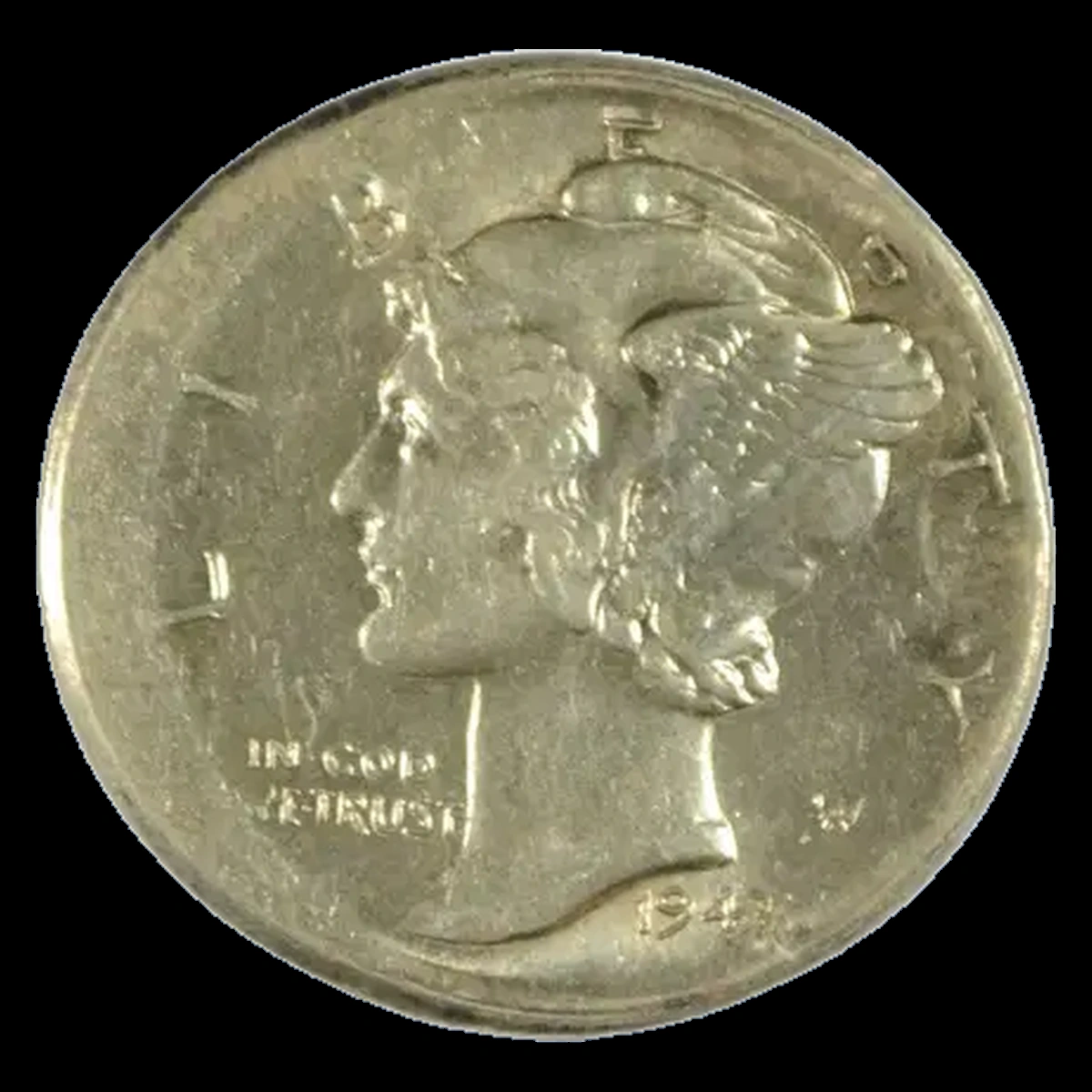
11. 1943 Dime Both Designs Fit inside an Expanded Outline: Broadstrike Error
When the collar fails to restrain a blank, metal can spread beyond the usual diameter. The complete designs may sit unevenly within that wider outline.
Reports include Philadelphia, Denver, and San Francisco examples. One early San Francisco die pairing combines broadstriking with a repunched S, but other S-mint coins do not automatically share that mintmark variety.
How to Identify
Check that the intended design remains on both faces before deciding that an unevenly positioned strike is off center. An uncentered broadstrike can preserve everything within the expanded metal.
Inspect the outer area for natural flow and absent or incomplete reeding. Hammering a finished coin can also widen it, but tends to flatten existing detail and leave impact marks.
What It’s Worth
$40–$300 is the estimated range for genuine 1943 broadstrikes. The amount of expansion, preservation, and any separately established variety affect the whole-coin value.
A different-year 1988-P dime with overlapping strikes and expansion sold for $80.50 in May 2005. Its extra strike makes it an imperfect comparison for a single broadstrike.
12. 1943 Dime A Large Unstruck Crescent Remains: Off-Center Strike Error
A blank that misses the centered striking position receives only part of the design. Unlike a broadstrike, an off-center strike loses intended details beyond the available metal.
A Philadelphia example graded NGC MS63 is 40% off center. A separate PCGS MS62 has a smaller 5% displacement.
How to Identify
Compare the untouched crescent and design cutoff on both faces. A wider border on only one side does not by itself establish a displaced blank.
Confirm that 1943 remains readable and inspect the transition into blank metal for deliberate grinding. The supplied descriptions give no clock direction to assign to either specimen.
What It’s Worth
$75–$350 is the estimate for smaller shifts, while dramatic attractive examples with readable dates may fall around $500–$2,000. These are whole-coin ranges rather than prices for each percentage point.
The 40% off-center NGC MS63 dime sold for $1,680 at Heritage on July 15, 2021. The separate 5% PCGS MS62 coin should not inherit that result.
Conclusion
On a 1943 dime, a raised ridge, an open fracture, and a separating flap describe three different problems. Check the edge and both faces to decide whether the evidence lies in the die, the blank, or the strike.
Keep mintmark patterns and specimen measurements attached to the correct example. A readable date and a clear mechanism make auction comparisons more useful than an unusual shape or a broad error label alone.