Rare 1973 Dime Errors (List & Pictures)
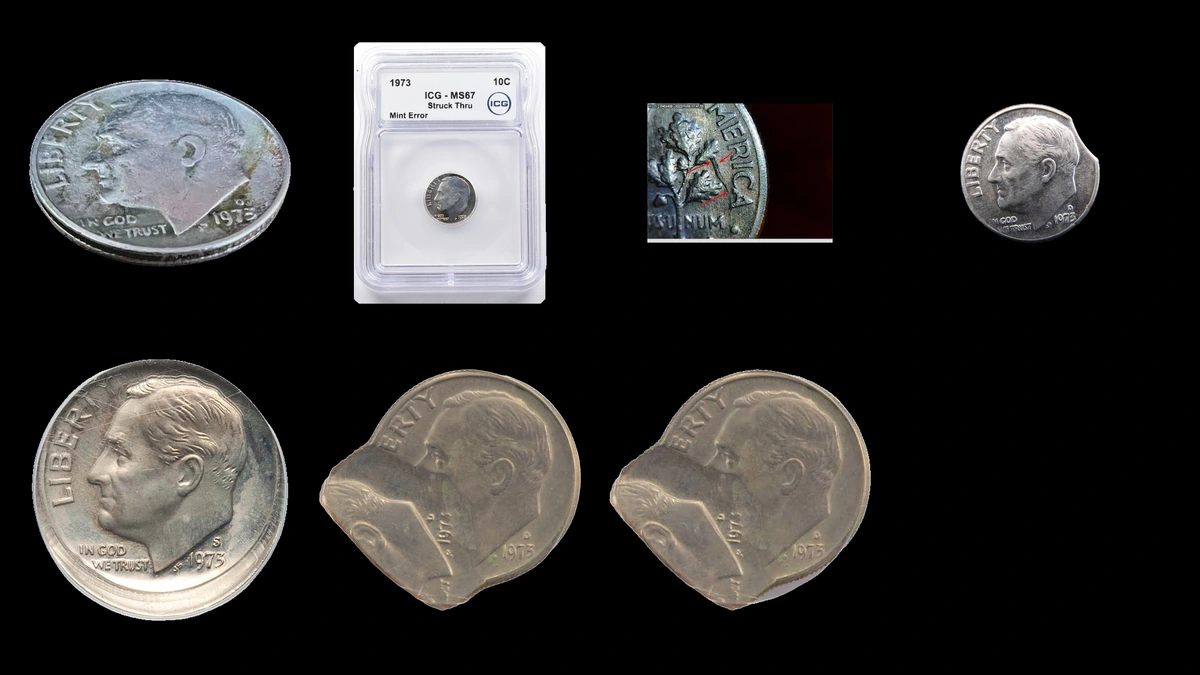
A 1973-S collector Proof can be an error when its strikes move apart or the coin spreads outside its normal border. One double-struck, broadstruck Proof brought $1,800 in September 2020.
These 1973 dime errors have estimated values of $5–$3,000. Keep ordinary coins and Proofs separate as you compare their metal, surface marks, and overlapping designs.
1. 1973 Dime Unexpected Metal Under the Dime Design: Foreign Blank Error
The 1973 records include three foreign blank types. Two received San Francisco Proof designs, while a third became an ordinary Denver dime.
The S Proofs use a 2.5-gram Liberian cent blank and a separate 1.8-gram Liberian ten-cent blank. The Denver AU58 example uses a 2.0-gram Philippine ten-sentimos blank.
How to Identify
Compare the actual weight and metal with the correct certified blank identity. The three measurements do not describe different readings for one specimen.
A normal 1973 dime, including an S Proof, is clad metal weighing about 2.268 grams and measuring 17.91 millimeters. A reflective Proof finish does not mean silver.
The Liberian cent-blank Proof is copper-colored, while the lighter ten-cent-blank Proof can look more ordinary. Color alone cannot identify a country or distinguish a foreign blank from missing outer metal.
What It’s Worth
$1,000–$3,000 is an estimated range for comparable authenticated foreign-blank errors. Finish, intended blank, and preservation help choose a closer comparison.
The Liberian cent-blank Proof sold for $1,560 in November 2020. The different Liberian ten-cent-blank Proof brought $1,380 in January 2009.
The Philippine-blank coin should not inherit either sale or the Proof finish. The lighter Liberian Proof’s other surface errors are included in its whole-coin price.
2. 1973 Dime An Exposed Copper Area: Missing Outer Layer Error
A normal clad dime has copper-nickel outer layers around a copper core. Losing an outer layer can expose copper that carries the design.
A no-mintmark ordinary example is recorded as ANACS MS62 with a missing layer. A separate Denver seller described only a small copper patch near Roosevelt’s ear.
How to Identify
Inspect where the remaining outer metal meets the exposed core. Check the edge structure and weight instead of relying on color alone.
A small patch does not remove as much weight as an entire face. The supplied MS62 record does not establish its affected face here, and it should not be merged with the Denver ear-area report.
Pitting, coatings, and scraped details can point to a later cause. An ordinary 1973 Philadelphia dime correctly has no mintmark.
What It’s Worth
$40–$300 is an estimated range for confirmed layer losses. Extent, original detail, and surface condition affect the comparison.
The no-mintmark MS62 example sold for $63 in February 2006. The unconfirmed Denver patch was part of a $3.50 whole-coin seller offer with several claimed defects.
3. 1973 Dime Dark or Mottled Color With the Metal Intact: Annealing Report Error
Annealing is the heating process used to soften blanks before striking. An abnormal heating environment can affect a blank’s surface color.
A seller suggested that explanation for a no-mintmark 1973 dime. The suggestion is not grading-service confirmation that the color originated at the Mint.
How to Identify
Leave the surface uncleaned and inspect its texture under neutral light. Pitting, bubbles, or a separate coating need other explanations.
Check that the outer layers are still present. Physically missing metal belongs to the layer-loss comparison rather than a color-only heating claim.
Storage, chemicals, and later heat can also darken a finished dime. Original struck surfaces and specialist assessment matter more than a dramatic shade.
What It’s Worth
$10–$100 is an estimated range for a genuine abnormal-heating error. The estimate depends on an original Mint-made surface change.
A seller’s “likely annealing” wording does not establish that premium. Ordinary toning should be judged as part of the coin’s appearance and condition.
4. 1973 Dime Thin Metal Lifting From the Surface: Lamination Error
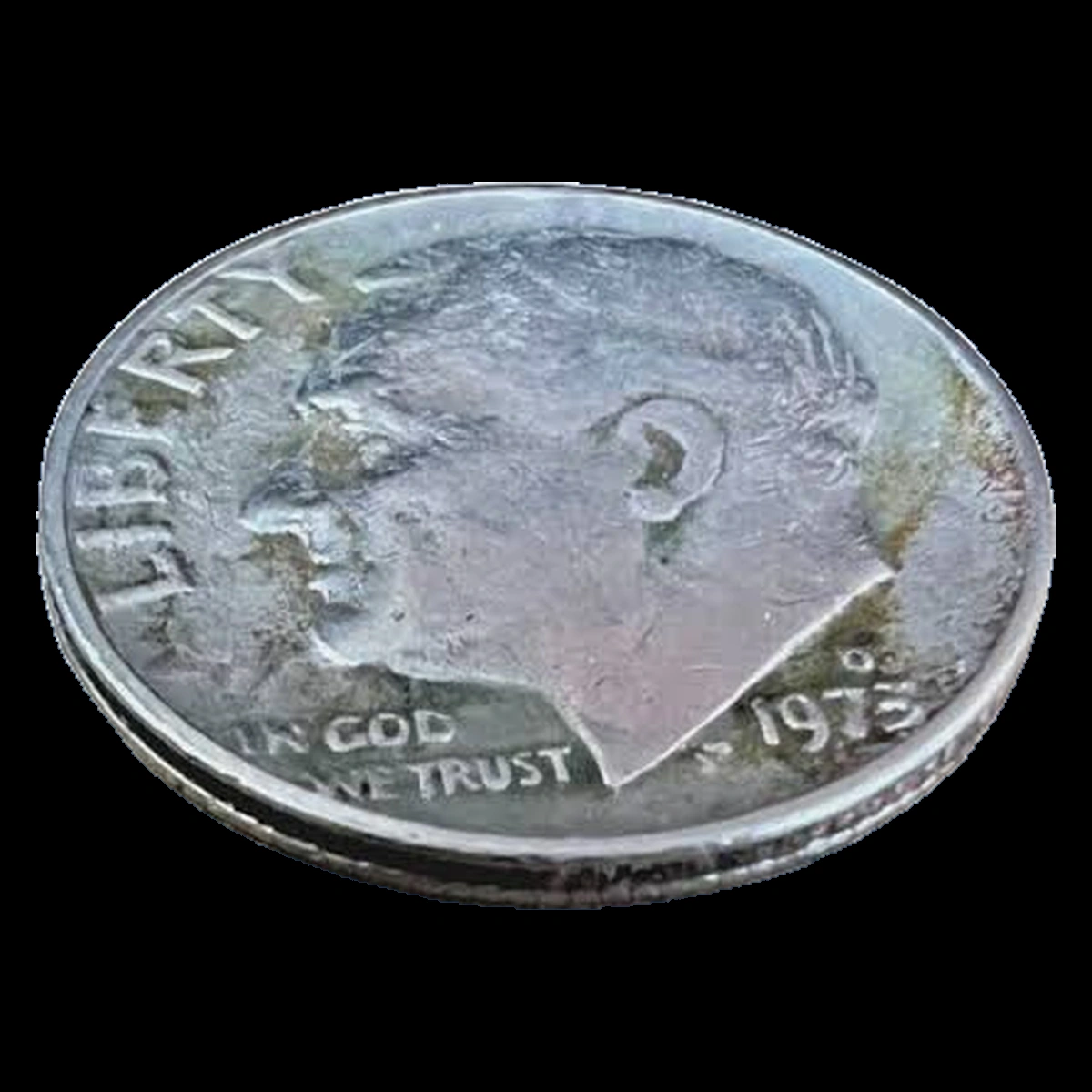
A weak seam can let a strip of metal lift while staying partly attached. This separation is called lamination.
A Denver seller reports a defect near the upper back. The separate Liberian ten-cent-blank Proof has two much clearer long back splits.
How to Identify
Leave attached strips in place and examine the openings beneath them. A scratch cuts across the surface rather than naturally separating a thin layer.
On the foreign-blank Proof, one split runs between about 4:30 and 7:30, and another from about 10:30 toward the oak branch. Those positions belong to that coin alone.
Its recorded 1.8 grams reflects a different blank from an ordinary American dime. Do not treat the weight difference as metal lost from a normal 2.268-gram coin.
What It’s Worth
$5–$150 is an estimated range for small genuine laminations on ordinary dimes. Larger intact strips with clear surrounding detail can attract more interest.
The Denver seller asked $3.50 for a coin with several described defects. The separate Proof’s $1,380 sale included its rare foreign blank and does not value peeling metal alone.
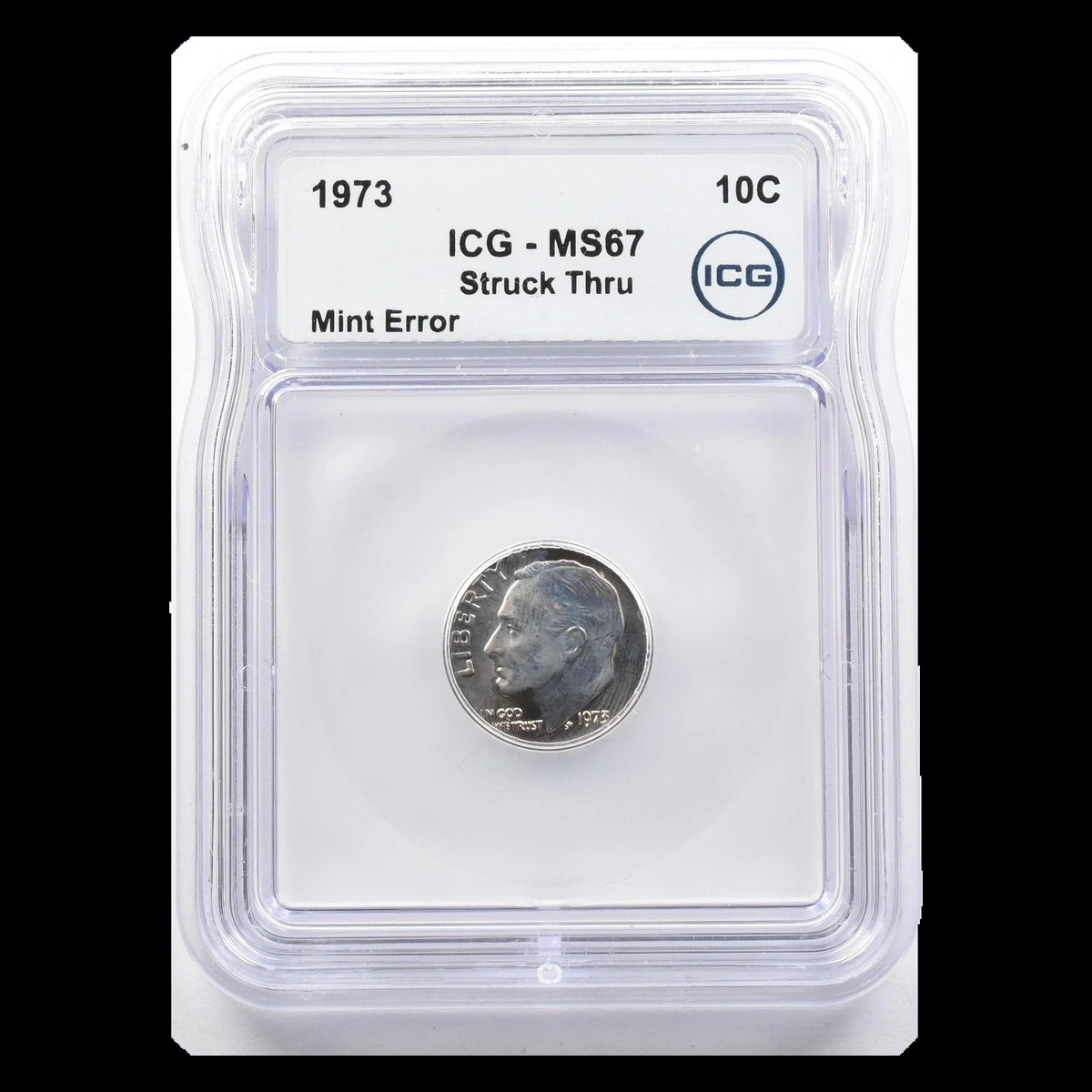
5. 1973 Dime Missing Letters or Fine Thread Marks: Struck Through Material Error
A blocked die recess can fail to form part of a letter. One 1973 year report describes missing IM in DIME, while a Denver seller separately describes a blocked torch area.
The Liberian ten-cent-blank Proof has fine lint-thread impressions near 4:30 on the back. That is a different kind of obstruction on a different coin.
How to Identify
Compare missing IM with the surviving D and E. Selective interruption beside strong letters differs from a word evenly weakened by wear.
Inspect the surrounding metal for scraping or polishing. A seller’s grease explanation for the torch area cannot identify the material by description alone.
For the Proof, locate the actual thread-like lines rather than searching for missing IM. A broad smooth depression does not establish a woven-cloth impression.
What It’s Worth
$5–$200 is an estimated range for simple filled-letter and small struck-through errors. A clear interruption beside sharp detail makes a stronger example.
The Denver $3.50 offer and the foreign Proof’s $1,380 sale each cover a whole coin. Neither amount should be assigned separately to its blocked area or lint marks.
6. 1973 Dime Closely Repeated Letter Edges: Doubled Die Error
A doubled die carries an extra design outline in the tool itself. Each coin struck from it can receive that same small repeated shape.
The 1973 reports include minor front and back doubling without one universal pattern. LIBERTY, the motto, date, and back details are areas to examine, not features promised on every example.
How to Identify
Photograph a suspected detail beside the same area on a normal 1973 dime under similar light. Look for rounded separation or split ends rather than general thickness.
A flat ledge can come from movement during striking. A variety on another dime year or a 1973 half dollar cannot supply the missing identification.
Assess front and back claims separately. Small doubled outlines are different from the widely displaced images made by two blows to one coin.
What It’s Worth
$10–$125 is an estimated range for genuine minor doubled dies. Crisp identifiable detail and better preservation support stronger comparisons.
Worn faint examples usually sit lower. Saying both faces are doubled does not automatically double the value.
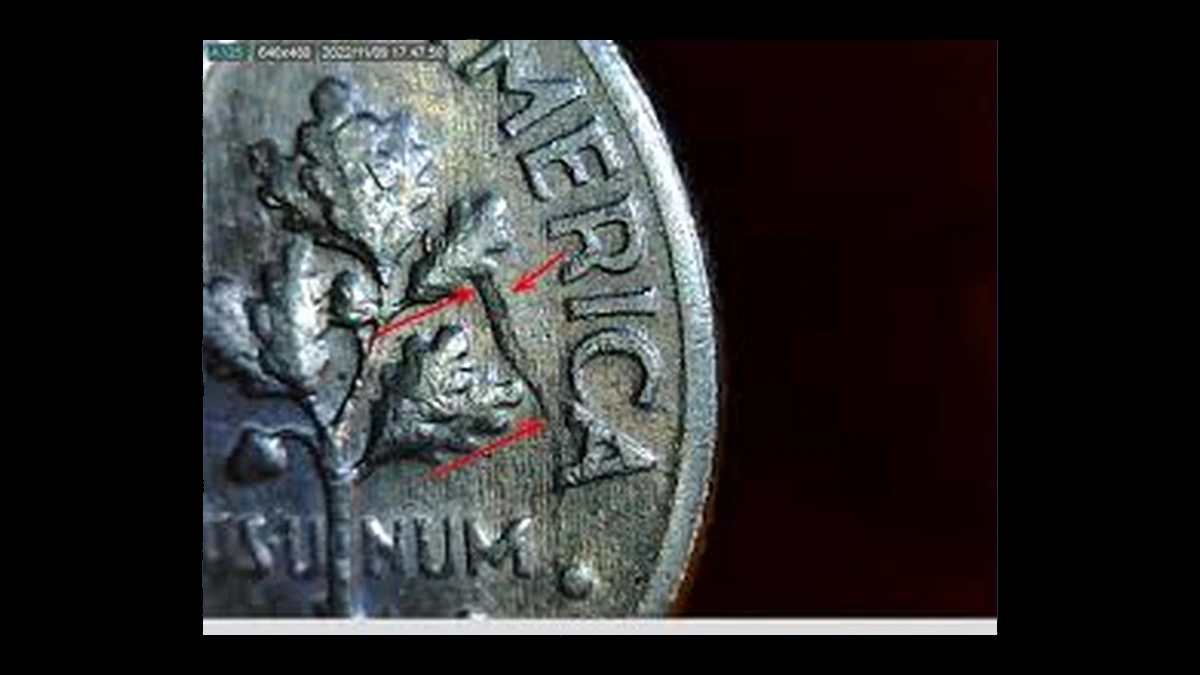
7. 1973 Dime Leaf Shapes Beside Roosevelt: Proof Die Clash Error
The reported 1973-S Proof has olive-leaf outlines near the nose and forehead. Stronger portrait traces appear on its back.
The dies collided without a blank and transferred marks to each other. Later coins picked up those opposite-design fragments.
How to Identify
Compare the extra front outlines with olive leaves from a normal back design. Then check the reverse for the corresponding portrait traces.
The recorded PCGS-holder example came from the Neal Burnett collection. Its extra shapes should be matched to that example instead of calling all fine lines clashes.
Move the light to separate reflections from actual marks. Avoid rubbing the reflective Proof surfaces.
What It’s Worth
$75–$500 is an estimated range for genuine Proof clashes of this general strength. Clear recognizable fragments and undamaged surfaces are important.
A holder alone does not justify the upper estimate. Fine scratches can hide the clash and reduce its appeal.
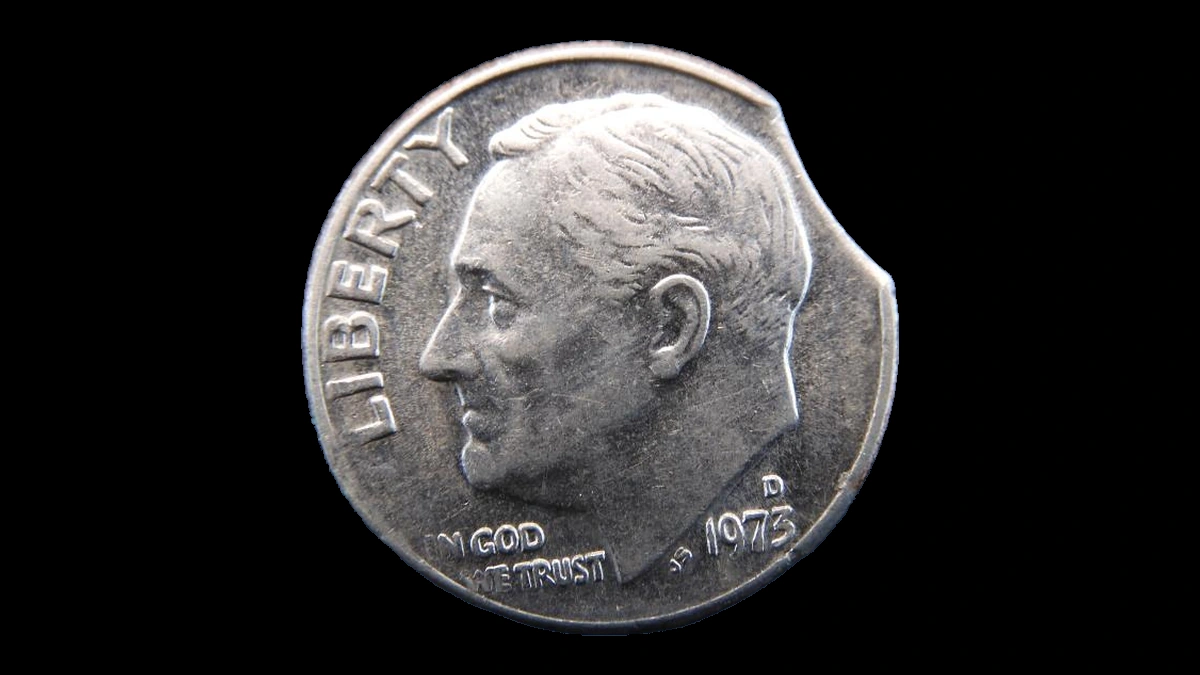
8. 1973 Dime A Curved Gap Along the Rim: Clipped Blank Error
A blank-cutting punch can overlap an earlier hole in the metal strip. The incomplete disk then receives its design with a curved section already absent.
The 1973 reports include a small Denver clip discussed by collectors. No fixed clock position or percentage is established.
How to Identify
Examine both ends of the opening for rim and design shaped around an existing shortage. A burr or saw marks may reveal a later cut.
Compare the weight with a normal dime, but remember that cutting after striking also removes metal. The surrounding original surface is the stronger test.
A weak rim opposite the gap can support a clip. A normal-looking opposite rim does not automatically rule one out.
What It’s Worth
$15–$150 is an estimated range for genuine modest clips on ordinary dimes. Clean gaps with intact dates generally make clearer comparisons than tiny worn shortages.
A section removed from a finished coin by cutting or corrosion does not earn the same error premium.
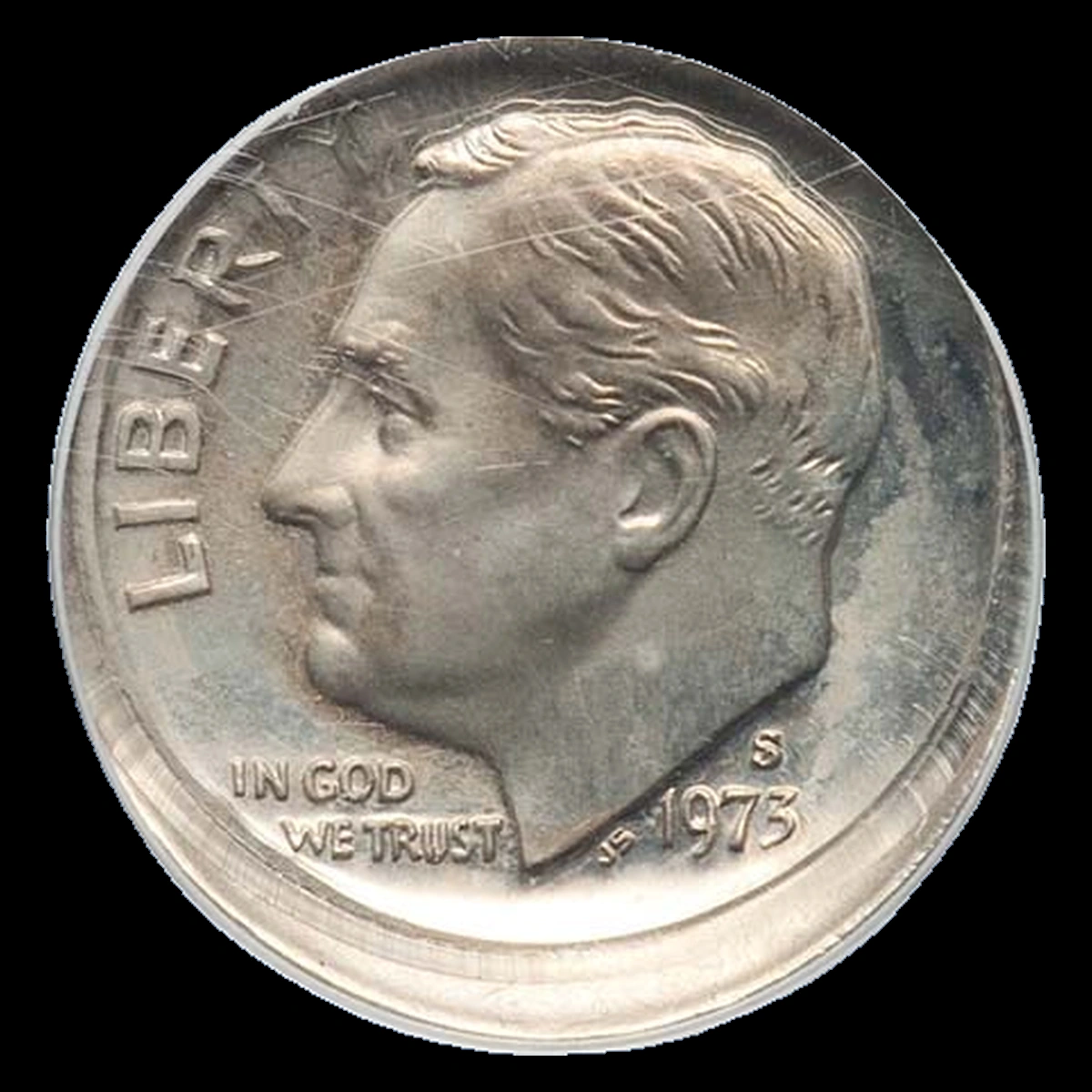
9. 1973 Dime A Blank Crescent Beside Cropped Design: Off-Center Strike Error
An off-center blank receives only part of the design. The area outside the dies stays untouched while some intended detail misses the metal.
A no-mintmark example is about 10% off center toward 11:30. A separate Denver report describes 65% displacement toward 9 o’clock.
How to Identify
Compare where both designs stop and the blank area begins. Both faces should fit the same misplaced disk.
Identify the date and any D before choosing a reference. The 10% and 65% descriptions belong to different coins and should not be combined.
The untouched crescent still contains metal. A later cut or an area ground smooth is a different feature.
What It’s Worth
$30–$350 is an estimated range for ordinary 1973 off-center dimes. A larger readable shift can attract interest, but the date and surfaces still matter.
A 1979-D dime struck 70% off center sold for $92 in May 2005. A large bare area therefore does not guarantee a four-figure price.
10. 1973 Dime A High Wall and Flattened Back: Front Die Cap Error
The Denver cap stuck to the front die and curled upward under further blows. Its wall is especially high near 1 o’clock.
The back flattened as the metal thinned, and a faint sunken reversed portrait appeared. Those effects belong to the same cap.
How to Identify
Use side views to compare the wall with the stretched front design. Support thin parts without flattening or clamping them.
Inspect the flattened back under low light for the faint reverse image. It does not represent a separate flat brockage coin.
A later bend may leave sharp folds or tool damage instead of the original cap shape. The documented example has an NGC MS66 grade.
What It’s Worth
$400–$1,200 is an estimated range for similarly clear caps. Wall height, readable date, and preservation guide the comparison.
Published results record $546.25 in August 2009 for the Denver example. Its high wall and faint mirror detail are included in that one price.
11. 1973 Dime Two Dates and a Neighboring-Coin Boundary: Chain Strike Error
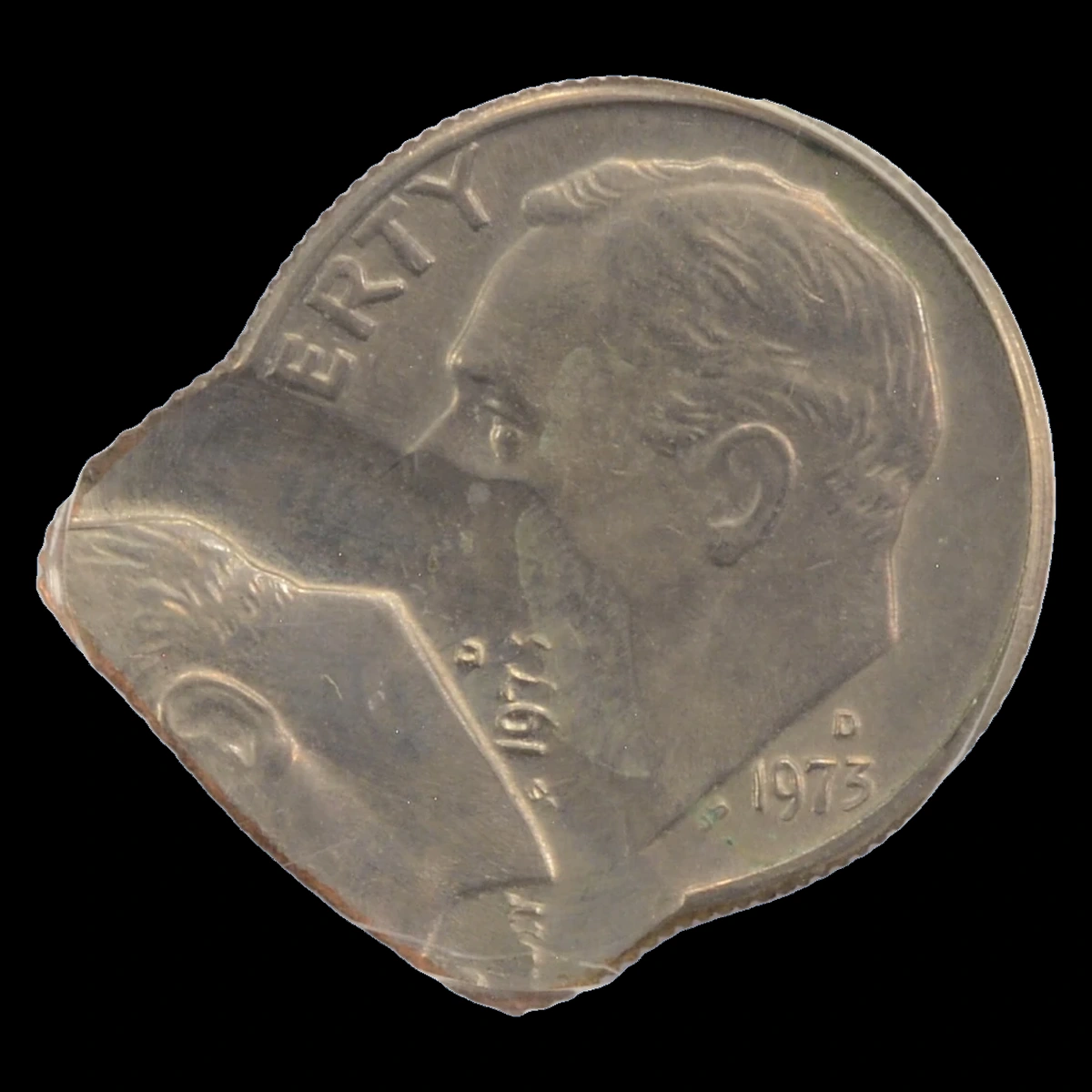
The reported 1973-D chain-strike coin also received a second blow 60% off center. Two complete dates and D marks survived.
A chain strike occurs when another coin beside it restricts spreading along their contact edge. Two dates alone do not prove that neighboring contact.
How to Identify
Trace the two strike images, then locate the boundary made by the neighboring coin. The report supplies no clock position for that boundary.
The dealer describes a PCGS MS62 coin with a light counting-wheel mark on the back. That later surface mark is separate from the chain-strike contact.
Compare the contact edge with the freely expanded areas. A random flat or damaged edge is not enough.
What It’s Worth
$350–$1,200 is an estimated range for comparable combined examples. Clear dates and a convincing contact boundary help explain the accident.
The dealer asked $600 for the complete coin. That is an offer, not an auction result, and the later counting-wheel mark still affects condition.
12. 1973 Dime Opposite-Side Detail Across Three Strikes: Flipover Triple Strike Error
The Denver example received three strikes with a flip between blows. Parts of the front and back designs appear together on its faces.
It was listed in a PCGS Genuine holder. That label states an authenticity conclusion, not a normal numerical condition grade.
How to Identify
Separate portrait fragments from back-design fragments in enlarged photographs. Follow three distinct strike areas where the remaining overlap allows it.
The published description does not fully establish the order of all three impressions. Do not borrow a sequence or percentage from another coin.
The Genuine label also does not identify a specific damage problem here. Read the actual holder and surfaces without supplying an unstated condition.
What It’s Worth
$750–$2,000 is an estimated range for comparable triple strikes involving a flip. Readable designs can matter more than a high condition number.
Published August 2009 results record $1,035 for the coin. Its Genuine label should not be presented as a high numerical grade.
13. 1973 Dime Two Displaced Designs or an Expanded Proof: Double Strike Error
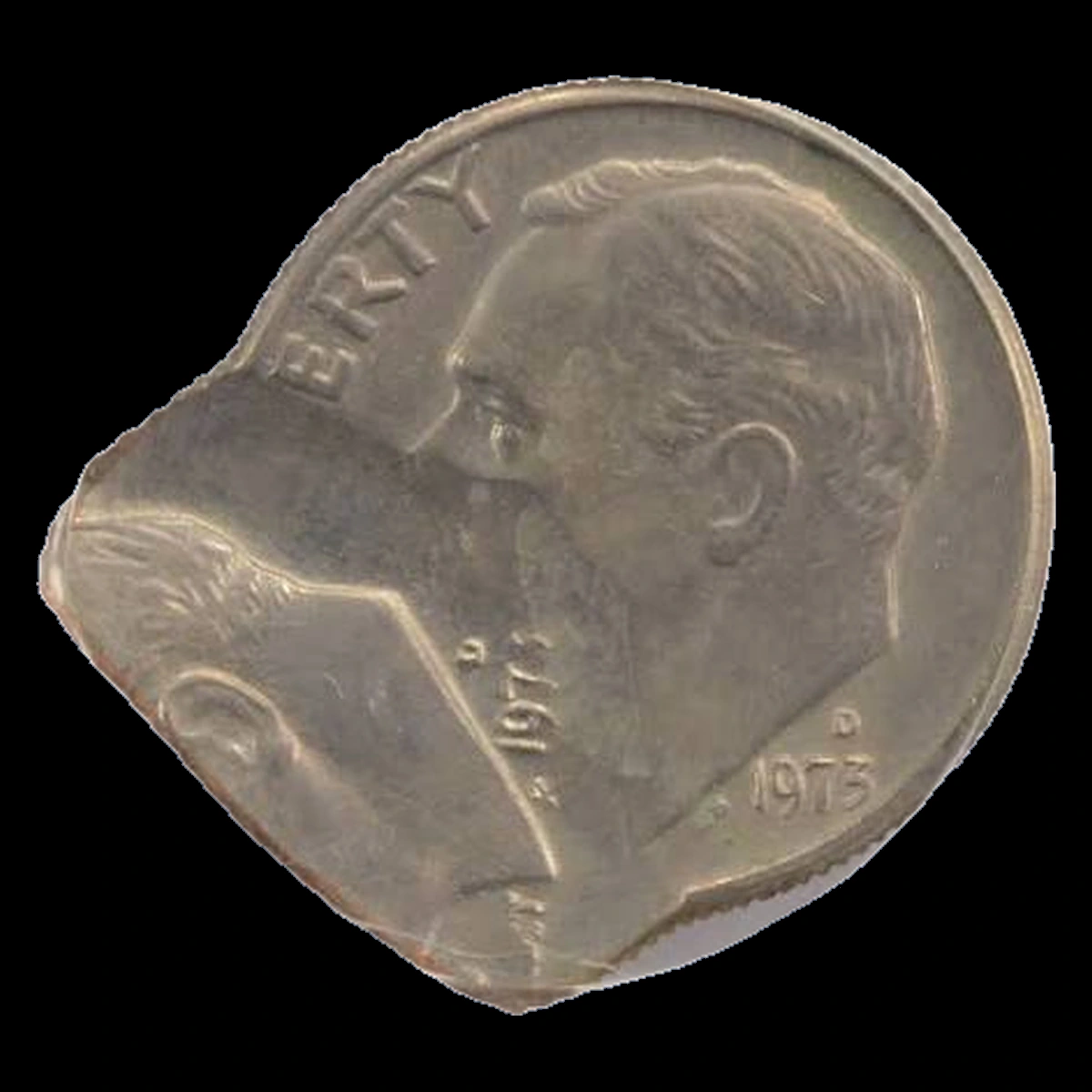
The ordinary Denver example received a second strike 40% off center and was later cleaned. San Francisco Proofs show separate displaced or broadstruck double-strike combinations.
The broadstruck Proof expanded without normal collar support while keeping complete designs. Its NGC PR67 grade describes a well-preserved collector coin.
How to Identify
Identify the finish before choosing a comparison. Follow two distinct images into their overlap rather than judging from sharp detail or shiny surfaces.
A normal Proof may receive repeated blows without the blank moving. Those routine blows are not the displaced or expanded errors described here.
The Denver 40% second strike belongs to its own coin. The separate Proofs need their own photographs and strike descriptions.
What It’s Worth
$150–$3,000 spans the estimated ordinary and Proof ranges. Ordinary double strikes are estimated at $150–$600, while comparable Proof combinations are estimated at $1,000–$3,000.
The cleaned Denver coin sold for $216 in April 2020. The double-struck, broadstruck Proof brought $1,800 in September 2020.
Each result covers its complete coin. The special finish and clear striking changes must both fit before using a Proof-error comparison.
Conclusion
Several of these 1973 records describe multiple effects on one coin. The lighter Liberian Proof has splits and thread marks, while the chain strike also has two impressions.
Estimated values range from $5–$3,000, with each complete object priced once. Keep its blank, mint, finish, and strike sequence together, and preserve any attached metal or curved cap wall during inspection.