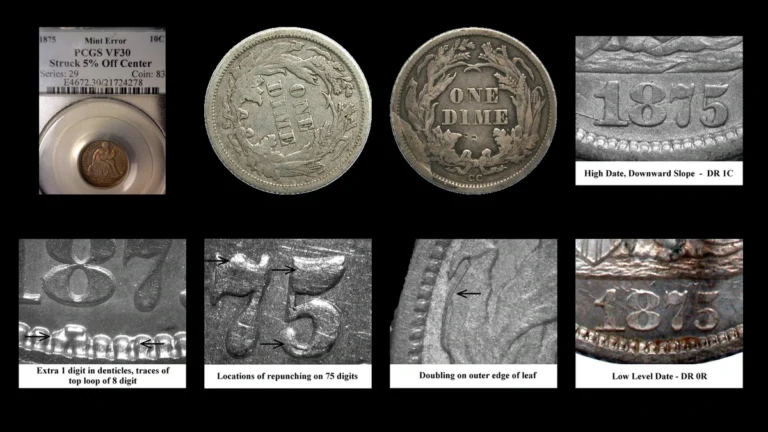
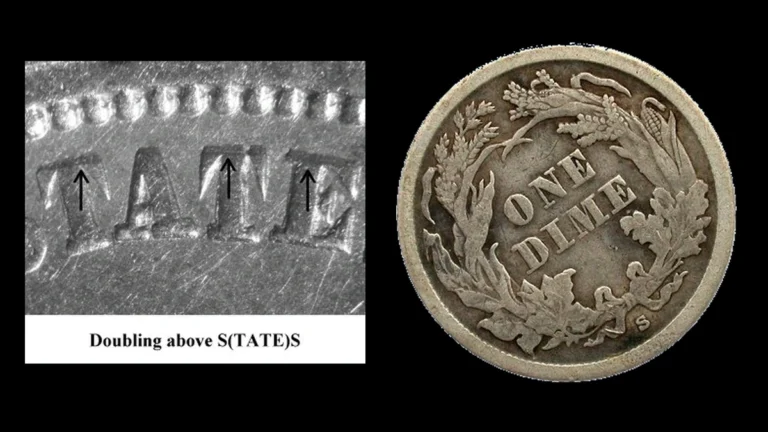
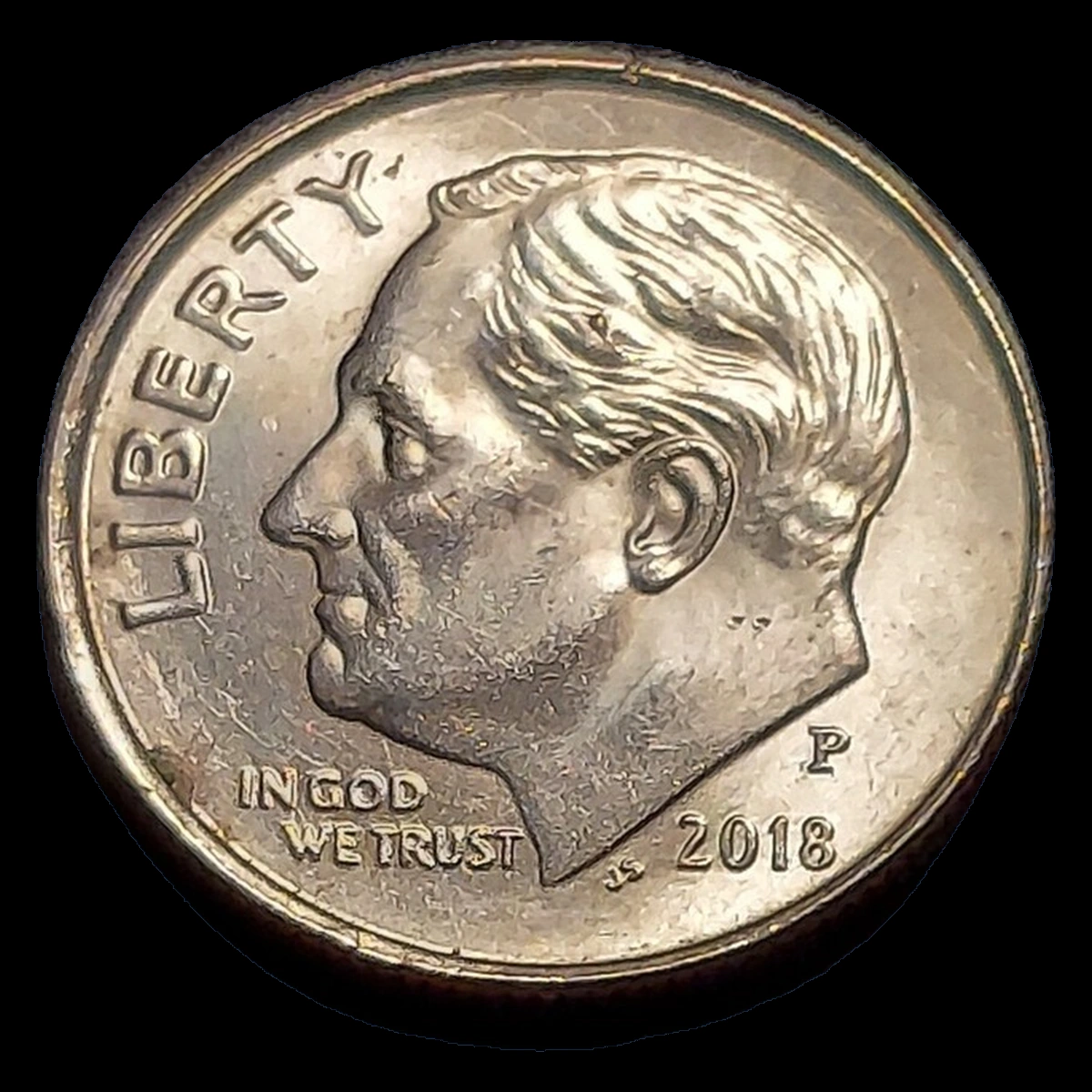
Rare 2018 Dime Errors (List & Pictures)
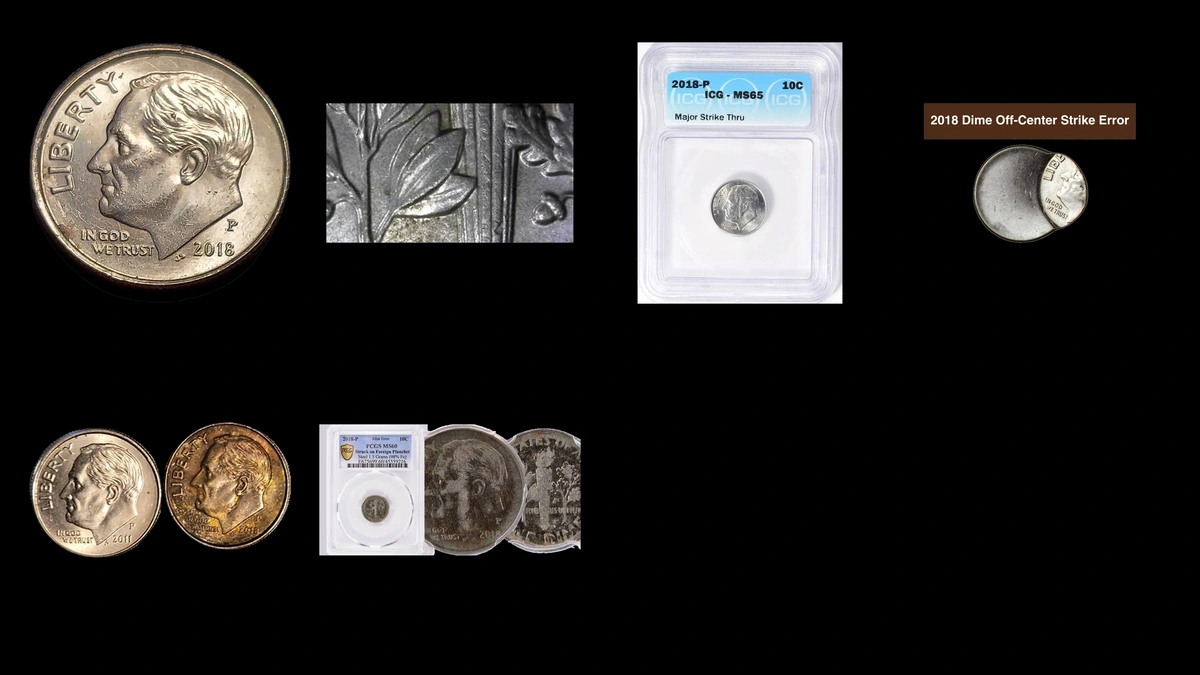
A Philadelphia dime on a mostly iron disc sold for $2,160 in July 2023, far above the modest premiums associated with tiny branch marks. The 2018 dime errors below have estimated whole-coin values of $2–$3,000.
Examine raised and recessed features first, compare both faces and the edge, then use weight and composition to investigate copper-colored or unusually light coins.
| What looks unusual | Possible category | Estimated range |
|---|---|---|
| Extra raised stem | Die dent | $5–$15 |
| Fine ridge or mound near branches | Die crack or chip | $2–$30 |
| Repeated letter contours | Minor doubled die | $5–$100 |
| Depressed or weak portrait area | Strike-through | $20–$150 |
| Wide outline or shifted designs | Collar failure or off-center strike | $15–$500 |
| Exposed copper front | Missing clad layer | $100–$600 |
| Light, magnetic wrong metal | Iron planchet | $1,500–$3,000 |
A normal clad dime has copper-nickel outer layers bonded around a copper core, with a weight of 2.268 grams and diameter of 17.91 millimeters. The 2018-S silver Proof is a different collector product containing 90% silver and weighing 2.50 grams.
1. 2018 Dime Another Stem beside a Branch: Die Dent Error
The Philadelphia report describes an extra raised branch-like shape caused by a dent in the die. An object made a hollow in the tool, which later filled with coin metal during striking.
This differs from steel breaking away as a chip or from repeated design in a doubled die. An extra stem’s appearance should not settle among those explanations without comparison.
How to Identify
Compare the branch arrangement with a normal reverse and locate the isolated raised addition. Inspect its boundary for original struck metal rather than an attached deposit.
A later impact can leave a hollow with a pushed-up lip. Confirm the P and full date while checking whether the suspect addition matches the reported die-made shape.
What It’s Worth
The estimated whole-coin range is $5–$15. The finder’s discussion attributes an approximately $10 opinion to specialist Mike Diamond, while other participants questioned buyer demand at that amount.
This is an opinion, not an auction record. A tiny visible feature should not receive a major-error price simply because a close-up enlarges it.
2. 2018 Dime Small Raised Lines or Bumps: Die Cracks and Chips Error
Reports on Philadelphia reverses describe fine lines and compact raised areas near the olive and oak branches. Metal entering a narrow die crack makes a ridge; metal entering a small chipped area makes a mound.
How to Identify
Keep the torch visible for orientation and examine each branch separately. Follow the feature into the surrounding design to distinguish a ridge or mound from a bright scratch edge.
A chip enclosed within the design is not a rim cud. Check for a genuine rim connection before using that larger-break term.
What It’s Worth
Modest examples are estimated at $2–$30, with tiny marks near the lower end. These are guide-based values rather than recorded sales assigned to each chip, and a dramatic nickname does not establish a higher premium.
3. 2018 Dime Extra Outlines beside Letters: Doubled Die Error
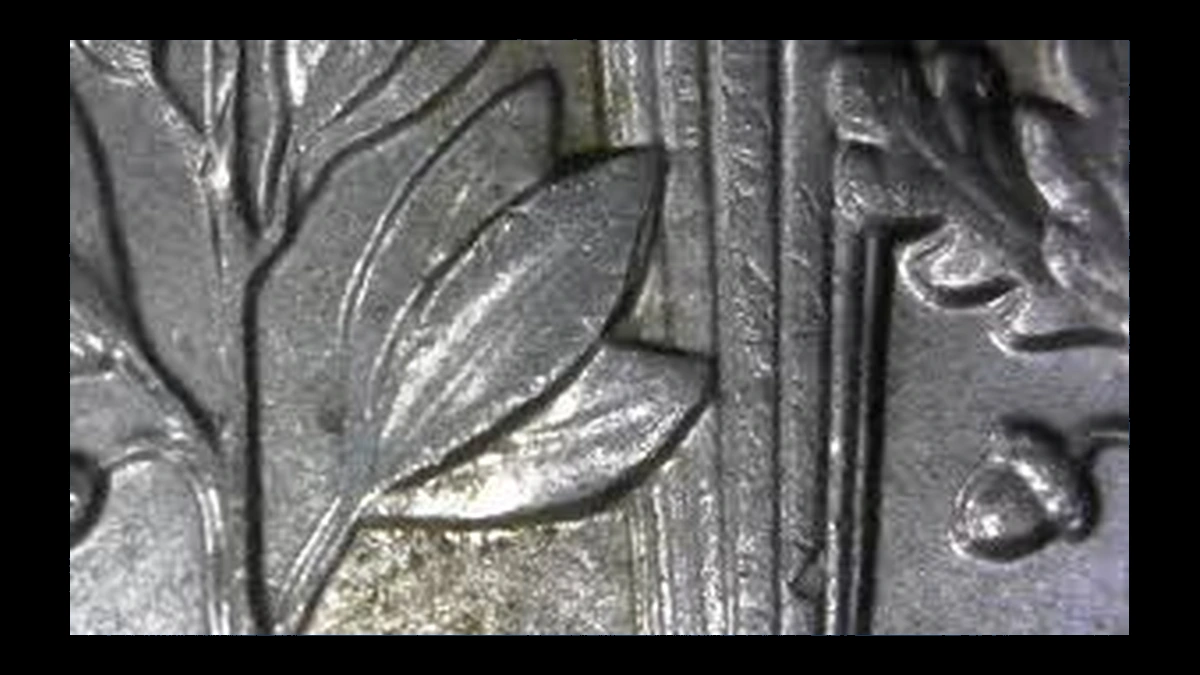
The supplied reports concern both faces, with front search areas including LIBERTY, the motto, and date, and reverse reports involving outer wording and denomination. A genuine doubled die carries the extra design before it strikes the coin.
A minor Denver variety is mentioned, but unrelated photographs should not be pooled into one required pattern. Flat shelves from strike movement or spreading from die wear can also make letters appear doubled.
How to Identify
Choose the mint and face, then compare the secondary outline on the same letters with a confirmed example. Look for repeated contours without the main stroke appearing shaved down into a shelf.
A front image and a different coin’s reverse cannot jointly establish one variety. General descriptions identify search areas, not a complete set of diagnostics.
What It’s Worth
Identified minor doubled dies are estimated at $5–$100. The 2018 guide discussion supplies estimates rather than a series of certified auction results.
More listed locations do not automatically make a seller’s claim stronger. Ordinary shelf-like doubling should not receive the same variety premium.
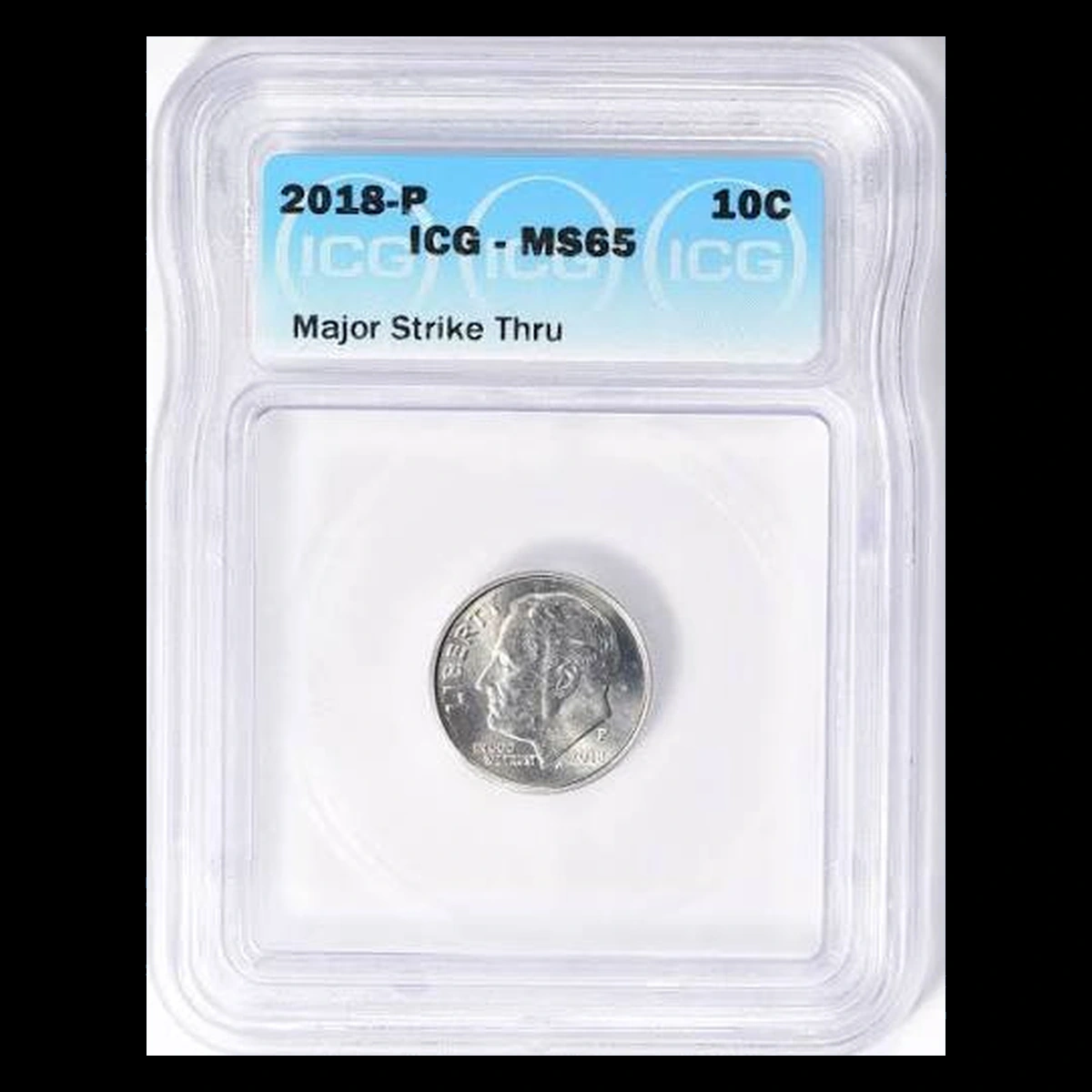
4. 2018 Dime A Hollow Interrupts the Portrait: Struck Through Material Error
One report describes a vertical depression across Roosevelt’s portrait, where material blocked the die’s contact with the blank. The resulting area is weak or recessed, unlike an extra raised branch.
A separate Denver seller used the name “Smoking Roosevelt.” That nickname does not identify the same object, location, or specimen as the vertical portrait report.
How to Identify
For the portrait example, follow the interrupted design from the head toward the cheek. Inspect under side light for a pressed impression rather than a fresh cut with burrs or tool marks.
Evaluate the Denver candidate from its actual boundaries instead of interpreting the nickname as proof of wire or another object. Neither report establishes retained material.
What It’s Worth
Minor through conspicuous impressions are estimated at $20–$150. No verified sale links these separate reports, so the range reflects comparable modern strike-throughs rather than a special price for the seller’s label.
5. 2018 Dime Measurable Outward Spread: Broadstrike and Collar Failure Error
A true broadstrike expands because the collar, the ring around the blank, failed to restrain its width. Both complete designs can remain within that wider outline.
The Philadelphia reports include an expanded-strike category and a separate smooth-edge account. Smoothness alone at ordinary size does not establish a broadstrike.
How to Identify
Measure several widths and trace the entire outer design on both faces. Pair actual spread with an edge formed during that strike, rather than relying on one broad-looking border.
Inspect for filed or crushed grooves and later rolling damage. A normal-sized smooth-edge coin needs a separate explanation instead of automatically inheriting the broadstrike identification.
What It’s Worth
Genuine 2018 broadstrikes are estimated at $50–$300. A 2000-P MS65 combining broadstrike and multiple striking sold for $159 in September 2025, a different-year compound-error comparison.
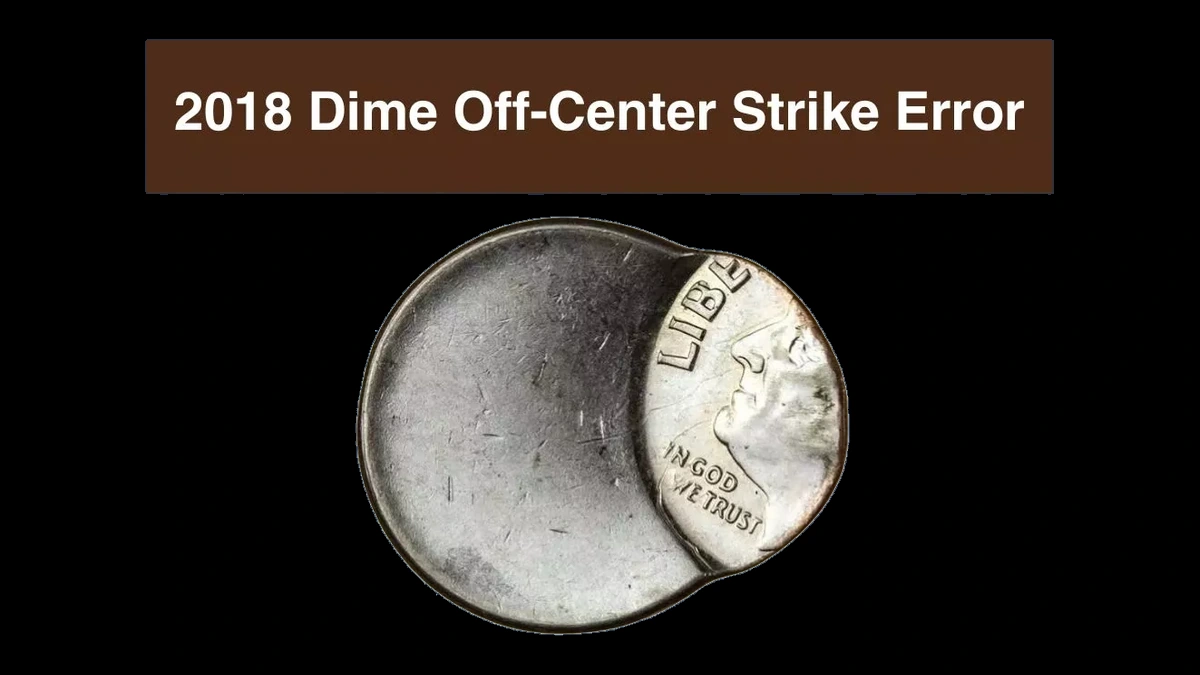
6. 2018 Dime Both Designs Shift beside Unstruck Metal: Off-Center Strike Error
A portrait displaced right with a wider left border does not by itself prove the entire blank was misplaced. One die can shift laterally while the opposite design stays centered.
A true off-center blank leaves corresponding displacement and untouched metal on both faces. The generic Philadelphia report should not supply a 30% figure to the subtly shifted portrait.
How to Identify
Turn the dime over and compare design boundaries before estimating any percentage. A centered reverse opposite a lopsided obverse points toward a different die-alignment explanation.
Inspect the unstruck area for original texture and verify the complete date and surviving mintmark. Grinding or polishing can remove detail without producing an original blank crescent.
What It’s Worth
Genuine offsets are estimated at $15–$500 from small shifts through stronger readable-date examples. A 1977 MS64 Full Bands struck 10% off center sold for $109 in June 2026, offering different-year context.
A small one-face shift should not be priced as a dramatic two-face displacement. The quoted range is not a claimed top-price 2018 auction result.
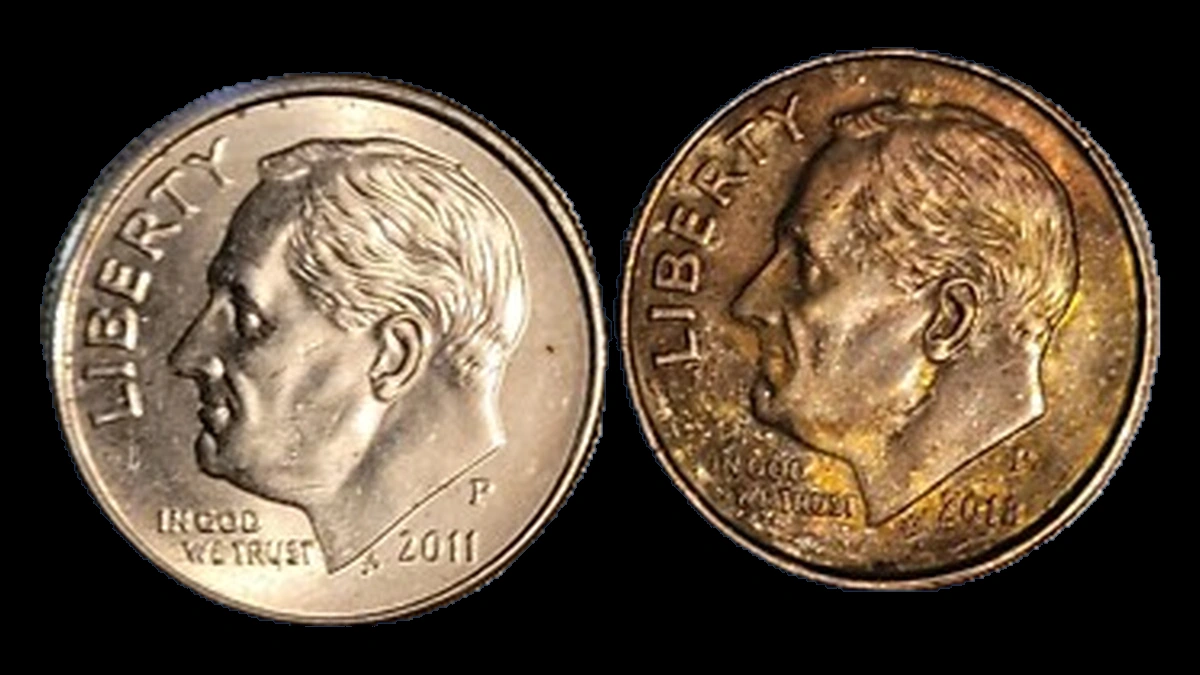
7. 2018 Dime Copper Appears on the Front: Missing Obverse Clad Layer Error
A certified Philadelphia MS64 has its front clad layer missing, exposing the copper inside. The lost outer material can lower the weight while leaving the coin’s basic outline intact.
The supplied 2018 description gives no exact missing percentage. The 80% figure attached to a separate 2019 comparison must remain with that coin.
How to Identify
Compare the exposed face with the reverse and the edge structure, then weigh the coin against the normal clad standard. The shortage depends on the actual amount of absent layer.
Look for chemical roughness, sanding, coatings, or staining that could imitate copper exposure. Color alone cannot establish original layer loss, and the separate silver-Proof standard should not be used for a normal P-mint clad coin.
What It’s Worth
Comparable identified examples are estimated at $100–$600. The 2018-P PCGS MS64 sold for $384 on July 15, 2021.
A 2019-P MS61 Full Bands missing 80% of its obverse layer brought $139 in September 2024. Its year, grade, and extent of loss differ from the 2018 specimen.
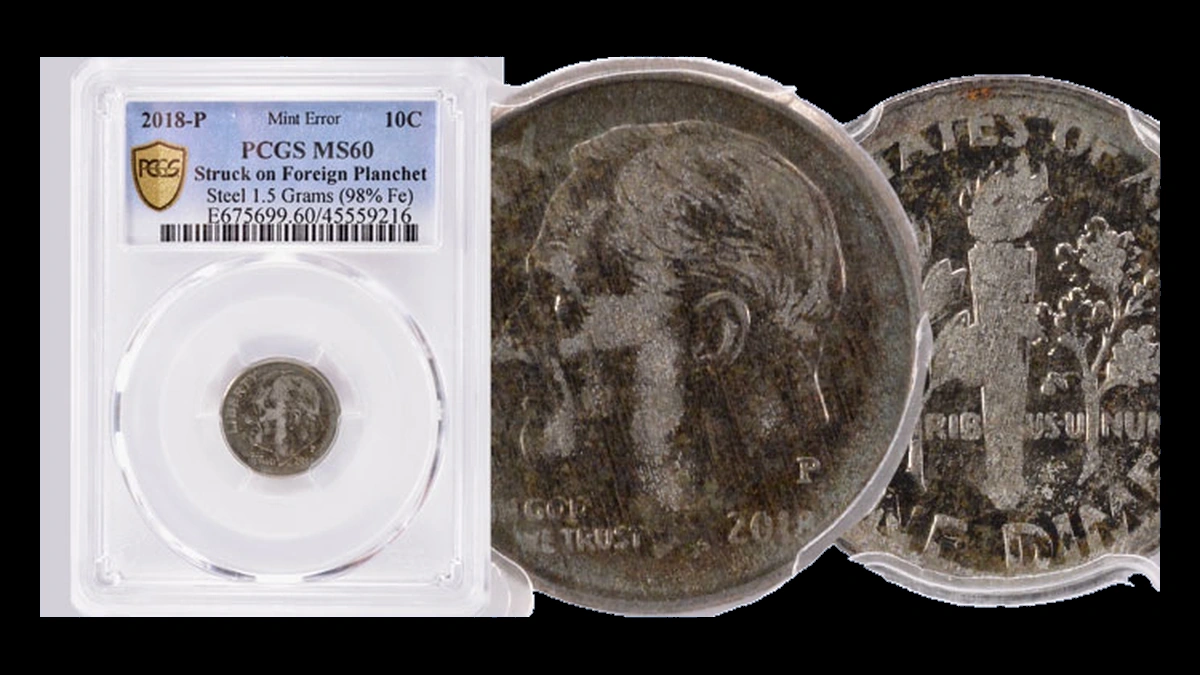
8. 2018 Dime A Very Light Magnetic Dime: Iron Foreign Planchet Error
The auctioned Philadelphia MS60 weighs 1.5 grams and contains about 98% iron. Gray and olive-brown color accompany weak detail at both the center and border.
The catalog proposes a blank intended for foreign coinage without identifying a country or denomination. It records at least four examples, so this should not be described as a unique discovery.
How to Identify
Check for a strong magnetic response without touching the magnet to the surface, then verify the low weight. Normal clad stock is not magnetic, although coatings or alterations can complicate a simple test.
Confirm the 2018 date, P, weak central and border detail, and original edge structure. Nondestructive specialist composition testing should support the mostly iron identity rather than color or magnetism alone.
What It’s Worth
Similarly authenticated errors are estimated at $1,500–$3,000. The PCGS MS60 sold for $2,160 on July 21, 2023.
MS60 allows substantial marks despite no circulation wear. The price belongs to a verified wrong-metal coin, not any dark or magnetic dime awaiting identification.
Conclusion
Small raised branch marks, depressed portrait areas, and unusual metal each require different evidence. Compare both faces before calling a shift off center, and pair actual expansion with full designs before calling a smooth-edge dime broadstruck.
For missing layers and iron blanks, the edge, weight, and composition must agree, with the correct clad or silver standard and the individual specimen’s sale history kept intact.