Rare 1948 Penny Errors (List & Pictures)
A Franklin half-dollar design struck over a 1948 cent sold for $14,100 in January 2016. It is an exceptional example among 1948 penny errors, whose estimated whole-coin values span $2–$20,000.
Begin with the small raised details in the words and mintmark, then examine the surface and outline. A second denomination requires a different explanation from an ordinary doubled letter.
| Where to look | Possible finding | Estimated value |
|---|---|---|
| Eye, TRUST, or LIBERTY | Doubled die | $10–$500 |
| D or S | Repunched mintmark | $5–$500 |
| Raised bar or rim patch | Die chip or cud | $2–$600 |
| Surface layer or depression | Lamination or struck-through | $5–$300 |
| Opening or missing edge | Cracked or clipped planchet | $10–$750 |
| Expanded or incomplete design | Broadstrike or off-center | $30–$1,000 |
| Franklin over Lincoln | Half-dollar overstrike | $10,000–$20,000 |
A standard 1948 cent weighs about 3.11 grams and measures 19.05 millimeters across, with a plain edge. It is copper alloy throughout, so a peeled surface should not reveal the zinc core found in modern cents.
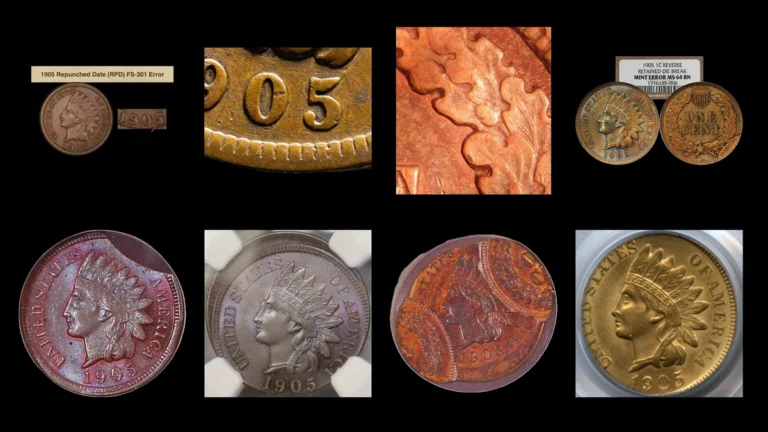
1. 1948 Penny Small Repeated Design Details: Doubled Die Error
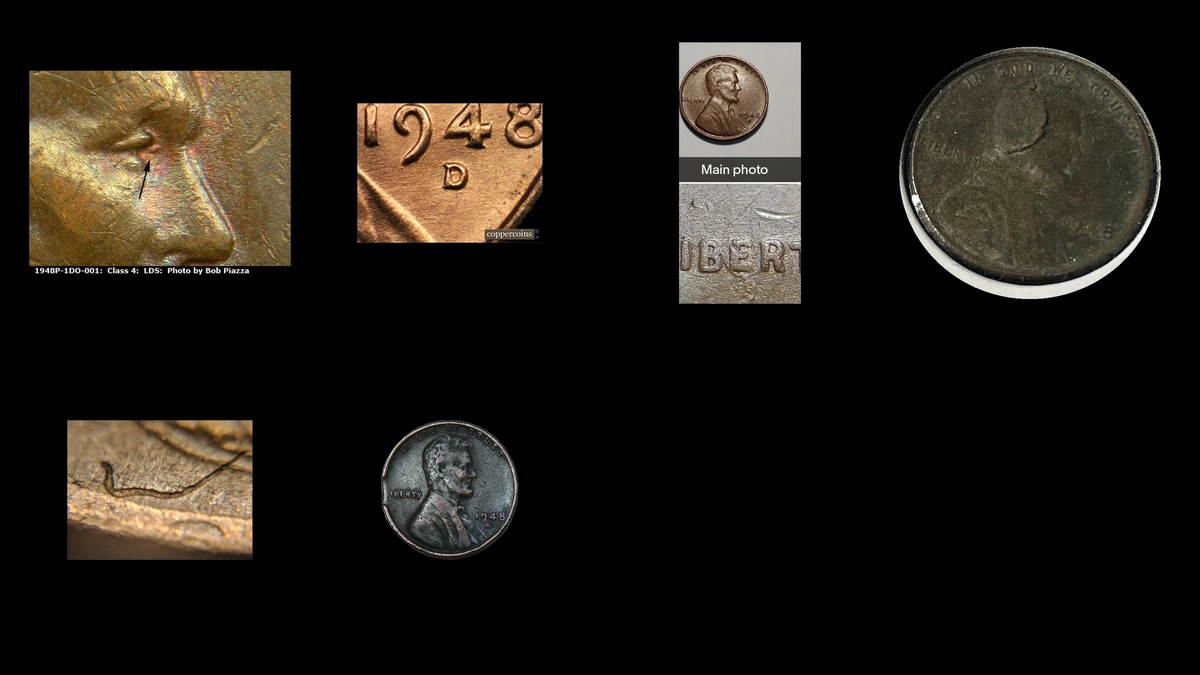
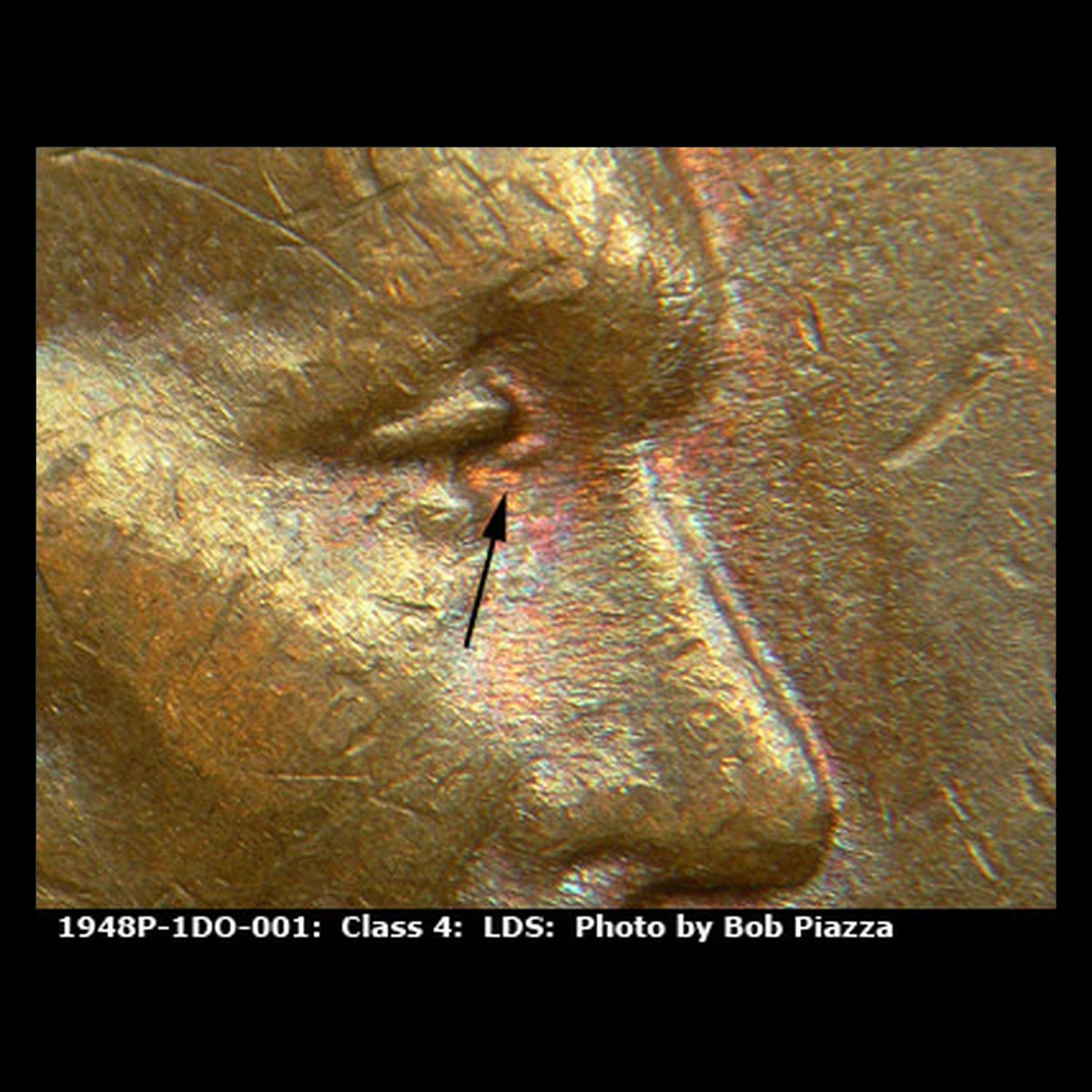
On one reported 1948-S variety, the first T in TRUST carries an extra part of its upright stroke. Other reports concern the Philadelphia eyelid, Denver LIBERTY, and reverse detail.
These are separate varieties made by dies carrying duplicated design elements. They are not a list of features that every doubled-die 1948 cent must show.
How to Identify
Read the mintmark before selecting a comparison: no letter indicates Philadelphia, D Denver, and S San Francisco. Inspect the specific feature associated with that mint and variety.
Look for a distinct extra raised outline matching an attributed example. A flat shelf beside a letter can result from movement during striking and does not establish a doubled die.
What It’s Worth
Estimated value is $10–$500 for minor 1948 doubled-die varieties. A sharper, stronger, correctly matched example can justify more than a worn coin with barely readable doubling.
The supplied evidence provides no specific 1948 auction result for this range. A generic seller label is not enough to place a coin at its upper end.
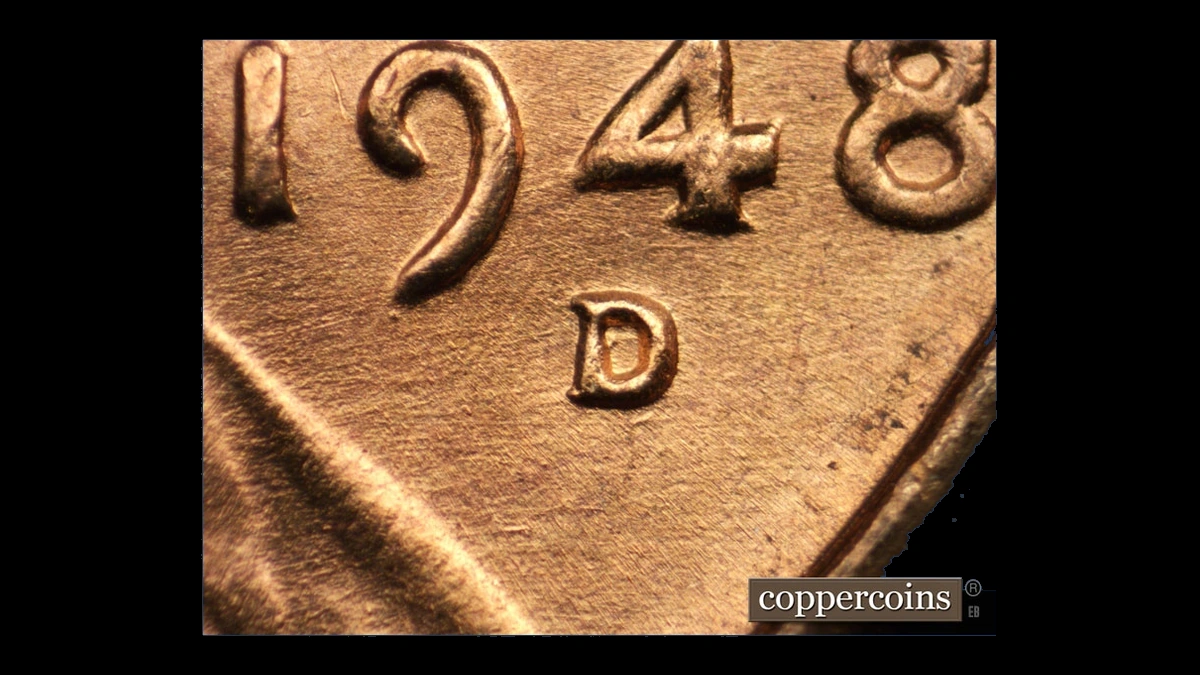
2. 1948 Penny An Extra Curve Beside D or S: Repunched Mintmark Error
The mintmark was added to the die by hand. When repeated punches did not line up, a surviving part of the earlier letter could appear on the cents struck from that tool.
How to Identify
Trace the extra shape to see whether it fits another D or S rather than an isolated bump. Photograph the letter with enough detail to compare both its shape and the direction of separation.
Different San Francisco repunching directions and Denver examples have been reported. One listed 1948-S also has doubled front detail, but that additional feature requires its own match.
What It’s Worth
The estimated whole-coin range is $5–$500, with minor examples commonly estimated at $5–$100. The $100–$500 portion is for stronger, clearly attributed pieces in better condition.
No completed sale is supplied for the listed S combination. Its mintmark and doubled front do not turn it into two independently priced coins.
3. 1948 Penny An Added Bar or Rim Lump: Die Chips and Cuds Error
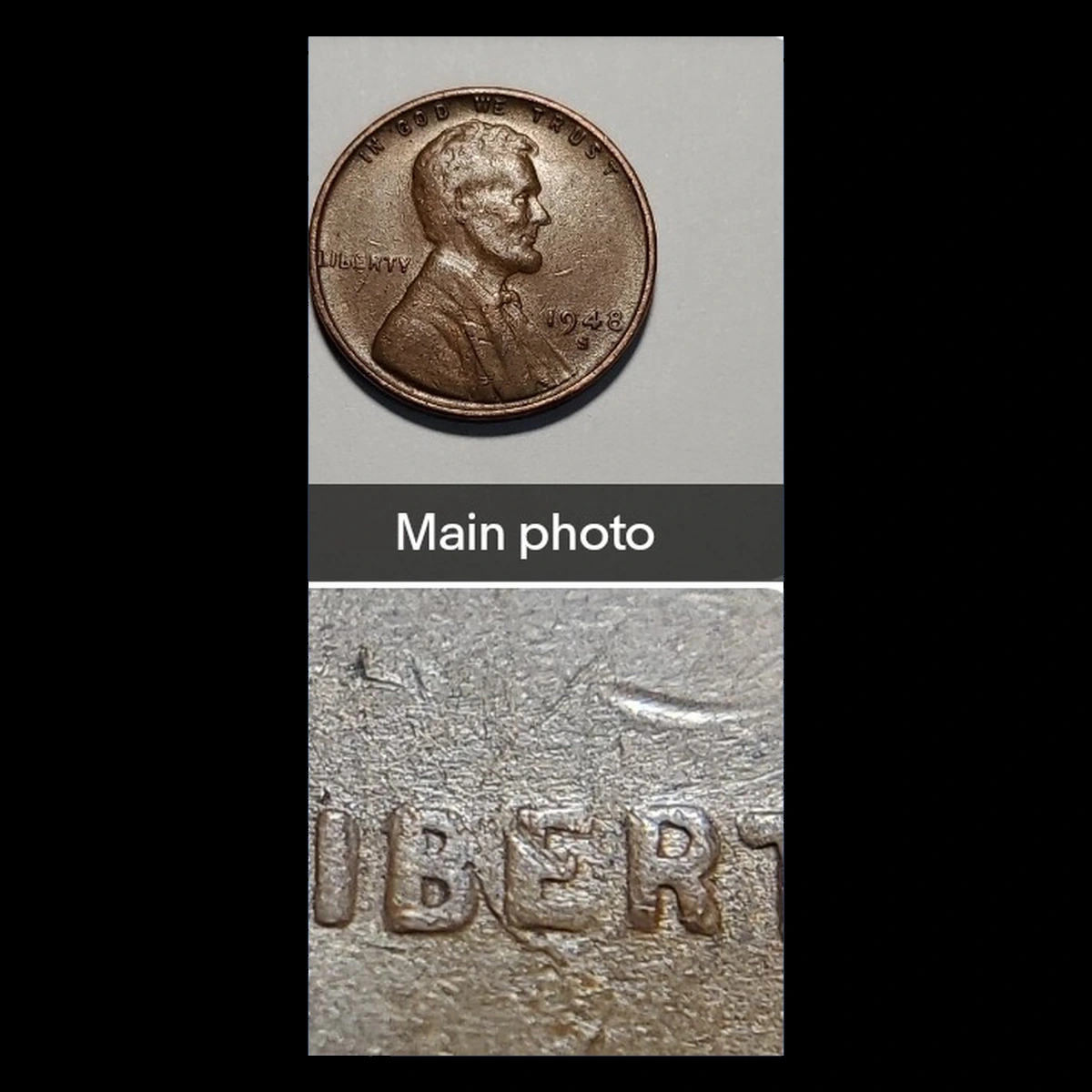
LIBERTY may seem to contain an extra I when a raised bar fills the space between B and E. This BIE feature forms when a small piece breaks from the die and coin metal fills the opening.
A larger break reaching the die’s edge can produce a raised rim-connected patch called a cud.
How to Identify
For a BIE, locate raised metal inside the B–E gap rather than a new engraved letter. For a cud, establish a continuous connection between the raised patch and the rim.
Study the surface around the feature for solder, glue, or another added material. An interior chip and a rim-connected cud share a cause but need different visual comparisons.
What It’s Worth
Estimate $2–$600 across these die breaks: about $2–$50 for small BIEs and $50–$600 for larger confirmed cuds. Size and the amount of design replaced matter alongside condition.
A 1977 cud cent brought $138 in May 2021. That later Memorial cent is a comparison for a larger break, not a sale price for a tiny 1948 BIE.
4. 1948 Penny The Surface Lifts or Peels: Lamination Error
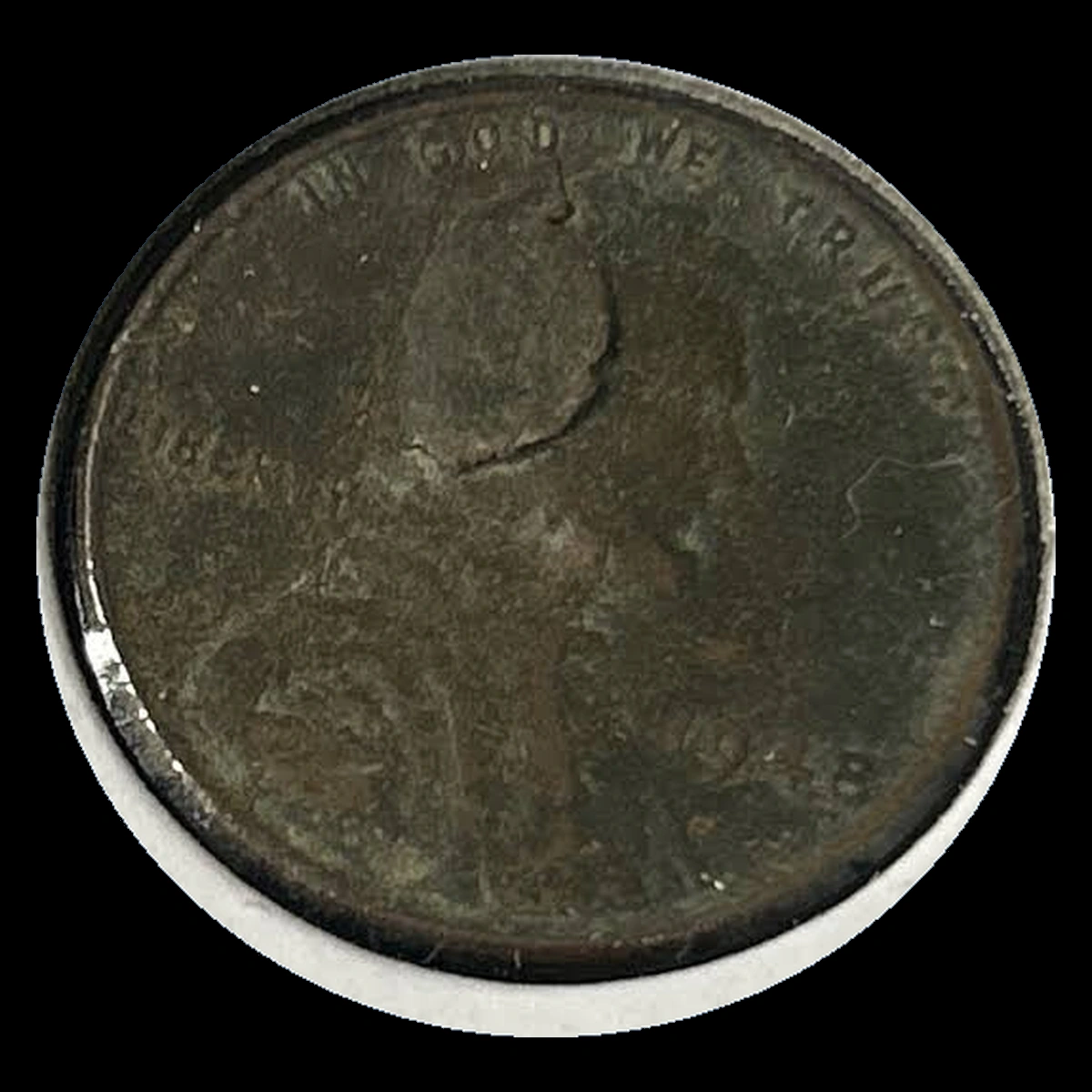
A weakness within the copper alloy can let a thin layer loosen or detach. The resulting seam may cross the design rather than follow the edge of a letter.
How to Identify
Examine the boundary between intact metal and the peeling area without prying up a flap. A natural layer separation differs from an area scraped flat or eaten away by corrosion.
Reported Philadelphia examples include a rim-to-rim separation and another large front-side area near the date and TRUST. Those descriptions belong to different coins.
What It’s Worth
A genuine 1948 lamination has an estimated whole-coin value of $5–$250. Larger, easily understood separations generally attract more attention than small flaws on heavily worn pieces.
A 1952-D front lamination graded NGC AU55 Brown sold for $35 in July 2013. It provides a later Wheat-cent comparison in lightly worn condition.
5. 1948 Penny Something Interrupted the Design: Struck Through Material Error
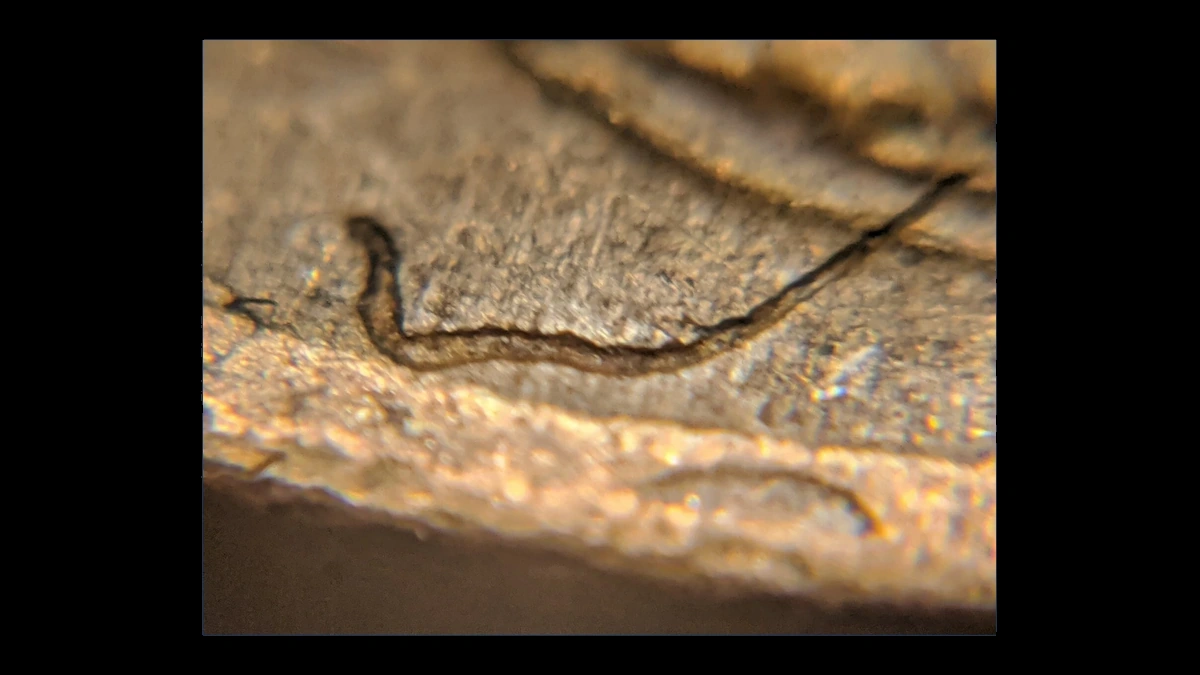
A patch can be depressed or lack detail because material blocked the die during striking. The material does not have to remain attached to leave evidence of its presence.
How to Identify
Check the boundary for design interrupted as it formed, rather than cut afterward by a sharp impact. Ordinary wear, corrosion, and scratches need to be excluded before assigning a cause.
Reports include a Philadelphia coin affected on both faces and a San Francisco example. Their supplied descriptions do not establish thread, wire, cloth, or any other specific obstruction.
What It’s Worth
Use an estimated $10–$300 for confirmed 1948 struck-through cents. A clear original impression and stronger preservation can support the higher values.
An uncertified front-and-back example was offered for $16.50. Its MS63 description is the seller’s grade, and the amount is an asking price rather than a completed transaction.
6. 1948 Penny An Open Seam in the Metal: Cracked Planchet Error
Here the crack opens in the coin itself. A weak blank can split under striking pressure, leaving a physical opening instead of the raised ridge produced by a cracked die.
How to Identify
Examine both faces and the edge where the opening begins, without bending the coin. Saw marks, fresh cuts, and bending damage would point toward a later cause.
The documented 1948-S has an edge opening near five o’clock with the front upright. Its auction description was NGC MS66, an unworn grade with few noticeable marks.
What It’s Worth
Estimated value is $75–$750 for one authenticated 1948 cracked-planchet cent. Preservation and the quality of the original opening affect that estimate.
A 2014 GreatCollections lot paired the 1948-S with a 1947-S struck-through cent. The $75 starting bid applied to both coins and supplies neither a final sale nor a single-coin value.
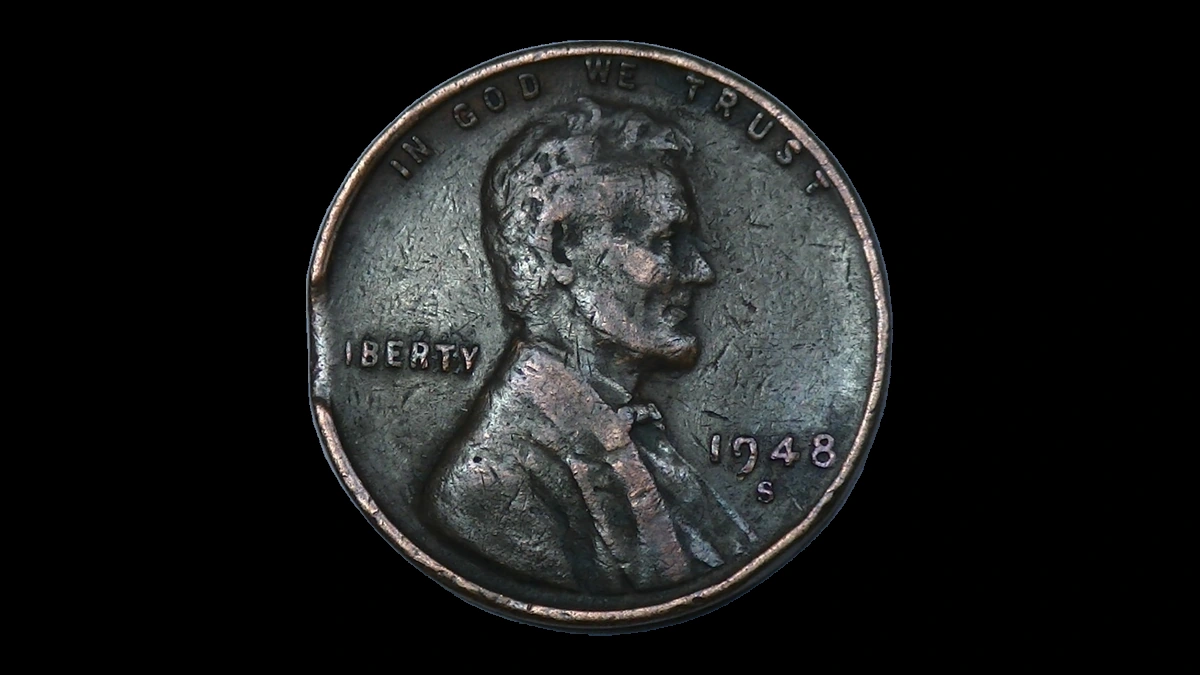
7. 1948 Penny A Curved or Straight Gap: Clipped Planchet Error
The cent begins with too little metal when part of its blank is missing before striking. Reported 1948 clips include both curved and straight boundaries.
How to Identify
Inspect how the struck rim and nearby lettering meet the gap. Weakness and natural flow around an existing opening are more useful than its bite-like shape alone.
Look for possible weakness opposite the clip and check for cutting marks at its ends. A reduced weight can support missing metal, but cannot establish whether the loss happened at the Mint.
What It’s Worth
Verified 1948 clips are estimated at $10–$350. Small clips on worn cents sit below prominent original gaps with clear date information.
A 1967 cent with a 13% straight clip sold for $39 in July 2021. Its later date and Memorial reverse make it a comparison rather than a 1948 price record.
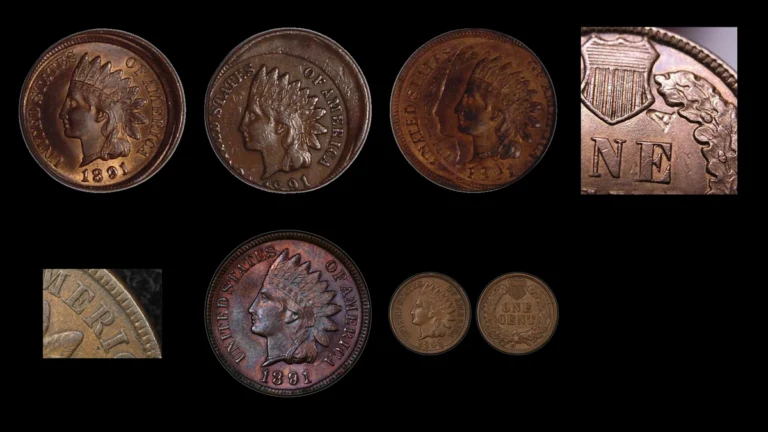
8. 1948 Penny The Whole Design Fits on a Wider Disc: Broadstrike Error
When the collar fails to contain the planchet, striking can spread metal beyond the normal diameter. The design remains complete despite the enlarged border.
How to Identify
Read every outer word on both sides and compare the coin’s measured width with a normal cent. Uneven spread can occur, but missing outer design suggests a different striking error.
Reports include Philadelphia and Denver broadstrikes. Their plain edges are ordinary for cents; expansion and original strike flow are the useful evidence.
What It’s Worth
An estimated $40–$400 covers confirmed 1948 broadstrikes. Later hammering does not qualify, even if it produces a wider coin.
A 1946-S broadstrike brought $89 in December 2024. That same-series sale supports context, with a different date and mint.
9. 1948 Penny Blank Metal Beside an Incomplete Image: Off-Center Strike Error
A coin can retain its full blank while receiving only a fraction of the intended design. The planchet sat away from the center of the dies when they closed.
How to Identify
Photograph both faces to show the relationship between the struck and blank areas. A shifted image on one side with a centered opposite face can indicate a misaligned die instead.
The documented 1948-D was described as 85% off center toward ten o’clock. Its date and D remained visible, so the small surviving design still established its identity.
What It’s Worth
Estimated whole-coin values range from $30–$1,000 for genuine 1948 off-center cents. A readable date, appealing displacement, and preservation all influence the result.
The extreme Denver example, graded ANACS AU55, sold for $336 in January 2022. That lightly worn coin shows why the largest percentage does not automatically command the top estimate.
10. 1948 Penny Franklin Appears over a Wheat Cent: Half-Dollar Overstrike Error
The earlier cent design survived beneath a second design from Franklin half-dollar dies. This coin had already been struck as a penny before entering the other press.
How to Identify
Locate the cent’s 1948 date above Franklin’s ear, then follow other surviving penny details beneath the larger portrait. A half dollar struck on an unused cent blank would lack those earlier cent impressions.
Only 19 is visible from the half-dollar date. The complete cent date establishes the underlying coin’s year, not necessarily the year of the second strike.
The metal began as a cent, so its weight should be assessed against that origin rather than a normal silver half dollar. The second strike can alter the outline.
What It’s Worth
The estimated range for this exceptional authenticated combination is $10,000–$20,000. That figure applies to the overlapping denominations, not a generally copper-colored or oddly marked penny.
The NGC MS64 Brown coin realized $14,100 at Heritage Auctions in January 2016. Its recognizable underlying design is central to that comparison.
Conclusion
For most 1948 pennies, begin with a specific physical clue: an extra raised stroke, a lifting layer, or a change in the edge. Preserve that clue by avoiding cleaning, scraping, or flexing the coin.
The Franklin overstrike is an exceptional case within the $2–$20,000 estimates. For more ordinary finds, compare the actual subtype and condition, and keep asking prices and opening bids separate from completed sales.