Rare 1954 Dime Errors (List & Pictures)
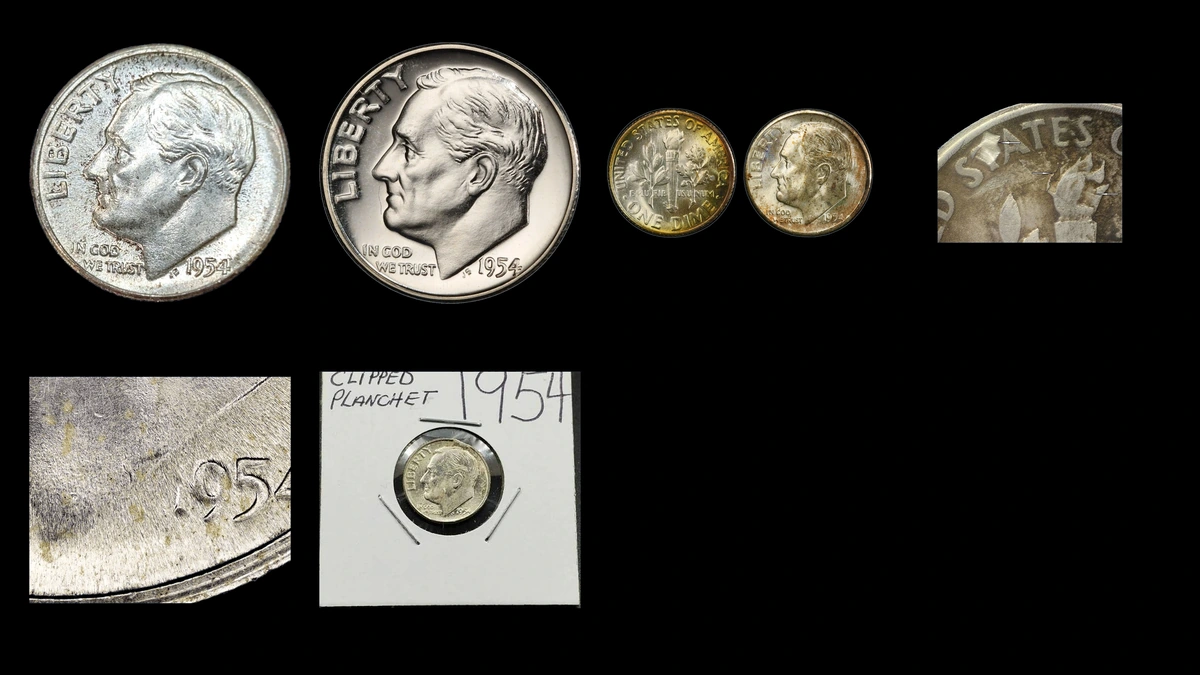
The initials below Roosevelt’s neck are JS, and their tiny size makes wear easy to mistake for an error. These 1954 dime errors have estimated whole-coin values of $10–$2,000.
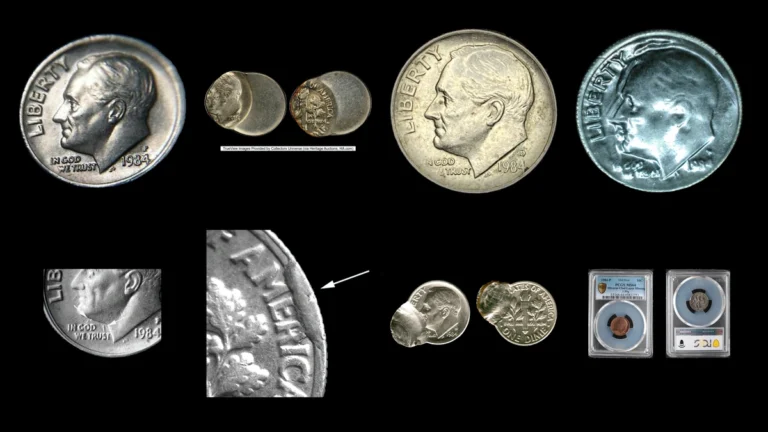
A 1954 Proof doubled die was recorded at $257 in March 2021. The larger supplied strike comparison is a different-year 1976 flip-over dime at $423 in January 2017; inspect the portrait first, then the back and outline.
1. 1954 Dime JS Is Hard to See: Reported Missing Initials Error
The reported San Francisco feature concerns weak or missing JS below the cut-off neck. Blocked detail or treatment of the stamping tool could explain local loss.
A smooth-looking patch does not establish either cause. These tiny letters can also disappear through wear or later scraping.
How to Identify
Find JS on a normal dime and compare the same spot under changing light. Look at the neck and date to judge whether nearby details are worn too.
Sharp surroundings make a local missing feature more meaningful. Check for smoothing scratches, and confirm the S beside the torch on the back.
A matched example from the same tool helps distinguish a Mint-made change from damage.
What It’s Worth
$10–$100 is the conditional estimate for identified Mint-made loss of JS. Clear nearby detail and an undisturbed surface support the comparison.
Ordinary wear that makes the initials difficult to read does not earn the same premium.
2. 1954 Dime A Spike from the Head or Patch above the Lip: Die Cracks and Chips Error
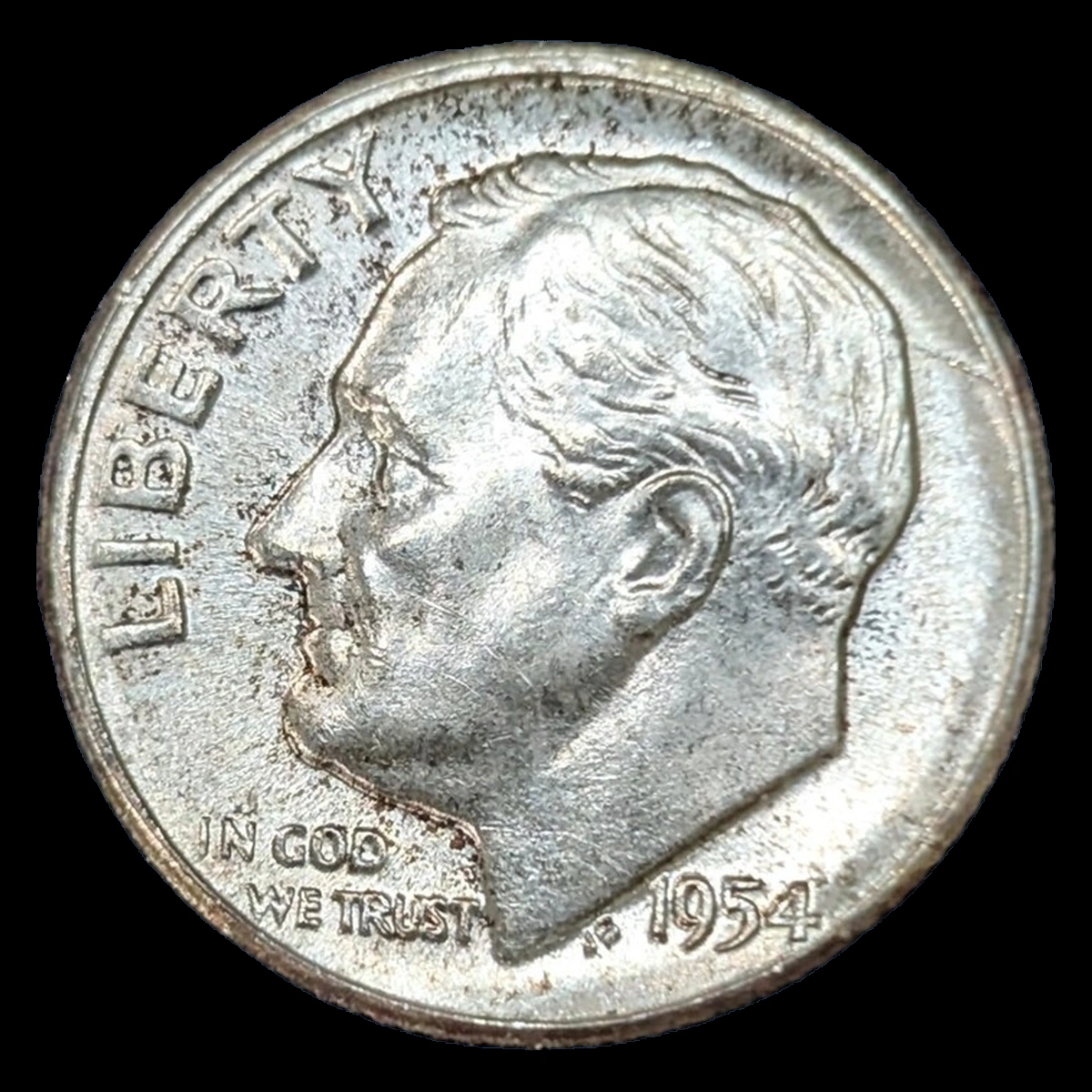
Cracks in the die, or stamping tool, can leave raised lines on a coin. Several Philadelphia examples have lines extending from Roosevelt’s head toward the rim.
A separate upper-lip chip gives a mustache-like appearance. Its mint and finish are not established by the Philadelphia head-crack reports.
How to Identify
For a head crack, follow the actual raised path and compare it with the corresponding example. Not every crack follows the same route.
For a lip chip, inspect how the extra metal joins the portrait. A deposit or a ridge pushed up by a hit can imitate a lump.
Side lighting helps separate raised metal from a groove, but keep both faces with any close-up to preserve the coin’s identity.
What It’s Worth
$10–$75 is the estimated range for small head cracks. An identified upper-lip chip may fall around $15–$150.
Visibility and condition matter more than the nickname used for the shape.
3. 1954 Dime Extra Outlines on a Proof or the Back: Doubled Die Error
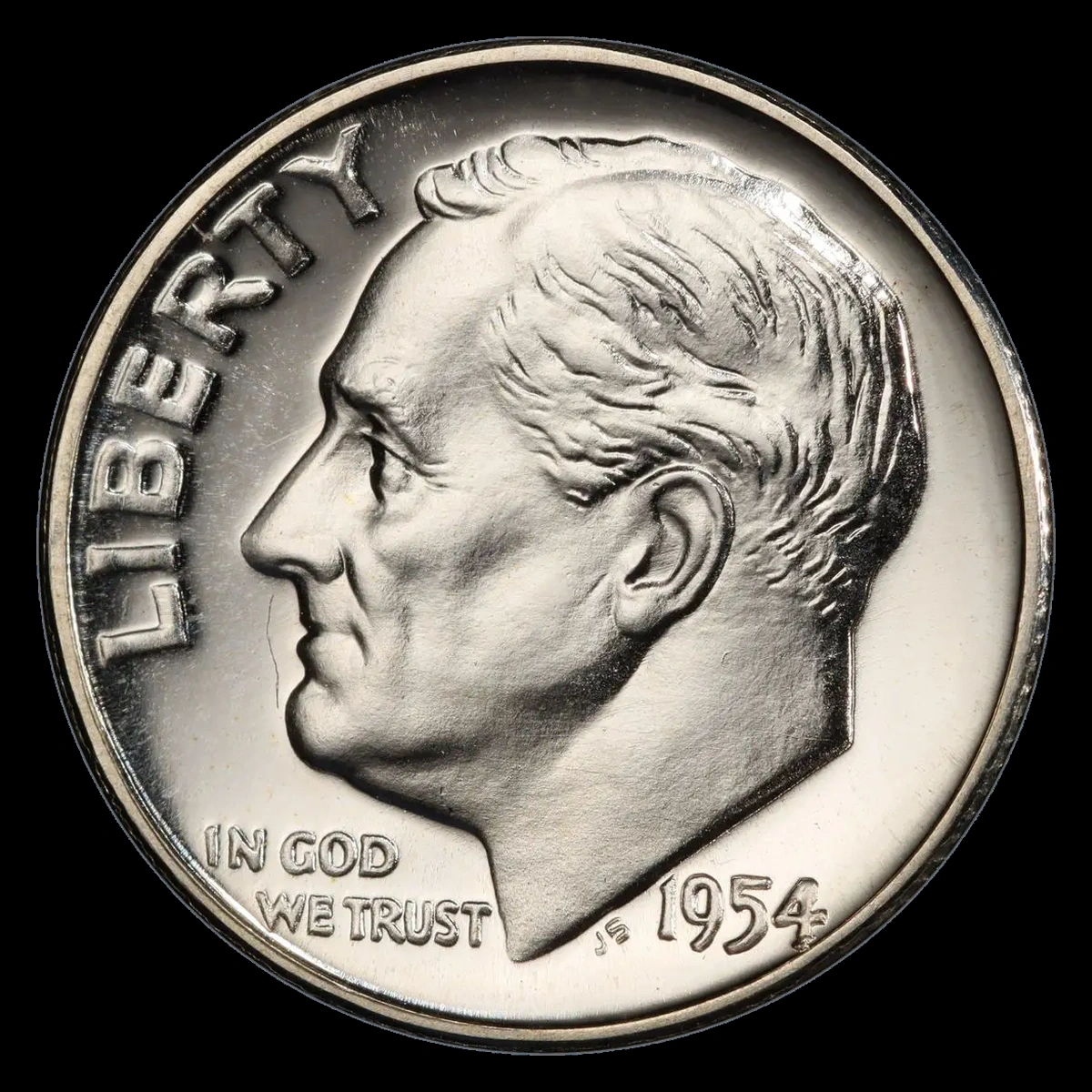
The recognized Proof front variety is FS-101. Its reported features include an extra outline beneath the final 4, along with doubling at JS and the motto.
The repeated image was built into the tool. A Proof’s normal repeated blows during manufacture do not themselves create a doubled die.
How to Identify
On a Proof candidate, compare the final 4 with an identified FS-101 photograph. Continue to JS and IN GOD WE TRUST for related matches.
Move the light so glare shifts while actual raised edges stay fixed. Low flat shelves can have a different striking cause.
The ordinary Philadelphia back report concerns ONE DIME, the country name, and torch details. It needs its own reference and does not use the Proof-front label.
What It’s Worth
$75–$500 is the estimated range for identified Proof front examples. An authenticated minor ordinary back pattern is estimated at $25–$300.
PCGS records Proof FS-101 in PR67 at $257 through eBay on March 31, 2021. PR67 describes a well-preserved collector Proof.
4. 1954 Dime Earlier D or S Fragments: Repunched Mintmark Error
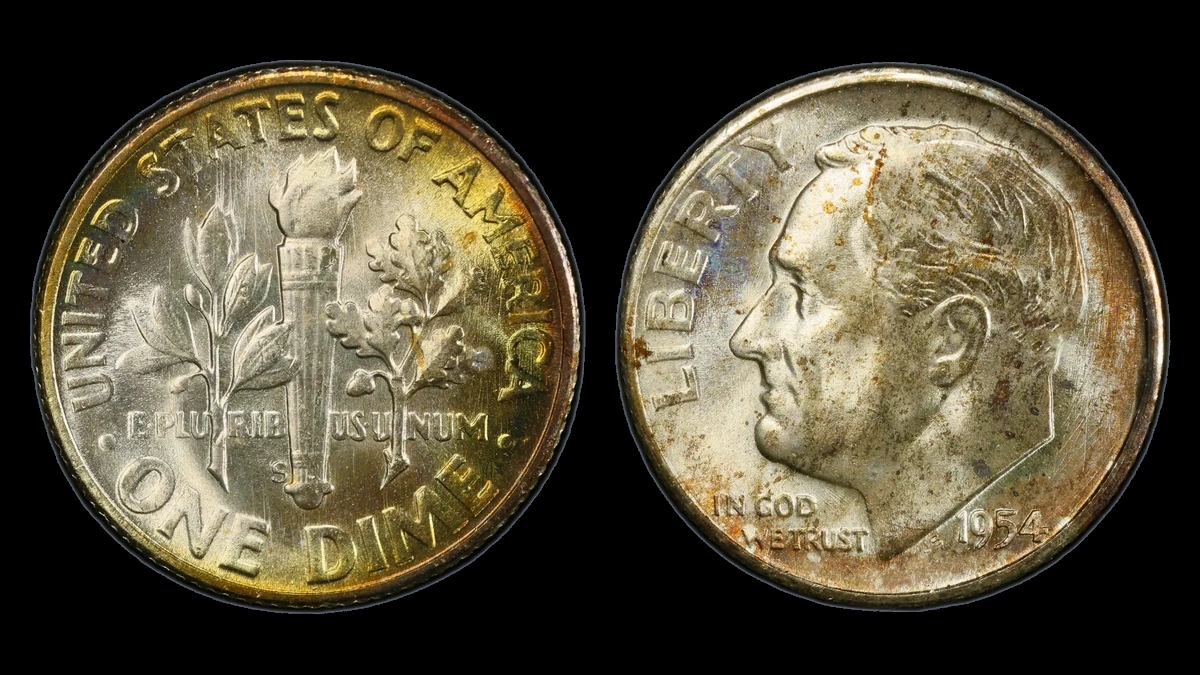
A shifted repeat punch could leave parts of the first mint letter beside the final one. Both D/D and S/S patterns are listed for 1954.
The Denver report places the earlier D above the main letter. The San Francisco pattern needs its own photograph rather than that same direction.
How to Identify
Find the mintmark to the lower left of the torch. Trace the normal letter first, then look for raised fragments fitting another copy.
For Denver, inspect above D with the back upright. For San Francisco, compare the extra curves with an attributed S/S image.
A single lump, scratch, or flat shelf does not establish a repeated punch.
What It’s Worth
$20–$400 is the estimated range for identified minor repunched mintmarks. Strong surviving fragments on original surfaces are easier to appreciate than faint traces.
Each mint’s pattern needs a separate condition comparison.
5. 1954 Dime Broad Separation across the Back: Lamination Error
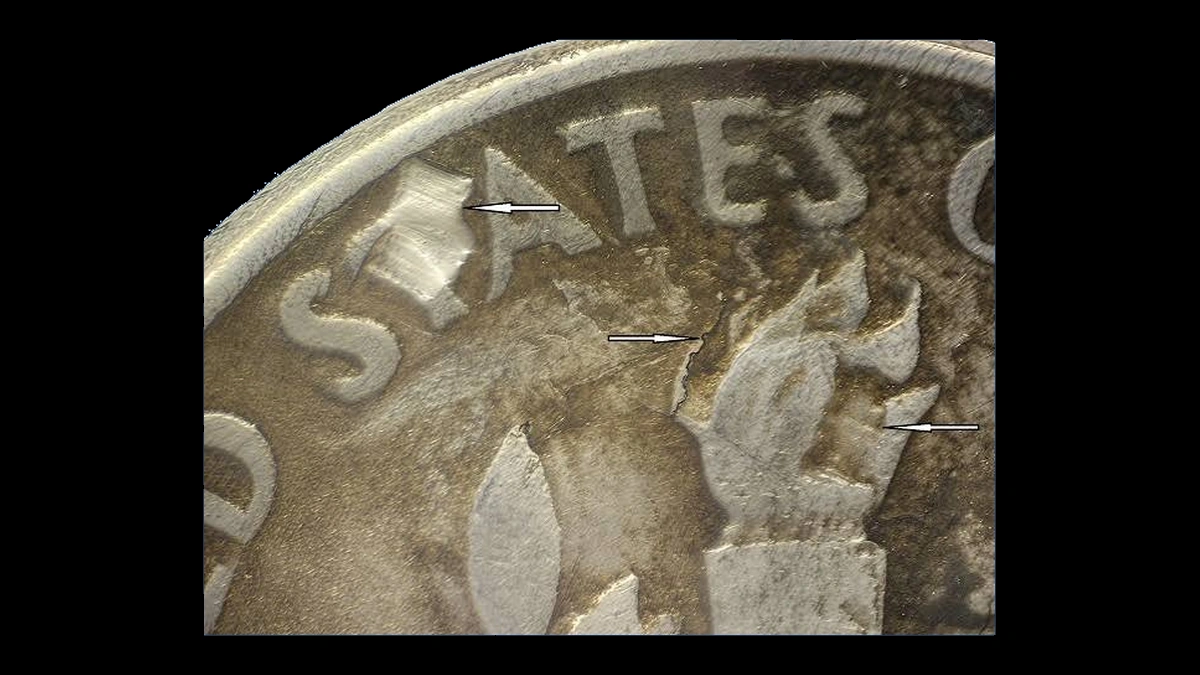
An old Denver listing describes a reverse lamination running from about 2 to 10 o’clock. The coin was described as VF, a circulated grade with substantial design remaining.
Lamination is separation within the alloy, which can leave a flap or exposed recess. This silver dime does not have a modern clad outer sheet.
How to Identify
Confirm the D beside the torch base and hold the back upright. Follow the actual boundary through the broad reported area without assuming a perfectly straight band.
Use side light to examine the surface and any attached silver. Do not lift a flap or insert anything beneath it.
A scraped groove through completed design needs a different explanation from a natural split inside the alloy.
What It’s Worth
$20–$400 is the estimated range for authenticated laminations. The old listing’s $2 figure was a minimum bid, not a selling price.
A clear boundary and preserved surrounding design help show the defect; cleaning or heavy wear can hide it.
6. 1954 Dime Shallow Detail across the Design: Weak Strike Error
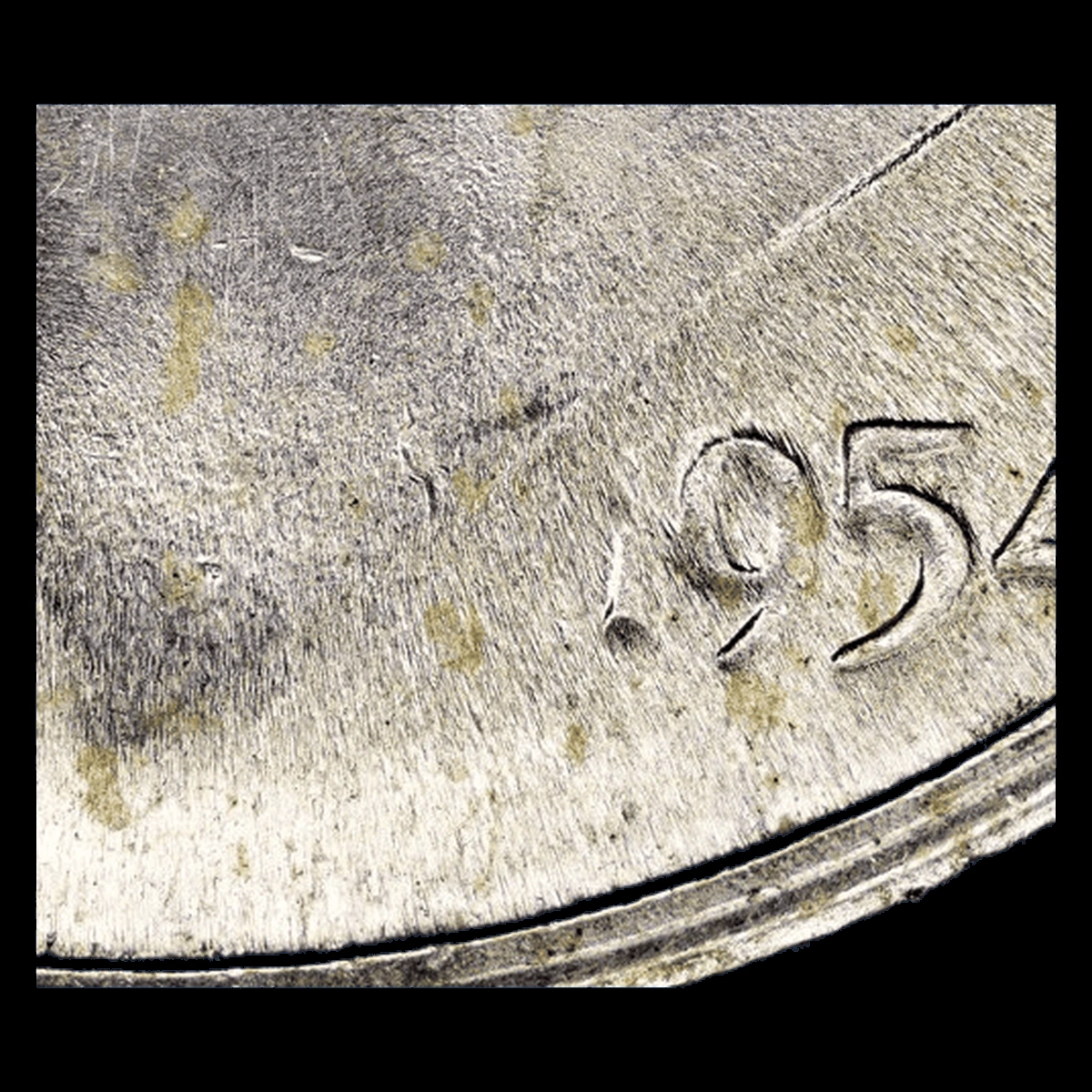
A strike may leave some details incompletely formed. The 1954 report does not establish one particular mint or affected area.
Soft torch bands alone are not automatically an error. Full Bands is a designation for sharply separated torch bands, which ordinary coins may lack.
How to Identify
Compare protected spaces between letters with Roosevelt’s exposed high points. Wear tends to smooth the higher parts first.
Look for original texture in shallow areas and check for rubbing or chemical pits. Show sharp and weak areas together in photographs.
What It’s Worth
$15–$200 is the estimated range for an identified weak strike with original surfaces. Broad unusual weakness gives a stronger comparison than one slightly soft band.
The absence of a Full Bands label does not itself justify an error premium.
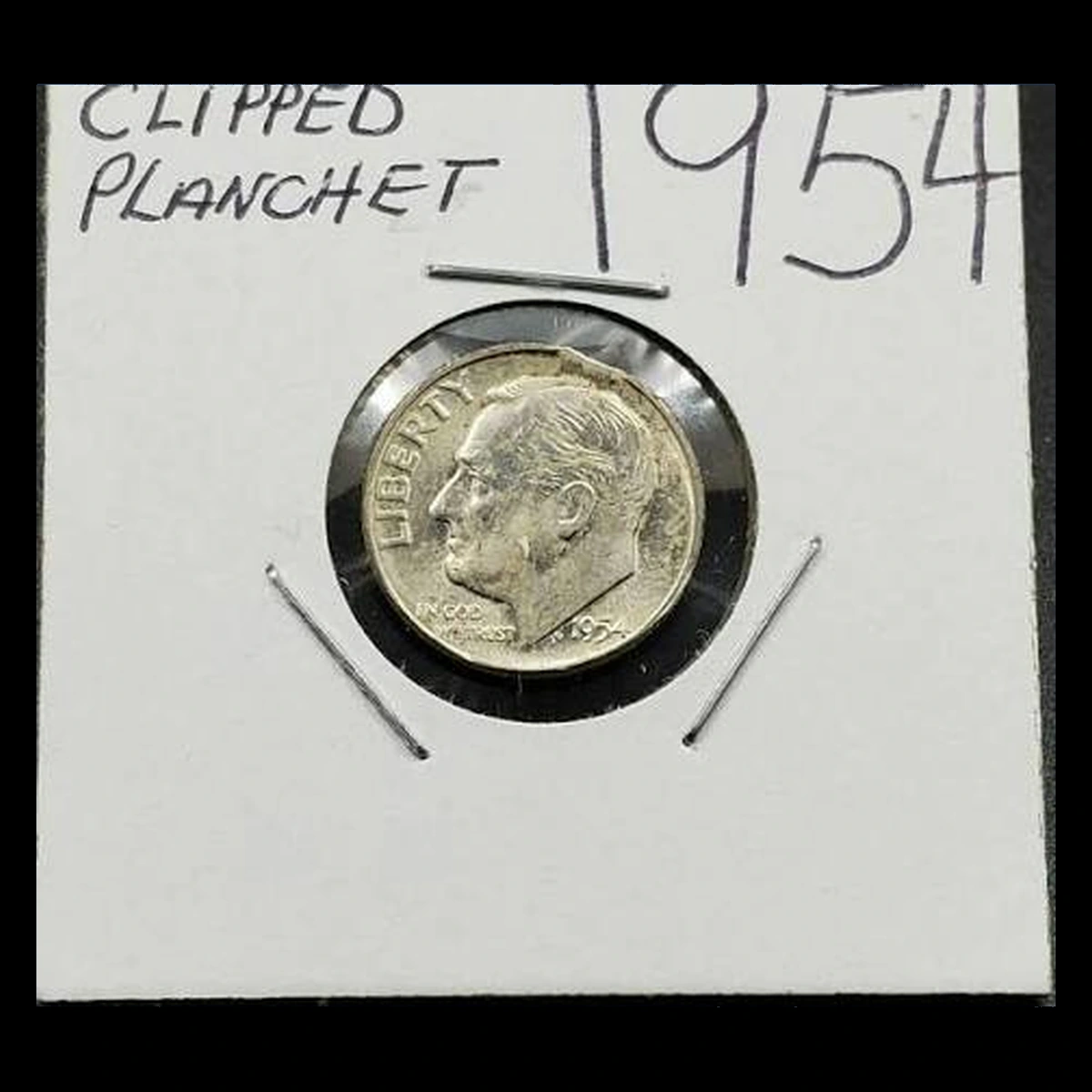
7. 1954 Dime Missing Metal at the Edge: Clipped Blank Error
A Philadelphia clipped dime is listed by a dealer, and a separate San Francisco example is described with a curved gap. The Philadelphia description does not establish the same gap shape.
Both concern metal already absent when the prepared blank received its design.
How to Identify
The Philadelphia dealer example needs its own outline comparison. Follow the rim toward each end of the gap and inspect the exposed side.
Later cuts may slice through finished detail or leave filing marks. Weakness at the opposite rim can help on some clips but is not required on every coin.
A normal silver dime weighs 2.50 grams. Reduced weight confirms metal loss, while the edge helps establish when that loss happened.
What It’s Worth
$20–$300 is the estimated range for genuine 1954 clipped dimes. Larger original gaps with readable identity may attract more interest.
A 1963 ragged clip graded NGC MS65 was recorded at $109 in July 2021. Its irregular shape and grade do not describe either 1954 listing.
8. 1954 Dime The Picture Misses Part of a Round Blank: Off-Center Strike Error
An off-center strike leaves plain silver beside an incomplete design. The blank sat partly outside the tools.
The reported 1954 category has no established mint, direction, or percentage for a specific specimen.
How to Identify
Read the surviving date and follow the design to where it runs beyond the edge. Compare the struck boundary on the opposite face.
If the mintmark area missed the strike, an absent D or S does not establish Philadelphia origin. Inspect the plain silver for sanding or partly erased letters.
What It’s Worth
$40–$750 is the estimated range for authenticated, identifiable examples. A readable year and attractive remaining design can matter more than a very large shift.
A later clad 1967 dime struck 50% off center sold for $93 in January 2022. That percentage does not describe a 1954 coin.
9. 1954 Dime Front and Back Pictures Overlap: Flip-Over Double Strike Error
A reported 1954-S dime from Edgar Murphy’s collection turned over between two strikes within the collar, the ring around the edge. Parts of the first picture survived under the design from the opposite tool.
Back details appear within the front, and front details remain on the back.
How to Identify
Place normal front and back photographs beside the candidate. Find recognizable torch-side shapes among Roosevelt and portrait-side shapes among the reverse design.
Two shifted Roosevelt images alone do not show a flip. The reported Murphy specimen provides the relevant overlapping-design comparison.
Inspect both faces and the edge for a consistent striking sequence. Later squeezing can leave misleading transferred marks and needs to be ruled out.
What It’s Worth
$500–$2,000 is the estimated range for an authenticated 1954-S flip-over double strike. Clear pieces of both designs make the event easier to understand.
A 1976 dime with a widely off-center flip-over second strike brought $423 in January 2017. It differs from the reported 1954 strike within the collar.
Conclusion
Locate the correct feature before using a label: JS is below the neck, the mintmark is beside the torch, and Proof front doubling has its own pattern. Small worn details should not be mistaken for confirmed missing designs.
For larger errors, preserve the full outline and both faces in photographs. Those views keep a clipped blank, a displaced strike, and a flip-over sequence from becoming confused.