Rare 2011 Dime Errors (List & Pictures)
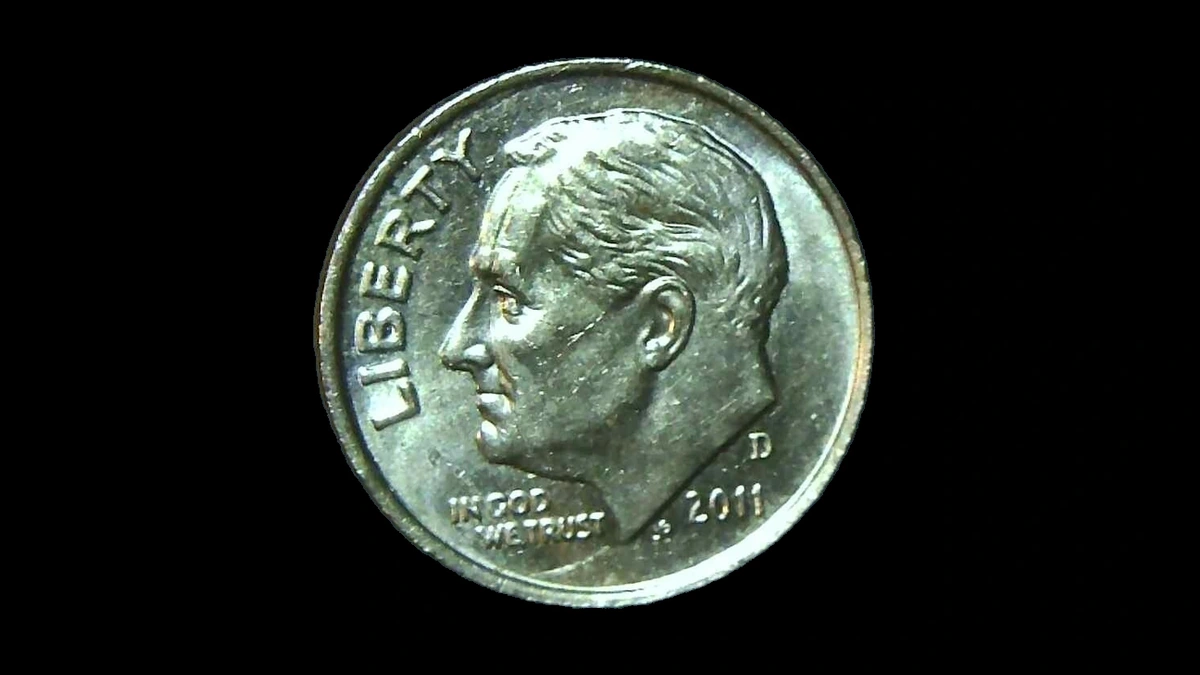
Estimated values for 2011 dime errors range from $2–$1,500, depending on what happened during manufacture. A different-denomination comparison, a 1986-P nickel struck through foreign material, sold for $204 in June 2023.
This guide explains the checks that distinguish repeated detail, missing metal, and displaced designs without relying on an unusual appearance alone.
| Error group | Estimated value |
|---|---|
| Doubled front design | $10–$150 |
| Manufacturing-related color | $15–$150 |
| Cracks, chips, and cuds | $2–$300 |
| Clipped blank | $15–$300 |
| Struck-through material | $20–$400 |
| Broadstrike | $30–$500 |
| Rotated reverse | $20–$600 |
| Missing outer layer | $50–$600 |
| Off-center strike | $30–$800 |
| Reported nickel-blank strike | $300–$1,500 |
1. 2011 Dime Repeated Front Design Details Error
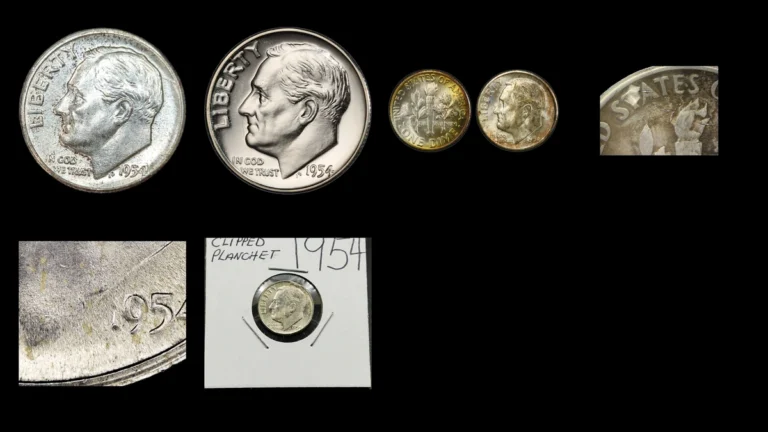
A Philadelphia front-doubling example has been reported for 2011. The supplied description does not establish an exact pattern to apply to every letter, date digit, or portrait feature.
If the repeated shape was present in the die, each coin struck from that tool could reproduce it. This differs from a coin moving and receiving a second blow.
How to Identify
Compare the suspected area with an ordinary dime under the same light. Rounded secondary outlines or split corners deserve closer examination than a letter that simply looks wide.
A flat, lowered shelf can result from movement during striking. Preserve a photograph showing the full date and P, then match the exact close-up detail with a confirmed variety reference.
What It’s Worth
A clearly identified minor doubled-front variety has an estimated range of $10–$150. Stronger visible separation and original surfaces provide better comparisons than vague thickening.
A high grade cannot establish the variety by itself. Wear may also conceal the small features needed for a reliable match.
2. 2011 Dime Unusual Color from Heat Treatment Error
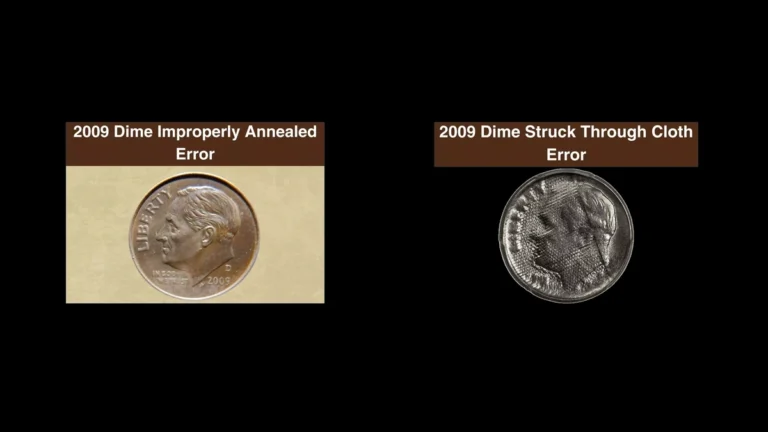
A dark Denver dime could prompt an annealing-error claim, but its color needs an explanation. Annealing is the heating step used to soften blanks before striking.
A manufacturing problem during that treatment can affect surface color. Soil, staining, and heating after minting can produce similar appearances without the same error.
How to Identify
Compare open fields with protected recesses under neutral light, noting deposits, streaks, and remaining original texture. Inspect the edge to see whether the pale outer layers and copper center remain intact.
An ordinary clad dime normally weighs 2.268 grams and measures 17.91 millimeters across. Matching those standards does not tell you when discoloration developed.
What It’s Worth
An identified manufacturing-related color error has an estimated range of $15–$150. This estimate does not automatically apply to a brown or black coin.
Preserve the surface for examination rather than polishing it. Environmental damage and later heating can reduce appeal instead of adding an error premium.
3. 2011 Dime Raised Cracks, Chips, and Cuds Error
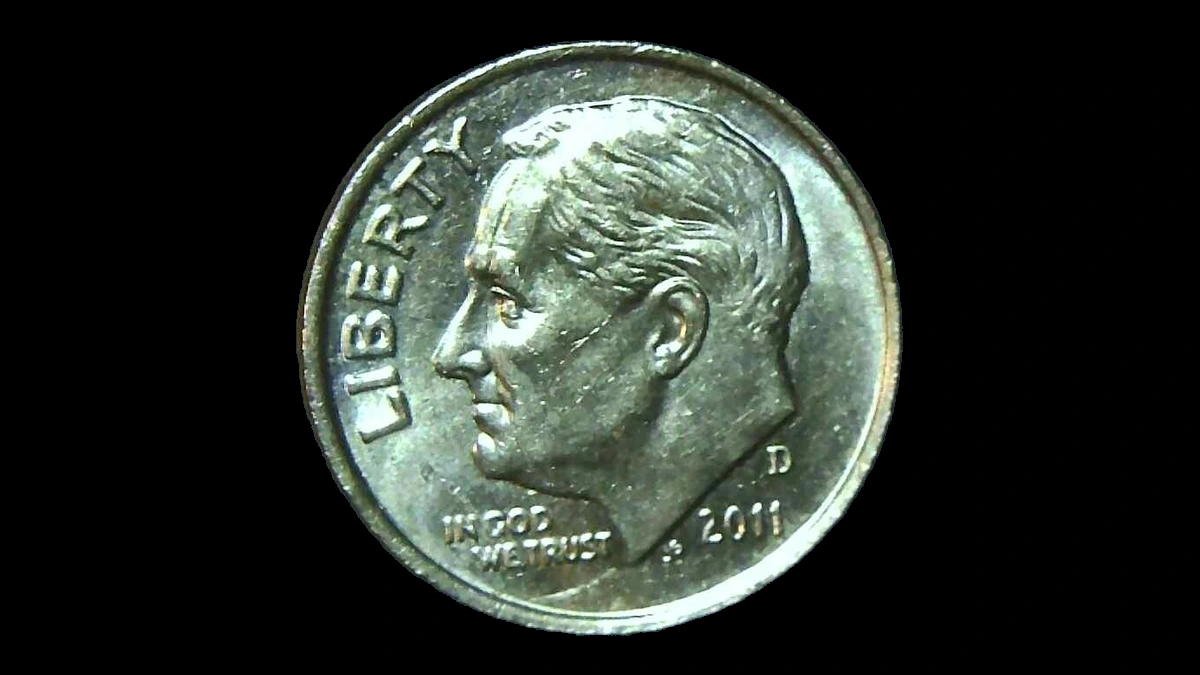
The Philadelphia report describes a chip near Roosevelt’s eye. A separate Denver example has a larger break joined to the rim, called a cud.
Both arise from damage to a die, but they occupy different shapes and locations. Metal filling a narrow crack makes a ridge, while a missing piece of the tool can produce a lump or broad patch.
How to Identify
Follow the feature’s outer boundary and determine whether it stays inside the design or reaches the rim. Check for a neighboring impact dent that could have pushed metal upward after minting.
For Denver, compare the complete outline with the cataloged cud. The term alone does not establish its exact position or authenticate an unrelated bump.
What It’s Worth
Modest cracks and chips have estimated values of $2–$40. Larger genuine rim-connected breaks have an estimated range of $25–$300.
A conspicuous position near the eye does not guarantee a high price. For a cud, the size and natural connection to the rim matter more than a dramatic nickname.
4. 2011 Dime Clipped Blanks Error
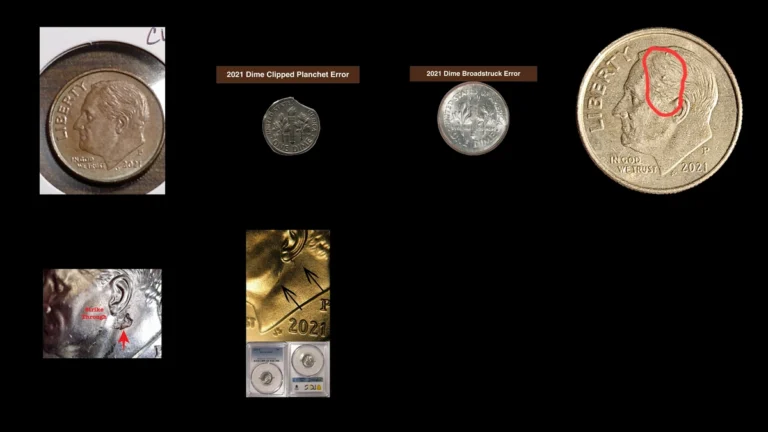
An incomplete blank can leave a gap in the finished dime’s outline. The missing section existed before striking because the blank-cutting process failed to produce a complete disc.
Reports for 2011 do not establish one universal clip size or shape. Each coin’s boundary must show how the surrounding metal formed beside the opening.
How to Identify
Inspect both ends of the gap and the nearby rim and lettering. Burrs, file marks, or a cut through finished details suggest metal was removed afterward.
A weak rim area opposite the gap can support an original clip, but it is not required on every genuine example. A low weight confirms missing metal, not when it disappeared.
What It’s Worth
Genuine ordinary-issue clips have estimated values of $15–$300. The amount missing, readable identity, and an original boundary influence the comparison.
A large saw cut does not qualify simply because it gives a coin an unusual outline. Clear photographs should include both faces and the complete remaining date.
5. 2011 Dime Struck-Through Material Error
A Philadelphia example is reported with wire suggested as the obstruction. That specific label requires an impression consistent with wire, rather than any thin curved mark.
Material caught between a die and blank can interrupt the design or leave a depression. Scratches and later impacts can resemble those effects but form after the design is already present.
How to Identify
Follow surviving design toward the affected area and inspect where it stops or changes. Look for sharp cuts, pushed-up edges, or connected corrosion pits that suggest another cause.
A proposed wire impression should have a coherent narrow shape. Leave any retained material untouched and photograph the whole affected face before making close-ups.
What It’s Worth
An identified struck-through area has an estimated range of $20–$400. A recognizable impression gives a firmer comparison than an unexplained weak patch.
A 1986-P nickel with a struck-through error sold for $204 in June 2023. That different year and denomination provide context, not a sale record for the reported 2011 dime.
6. 2011 Dime Broadstrikes with Expanded Borders Error
The reported Philadelphia broadstrike has metal extending beyond the normal outline. During striking, the collar failed to contain the blank as intended.
The design can remain complete even when the expanded border is uneven. Edge grooves may also be incomplete where normal collar contact did not occur.
How to Identify
Trace the outer letters on both faces before judging the width. A complete design within an expanded margin points to a different process from an off-center strike that loses design beyond the blank.
Inspect the edge and letter tops for later flattening or grinding. Increased diameter alone is insufficient because a finished dime can be widened by pressure.
What It’s Worth
Genuine Philadelphia broadstrikes have estimated values of $30–$500. Obvious original expansion and attractive surviving design make the error easier to compare.
A smooth edge or slightly wide rim does not independently support the upper end. The surface, edge, and metal flow should agree with an original striking error.
7. 2011 Dime Rotated Reverse Error
Roosevelt and the torch should have a consistent orientation to each other. A reported Denver rotation concerns the angle between the dies, rather than either design shifting toward the rim.
No specific angle is established for the 2011 report. An individually straightened photograph of each face hides the relationship being tested.
How to Identify
Hold Roosevelt upright, then flip the coin from top to bottom without twisting sideways. The torch should finish upright on an ordinary coin.
Repeat the movement while keeping a straight reference visible and record the actual direction and angle of any tilt. A transparent holder can help prevent accidental movement within your grip.
What It’s Worth
Obvious genuine rotations have estimated values of $20–$600. A slight tilt generally provides a weaker comparison than a major turn with clear orientation evidence.
A different 2015-D nickel with a ninety-degree rotation sold for $79 in October 2021. Neither its angle nor its price establishes those details for the reported 2011 dime.
8. 2011 Dime Missing Outer Layers Error
Philadelphia and Denver dimes have been reported with outer-layer loss. A seller separately describes a Denver example with the reverse layer absent, but that claim is not an independent grading decision.
Loss of a pale outer sheet exposes copper beneath it. Surface staining can change color without removing any layer.
How to Identify
Determine the finish and composition before interpreting the edge. San Francisco made clad and ninety-percent-silver Proof dimes; the silver version normally weighs 2.50 grams and lacks a copper-center stripe.
On an ordinary P or D coin, inspect the exposed face and remaining layer boundary together. Scrapes, corrosion, and chemical attack can remove metal too, so low weight must be supported by the surface evidence.
What It’s Worth
Identified genuine layer loss has an estimated range of $50–$600. The extent of exposure and preservation of the original struck design affect its appeal.
The seller-described Denver reverse-layer example was listed at $11.06 when checked. That was an asking price for an ungraded claim, not a verified sale establishing the authenticated-error market.
9. 2011 Dime Off-Center Strikes Error
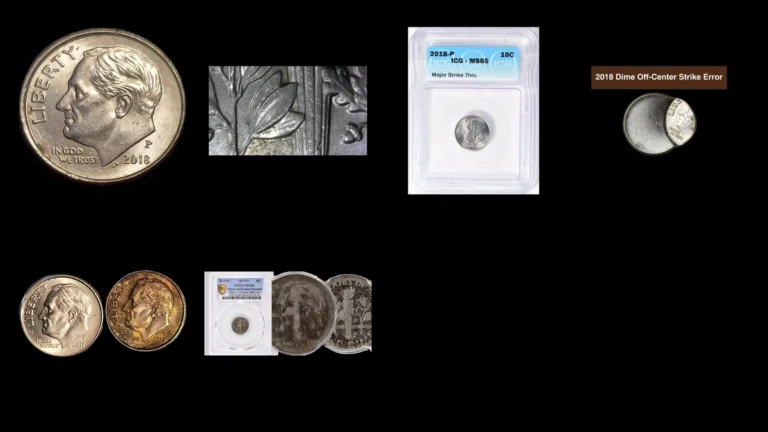
The Denver off-center report describes a blank that was not in its intended position beneath the dies. Part of the design missed the available metal, leaving an unstruck area beside the displaced image.
The supplied report does not give a direction or percentage. Those details must come from the actual specimen.
How to Identify
Find the meeting line between struck and unstruck metal, then check the opposite side for design that runs beyond the edge. Both faces should support the same displaced blank.
An uneven rim limited to one face can result from a shifted die instead. Keep the surviving date and D visible and look for grinding marks in any supposedly blank area.
What It’s Worth
Genuine dated off-center examples have estimated values of $30–$800. Clear displacement and attractive original surfaces help establish the comparison.
A larger empty crescent does not automatically compensate for a missing date, corrosion, or heavy scratches. Evaluate the complete coin rather than pricing the percentage alone.
10. 2011 Dime Reported Strike on a Nickel Blank Error
A dime design on a nickel blank would occupy a disc larger and heavier than its normal blank. Year guides report a 2011 Denver candidate, but its metal and original strike need confirmation.
This matters because a broadstrike can also be wide. It spreads existing dime metal without adding the mass expected from a nickel blank.
How to Identify
A nickel blank normally starts at 5.00 grams and about 21.2 millimeters across. Striking may change its final outline, so assess size and weight together.
Inspect for uniform nickel-alloy metal rather than an ordinary dime’s layered edge, and look for seams or an added border. A specialist should confirm the material before the reported blank identity becomes a firm attribution.
What It’s Worth
A confirmed dime struck on a nickel blank has an estimated range of $300–$1,500. This is a conditional estimate for the reported category, not a documented 2011 sale.
The date, design clarity, and original surfaces remain important. A flattened dime does not qualify merely because its diameter is larger.
Conclusion
Begin with a feature that can be shown clearly, such as the boundary of missing metal or the angle between the two designs. Then keep the date, mintmark, and finish connected to that evidence.
The reported 2011 categories include examples needing further confirmation, so use price estimates only after identification. Preserve original surfaces and any attached material; those details can explain the manufacturing process more effectively than an unusual color or outline alone.