Rare 1956 Dime Errors (List & Pictures)
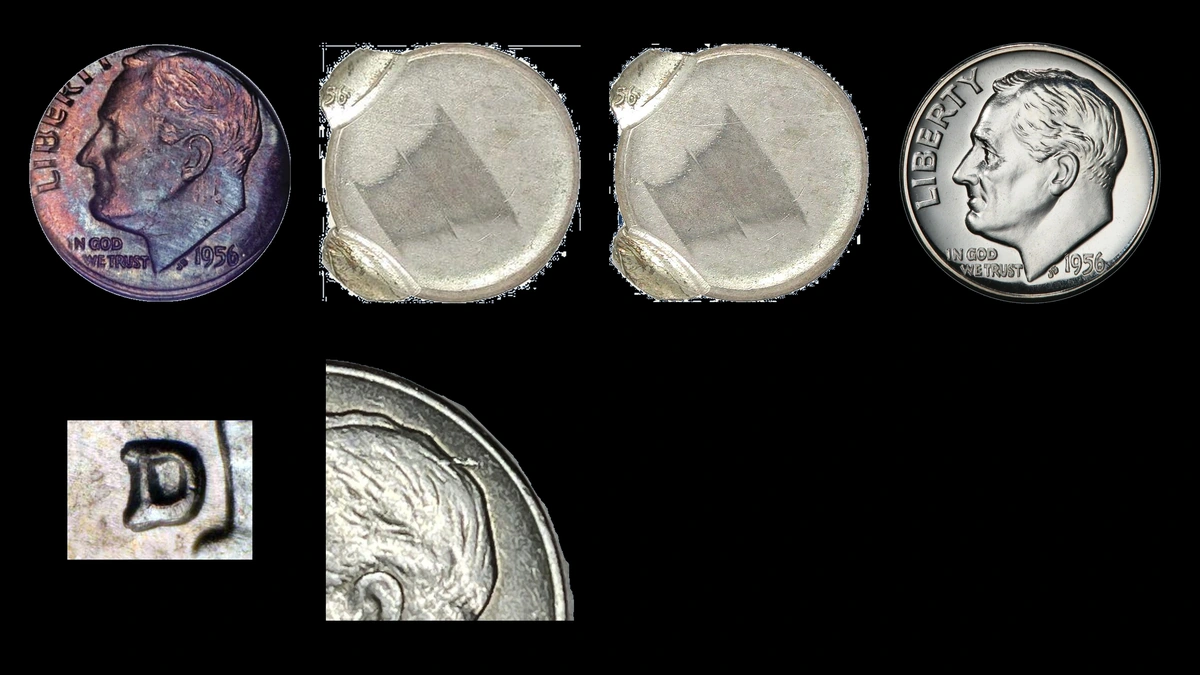
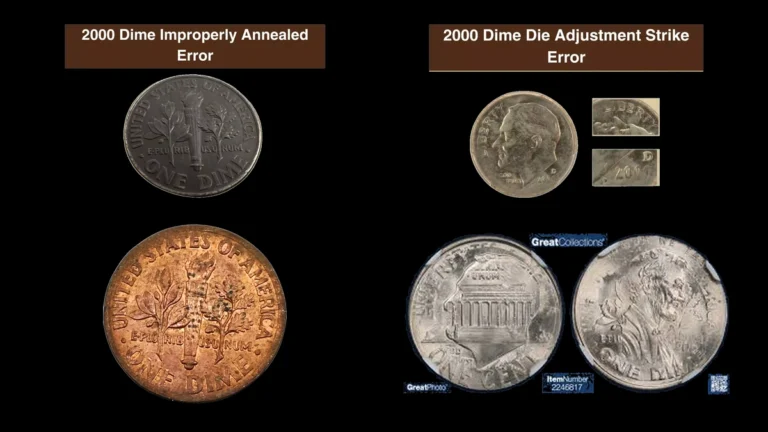
A 1956 dime struck over a finished Honduran centavo sold for $4,080 in October 2022. The 1956 dime errors below span estimated whole-coin values of $15–$6,000.
Compare the metal and visible designs first, then inspect the outline and smaller details. A normal silver dime weighs 2.50 grams and measures 17.9 millimeters; an unusual foreign blank need not match those standards.
| Visible clue | Feature | Estimated whole-coin range |
|---|---|---|
| Small copper coin with dime design | Honduran blank | $1,500–$5,000 |
| Earlier foreign design underneath | Honduran centavo overstrike | $2,500–$6,000 |
| Two displaced impressions | Double strike | $200–$1,250 |
| Single displaced impression | Off-center strike | $75–$750 |
| Straight missing edge | Clip | $40–$400 |
| Clip plus expanded surviving outline | Broadstrike with clip | $100–$500 |
| Repeated letters on Proof | Doubled die obverse | $75–$800 |
| Second D outline | Repunched mintmark | $20–$250 |
| Raised line or rim patch | Die cracks and rim breaks | $15–$400 |
| Thin metal peel | Lamination | $15–$150 |
1. 1956 Dime Roosevelt on a small copper disc: Honduran centavo blank Error
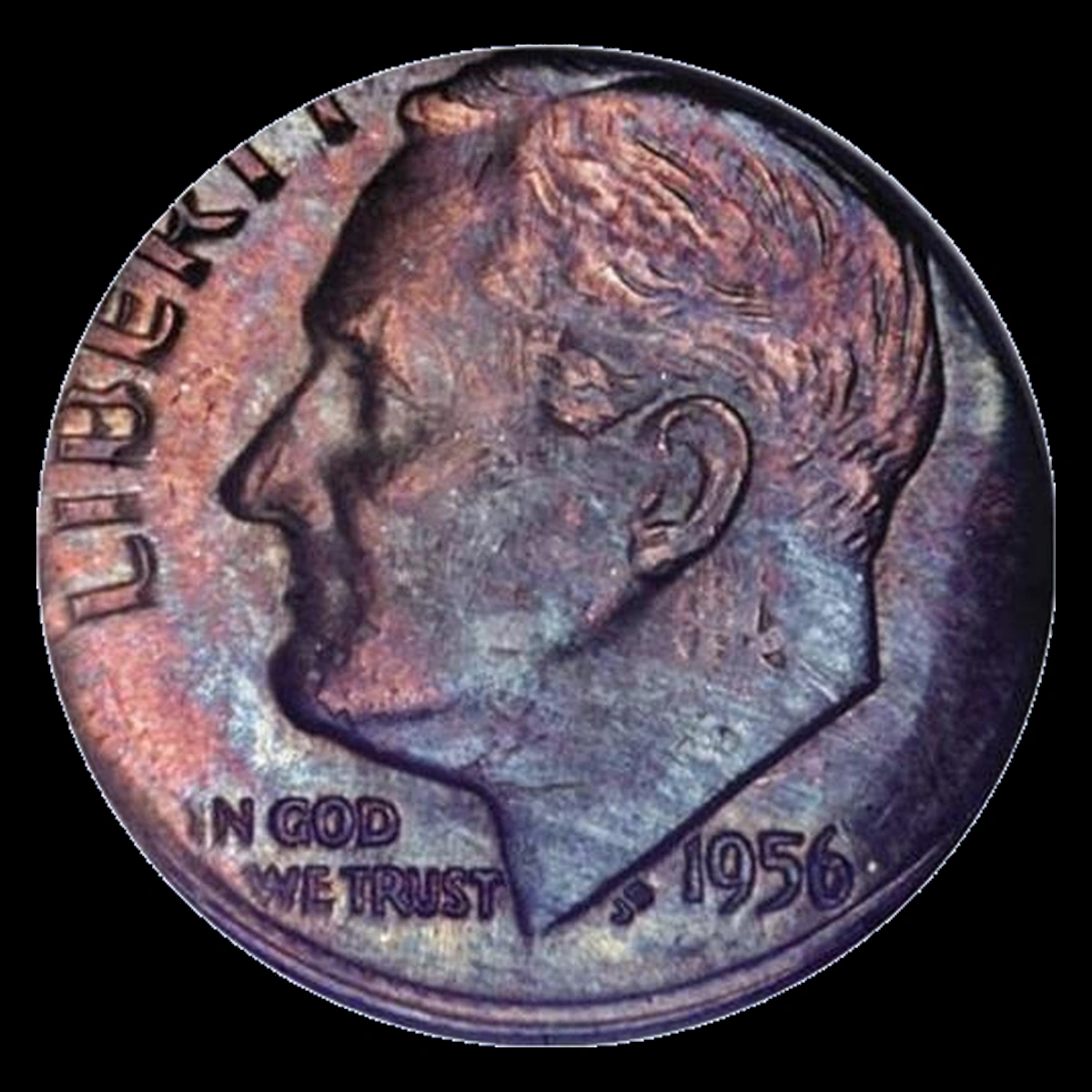
The reported NGC MS65 Brown example weighs 1.5 grams and was struck on a blank intended for a Honduran one-centavo coin. Its smaller disc could not receive all the outer dime design.
Because this was an unused blank, it had no earlier foreign design beneath Roosevelt. That is the central distinction from the overstruck finished centavo described next.
How to Identify
Compare the recorded 1.5 grams with the 2.50-gram silver-dime standard and examine how much of the design fits. Do not assume the wrong blank retained a normal dime diameter.
Inspect the surface and edge for plating, filing, or other alteration that could produce misleading color and size. Brown appearance alone does not establish a foreign blank.
A reliable metal-and-blank attribution is necessary for this unusual piece. The evidence should support an original small disc carrying the dime strike without a prior Honduran image.
What It’s Worth
A genuine dime on this foreign blank has an estimated whole-coin range of $1,500–$5,000. The 2008 offering of the MS65 Brown specimen did not sell.
The related $4,080 sale concerns a dime struck over a finished Honduran coin, with an earlier design and a different grade. It frames the comparison without supplying a transaction for the unused-blank specimen.
2. 1956 Dime Another country’s design remains underneath: Honduran centavo overstrike Error
Here a finished 1956 Honduran one-centavo coin entered the dime press after receiving its own design. The Roosevelt strike left traces of the foreign letters, symbols, or date beneath it.
The documented NGC MS63 Brown is a separate coin from the MS65 Brown struck on an unused blank. Its older design is evidence of an additional production history.
How to Identify
Search for recognizable portions of the earlier centavo and compare them with the correct Honduran design. Random scratches should not be assembled into a claimed foreign date.
Check that the underlying traces and Roosevelt design belong to the same struck object. Inspect the edge for seams, added material, and later damage.
For a sealed example, rely on the recorded identification without opening the holder. Copper color or low weight alone cannot distinguish this overstrike from an unused wrong blank.
What It’s Worth
Comparable genuine overstrikes have an estimated whole-coin range of $2,500–$6,000. Visibility of both designs is an important part of collector appeal.
The NGC MS63 Brown sold for $4,080 at Heritage on October 10, 2022. That amount covers the complete overstruck coin, not a wrong-blank value plus a separate centavo value.
3. 1956 Dime Two small impressions survive: double strike Error
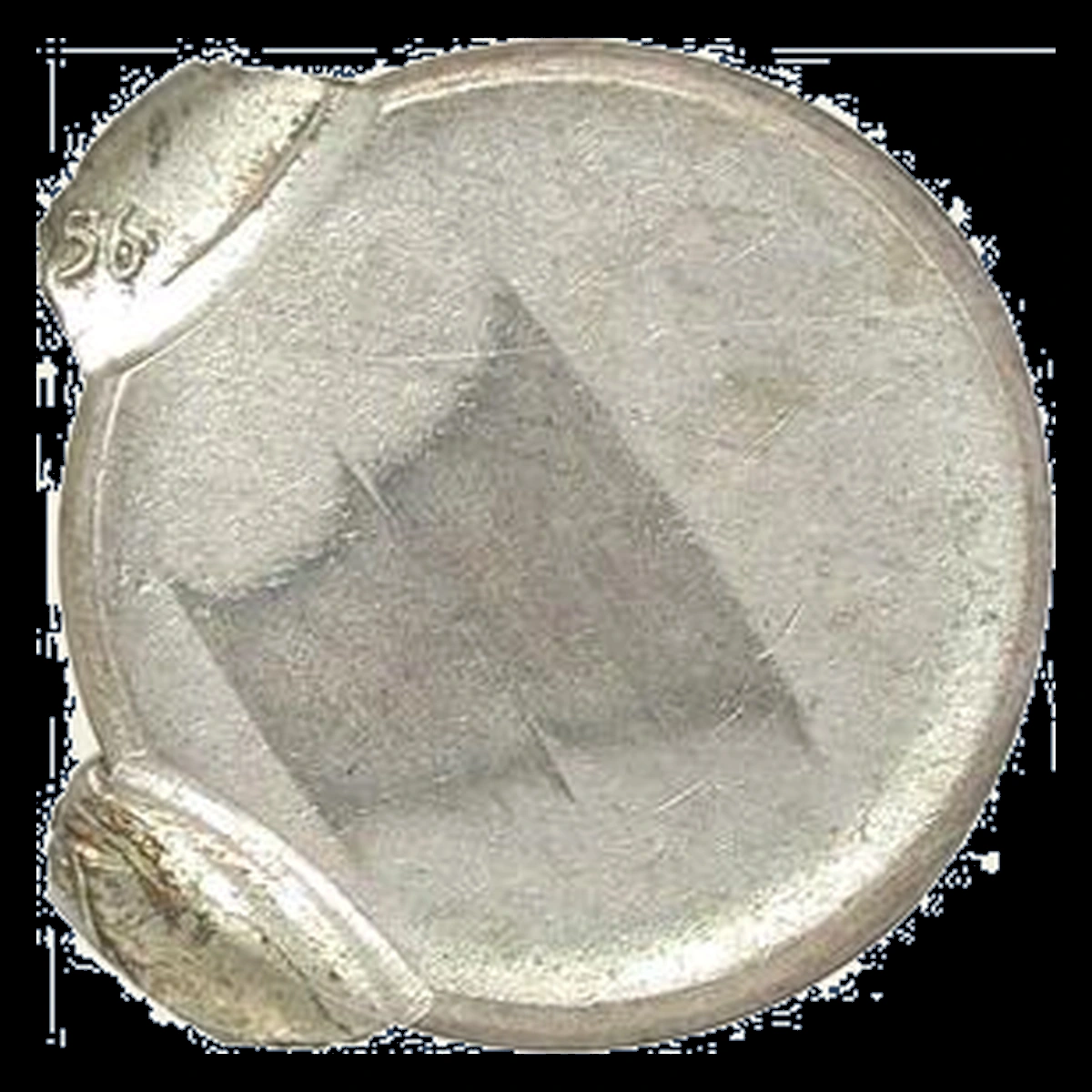
A collector-listed dime carries two heavily displaced strikes, with NGC describing both as off-center and assigning MS63. The owner describes each displacement as greater than ninety percent.
Only the final date digits, 56, remain visible. The complete 1956 identification therefore depends on the recorded attribution rather than a fully readable date on the coin.
How to Identify
Locate two separate placements of portrait or lettering while keeping the entire outline visible. Their arrangement should demonstrate two real strikes on one blank.
Compare the surviving 56 with the recorded specimen without claiming all four date digits can be read. Keep the owner’s percentage description distinct from the grading label’s stated facts.
Later pressure from another finished coin can leave reversed sunken marks. Those need to be distinguished from the two original strike impressions.
What It’s Worth
Genuine double strikes with clearly separated impressions have an estimated whole-coin range of $200–$1,250. No price is supplied for this specific 1956 example.
A 1964-D NGC MS64 with its second strike seventy-five percent off-center sold for $312 in March 2023. Its configuration differs from two extreme offsets, and neither strike on the 1956 coin should be priced as a separate coin.
4. 1956 Dime A large plain area beside one design: off-center strike Error
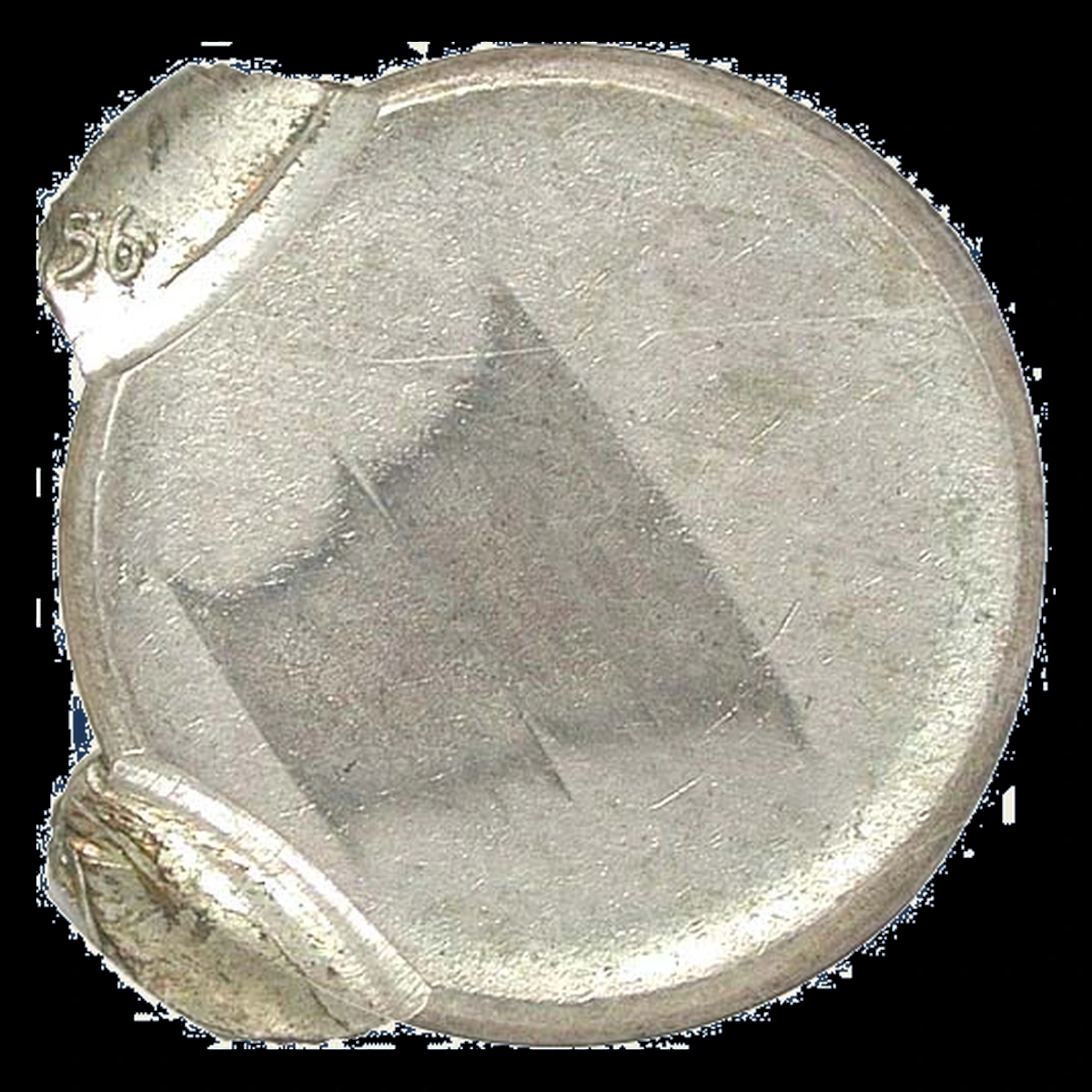
The documented Philadelphia dime was struck fifty-five percent off-center and graded NGC MS62. More than half the intended design missed the blank while the rest of the metal remained plain.
Denver examples are reported separately. They do not inherit this specimen’s percentage or configuration.
How to Identify
Find the surviving date and compare the struck-to-plain boundary on both faces. The incomplete designs should relate to the same intact unstruck portion.
Inspect the margin for grinding or filing that could have removed a normal design. Missing mintmark detail cannot identify the mint when that area was never struck.
The outline may change during an abnormal strike without equivalent weight loss. Record the full coin rather than selecting only the most dramatic closeup.
What It’s Worth
Readable-date examples have an estimated whole-coin range of $75–$750 across modest through bold attractive offsets. Surviving detail and surface quality matter alongside displacement.
A 1964 ANACS MS65 dime struck sixty percent off-center sold for $134 in December 2025. This different-year silver comparison does not establish a price for the fifty-five-percent 1956 specimen.
5. 1956 Dime A straight segment was absent before striking: straight clip Error
The documented Philadelphia NGC MS65 straight clip weighs 2.35 grams. It appeared in a two-coin lot, so its measurements and any group outcome must remain associated correctly.
A straight clip can originate when the blanking punch crosses the metal strip’s edge. The incomplete blank then receives its design around that boundary.
How to Identify
Examine both endpoints of the straight gap and the way the rim approaches them. Later cutting can slice through finished letters or reeding and leave file marks.
Use the recorded 2.35 grams for this coin only. Wear and missing metal both affect weight, so the difference from standard does not directly prove a percentage.
Weakness opposite the gap can support a clip but is not mandatory. Natural struck transitions at both ends provide stronger evidence than the straight outline alone.
What It’s Worth
Genuine worn through attractive unworn straight clips are estimated at $40–$400 for the whole coin. A clear gap and original surfaces affect the comparison.
A separate PCGS MS64 with a sixteen-percent straight clip and broadstrike sold for $126 in July 2021. Its price includes both features and does not describe the 2.35-gram MS65.
The MS65’s two-coin lot should not have its entire group amount assigned to this dime. No standalone realized price is supplied here.
6. 1956 Dime The surviving metal also spread outward: broadstrike with a straight clip Error
The sixteen-percent clipped Philadelphia MS64 combines an incomplete blank with failure of the collar to contain it. The gap explains missing metal; the broadstrike explains expansion elsewhere.
Design lost at the clipped section does not establish an additional off-center strike on an intact blank. The two recorded mechanisms already account for different parts of the outline.
How to Identify
Locate the straight gap first, then inspect the surviving circumference away from it. Look for naturally expanded metal beyond the normal border in intact areas.
Compare several spans and examine how the surviving lettering meets the expanded edge. Later hammering can widen a coin while flattening finished details.
A clip by itself does not prove collar failure. The expansion requires evidence separate from the missing segment.
What It’s Worth
Comparable genuine combinations have an estimated whole-coin range of $100–$500. Stronger expansion and attractive remaining design may increase interest.
The PCGS MS64 sold for $126 in July 2021, the same transaction cited under clips. Adding that category’s full estimate here would count the same coin twice.
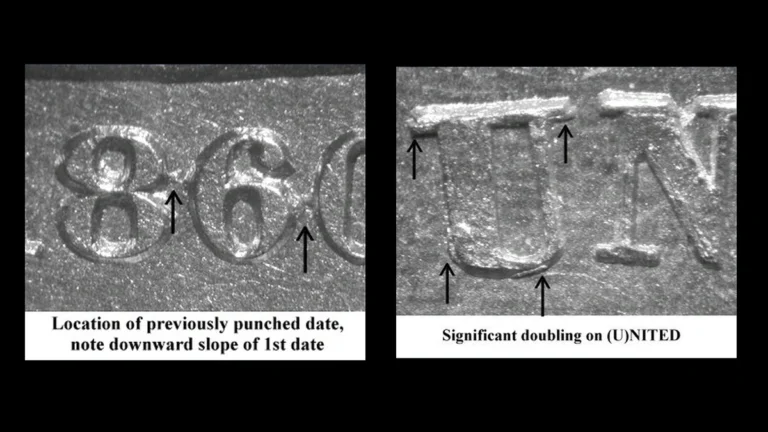
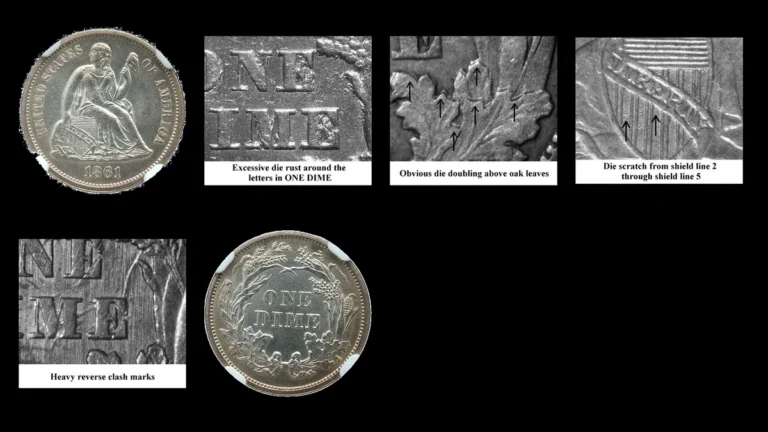
7. 1956 Dime Extra front contours on a collector coin: Proof doubled die obverse Error
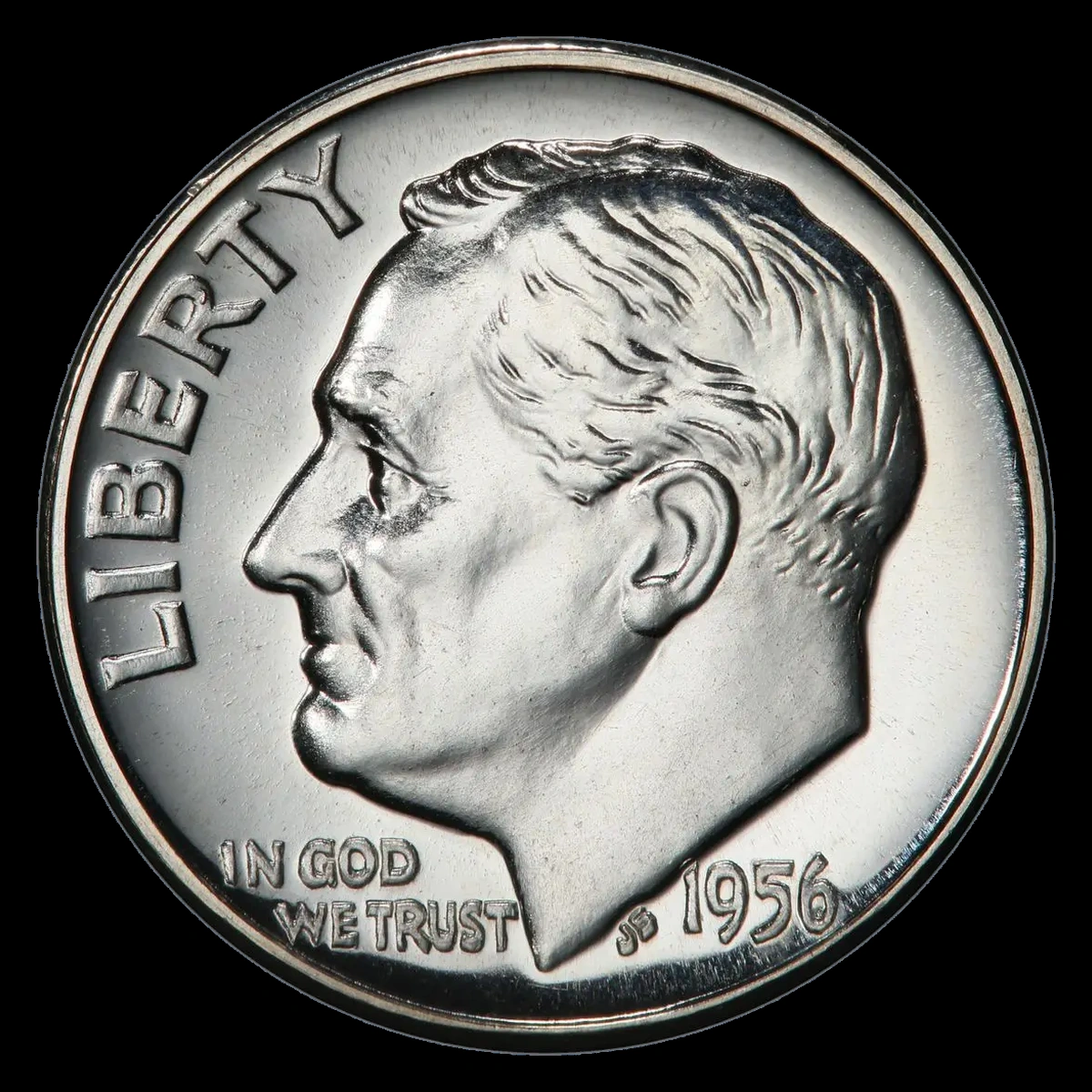
The recognized FS-101 variety concerns the portrait side of a 1956 Proof. Its repeated design detail originated in the die rather than from normal repeated blows used to manufacture Proofs.
The date, motto, LIBERTY, and small JS initials are comparison areas. Reflections in the mirrorlike fields should not be treated as proof that every detail is doubled.
How to Identify
Compare equally sized images with an attributed FS-101, beginning at the date and motto before checking other design points. Match the particular contours rather than demanding equally strong repetition everywhere.
Change the light to distinguish fixed added metal from moving highlights. A normal Philadelphia Proof has no mintmark.
Its silver composition uses the same 2.50-gram and 17.9-millimeter standards as a regular 1956 dime. Finish and actual diagnostic outlines provide the useful distinction.
What It’s Worth
Identified FS-101 Proofs are estimated at $75–$800 from impaired examples through attractive preservation. Scratches across reflective fields can reduce appeal.
GreatCollections listed a PCGS Proof-67 without a sale amount used here. A 1960 doubled-reverse Proof-68 Cameo sold for $533.50, offering different-year and different-face variety context only.
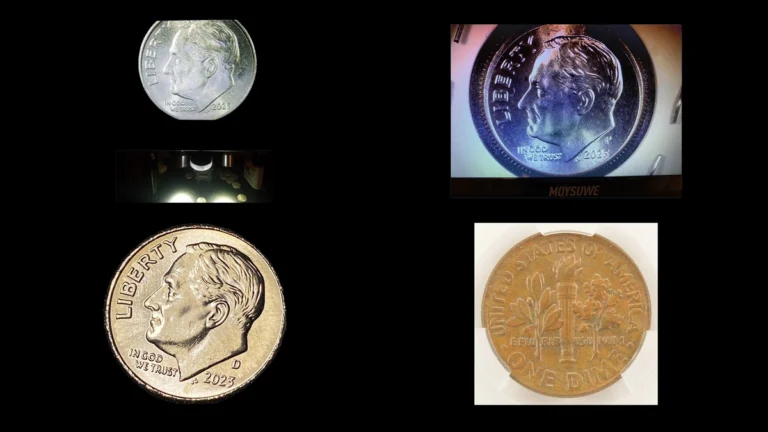
8. 1956 Dime Another D overlaps the mintmark: repunched mintmark Error
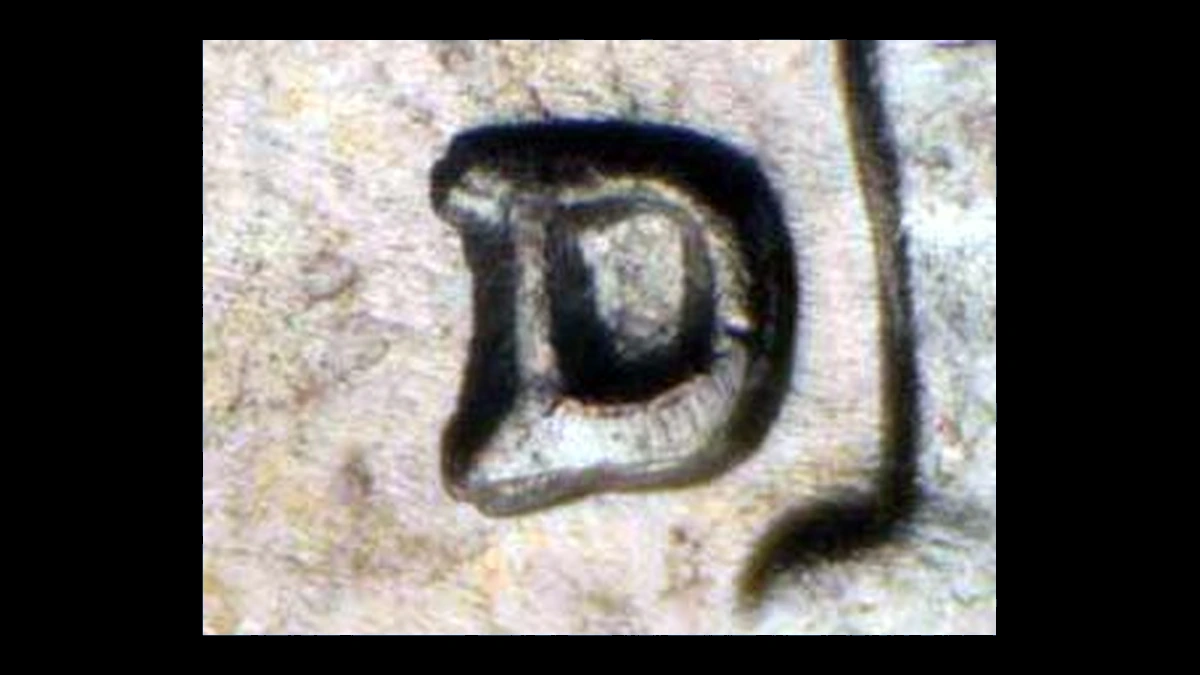
The small D left of the reverse torch can show a remnant of an earlier D. A repeated hand-punch entry into the die left the overlapping letter shape.
The reports do not establish one repunching direction for every 1956-D example. A bump elsewhere on the coin cannot identify this mintmark variety.
How to Identify
Keep the entire D in view and follow its suspected extra curve. The remnant should correspond to another D rather than a random dot or scratched edge.
Choose an attributed same-year reference for the actual punch position. A flat shelf from movement during striking requires a different explanation.
The exact letter relationship is the diagnostic evidence. General thickness or glare around the mintmark does not provide the same match.
What It’s Worth
Clearly identified minor D/D varieties are estimated at $20–$250 from worn through attractive unworn examples. Nearby silver Roosevelt mintmark varieties supply the comparison.
No specific 1956 transaction is supplied. A faint suggestion on a heavily worn letter should not inherit the assessment of a sharp, easily recognized earlier D.
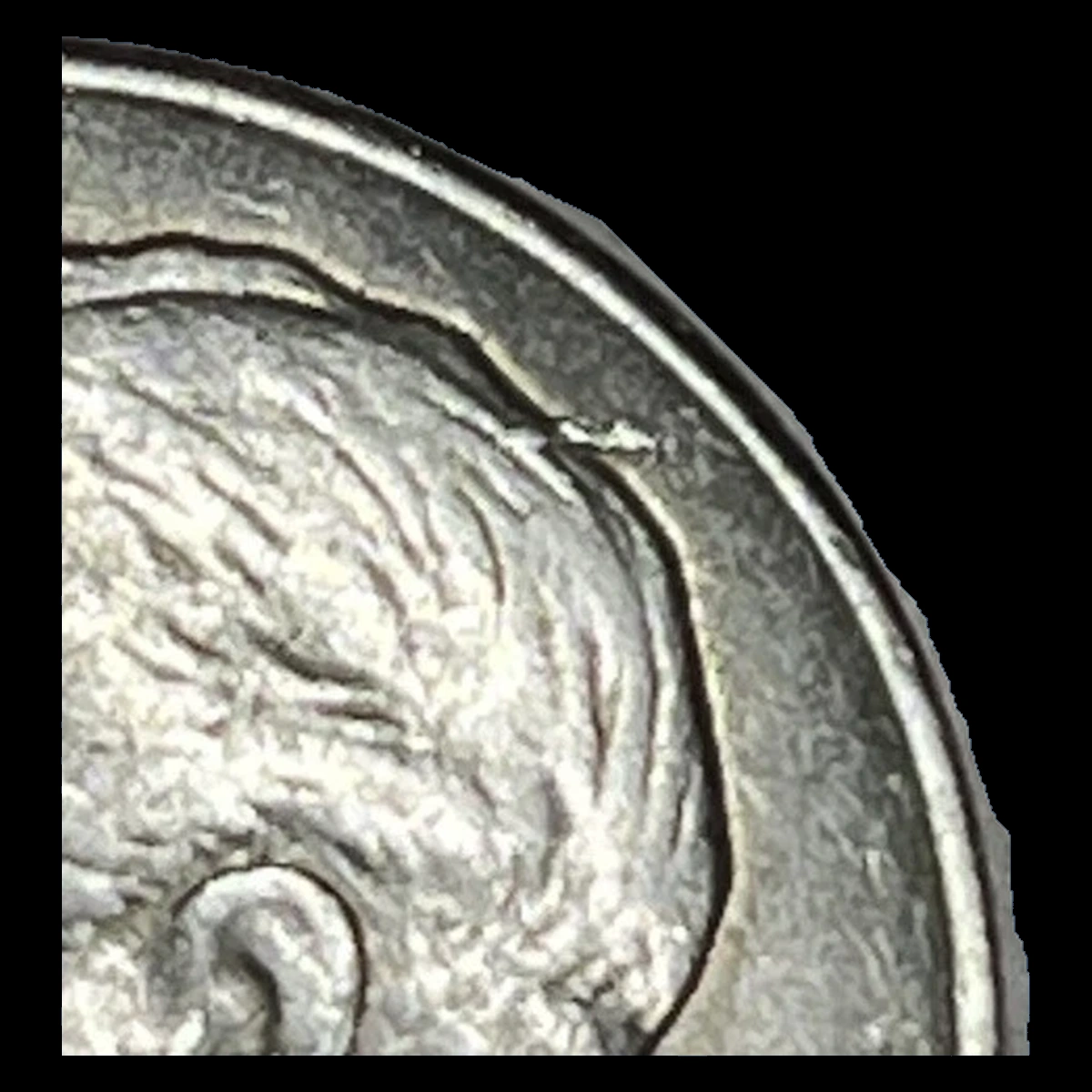
9. 1956 Dime Raised lines or a patch at the border: die cracks and rim breaks Error
Reported cracks occur near LIBERTY, the portrait, and reverse details without one universal route. Metal entering a crack in the die leaves a raised line.
A larger piece missing at the die’s edge can produce a rim-connected patch called a cud. The two shapes record different degrees and locations of tool damage.
How to Identify
Decide whether the feature is a narrow ridge or a broader patch before selecting a reference. Trace a line through the design without connecting unrelated scratches.
For a cud, keep the rim connection visible and check where normal detail stops. Added material over intact design is different from a die that could no longer stamp that area.
Inspect both faces and the edge for an impact’s crushed or folded metal. A die crack adds relief; it does not require the coin itself to split.
What It’s Worth
Small cracks are estimated at $15–$100, while larger genuine rim breaks can fit $100–$400 on attractive examples. These whole-coin estimates are not auction results for named 1956 specimens.
A fine ridge may add little beyond the underlying dime. A clear rim connection and lost normal detail make a major break easier to recognize, but condition still matters.
10. 1956 Dime A thin sheet separates within the silver: lamination Error
The 1956 alloy contains silver and copper throughout, rather than a copper center between manufactured outer layers. A weak region can allow a thin flake to lift or detach.
Year guides report lamination without naming one fixed location. The actual separating boundary distinguishes it from a scraped hollow.
How to Identify
View the loose edge from the side and leave it attached. Look for a thin sheet joined to the surrounding struck surface.
Pitting, scraping, and material stuck on top need other explanations. Check the opposite face and edge for related damage or a continuing seam.
Weight may stay near normal while a flap remains attached. Its layered form is more informative than color or roughness alone.
What It’s Worth
Minor genuine peeling is estimated at $15–$50, with larger clear separations on attractive examples around $50–$150. Extensive loss across the portrait can reduce appeal despite its original cause.
A 1942 Mercury dime with major front peeling sold for $89 in March 2023. Its different design and condition make it a broad silver-dime comparison rather than a direct 1956 price.
Conclusion
An earlier Honduran design separates the finished-coin overstrike from the unused foreign blank. The silver examples need other evidence: distinct impressions, original gap boundaries, expansion, or matching small design features.
Keep every transaction attached to its actual specimen. The $4,080 overstrike, the $126 clipped broadstrike, and a two-coin clip lot cannot be redistributed among the other categories as separate error premiums.