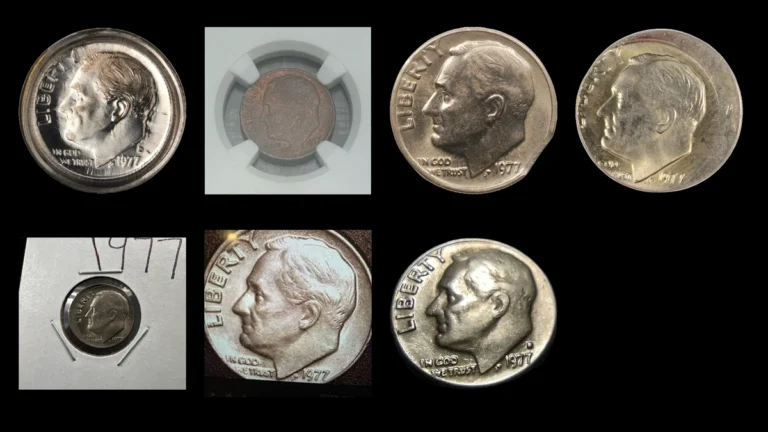
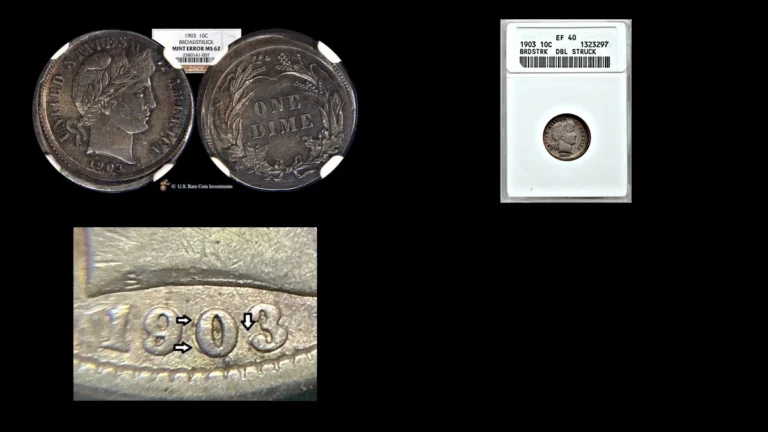
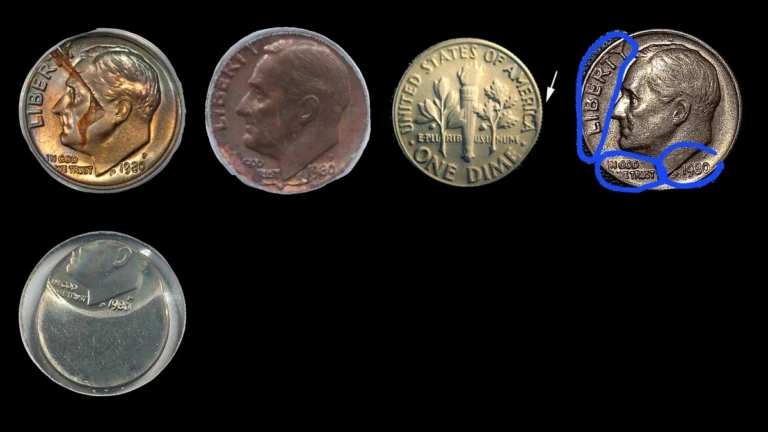
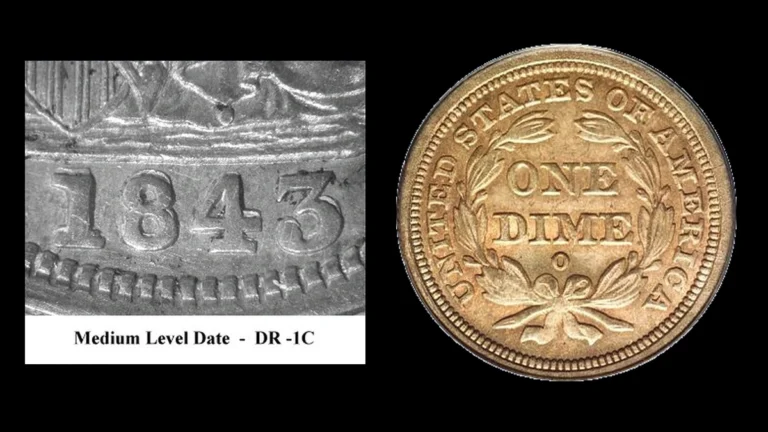
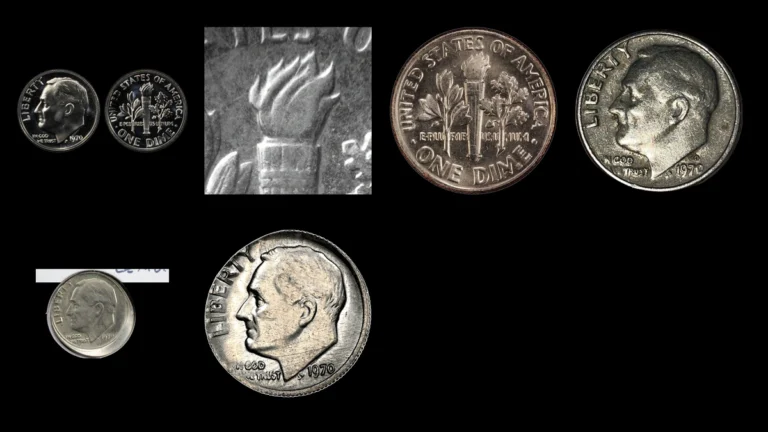
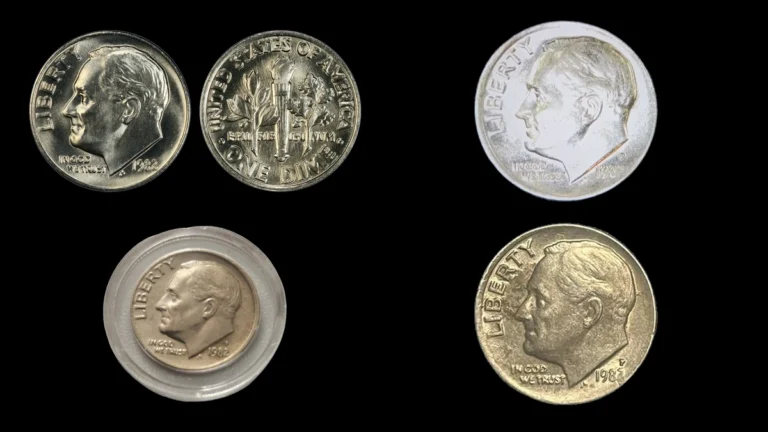
Rare 1978 Dime Errors (List & Pictures)
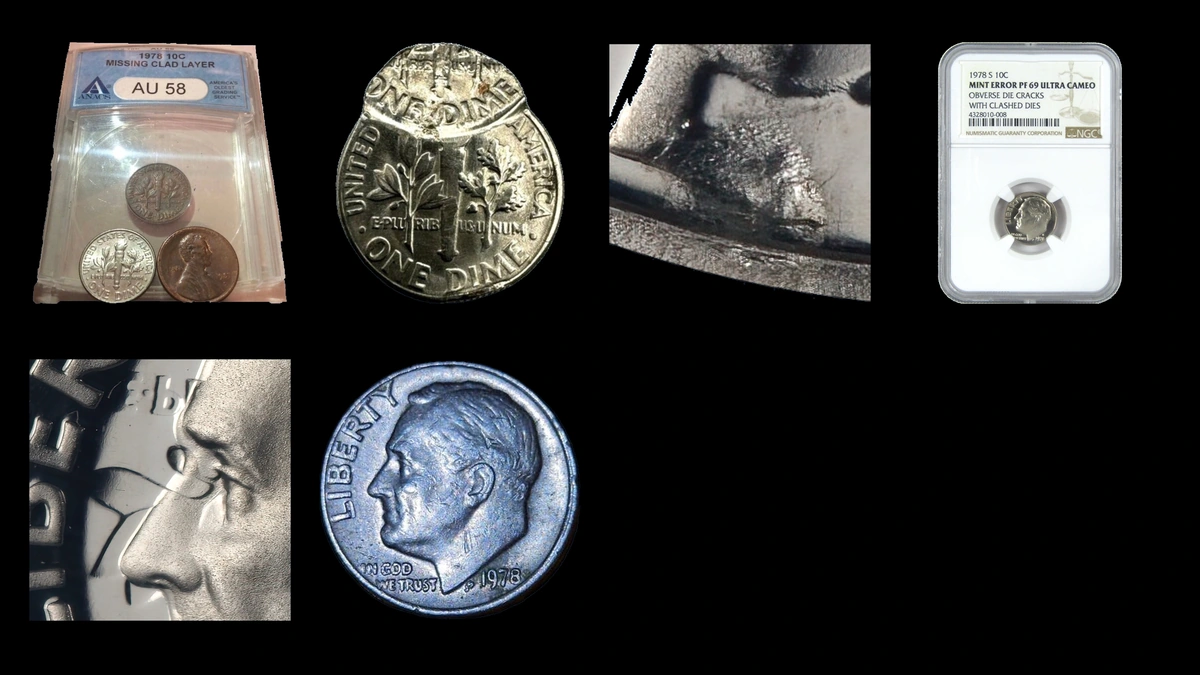
A strange-looking 1978 dime may call for a scale, a magnifier, or photographs of both faces. Color changes, missing metal, and repeated designs each provide different evidence.
These ten groups of 1978 dime errors span an estimated $5–$5,000. The highest supplied auction comparison is $4,080 for a 1957 dime on an El Salvador blank; a same-year 1978-D double strike brought $264.
Begin with the metal and outline, then examine the design and its smallest details.
| Starting clue | Category | Estimated range |
|---|---|---|
| Yellowish metal throughout | Reported El Salvador blank | $1,000–$5,000 if established |
| One copper-colored face | Missing front clad layer | $75–$250 |
| Three curved gaps and shifted design | Triple clips with off-center strike | $100–$600 |
| Widened complete design | Broadstrike | $25–$150 |
| Two widely separated impressions | Double strike | $150–$750 |
| Localized weak detail | Strike-through or filled die | $10–$100 |
| Raised ridges and lumps | Cracks, chips, or cuds | $5–$400 |
| Opposite-design traces on a Proof | Clashed dies | $100–$350 |
| Extra front-side outlines | Doubled die obverse | $50–$600 |
| Extra back-side outlines | Doubled die reverse | $20–$200 |
The normal dime weighs 2.268 g and measures 17.9 mm, with copper-nickel outer layers surrounding a copper core and grooves around its edge. San Francisco Proofs are also clad coins; their specially made reflective finish does not make them silver.
Use a scale accurate to 0.01 g and calipers for accessible coins, keeping sealed examples in their holders. A 10× magnifier and changing light angles help with the smaller features.
1. 1978 Dime A Yellowish Dime: Reported Strike on an El Salvador Centavo Blank Error
A historical table lists a 1978 dime struck on brass intended for an El Salvador one-centavo coin. The entry does not supply that specimen’s mint or measured weight.
This would be a wrong-planchet error: the prepared metal blank belonged to a different coin. Brass contains copper and zinc, unlike the dime’s normal layered composition.
How to Identify
Color can suggest a question but cannot answer it. Plating and chemicals can turn an ordinary dime yellowish without changing the metal underneath.
Professional nondestructive alloy testing, weight, and dimensions must support the proposed foreign blank. Examine the edge for normal layers or a coating, and never scratch or file the coin to expose its interior.
The historical Mint Error News entry leaves measurements unspecified. The 2.2 g figure from a different 1957 example must not be assigned to the 1978 report.
What It’s Worth
A professionally established example has an estimated $1,000–$5,000 range. Identification strength and condition are central to that conditional estimate.
A 1957 dime on an El Salvador centavo blank brought $4,080 in July 2022 in NGC MS63 Brown. It supplies a different-year auction comparison, not a recorded sale of the 1978 coin.
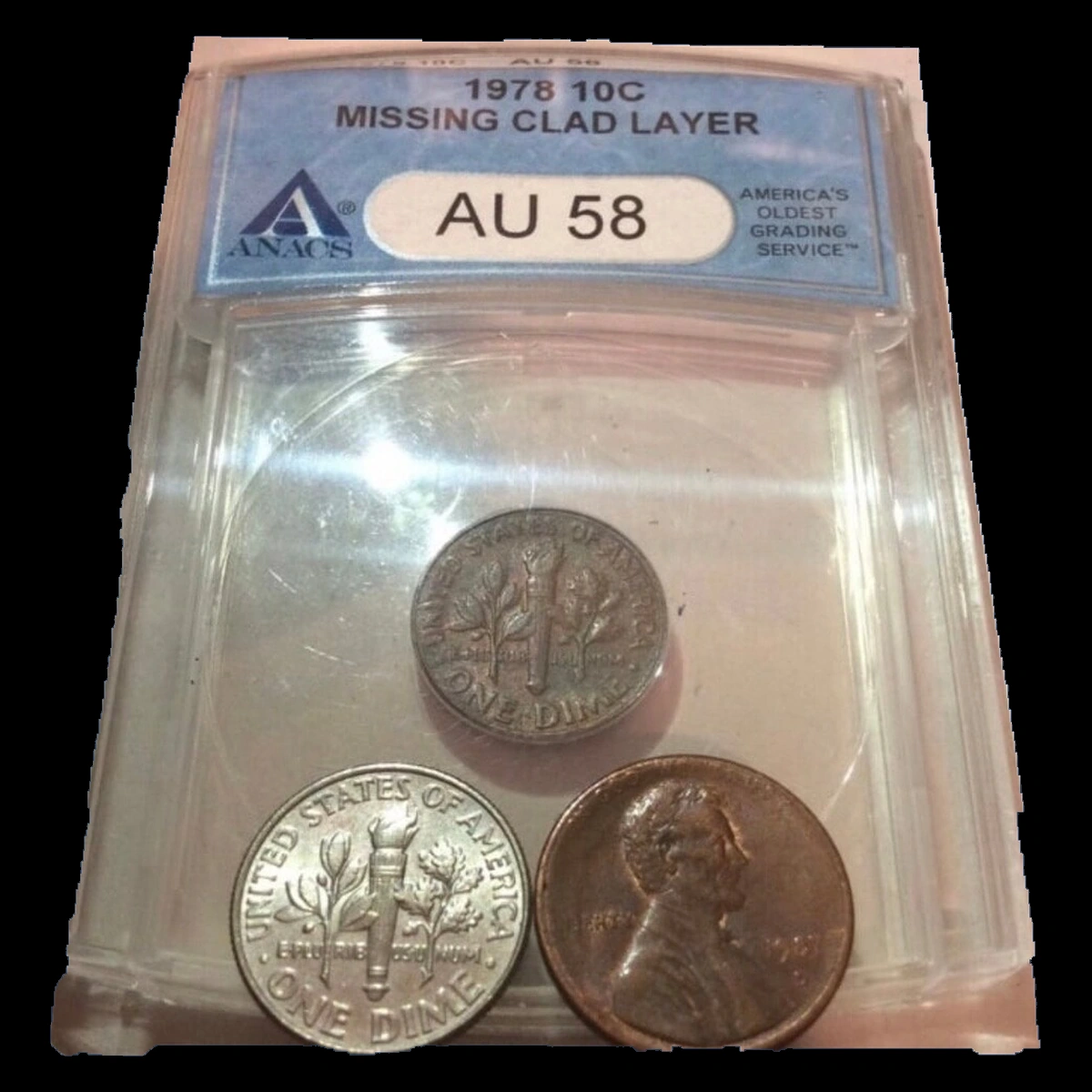
2. 1978 Dime A Copper Front and Pale Back: 1978 Missing Clad Layer Error
One copper-colored face may indicate that an outer covering was absent when the coin was struck. The exposed core then received the design directly.
The Philadelphia example described in the year guide has its front layer missing and an AU58 grade, meaning slight wear. Both appearance and reduced weight need to fit the missing metal.
How to Identify
Photograph both faces and the edge before judging the color difference. A missing layer should reduce weight, although the amount depends on how much metal is absent.
Inspect for intact struck detail in the copper face. Grinding can cut across the design, while chemicals or heat can change color without creating an original missing-layer error.
What It’s Worth
The estimated whole-coin range is $75–$250. The guide’s roughly $75–$200 range includes lightly worn pieces, with the higher allowance here favoring an attractive unworn example.
No named transaction is assigned to the reported AU58 coin. Its Philadelphia origin also means the absence of a mintmark is normal.
3. 1978 Dime Three Gaps and a Shifted Picture: 1978 Triple Clips with an Off-Center Strike Error
Three curved openings interrupt the Philadelphia specimen’s outline, and its design is also ten percent off center. These features record two stages of production.
The blanking punch overlapped earlier holes in the metal strip, producing an incomplete disc. That clipped blank then entered the striking press out of position.
How to Identify
Inspect all three curved boundaries for natural blanking surfaces and nearby metal flow. Saw marks or cuts through completed design can instead reveal later removal.
Compare both faces for the displaced strike after examining the clips. The NGC Uncirculated Details specimen also has a wheel mark on the back, which is later damage rather than another mint error.
What It’s Worth
The combination has an estimated $100–$600 range, depending on clarity, remaining design, and damage. No completed sale amount is assigned to the documented example.
The $264 same-year double strike discussed below offers limited context for a dramatic error, but it formed differently. Do not price each of the three missing arcs as a separate coin or ignore the wheel mark.
4. 1978 Dime A Wider Outline with the Design Intact: 1978 Broadstrike Error
An expanded border can result when the retaining collar fails to contain the blank during striking. This collar normally controls diameter and forms the edge grooves.
The main designs remain within the metal on a broadstrike. A year guide and an auction listing identify this category for 1978 without supplying a recovered sale amount here.
How to Identify
Measure across several directions, then inspect both faces for complete outer lettering. A tiny difference in border width does not establish that the whole blank escaped normal confinement.
Examine the changed edge and expanded metal for evidence of an original strike. Flattened letters, battered surfaces, or squeezed grooves may show that a finished coin was widened later.
What It’s Worth
Clearly expanded examples have an estimated $25–$150 range across worn and unworn condition. The year guide reaches about $100, with the higher allowance favoring stronger preservation and spread.
These are estimates for recognizable broadstrikes. An uneven rim without supporting edge and design evidence does not justify applying them.
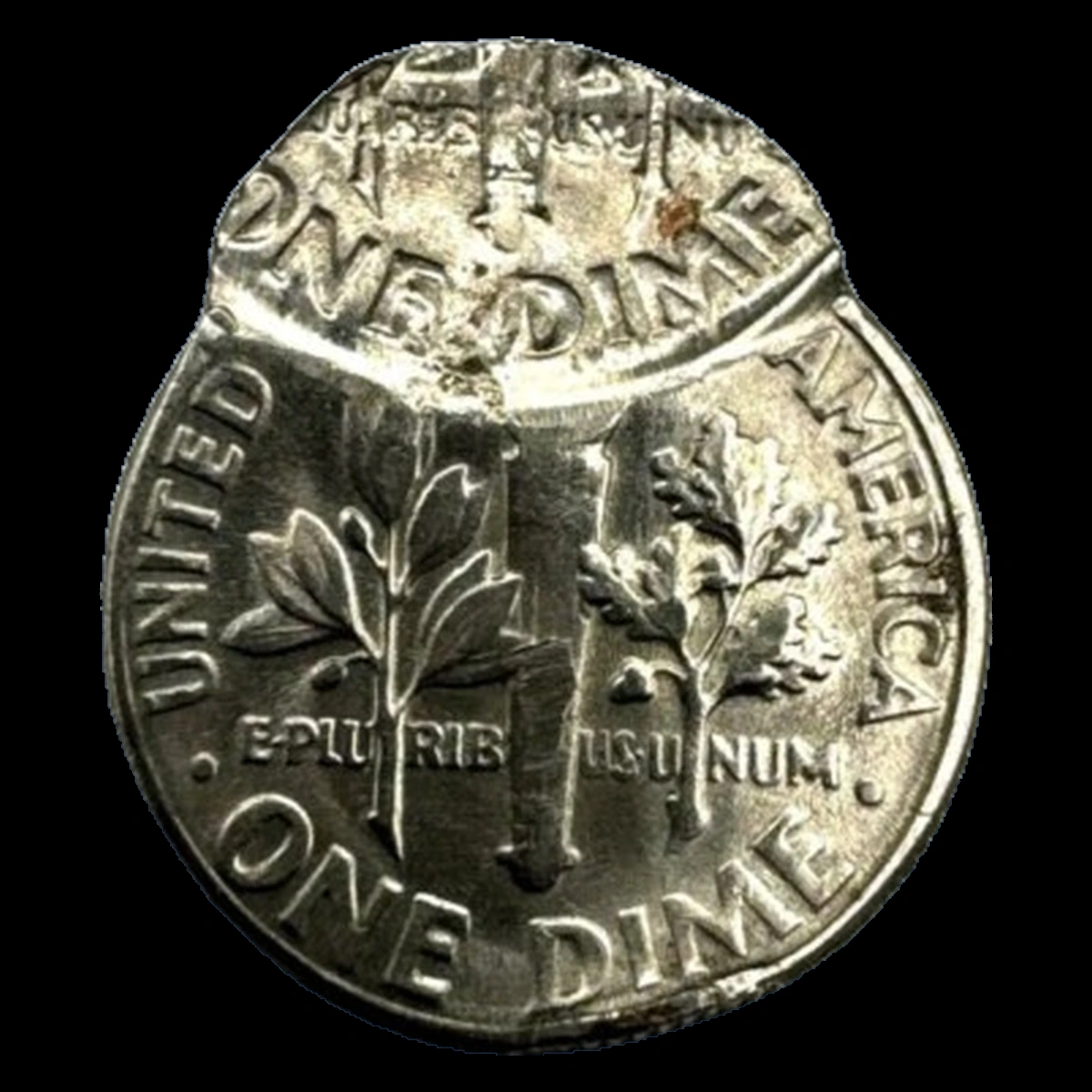
5. 1978 Dime Two Separate Impressions: 1978-D Double Strike Error
The documented Denver dime preserves much of its first design while a second impression sits mostly beyond it. The second strike is described as 85% off center and uniface.
Uniface means the later impression appears on only one face because something blocked the other side. The percentage describes the strike’s displacement, not missing metal.
How to Identify
Read the first date and D independently, then locate details belonging to the second impression. Genuine separate strikes occupy visibly different positions rather than merely doubling a letter’s edge.
Inspect where the impressions meet for original metal flow and signs of later alteration. The documented uniface event does not require a matching second design on the back.
What It’s Worth
Collectible 1978 double strikes with clear separation have an estimated $150–$750 range. Date visibility and surface quality help determine an appropriate comparison.
The ANACS MS63 Denver example sold for $264 on January 3, 2022. Its unworn grade allows noticeable marks, and its strongly displaced second strike is part of the appeal.
6. 1978 Dime Detail Fades in One Area: 1978 Strike-Through or Grease-Filled Die Error
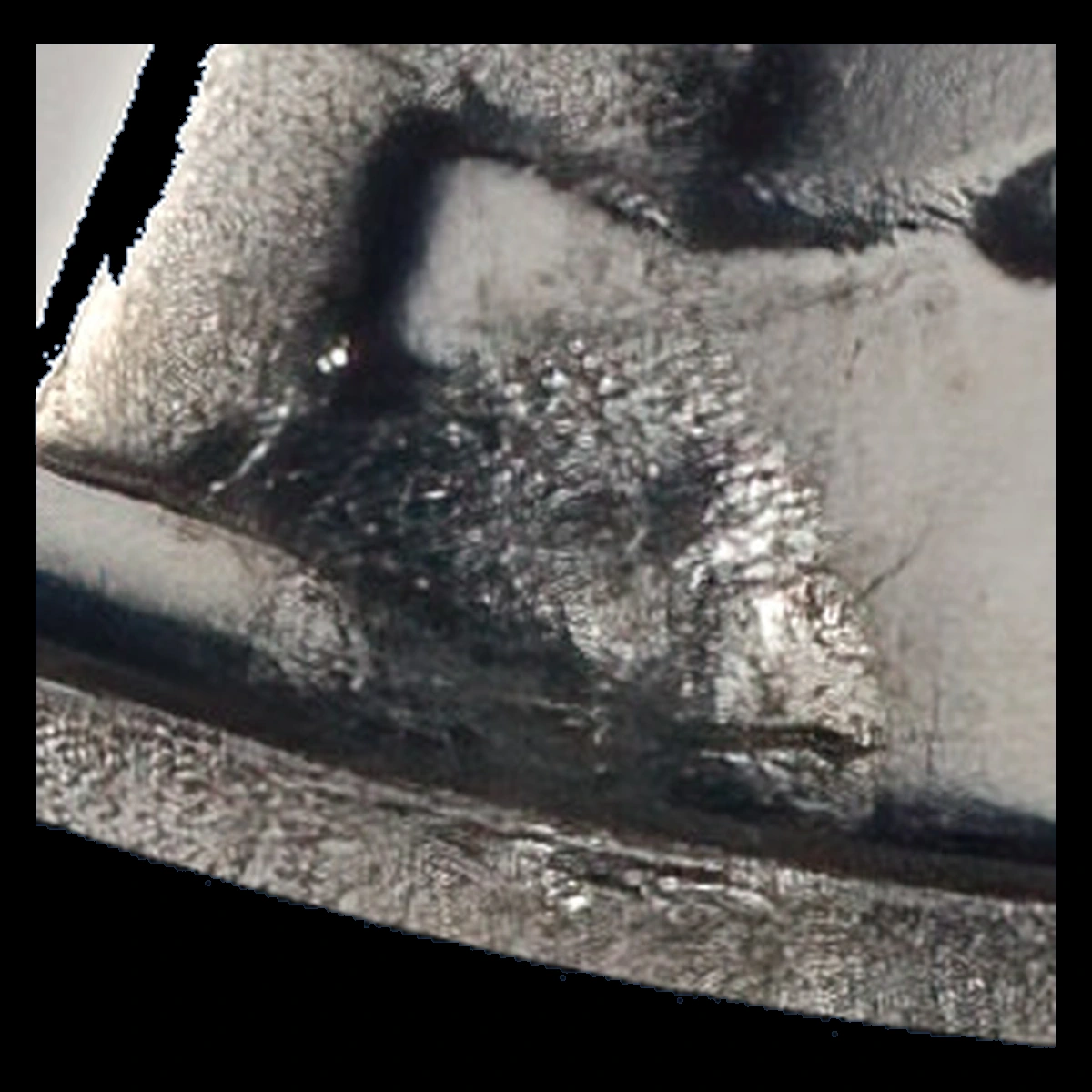
A sharp design can become locally weak when material blocks contact between the blank and die. Grease may soften details, while a firmer object can leave a more distinct impression.
Reports mention weak Denver mintmarks among these effects. A raised blob inside D instead may result from a small break in the tool.
How to Identify
Compare the affected patch with nearby high points. General wear usually weakens other exposed details, while scraping or a gouge may leave disturbed metal and a raised lip.
If D seems weak, record any surviving outline above the date. A completely absent letter can also belong to a normal Philadelphia dime and does not prove a filled die.
What It’s Worth
Modest, identified strike-through features have an estimated $10–$100 range. Simple grease-filled effects are placed around $10–$30 in year guides.
Distinct impressions usually provide clearer evidence than vague weakness. The figures are guide estimates, with no named auction record supplied for this group.
7. 1978 Dime Raised Lines, Bumps, or Rim Patches: 1978 Die Cracks, Chips, and Cuds Error
Different forms of die damage leave different raised marks. A crack makes a ridge, a small missing piece can make a bump, and a larger break reaching the rim produces a cud.
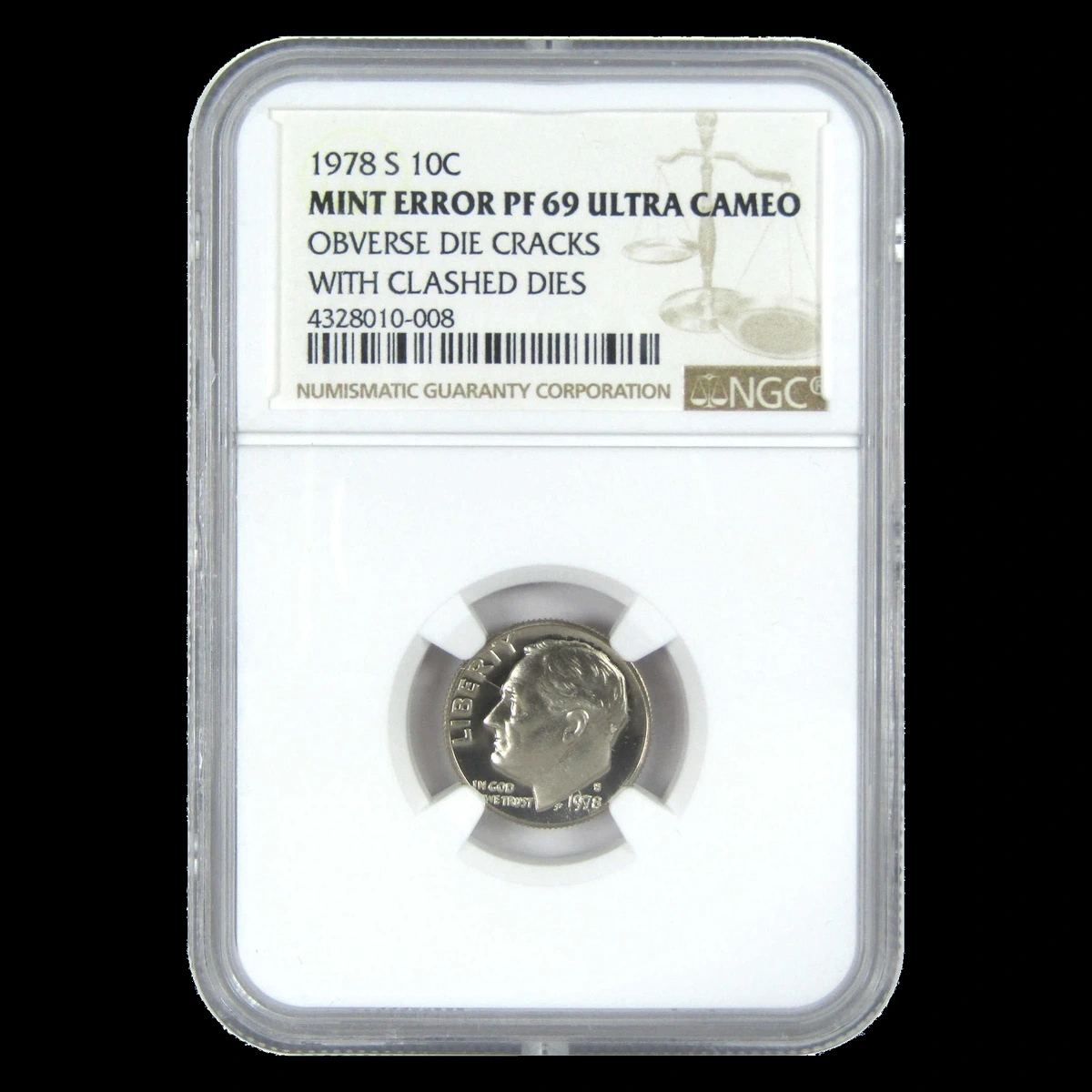
Reports cover ordinary 1978 tool breaks and a separate 1978-S split-tool Proof. These should not be presented as one coin bearing every feature.
How to Identify
Use low side lighting to distinguish raised metal from a cut. Follow a suspected cud to the rim; an isolated interior blob is not a rim cud.
For a split-tool claim, compare the whole path and neighboring design with the actual reported coin. A fracture through the dime itself can show at its edge and has a different origin.
What It’s Worth
The group spans an estimated $5–$400: minor chips around $5–$30 and bold rim breaks approximately $25–$400. These values apply to complete coins, not amounts to add for each line or bump.
The reported split-tool Proof needs its own condition and variety comparison. No individual auction price is supplied for it.
8. 1978 Dime Traces of the Opposite Design: 1978-S Proof Clashed Dies Error
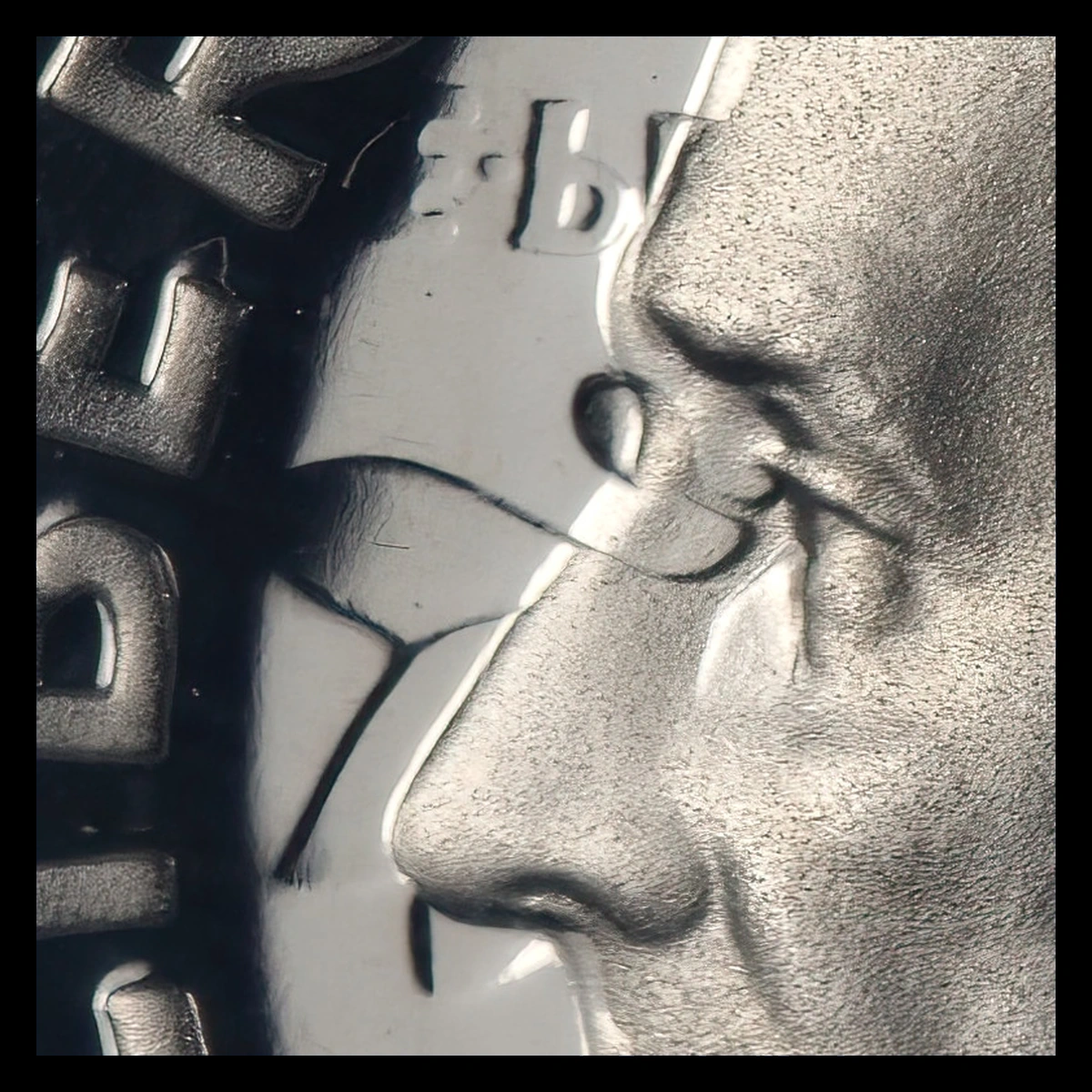
Faint extra design shapes on a reflective Proof can come from the two dies meeting without a blank between them. Each tool picks up traces of the opposite design, which can transfer to later coins.
Separate 1978-S examples were graded PCGS PR67 and PR68 Deep Cameo. Deep Cameo describes strong contrast between frosted designs and mirrorlike backgrounds.
How to Identify
Use diffuse light and gently change the holder’s angle so reflections do not hide the traces. Compare both faces with the recorded Proof examples rather than inventing a fixed location from the error name.
Recognizable opposite-design shapes differ from straight cleaning lines and random scratches. Leave a graded Proof sealed while examining it.
What It’s Worth
Clear, attractive examples have an estimated $100–$350 range. The separately graded PR67 and PR68 Deep Cameo coins each brought $159 in October 2022.
Visible clash detail and clean reflective surfaces matter more than the numerical grade alone. Cleaning lines can obscure the feature and reduce demand.
9. 1978 Dime Extra Outlines on the Front: Reported 1978 Doubled Die Obverse Error
The date, motto, LIBERTY, and profile are inspection areas listed for front-side doubling. The guide does not establish one certified coin showing duplication at all of them.
A true doubled die has repeated detail in the stamping tool before the coin is struck. That differs from a second strike on the finished coin or a flat ledge caused by movement during striking.
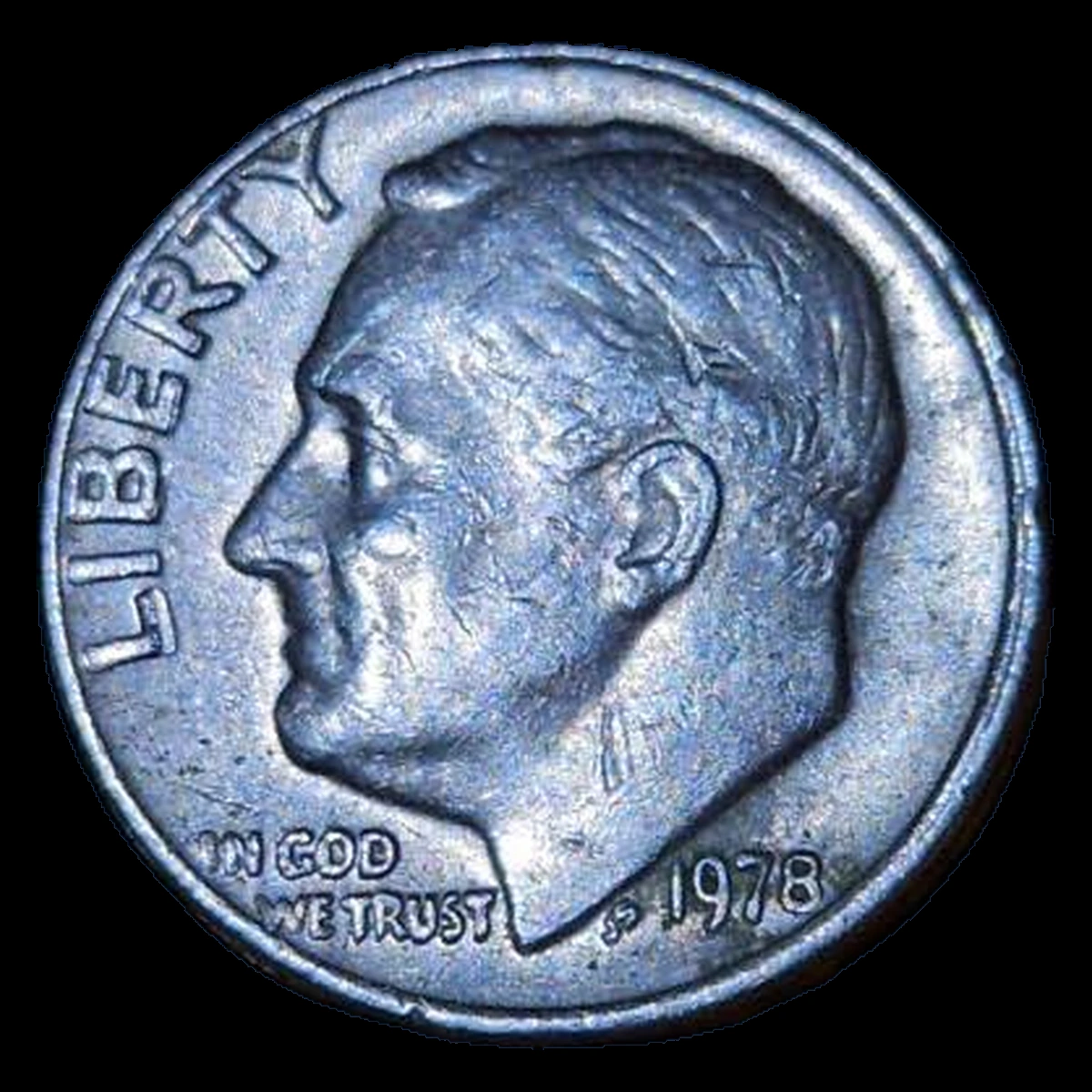
How to Identify
Keep the date and mintmark area visible in an overall photograph, then enlarge the clearest suspected feature. Look for rounded duplicate outlines or split corners that remain fixed under changing light.
Match the actual shape and position to a documented example. One thick letter does not prove all the reported areas are doubled.
What It’s Worth
The guide-based estimate is $50–$600 for correctly identified front doubling, from modest worn pieces to clearer unworn examples. No named 1978 auction result is used for this category.
Strong separation and undamaged surfaces support better comparisons. An unexplained seller label cannot substitute for identifying the doubled pattern.
10. 1978 Dime Extra Outlines on the Back: Reported 1978 Doubled Die Reverse Error
On the torch side, inspect ONE DIME, the torch, branches, and other lettering. The year list names these possible areas without establishing one die that duplicates every feature together.
Reverse doubling follows the same principle as front doubling: the extra contours originate in the tool. Each candidate still requires a matching pattern.
How to Identify
Trace a second edge through neighboring details and photograph it under two light angles. Rounded contours that persist in the metal are more useful than a reflection or a flat shelf.
Confirm the date and mint before selecting a comparison. The broad report does not assign every reverse pattern to one mint.
What It’s Worth
Identified minor reverse doubling carries an estimated $20–$200 range across worn and unworn examples. The figures follow a year-guide range rather than a sale of a named variety.
Clear separation in an ordinary close-up is more useful to a buyer than a thick, ambiguous edge on a heavily worn coin. Establish the variety before applying the upper estimate.
Conclusion
For 1978 dimes, the first useful question is whether the odd feature changes the metal, the outline, or the design. That choice directs the next check toward measurements, edge inspection, or magnified detail.
The $5–$5,000 estimates cover very different levels of evidence and rarity. Keep historical foreign-blank reports conditional, distinguish damage from original errors, and use an actual sale only when its coin provides a relevant comparison.