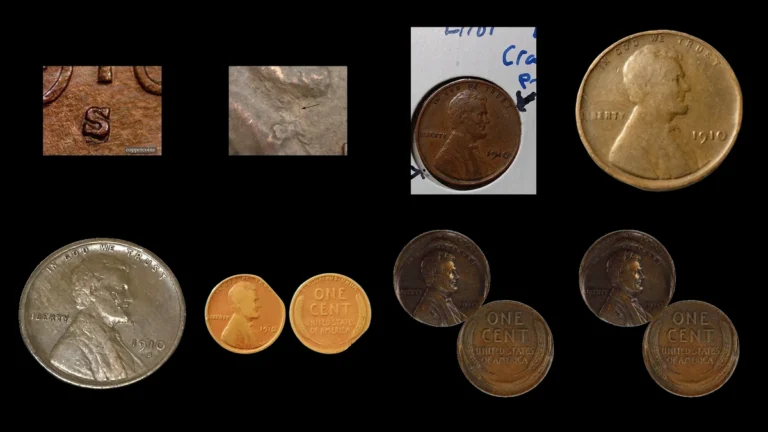
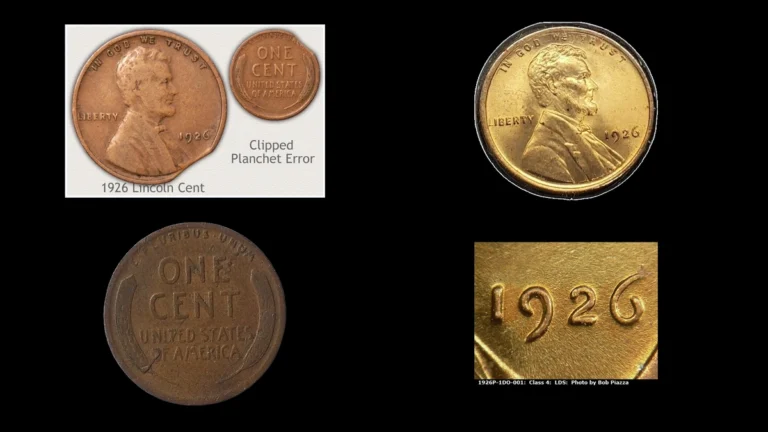
Rare 1958 Penny Errors (List & Pictures)
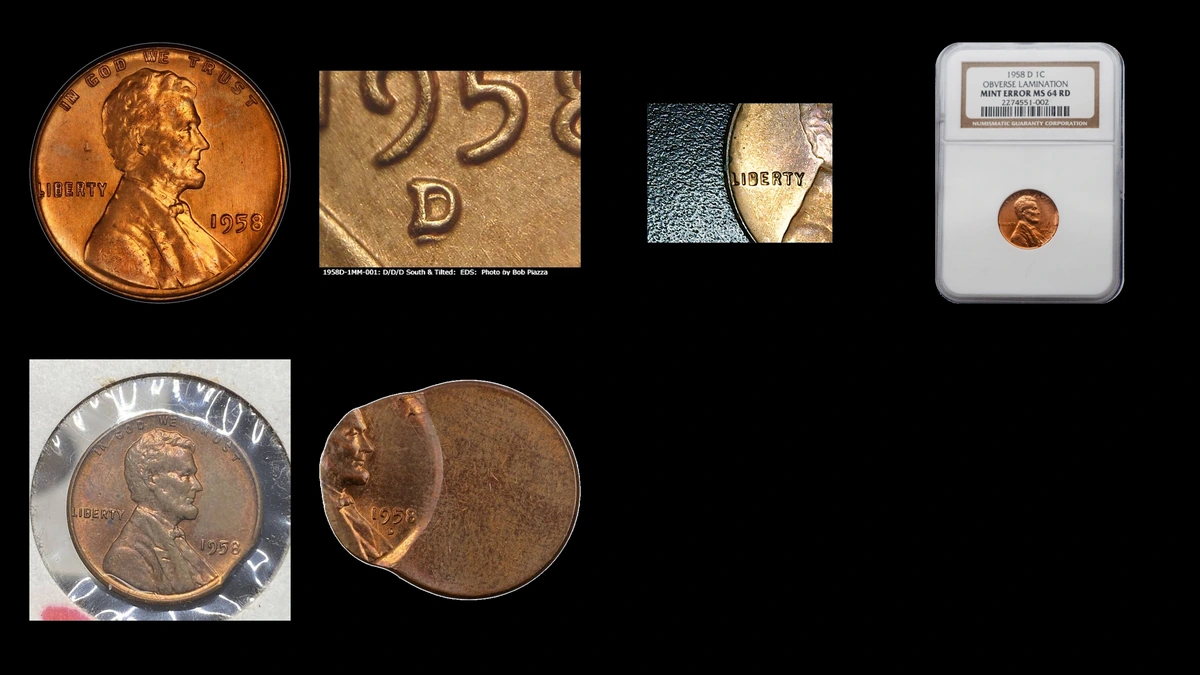
The highest supplied sale for 1958 penny errors is $1,136,250, paid in January 2023 for the major Philadelphia doubled die. Estimated ranges in this guide run from $2 to $1.2 million, with that rare variety far above the small chips and blank defects found elsewhere in the list.
Identify the visible feature first, then compare its mint, metal, and strike history with the correct example.
| Visible clue | Possible explanation | Estimated value |
|---|---|---|
| Strong repeated motto and LIBERTY | Major FS-101 doubled die | $300,000–$1,200,000 |
| Small extra letters or raised metal | Minor doubling, repunched D, chip, or cud | $2–$600 |
| Peeling, thin, or incomplete metal | Lamination, split, taper, or clip | $5–$400 |
| Displaced or repeated whole designs | Off-center or rotated double strike | $25–$2,000 |
| Pale metal or an older foreign design | Silver or Cuban blank, or Cuban overstrike | $600–$8,000 |
A regular 1958 cent weighs 3.11 grams and measures 19.05 millimeters across a plain edge. Measurements help explain an abnormal blank, but tiny design varieties require clear photographs and a precise visual match.
Handle split layers and flaking surfaces gently, and keep certified coins sealed. Added color or a polished surface can obscure the evidence rather than improve it.
1. 1958 Penny Bold extra outlines in LIBERTY and the motto: Doubled Die Error
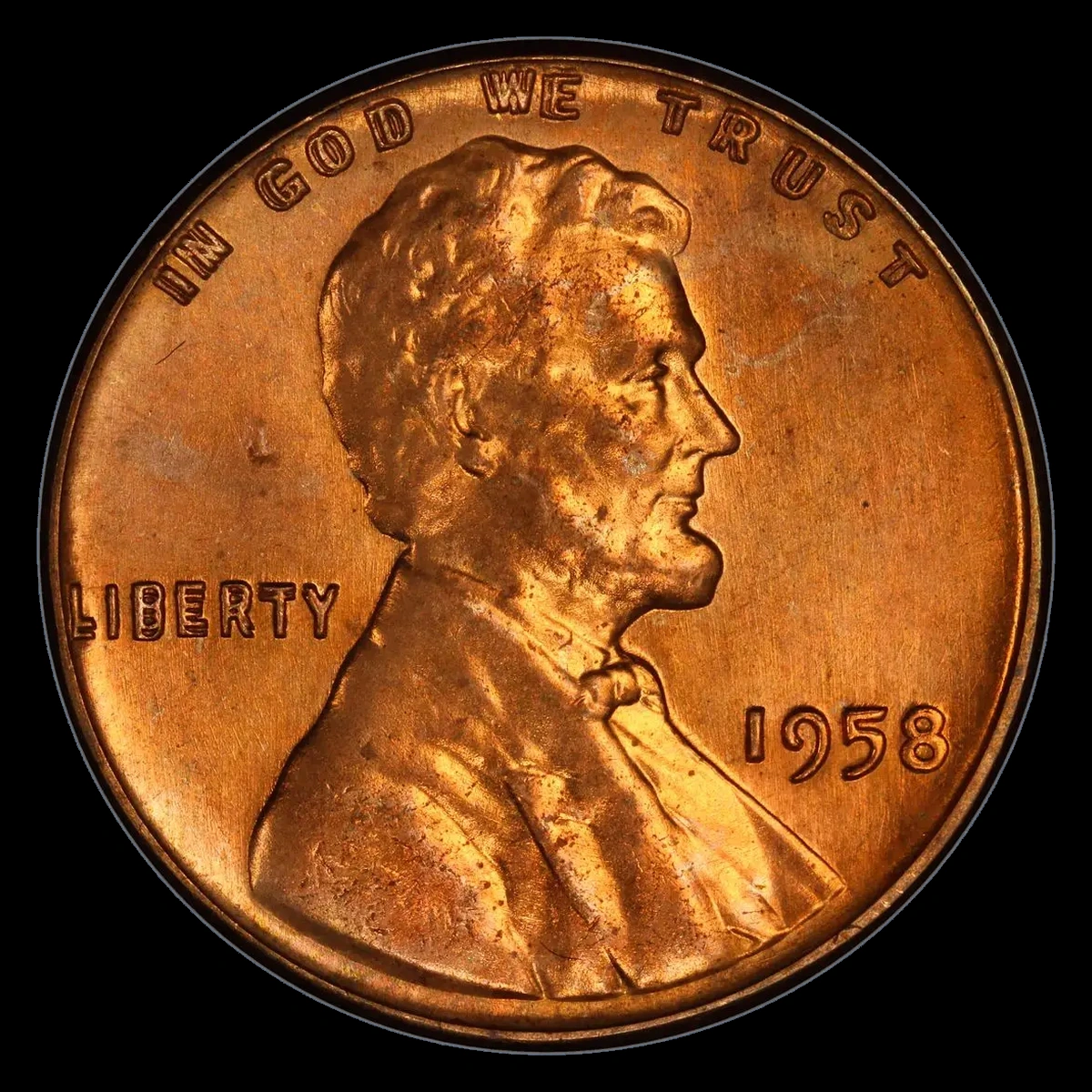
The major Philadelphia FS-101 shows substantial repeated lettering in LIBERTY and IN GOD WE TRUST. The die carried this doubled design before striking the coin.
Minor reverse-doubling reports are separate. They cannot establish the identity or extraordinary value of the major obverse variety.
How to Identify
Compare the whole lettering pattern with an authenticated FS-101 rather than choosing a single thick letter. Flat shelves caused by movement during striking do not reproduce its strong raised letter shapes.
Supporting marks on recorded examples include die-polishing lines and a small projection at the upper right of the second A in AMERICA. These details support the principal design match rather than replacing it.
A proposed minor reverse variety needs its own catalog reference. A serious major-variety candidate requires professional authentication before the exceptional prices become relevant.
What It’s Worth
The authenticated major variety has a working estimate of $300,000–$1,200,000, while minor identified reverse varieties are estimated separately at $5–$100. Their very different features explain the gulf.
The Stewart Blay PCGS MS65 Red FS-101 brought $1,136,250 at GreatCollections in January 2023. PCGS also records a $336,000 sale for an MS64 Red example in 2018.
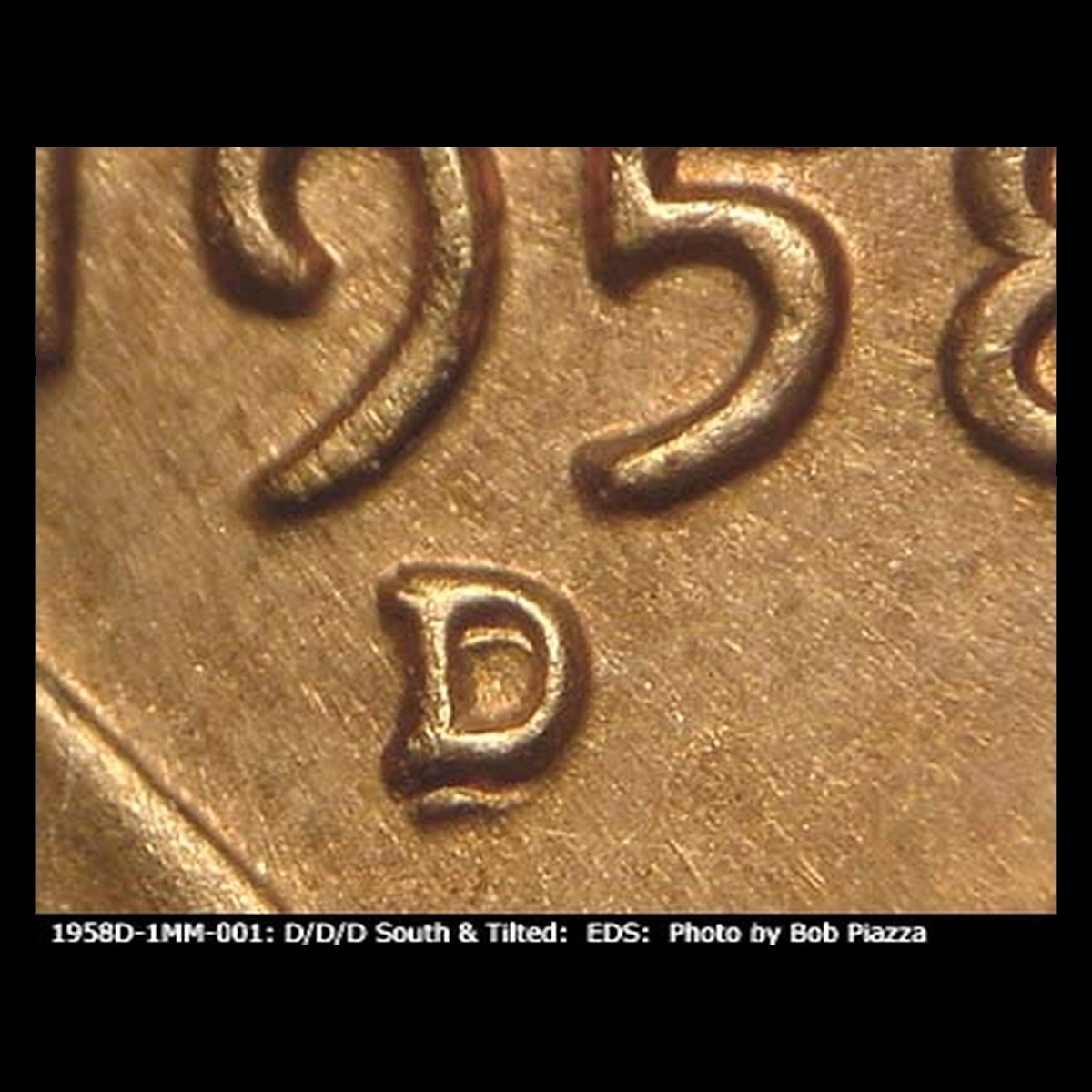
2. 1958 Penny More than one D outline appears: Repunched Mintmark Error
Hand punching the mintmark into a die could leave an earlier D impression beside the final one. Coins struck from that die repeated the same overlap.
The 1958-D reports include multiple impressions described as D/D/D. Three impressions require three coherent letter traces, not simply three nearby bumps.
How to Identify
Photograph the D with the date upright and avoid image sharpening that can manufacture apparent edges. Trace each extra curve or upright against the specific variety reference.
If many other letters show flat ledges, movement during striking may explain the effect. Examine the mintmark’s base for added metal and distinguish an earlier D from a chip or glare.
What It’s Worth
Identified minor repunched mintmarks are estimated at $5–$150. Clear separation and attractive preservation support stronger comparisons.
The range is based on modest late Wheat-cent repunches rather than a supplied auction price for each 1958-D pattern. A triple-punch label does not automatically justify the upper end.
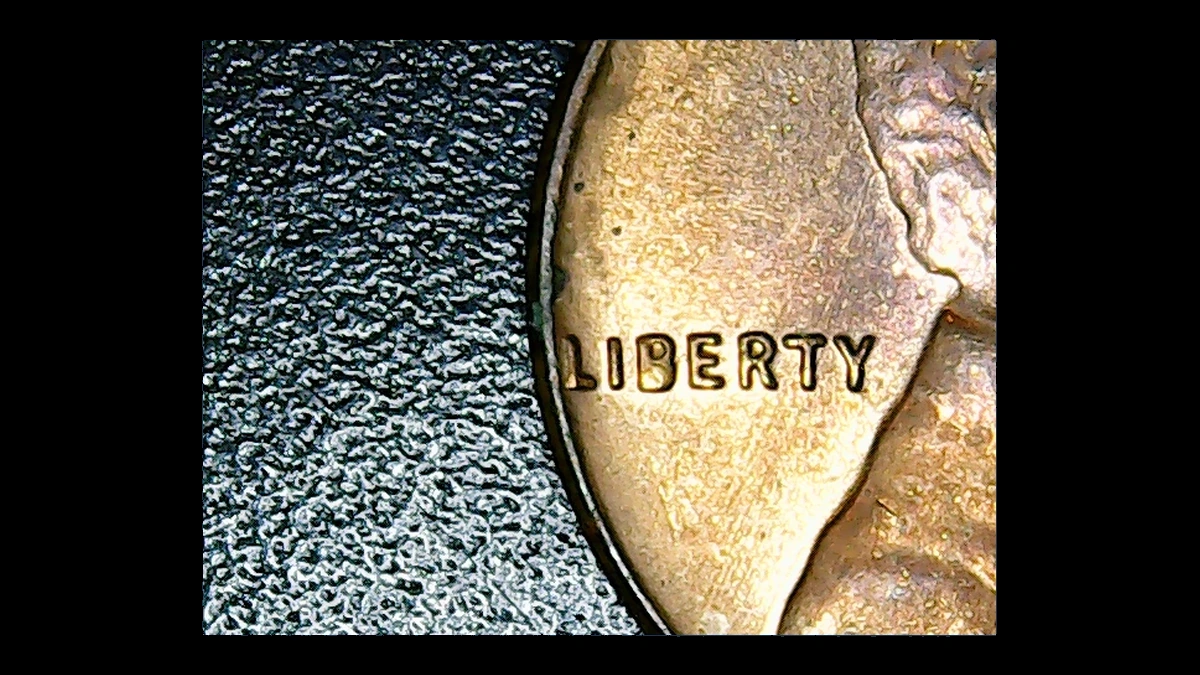
3. 1958 Penny A bar in LIBERTY or a mound at the rim: BIE Chip and Cud Error
A small break in the die can leave a raised bar between B and E, creating the BIE nickname. A larger missing die section reaching the edge leaves a rim-connected mound called a cud.
The recorded Denver obverse cud graded PCGS MS64 Brown. Its precise clock position is not established by the short auction description.
How to Identify
Follow the feature’s boundary and connection to the original coin metal. A BIE occupies the letter gap; a cud must meet the rim and replace part of the intended design.
Check for a squeezed edge, attached solder, or a later impact that displaced metal. A large interior bump does not qualify as a cud merely because of its size.
What It’s Worth
BIE chips are estimated at $2–$40, while larger confirmed obverse cuds are estimated at $75–$600. Their different scale and impact on the design matter.
The PCGS MS64 Brown 1958-D cud sold for $312 in March 2021. That sale concerns a substantial break rather than a small raised bar between letters.
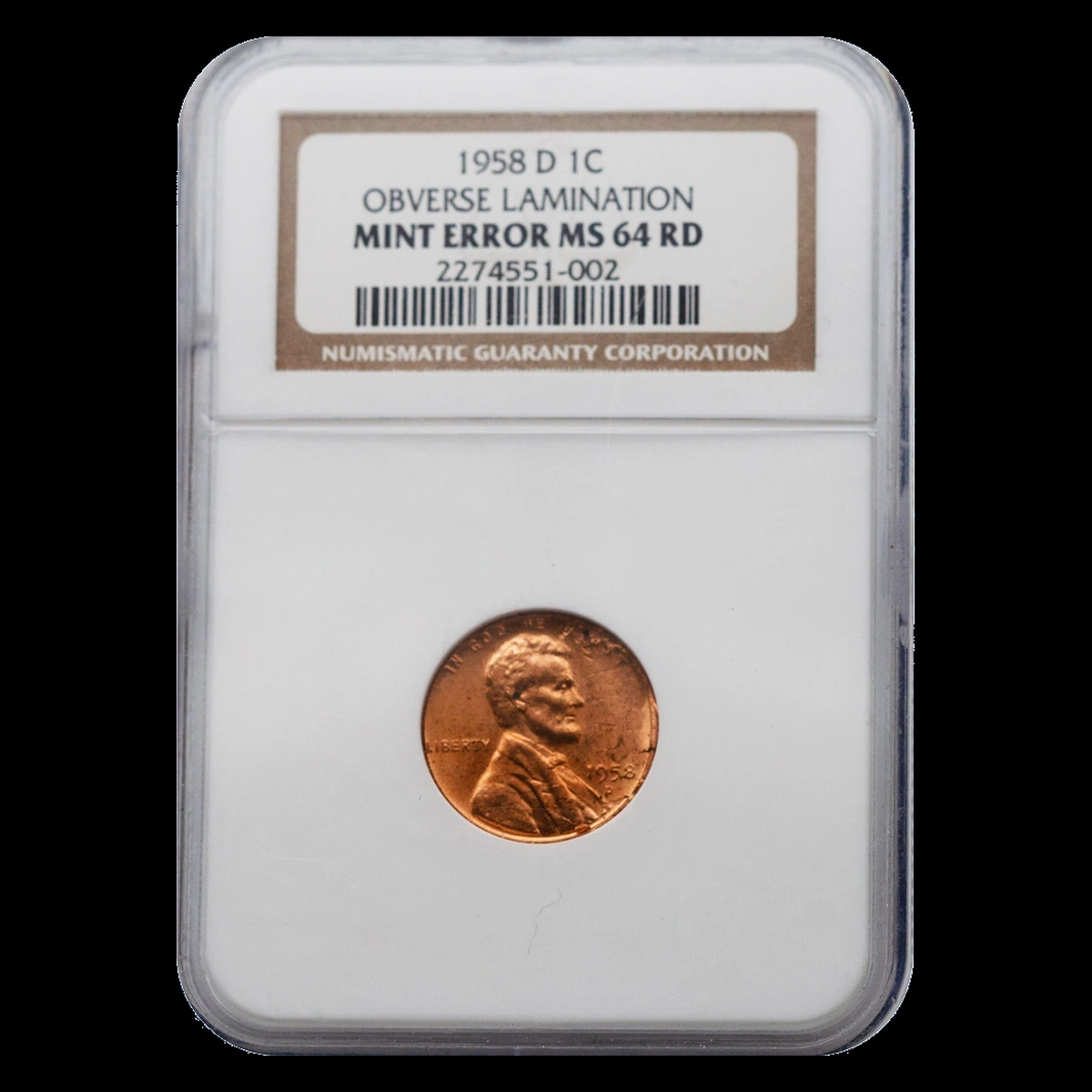
4. 1958 Penny A layer separates on Lincoln’s side: Lamination Error
Internal weakness in the copper alloy can lift a thin layer or leave a rough patch after it detaches. This obverse lamination is different from peeling plating on a modern zinc-centered cent.
A collector-recorded 1958-D example graded PCGS AU55 Brown. A separate NGC XF45 Brown auction example has its own peeling shape and greater wear.
How to Identify
Use side lighting to follow the layer’s seam into the surrounding alloy. Leave any attached part in place so the natural separation remains visible.
A shallow gouge or broad corrosion can mimic a low patch without a layered split. The two recorded Denver specimens should not be treated as interchangeable photographs of one coin.
What It’s Worth
Genuine laminations are estimated at $5–$200. Extent, intact evidence, and the surrounding coin’s preservation influence the result.
The 1958-D XF45 Brown example brought $24 in September 2012. That worn specimen’s modest sale does not belong to the separate AU55 collector piece.
5. 1958 Penny A thin front half exposes inner metal: Split After Strike Error
The recorded 1958-D piece retains Lincoln and the date on one outer face, with an exposed internal surface on the other. Its layer separated after the original coin had already received its designs.
The surviving front half weighs 1.5 grams and graded NGC AU55. The grade describes light wear on the remaining struck face.
How to Identify
Compare the two faces before interpreting the roughly half-normal weight. The inner surface should not carry a newly struck Wheat reverse, which would indicate a different sequence.
Inspect the thin edge for saw cuts or circular grinding marks. A deliberately sliced or thinned ordinary coin can also weigh around half the usual amount.
Confirm the D on the surviving face and preserve the piece’s structure. Do not assume its matching back half is available.
What It’s Worth
Authenticated split-after-strike pieces are estimated at $30–$400. Readable identity and preservation of the natural split help collectors understand the object.
The recorded 1.5-gram front half sold for $77 in June 2023. Its price is for that surviving piece, not an assumed matched pair.
6. 1958 Penny Thickness slopes across the coin: Tapered Planchet Error
A blank that becomes thinner toward one side may leave weaker detail there because less metal fills the die. The gradual thickness change defines the taper.
A Philadelphia PCGS MS63 Brown example is labeled 10% tapered. A different collector record describes a 1958 tapered coin weighing 2.26 grams.
How to Identify
Compare thickness at several points and relate the slope to the struck detail. Abrasive lines, cut rims, or a polished patch can expose later grinding.
Keep the two records separate: the 10% label is neither the other coin’s measurement nor necessarily its percentage of weight loss. A light scale reading alone does not show where metal is reduced.
What It’s Worth
Authenticated tapered-planchet cents are estimated at $50–$350. A clear original slope is more informative than an unsupported percentage.
A 1951-S tapered cent weighing 1.94 grams sold for $84 in September 2024. It is a different-year comparison, not a sale of either recorded 1958 piece.
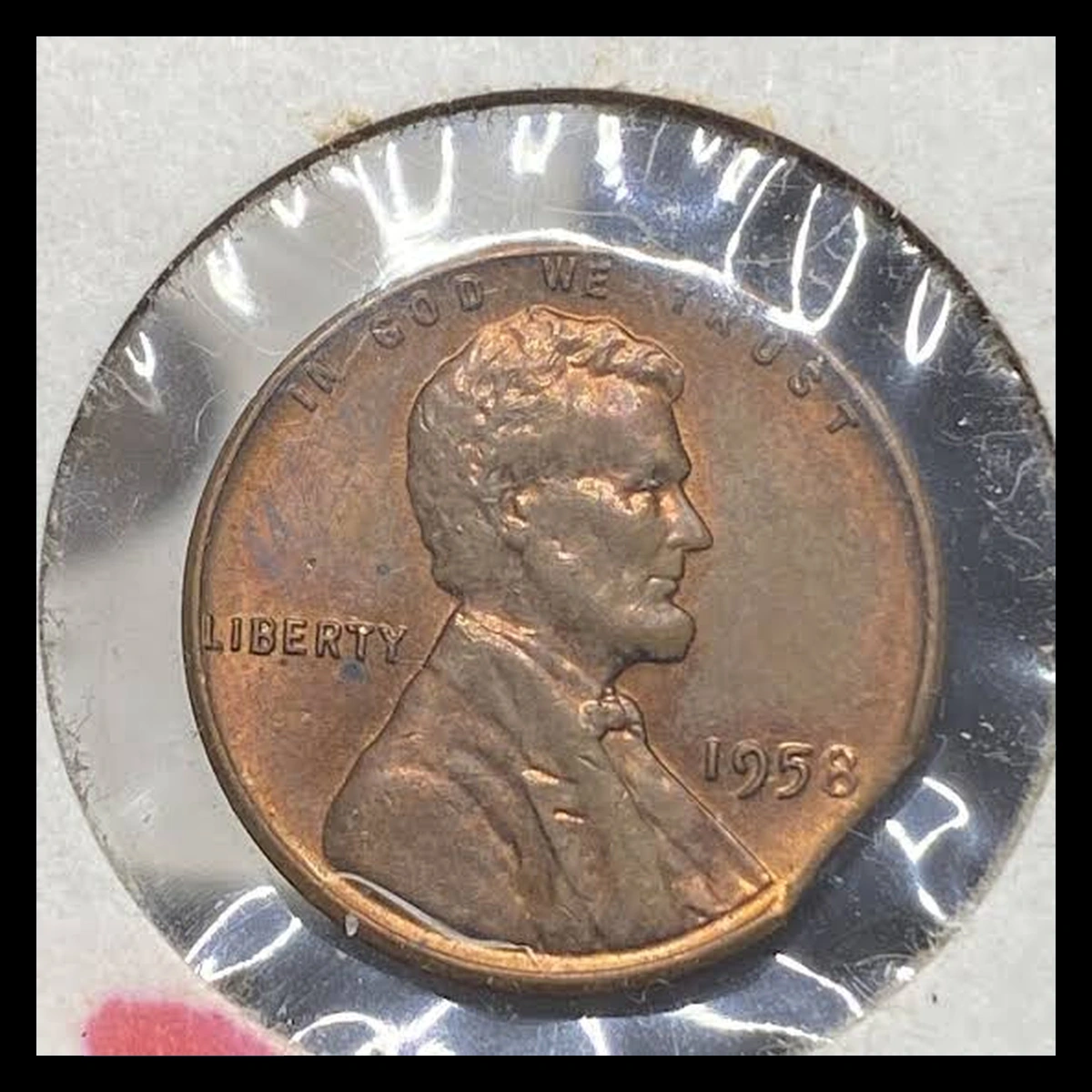
7. 1958 Penny A small section is missing from the edge: Clipped Blank Error
The reported 1958-D collector-set example has a 3% clip and a PCGS MS64 Red grade. The design formed around a blank that already lacked that small section.
A cut made after striking can imitate the outline. Its relationship to the rim and completed lettering is what needs examination.
How to Identify
Inspect both ends of the gap for original rim formation instead of fresh file or saw marks. Nearby lettering may weaken toward the gap, and the opposite rim can sometimes be weak too.
A 3% clip may produce only a small weight change that wear or scale error can obscure. Do not identify it solely by a reading borrowed from a larger clip.
What It’s Worth
Authenticated clips are estimated at $15–$300, with a small 3% example usually compared toward the modest end. Original surfaces and clear boundary structure remain important.
A 1953-D curved clip weighing 2.68 grams sold for $51 in March 2022. Its weight and missing-metal shape must not be assigned to the 1958-D collector example.
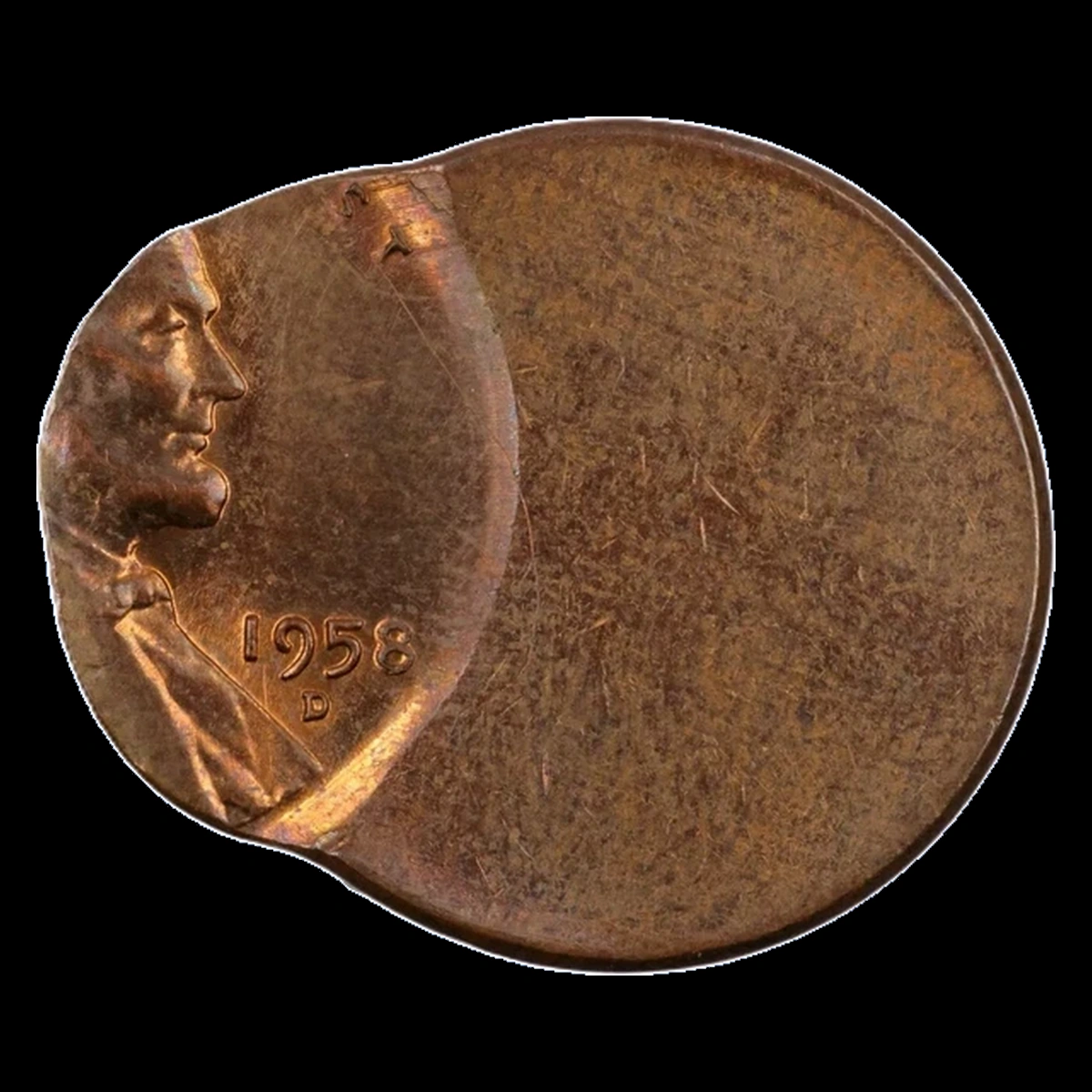
8. 1958 Penny An incomplete design sits beside unused metal: Off-Center Strike Error
A misplaced blank can receive the dies’ designs on only part of its surface. The reports include a Philadelphia cent about 20% off center and a separate Denver example at 60%.
The Denver coin graded PCGS MS63 Brown. Its percentage does not establish the amount or direction on another 1958 cent.
How to Identify
Read the date and mintmark, then compare the incomplete designs and unstruck area on both faces. A slightly uneven border with all the intended design present is insufficient.
Look for original blank texture at the transition rather than polishing lines that erased a normal impression. Most simple off-center strikes retain the full blank’s metal despite missing part of the image.
What It’s Worth
Genuine 1958 off-center cents are estimated at $25–$750. Readable dates and original surfaces matter alongside the displacement.
The 60% off-center Denver MS63 Brown coin sold for $240 in April 2021. That transaction is not a sale of the reported Philadelphia 20% example.
9. 1958 Penny Repeated designs turn within a round outline: Rotated Double Strike Error
A cent can rotate between strikes while remaining inside the collar, the ring controlling its diameter. Separate design impressions may therefore overlap inside a largely normal outline.
The Philadelphia 1958 example was offered as PCGS Genuine AU Details. It was authenticated, but a condition problem prevented a normal numeric grade; the short title does not identify that problem.
How to Identify
Trace one sequence of lettering and then the second through its changed angle. The relationship should explain a turned coin struck again, rather than flat shelves alongside single letters.
Match the certification photographs and inspect for later pressure or damage. Keep the unspecified Details issue in the condition assessment without guessing that it means cleaning or scratches.
What It’s Worth
Authenticated rotated double strikes of this kind are estimated at $300–$2,000. Clear overlap can add appeal, while the condition issue can reduce it.
The 1958 GreatCollections listing ended in June 2026 without a publicly visible final price. Its displayed $500 was the starting bid, not a completed sale.
A different 1952-D rotated double strike with an additional small indent sold for $1,116.25 in June 2017. That completed transaction supplies context without pricing the 1958 coin.
10. 1958 Penny A silver blank crowds the outer cent letters: Dime Planchet Error
An unused silver dime blank is smaller than the intended cent blank. Philadelphia and Denver 1958 examples show how its position can affect the outer design differently.
The Philadelphia PCGS MS65 piece retains nearly all lettering but loses the top of the second T in TRUST, with the top of O in ONE blending nearby. The Denver PCGS MS64 piece has a sharp date and D, a stretched 8 toward the rim, and distorted outer mottos.
How to Identify
A silver dime blank’s standards are 2.50 grams and 17.91 millimeters across, though striking can enlarge its outline. These are reference specifications rather than reported measured weights for the two auction specimens.
Check for plating, exposed copper, or filing and obtain nondamaging composition testing. Gray color alone cannot establish silver.
An unused blank has no earlier dime design. If recognizable Roosevelt details survive, investigate a different strike sequence.
What It’s Worth
Comparable authenticated silver dime-planchet cents are estimated at $600–$3,500. Strong identity, attractive surfaces, and readable central design help the comparison.
The Philadelphia MS65 example sold for $1,920, while the Denver MS64 brought $1,680, both in May 2022. Their separate mint-specific features and condition must remain attached to the correct sale.
11. 1958 Penny The blank was intended for a Cuban centavo: Foreign Planchet Error
The United States Mint made copper-nickel centavos for Cuba in 1958, making those blanks available within production. A blank reaching the cent press could receive Lincoln instead of its intended design.
The silver-gray PCGS MS63 example has a bold date but lacks IN GOD WE and LI in LIBERTY. A separate 2.5-gram NGC MS63 specimen was described as improperly annealed, meaning its preparatory heating was abnormal.
How to Identify
Have the composition compared with the intended Cuban blank. A 2.5-gram reading does not by itself separate it from a silver dime blank, since the recorded annealed piece has that weight too.
An unused Cuban blank should not show a previously struck Cuban portrait. Compare missing lettering and original surface evidence with the actual specimen being claimed.
The annealing attribution requires its own support rather than unusual color alone. Red wording on a holder does not turn copper-nickel foreign-blank metal into an ordinary copper cent.
What It’s Worth
Identified Cuban-planchet cents are estimated at $800–$4,000. This range covers different preservation and surface conditions after blank identity is secure.
The silver-gray PCGS MS63 coin sold for $1,116.25 in September 2015. The separate improperly annealed 2.5-gram example brought $1,740 in December 2019.
12. 1958 Penny Martí’s earlier outline survives beside Lincoln: Cuban Centavo Overstrike Error
A finished Cuban centavo can enter the cent press with its own design already present. The later strike then leaves portions of two countries’ designs on one piece.
The recorded 1958 overstrike weighs 2.5 grams and graded NGC MS65. José Martí’s earlier head outline remains to Lincoln’s right, and the faint Cuban date is above LIBERTY.
How to Identify
Identify genuine Cuban details before explaining the pale color. On the documented example, the bold cent date accompanies an absent right rim and LI beyond the available metal.
Follow the older head outline and date through their overlap with the cent design. Scratches should not be turned into imagined lettering, and a joined edge would undermine the one-piece overstrike explanation.
Its weight cannot independently distinguish a finished host from an unused Cuban blank. The surviving older design supplies that difference.
What It’s Worth
Comparable authenticated Cuban-centavo overstrikes are estimated at $2,500–$8,000. Understandable earlier design can matter as much as a small grade difference.
The NGC MS65 example sold for $4,935 on April 29, 2016. That result belongs to a completed Cuban coin overstruck with the cent design, not an unused foreign blank.
Conclusion
A clear 1958 error identification can rest on a tiny earlier mintmark, a natural separation, two shifted impressions, or an older foreign portrait. Those features describe different objects even when their color or weight seems similar.
Keep the major doubled die separate from minor doubling and ordinary damage. With every category, preserve the surfaces and compare the actual mint, measurements, and specimen history before applying a price.