Rare 1969 Penny Errors (List & Pictures)
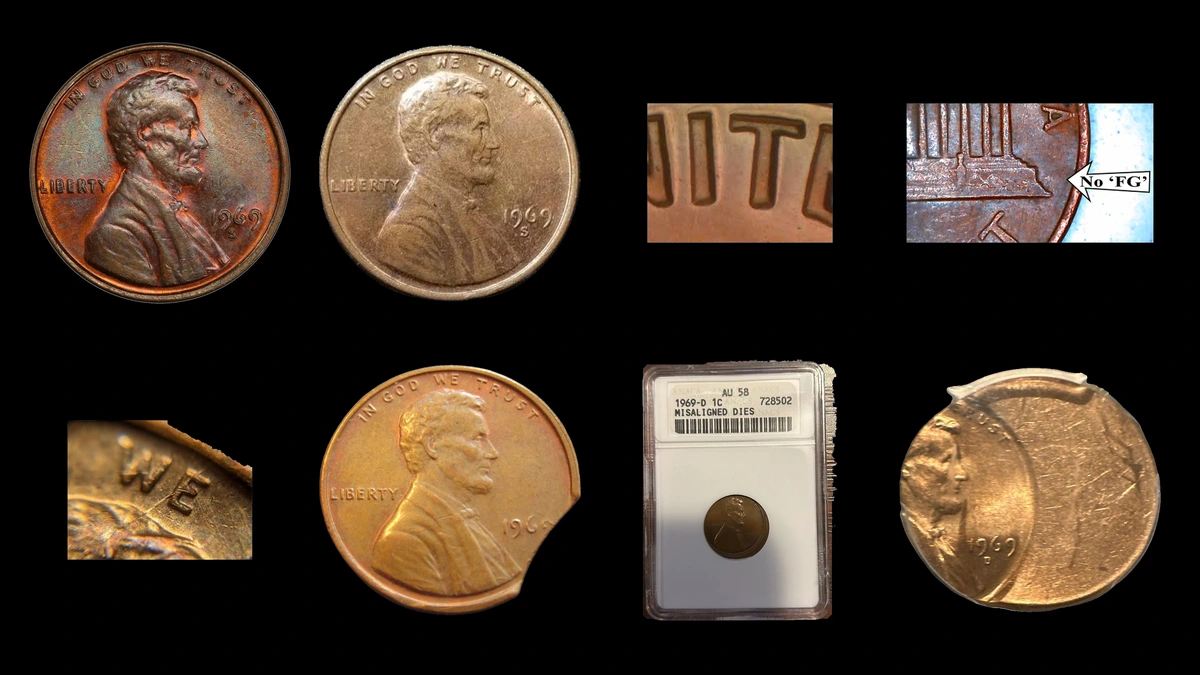
A major 1969-S doubled die sold for $601,875 at GreatCollections in January 2023. Estimated values across 1969 penny errors span $1–$650,000, with that specific variety far above most small features.
Compare the complete pattern of an unusual mark before looking at its price. Normal 1969 cents use copper-rich alloy throughout, weigh 3.11 grams, measure 19.05 mm, and have a smooth edge; San Francisco made both ordinary strikes and Proofs.
| Observation | Error or variety | Estimated value |
|---|---|---|
| Repeated front design | Minor doubled dies or major S FS-101 | $5–$650,000 |
| Extra D or S outline | Repunched mintmark | $3–$200 |
| Subtle repeated Proof motto | Proof doubled reverse | $10–$250 |
| Missing reverse initials | Denver No FG | $10–$750 |
| Shallow unworn detail | Weak strike | $1–$30 |
| Raised letter bar or rim patch | BIE chip or cud | $3–$500 |
| Peeling within alloy | Lamination | $5–$300 |
| Missing edge segment | Clip | $10–$350 |
| One face shifted | Misaligned die | $10–$125 |
| Spread metal and edge step | Broadstrike with partial collar | $50–$600 |
| Plain crescent beside design | Off-center strike | $15–$800 |
| Several impressions or contact edge | Double strike or chain combination | $75–$1,500 |
| Mirror image with displacement | Brockage off center | $75–$2,000 |
| Cent on unused dime blank | Wrong planchet | $300–$3,500 |
| Older dime design under cent | Double denomination with reported flip | $500–$6,000 |
| Two strikes on Canadian blank | Foreign-planchet combination | $1,500–$6,500 |
1. 1969 Penny Widely Separated Date and Words: Doubled Front Design Error
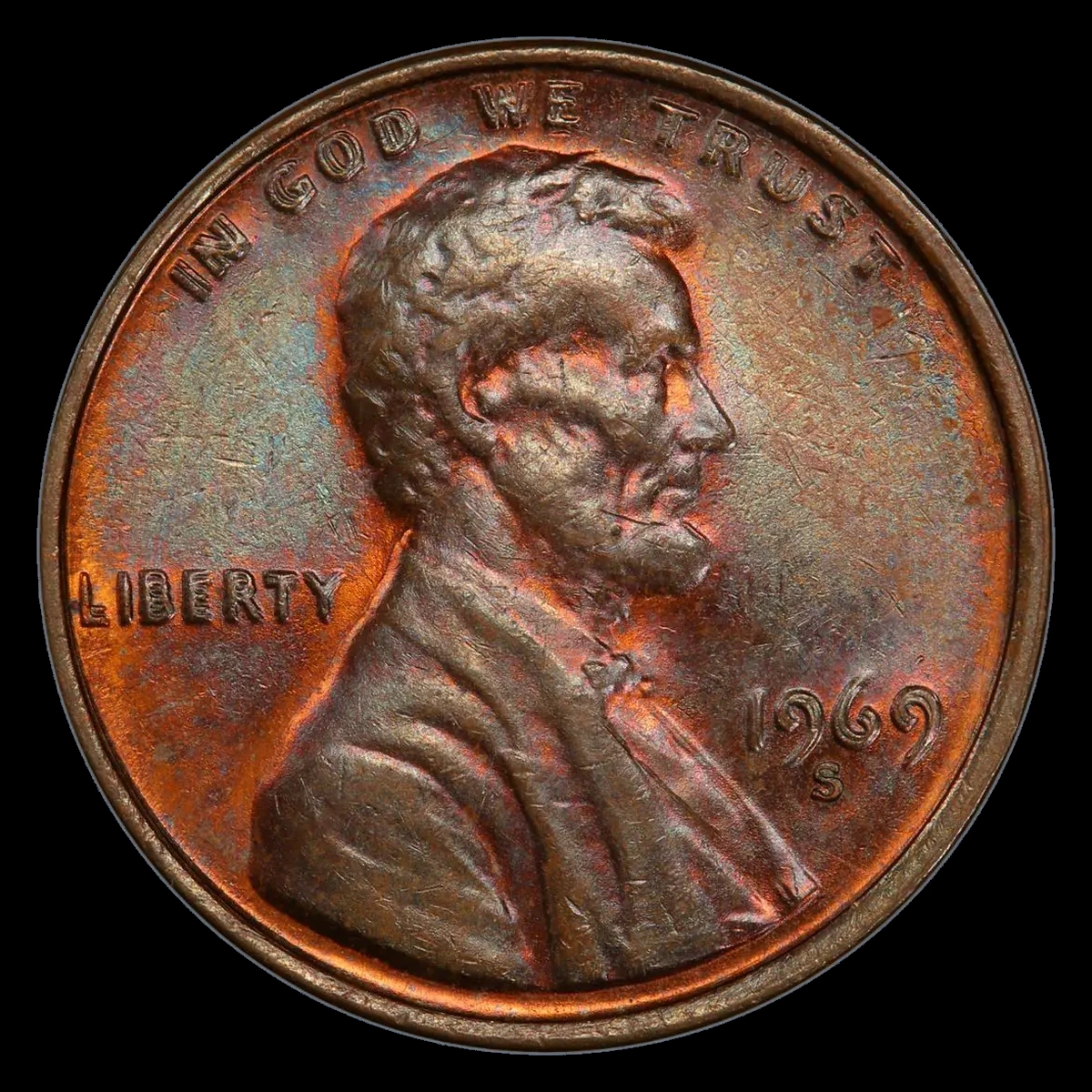
The major 1969-S FS-101 has strong raised doubling across the date, LIBERTY, and IN GOD WE TRUST. Its die already carried the repeated design, while the S was added later and need not show the same doubling.
This famous variety is an ordinary strike, not a Proof. Other 1969 front doubled dies have much smaller features and require separate comparisons.
How to Identify
Examine the date and both inscriptions together for the major pattern’s rounded separation. A low flat ledge beside isolated letters is not the same feature.
For minor varieties, match the mint and exact digit or word affected, including any extra detail near 6 or 9. Do not replace a full-pattern match with one odd edge or an attractive grade.
What It’s Worth
The overall estimated range is $5–$650,000, but it divides into distinct groups: minor front varieties around $5–$200 and genuine major FS-101 examples around $15,000–$650,000. Those ranges are not interchangeable.
PCGS records $601,875 for an MS66 Red example in January 2023 and $70,312.50 for a different MS64 Red coin in September 2025. Each result belongs to the major variety in its stated condition.
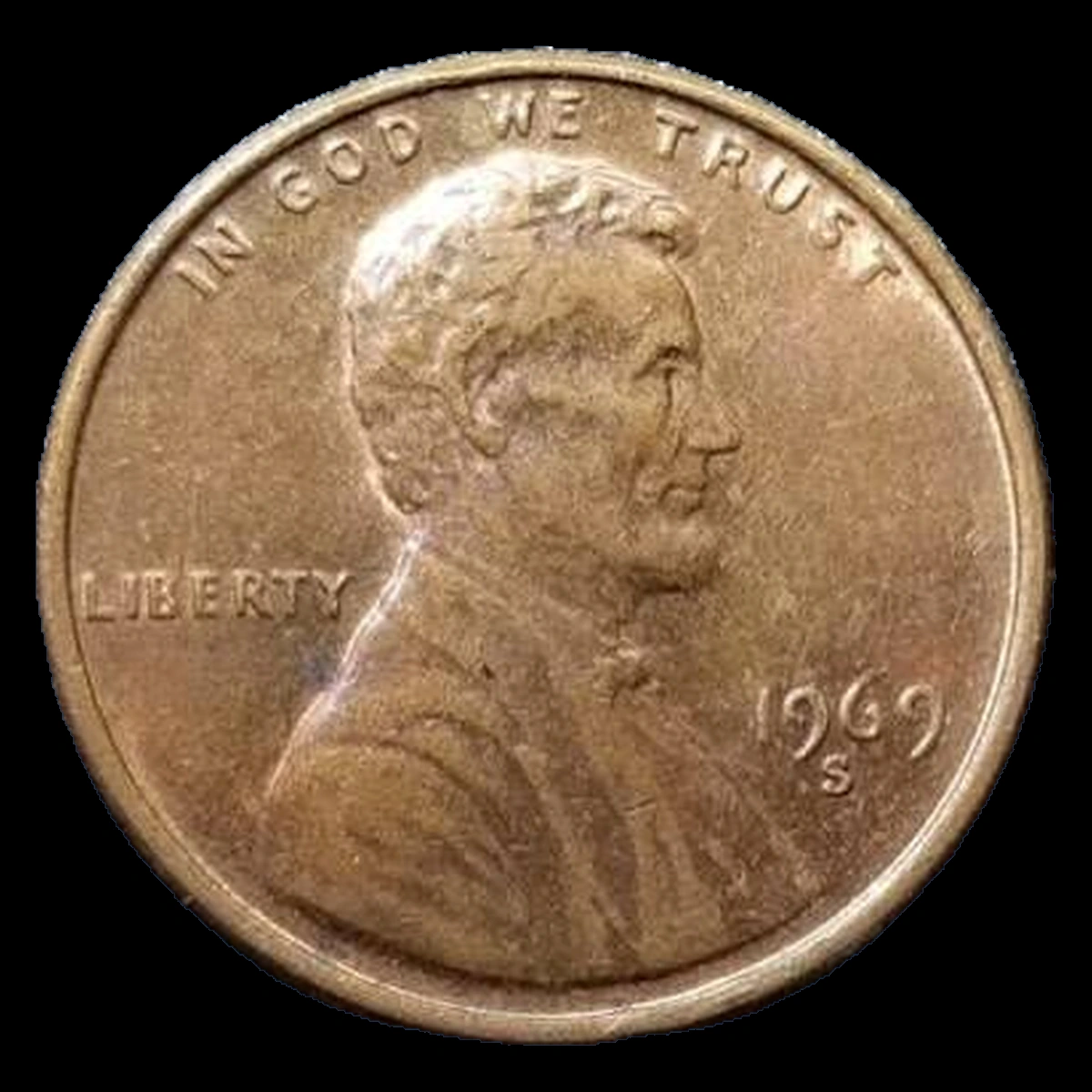
2. 1969 Penny A Second Curve at D or S: Repunched Mintmark Error
A shifted or tilted mintmark punch can leave parts of an earlier letter in the die. Denver and San Francisco varieties have different extra curves, uprights, and split tips.
How to Identify
Compare the extra segment with the appropriate Coppercoins variety photographs. D remnants can occur in several directions, while S patterns include westward, eastward, and rotated overlaps.
Trace enough of the extra shape to show another letter placement rather than an isolated bump. This separately punched mintmark is different from the major doubled date and inscriptions.
What It’s Worth
Identified 1969 repunched D or S varieties have an estimated value of $3–$200. Preserved curves and split tips make the pattern easier to match.
No one auction specimen establishes the range. A small repunched S must not inherit the major doubled-front variety’s six-figure price.
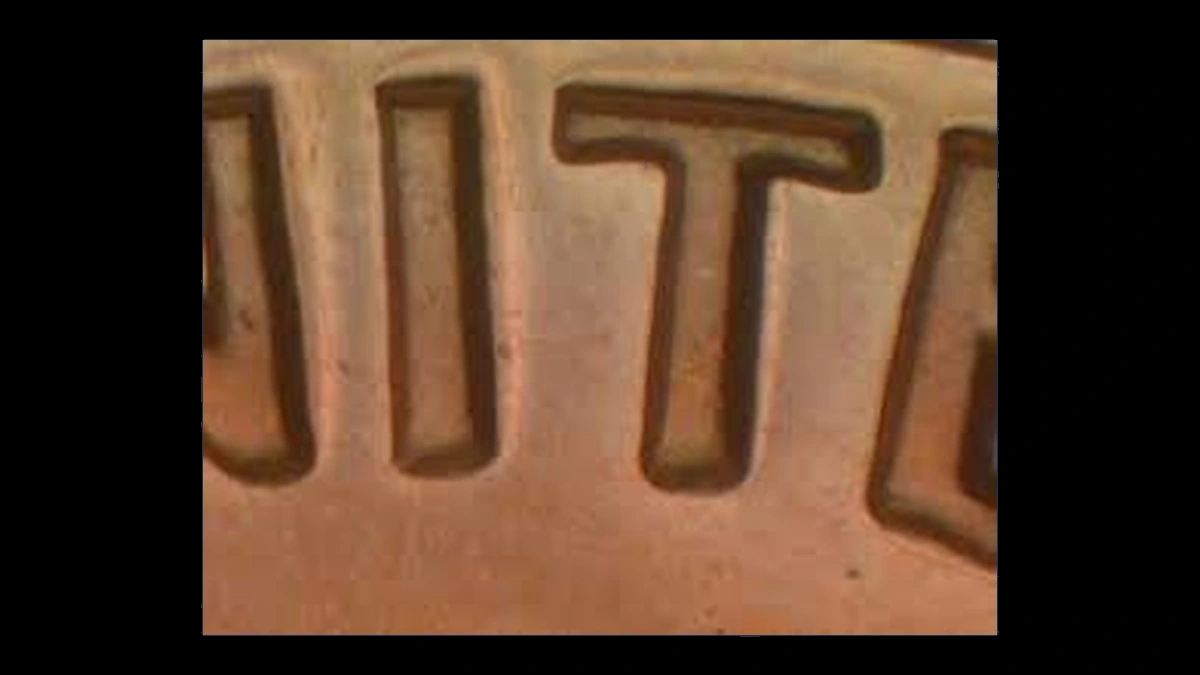
3. 1969 Penny Fine Repeated Motto Edges on a Proof: Doubled Reverse Error
Two listed San Francisco Proof reverse patterns have light doubling around E PLURIBUS UNUM. They also show incomplete design formation near the motto and the Memorial’s left side.
How to Identify
Establish Proof manufacture from the complete surfaces or an existing grading record. S alone is insufficient because San Francisco also made ordinary cents in 1969.
Follow the raised repeated letter edges under changing light. Reflections that move with the lamp are different, and normal repeated aligned Proof blows do not automatically create a doubled die.
What It’s Worth
An identified 1969-S Proof doubled reverse has an estimated value of $10–$250. Surface preservation and visible separation are both important for these subtle patterns.
No individual sale is supplied here. These modest Proof reverse varieties belong in a separate comparison from the major ordinary-strike front doubled die.
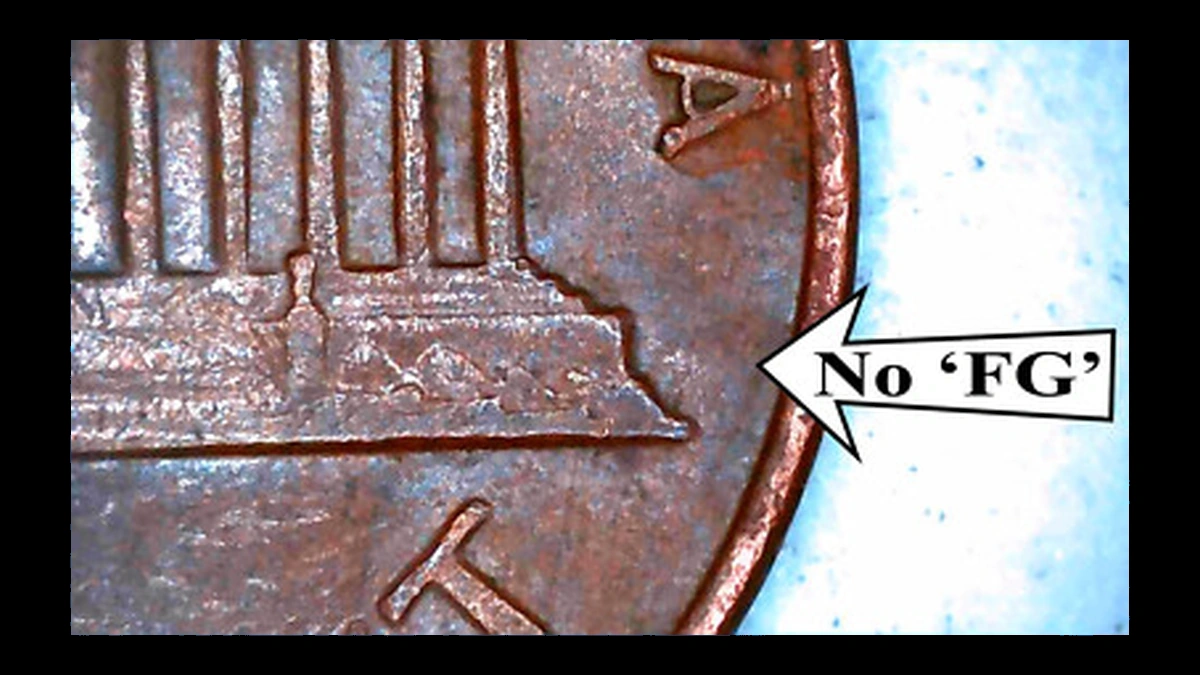
4. 1969 Penny FG Is Absent Beside the Memorial: No FG Error
The designer’s initials normally sit near the Memorial’s lower right. On the 1969-D FS-901 variety, deep die polishing removed the shallow FG detail so later coins did not receive it.
How to Identify
Locate FG on a normal coin, then inspect the candidate under more than one light angle. Confirm D and compare the nearby Memorial detail and original surface.
Wear, blocking material, or scraping can also make the initials hard to see. A uniformly flattened reverse does not establish the cataloged polished-die state.
What It’s Worth
An identified 1969-D No FG has an estimated value of $10–$750. Color, wear, and the clarity of the attribution influence its place in the range.
PCGS records an MS62 Brown example at $198 in January 2014. That unworn coin’s result is not a price for any cent with faint initials.
5. 1969 Penny Shallow Detail on Original Surface: Weak Strike Error
Incomplete striking can leave Lincoln or the Memorial shallow even where the surface shows little wear. The year report names no mint or proven cause for its weak-strike category.
How to Identify
Compare shallow design with exposed high points and original texture under magnification. Wear removes detail that once formed, while an incompletely struck area may retain its original surface.
Die wear or an obstruction can also soften the image. Low pressure is a possibility, not an established explanation for every flat-looking coin, and the appearance does not prove a special test strike.
What It’s Worth
An identified original weak strike has an estimated value of $1–$30. Many softly struck cents attract little extra interest.
No particular sale supports a higher valuation here. Heavy circulation wear can obscure the distinction enough to leave an ordinary-looking cent.
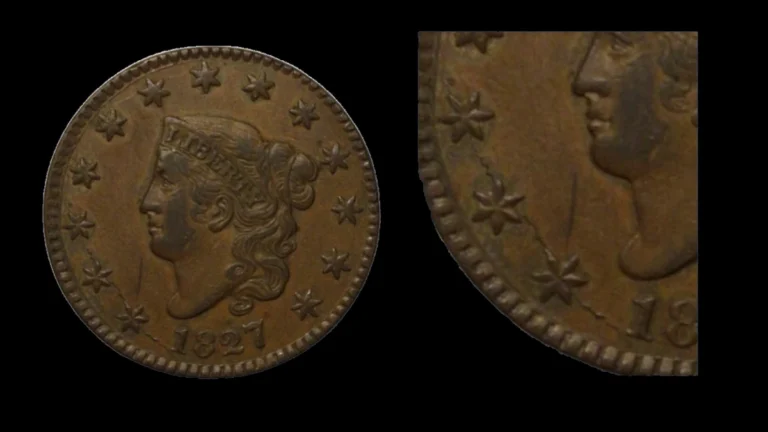
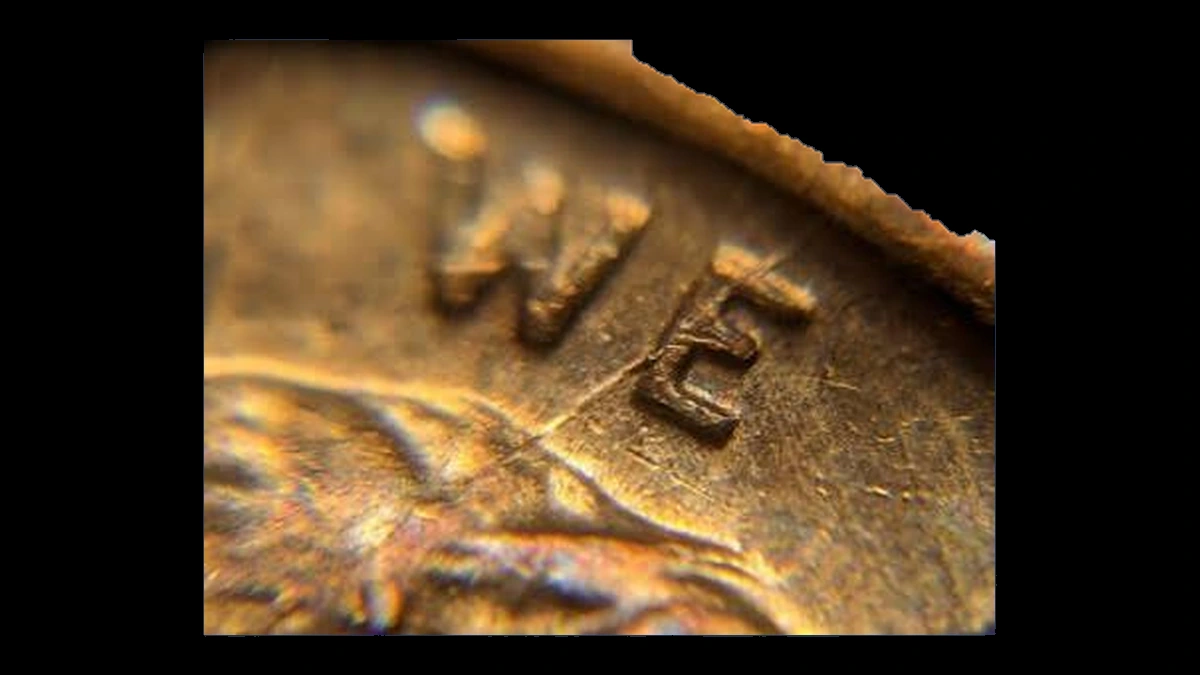
6. 1969 Penny A Raised Rim Patch or Letter Bar: Cud and BIE Chip Error
A missing piece of die leaves space for raised coin metal. At the rim that can create a cud; within LIBERTY, a small bar between B and E produces the BIE appearance.
How to Identify
Follow the feature to its endpoint: a cud joins the rim, while BIE occupies the letter gap. Inspect for original texture rather than a seam around dirt, solder, or attached material.
Opposite-face weakness can support a rim break, though its strength varies. The reports do not assign one common break shape to every mint.
What It’s Worth
The estimated overall range is $3–$500, separating ordinary BIE chips around $3–$25 from identified rim cuds around $25–$500. Replaced design and preserved surfaces affect comparison.
A 1977 cud graded PCGS MS63 Red and Brown sold for $138 in May 2021. That different-year result does not belong to a reported 1969 coin or a tiny letter-space bar.
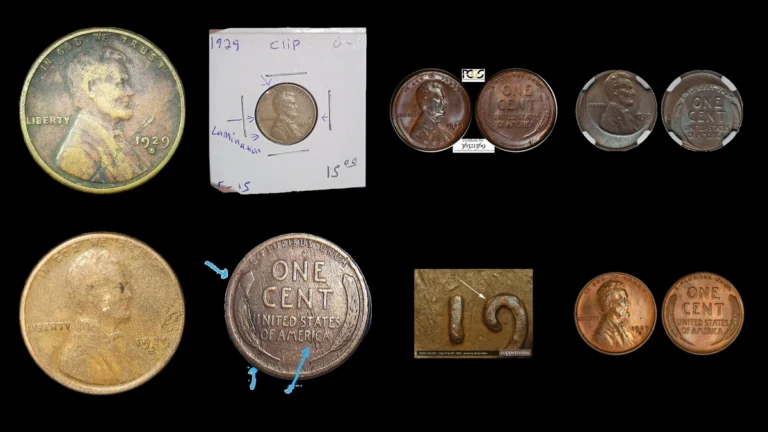
7. 1969 Penny Copper Alloy Peels or Splits: Lamination Error
An internal weakness can allow a layer of the alloy to separate, leaving a flap or rough exposed area. Unlike modern zinc cents, a normal 1969 cent has no thin copper skin over a zinc core.
How to Identify
Inspect the separation boundary and its relationship to the design without bending a retained flap. Natural internal texture differs from parallel scraping or widespread chemical pitting.
A missing layer may reduce weight, while a flap still attached need not do so. The general report establishes no exact specimen or stage of separation.
What It’s Worth
An identified 1969 alloy separation has an estimated value of $5–$300. Larger clear splits or retained flaps can be more appealing than small uncertain flakes.
This is a comparison estimate without a named transaction. Removing a flap changes the coin and destroys part of its evidence.
8. 1969 Penny A Curved or Straight Gap: Clipped Blank Error
A blank punch overlapping a previous hole can leave a curved missing section. A blank cut at an unsuitable strip boundary can instead have a straight gap before striking.
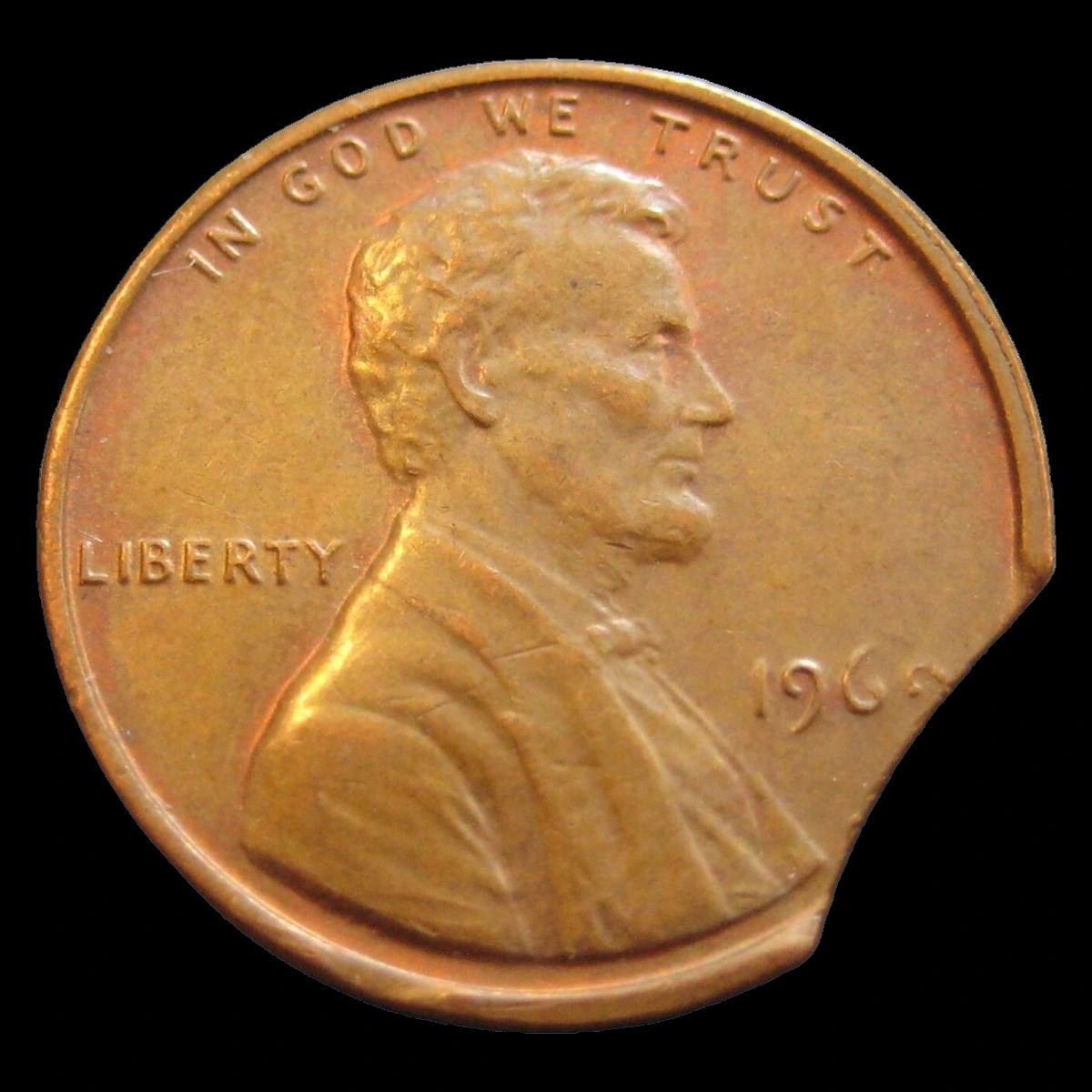
How to Identify
Inspect how adjacent letters and rim approach the missing metal. They should fit a pre-existing gap rather than a later cut through finished design.
Opposite-rim weakness can support the explanation but cannot settle it alone. The 1969 report does not establish one exact mint or size for either clip shape.
What It’s Worth
A genuine 1969 clip has an estimated value of $10–$350. Date visibility, gap size, and original boundaries influence the comparison.
No specific 1969 auction result is supplied for these forms. Low weight also fits later cutting, so it does not establish an error premium by itself.
9. 1969 Penny The Front Moves but the Reverse Stays Centered: Misaligned Die Error
A recorded 1969-D cent has an obverse misaligned die, meaning the front stamping tool shifted sideways. The more normally centered reverse helps distinguish this from a misplaced blank.
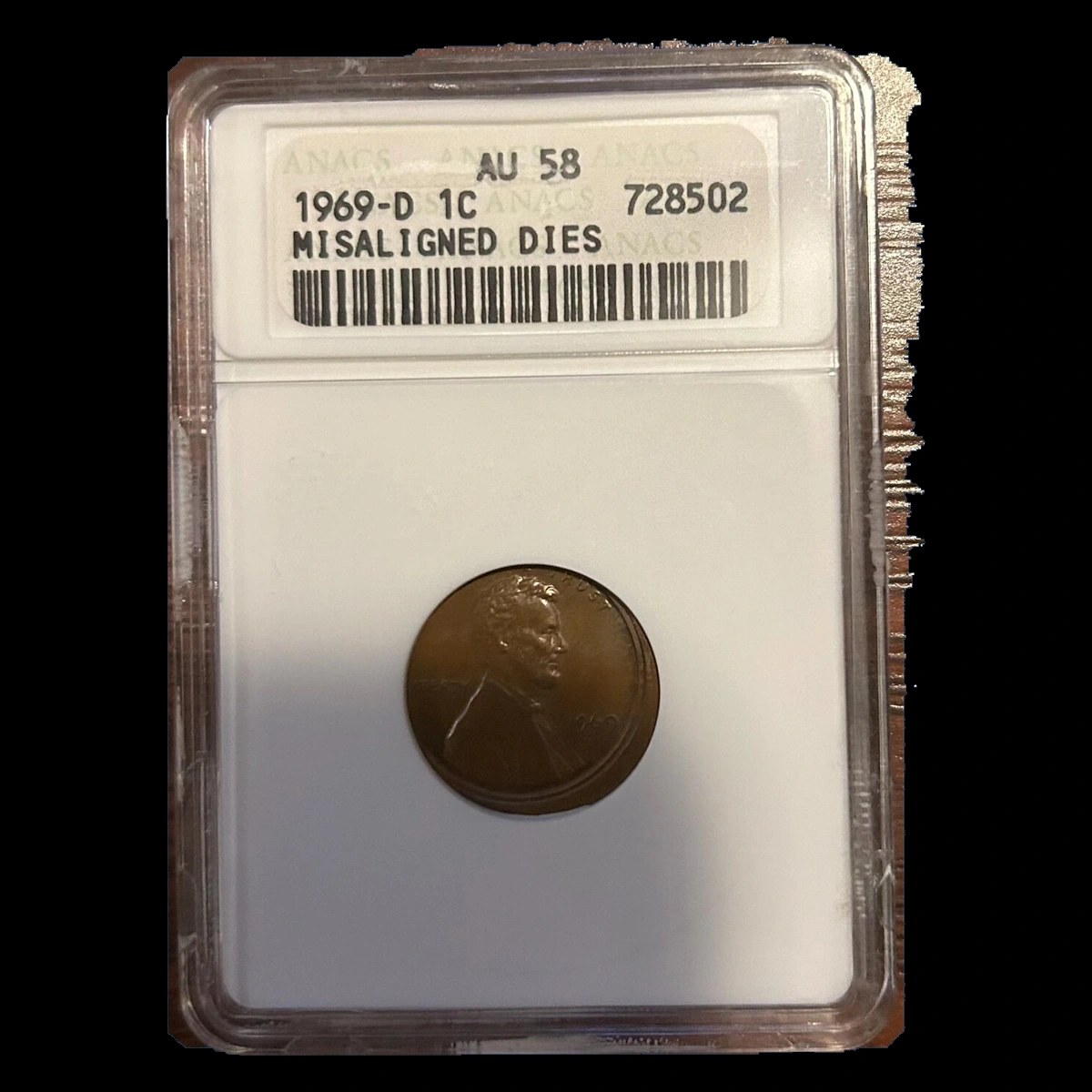
How to Identify
Compare the distance from design to rim around both faces using straight-on photographs. A shift mainly on the front supports the one-tool explanation.
Inspect the edge for scraping or pushed-in metal that could create a false border difference. Both designs missing the blank together would call for an off-center-strike comparison.
What It’s Worth
An identified 1969 die misalignment has an estimated value of $10–$125. Visibility and intact original edge help the comparison.
The Denver example graded NGC MS63 Red and Brown sold for $39 in March 2025. That is a front-tool misalignment sale, not a value for a larger displacement of both faces.
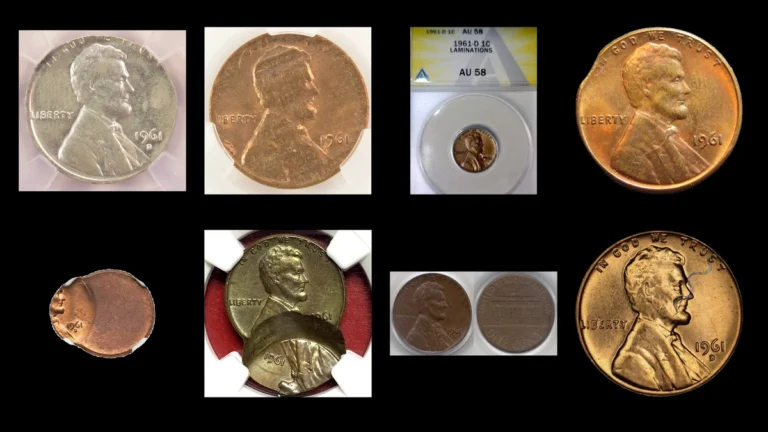
10. 1969 Penny Spread Metal Meets a Stepped Edge: Broadstrike with Partial Collar Error
If only part of a blank contacts the collar ring, one portion can remain constrained while another spreads. A historical list reports this combination of broad striking and partial collar contact for 1969.
How to Identify
View the edge from the side and follow the step between the held and expanded portions. Then inspect the full design for original outward spread.
No fixed position is supplied for the step. A wide coin without the edge evidence is not necessarily this combination, and later squeezing can also distort a rim.
What It’s Worth
A confirmed 1969 broadstrike with partial collar has an estimated value of $50–$600. Both the edge feature and spreading should be understandable.
The historical report has no individual sale attached here. Strong preserved design and an undamaged edge are more useful than diameter alone.
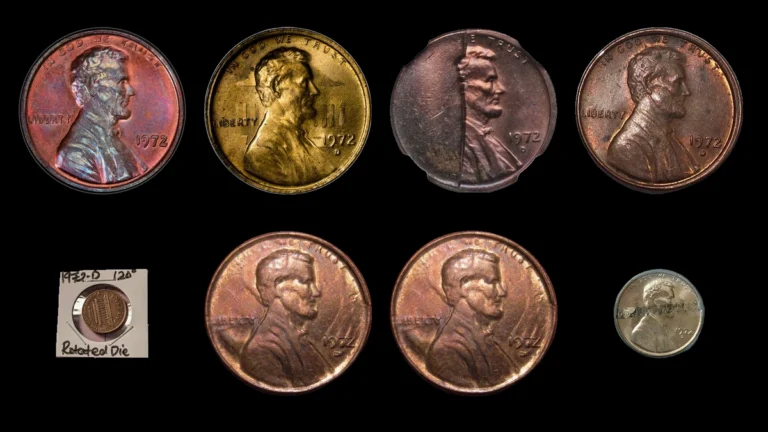
11. 1969 Penny Part of the Disc Remains Plain: Off-Center Strike Error
A blank away from its intended position can receive incomplete designs beside an unstruck crescent. Recorded Denver examples include separate coins at about 50% and 65% displacement.
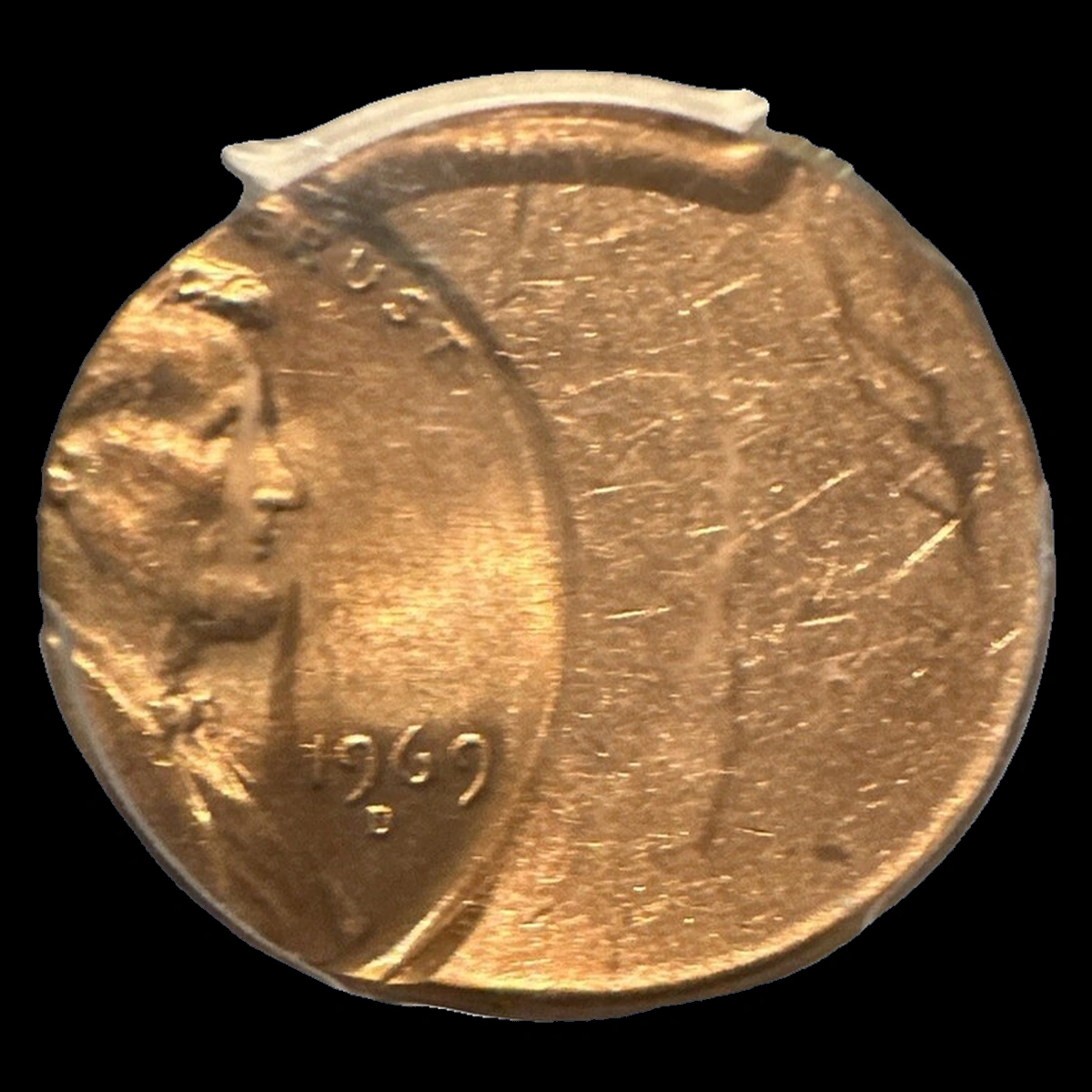
How to Identify
Read the surviving date and mint evidence, then compare both faces for the same misplaced disc. A shift on only one face may instead involve a misaligned die.
The plain crescent remains metal and should show no grinding that erased a finished design. Philadelphia and San Francisco reports require their own identities rather than borrowing the Denver auction details.
What It’s Worth
Estimated values for identified 1969 off-center cents range from $15–$800. Preserved dates and attractive surfaces can matter as much as displacement.
The Denver 50% NGC MS63 Brown example sold for $149 in September 2024, while a separate 65% MS64 Brown coin brought $89 in June 2023. Their results show that the larger percentage does not guarantee the higher price.
12. 1969 Penny Two Impressions and Sometimes Edge Contact: Double Strikes Error
A cent that moves and receives another blow can preserve separate design positions. Denver records include 85% and 96% strikes on one coin, 65% and 98% on another, and other pieces with later strikes at 93% or 80%.
Separate reports describe chain contact with a neighboring blank or rotation within the collar. Those added effects do not belong automatically to every double strike.
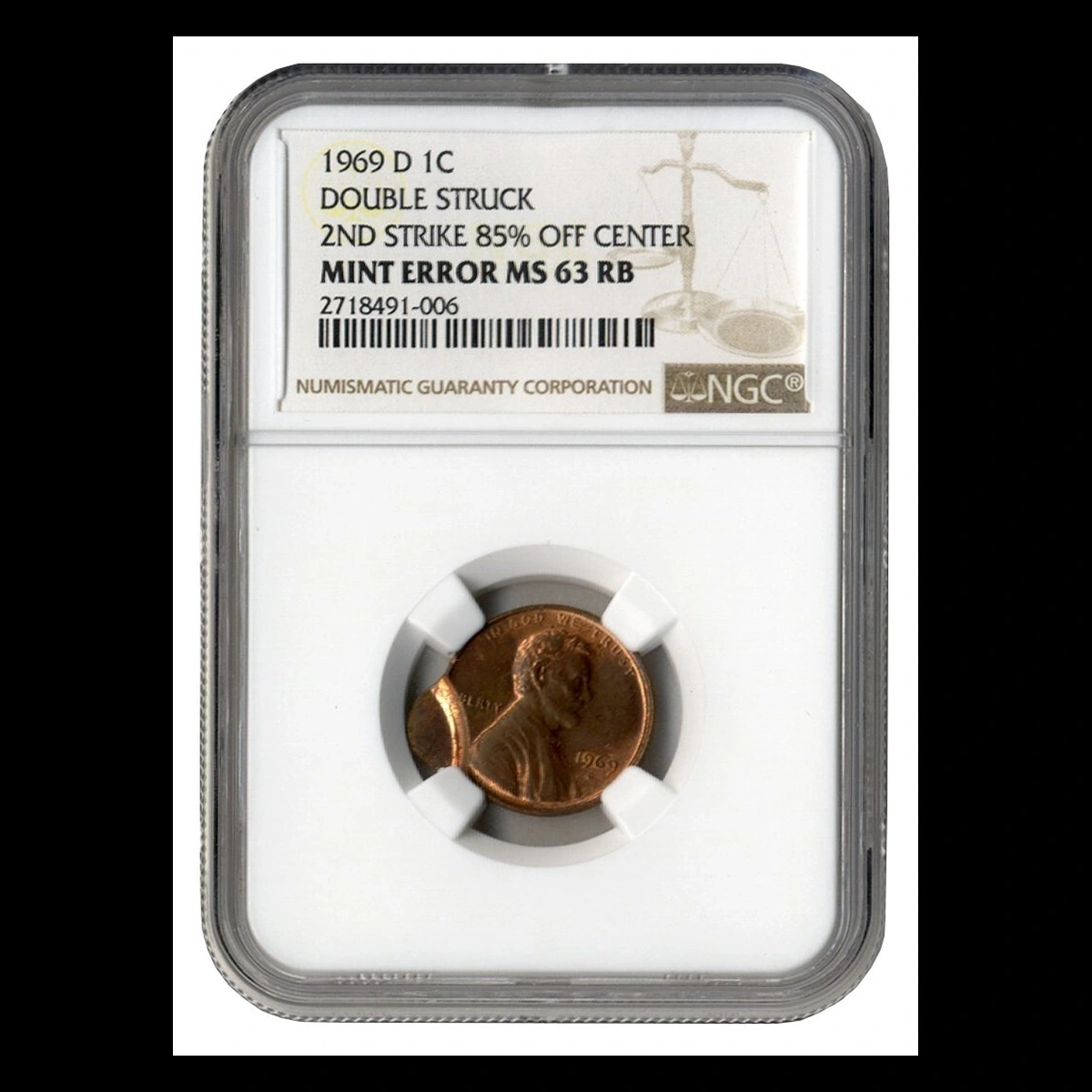
How to Identify
Trace a coherent feature through each impression and mark their positions on a full-coin photograph. Determine whether both strikes moved off center or only the later one did.
For chain contact, examine the edge without inventing a neighboring blank’s position or size. For rotation inside the collar, compare the angle between designs and the retained edge shape.
What It’s Worth
Identified 1969 double-strike forms have an estimated value of $75–$1,500. Readable overlaps, original contact features, and condition shape the comparison.
The PCGS MS62 Brown 85%/96% coin sold for $109 in March 2025, and an ANACS MS63 Red and Brown chain-struck example brought $111 in April 2020. A separate MS61 Brown coin with a 93% second strike sold for $75 in October 2022.
13. 1969 Penny A Sunken Mirror Image on an Off-Center Coin: Brockage Error
A struck coin can press its raised design into a new blank and leave a backward, recessed copy. The documented 1969-D example combines that brockage with a strike about 80% off center.
How to Identify
Establish both the reversed reading direction and the sunken relief under angled light. Then compare the ordinary impression and large plain area on the same coin.
The mirrored image is a direct coin-to-coin transfer, unlike faint marks from clashed dies. Check for later squeezing and crushed edges that could produce an artificial impression.
What It’s Worth
A genuine 1969 brockage combination has an estimated whole-coin value of $75–$2,000. Coverage and clarity of the mirror image affect comparison.
The PCGS MS64 Red and Brown 80% off-center example sold for $94 in December 2020. The upper estimate does not imply that its particular partial image sold for more.
14. 1969 Penny A Smaller Clad Blank Carries the Cent: Dime-Planchet Error
Both ordinary and Proof 1969-S cents are reported on unused clad dime blanks. The PCGS PR68 Cameo Proof has an uneven rim pattern, with STATES especially close to the edge.
How to Identify
For that PR68 specimen, compare the rim above WE TRUST and CENT with gaps near eight o’clock on the front and ten on the reverse. A lower-grade Proof retains readable surrounding wording and must not inherit the same rim description.
Establish the finish independently because S alone does not mean Proof. Dime blanks begin near 2.268 grams and 17.9 mm, contain clad metal, and have no earlier dime design.
What It’s Worth
The overall estimated range is $300–$3,500, with ordinary strikes around $300–$1,500 and identified Proof examples around $1,000–$3,500. Actual finish and preservation determine the relevant group.
The PR68 Cameo example sold for $1,920 in May 2022. That Proof result is not a sale assigned to an unnamed ordinary-strike 1969-S piece.
15. 1969 Penny Earlier Dime Detail with a Reported Flip: Double Denomination Error
A historical listing describes a 1969 cent struck over a finished dime with a flipover also noted. Surviving earlier dime design distinguishes it from a cent on an unused blank.
How to Identify
Locate recognizable dime portrait or lettering beneath the later cent design and compare both faces. Let those overlaps establish the sequence rather than assuming a turn from the label alone.
The listing does not establish the underlying dime date or the full series of blows and turns. Keep any readable dime identity separate from the cent’s 1969 date.
What It’s Worth
An authenticated comparable combination has an estimated whole-coin value of $500–$6,000. Clearly preserved older design and understandable additional movement help comparison.
A 1973-D cent-over-dime graded PCGS MS63 sold for $4,560 in July 2022. That is a different-year result, not a sale of the historical 1969 report or a fixed added premium for flipping.
16. 1969 Penny Two Cent Strikes on a Canadian Dime Blank Error
Heritage identified a 2.12-gram 1969 piece as struck on a Canadian ten-cent blank. It received two cent strikes inside the collar with a small clockwise turn between them.
How to Identify
Compare the recorded light weight and metal with the actual auction specimen, then trace matching raised details through the change in angle. Both impressions should fit rotation within the retaining ring.
Nondestructive composition testing can help establish an unfamiliar blank. A shared supplier mixing blanks was suggested by the auction writer, but that is a possible route rather than a proven production history.
What It’s Worth
The estimated whole-coin value is $1,500–$6,500 for an identified comparable foreign-blank and double-strike combination. Its two features should be assessed together.
The NGC MS62 Canadian-blank example sold for $2,760 in May 2007. Pale color and vaguely doubled-looking letters alone do not make another cent comparable.
Conclusion
The major 1969-S doubled die is a complete, recognizable pattern across the date and inscriptions. Small mintmark overlaps, subtle Proof reverse doubling, and flat strike shelves need their own much smaller comparisons.
For other errors, keep the metal and striking sequence clear. A split in copper alloy, an unused dime blank, and an older dime beneath a cent impression each preserve different evidence that should guide the identification before the price.