Rare 1962 Quarter Errors (List & Pictures)
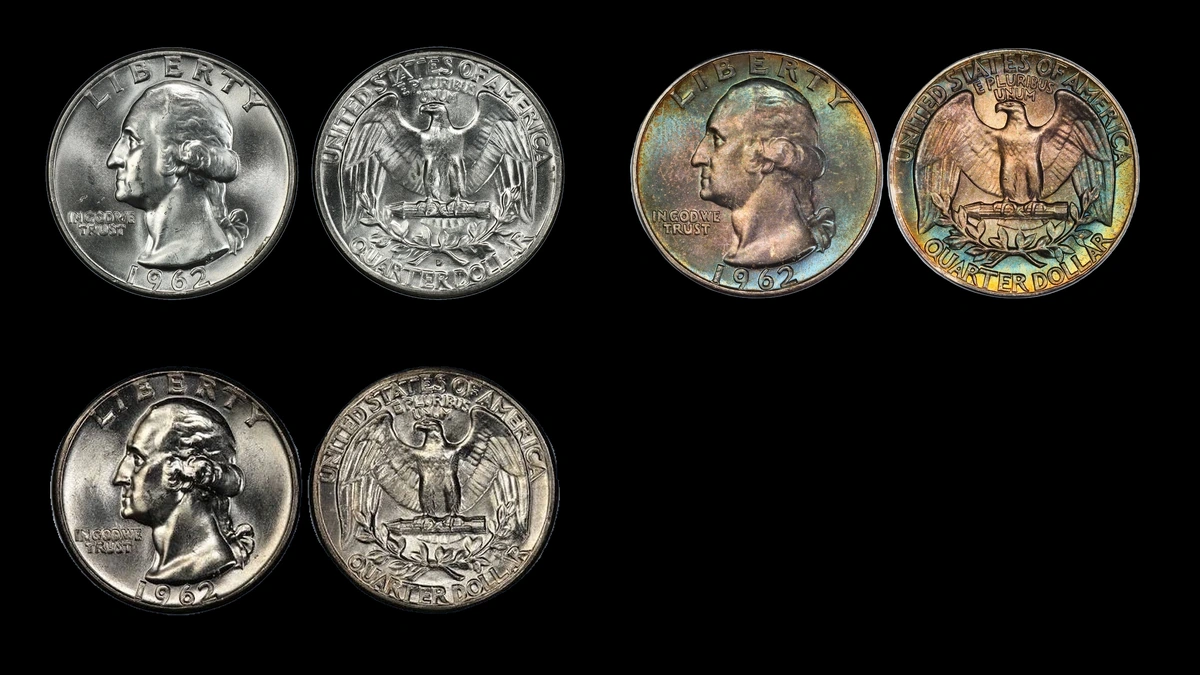
A Philadelphia doubled-die quarter graded MS66+ sold for $3,290 in July 2016. Estimated values for 1962 quarter errors range from $20–$3,500 across the examples below.
This guide covers changed design details, incomplete blanks, and wrong-metal strikes, including an undated foreign-blank coin cataloged only as (1962).
| Category | Estimated value | Important check |
|---|---|---|
| Straight clip | $20–$300 | Original formation beside the gap |
| Repunched D | $25–$500 | FS-501 mintmark pattern |
| Off-center strike | $50–$1,000 | Readable year and two-face displacement |
| Type B reverse | $20–$1,500 | Ordinary Philadelphia strike, not normal Proof |
| Silver dime blank | $400–$2,000 | Small blank with quarter design |
| Attributed Korean blank | $500–$3,000 | Foreign metal and assigned year need support |
| Doubled front FS-101 | $50–$3,500 | Match several actual design details |
1. 1962 Quarter Straight Clipped Blank Error
The recorded ANACS AU50 quarter weighs 5.63 grams and has a straight gap in its outline. The blank was incomplete before it received the design.
That flat boundary differs from a curved clip, although both involve missing blank metal. A straight cut made after minting can imitate the overall shape.
How to Identify
Inspect the gap from the side for saw marks or filing, then follow the struck rim into both ends. Original details should make sense beside a boundary that existed during striking.
A normal silver quarter weighs 6.25 grams. The recorded 5.63 grams belongs to this coin rather than serving as a required weight for every straight clip.
Possible weakness opposite the gap can support the check, but its absence alone does not reject a clip. Keep the date and full missing section visible together.
What It’s Worth
Genuine straight-clipped examples have estimated values of $20–$300. Condition and the clearly original boundary affect the comparison.
The AU50 coin appeared in a three-coin lot sold for $51 in July 2021. That total also included clipped 1955 and 1965 quarters and supplies no separate price for the 1962 piece.
2. 1962 Quarter Repunched D Mintmark Error
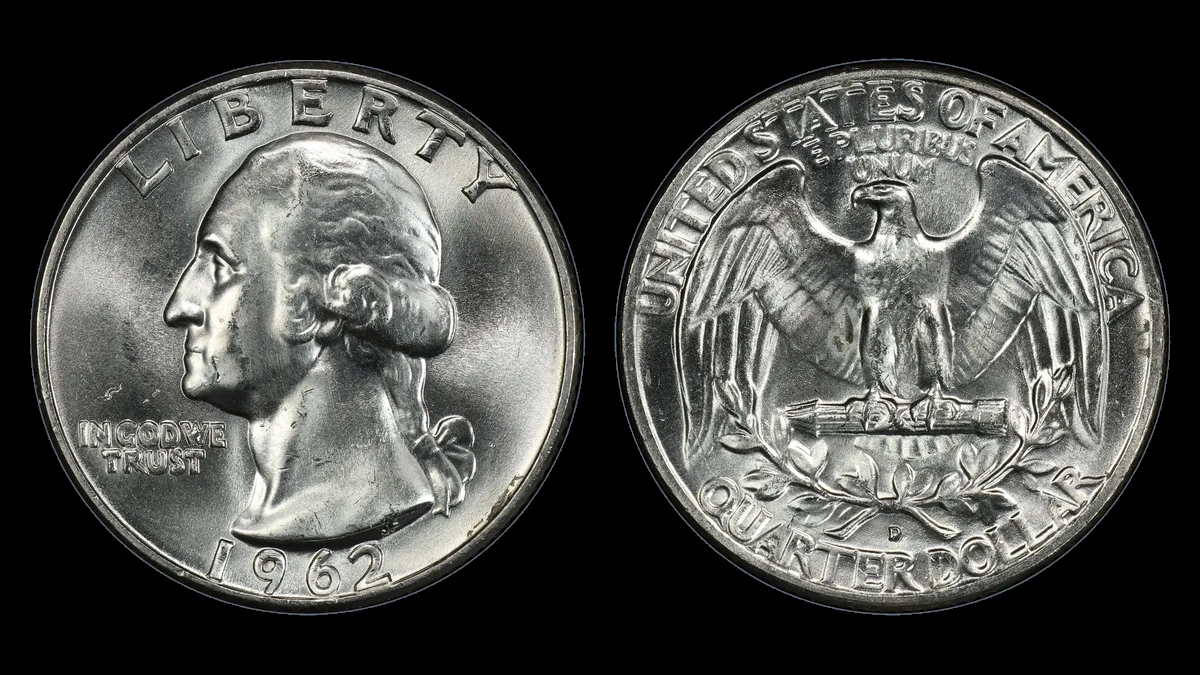
Denver FS-501 preserves traces of an earlier D around the main mintmark. Workers then punched mint letters into the dies individually, allowing a shifted repeat entry to leave overlapping shapes.
The resulting variety concerns the mintmark itself. It does not imply that Washington’s portrait or the rest of the design is doubled.
How to Identify
Find D below the eagle and above QUARTER DOLLAR. Trace the complete main letter before comparing the smaller remnants with a confirmed FS-501 photograph.
Inspect under changing light for a consistent rounded outline rather than a shadow, scratch, or flat strike-related shelf. No specific punch direction is established in the supplied description.
What It’s Worth
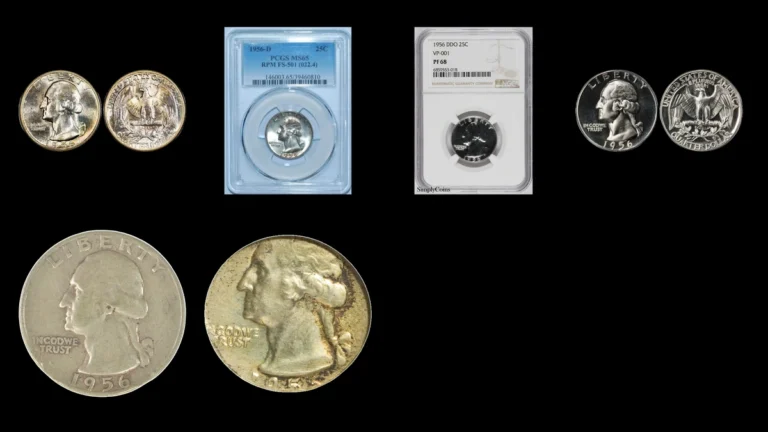
Confirmed D-over-D examples have estimated values of $25–$500. PCGS records an MS65 example at $495 on eBay in August 2021.
That grade describes an unworn coin with relatively few marks. Wear can hide the small earlier impression well before the main D becomes unreadable.
3. 1962 Quarter Reported Off-Center Strikes Error
Both Philadelphia and Denver circulation quarters appear in off-center reports. A misplaced blank leaves unstruck metal opposite the part of the design that misses the disc.
The coin’s surviving year and mintmark must support its identity. An incomplete date cannot be turned into a readable 1962 merely by comparison with another example.
How to Identify
Follow the boundary between the unstruck crescent and the design on both faces. They should describe one displaced blank, rather than one shifted die beside a normally centered opposite face.
Inspect for filing or a seam that could explain an artificial blank area. A full design surrounded by expansion may require a broadstrike comparison instead.
What It’s Worth
Authenticated 1962 off-center quarters have estimated values of $50–$1,000. A complete year, clear displacement, and attractive surfaces help establish the comparison.
A different 1943-S quarter struck thirty-five percent off center sold for $2,640 in July 2022. Its earlier date and different mint make that a comparison, not a recorded 1962 result.
4. 1962 Quarter Type B Reverse on a Circulation Coin Error
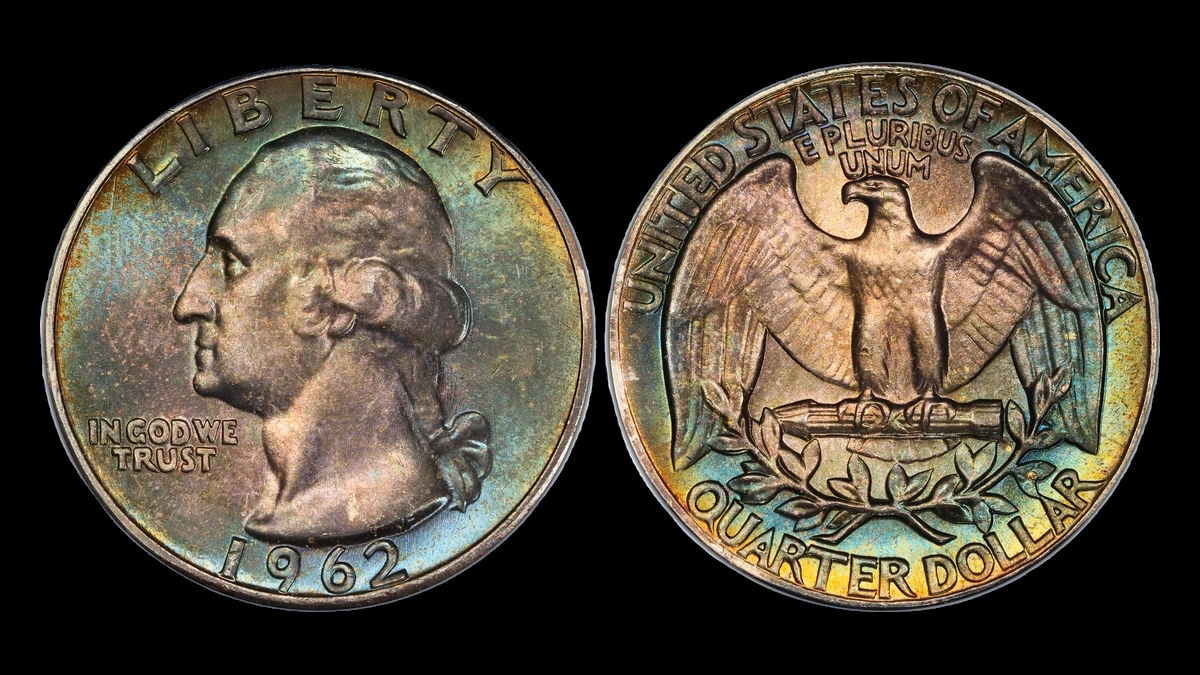
The wide gap between E and S in STATES is a useful clue to Type B. This reverse design, intended for Proofs, also appeared on some ordinary Philadelphia quarters.
The collectible mismatch concerns its use on a circulation strike. The same design on a normal Proof is expected.
How to Identify
Establish the issue and finish before examining the lettering. Artificial shine from polishing does not establish Proof manufacture.
Compare the E-S spacing and leaf details beneath the eagle’s tail with a confirmed Type B reference. The usual circulation letters nearly touch, while Type B leaves clear separation.
What It’s Worth
Confirmed circulation-strike Type B quarters have estimated values of $20–$1,500. PCGS lists an MS66+ example at $1,500 on eBay in April 2019.
That exceptionally well-preserved unworn coin is not a typical worn find. Normal Proofs do not receive the circulation-variety premium for their expected reverse.
5. 1962 Quarter Strike on a Silver Dime Blank Error
The Fred Weinberg Collection PCGS MS62 example documents a quarter design struck on a silver dime blank. Both denominations used ninety-percent silver, so color does not separate the correct and incorrect blanks.
The small disc lacks room for the full quarter design. Its remaining portrait and lettering must fit the naturally limited metal.
How to Identify
A silver dime blank normally starts at about 2.50 grams and 17.9 millimeters across. The quarter strike can spread it, so use actual size and weight together with the surface evidence.
Inspect the edge for trimming or grinding that could reduce a normal quarter. This category concerns an unused dime blank, not a previously struck dime carrying an older design.
What It’s Worth
Comparable authenticated silver-dime-blank quarters have estimated values of $400–$2,000. The MS62 example sold for $660 in July 2022.
Its grade indicates an unworn coin with noticeable marks. Readable identity and preserved surfaces remain important when much of the intended design is absent.
6. 1962 Quarter Attributed Korean 10 Hwan Blank Error
The dealer-described PCGS AU58 piece has no visible date and was cataloged as (1962). Its proposed host is a Korean 10 hwan blank.
The parentheses distinguish an attributed year from one readable on the metal. The dealer also noted its resemblance to a quarter on a cent blank, so brown color cannot resolve the foreign-blank identification.
How to Identify
Start with the holder and recorded history, checking that the photographs show the same undated specimen. Washington’s portrait identifies the design without identifying either the blank’s country or the striking year.
A specialist should compare actual dimensions, weight, and composition with the proposed Korean blank. Keep the assigned year in parentheses and leave an encapsulated coin sealed.
What It’s Worth
A properly supported example has an estimated range of $500–$3,000. The historical Fred Weinberg listing asked $800, which was not an auction result.
The missing date limits year-specific comparisons. The blank attribution and original strike must be convincing before the unusual appearance supports the estimate.
7. 1962 Quarter Doubled Front Design Error
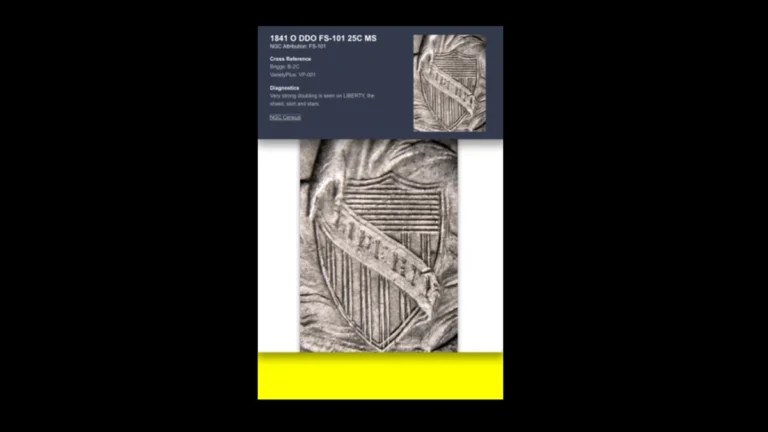
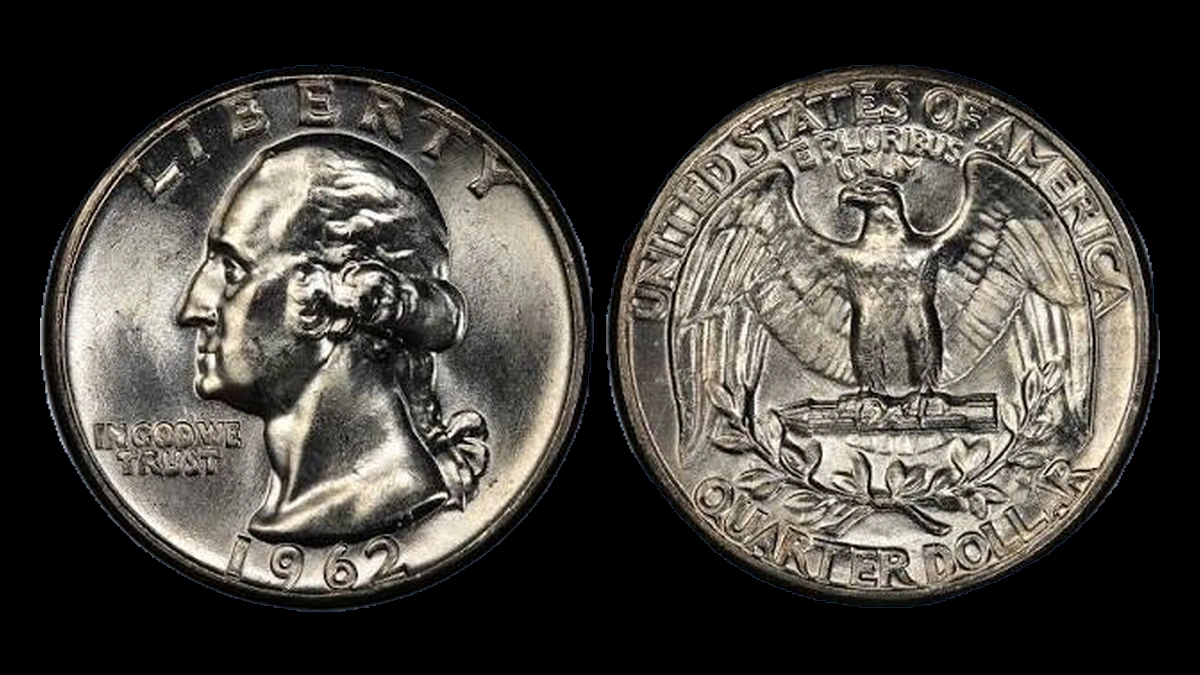
Philadelphia FS-101 is a recognized circulation-strike doubled-die variety. Reports direct attention to the eye, LIBERTY, and motto, but identification requires the actual matched pattern.
The repeated design was already present in the die. A coin did not need another strike to acquire those outlines.
How to Identify
Compare one clear LIBERTY letter with the FS-101 reference, then look for supporting eye and motto details. Several consistent matches are stronger evidence than unrelated dents or thick letters.
Use changing light to distinguish rounded separation from a flat shelf or reflection. The reference must be a Philadelphia circulation coin, rather than a Proof or another year’s variety.
What It’s Worth
Confirmed examples have an estimated range of $50–$3,500. A PCGS MS66+ specimen sold for $3,290 at Heritage in July 2016.
That result concerns exceptional unworn preservation. Wear can conceal the diagnostic details, and an unverified doubled-looking edge does not earn the same attribution or price.
Conclusion
The right comparison depends on what changed and how securely the coin is identified. A spaced pair of reverse letters, an extra D, and a small silver blank tell different manufacturing stories.
Keep group auction totals separate from individual prices and preserve the parentheses on the undated Korean-blank attribution. Original surfaces, readable dates, and matched design details provide a sounder basis for evaluation than color or an unusually wide outline alone.