Rare 2001 Penny Errors (List & Pictures)
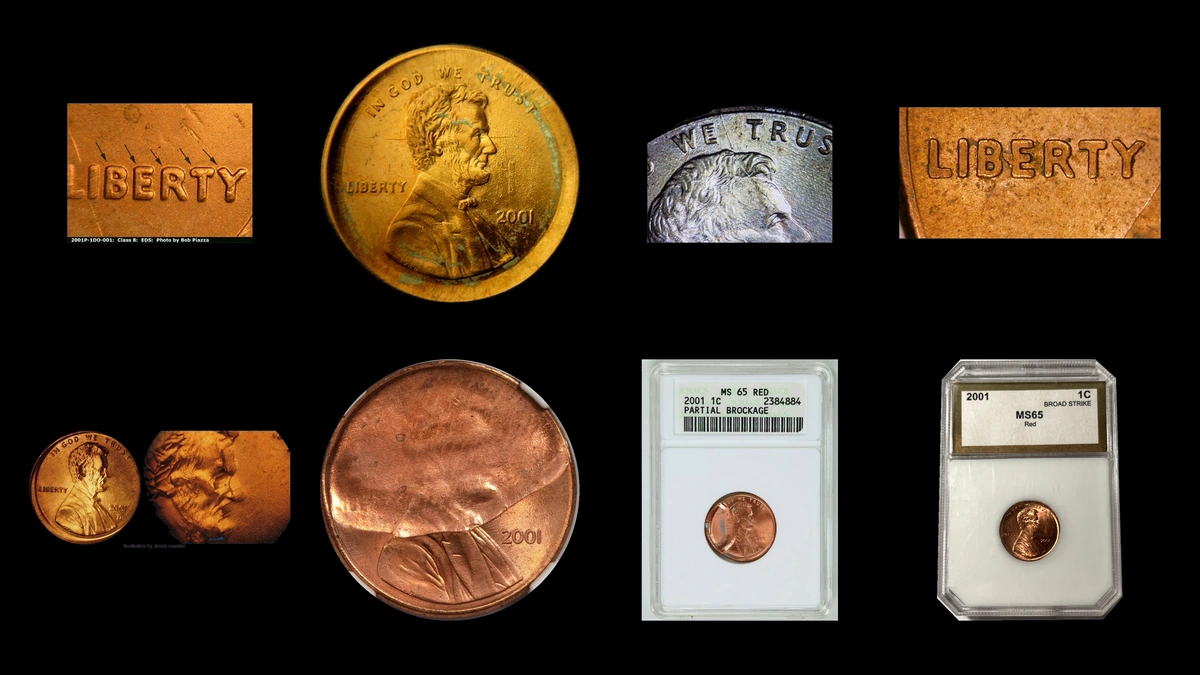
A 2001-D cent paired with a dime reverse sold for $114,000 in June 2021. Estimated values across 2001 penny errors range from $3–$150,000, with most small varieties far below that exceptional result.
Look through the Memorial columns and front lettering before inspecting larger changes to the surface, outline, or metal. A normal cent has copper plating over zinc, weighs 2.50 grams, measures 19.05 mm, and has a smooth edge.
| Observation | Error group | Estimated value |
|---|---|---|
| Column sliver | Doubled reverse | $10–$75 |
| Opposite-design trace | Die clash | $15–$400 |
| Shoulder-to-rim ridge | Die crack | $5–$150 |
| Letter bar or rim lump | Chip or cud | $5–$500 |
| Erased and dragged design | Slide doubling | $10–$200 |
| Local weak detail | Grease or debris strike-through | $3–$200 |
| Distorted covered-die impression | Cap strike-through | $50–$650 |
| Backward sunken detail | Partial brockage | $50–$700 |
| Curved missing section | Clip | $5–$40 |
| Complete widened design | Broadstrike | $20–$350 |
| Partial design and plain metal | Off-center strike | $25–$600 |
| Separate strike positions | Double strike | $100–$1,000 |
| Contact-shaped edge | Chain strike combination | $150–$1,500 |
| Smaller clad blank | Dime-planchet error | $250–$1,500 |
| Older dime under cent design | Double denomination | $1,000–$5,000 |
| Two matching separate coins | Mated pair | $750–$2,500 per pair |
| Two blanks remain joined | Bonded pair | $1,500–$4,000 per object |
| Cent front and dime back | Mule | $75,000–$150,000 |
1. 2001 Penny An Extra Sliver by the Statue: Doubled Memorial Columns Error
The small spaces within the Memorial are worth inspecting under magnification. A doubled die carries extra design in the stamping tool, producing the same repeated shape on later coins.
How to Identify
Wexler’s 2001-D WDDR-001 shows doubling at the lower left of the seventh column beside the statue’s legs. Confirm D, count from the left, and compare the small dot near the seventh opening’s bottom and the mark above the eleventh column.
Other numbered varieties have different positions. An extra eye or bow tie is not the diagnostic feature of this reverse variety, and a flat strike shelf must not replace the catalog match.
What It’s Worth
Identified minor 2001 Memorial doubled dies have an estimated value of $10–$75. A crisp column sliver is more useful than vague thickening in a blurred photograph.
No realized price is supplied for WDDR-001. Its value should not be borrowed from a famous doubled front design of another year.
2. 2001 Penny A Fragment of the Other Face: Die Clash Error
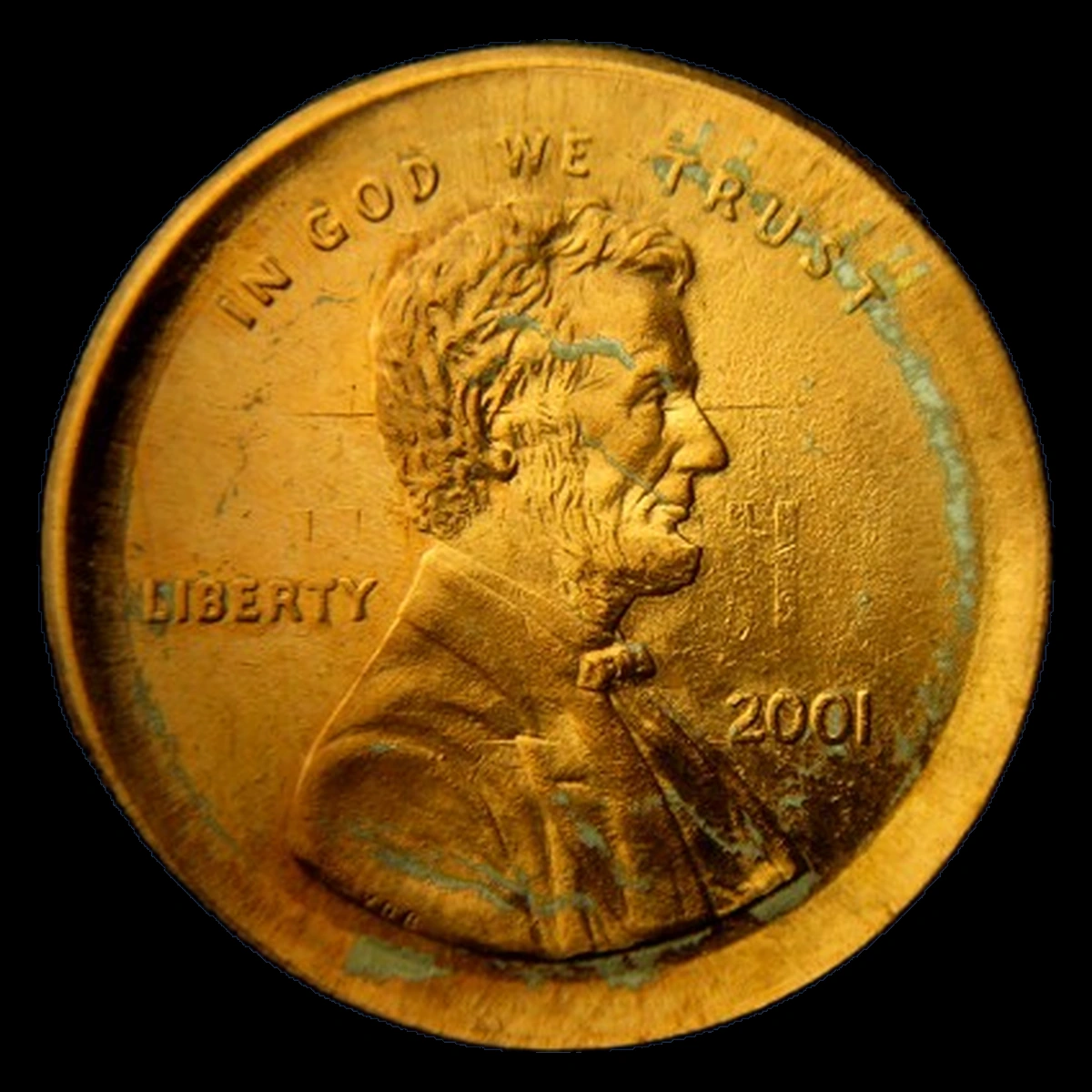
An extra outline may belong to the design on the opposite side. Dies that meet without a blank can mark each other, then transfer those marks to later cents.
How to Identify
Compare the unexpected feature with the opposite design and a suitable cataloged clash example. Philadelphia and Denver patterns need separate matches.
Follow the actual continuous shape under changing light. Random scratches or later pressed-in marks do not become a clash just because part of them resembles a column.
What It’s Worth
A recognized 2001 clash has an estimated value of $15–$400. Strong transferred detail on clean surfaces can support more interest than faint traces on a worn coin.
No individual sale is supplied for these patterns. The mint letter alone does not set a standard premium.
3. 2001 Penny A Raised Shoulder-to-Rim Line: Die Crack Error
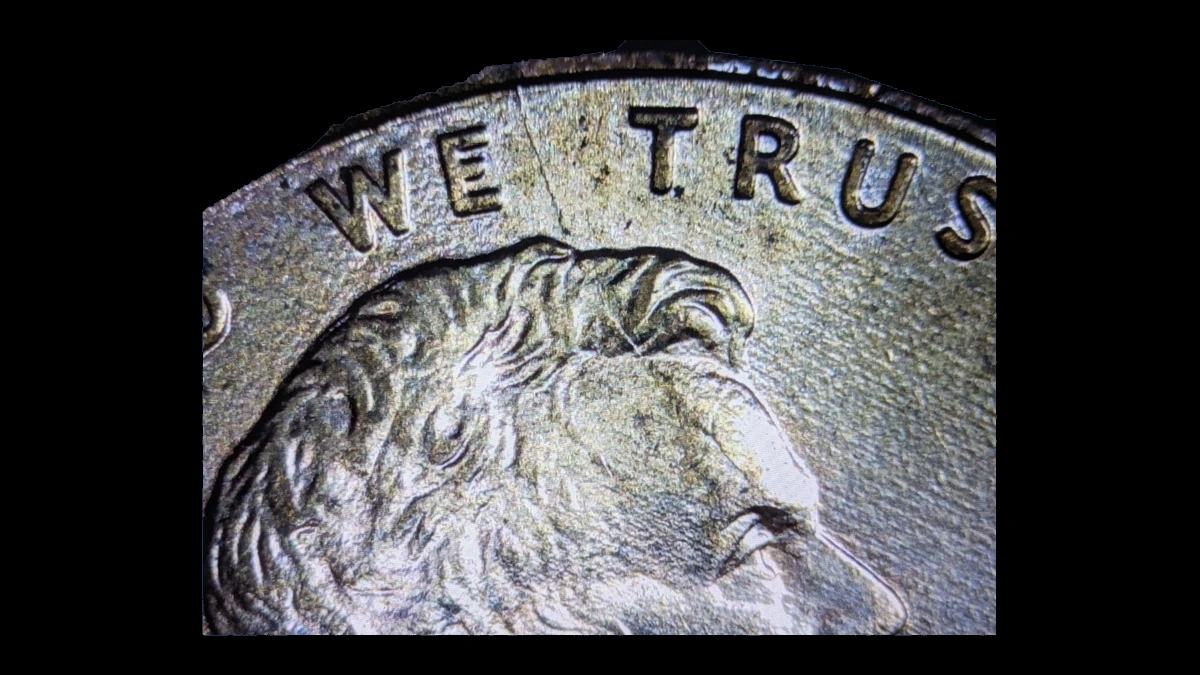
A reported Philadelphia cent has a ridge running from Lincoln’s shoulder toward the rim. Metal entered a fracture in the die and copied its shape onto the coin.
How to Identify
Trace the whole path with light from opposite directions. A solid raised ridge differs from a cut with pushed-up metal or an actual opening through the penny.
A larger internal break may create a patch without reaching the edge. Do not assume that every unusual 2001 line follows the reported Philadelphia shoulder route.
What It’s Worth
Identified 2001 die cracks have an estimated value of $5–$150. Clearly visible original ridges on attractive coins fit the stronger end.
The supplied guide mentions a much higher shoulder-to-rim result without establishing its original auction record. That unverified reported amount is not used to price ordinary examples here.
4. 2001 Penny A Bar in LIBERTY or a Rim Patch: Die Chips and Cuds Error
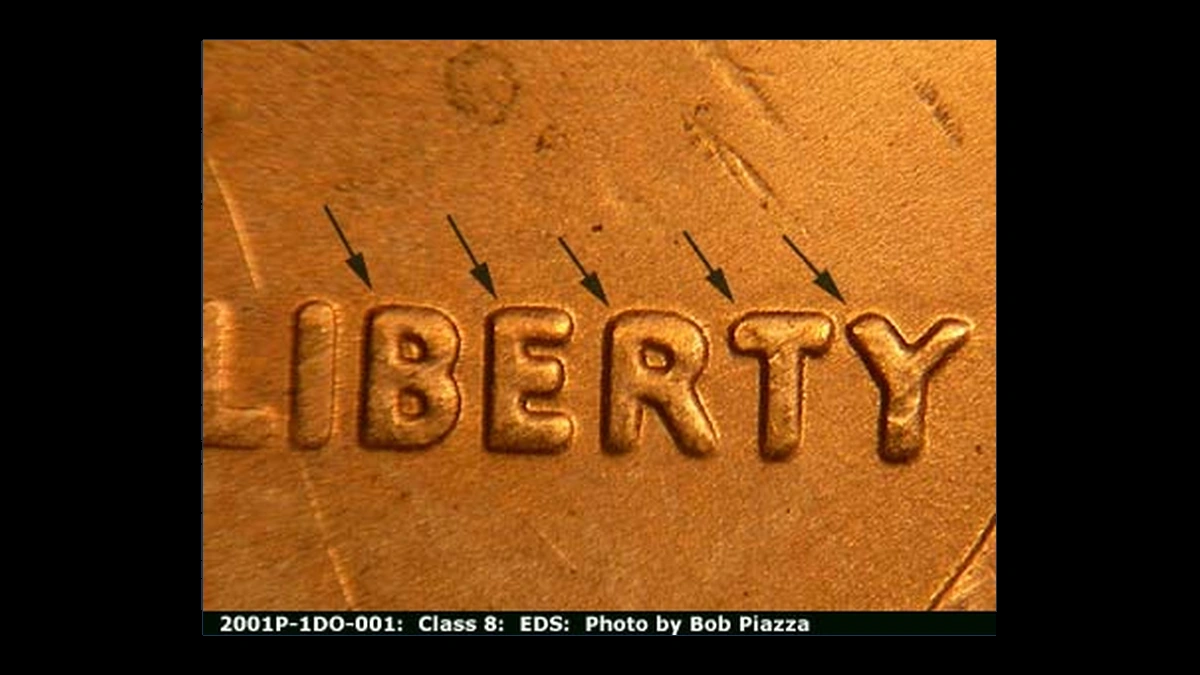
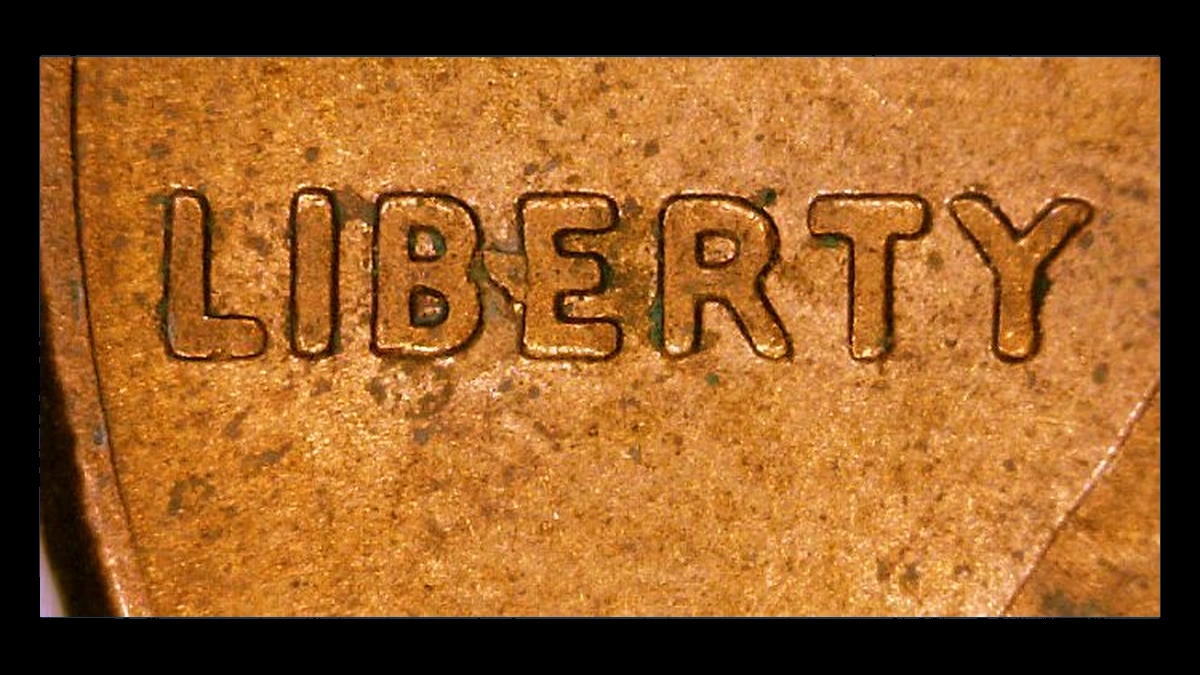
A small die chip can leave an I-like bar between B and E, giving the BIE nickname. A larger missing piece at the tool’s edge can instead produce a rim-connected patch called a cud.
How to Identify
Check the B–E gap for a solid raised bar, then distinguish it from dirt, coating bubbles, or a scratch. For a cud, follow the larger patch to the rim and inspect the normal design it replaces.
Philadelphia rim breaks are cataloged separately from the small lettering chips. Opposite-face weakness can support a cud, though it need not be dramatic.
What It’s Worth
The estimated overall range is $5–$500, with BIE chips around $5–$25 and larger identified rim breaks around $50–$500. Location and size keep those comparisons distinct.
No sale is assigned to every catalog entry. Added blobs or squeezed edge metal do not qualify simply because they stand above the surface.
5. 2001 Penny Design Is Erased and Dragged: Slide Doubling Error
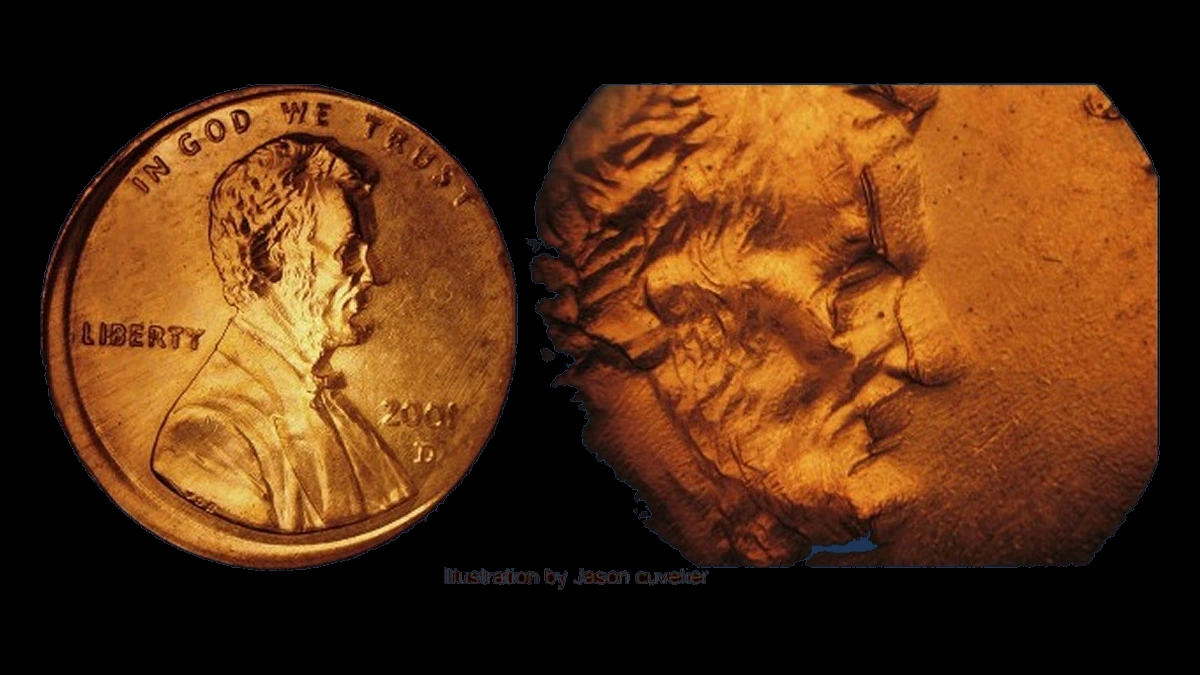
Sideways die movement can smear newly formed design and pile metal into ridges. Error-Ref’s 2001-D example records a northeast shift during the downward stroke, followed by movement back southwest.
How to Identify
Compare the southwest erased crescent and dragged ridges with the illustrated slide-doubling specimen. The erased and displaced portions should explain a coherent movement of the tool while it touched the coin.
This is different from a repeated design already in a doubled die. Later scraping and small flat machine-doubling shelves are not equivalent to the dramatic illustrated event.
What It’s Worth
A dramatic authenticated 2001 slide-doubling event has an estimated value of $10–$200. Ordinary flat machine doubling generally adds little or nothing.
The estimate is not a realized price for the pictured coin. Original surface and a convincing movement pattern must support the diagnosis.
6. 2001 Penny A Local Area Fails to Form: Grease or Debris Strike-Through Error
An obstruction between a die and the blank can leave weak detail beside sharp design. Soft material may block small recesses, while firmer debris can produce a more bounded interruption.
How to Identify
Study the boundary and nearby high points for signs of wear, scraping, or polishing. A missing word or date digit does not identify grease by itself.
The report does not establish one specific authenticated 2001 grease specimen. A generic illustration must not be dated to this year without a readable coin identity.
What It’s Worth
Genuine 2001 grease or debris strike-throughs have an estimated value of $3–$200. The year guide places many single-letter effects near $3–$10.
A broad original interruption on a sharp coin can be more appealing. These are guide-based estimates, not auction results assigned to one specimen.
7. 2001 Penny A Covered Tool Distorts the Face: Struck Through a Die Cap Error
A previously struck coin can stay over a die and act as a cover. The next blank receives a weakened or distorted impression through that cap instead of direct contact with the tool.
How to Identify
Compare the broad affected area with surviving detail and the opposite face. Year-specific listings describe a Philadelphia front-side example and a separate Denver reverse-side example.
Inspect the edge to distinguish the coin struck through a cap from a coin that became the cap itself. The Denver description does not by itself establish a cup-shaped piece.
What It’s Worth
A confirmed 2001 cap strike-through has an estimated value of $50–$650. Clear distortion with recognizable identity is more useful than unexplained softness.
No realized price is assigned to the two supplied listings. A neighboring auction lot’s result should not be transferred to either coin.
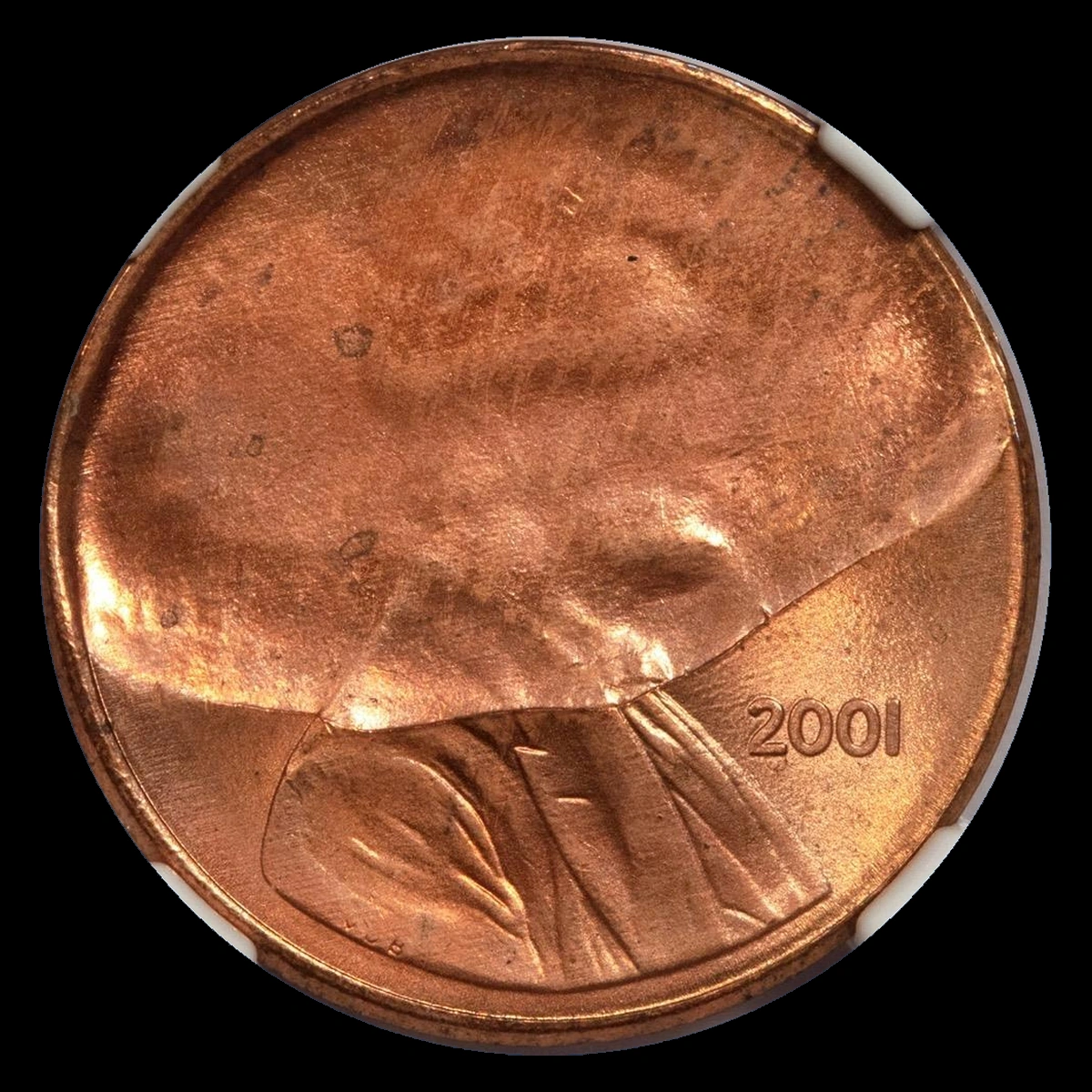
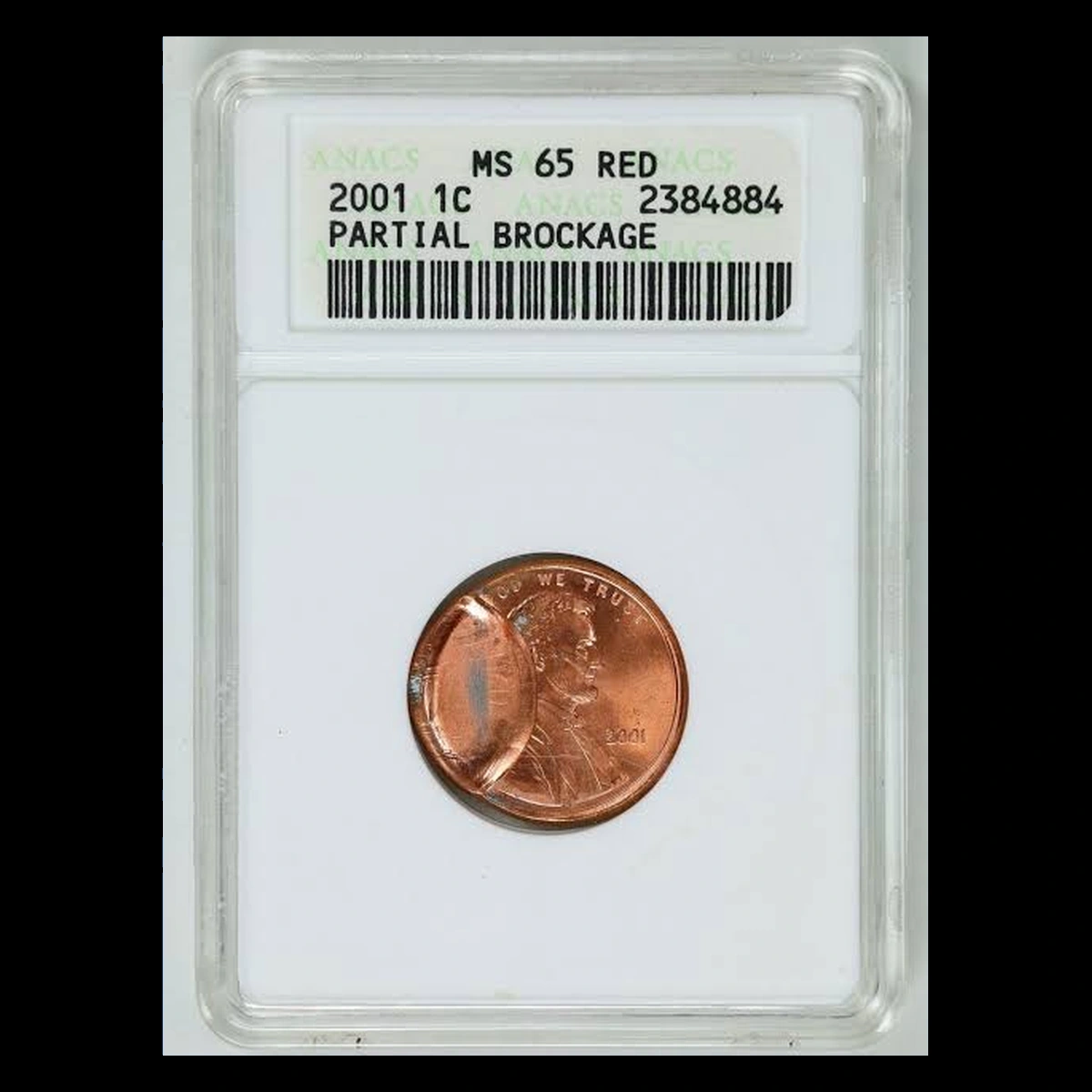
8. 2001 Penny Backward Detail Sinks into the Front: Partial Brockage Error
A struck cent can act as a stamp, pressing a reversed copy of its raised design into a new coin. The documented 2001 example has only a partial front brockage.
How to Identify
Check that the transferred detail reads backward and is recessed, then follow its boundary into the normally struck area. A broad plain depression without a recognizable image supplies different evidence.
Clashes come from contact between dies, while brockage transfers design directly from a coin. Later squeezing can imitate mirrored detail, so examine the full strike and surrounding metal.
What It’s Worth
Identified 2001 brockages have an estimated value of $50–$700. Size, readable transferred design, and preservation affect the comparison.
The NGC MS64 Red partial-front example sold for $79 in March 2025. That actual result shows that a genuine partial brockage need not approach the upper estimate.
9. 2001 Penny A Curved Gap Predates the Design: Clipped Planchet Error
A cutting punch overlapping an earlier hole in the metal strip can produce an incomplete blank. The design is then struck around the pre-existing curved gap.
How to Identify
Inspect both faces and the gap’s edge for natural contact between the design and missing area. Opposite-rim weakness may support the diagnosis without being equally visible on every clip.
Low weight fits missing metal but also fits later cutting. Saw marks, grinding, and fresh squeezing must be considered; the report fixes neither mint nor gap position.
What It’s Worth
A genuine 2001 curved clip has an estimated value of $5–$40. The supplied guide places many ordinary examples around $5–$25.
No particular 2001 specimen sets this range. A readable date and clean original boundaries can make a modest clip more useful than a heavily damaged larger gap.
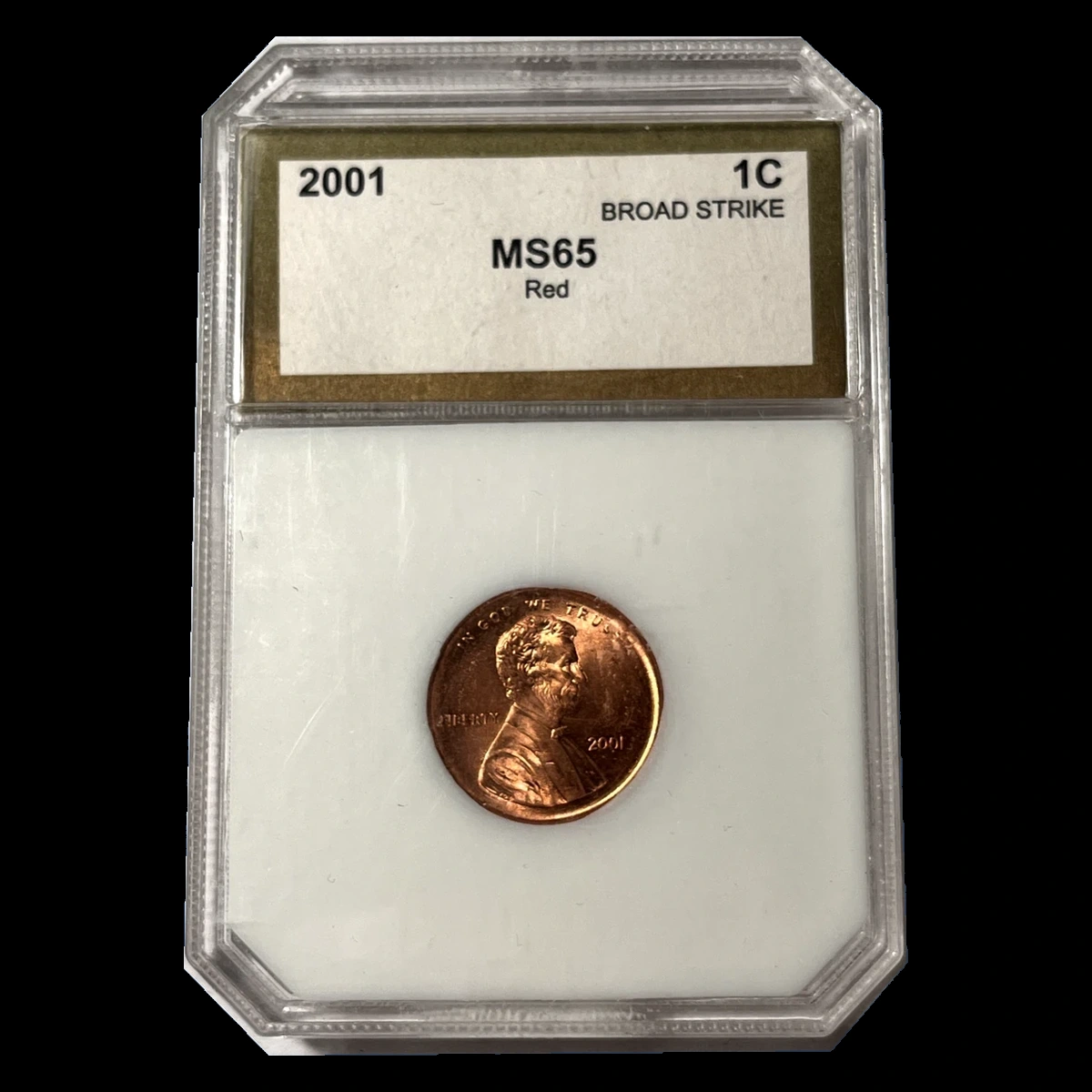
10. 2001 Penny Complete Design in an Expanded Border: Broadstrike Error
A broadstrike spreads because the collar does not restrain the blank normally. A collector gallery records a no-mint-letter 2001 example graded PCGS MS65 Red.
How to Identify
Measure across several directions and check that both complete designs remain on the metal. Uneven expansion is possible, so symmetry is not a requirement.
Look for crushed letters, heavy scraping, or squeezed edges that could explain later flattening. A smooth edge is normal on a penny and cannot establish the error.
What It’s Worth
A genuine 2001 broadstrike has an estimated value of $20–$350. Clear original spreading and preserved design are more useful than a slightly uneven rim.
The MS65 Red gallery example documents an unworn copper-red coin with relatively few marks. Its gallery appearance is not a realized selling price.
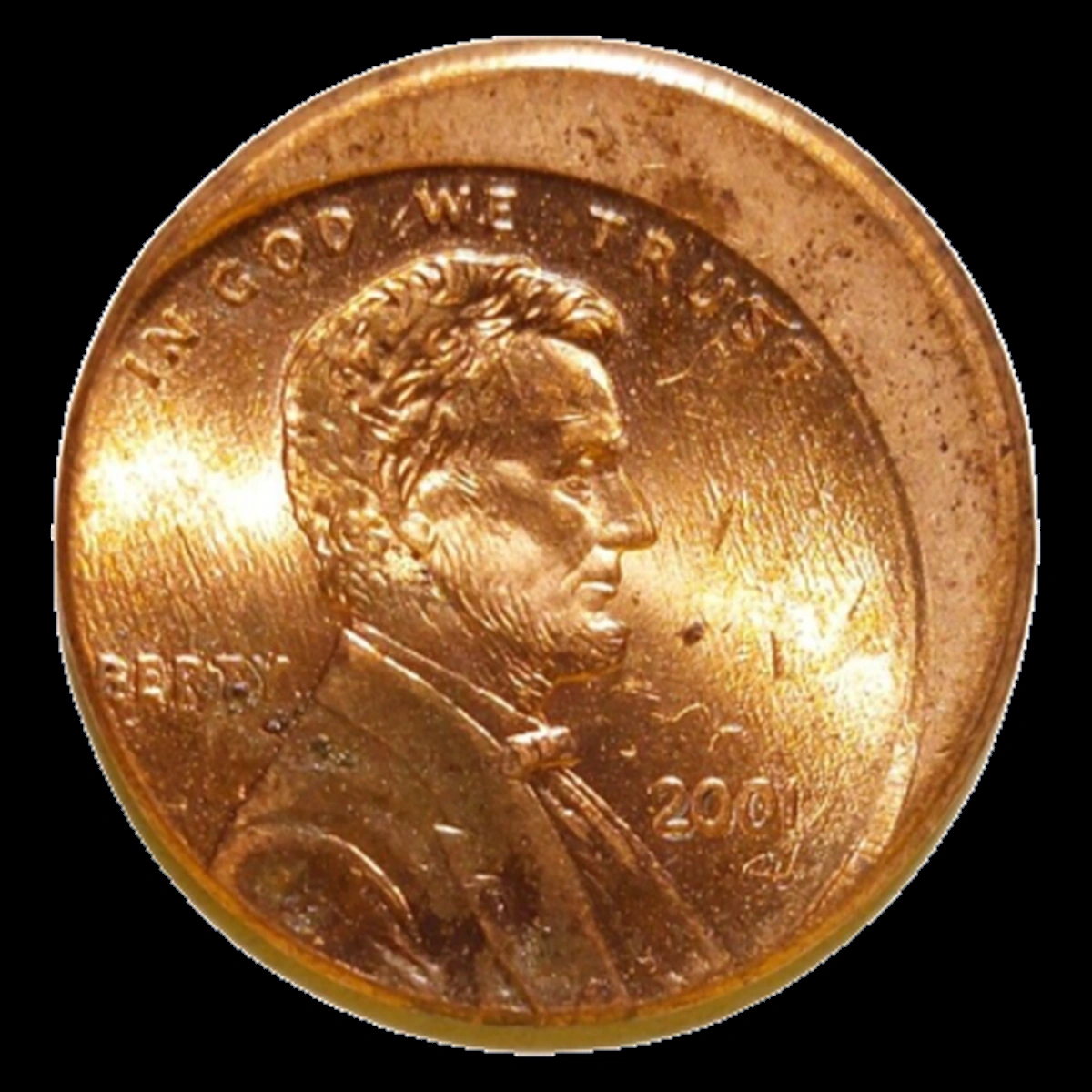
11. 2001 Penny Unstruck Metal Beside a Partial Design: Off-Center Strike Error
A blank away from its intended position can receive only part of both dies’ designs. A Denver example is reported at about 15% off center, with the plain portion still present as metal.
How to Identify
Find the readable date and D, then compare both faces at the transition into the unstruck area. The designs should fit the same shifted blank.
One shifted face can instead indicate die misalignment. Do not copy the reported 15% figure onto another coin or mistake grinding for original plain surface.
What It’s Worth
Identifiable 2001 off-center cents have an estimated value of $25–$600. Useful surviving dates and attractive surfaces matter alongside displacement.
The reported Denver coin’s original auction identity is not established here. Its description does not turn an exceptional guide claim into a verified sale.
12. 2001 Penny Two Impressions with a Flip Between Them: Double Strike Error
A documented 2001 coin first received an approximately 50% off-center strike, then flipped and received another around 55% off center. A new blank blocked one tool during the second blow and flattened part of the earlier impression.
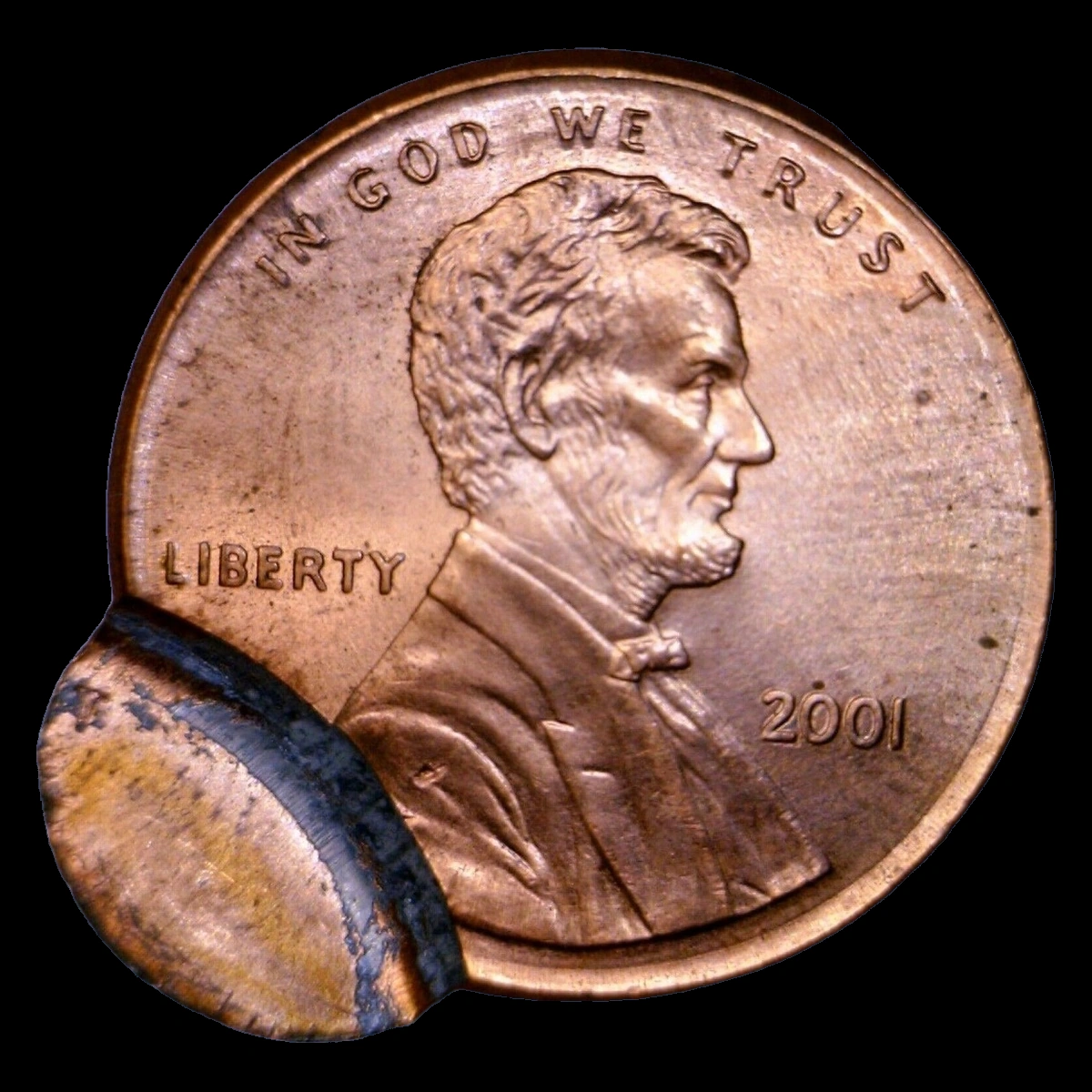
How to Identify
For that example, trace the first impression toward seven o’clock and the later one toward four o’clock. The flattened portion of WE TRUST belongs to the intervening blank’s effect.
Those directions describe one coin, not every double strike. Keep the two design positions separate and do not infer a mint from an area where no letter survives.
What It’s Worth
Identified 2001 multiple strikes have an estimated value of $100–$1,000. Clear evidence of both impressions and preserved identity help explain their appeal.
The described coin sold for $299 in February 2005 in an NGC MS63 Red holder. That historical sale is one comparison, with both off-center blows belonging to the same specimen.
13. 2001 Penny An Edge Shaped by Another Coin: Chain Strike Error
Two expanding blanks or coins can meet during striking and limit each other’s spread. The contact-shaped edge is called a chain strike, and the documented 2001 example also has a double strike.
How to Identify
Inspect the altered edge from above and from the side for metal flow consistent with contact. A cut, ground, or later flattened edge needs a different explanation.
Trace the repeated impressions to understand the complete shape. No exact contact position is supplied, and a supposed matching partner needs its own evidence.
What It’s Worth
A confirmed 2001 chain-strike and double-strike combination has an estimated whole-coin value of $150–$1,500. Readable impressions and a clear contact boundary make the event easier to understand.
The cataloged coin is NGC MS65 Red and Brown, but no realized price is supplied. Do not add independent headline prices for the two related effects.
14. 2001 Penny Cent Design on a Dime Blank: Wrong Planchet Error
A 2001 cent cataloged on a dime planchet weighed 2.2 grams. The smaller clad blank had not received a dime design before entering the cent press.
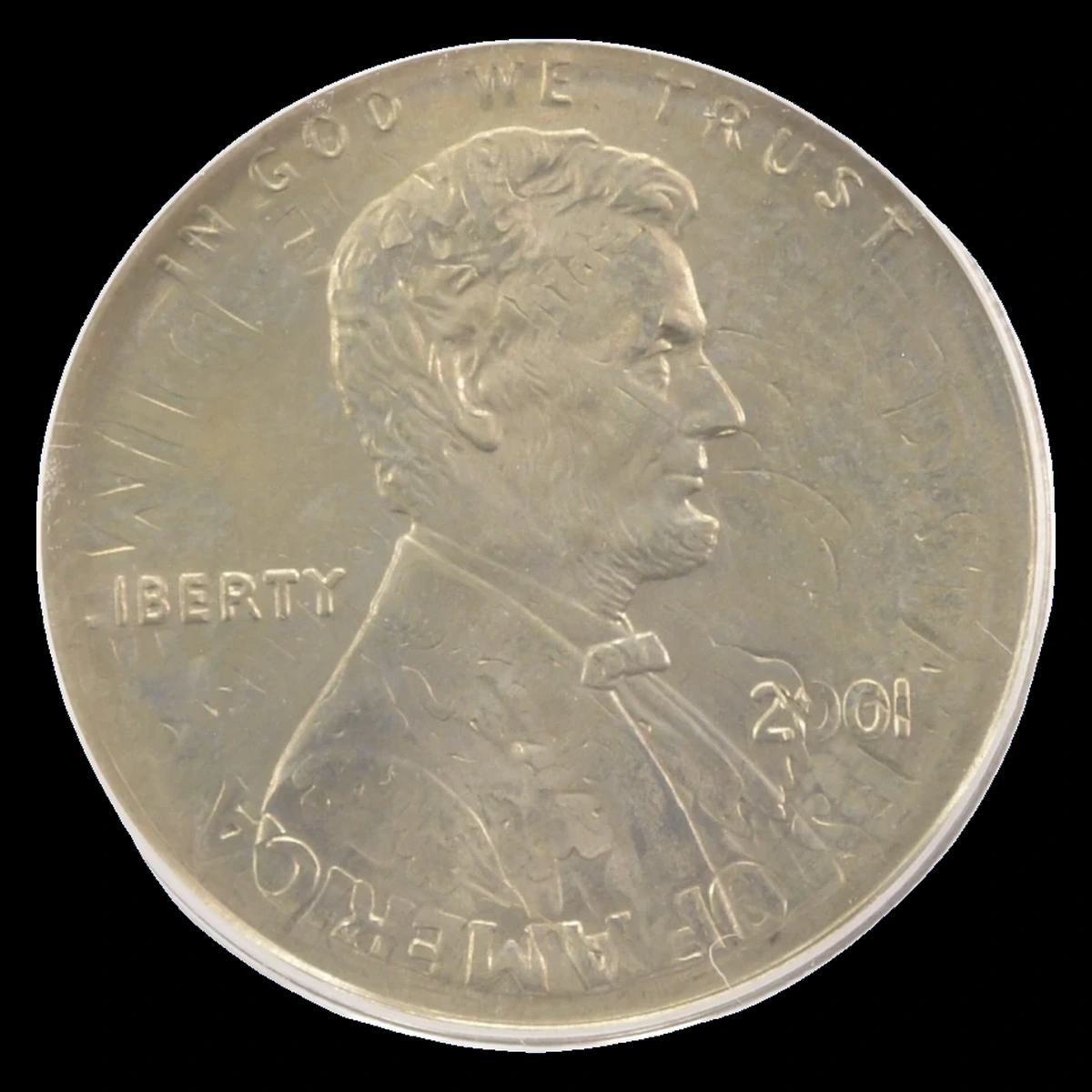
How to Identify
Compare the metal and weight with a dime blank’s nominal 2.268 grams and approximately 17.9-mm starting diameter. A cent strike can spread that outline.
Look for cent-only design; surviving Roosevelt details would change the diagnosis to a double denomination. Gray color from stripped copper on a zinc penny does not establish a dime blank.
What It’s Worth
A confirmed 2001 dime-planchet cent has an estimated value of $250–$1,500. Surface quality and surviving date detail influence comparison.
The NGC MS66 example sold for $446.20 in January 2009. Its recorded 2.2-gram weight should be kept distinct from the nominal dime weight, and no mint letter is established by the supplied description.
15. 2001 Penny A Finished Dime Under the Cent: Double Denomination Error
A previously struck dime can receive a cent design over its original image. Some Philadelphia examples show crossing portraits, while a separate Denver coin has Roosevelt upside down relative to the Memorial.
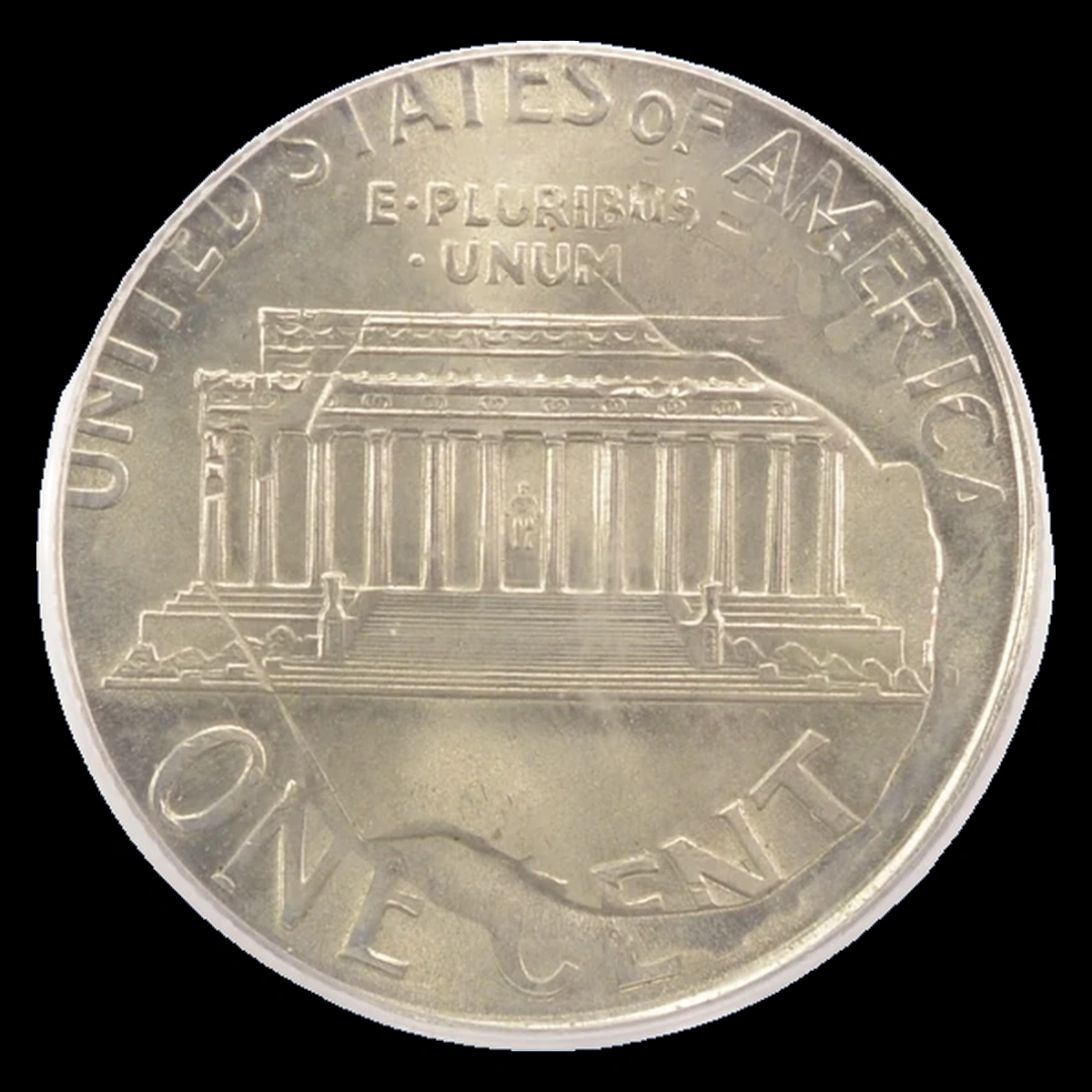
How to Identify
Find unmistakable dime detail and trace the later cent design across it. Record surviving dates and mint letters separately rather than borrowing an orientation from another specimen.
The underlying coin should fit dime-type metal and weight, allowing for spreading during the second denomination’s strike. An unused dime blank would not carry that earlier design.
What It’s Worth
Authenticated 2001 cent-over-dime errors have an estimated value of $1,000–$5,000. The clarity of both designs and preservation determine the closest comparison.
A 2001 cent on a 2001-P dime graded NGC MS68 sold for $2,340 in March 2025. Its exceptional unworn grade and particular underlying dime do not set one price for all mint and orientation combinations.
16. 2001 Penny Two Separate Coins Explain One Event: Mated Pair Error
A mated pair consists of separate coins with matching evidence of a shared striking accident. The documented 2001 pair includes a double-struck coin with its second strike about 70% off center and a broadstruck partner with partial brockage.
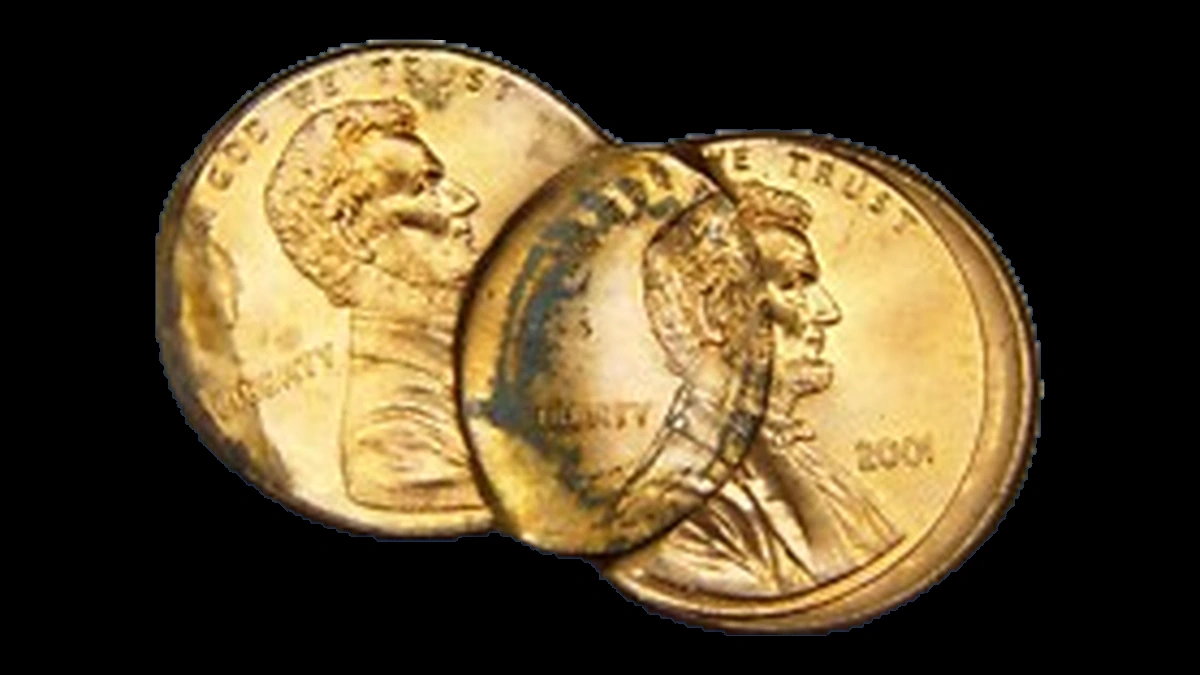
How to Identify
Compare both coins at the same photographic scale for matching contact outlines and transferred details. Their shared date alone does not establish a relationship.
Keep the pieces separate rather than pressing them together to demonstrate a fit. Records of their association preserve information that either coin alone may not explain.
What It’s Worth
The estimated value is $750–$2,500 for the complete pair. This is not a per-coin estimate.
The ANACS MS64 Red and MS65 Red pair sold for $1,320 in March 2025. The different grades belong to its two members, not two unrelated sales.
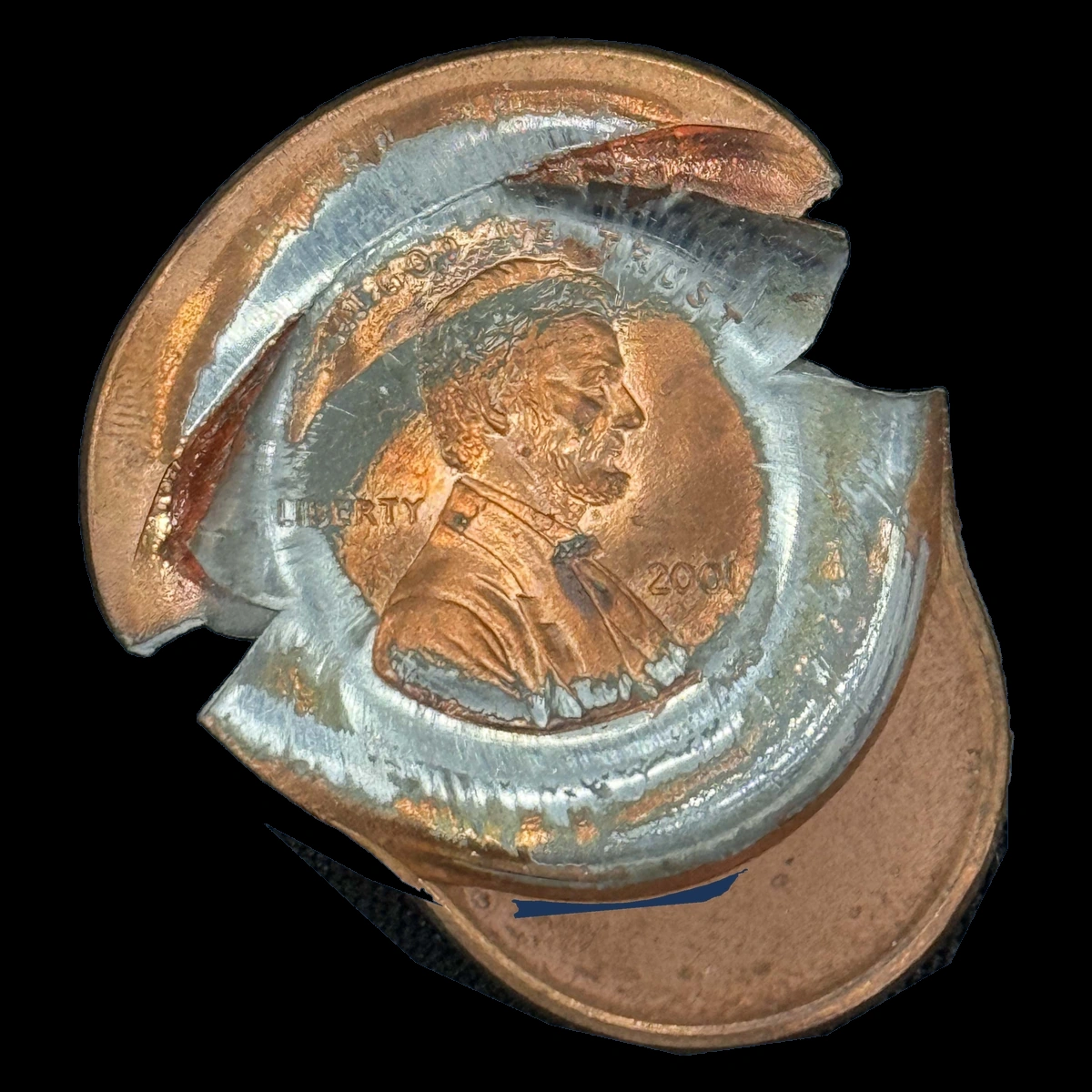
17. 2001 Penny Two Blanks Stay Connected: Bonded Pair Error
A bonded pair is one joined object, unlike a mated pair of separate coins. Greg Bennick described a 2001 example weighing 5.02 grams and measuring about 35 by 28 mm, with both blanks broadly expanded.
How to Identify
Follow the metal connection and the way the designs meet the overlap without pulling the pieces apart. Glue, solder, and later heat damage can reveal an artificial join.
The documented object was graded NGC MS66 Red and Brown. Its weight fits roughly two starting cent blanks, but neither weight nor expanded dimensions alone prove a genuine bond.
What It’s Worth
An authenticated bonded pair of this kind has an estimated whole-object value of $1,500–$4,000. The clarity of its connected strike and surface condition are central.
A later advertisement asked $2,850 for a 2001 pair in a PCGS MS65 Red holder. That is an asking price, and the different holder and color description do not establish identity with the NGC example.
18. 2001 Penny The Dime Reverse Replaces the Memorial: Mule Error
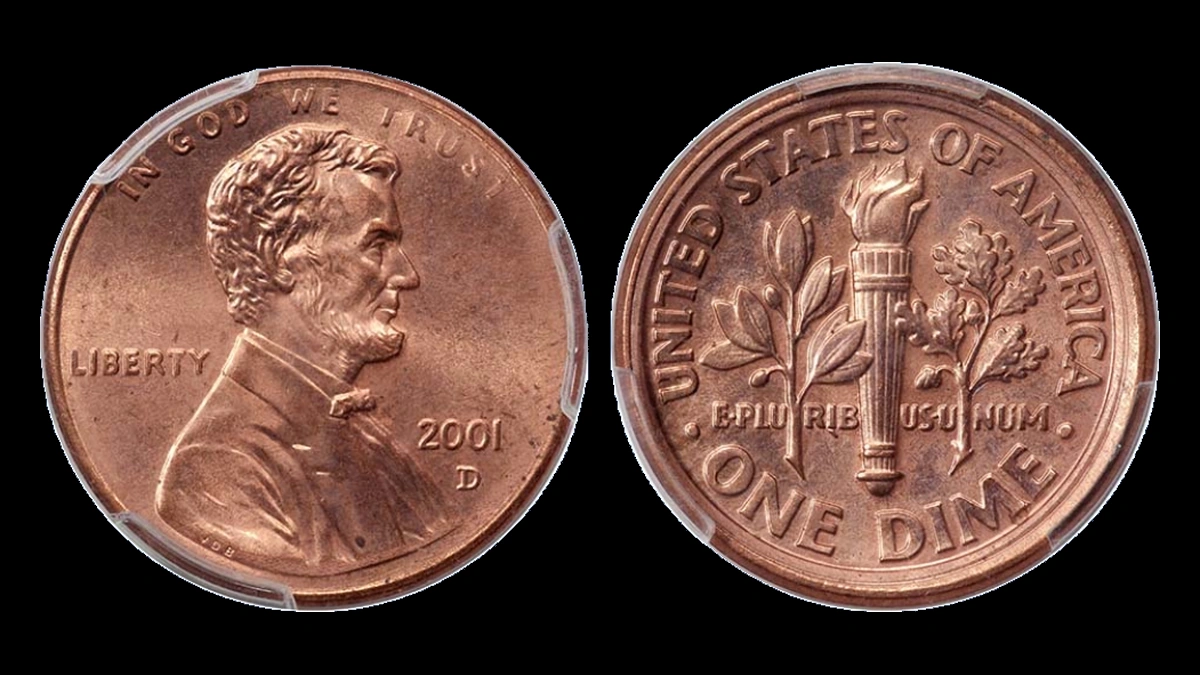
The documented 2001-D mule combines a Lincoln front die and a dime reverse die on a cent blank. Each face receives its own design, rather than one denomination overlapping an earlier coin.
How to Identify
Check the 2001-D front and the torch-and-branches reverse, then examine the entire edge for seams or a fitted shell. A correct weight cannot establish that two genuine dies struck one intact blank.
Professional authentication and the known coin’s records are essential. A glued novelty or a hollowed assembly has a different origin, even if its two faces look convincing separately.
What It’s Worth
A working appraisal range of $75,000–$150,000 reflects the rare authenticated pairing and its historical sale. It does not apply to an ordinary cent-over-dime error.
PCGS records the $114,000 Heritage sale in June 2021. That result belongs to the documented mule on cent metal, not any homemade two-denomination object.
Conclusion
A doubled column, a dragged design, and a backward impression each preserve a different kind of evidence. Start with what the metal actually shows before choosing the error’s name or its price comparison.
The larger pieces also require clear distinctions: unused dime blank, finished dime, and mismatched dies are three different origins. Keep mated pairs together in their records and bonded pairs physically intact so their shared striking history remains understandable.