Rare 1855 Penny Errors (List & Pictures)
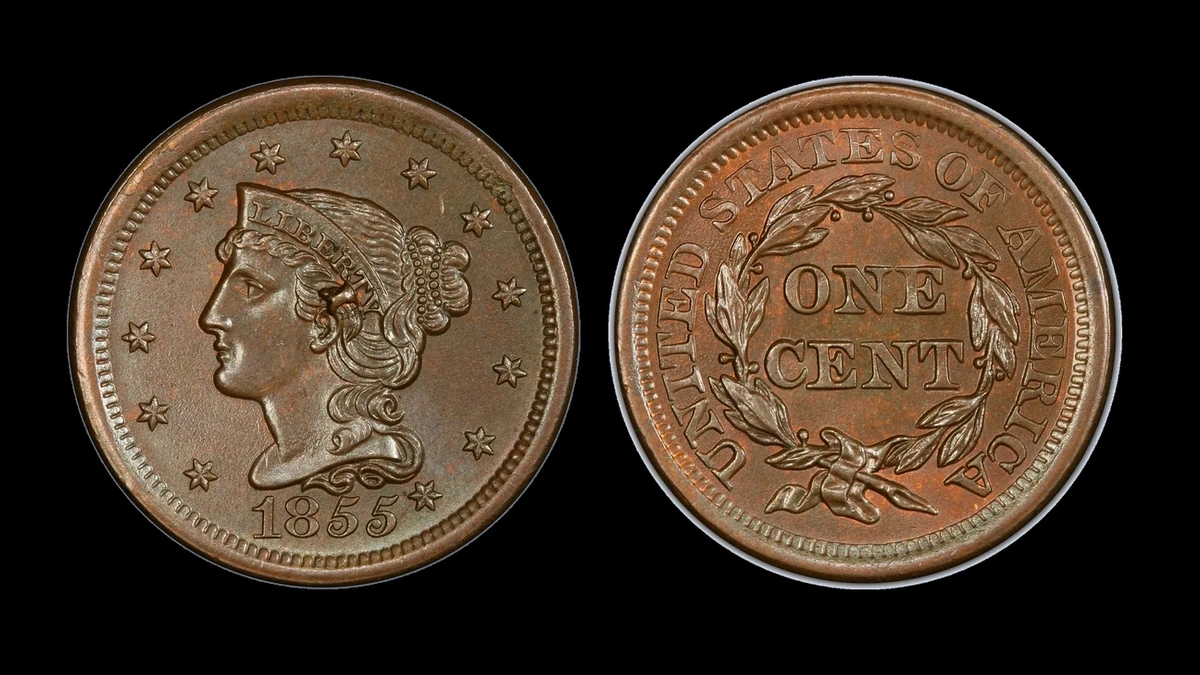
The familiar Knob on Ear and a rare cup-shaped die cap tell very different stories about 1855 penny errors. One records a broken die; the other was a coin trapped on a die while more blanks entered the press.
The documented cap has a reported auction result of $20,470, within an overall estimated whole-coin range of $20–$40,000. Inspect raised and separating metal first, then compare alignment and altered outlines before interpreting the exceptional cap.
| Clue | Possible identification | Estimated range |
|---|---|---|
| Ear knob, raised line, or rim patch | Die chip, crack, or cud | $20–$3,000 |
| Thin lower-reverse layer | Lamination | $25–$1,500 |
| Unusual missing edge | Possible clipped planchet | $50–$1,500 if confirmed |
| One face displaced | Misaligned die | $25–$750 |
| Shared displacement and bare crescent | Off-center strike | $150–$5,000 |
| Cup walls and spread reverse | Die cap | $15,000–$40,000 |
1. 1855 Penny A Knob Above the Ear or Raised Reverse Marks: Die Damage Error
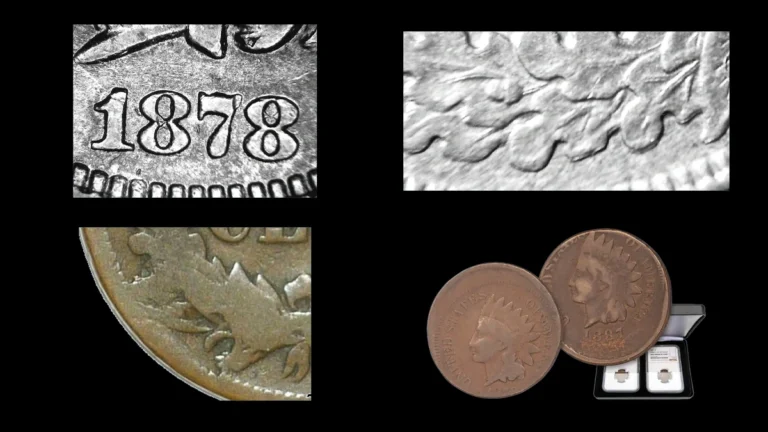
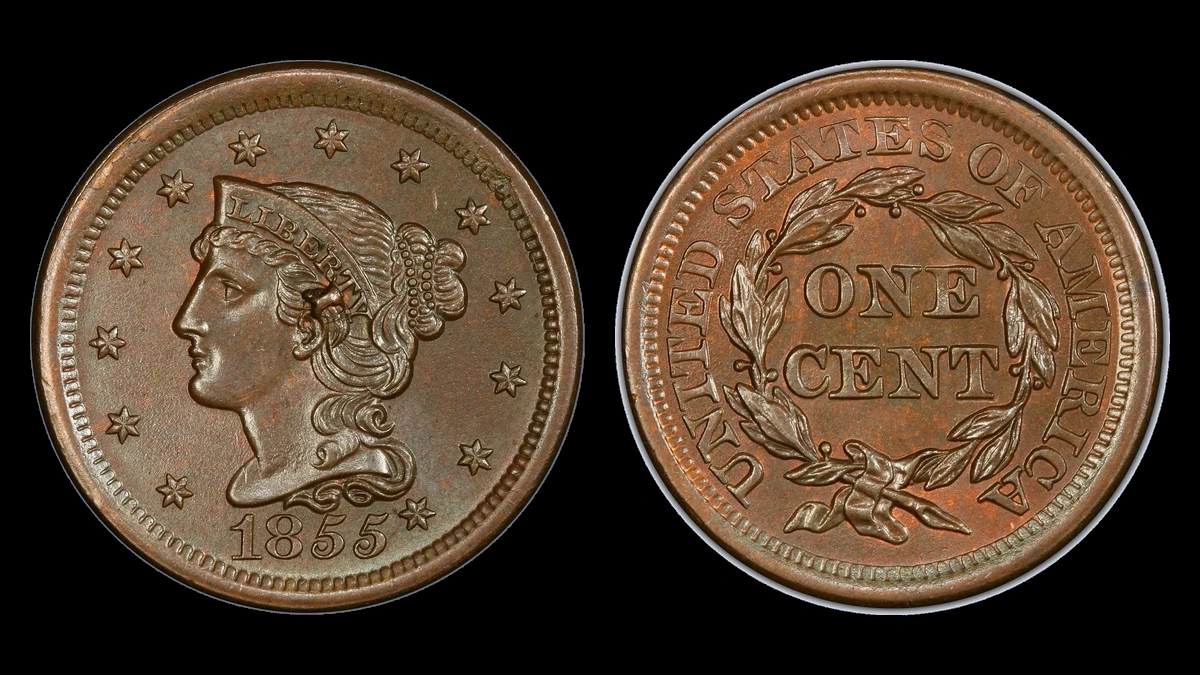
The Slanting 55 Knob on Ear variety has a rounded raised feature above Liberty’s ear, near the area below T in LIBERTY. Metal filled a missing part of the die and copied that lump onto later coins.
Upright 55 examples instead include a crack from the last S in STATES to O in OF and a separate rim-connected cud above E in STATES. The normal date styles help keep these different varieties apart.
How to Identify
Match the raised ear shape with the recognized Slanting 55 variety. An attached lump does not become a die chip merely because it occupies the same general area.
On the reverse examples, distinguish the raised S-to-O ridge from a scratched groove and trace the cud into the rim above E. A fold or solder seam can reveal later alteration rather than struck metal.
What It’s Worth
$20–$500 is the estimate for ordinary cracks, while identified Knob on Ear or stronger cud examples can fall around $75–$3,000. Preservation and the specific variety are part of each whole-coin comparison.
The Upright 55 N-4 with a cud above E and a small lamination brought $460 before the buyer’s fee in January 2011. That price belongs to a different variety from the Slanting 55 ear knob.
2. 1855 Penny A Thin Layer Separates at the Lower Reverse Rim: Lamination Error
The same documented N-4 coin has a thin lamination at the bottom of its reverse. This defect belongs to the copper itself, unlike the solid raised cud created by its damaged die.
How to Identify
Look along the lower rim under side lighting for a lifted layer or layered boundary. A smooth dent with metal pushed aside does not reproduce that separation.
Leave loose copper untouched and keep the local flaw distinct from a complete split of the coin. A tiny flake may produce no useful weight difference, especially while it remains attached.
What It’s Worth
$25–$1,500 is the estimated range for 1855 laminations in varying condition. A small peel can reduce eye appeal rather than add a premium.
Goldberg’s N-4 cataloged MS62 sold for $460 before the buyer’s fee in January 2011. That is the same combined lamination-and-cud result discussed above, not another $460 to add.
3. 1855 Penny An Unusual Gap Interrupts the Outline: Possible Clipped Planchet Error
The owner of an 1855 N-3 described it as an unusual blank or a clip. That wording leaves its cause open, so the variety name cannot establish a gap shape or clock position.
How to Identify
Examine where the struck rim reaches each end of the opening. Natural soft formation can support an incomplete blank, while saw lines or filed grooves suggest metal removed after striking.
A normal copper cent weighs 10.89 g and measures 27.5 mm across; use intact spans and safe handling when recording a loose coin’s measurements. Low weight cannot distinguish a mint-made clip from a later cut, and certified specimens should remain sealed.
What It’s Worth
$50–$1,500 is the conditional estimate if the opening is established as a genuine clip. The range does not authenticate the owner’s unusual-blank candidate.
An 1852 clipped cent graded NGC MS63 Brown sold for $384 in June 2024. That unworn same-series comparison has a different date and known grade, which should not be assigned to the reported N-3.
4. 1855 Penny The Front Shifts More Than the Back: Misaligned Die Error
Compare the border around both faces when only one design appears displaced. A misaligned front die can shift the portrait relative to a more evenly centered reverse.
How to Identify
The collector’s example carries an ANACS EF45 Details description, but the supplied report does not specify the condition problem or the direction and distance of the shift. Those details must come from the coin and its full attribution.
Photograph complete rims at the same scale and inspect the edge for later alteration. If both designs are cut off beside unstruck metal, an off-center strike needs consideration instead.
What It’s Worth
$25–$750 is the estimate for a genuine misaligned-die example. A small displacement may add little to the underlying large cent’s value.
No sale is supplied for the EF45 Details coin, whose condition problem must be considered. The $1,092.50 sale of a dramatically off-center 1855 cent concerns a different mechanism and does not set the price of a slight one-face shift.
5. 1855 Penny Both Designs Miss Part of the Blank: Off-Center Strike Error
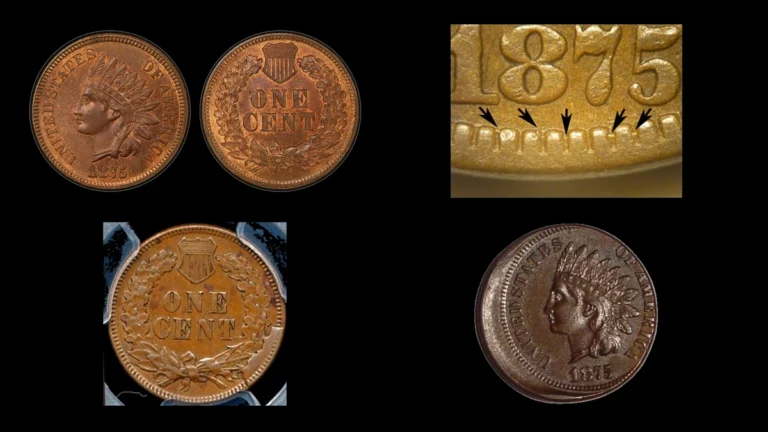
The two recorded examples show very different amounts of displacement. One is an Upright 55 NGC VG10 Brown cent struck 15% off-center; another is a PCGS Fine 15 cent struck 70% off-center toward 10:30 with its date intact.
How to Identify
Follow the blank crescent and the missing normal design on both faces to check that they fit one displaced blank. A shift on the front alone calls for the misaligned-die comparison.
The direction of the 15% specimen is not established in the supplied description. Do not transfer the 70% coin’s 10:30 orientation merely because the two dates match.
What It’s Worth
$150–$5,000 is the estimated range for genuine dated 1855 off-center cents. Readable dates, surface quality, and surviving detail matter alongside the displacement percentage.
The 70% PCGS Fine 15 example sold for $1,092.50 at Heritage on January 7, 2009. The separate 15% VG10 Brown specimen does not automatically inherit that price.
6. 1855 Penny Raised Walls Surround Liberty’s Portrait: Die Cap Error
The documented Upright 55 NGC AU58 Brown cap retains a sharp portrait inside a cup-shaped rim. The coin stuck to the front die and received repeated blows as new blanks arrived beneath it.
Those later contacts spread and flattened its reverse while its edge wrapped around the die. This is the cap itself, distinct from the other coins it struck.
How to Identify
Compare side views with both faces: the walls, clear inner portrait, and enlarged flattened reverse need to fit the same repeated-strike process. A coin simply bent into a bowl can have an unusual shape without the required design changes.
Do not flatten or reshape the object. For a safely accessible loose cap, record altered width and height rather than requiring a flat-coin diameter, and inspect the former plain edge for cuts, joins, or later bends.
What It’s Worth
$15,000–$40,000 is the estimated range for a genuine 1855 cap of this importance and quality. Depth, natural surfaces, and the surviving portrait are central to the assessment.
Mint Error News reports a $20,470 auction result for the AU58 example. A separate published $40,000 valuation is an estimate rather than another completed sale.
Conclusion
Date style and the relationship between raised metal and the original surface guide an 1855 identification. The Slanting 55 ear knob, Upright 55 reverse cud, and local lamination are separate features even when two defects share one coin.
The $20–$40,000 estimates extend to an exceptional die cap. Keep that rarity separate from bent coins, and retain the conditional status of an unusual outline until its edge evidence establishes a genuine clip.