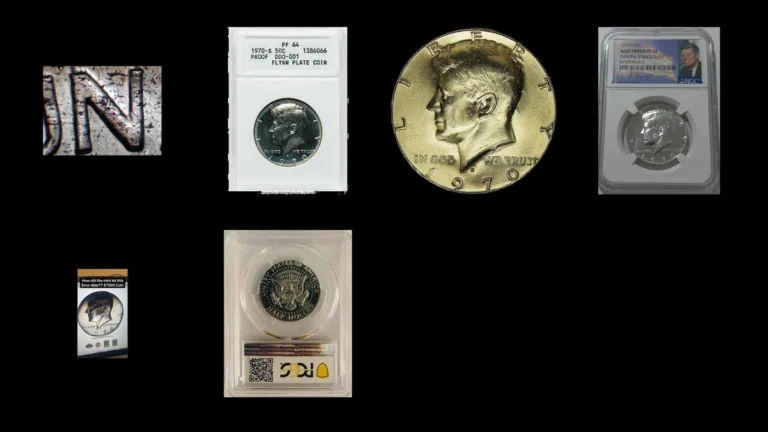
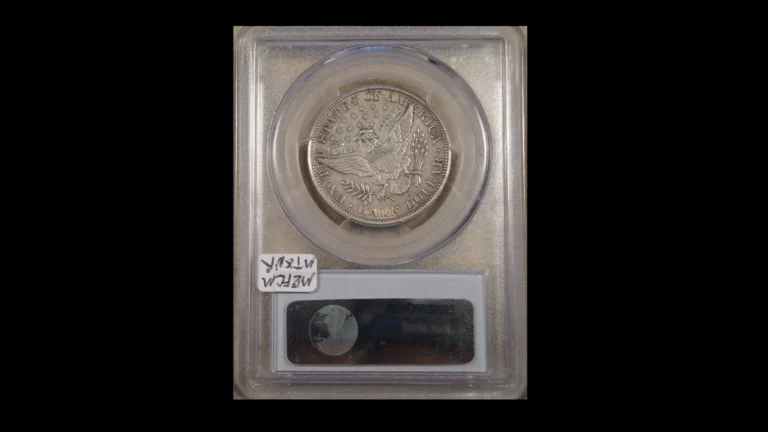
Rare 1998 Half Dollar Errors (List & Pictures)
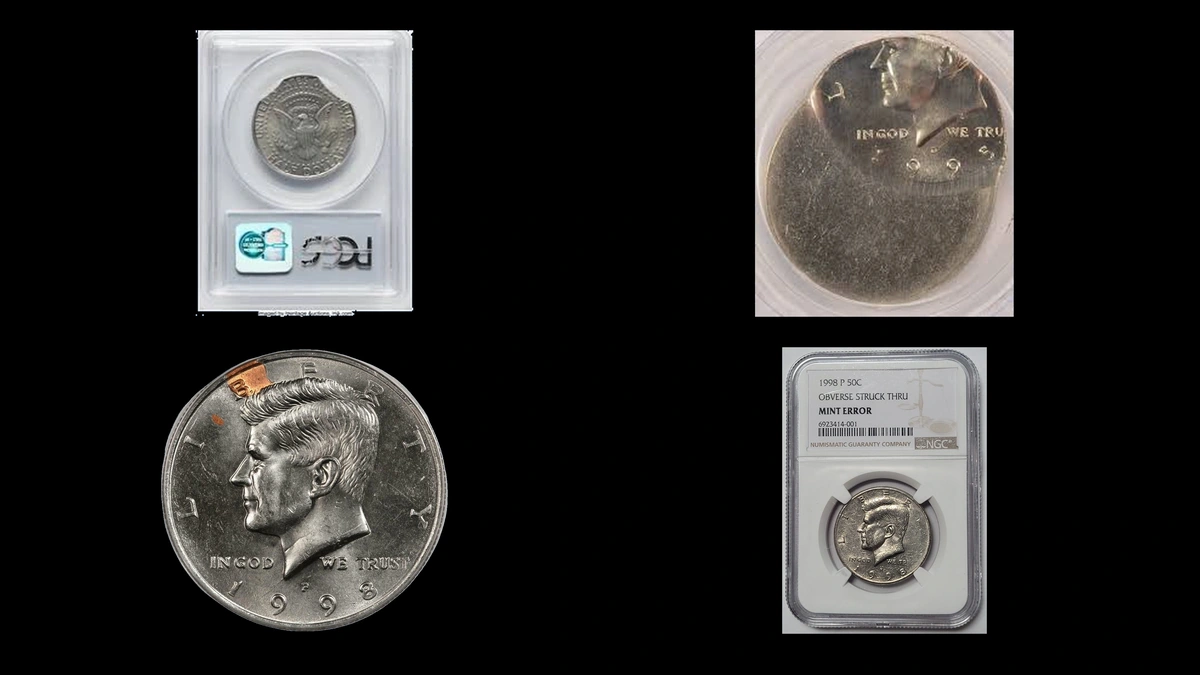
A 6.25-gram 1998-D can be light because nearly half its metal is missing, rather than because it used a quarter blank. That distinction is central to identifying 1998 half dollar errors, whose supplied estimates range from $30 to $3,500.
A different-year wrong-blank Kennedy brought $2,880 in 2023; the large 1998-D clip itself sold for $240 in 2021. Check the outline, edge, surface layers, and fine design features before choosing a comparison.
| Visible clue | Possible error | Estimated range |
|---|---|---|
| One or several rim gaps | Clipped planchet | $60–$500 |
| Expanded border, complete designs | Type 1 broadstrike | $100–$300 |
| Bare crescent and shifted designs | Off-center strike | $150–$800 |
| Unexplained size or metal mismatch | Wrong planchet | $1,000–$3,500 |
| Small magnetic edge particle | Embedded foreign material | $200–$1,000 |
| Uneven or partly lost outer layer | Defective cladding | $125–$600 |
| Interrupted or weak design | Strike-through | $30–$400 |
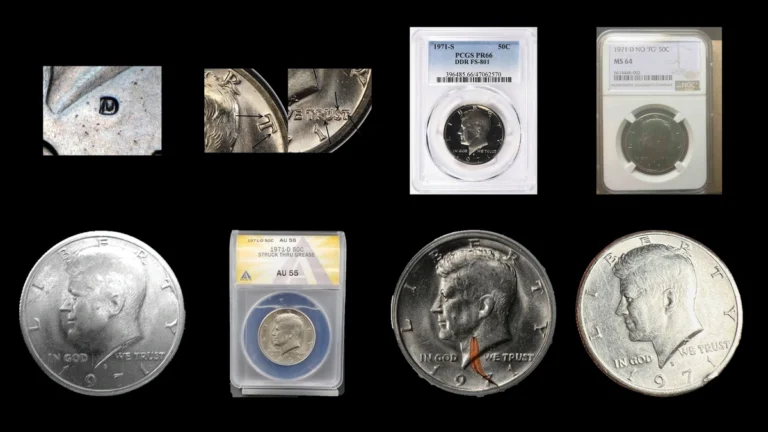
| Extra front-side contours | Reported doubled die obverse | $50–$250 |
Normal P and D halves are clad coins with pale copper-nickel faces over a copper core, weighing 11.34 grams and measuring about 30.6 millimeters. Clad proofs share that weight, while silver proofs and the silver matte issue begin at 12.50 grams; matte describes a soft, non-mirror finish.
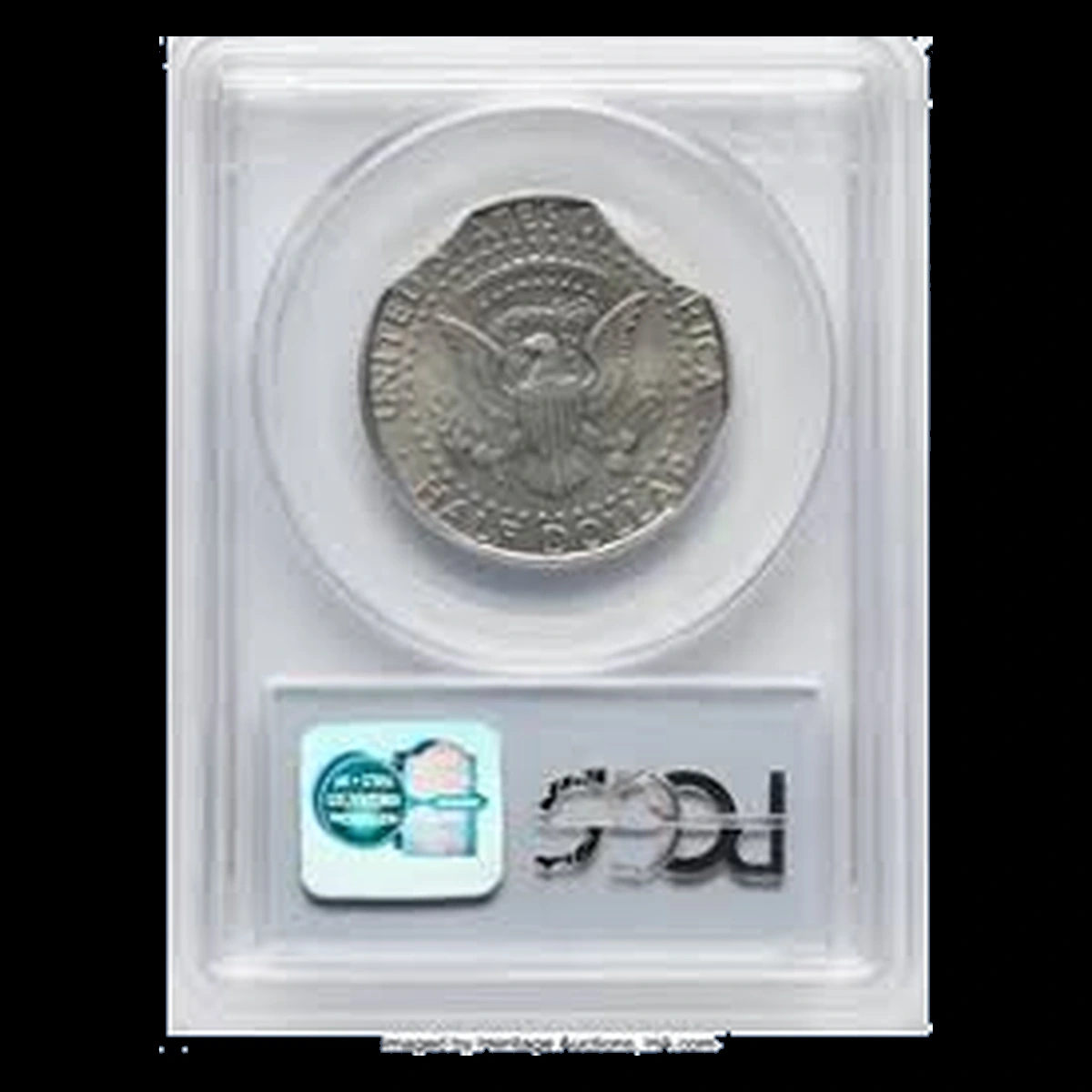
1. 1998 Half Dollar Missing arcs around the perimeter: Curved and multiple clips Error
The 1998-D NGC MS66 with a 45% curved clip retains only 6.25 grams of metal. Separate Denver specimens include an NGC MS64 with a 15% curved clip and a PCGS MS63 with a 10% triple clip.
Each blank lacked the relevant metal before striking. A separate S-mint proof clip is reported, but its alloy is not established in the supplied evidence.
How to Identify
Inspect every gap where its ends meet the rim for original striking transitions. Saw marks, filed surfaces, and sharp cut edges indicate that metal may have been removed later.
Opposite-rim weakness can provide supporting evidence, though it is not equally visible on all clips. Compare the low weight with the missing area instead of treating a quarter-like reading as proof of a quarter blank.
Identify an S proof’s composition independently. The Denver coins’ weights, percentages, and grades cannot be assigned to that separate report.
What It’s Worth
Comparable clips are estimated at $60–$500, with size, grade, and visual appeal affecting the result. Heritage records include $65 for the MS64 15% clip and $240 for the MS66 45% clip in July 2021.
The MS63 triple clip brought $99 in March 2025. These are three distinct transactions, and none establishes a price for the S-proof report.
2. 1998 Half Dollar A complete design inside an expanded outline: Type 1 broadstrike Error
Heritage identified a 1998-P NGC MS65 as both broadstruck and struck on a Type 1 blank. Type 1 means the blank had not received the prepared raised rim normally formed before striking.
The broadstrike occurred when the collar ring failed to restrain the edge, allowing outward spread. The unprepared rim and collar failure concern different manufacturing steps on the same coin.
How to Identify
Confirm complete designs on both faces and examine the expanded perimeter for original metal flow. Missing or abnormal edge grooves can support loss of normal collar contact.
Those features alone do not establish a Type 1 blank, because an ordinary prepared blank can also be broadstruck. The unprepared-rim identification needs an additional comparison with the certified specimen.
Later flattening can widen a normal half but often damages its raised design and leaves pressure marks. Spreading without metal loss should leave weight near the appropriate standard.
What It’s Worth
Similar clear unworn examples are estimated at $100–$300. The NGC MS65 Type 1 broadstrike sold for $106 at Heritage on January 10, 2010.
A more dramatic broadstrike needs its own comparison. The historical result does not price a damaged coin merely because its outline is equally wide.
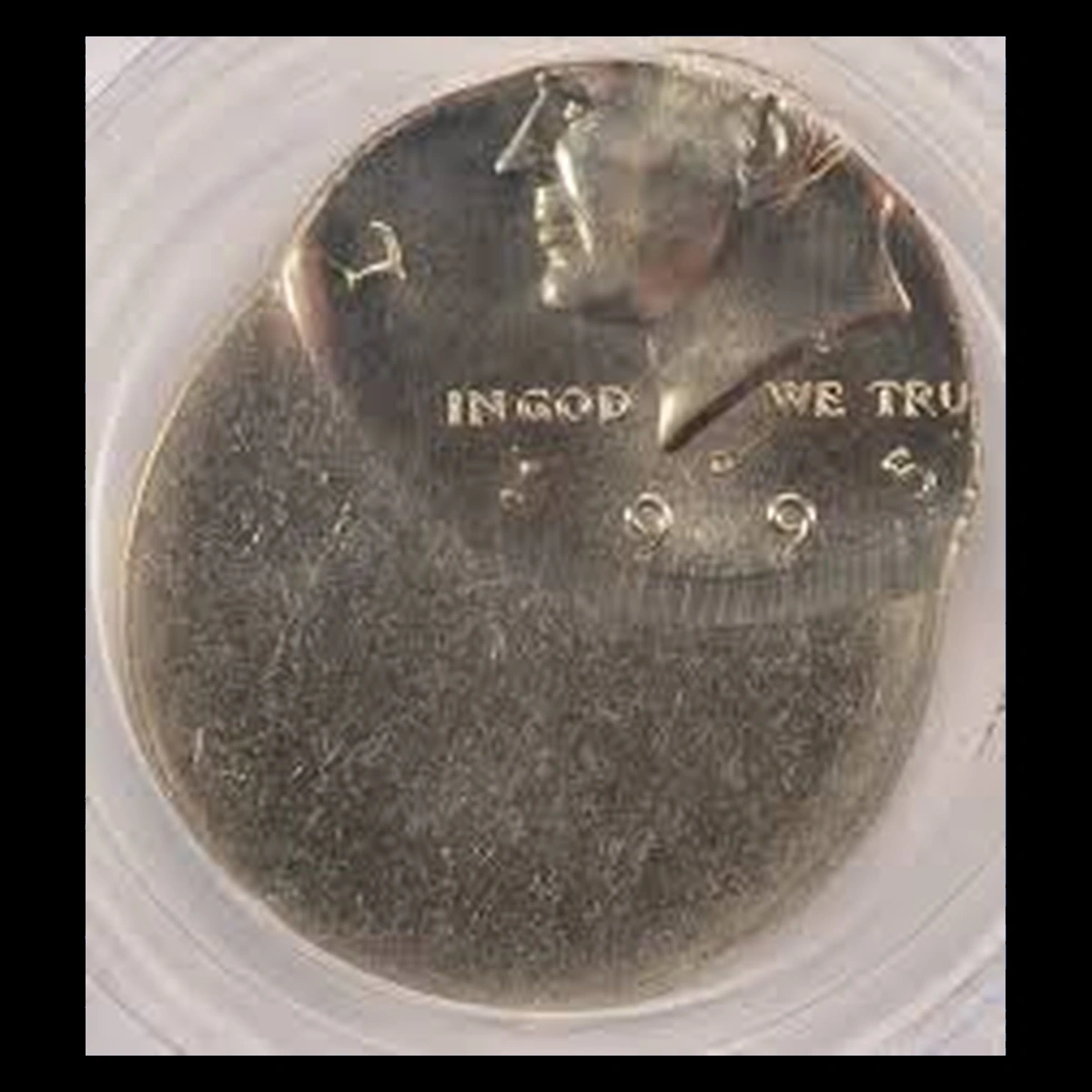
3. 1998 Half Dollar A plain crescent alongside displaced designs: Off-center strike Error
The reported 1998-D category involves a blank positioned partly beyond the dies. Its design should be shifted on both faces, with original unstruck metal left beside the struck area.
How to Identify
Use uncropped photographs to compare where each design ends against the surviving metal. A shifted face alone may indicate a misaligned die, while a broadstrike can retain the complete design.
A clip is an actual absence of metal, not simply a blank crescent. Inspect the unstruck area’s boundary for grinding or scraping that could remove design after minting.
The 1998-D report supplies no measured angle or percentage. Those details must come from the specific coin being examined.
What It’s Worth
An authenticated example with a readable date and obvious offset is estimated at $150–$800. Small shifts generally need less dramatic comparisons than large bare crescents.
A 1999-D NGC MS66 struck 65% off center sold for $552 in March 2023. Its percentage and grade belong to that different-year specimen and cannot identify the general 1998-D report.
4. 1998 Half Dollar Size or composition inconsistent with a normal half: Reported wrong planchet Error
A wrong-planchet strike uses a blank intended for another denomination or issue. The year reference lists the category for 1998-P and D but supplies no identified receiving blank, measured weight, or certification.
How to Identify
Record weight, actual width, metal, edge structure, and surviving design before naming a proposed blank. A smaller blank may spread under the half-dollar dies, so finished diameter alone is insufficient.
Exclude clipping, missing layers, trimming, and chemical damage as reasons for abnormal weight or appearance. Professional metal testing can help test a specific proposed composition.
The 6.25-gram Denver clip already has a visible explanation for its low weight. A generic quarter-sized illustration cannot establish the identities of either reported wrong-blank 1998 coin.
What It’s Worth
A genuine Kennedy on an identifiable wrong blank is estimated at $1,000–$3,500 across circulated through ordinary unworn examples. No recorded 1998 sale is supplied for this category.
A 1974 Kennedy struck on a Taiwan five-dollar blank, graded PCGS AU55, sold for $2,880 in September 2023. That different year and blank demonstrate the market for established errors without identifying the reported 1998 metal.
5. 1998 Half Dollar A tiny magnetic spot beneath edge grooves: Embedded particle Error
Mike Diamond examined a circulated 1998-P with a strongly magnetic dark particle about half a millimeter across at the edge. With the reverse upright, the particle lay near 5:30, and edge grooves continued across it.
How to Identify
Compare the grooves across the particle with those in adjacent coin metal. A loose magnetic speck differs from material embedded beneath original struck edge detail.
Test attraction gently without dragging a magnet across the surface. The reported attraction was localized, not evidence that the whole coin had a steel core.
The coin weighed 11.25 grams, within normal variation, according to the Coin World examination. Steel embedded during edge preparation was Diamond’s suggested explanation, not the result of a reported laboratory test.
What It’s Worth
A well-documented mint-embedded foreign particle is estimated at $200–$1,000. No sale price is claimed for the examined 1998-P.
A 1992-D struck through a fragment of edge ridging, graded NGC MS64, sold for $336 in July 2021. It provides context for recognizable foreign material, but involves a different process from an embedded magnetic nodule.
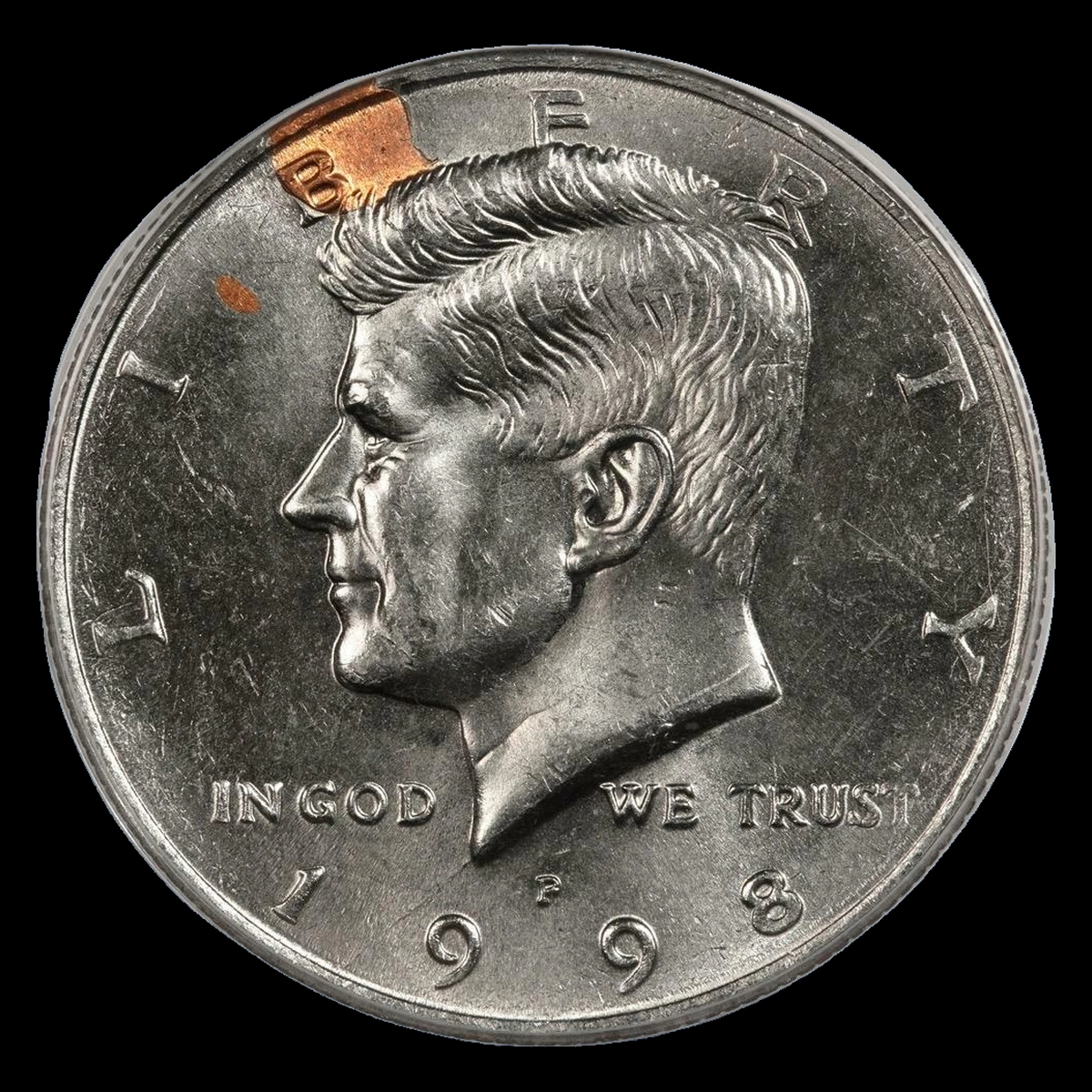
6. 1998 Half Dollar A flawed outer surface or exposed copper patch: Defective cladding Error
A 1998-P NGC MS63 was cataloged with defective obverse cladding. A separate ANACS MS64 listing describes partial clad-layer loss without establishing its mint or affected face in the supplied record.
How to Identify
Locate a physical boundary, step, or separation where the pale outer layer meets the affected area. Neither report requires an entire layer to be absent.
Copper visible at a normal clad edge is expected, and a brown face can result from staining or chemical treatment. Check both sides for artificial peeling and tool marks without disturbing any remaining layer.
A small defect may barely change weight, whereas actual metal loss can reduce it. Combine that measurement with the visible layer structure rather than using color alone.
What It’s Worth
Modest defects through clear partial loss on unworn coins are estimated at $125–$600. The 1998-P MS63 defective-cladding coin sold for $149 in March 2023.
The separate ANACS MS64 partial-loss listing asked $349.97. That offer is not a completed sale and does not transfer the Philadelphia coin’s identity to the second specimen.
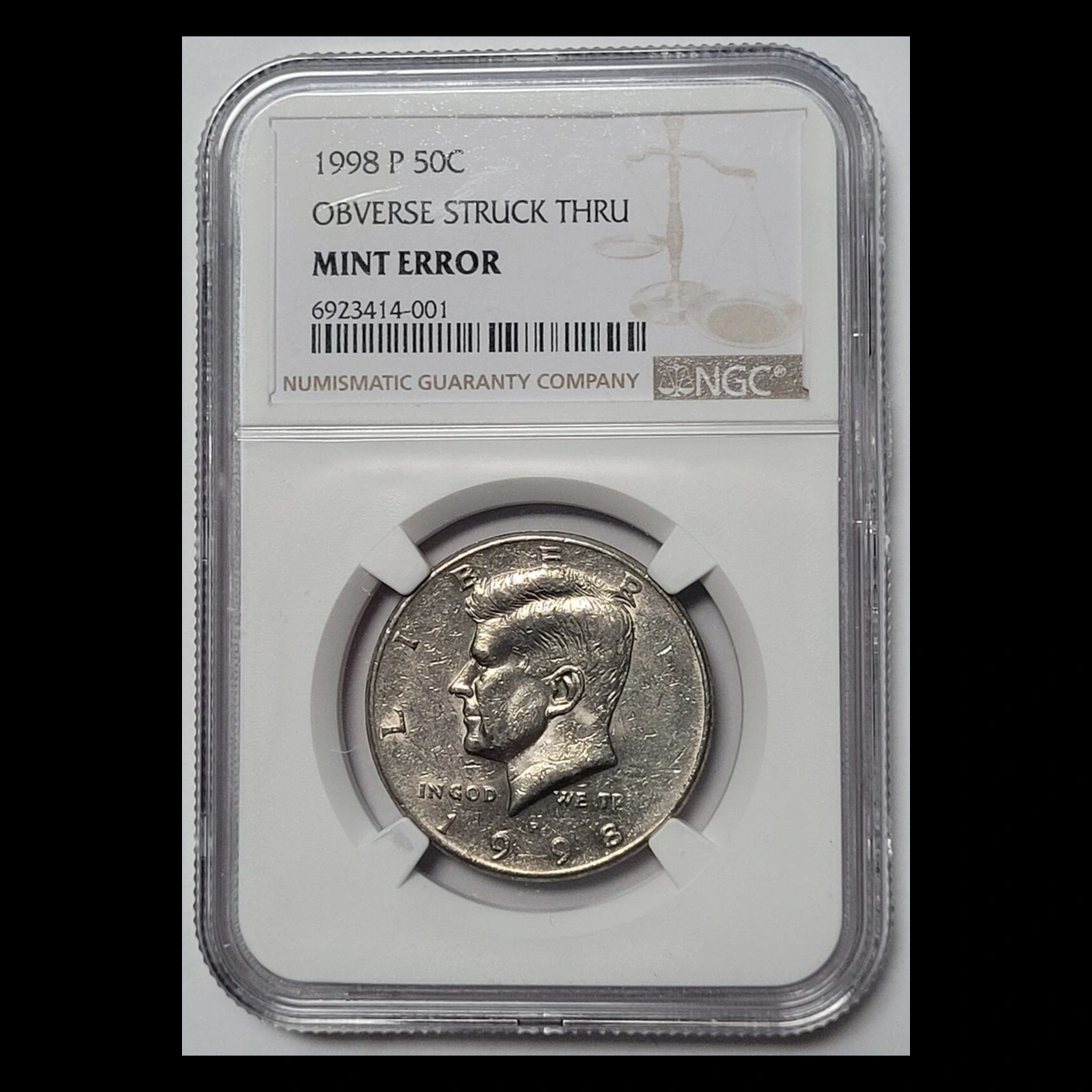
7. 1998 Half Dollar A depression or locally weak design: Reported strike-through Error
A Denver seller report concerns an obverse strike-through, while a Philadelphia report describes grease blockage. An obstruction can leave a shaped depression or stop fine detail from forming, depending on what was between die and blank.
How to Identify
Study the boundary between the affected patch and normal detail under side light. A later scrape can cut across finished letters and push metal to either side.
For the grease report, compare nearby features of similar height with a normal same-mint coin to exclude ordinary weakness or wear. The supplied descriptions do not establish every boundary or the exact obstructing material on both specimens.
What It’s Worth
Modest grease-blocked areas are estimated at $30–$120, while clear object impressions are estimated at $100–$400. The reported 1998 coins need their actual effects established before either range applies.
The 1992-D MS64 struck through a ridging fragment brought $336 in July 2021. Its identified object makes it more specific than a general seller claim of grease and does not establish an equal price.
8. 1998 Half Dollar Added contours at LIBERTY, the date, or portrait: Reported doubled die obverse Error
The Philadelphia doubling reports name areas of the obverse without providing a confirmed variety number. A true doubled die contains repeated shapes in the tool itself, which can recur on coins made from it.
How to Identify
The year reference specifically mentions L, I, and B in LIBERTY. Compare those letters, the date, and portrait edges with a normal 1998-P at equal enlargement.
Rounded extra contours or separated corners deserve closer investigation. Flat shelves from striking movement, rough worn-die edges, and reflected bright lines do not provide the same evidence.
A confirmed match should reproduce the same added shapes on another verified coin from the die. One thick letter alone does not establish a recognized variety.
What It’s Worth
Clearly identified unworn examples are estimated at $50–$250. No independently checked auction result or formal variety number accompanies the supplied 1998-P report.
Other Kennedy doubled dies show collector interest in the error class. Their rarity, grade, or special proof finish should not be transferred to this ordinary-strike report.
Conclusion
Use the surviving metal to explain a 1998 half before assigning an error name. A large clip can weigh like another denomination, while an embedded edge particle can leave the total weight within normal variation.
Layer boundaries, original rim transitions, and consistent repeated designs provide different kinds of evidence. Keep each mint, finish, and individual specimen attached to its own measurements and price record when deciding which comparison fits.