Rare 1976 Quarter Errors (List & Pictures)
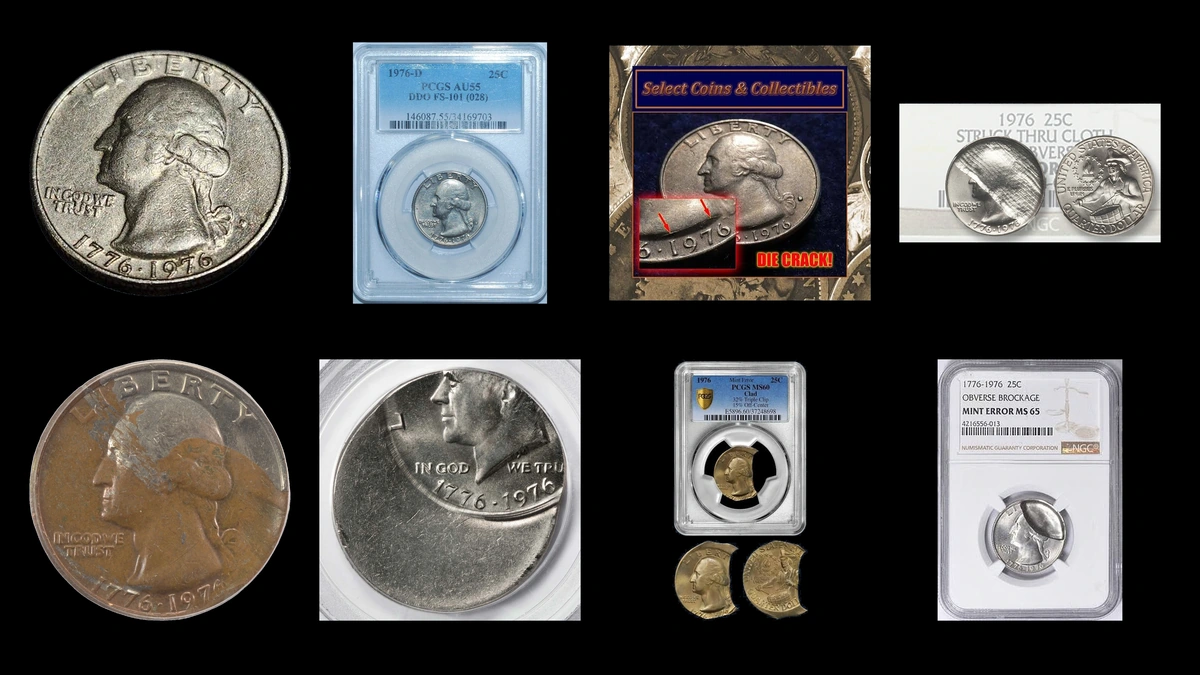
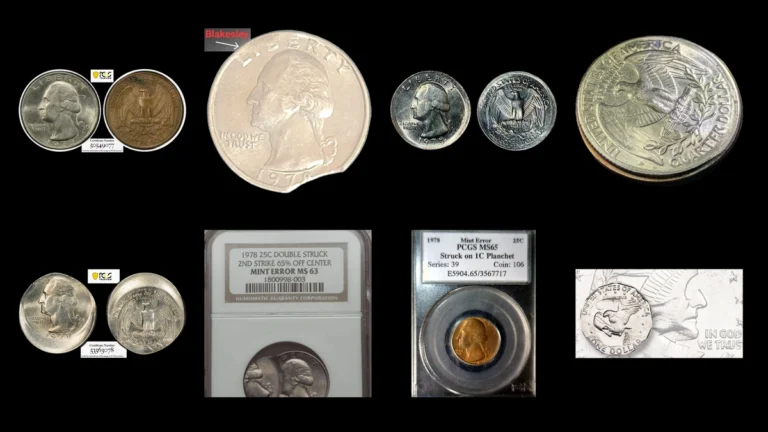
The 1776–1976 date identifies the Bicentennial design, but it does not make an ordinary quarter rare. Genuine 1976 quarter errors here have estimated values from $5–$20,000.
A Proof quarter struck over an already-made 1967 dime brought $15,000 in January 2021. Start with letters and surface marks, then compare the edge, repeated pictures, and the metal carrying the design.
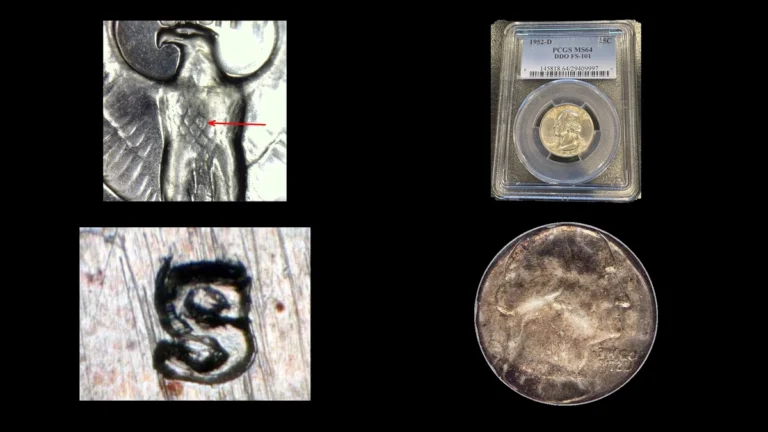
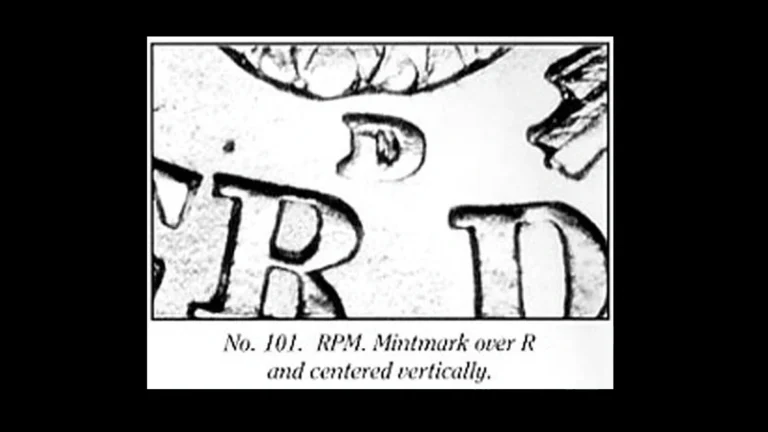
1. 1976 Quarter Another D Appears above the Letter: Repunched Mintmark Error
The Denver RPM-001 variety shows D over D toward the north. North means upward with Washington upright.
A repeat punch in a slightly changed position left part of the earlier letter on the stamping tool. Coins from that tool can share the same small feature.
How to Identify
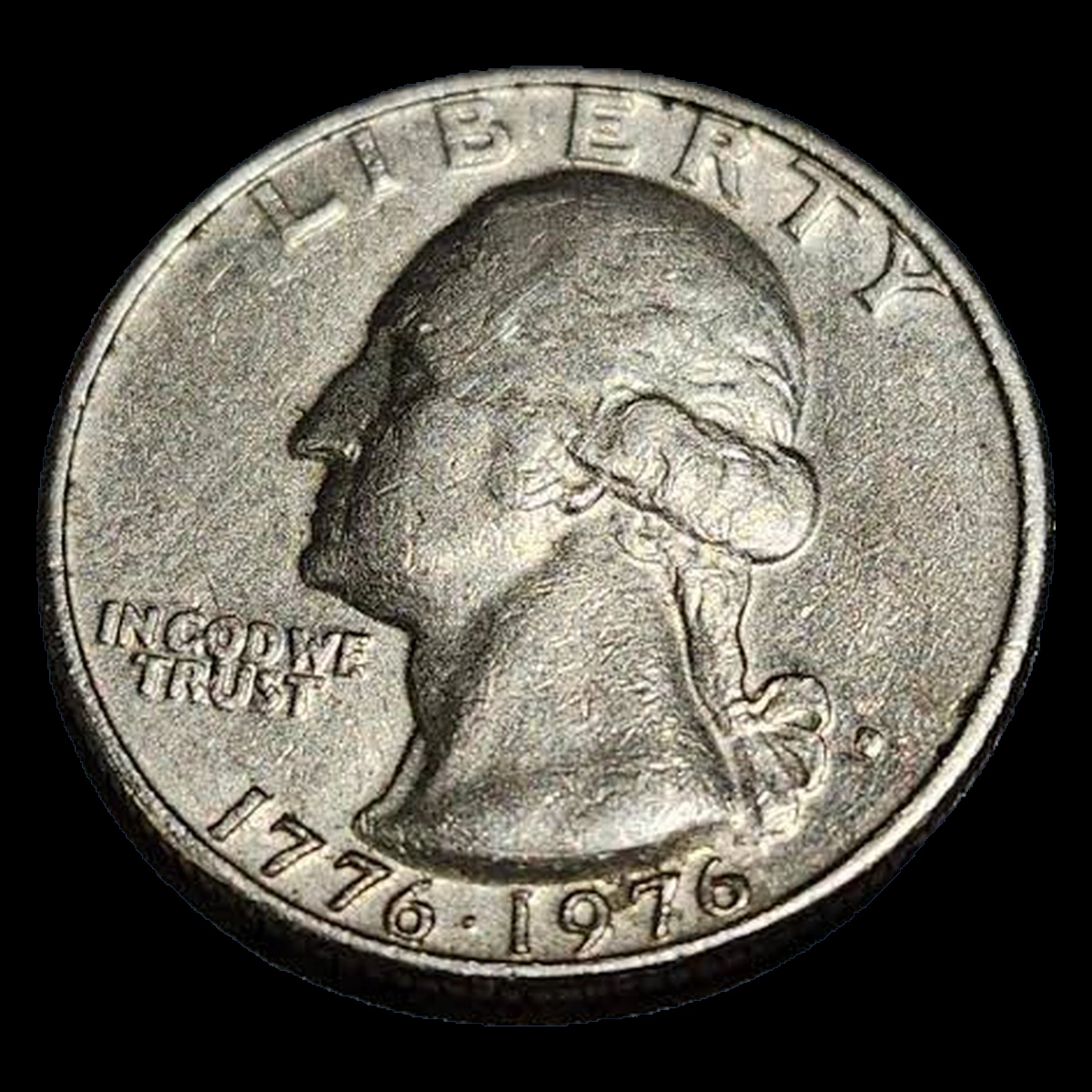
Trace the D beside the hair ribbon, then look above it for a curve or upright that fits another D. Keep the photograph upright when judging direction.
Compare with RPM-001 under different light angles. A shapeless bump, swollen edge, or low flat shelf does not establish the same punch pattern.
What It’s Worth
$15–$200 is the estimated range for identifiable examples. Clear upper-letter fragments on clean surfaces make this small feature easier to appreciate.
Ordinary mintmark thickness does not qualify for the same premium.
2. 1976 Quarter Split Lettering or Drummer Details: Doubled Die Error
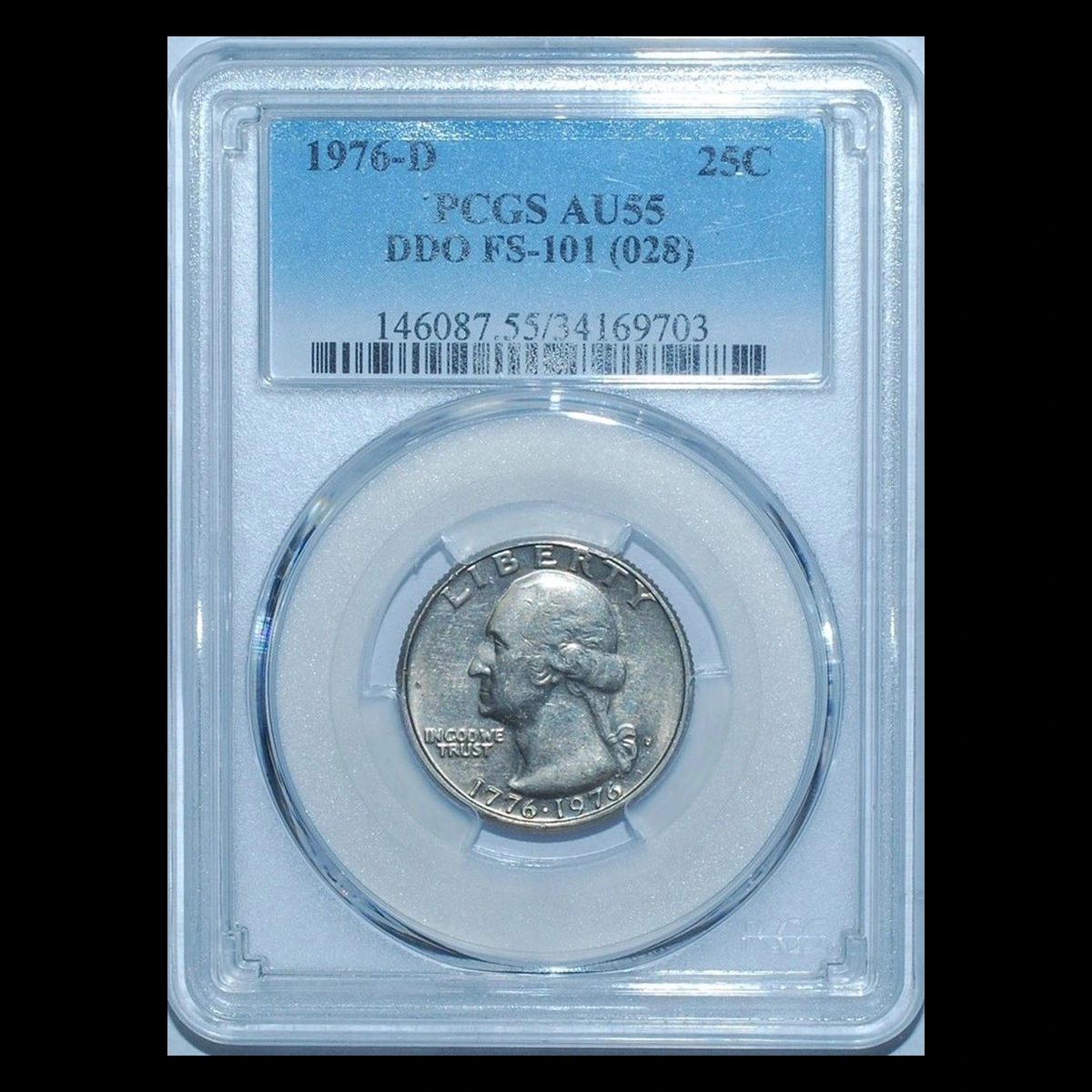
A doubled die has repeated design built into the tool. Denver FS-101 shows strong LIBERTY doubling, while FS-102 has closer separation.
Separate Denver back varieties affect lettering; the second also affects the drum and outer fingers. These are distinct patterns within the same broad category.
How to Identify
Wexler’s Denver photographs help compare the spacing in LIBERTY. FS-102 also has a raised diagonal line below RU in TRUST, which supports a lettering match rather than replacing it.
On the back, compare DOLLAR, the initials, and the relevant drum or finger details. A “six-finger” nickname is not an identification by itself.
San Francisco clad Proof DDO-001 affects the date. The separate 40% silver DDO-002 affects the motto, date, and LIBERTY, but its catalog does not specify Proof or ordinary finish.
What It’s Worth
$50–$3,500 is the estimated range for identified Denver front varieties. Subtler reverse or San Francisco patterns are estimated at $20–$500.
Match the exact pattern, metal, and condition before applying a price from another doubled-die variety.
3. 1976 Quarter A Ridge or Large Edge Mound: Die Cracks and Cuds Error
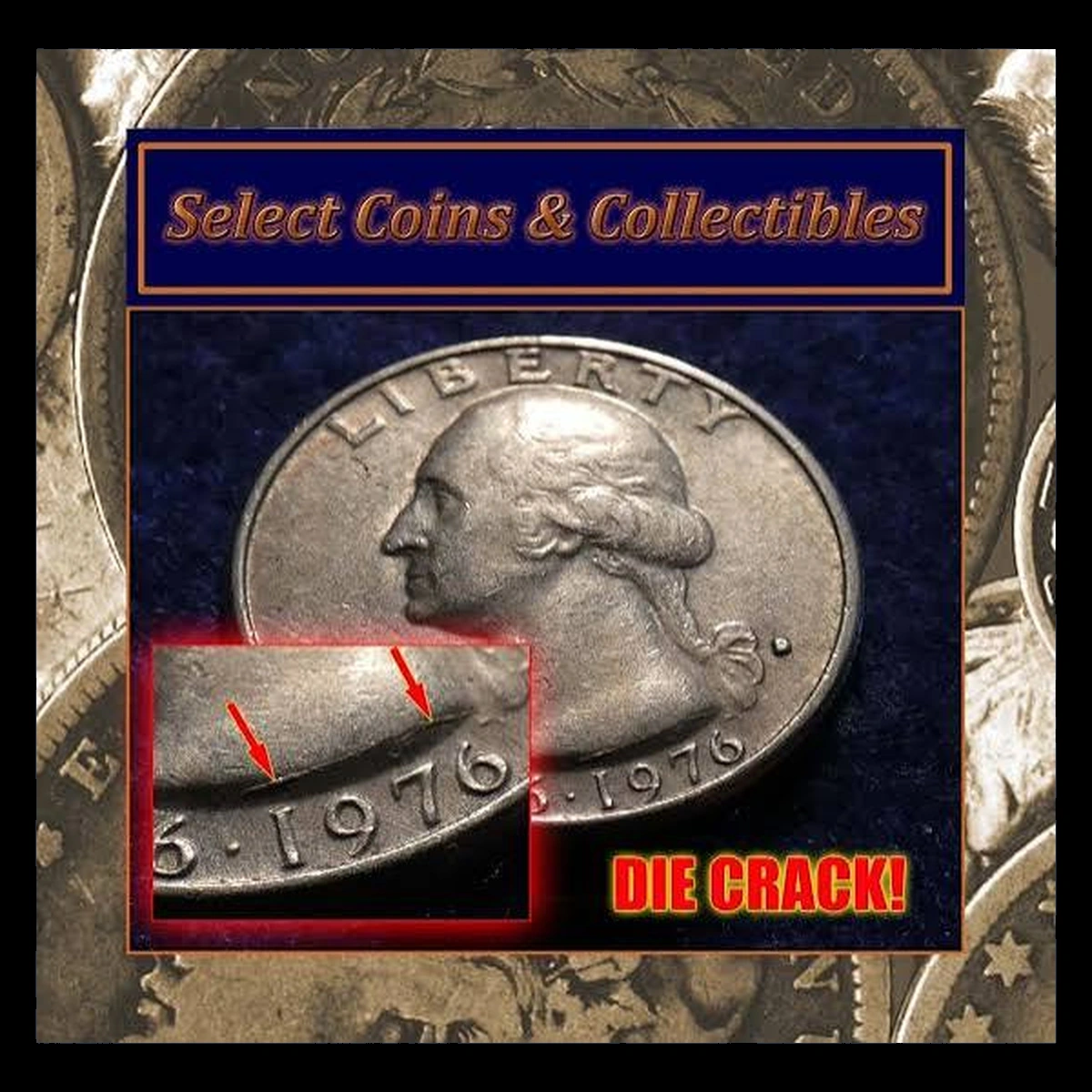
A crack in a tool leaves a raised line. A larger missing piece at the tool’s edge can leave a rim-connected mound called a cud.
Reports include a major Denver break, but exact positions must come from each specimen. A similar eagle-back quarter is not a location reference for the Bicentennial drummer design.
How to Identify
Check whether a line stands above the surface or cuts into it. A scratch may have a pushed-up lip beside its main groove.
For a cud, trace the mound to the rim and identify the normal design it replaces. Crushed finished letters can instead suggest later impact damage.
What It’s Worth
$5–$50 is the estimate for small recognizable cracks. Substantial identified rim breaks can range around $100–$2,500.
Size, readable identity, and surface preservation all affect the whole-coin comparison.
4. 1976 Quarter A Woven Texture Interrupts Washington: Struck Through Cloth Error
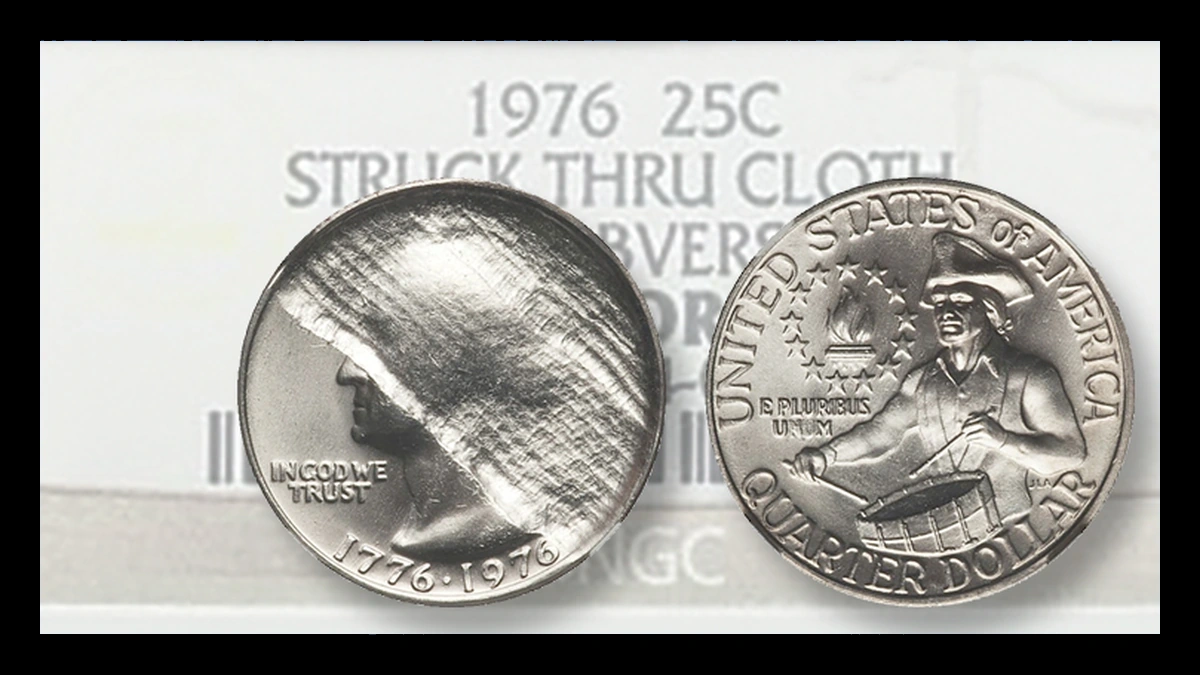
Fabric between the blank and tool can leave crossing thread impressions while blocking normal design. A Philadelphia example was graded NGC MS66 and described as struck through cloth on the front.
The exact position must come from that coin’s image. Random scratches do not form the same organized weave.
How to Identify
Follow several crossing threads with a magnifier. Check where the texture meets the normal portrait and letters.
Later rubbing can cut across finished details instead of interrupting their formation. Include the dual date in a wider view beside the texture close-up.
What It’s Worth
$250–$1,500 is the estimated range for identifiable cloth impressions. The MS66 coin sold for $881.25 in January 2017.
A clear original weave and attractive surfaces support stronger interest.
5. 1976 Quarter Both Faces Have Very Shallow Detail: Weak Strike Error
The cataloged Bicentennial example came from a 1975 mint set and was described as a die-adjustment strike. These quarters were made in both 1975 and 1976 with the 1776–1976 date.
Broad weak detail can show incomplete formation, but the label does not independently prove deliberate press testing.
How to Identify
Inspect sheltered spaces as well as Washington’s high points. Wear usually attacks exposed detail first, while weak pressure can leave other areas shallow too.
Compare both faces and check for polishing or scraping. A few isolated missing letters may have a local obstruction rather than a broadly weak strike.
What It’s Worth
$100–$600 is the estimated range for clearly identified broad weakness with original surfaces. Enough readable design must remain to establish the issue.
The 1975 set origin does not change the date on the coin or determine another weak quarter’s value.
6. 1976 Quarter The Drummer Side Is Copper: Missing Reverse Layer Error
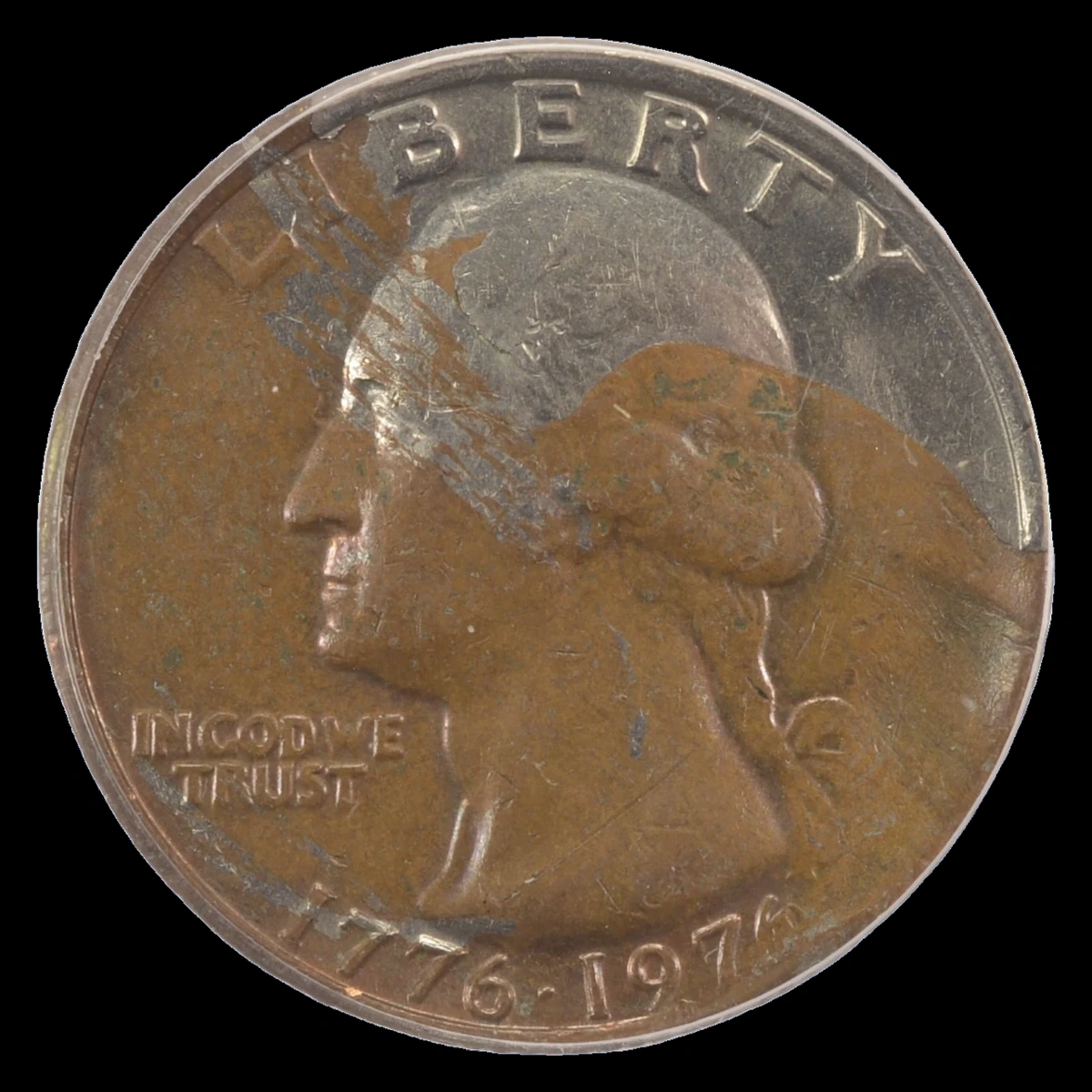
A missing pale outer sheet can expose the copper center on the back while leaving Washington silvery. The documented Philadelphia NGC MS63 example weighs 4.7 grams.
Ordinary clad quarters weigh 5.67 grams; normal 40% silver collector quarters weigh 5.75 grams. A silver version is not itself a missing-layer error.
How to Identify
Compare both faces under the same light and inspect where their layers meet at the edge. A stain can change color without removing metal.
Check the exposed design for grinding lines or chemical damage. Use the coin’s own weight alongside its visible layer structure.
What It’s Worth
$150–$700 is the estimated range for identifiable reverse-layer loss. The MS63 example sold for $423 in January 2017.
A separate NGC AU58 example brought $402.50 in January 2010. Its measurement must not be borrowed from the MS63 coin.
7. 1976 Quarter A Wide Border around the Drummer: Broadstrike Error
Metal can spread beyond its usual width when the collar, the surrounding ring, fails to restrain it. The complete design remains within the expanded outline.
Documented Philadelphia examples include NGC MS64 and MS65 coins. Their grades describe condition, not the amount of spread.
How to Identify
Trace LIBERTY, the dual date, and all outer drummer-side words. Missing intended design calls for an off-center comparison instead.
Compare a loose coin with the usual 24.3-millimeter width, then inspect for crushed details or hammer marks. Natural expansion needs more evidence than size alone.
What It’s Worth
$30–$250 is the estimated range for original Bicentennial broadstrikes. Obvious spread with clean complete lettering makes a stronger display.
A higher numerical grade does not automatically mean a more dramatic broadstrike.
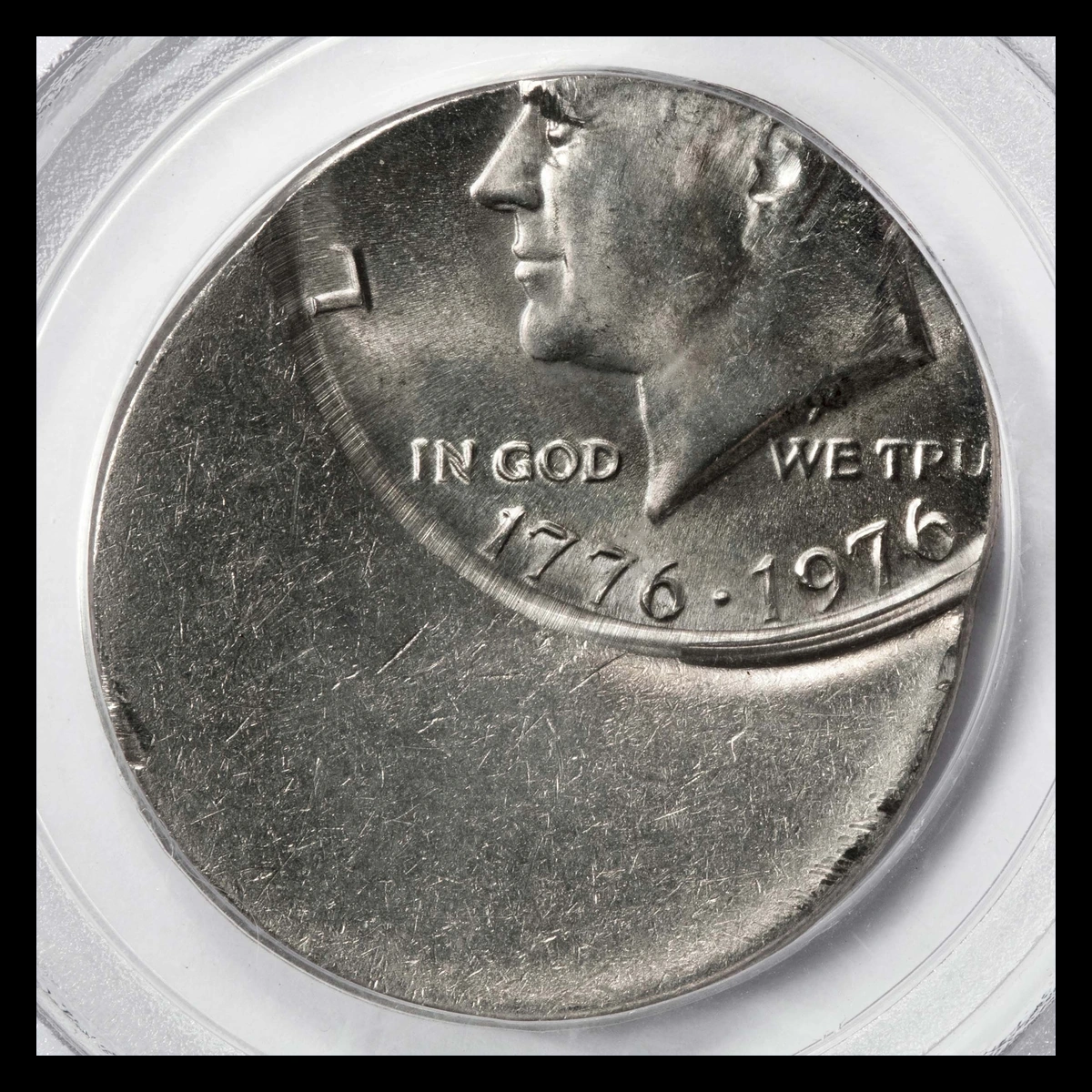
8. 1976 Quarter A Crescent Never Received the Picture: Off-Center Strike Error
Separate Philadelphia examples were struck 10% and 15% off center. Part of each blank sat outside the tools, leaving plain metal beside incomplete designs.
The missing picture differs from an expanded border that still holds every design element.
How to Identify
Check the struck boundary on both faces and read the surviving dual date. A shift only on Washington’s face may have a different alignment cause.
Inspect the crescent for original texture rather than grinding or erased detail. An off-center strike does not itself remove metal, so a clad example may still weigh near normal.
What It’s Worth
$40–$350 is the estimated range for comparable off-center quarters. A PCGS MS64 10% example sold for $114 in March 2023.
Clear identity and an undamaged blank area can matter more than a slightly larger shift.
9. 1976 Quarter Gaps Combined with an Unusual Strike: Clipped Blank Error
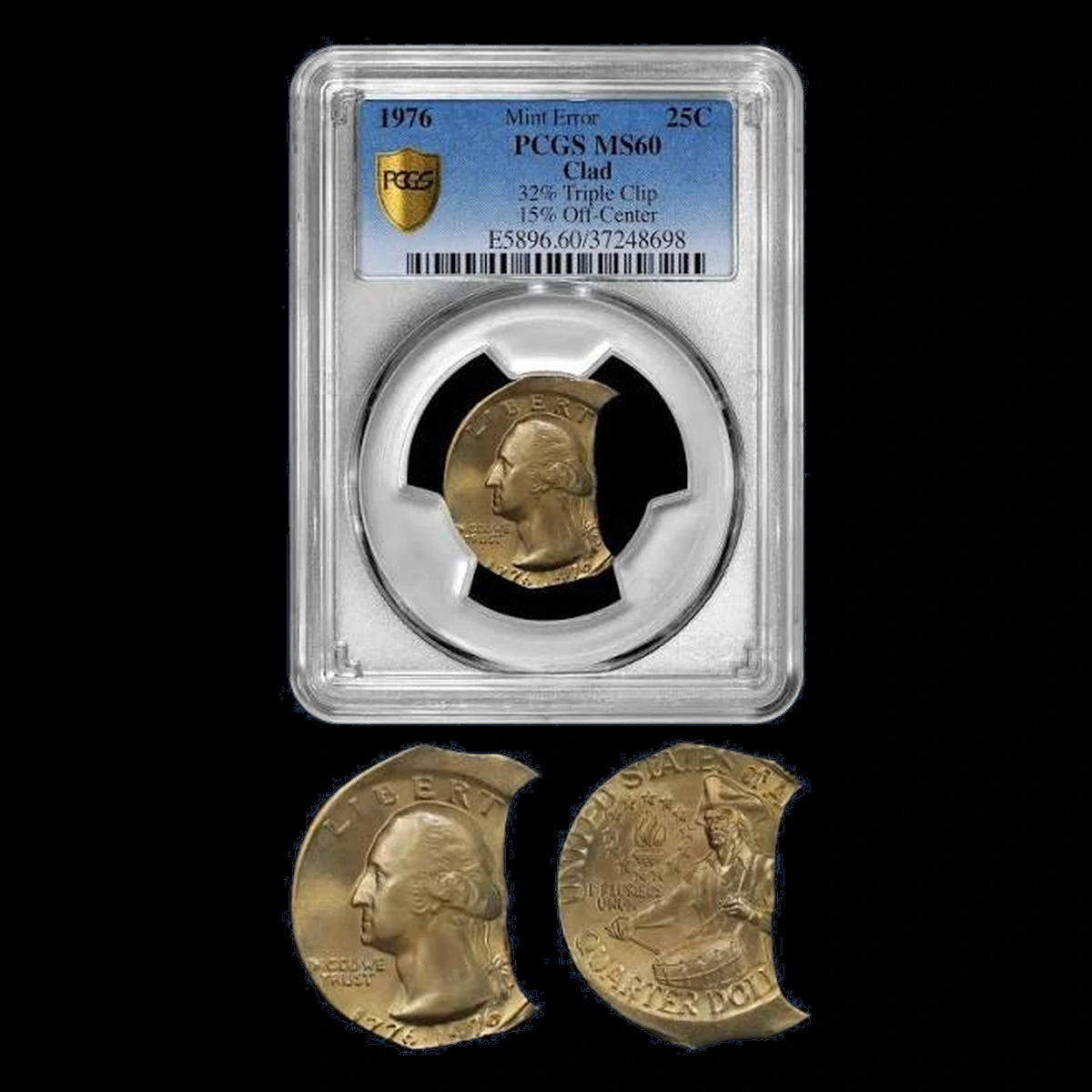
Philadelphia examples include one curved clip, two curved clips, and a separate double clip with a stepped partial-collar edge. These are different incomplete blanks.
Denver examples include an unspecified clip, a 20% straight clip with broadstriking, and a curved clip struck 25% off center.
How to Identify
Inspect each gap where the rim meets the missing metal. Natural flow differs from sawing through completed letters or bending the edge with cutters.
Then check the added strike feature separately. A partial collar leaves a step, a broadstrike retains complete design within expanded metal, and an off-center strike loses design beyond the blank.
What It’s Worth
$25–$800 is the estimated range across these clips and combinations. Large clear gaps or understandable combinations may attract stronger interest.
Value each complete coin together rather than adding separate maximum prices for every feature.
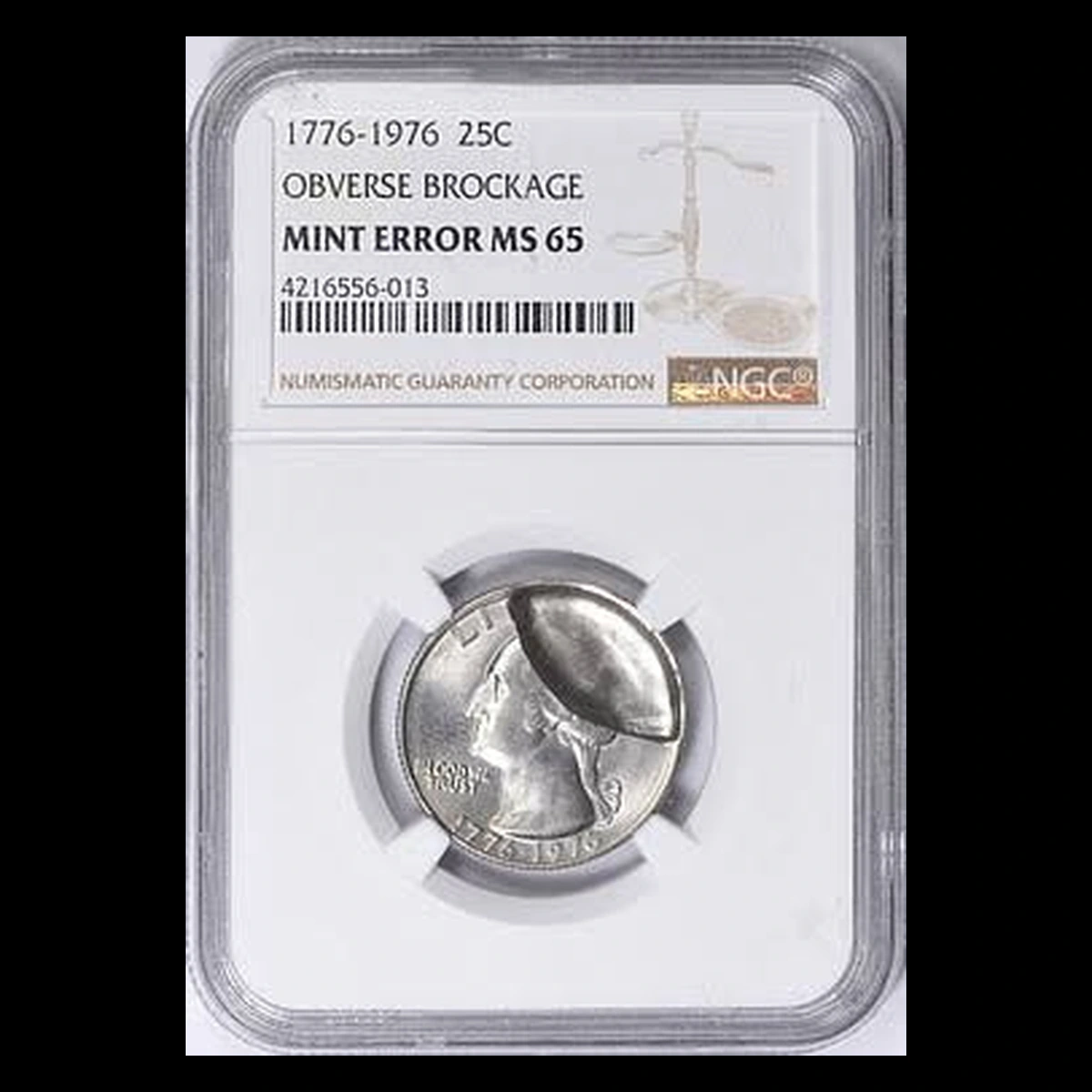
10. 1976 Quarter A Backward Front Image and Stepped Edge: Brockage with Partial Collar Error
Another struck coin pressed its raised design into the front of a Philadelphia Bicentennial quarter. The transferred image is reversed and sunken, a feature called brockage.
The NGC MS62 example also has a partial-collar step around the edge. Both features belong to the same coin.
How to Identify
Read any transferred letters backward and use side light to check their depth. A vague flattened patch gives less evidence than recognizable sunken design.
Follow the physical edge step separately. A normal copper stripe is a color boundary, not proof of a partial collar.
What It’s Worth
$100–$1,000 is the estimated range for an identifiable combination. The clarity of the backward image and preservation of the edge affect appeal.
A grade alone does not describe the size or visibility of either feature.
11. 1976 Quarter The Drummer Tilts after a Flip: Rotated Silver Proof Error
A recorded 1976-S 40% silver Proof has abnormal front-to-back tool alignment. Its catalog does not give the angle.
Proof means a specially made collector coin. This specimen is separate from the silver double strike with 180-degree alignment discussed next.
How to Identify
Hold Washington upright and turn the coin top to bottom without twisting. The drummer should be upright on a normally aligned quarter.
Repeat against a straight guide and photograph the consistent tilt. Keep a certified coin in its holder and confirm its silver Proof identity.
What It’s Worth
$100–$500 is the estimated range for clearly measured comparable examples. The NGC PR61 Cameo coin sold for $192 in December 2024.
Cameo describes frosted design against reflective backgrounds, not another mint error. Surface condition and the actual angle still matter.
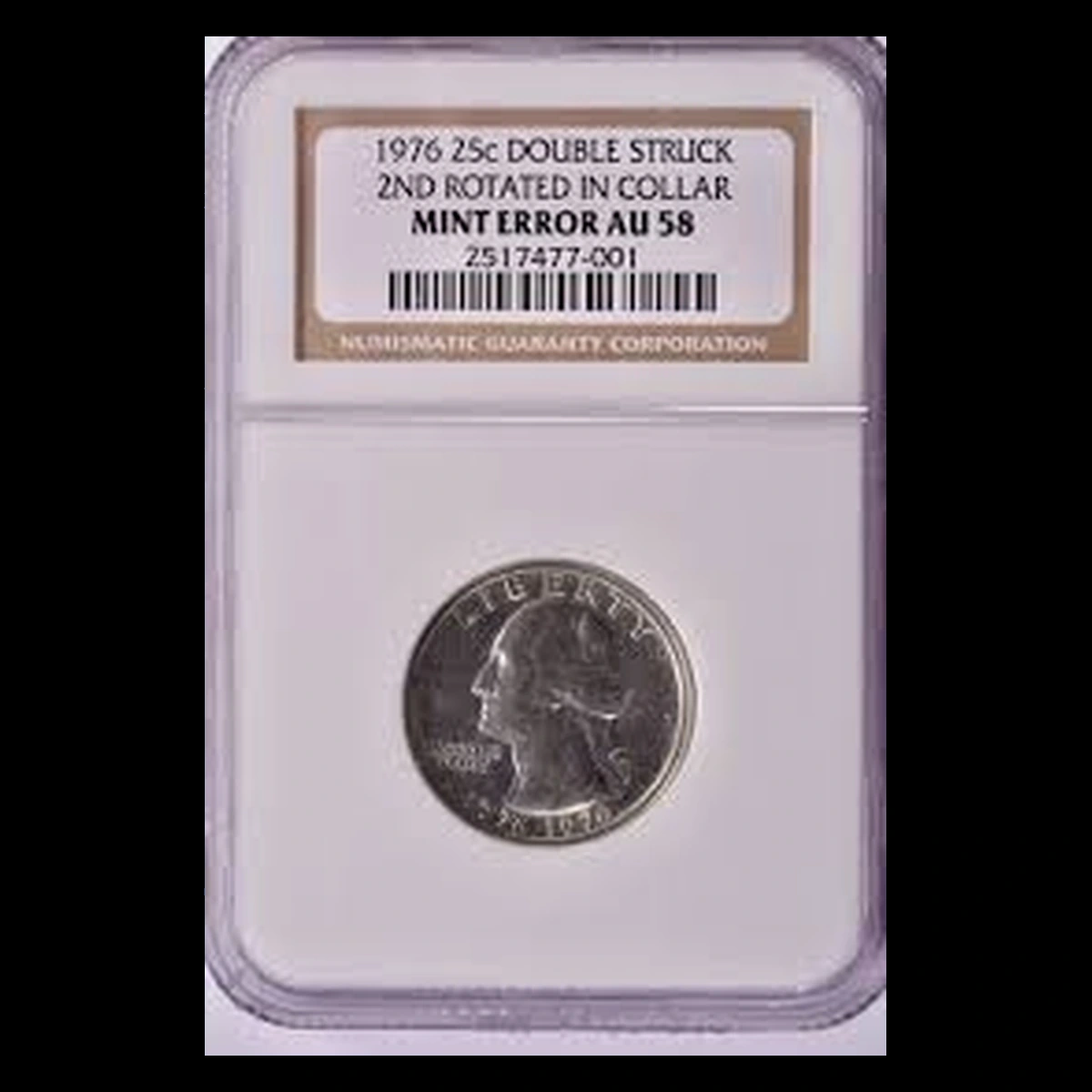
12. 1976 Quarter Overlapping Pictures at Different Angles: Repeated Strikes Error
A silver San Francisco Proof received a second impression about 135 degrees counterclockwise from the first, within the collar. It also has about 180-degree front-to-back alignment.
Those angles describe different relationships. Separate Philadelphia examples include a broadstruck multiple strike and a 95% off-center second strike with one face blocked.
How to Identify
On the Proof, map the two pictures on one face before measuring their rotation. Test the relationship between front and back separately.
For the broadstruck multiple strike, follow connected repeated details rather than its later counting-wheel mark. On the 95% example, locate the small second impression and keep scratches separate from the strike.
The blocked face of that 95% coin is not specified in the supplied description.
What It’s Worth
$90–$3,000 is the estimated range across these combinations. The silver PCGS PR64 double strike sold for $1,920 in July 2021.
The broadstruck multiple strike with a wheel mark brought $439.20 in June 2026. The scratched 95% second-strike coin sold for $99 in March 2023.
These are separate coins with different metal, patterns, and condition problems.
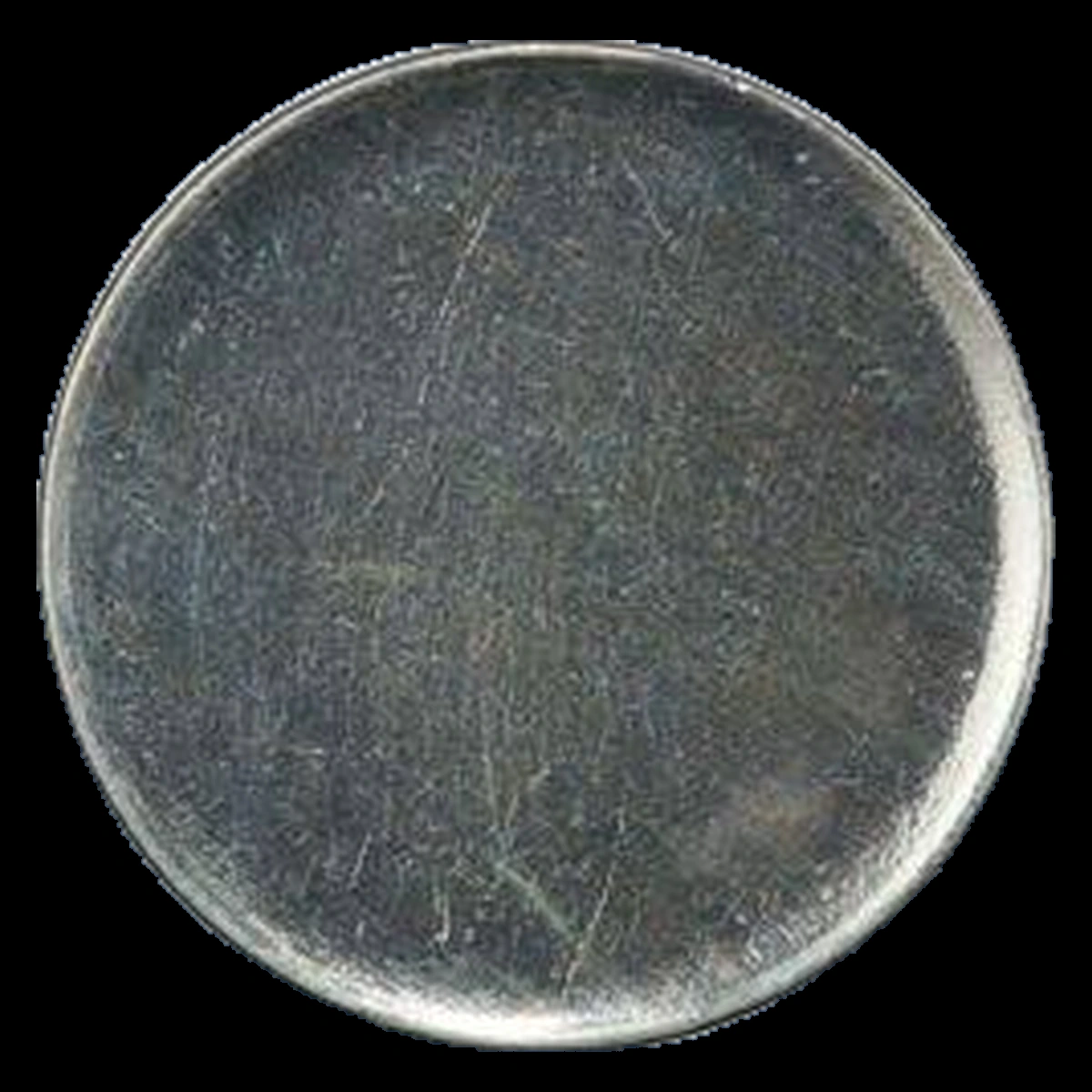
13. 1976 Quarter A Plain Silver Disk with a Prepared Rim: Unstruck Blank Error
The attributed Bicentennial silver blank has no portrait, drummer, or date. Its Type Two label means the rim was prepared before striking, not a second reverse design.
The year is parenthesized because it cannot be read from the metal. The issue attribution depends on professional identification and supporting documentation.
How to Identify
Confirm that the documentation names a silver quarter blank rather than a larger Bicentennial denomination. Inspect the plain surfaces and raised rim without opening a certified holder.
For a loose piece, the 5.75-gram and roughly 24.3-millimeter silver-quarter standards support size and metal checks. They cannot establish the issue’s year alone.
Grinding a finished coin smooth may leave abrasive tracks or traces of removed design.
What It’s Worth
$800–$2,500 is the estimated range for a comparable authenticated silver blank with reliable attribution. The PCGS PR63 example sold for $1,920 in July 2022.
An undocumented plain disk does not inherit that identity or value from diameter alone.
14. 1976 Quarter The Drummer Design Is Shared by Two Pieces: Mated Pair Error
Two blanks were struck together in the documented pair. The smaller piece blocked much of the quarter’s reverse and received much of the drummer design instead.
The quarter’s Washington side is fully struck. The smaller blank lay nearly centered against the back, but its proposed dime identity was not established.
How to Identify
Compare the small piece’s outline with the blocked area without pressing the pieces together. Follow how the reverse design is divided between them.
A separate damaged disk placed beside a quarter does not prove a pair. The complementary boundaries and design need to explain one shared event.
What It’s Worth
$1,500–$5,000 is the estimated range for a comparable identified complete pair. The NGC pair sold for $2,880 total in March 2023.
That amount covers both pieces together. Losing one removes part of the evidence behind the pairing.
15. 1976 Quarter The Quarter Design Crowds Smaller Metal: Wrong Blank Error
Known Bicentennial quarters were struck on cent, nickel, and dime blanks. The different metals and sizes must be identified separately.
A Denver cent-blank coin has scalp peeling and weighs 3.03 grams. A separate Philadelphia dime-blank coin has a narrow hair strike-through, not the same defect.
How to Identify
Start with recognizable quarter details meeting a natural small edge. On the Philadelphia dime example, almost all of QUARTER DOLLAR missed the metal.
Normal starting standards are 3.11 grams and 19.05 millimeters for a cent, five grams and 21.21 millimeters for a nickel, and 2.268 grams and 17.91 millimeters for a clad dime. Striking can change the final width.
Inspect for copper cent metal, uniform nickel alloy, or layered dime metal. Recorded Denver weights of 3.03, 4.9, and 2.2 grams belong to separate cent-, nickel-, and dime-blank specimens.
A reported San Francisco double-struck dime-blank Proof also requires visibly displaced repeated design. Normal Proof production alone is not that error.
What It’s Worth
$800–$8,000 is the estimated range across identified blanks and finishes. A Philadelphia nickel-blank MS62 sold for $1,020 in August 2024, and a dime-blank MS64 brought $2,520 that month.
The Denver cent-blank MS65 Brown coin sold for $3,840 in January 2018. A San Francisco PR68 Deep Cameo dime-blank example was offered at $6,000, an asking price.
Exceptional metal, finish, and preservation comparisons should not be applied to an ordinary small-looking coin.
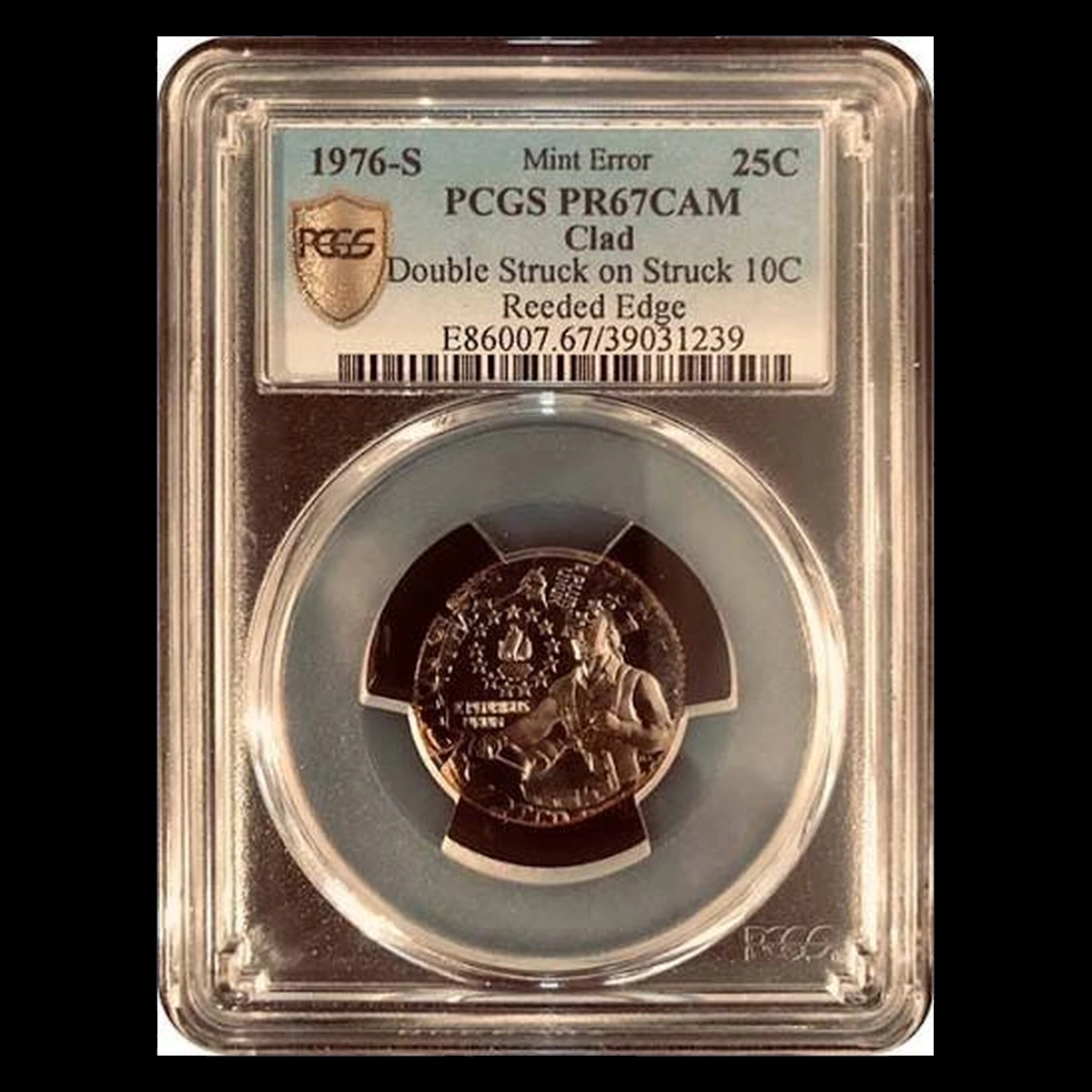
16. 1976 Quarter Roosevelt Survives beneath Washington: Quarter over a Finished Dime Error
An already-made dime can receive a later quarter design. Surviving Roosevelt details separate this event from striking an unused dime blank.
The San Francisco Proof over a 1967 dime is nearly egg-shaped, with faint earlier date digits in Washington’s hair. A separate Philadelphia quarter over a 1976 dime has the new design about 90 degrees clockwise from the old one.
How to Identify
On the San Francisco coin, connect the faint 1967 digits with the upside-down Roosevelt outline and surviving dime lettering. Random marks cannot establish an earlier design.
The quarter date and S remain clear on that specimen. Its collar contact near 5 o’clock is another feature, not proof of overstriking by itself.
Keep the Philadelphia coin’s 1976 host date and quarter-turn relationship separate. Both require actual dime details beneath the quarter impression.
What It’s Worth
$6,000–$20,000 is the estimated range for identified quarter-over-dime errors of comparable interest. The NGC PR67 over a 1967 dime sold for $15,000 in January 2021.
Readable earlier details, dates, and well-preserved surfaces make the unusual sequence easier to demonstrate.
Conclusion
The drummer reverse and dual date identify the design, while the unusual feature explains the error. A missing layer, a blank with no design, and a quarter over an already-struck dime leave very different evidence.
Keep each coin’s metal, measurements, and strike sequence together. A pair price covers two related pieces, and a high-grade Proof sale needs a closer comparison than an ordinary circulation coin.