Rare 1991 Quarter Errors (List & Pictures)
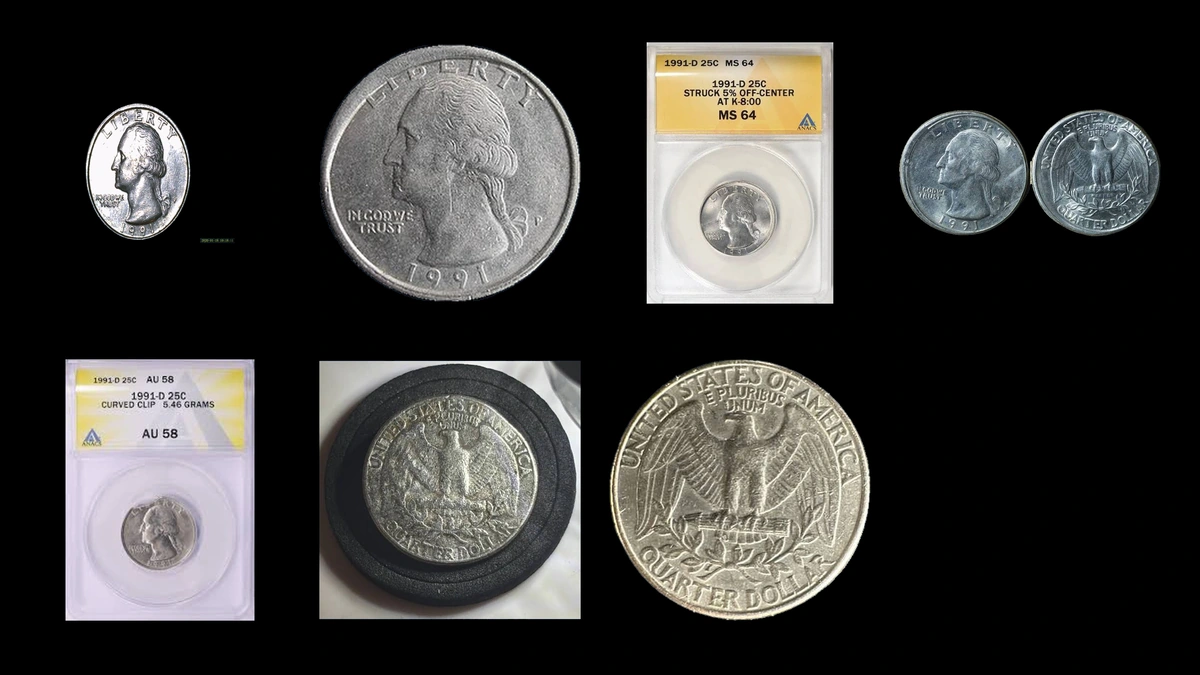
A 1991-P quarter with a rotated reverse sold for $94 in December 2025, a useful recorded result among many unpriced reports. The 1991 quarter errors below have working ranges from $2–$500, depending on the defect and condition.
Start with the position of each design, then examine the outline, metal, and smaller details. Regular 1991 quarters, including San Francisco Proofs, are copper-nickel clad coins weighing 5.67 grams and measuring about 24.3 millimeters across.
1. 1991 Quarter An Uneven Front Border: Misaligned Die Error
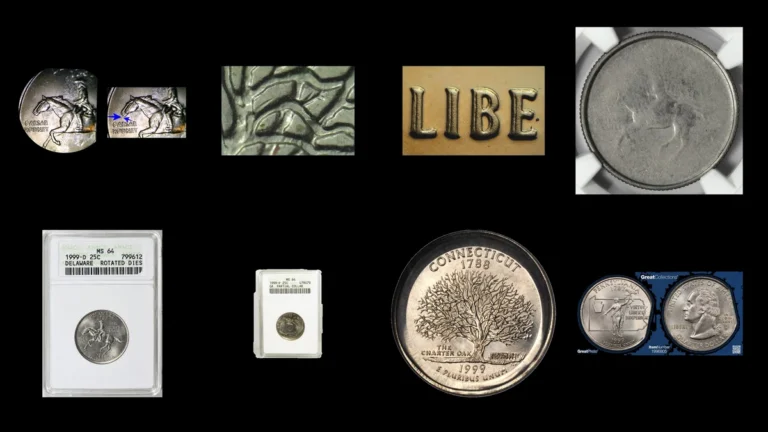
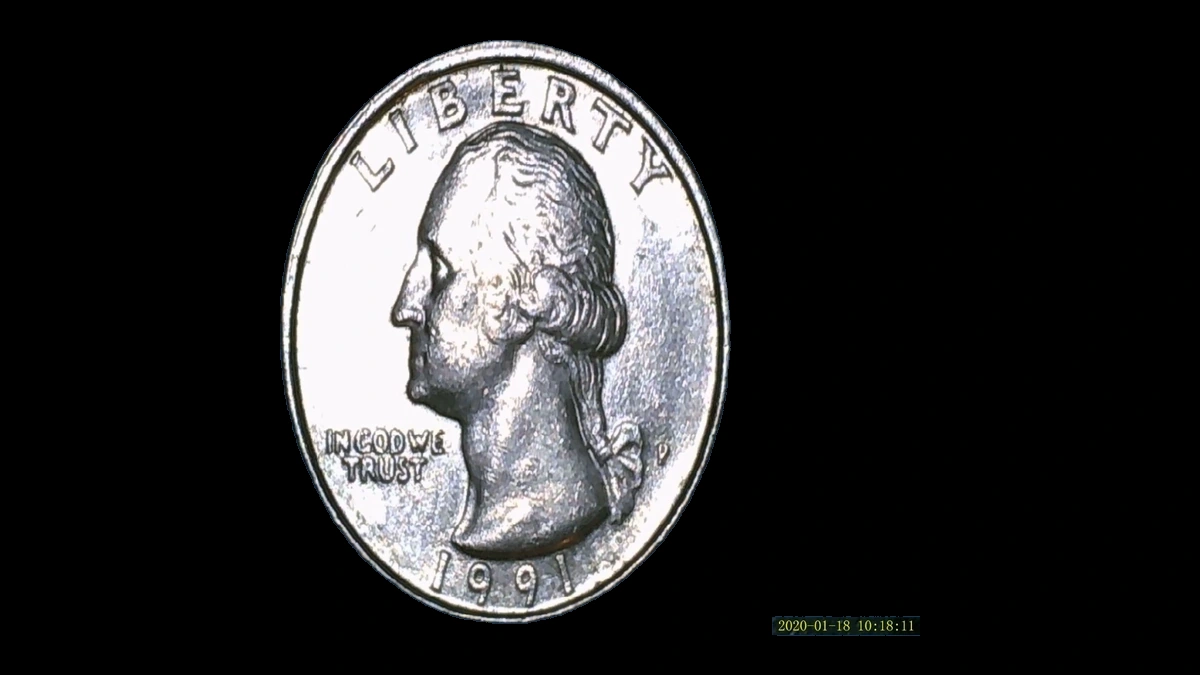
On the reported 1991-P example, LIBERTY sits unevenly within the front border while the eagle side remains centered. One die, the steel tool carrying the design, was displaced sideways relative to the coin.
How to Identify
Photograph both faces straight on and compare the space between the lettering and edge around the entire circle. A tilted camera can make a normal border appear uneven.
A dent affects a local area of the rim; a misaligned die changes the position of an entire face. This is also different from a reverse that is rotated relative to the front.
What It’s Worth
$2–$75 is a reasonable estimate for a confirmed example, with a barely displaced design near the lower end. The supplied 1991-P report does not include a completed sale.
2. 1991 Quarter The Eagle Turns the Wrong Way: Rotated Die Error
Check the eagle’s direction before judging whether either design is off center. A rotated die can leave both faces neatly centered but change their alignment when the coin is flipped.
How to Identify
Hold Washington upright and turn the coin over from top to bottom around a horizontal axis. The eagle should then be upright too.
Keep that axis steady and make sure the coin has not moved inside its holder. The documented 1991-P example has no supplied rotation angle, so its sale cannot establish the price of a specific 90-degree or 180-degree error.
What It’s Worth
$20–$250 covers a practical range for authenticated rotations of differing size and condition. A 1991-P graded NGC AU58, indicating slight wear, sold for $94 on December 22, 2025.
3. 1991 Quarter A Smooth Crescent Replaces LIBERTY: Die Attrition Error
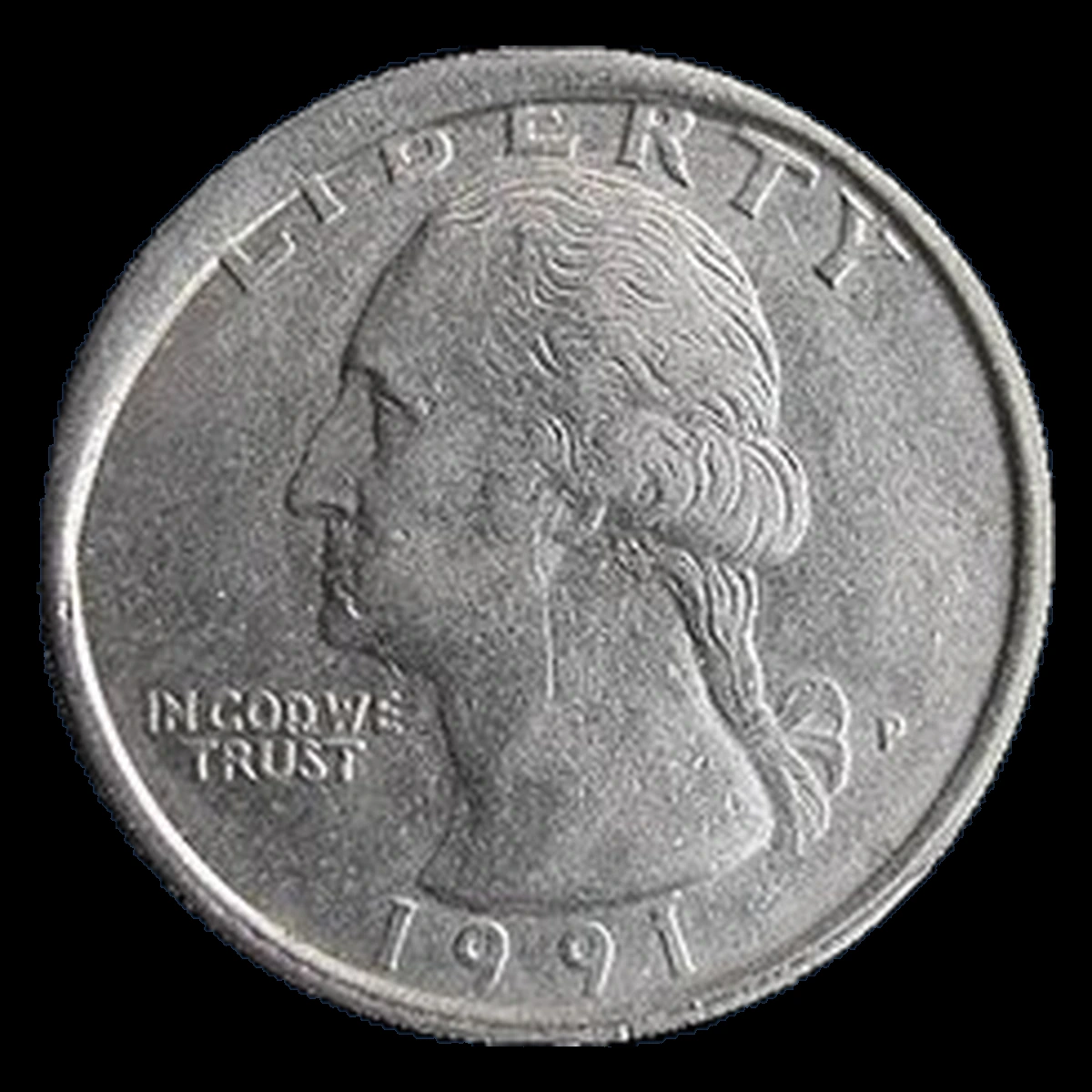
A smooth area at the upper left can remove part of LIBERTY even when the remaining design looks centered. Two examined 1991-P quarters show this unusual effect from different pairs of dies.
When a displaced die repeatedly strikes the entrance to the collar, its edge can wear away. Returning the die to its proper position does not restore the lost design, as the supplied Coin World explanation of die attrition describes.
How to Identify
Examine where the smooth crescent meets the surviving letters and field. Grinding a finished coin removes metal from the coin itself and can leave scratches or altered contours.
The two reported quarters should not be presented as early and late stages of one die’s wear. Their different die pairs matter when comparing the photographs.
What It’s Worth
$50–$500 is an estimated range, not a documented sale range for these two coins. Clear evidence of the cause and the amount of design lost would be central to an appraisal.
4. 1991 Quarter A Blank Crescent Beside the Design: Off-Center Strike Error
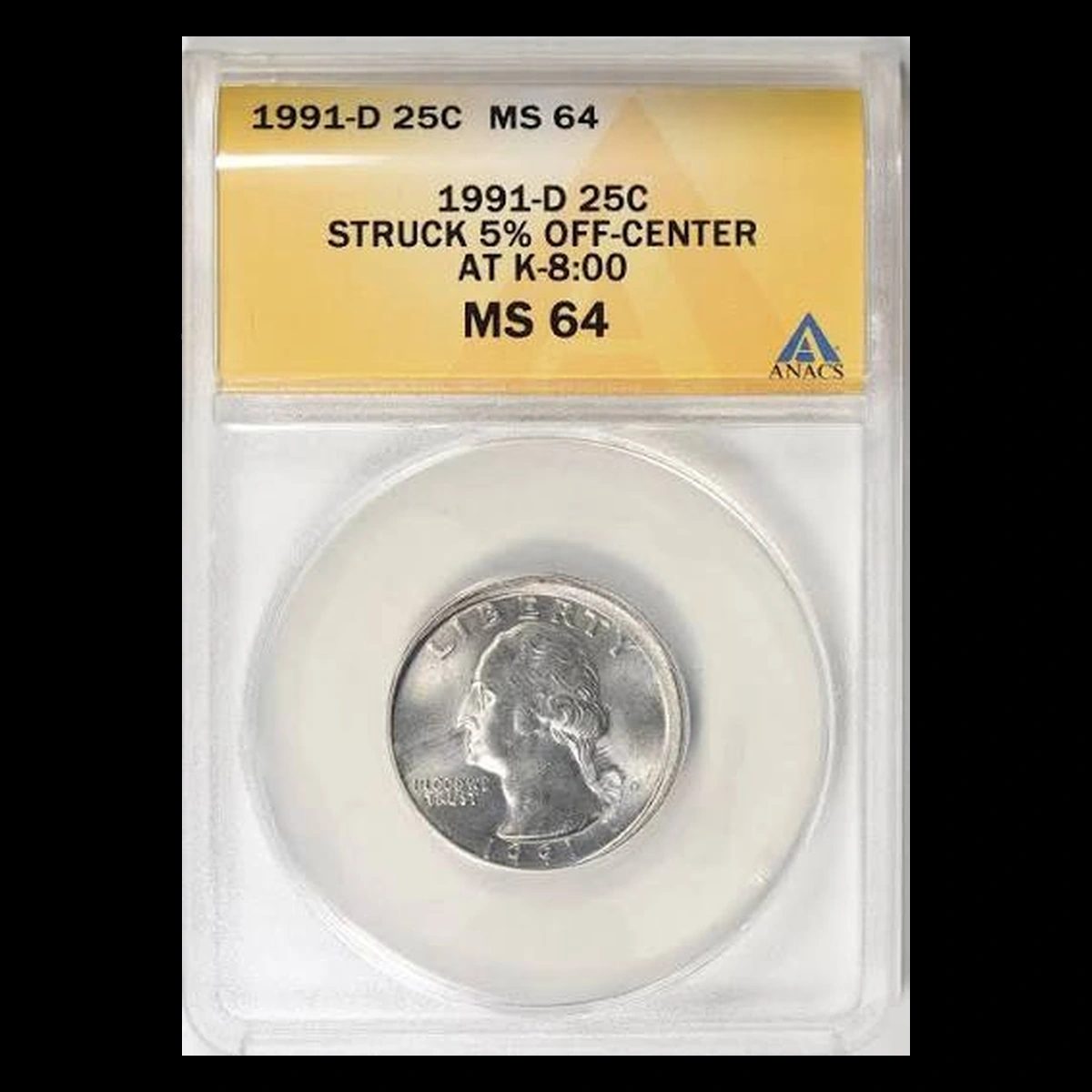
An off-center quarter has metal left outside the struck design. The documented 1991-P is displaced about 20% toward 1 o’clock, leaving a conspicuous unstruck area.
The blank was not properly positioned between the dies when they struck. Unlike a clip, this error does not begin with a piece missing from the blank.
How to Identify
Both faces should show the consequences of the displaced strike. Check whether the date and P mintmark, both on the Washington side, remain readable.
A front design that shifts while the reverse remains centered points instead to a misaligned die. The untouched crescent is especially useful for separating these appearances.
What It’s Worth
$25–$300 is an estimated individual-coin range. An ANACS MS64 example sold with a 1994-P off-center quarter for $71 in January 2022; that amount paid for both coins, not the 1991-P alone.
5. 1991 Quarter A Complete Design on a Wider Coin: Broadstrike Error
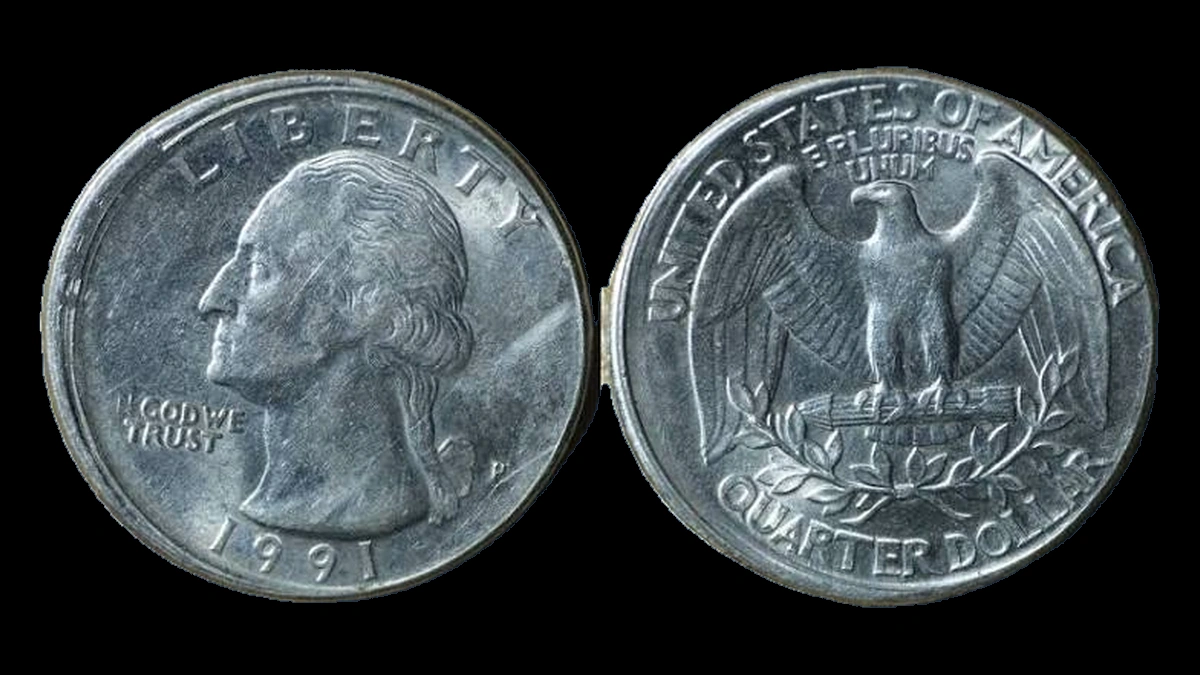
When the collar fails to contain the blank, metal can spread outward during the strike. A broadstruck quarter can retain both complete designs while developing an unusually wide, irregular border.
How to Identify
Look for the full lettering and design inside an expanded outline. Missing design beyond the edge suggests an off-center strike instead.
A smooth edge alone does not prove a broadstrike because wear or later alteration can remove the grooves. The supplied 1991 report gives neither a specific mint nor a measured diameter.
What It’s Worth
$40–$200 is a working estimate for this category. For context, a 1995-D graded MS62 sold for $63 in March 2023, but that is a different-year comparison.
6. 1991 Quarter A Curved Bite in the Edge: Clipped Planchet Error
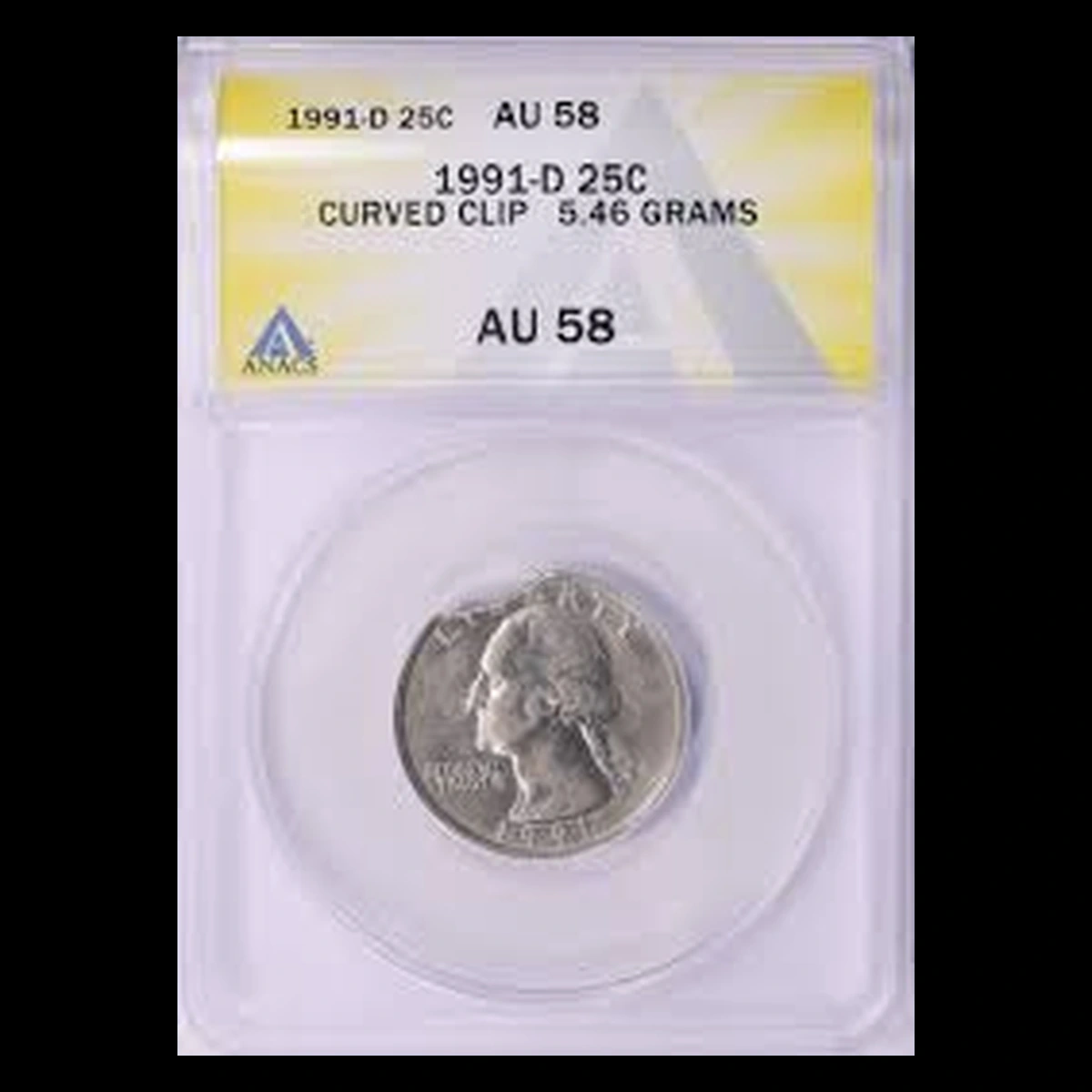
A curved gap may originate when the blanking press overlaps a hole already punched in the metal strip. The resulting incomplete blank can pass through the later production steps and receive the quarter design.
How to Identify
Follow the curve to both endpoints and inspect how the struck rim approaches them. Weakness opposite the clip can support the diagnosis, but it is not required on every genuine coin.
The supplied Rippere examples are separate coins: a 1991-P weighing 5.36 grams and a 1991-D weighing 5.46 grams. A loss of surface cladding would change a face rather than create this curved outline.
What It’s Worth
$10–$100 is an estimated range for ordinary authenticated clips, with size and condition affecting the result. Neither supplied 1991 example has a sale price; a 1995-P clip with an additional unfinished cut brought $159 in July 2022 and is not a direct comparison.
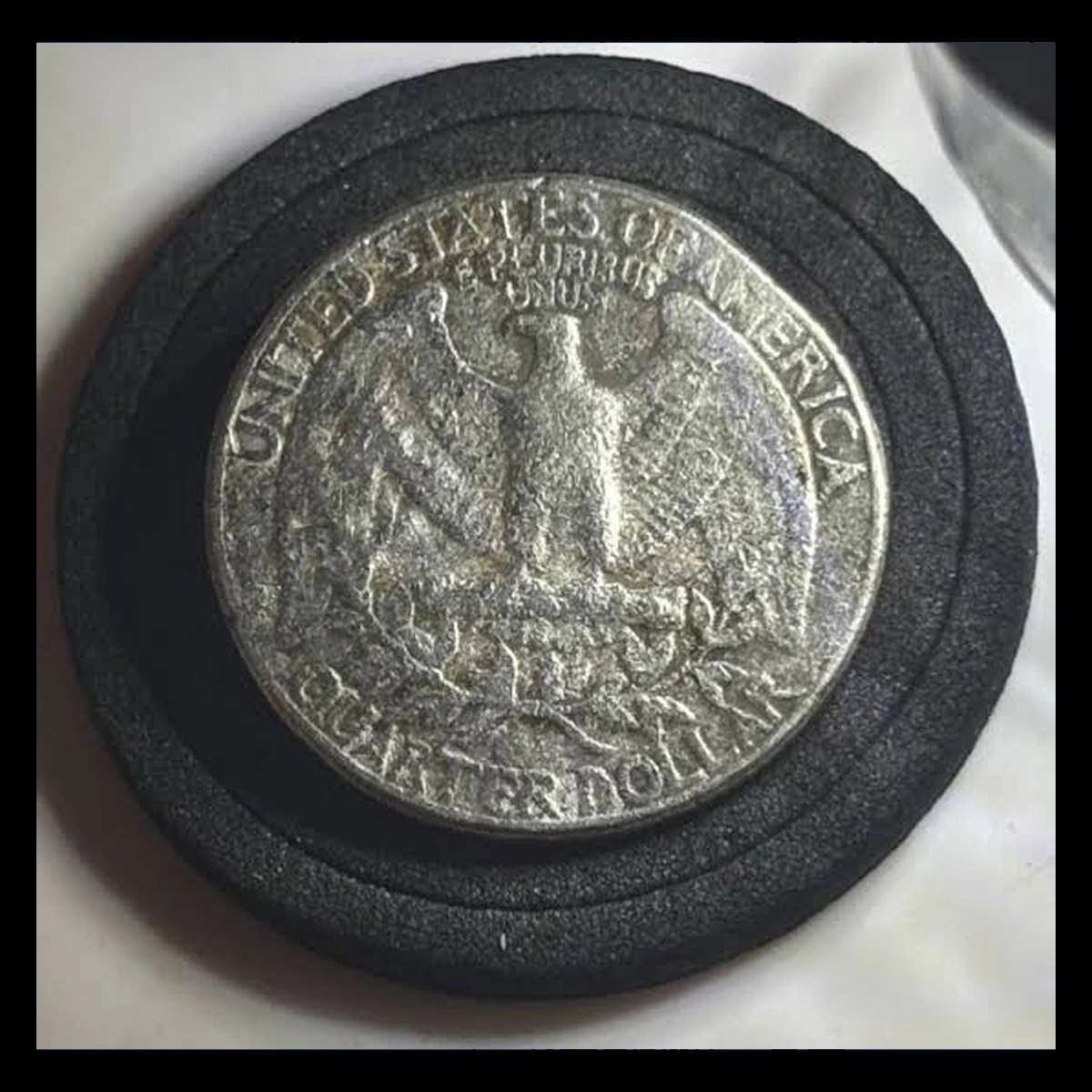
7. 1991 Quarter A Flap or Peeling Patch: Lamination Error
A local split within the coin’s metal can leave a lifting flap, rough patch, or missing fragment. This lamination category concerns a localized separation rather than the loss of an entire outer clad layer.
How to Identify
Study whether design details continue across the damaged area or onto an attached flap. That relationship can help establish whether the separation happened before or after striking.
Do not lift the metal to investigate it. An attached flap can leave the coin close to its normal weight, and the supplied report does not establish a particular mint or location on the design.
What It’s Worth
$10–$150 is a broad estimate, from modest peeling to an obvious retained flap. No exact-year sale was supplied for this category.
8. 1991 Quarter A Copper-Colored Face: Missing Clad Layer Error
The normal copper stripe along a quarter’s edge is not an error. A missing clad layer exposes the copper core across a face that should have a silver-colored outer layer.
How to Identify
Compare the entire face with the edge and the opposite side, then record the weight. Acid treatment or grinding can also produce an underweight, copper-colored coin, so weight alone cannot settle the cause.
The supplied 1991 report does not identify the mint or which face lost its layer. There was no regular silver Proof quarter in 1991 to explain a different metal composition.
What It’s Worth
$100–$500 is a working range for a confirmed full-face loss. A 1995-D with its front clad layer missing weighed 4.6 grams and sold for $149 in July 2022; those details belong to that comparison coin, not an identified 1991 example.
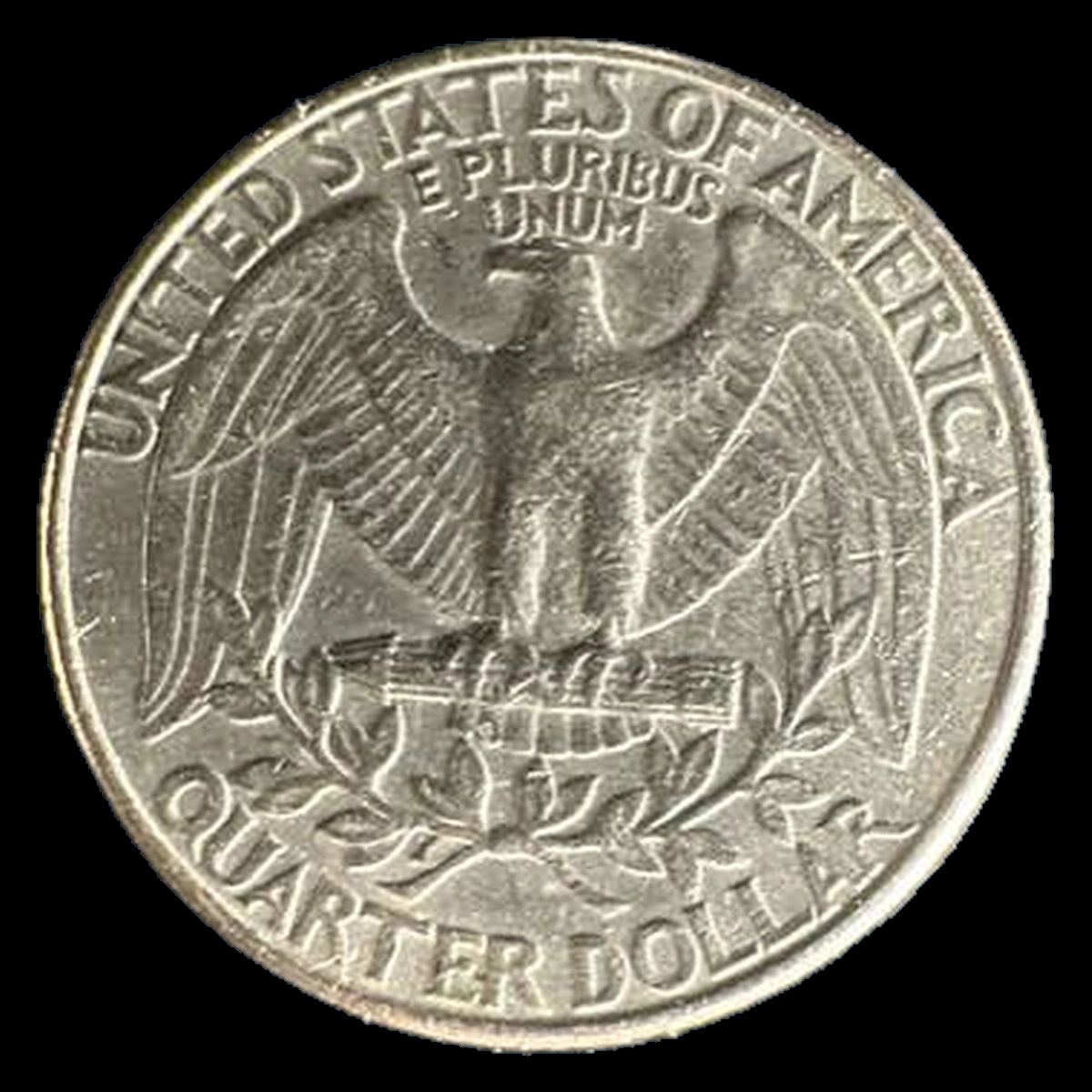
9. 1991 Quarter An Unusual Surface Color: Reported Annealing Error
Annealing is the heating step used to prepare metal for striking. Problems during that process can affect the surface, but a discolored 1991 quarter needs more evidence than a dark or unusual hue.
How to Identify
Inspect texture as well as color, keeping the coin uncleaned. Later heating, chemicals, plating, and ordinary toning can create appearances that resemble a production problem.
No fixed mint or diagnostic location accompanies the supplied report. Treat an annealing attribution as provisional until a qualified examiner can distinguish it from those alternatives.
What It’s Worth
$20–$200 is a conditional estimate for an authenticated mint-related surface error. An unexplained color change by itself does not justify that premium.
10. 1991 Quarter Weak Details or a Deep Impression: Struck-Through Error
Material caught between a die and the blank can interrupt the transfer of the design. Grease may leave weak lettering, while a hard object can create a much deeper depression.
A separate 1991-D report describes a possible feeder-finger strike-through. The feeder finger moves blanks into position, but the depth of a mark alone cannot identify that particular object.
How to Identify
Inspect the point where normal design ends at the affected area. A later cut may push up a lip of metal, while a strike-through records the obstruction during the strike.
Steep walls can support the presence of a hard object without establishing its identity. The supplied feeder-finger report does not provide a fixed position on the coin to use as a matching diagnostic.
What It’s Worth
$5–$75 is an estimate for grease-related weakness; a substantial authenticated hard-object impression may fall around $75–$500. Neither category has a supplied 1991 completed-sale example.
11. 1991 Quarter Extra Letter Outlines: Doubled Die Error
Inspect LIBERTY on the front and UNITED or DOLLAR on the eagle side for a second raised outline. A doubled die carries duplication in the tool itself and can reproduce it on multiple coins.
How to Identify
Rounded secondary details or distinct separation deserve closer study. A flat, shelf-like step beside a letter may instead be mechanical doubling from movement during striking.
The supplied reports do not establish one shared mint, finish, or doubling direction; a separate Denver reverse example is also illustrated. Match the actual coin to the relevant variety rather than applying the identity of a famous 1995-S doubled die.
What It’s Worth
$10–$150 is a provisional range for confirmed 1991 doubled dies. There is no supplied transaction for a specific attributed variety, and prices for other dates should not be transferred to these reports.
Conclusion
A useful examination of a 1991 quarter begins with both faces and a controlled top-to-bottom flip. Those observations separate sideways displacement, rotation, and unusual die wear before surface marks complicate the picture.
Record the mintmark, surviving date, and any missing metal without cleaning the coin. Several categories here remain reports with estimated prices, so an exact attribution matters more than choosing the largest number in a range.