Rare 1979 Nickel Errors (List & Pictures)
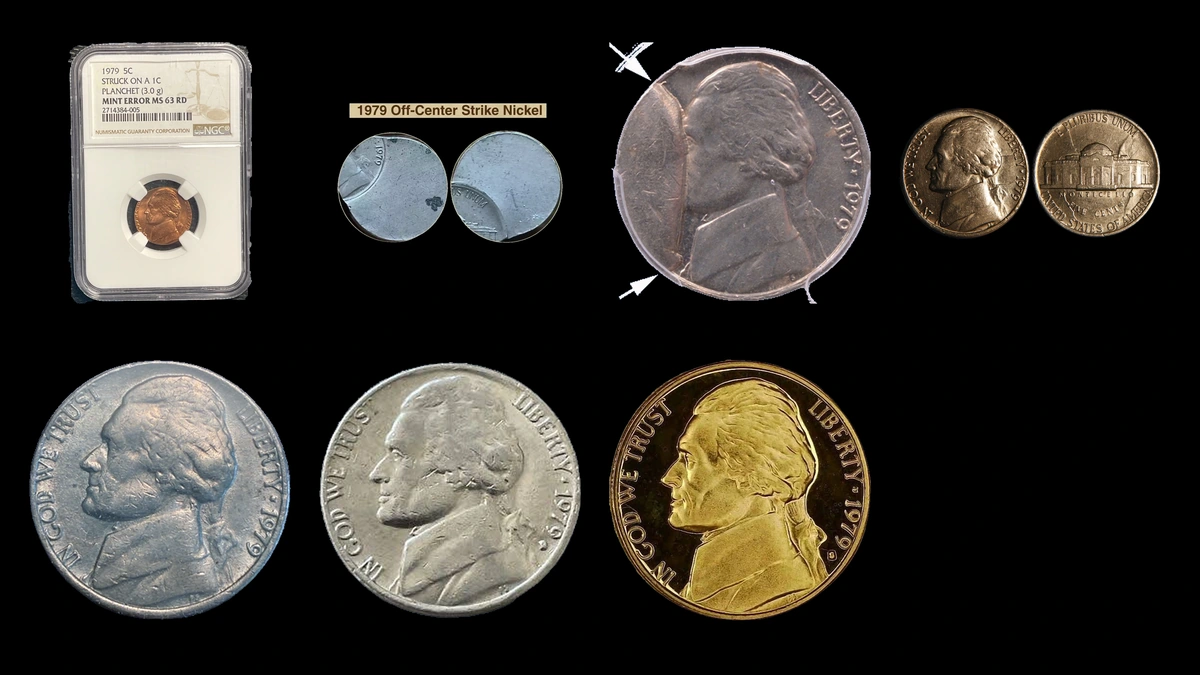
The two dates on one exceptional nickel record two trips through different presses: a 1978 cent later received Jefferson’s 1979 design. That example sold for $2,990 in January 2011.
The wider group of 1979 nickel errors spans estimated values of $5–$4,000, including small die flaws, incomplete blanks, and deep caps. Start by checking the metal and shape, then use the surviving designs to distinguish similar-looking errors.
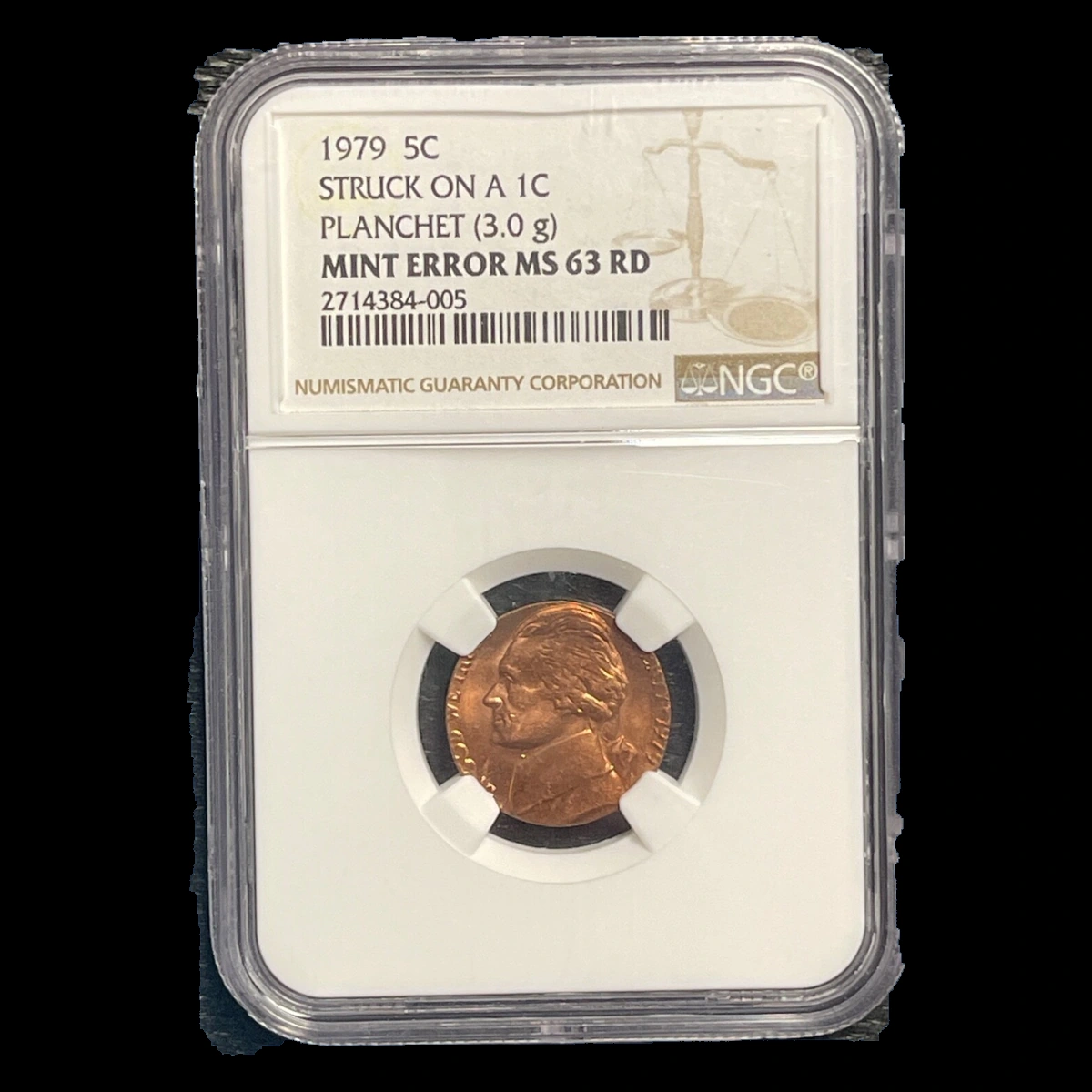
1. 1979 Nickel Nickel Details on a Smaller Copper Disc: Cent Planchet Error
A small copper-colored coin with nickel details may have started as a cent blank in the wrong press. The larger nickel design runs beyond the smaller disc’s edge, leaving portions absent.
A 1979 cent blank was the older copper alloy, normally about 3.11 grams and 19.05 millimeters before striking. It should not be compared with the 2.5-gram zinc cent introduced later.
How to Identify
Use color, size, weight, and the design cutoff together. A normal nickel weighs about 5 grams, measures 21.2 millimeters, and has a plain edge; striking can spread a smaller cent blank beyond its starting diameter.
Recorded examples include a Philadelphia coin at 3.1 grams, a Denver coin at 3.04 grams, and a separate defective Denver cent blank at 3.2 grams. The last measurement does not identify the flaw’s location or justify a missing-zinc explanation.
Inspect the surfaces and edge for plating or grinding. An unused cent blank has no earlier Lincoln design, which separates this error from the next category.
What It’s Worth
$200–$500 for worn or less attractive examples and $500–$1,500 for strong unworn pieces are the supplied estimates. A 1979-D graded ANACS MS64 Red brought $516 in June 2025, and an NGC MS65 Denver example weighing 3.1 grams sold for $552 in June 2024.
Assess a defective-blank combination on its own appearance. A flaw in the copper does not automatically improve its value over a sound wrong-planchet example.
2. 1979 Nickel A 1978 Date Survives Under Jefferson: Double Denomination Error
The underlying 1978 numerals on the documented NGC MS65 Red and Brown coin sit within the curve behind Jefferson’s head. They remain from a finished Lincoln cent that entered the nickel press and received a second denomination’s design.
A separate example was graded PCGS MS63 Red and Brown. The earlier cent design is the evidence that distinguishes these overstrikes from nickel designs struck on unused copper blanks.
How to Identify
Find more than one recognizable remnant of the earlier cent and follow how the nickel impression crosses it. The surviving designs should explain a sequence of strikes, not merely a brown color or an isolated curved mark.
Keep both dates visible in photographs where they survive, and inspect the edge for a seam or coating. Later pressure between finished coins often produces a recessed backward impression rather than the raised, partly flattened remains of an earlier design.
What It’s Worth
$1,000–$2,000 for worn but readable examples and $2,000–$4,000 for attractive unworn coins are the supplied ranges. The NGC MS65 example realized $2,990 in January 2011.
Its readable older date makes the process unusually easy to see. That clarity helps comparison more than calling any copper-colored nickel a double denomination.
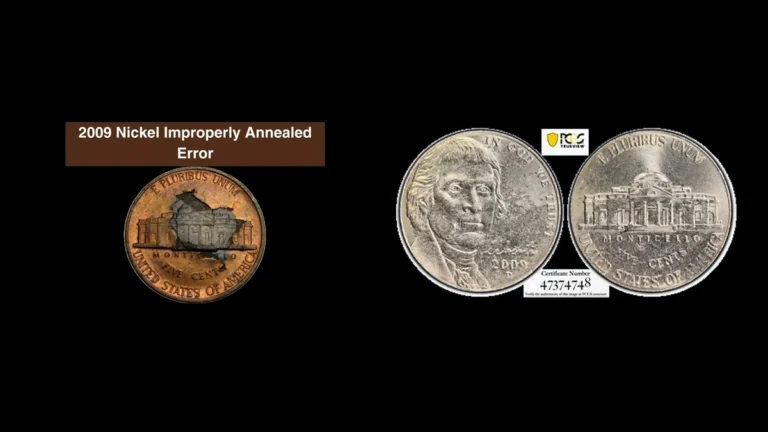
3. 1979 Nickel Brown Color on a Full-Size Nickel: Improper Annealing Error
A coppery surface does not always mean the coin was struck on cent metal. Abnormal conditions while heating a nickel blank before striking can alter its surface; this preparation process is called annealing.
A documented 1979-D was graded PCGS MS63 with a mis-annealed description. The nickel’s copper-nickel alloy is uniform, so the effect is not a missing outer layer of the kind found on a layered dime.
How to Identify
The normal nickel measurements help separate a full-size colored coin from a small cent-planchet error. They cannot establish whether the color developed at the Mint.
Compare the raised details, open fields, and edge without rubbing the surface. Peeling coatings, blistering, later heat exposure, and chemical treatment require consideration, and color photographs alone may not settle the cause.
What It’s Worth
$40–$125 for lightly worn authenticated pieces and roughly $125–$250 for attractive unworn examples are the supplied estimates. The actual PCGS MS63 1979-D sale was $111 in June 2023, below the suggested unworn range.
That result shows why the estimates should not be treated as price floors. A brown nickel affected after minting does not qualify simply because its color resembles the certified example.
4. 1979 Nickel Gaps in the Original Outline: Clipped Planchet Error
A clip removes part of the blank’s intended outline before the design is struck. The supplied 1979 examples include a roughly 10% straight clip, a Denver coin with two curved clips and an off-center strike, and another Denver coin with an approximately 7% straight clip plus a 10% off-center strike.
The clip percentages describe missing metal, while the off-center percentages describe displaced designs. They are separate observations even when they occur on one coin.
How to Identify
Photograph the full outline and identify every actual opening before examining the struck design. Unused copper-nickel beside an off-center impression is still present, unlike the gap made by a clip.
Look for saw marks, fresh cuts through lettering, or burrs at the ends of an opening. Weakness opposite a genuine clip can help, but it is not equally visible on every specimen, and low weight alone does not distinguish a clip from later cutting.
What It’s Worth
$15–$100 for modest clips and $100–$400 for striking combinations are the estimates. A 1997-P nickel with a 20% clip sold for $124 in March 2025, providing a different-year comparison.
The 1979-D straight-clip and off-center combination appeared in a three-coin lot. Neither the whole lot total nor an arbitrary third of it establishes that individual coin’s sale price.
5. 1979 Nickel An Opening Through the Metal: Defective Planchet Error
The documented 1979 blow-hole nickel has an opening attributed to a defect in the original planchet, the blank prepared for striking. PCGS graded the coin AU58, indicating very light wear.
A hole by itself cannot establish that history. Its boundary must preserve evidence that the defect existed when the surrounding design was struck.
How to Identify
Use angled light to compare the opening with nearby struck details. Circular cutting marks, sharp burrs, or a fresh bore through an already finished design can reveal drilling.
Do not insert a probe or smooth the opening. Missing weight would be consistent with either an original defect or later drilling, so preserve the boundary for close examination.
What It’s Worth
$150–$400 for worn genuine examples and $400–$1,000 for attractive pieces with clearly original openings are the estimates. The PCGS AU58 1979 example brought $253 in June 2008.
The sale concerns an authenticated defective planchet. It does not establish a premium for drilled nickels or mean that a larger hole is always worth more.
6. 1979 Nickel Complete Designs on a Wide Disc: Broadstrike Error
The collar normally restrains a nickel’s diameter during the strike. When it fails to contain the blank, metal can spread outward while the entire design remains on the coin.
A 1979 broadstrike graded ANACS MS60 Details appeared in an auction group with counting-wheel damage noted. Those later scrapes affect condition but did not create the expanded outline.
How to Identify
Follow the outer lettering on both faces to check that the designs remain complete. Broadstrikes need not be perfectly centered, but missing outer design beside an unstruck area suggests an off-center strike instead.
Compare widths in several directions and examine the expanded metal for original striking surfaces. Hammering can also make a coin wider, usually with flattened details or impact evidence that needs a different explanation.
What It’s Worth
$25–$100 for worn or marked broadstrikes and $100–$300 for attractive unworn examples are the estimates. An ANACS MS64 1987-P broadstrike sold for $53 in December 2011.
That is a different-year individual sale. The group-lot appearance of the damaged 1979 example does not supply an individual realized price.
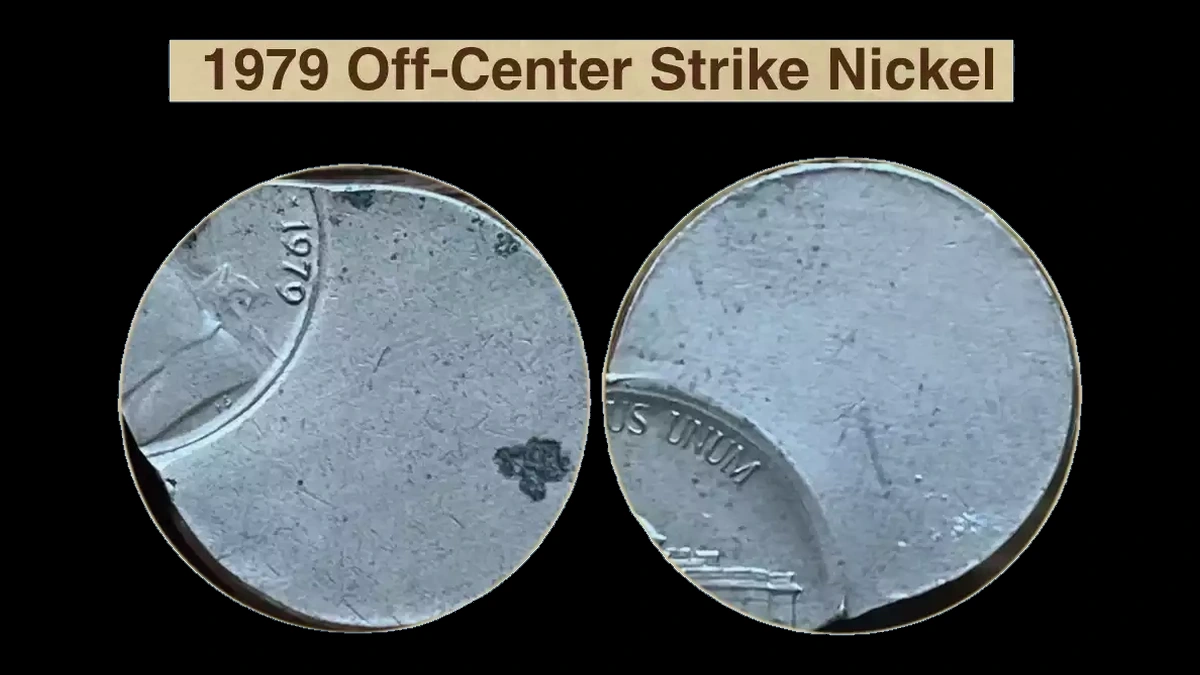
7. 1979 Nickel Most of the Disc Has No Design: Off-Center Strike Error
A strongly off-center nickel can retain more blank metal than struck design. The dies caught only part of a misplaced blank, leaving a large original crescent beside the impression.
The documented Philadelphia example is ANACS MS63 and about 60% off center toward 11:30, between the top and upper left with Jefferson upright. No mintmark is normal for a Philadelphia nickel dated 1979.
How to Identify
Confirm the readable date before assigning an undated fragment to 1979. Photograph the whole outline and compare the transition into the blank area on both faces.
Grinding lines, flattened remnants of letters, or a trimmed edge would need a separate explanation. The percentage describes design that missed the blank, not metal that was cut away.
What It’s Worth
$40–$150 for modest shifts and $150–$750 for dramatic, attractive examples with readable dates are the estimates. A 1999-D nickel struck 65% off center sold for $75 in September 2024.
The later-year result illustrates the limits of percentage alone as a price guide. Surface quality and surviving identification matter alongside the size of the blank crescent.
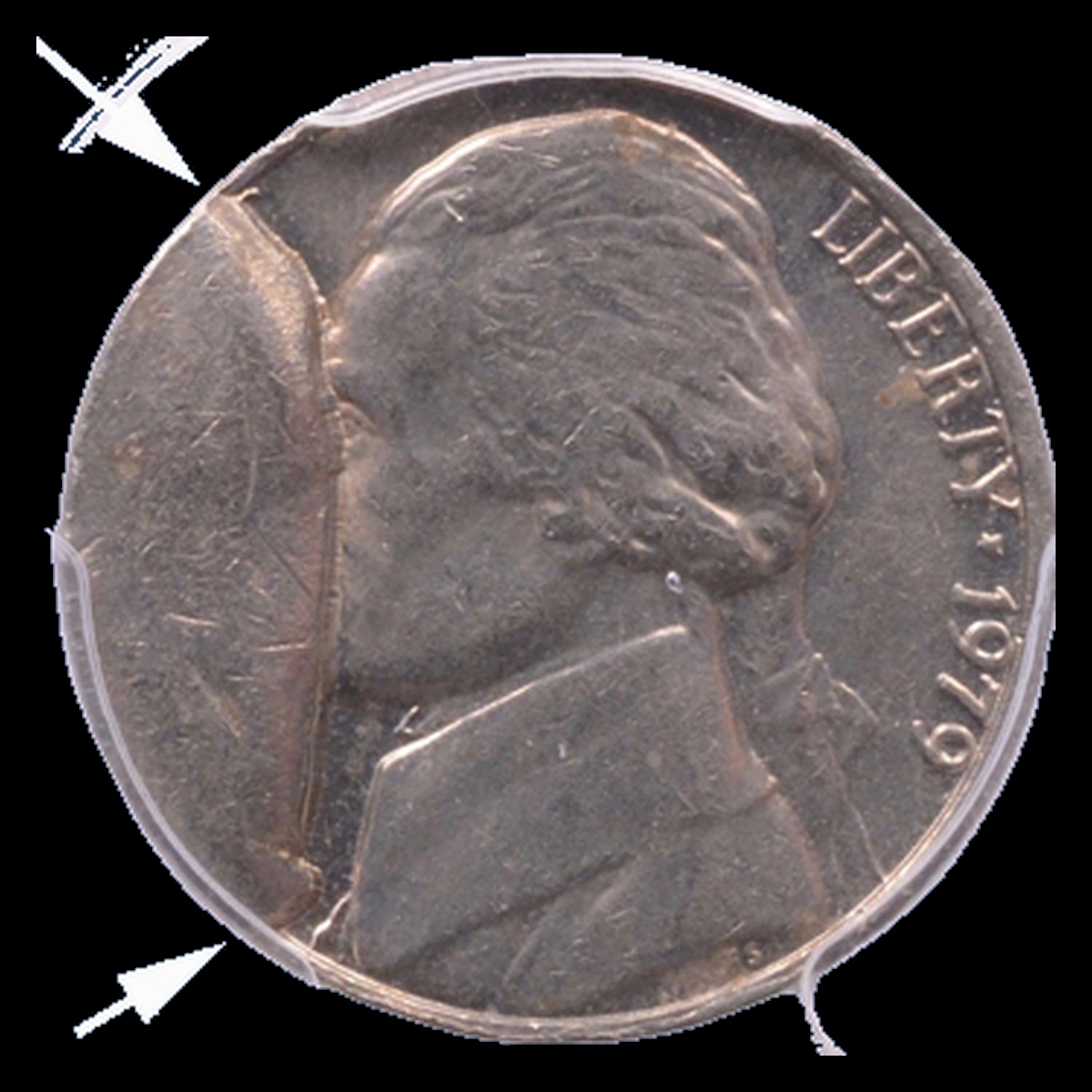
8. 1979 Nickel Raised Metal Joins the Rim: Cud Error
A rim-connected patch can replace part of the normal design when a piece breaks out of the die. Coin metal flows into the missing steel, creating the raised area called a cud.
Specialist listings include both Philadelphia and Denver examples for 1979. An ANACS MS64 auction coin and a cleaned AU58 Details dealer coin also have major-break descriptions, but their exact patches should be matched individually.
How to Identify
Trace the patch’s entire boundary and verify its connection with the rim. Inspect the adjacent edge for a dent, seam, or added metal that could imitate the appearance.
The opposite face may show weak detail because metal flowed into the die’s broken area. Keep cleaning scratches separate from the original patch, and select a catalog attribution only after matching the same mint and shape.
What It’s Worth
$20–$150 for worn or cleaned examples and $150–$600 for attractive coins with strong breaks are the supplied ranges. A lightly worn 1983-P example sold for $63 in July 2022.
That comparison is from another year. Cleaning is a condition issue, not an additional mint error to add to the cud’s description or value.
9. 1979 Nickel Overlapping Designs Record Another Blow: Multiple Strikes Error
A nickel that remains in the press can move and receive another impression. One 1979-D has a second strike 65% off center together with a recessed backward image on the reverse, while a different Denver double strike has a plain indent.
The backward image is a brockage transferred by a struck coin; the smooth indent comes from contact with a blank. Other supplied examples include a second strike 90% off center at 12 o’clock and a Philadelphia triple strike.
How to Identify
Trace repeated letters or portrait edges across the earlier impression instead of relying on thick-looking lettering. Keep both faces in view so that repeated designs and contact marks can be interpreted together.
Do not transfer the 65% example’s reverse brockage to the separate indented coin. Counting-wheel marks on the Philadelphia triple strike are later damage, not evidence of another blow from the dies.
What It’s Worth
$100–$600 for modest or worn repeated strikes and $600–$2,000 for attractive complex examples are the estimates. The PCGS MS65 1979-D double strike with a reverse brockage sold for $552 in April 2020.
The triple-struck example appeared in a five-coin lot, so no individual price should be extracted from the group total. An understandable sequence and readable details can matter more than the strike count alone.
10. 1979 Nickel Tall Walls Surround the Portrait: Die Cap Error
A trapped coin can stay on a die while further press activity pushes its metal outward and upward. A deep die cap therefore resembles a cup, with the portrait at its base and a distorted opposite surface.
The recorded 1979-D formed on the front die and was graded PCGS MS66. Its stretched walls represent more than a simple bent rim.
How to Identify
Support the cap without flattening it and photograph the interior, outside, and wall. Follow how the surviving design and metal stretching relate to the cup’s shape.
A sharply forced fold or tool bites may reveal artificial bending. Do not squeeze the walls with measuring tools, since the shape itself is evidence of the repeated pressing.
What It’s Worth
$400–$1,000 for worn or less attractive caps and roughly $1,000–$3,000 for especially strong, well-preserved examples are the supplied estimates. The actual PCGS MS66 1979-D deep cap sold for $840 in July 2021, showing that an unworn grade does not guarantee the higher range.
Cup depth, recognizable design, and the integrity of the surfaces help explain differences among caps. Later bending is not equivalent to the documented minting process.
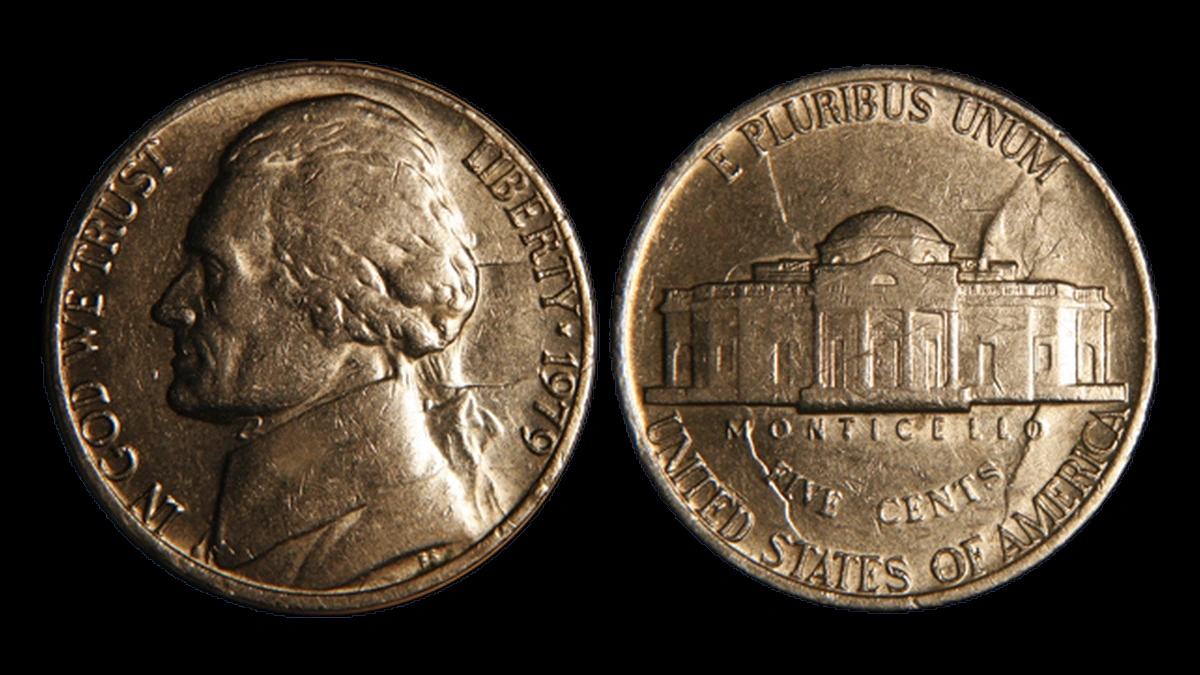
11. 1979 Nickel Faint Fragments Resemble the Opposite Face: Die Clash Error
Clash traces originate when the dies meet without a blank between them. Marks acquired during that contact can then appear among the normal designs of later coins.
The supplied 1979 report gives no universal location. Monticello’s ordinary architectural lines should not be treated as transferred portrait detail simply because they look unfamiliar.
How to Identify
Compare the suspected fragment with a specific portion of the opposite design. Several related curves that fit the same source feature are stronger evidence than an isolated scratch.
Use side lighting and include the full design in photographs. Signs of squeezing or a broad second-coin impression may point to a different event rather than contact between the dies.
What It’s Worth
$10–$75 for faint but recognizable clashes and $75–$200 for strong traces on attractive coins are the estimates. No particular 1979 auction result is supplied for the reported category.
Assess a clash and any accompanying rim break as features of one coin. Their highest estimated prices should not simply be added together.
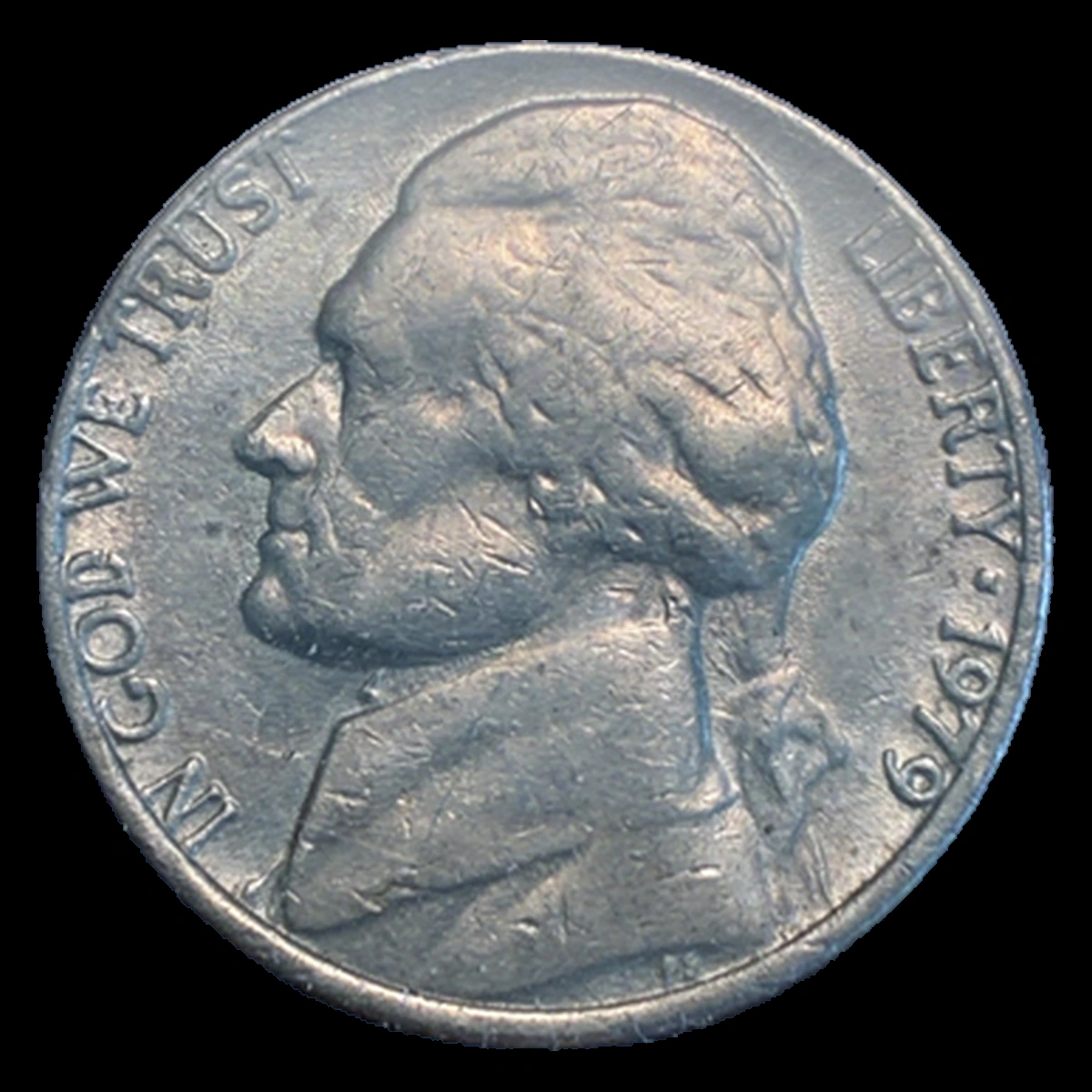
12. 1979 Nickel Weak Letters Beside Better-Preserved Detail: Filled Die Error
Material packed into a die’s recessed design can prevent a blank from filling it properly. Letters may emerge weak or absent even though the metal under them remains present.
The supplied guide reports a grease-filled die category without identifying an exact word or mint. The weak area must therefore be evaluated on the individual coin.
How to Identify
Compare the missing detail with nearby portrait, lettering, and building features. Broad smoothing of all high points may be circulation wear rather than a localized blockage.
Inspect the surface for filing lines, scraping, or a depressed damaged patch. A continuous original surface and a local contrast in detail support the claim more than an enlarged photograph of one indistinct letter.
What It’s Worth
$5–$40 for modest confirmed examples and $40–$100 for stronger missing design on a well-preserved coin are the estimates. There is no supplied sale of a particular certified 1979 specimen.
The range concerns a recognizable blocked strike. Ordinary worn letters do not qualify just because they are difficult to read.
13. 1979 Nickel A Second Curve Beside D: Reported Repunched Mintmark Error
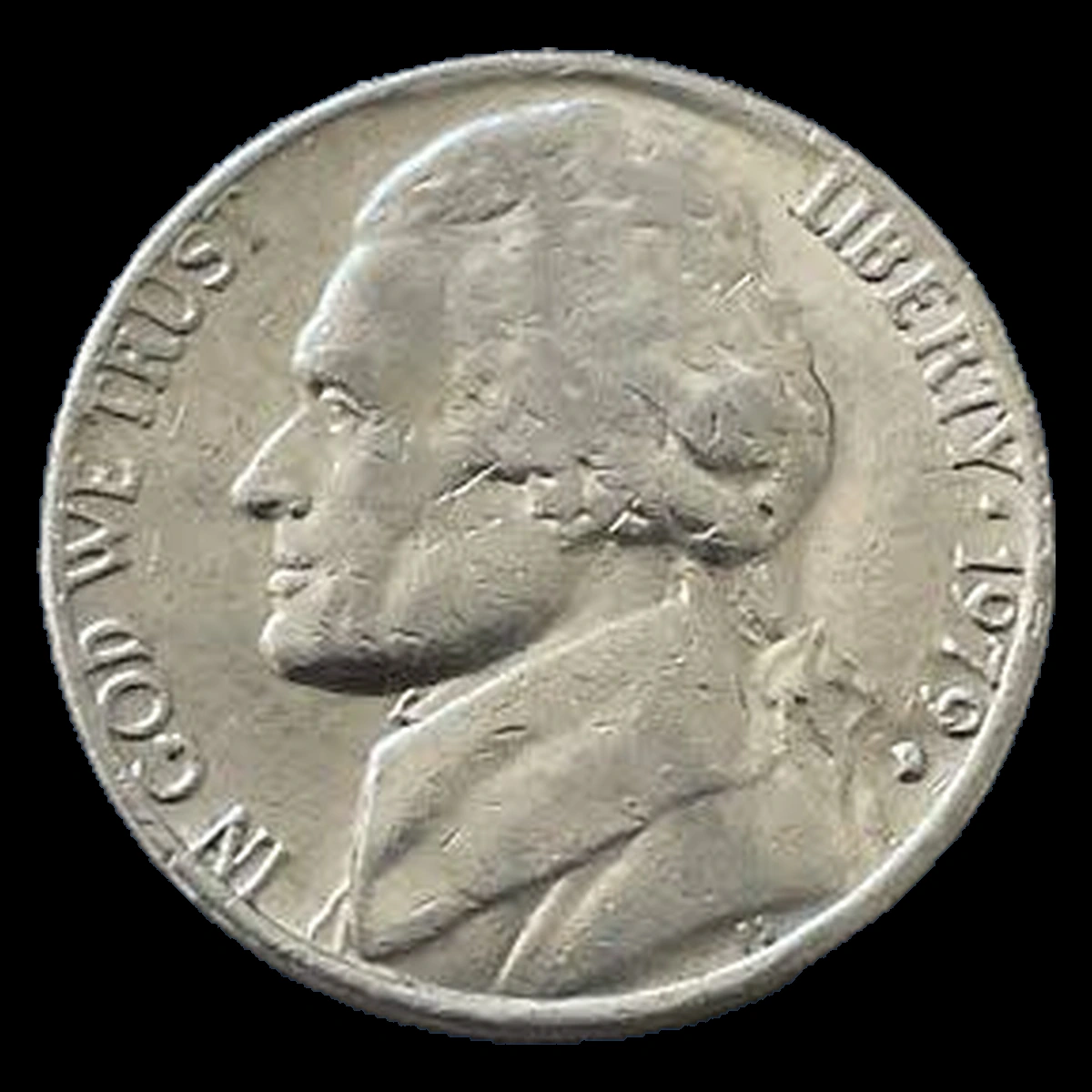
A mintmark punched into a working die more than once could leave overlapping outlines if the punch shifted. Coins struck from that die then repeat the extra mintmark trace.
The supplied 1979-D report places an additional impression southeast, or lower right, of the main D. Its proposed catalog number is unresolved without a matching documented nickel specimen.
How to Identify
Photograph the D beside the date and compare the lower-right curve with an accepted nickel variety reference. A similarly numbered Lincoln cent listing does not establish a nickel attribution.
Change the light to exclude reflections and examine whether the addition has a genuine curved mintmark form. Flat ledges, scratches, or added metal around the D need different explanations.
What It’s Worth
$10–$50 for worn examples and $50–$150 for attractive unworn pieces are conditional estimates for a verified minor repunched D. No established sale accompanies the unresolved report.
A proposed variety number should not raise the price before the coin matches a valid nickel listing. A thick-looking mintmark alone is insufficient.
14. 1979 Nickel Repeated Outlines in Front Lettering: Reported Doubled Die Error
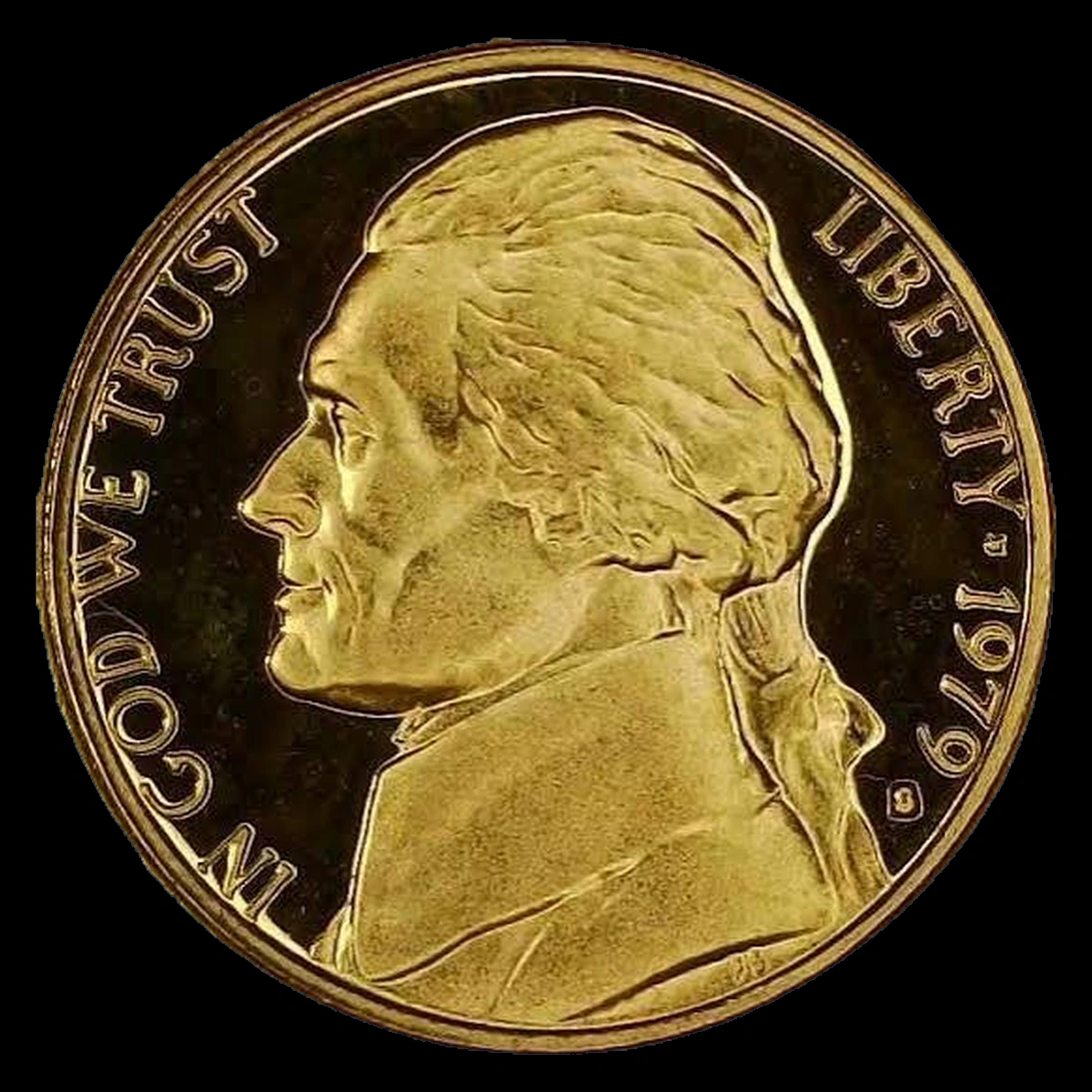
A genuine doubled die contains repeated design details in the tool before the coin is struck. That allows multiple coins to carry the same pattern without each receiving two blows.
The reported 1979 front-doubling category lacks an established numbered nickel variety and dependable matching markers. It remains a claim to verify rather than a specific attribution to assume.
How to Identify
Compare several affected letters under the same magnification, looking for consistent rounded separation or split corners. Record the date and mint so that any comparison belongs to the same issue.
A flat shelf beside narrowed lettering can result from movement during striking. Reflections and damage also produce apparent extra edges, so tilt the coin and examine the actual relief.
What It’s Worth
$20–$100 for verified minor doubling and $100–$300 for a strong, attractive example are working estimates. No confirmed sale is supplied for the unresolved 1979 report.
These figures require a genuine doubled-die identification. Enlarging ordinary strike doubling in a photograph does not give it the same collector status.
Conclusion
A 1979 nickel’s unusual appearance becomes useful evidence when its metal, outline, and designs support the same explanation. In particular, distinguish a smaller blank from an already struck cent, and a missing section from an intact unstruck area.
Preserve cup shapes and original surfaces, and keep later damage in the condition description. For reported small varieties, a precise photographic match matters more than a dramatic name or an unsupported catalog number.