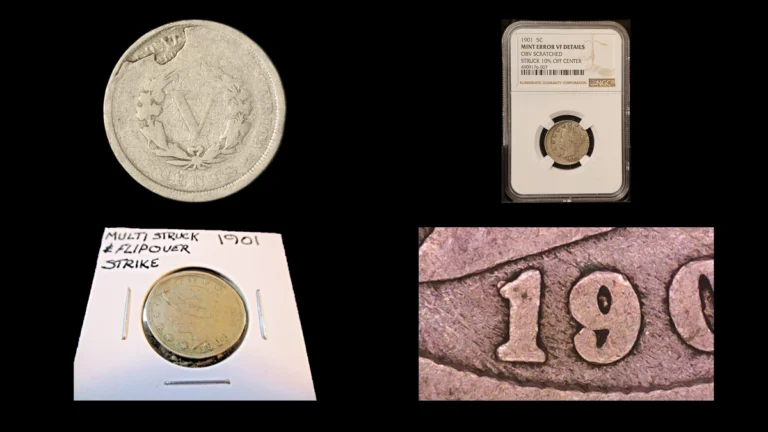
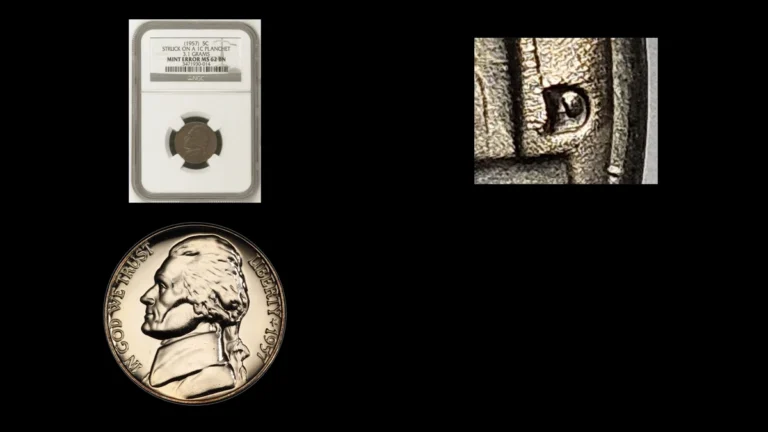
Rare 1900 Nickel Errors (List & Pictures)
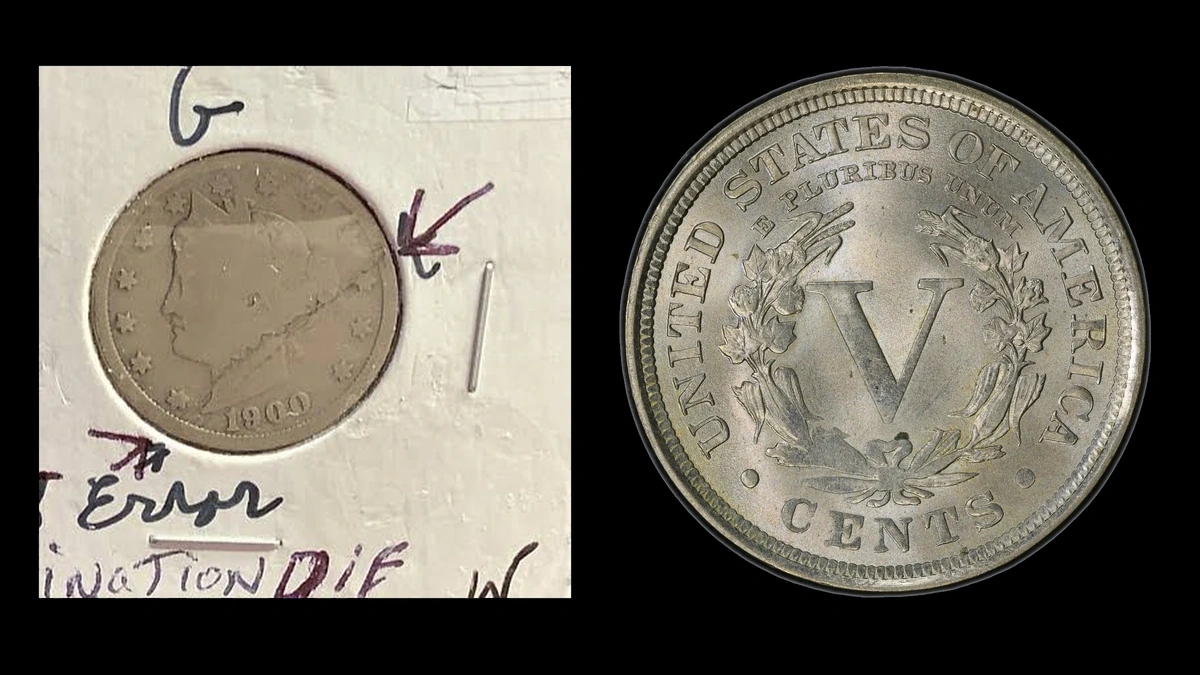
The 1900 doubled-reverse variety brought $1,320 at Heritage in January 2018, as recorded by PCGS. Estimated values for 1900 Liberty nickel errors range from $10–$2,500.
Compare the full design and outline first, then inspect loose metal, extra date strokes and the repeated lettering in CENTS.
| Observation | Error or variety | Estimated range |
|---|---|---|
| Complete design within expanded metal | Broadstrike | $75–$600 |
| Incomplete design beside unused metal | Off-center strike | $100–$1,000 |
| Blank identified for another country | Nicaragua five-centavo blank | $400–$1,500 |
| V sideways after controlled flip | Rotated dies | $20–$200 |
| Peeling original metal | Lamination | $15–$300 |
| Solid raised line | Die crack | $10–$150 |
| Extra portions of 1 and 9 | Repunched date | $25–$500 |
| Repeated reverse words and wreath detail | FS-801 doubled reverse | $150–$2,500 |
The normal Liberty nickel weighs 5 grams and measures 21.21 millimeters, with a plain edge. Its metal is a copper-nickel alloy throughout, so a surface peel is not a lost silver coating.
1. 1900 Nickel An Expanded Border Around the Design: Broadstrike Error
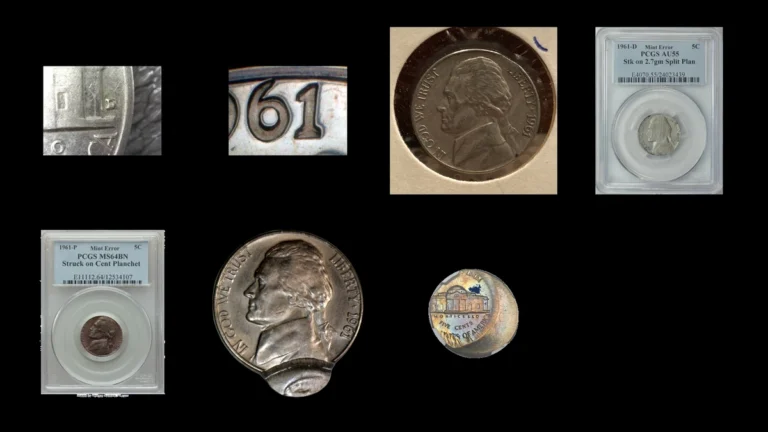
When the collar fails to restrain the blank, metal can spread beyond the usual outline. The collar is the ring that controls the edge during striking.
A recorded 1900 broadstrike is certified PCGS Genuine with a scratch. The scratch describes later condition and does not establish the mint error.
How to Identify
Measure the outline in several directions, then follow the main design and outer lettering on both faces. A broadstrike should retain them within the expanded metal.
Inspect the wider area for crushed letters and repeated impacts from later hammering. A plain edge is normal on a Liberty nickel and supplies no proof by itself.
What It’s Worth
Original 1900 broadstrikes are estimated at $75–$600. Clear spreading and readable design help, while scratches or other damage reduce appeal.
Coin World’s auction table reports $150 for the scratched example. That whole-coin result is not a standard added premium for every wide nickel.
2. 1900 Nickel A Displaced Design with Untouched Metal: Off-Center Strike Error
The recorded PCGS VF30 example is 12% off center. Its blank sat partly outside the intended striking area, leaving some metal unused and some design beyond the edge.
The catalog gives no clock direction. The percentage describes the shift, not metal removed from the coin.
How to Identify
Compare the bare area and missing design on both faces. A misplaced blank should explain their common relationship, unlike a shifted die affecting just one face.
Keep 1900 visible while inspecting the strike boundary for scraping. The edge should not show trimming that imitates an original incomplete design.
What It’s Worth
Confirmed examples are estimated at $100–$1,000. Remaining date, surface condition and clear displacement guide the comparison.
The VF30 12% specimen sold for $322 in October 2008. A larger shift does not automatically command more if the year is lost or the surfaces are damaged.
3. 1900 Nickel A Blank Intended for Nicaragua: Wrong-Blank Strike Error
A 1900 Liberty nickel was cataloged as struck on a Nicaragua five-centavo blank. Heritage records PCGS AU50, while a separate Mint Error News listing gives AU55.
The differing grades do not prove that two different specimens survive. The supplied descriptions give neither the actual weight nor the alloy composition.
How to Identify
Compare the actual design with the grading description and record the candidate’s own measurements. Normal nickel specifications cannot be substituted for the foreign blank’s unknown measurements.
Inspect outer lettering and the edge for trimming or plating, with non-damaging metal testing where needed. Unusual color or diameter alone cannot establish Nicaragua.
An unused foreign blank need not retain an older design. If foreign lettering survives underneath Liberty, document it separately because it could indicate an already struck host coin.
What It’s Worth
Comparable identified 1900 foreign-blank pieces are estimated at $400–$1,500. Attribution certainty, preserved design and condition are important.
The PCGS AU50 example sold for $546.25 in January 2010. No separate realized amount is assigned to the AU55 listing.
4. 1900 Nickel A Sideways V After Flipping: Rotated Reverse Error
A die can turn from its normal alignment while both designs remain centered. The cataloged 1900 example has a reverse described as 90 degrees clockwise and is in Good condition.
The relative direction of the two faces is the diagnostic. Either photograph can be rotated independently without proving anything about the coin.
How to Identify
Hold Liberty upright against a reference and flip the coin top to bottom without twisting sideways. The V should normally finish upright.
Repeat the movement without letting the coin slip, then compare the actual angle. Check the edge for a seam or other evidence of joined pieces.
What It’s Worth
Confirmed 1900 rotations are estimated at $20–$200. Angle, wear and original surfaces affect the comparison.
The Jim’s Coins catalog listing gave the Good example a $15 minimum bid. That threshold was not a completed selling price.
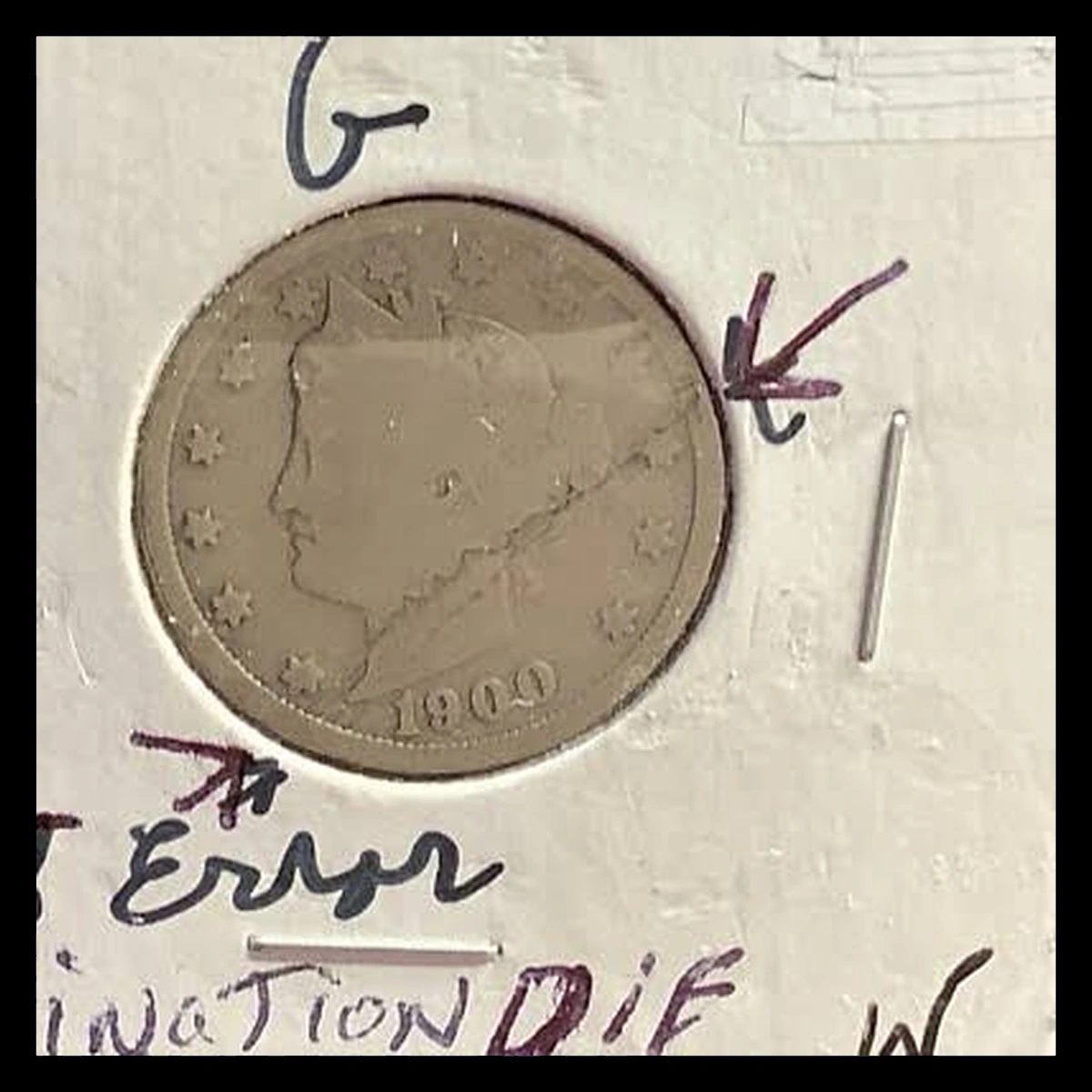
5. 1900 Nickel A Loose Surface Layer: Lamination Error
An internal seam can open and lift a thin patch of the original alloy. A circulated 1900 report describes lamination together with die cracks.
The peel belongs to the blank, while the crack ridges came from the die. Their coexistence does not establish one shared cause or a particular peeling location.
How to Identify
Trace the attached boundary under side lighting without pushing anything beneath it. A lifted layer differs from a gouge containing tool marks or a corroded pit.
Photograph neighboring original design with the split. An attached piece may leave both weight and diameter close to normal.
What It’s Worth
Confirmed 1900 laminations are estimated at $15–$300. A clear attached flap may attract interest, though some collectors prefer a sound example of the date.
No completed price is supplied for the reported coin with both cracks and peeling. Value that specimen once rather than adding two whole-coin estimates.
6. 1900 Nickel A Raised Line Across the Surface: Die Crack Error
A crack in a die can fill with metal and leave a thin raised ridge. The die is the steel tool that stamps the coin’s design.
Year sources report this type, including the circulated coin with lamination. No fixed path across Liberty or the letters is established for it.
How to Identify
Inspect the center of the line under low light to distinguish a ridge from a cut. A scratch can push metal upward along its sides.
Photograph the feature where it crosses ordinary design. A loose peeling seam is a separate metal flaw and should not be identified as a solid copied die crack.
What It’s Worth
A coin with a clear small original crack is estimated at $10–$150. Preservation and visibility affect its appeal.
The circulated combined-feature report has no individual sale assigned here. A scratch adds no error premium merely because its edges reflect light.
7. 1900 Nickel Earlier Strokes Beside 1 and 9: Repunched Date Error
Stack’s described an MS64 coin with the first two digits repunched in August 2010. More than one date-punch placement left remnants beside the final 1 and 9.
The description gives no direction for those remnants. It also does not establish doubled zeros at the end of the date.
How to Identify
Inspect the straight and curved extra strokes around 1 and 9, then compare with an identified example. Keep all four digits and the border in the photograph.
Use a second lighting angle to expose flat shelves, damage or reflections. A recognizable earlier numeral contour is more useful than generalized thickness.
What It’s Worth
Clearly identified repunched dates are estimated at $25–$500 across circulated and lower unworn grades. The estimate includes the underlying coin’s condition value.
The August 2010 catalog identifies the MS64 example without a realized amount used here. Its unworn preservation can contribute substantially to the price.
8. 1900 Nickel Extra CENTS and Wreath Outlines: Doubled Reverse Error
FS-801 repeats parts of the reverse lettering and wreath. CENTS, the motto above the V and nearby wreath detail provide the comparison areas.
The repeated design originated in the reverse die. It is distinct from the repunched front date and from flat shelves caused by movement during striking.
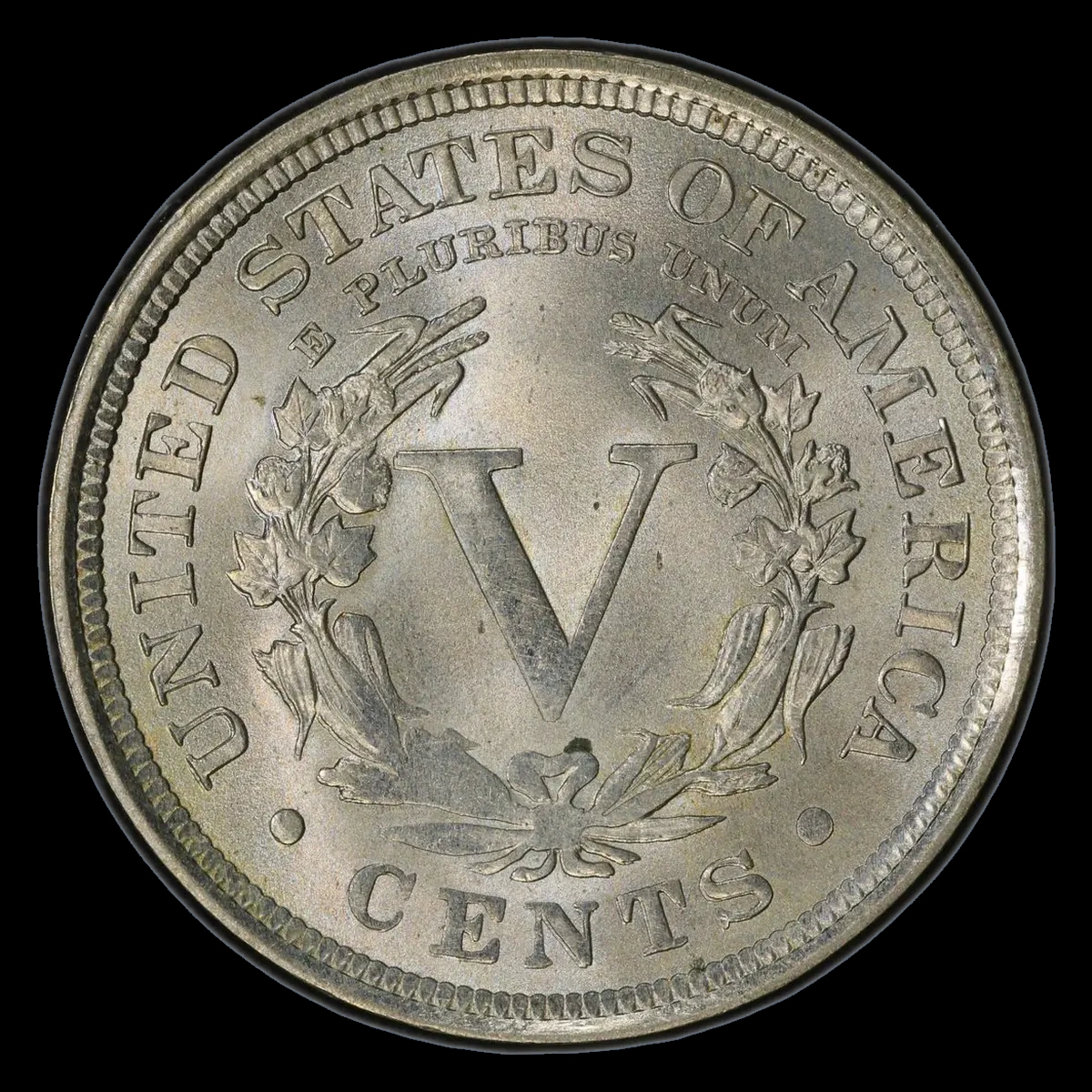
How to Identify
Begin with rounded extra contours in CENTS, then compare E PLURIBUS UNUM and the wreath with an identified FS-801 image. The same pattern should connect these features.
Change the light to separate relief from shadows. One thick letter or a flat ledge beside several details does not establish the variety.
What It’s Worth
Identifiable examples are estimated at $150–$2,500. Clear attribution and preserved surfaces are required before the higher variety comparison becomes relevant.
PCGS records a $1,320 Heritage result in January 2018. That is an actual reported auction amount rather than a seller’s asking price.
Conclusion
A 1900 nickel’s extra outline, missing design or turned reverse points toward a different part of manufacture. Keep the complete object visible while studying a small detail, especially when a crack and lamination occur together.
Use controlled flips for rotation and matching photographs for varieties. A foreign-blank attribution needs its own material evidence, while unknown measurements and catalog minimum bids should remain distinct from tested facts and completed sale prices.