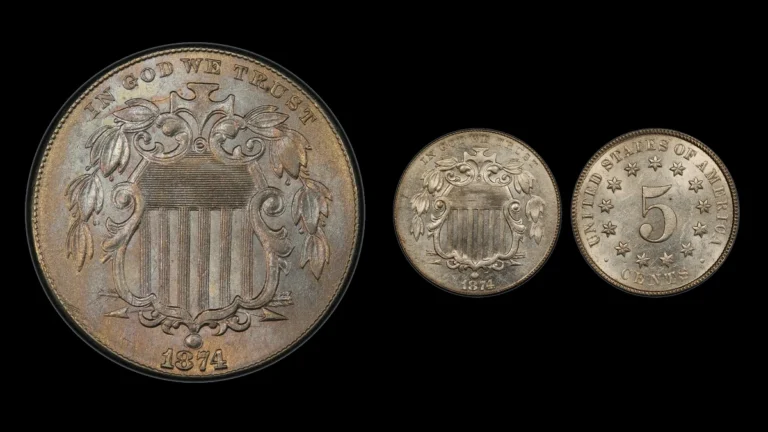
Rare 1876 Nickel Errors (List & Pictures)
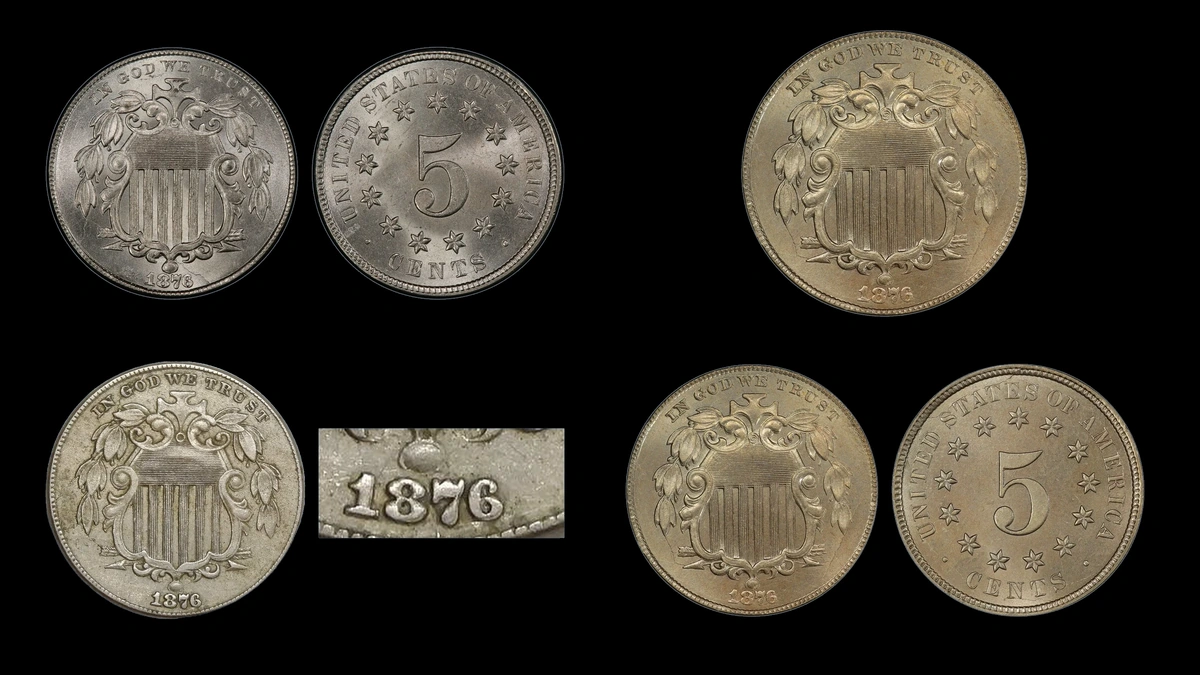
Several 1876 Shield Nickel errors appear as extra lines, but their shapes tell different stories. Straight extensions inside the shield identify the Bleeder variety, whose MS65 example brought $3,120 in August 2023.
The ordinary-strike examples below have estimated whole-coin values of $20–$3,500. Follow the shield stripes, ring, date, and surrounding surface to distinguish engraving, repeated design, and damaged dies.
1. 1876 Nickel Vertical Stripes Continue into the Shield’s Top Band: Bleeder Error
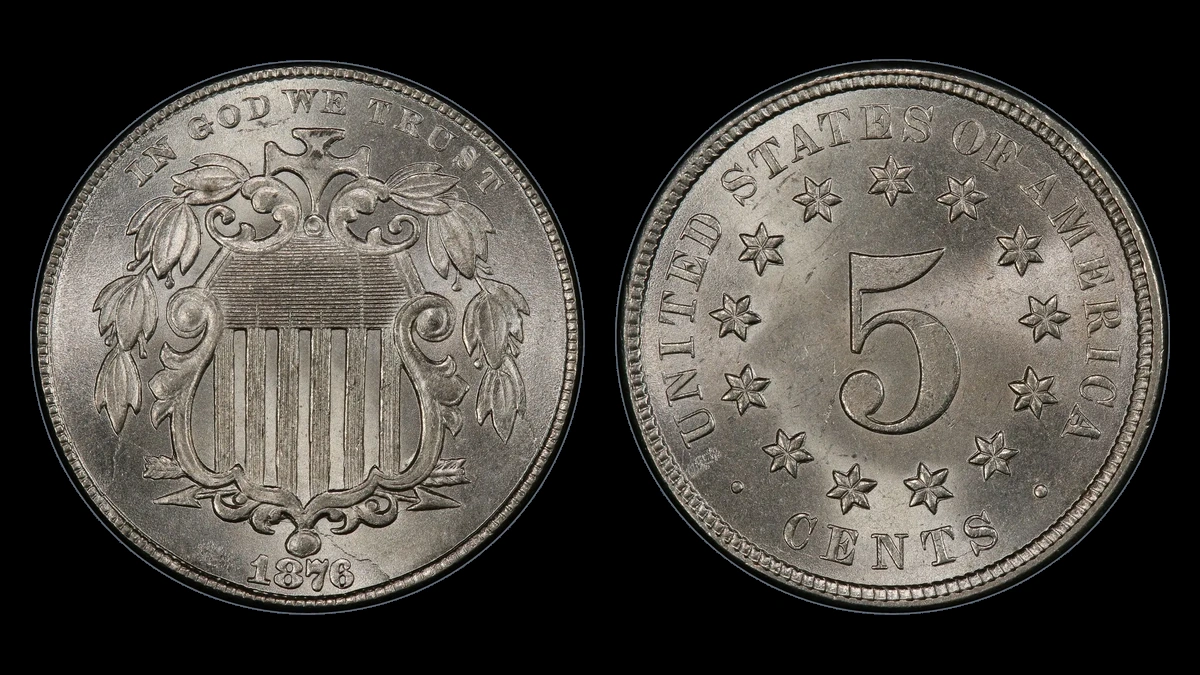
The shield’s vertical stripes normally stop at the horizontal band. On the Bleeder variety, orderly extensions continue upward past that boundary.
The usual explanation is that an engraver deepened the lines in the die and carried the cuts too far. A die is the steel tool that transfers the design onto the coin.
Some later examples also show cracks near the date and left side. Those additional lines do not define the Bleeder feature.
How to Identify
Follow several adjacent shield stripes into the horizontal band. Their extensions should continue in the same direction and regular spacing as the stripes below.
Compare the pattern with an identified example rather than accepting any line through the band. A wandering crack, random scratch, or shifted second shield outline has a different arrangement.
A normal loose 1876 Shield nickel is about 5 grams and 20.5 millimeters, with a plain edge and a reverse without rays between the stars. Those basic checks establish context, while the stripe extensions identify the variety.
What It’s Worth
Identified Bleeders are estimated at $100–$3,500, from worn examples retaining clear extensions to attractive unworn pieces. The figure covers the entire coin.
PCGS records a Heritage sale of $3,120 in August 2023 for an MS65 example. That grade describes an unworn coin with relatively few marks.
Wear can merge the vertical and horizontal detail, making the feature harder to identify. Cracks alone cannot support the same variety comparison.
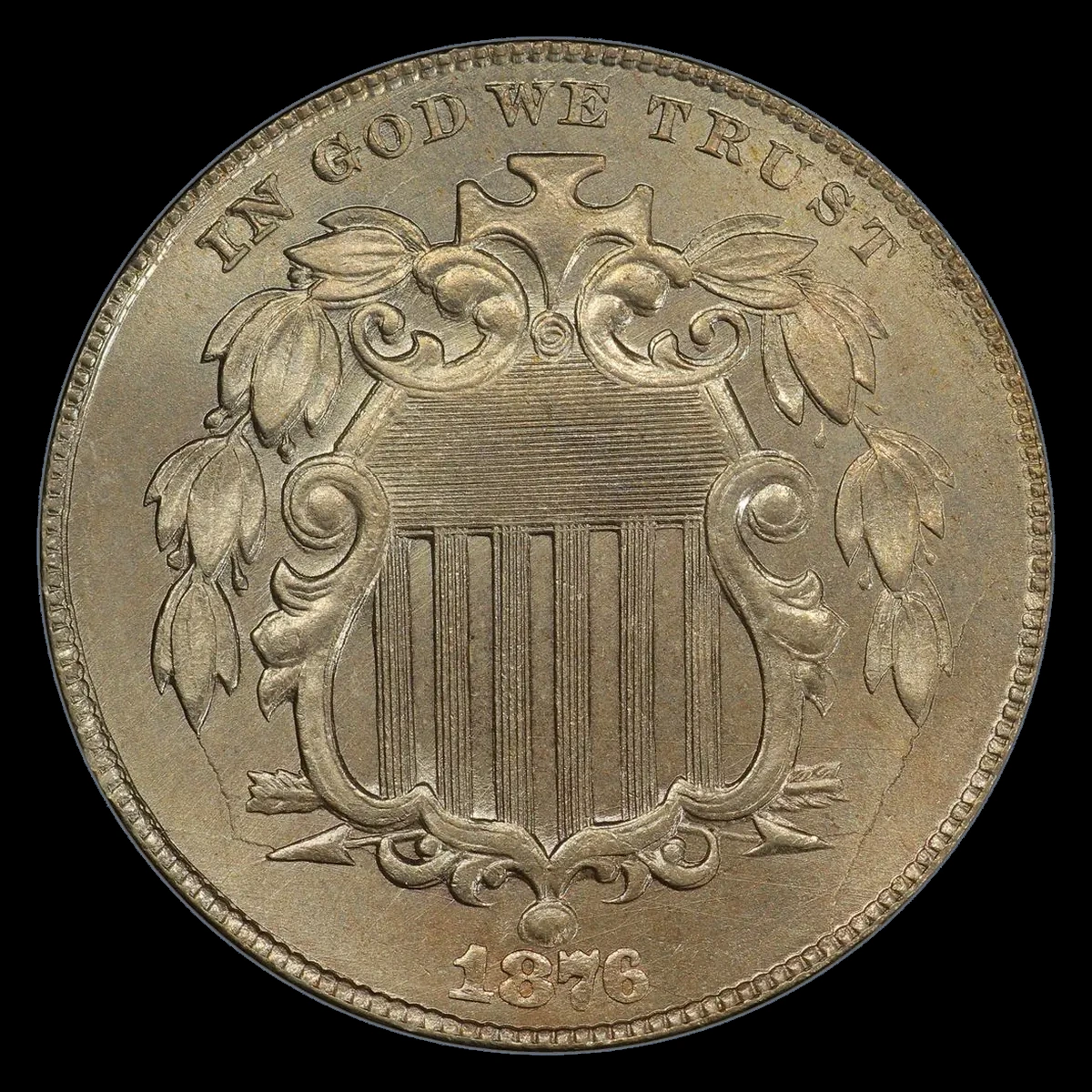
2. 1876 Nickel The Ring above the Shield Has Repeated Arcs: Doubled and Tripled Dies Error
The small ring can carry multiple raised outlines on a tripled-front variety. Those outlines originated while the design was transferred into the die.
Coins struck from that tool inherit the repetition without needing three separate blows. The 1876 issues include both doubled and tripled fronts, with different strongest details.
How to Identify
Trace the ring’s complete arcs against a clear photograph of the tripled variety. Rounded repeated contours fit that pattern more closely than a flat shelf beside one part of the ring.
Keep thin lines in the background separate from the ring itself. Nearby polish marks do not become additional ring impressions because they cross the same area.
A coin that does not match the tripled ring may require comparison with another doubled variety. The tripled feature is not a requirement for every 1876 doubled front.
What It’s Worth
Recognizable doubled and tripled fronts are estimated at $100–$2,500. Clear separation and strong preservation support the higher comparisons.
The $3,120 same-year Bleeder result concerns a different die variety. It should not be described as a sale of the tripled-ring coin.
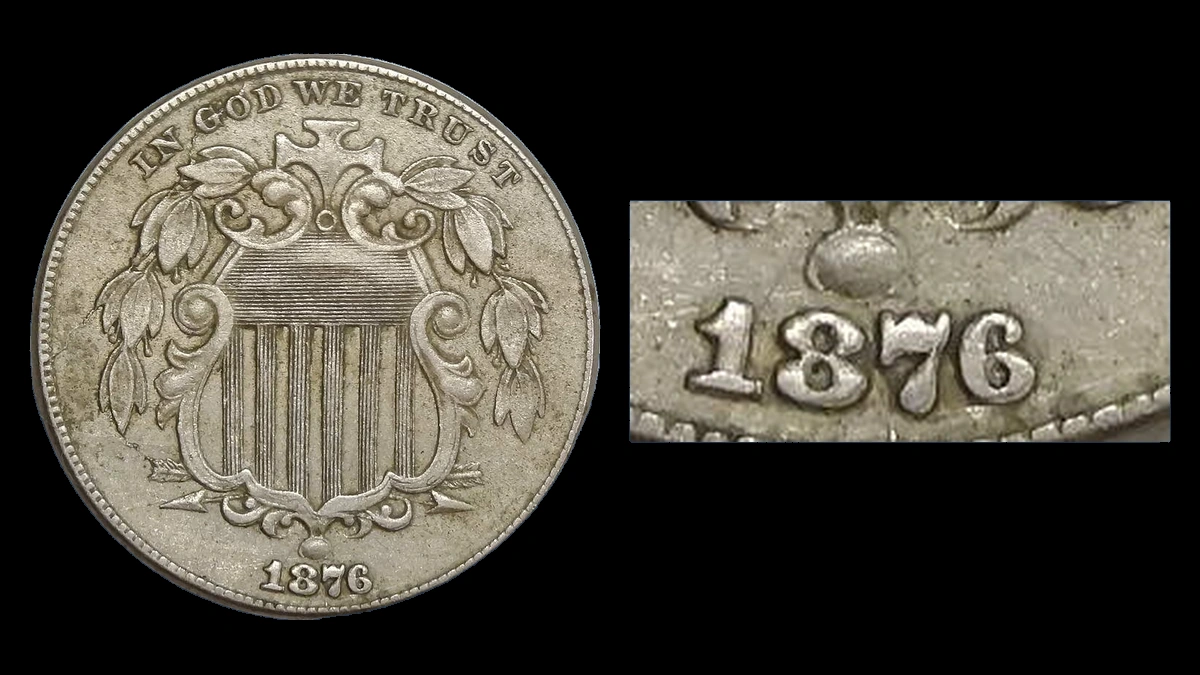
3. 1876 Nickel Tiny Earlier Numerals Remain around the Date: Repunched Date Error
A date punched into the die more than once can retain parts of its earlier positions. The extra strokes repeat portions of numerals rather than the surrounding design.
The Shield Nickel Varieties catalog describes one 1876 arrangement with traces above 87. Another has the bases of 187 shifted left.
The left-shifted-date example also has doubled front detail and strong die-polish lines. It is separate from the pattern with traces above 87.
How to Identify
Compare the full date with the appropriate pattern rather than expecting both arrangements at once. Look above 87 for one and beneath the left sides of 187 for the other.
The remnants should follow plausible numeral shapes. Random pits, cuts, and flat ledges do not establish an earlier date-punch position.
Once the left-shifted pattern matches, examine the ring and nearby background for its accompanying features. Those observations support the whole attribution without replacing the date evidence.
What It’s Worth
Identified ordinary-strike repunched dates are estimated at $50–$1,000, from worn coins through attractive pieces with little wear. Clear readable remnants generally compare better than one faint trace.
A coin with doubling and strong polish lines still has one total value. Adding three complete category estimates would overstate the combined specimen’s value.
4. 1876 Nickel Fine Raised Lines Fill the Space behind the Ring: Die Polish Error
The cataloged example has especially strong lines behind the small ring above the shield. Scratches made while polishing the die can become raised lines when metal fills those grooves during striking.
This specimen also carries a doubled front and a repunched date. The polish lines occupy the surrounding surface, rather than forming extra copies of the ring or numerals.
How to Identify
Use low side lighting to determine whether the lines stand above the coin’s surface. Scratches made directly on a finished coin generally cut into it instead.
Inspect where the lines meet the normal raised design. Cleaning marks can sweep across the field and design together, while the claimed die-polish pattern needs a match to the cataloged area.
Check the ring and date separately for the accompanying repetition. Counting background lines as design outlines would confuse the three different features.
What It’s Worth
The combined variety with visible polish lines is estimated at $50–$800 across worn through attractive lightly worn condition. This is a whole-coin range.
Heavy wear may leave only a few lines readable, while clear ridges on original surfaces make the feature easier to appreciate. Polishing the finished coin later is damage and does not earn the same attribution.
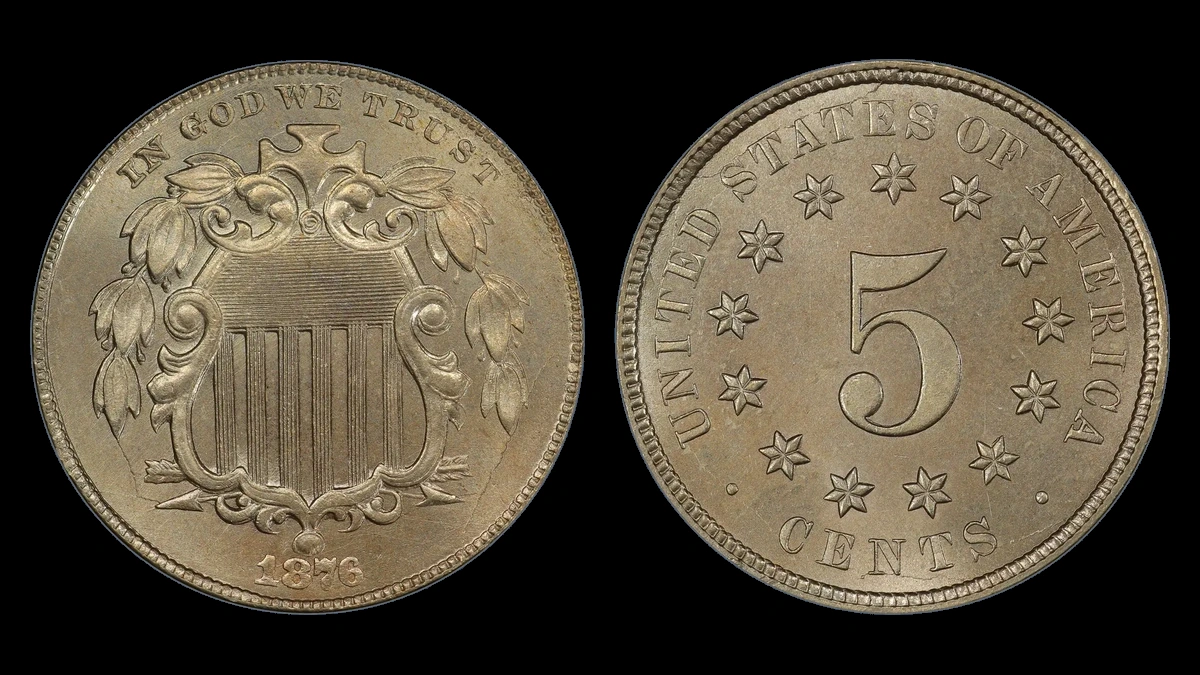
5. 1876 Nickel Raised Lines Cross the Field or Bound a Patch: Die Crack and Retained Break Error
Reported cracks appear above the shield’s cross, through the date area, in left-side areas, and on the reverse of separate 1876 examples. As a damaged die continues working, its lines can lengthen or connect.
A retained break means a cracked portion of the die remains in position. It can leave a bounded area with surviving design at a different height.
How to Identify
Follow a narrow line under angled light and check whether its center rises or forms a cut. A damaged round ornament beside the shield alone does not establish a die crack.
For a retained break, look for a rim-connected boundary and displaced design within the affected area. One faint ridge is insufficient, and the general report supplies no fixed face or clock position.
Inspect the adjacent edge for impacts that might explain raised or flattened metal after striking. Match the actual path instead of combining different reported cracks into one expected pattern.
What It’s Worth
Worn coins with small cracks through more obvious damaged-die features are estimated at $20–$500. Minor lines may add little to normal condition value.
The reported retained-break category supplies no individual transaction here. Clear boundaries and readable design help a comparison, while corrosion can conceal the important evidence.
Conclusion
Line direction and location make the 1876 varieties easier to separate. Regular vertical shield extensions differ from repeated ring arcs, numeral remnants, background polish marks, and wandering crack ridges.
Several features can belong to one coin, especially the left-shifted repunched date with doubling and polish lines. Match each visible feature, then assess the specimen as a whole instead of adding separate category estimates together.